







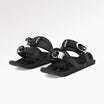












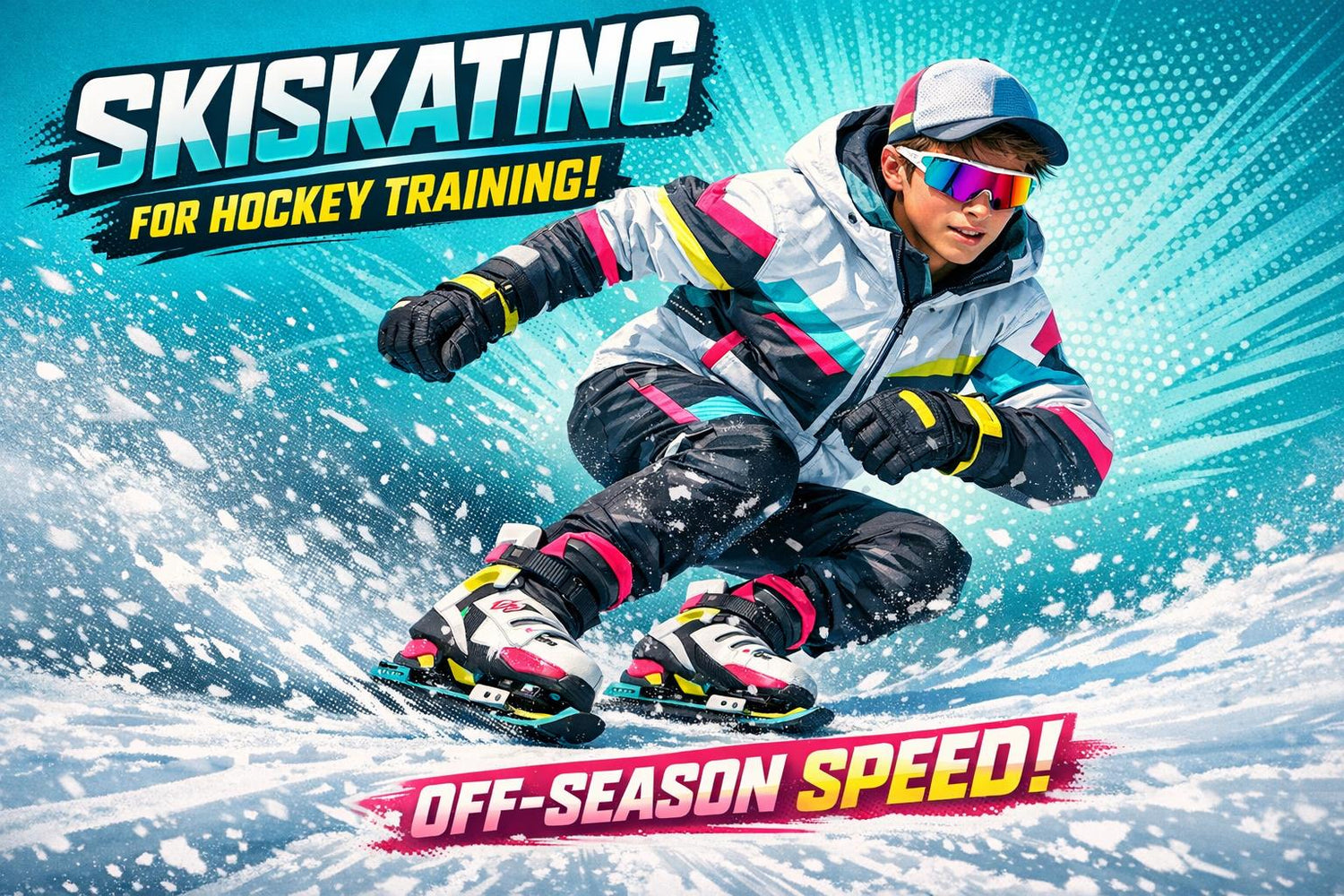
Want to keep your hockey skills sharp when the ice is out of reach? Enter skiskating - a game-changing way to train off-season. Using short skis like Snowfeet Skiskates, you can mimic hockey skating movements on snow, from lateral pushes to quick stops, without needing ice time. These compact skates (just 17.3 inches long) are portable, affordable, and designed to work with regular winter or snowboard boots. Perfect for sledding hills, parks, or even your backyard, skiskating helps you stay in shape and improve your edge control, agility, and power.
Why Snowfeet Skiskates Work for Hockey:
- Realistic Training: Replicates on-ice strides, edge work, and transitions.
- Portable & Simple: Lightweight, fits in a backpack, no specialized gear needed.
- Affordable: At $575, it’s a budget-friendly alternative to expensive rink time or full ski setups.
Key Features:
- Durable wood core with metal edges for precise control.
- Adjustable bindings fit U.S. shoe sizes 6–13.
- Works on packed snow, sledding hills, and trails.
Whether you're a youth player or a seasoned pro, skiskating is a practical way to stay game-ready during the summer months. Plus, it’s fun, efficient, and easy to get started. Ready to hit the snow?
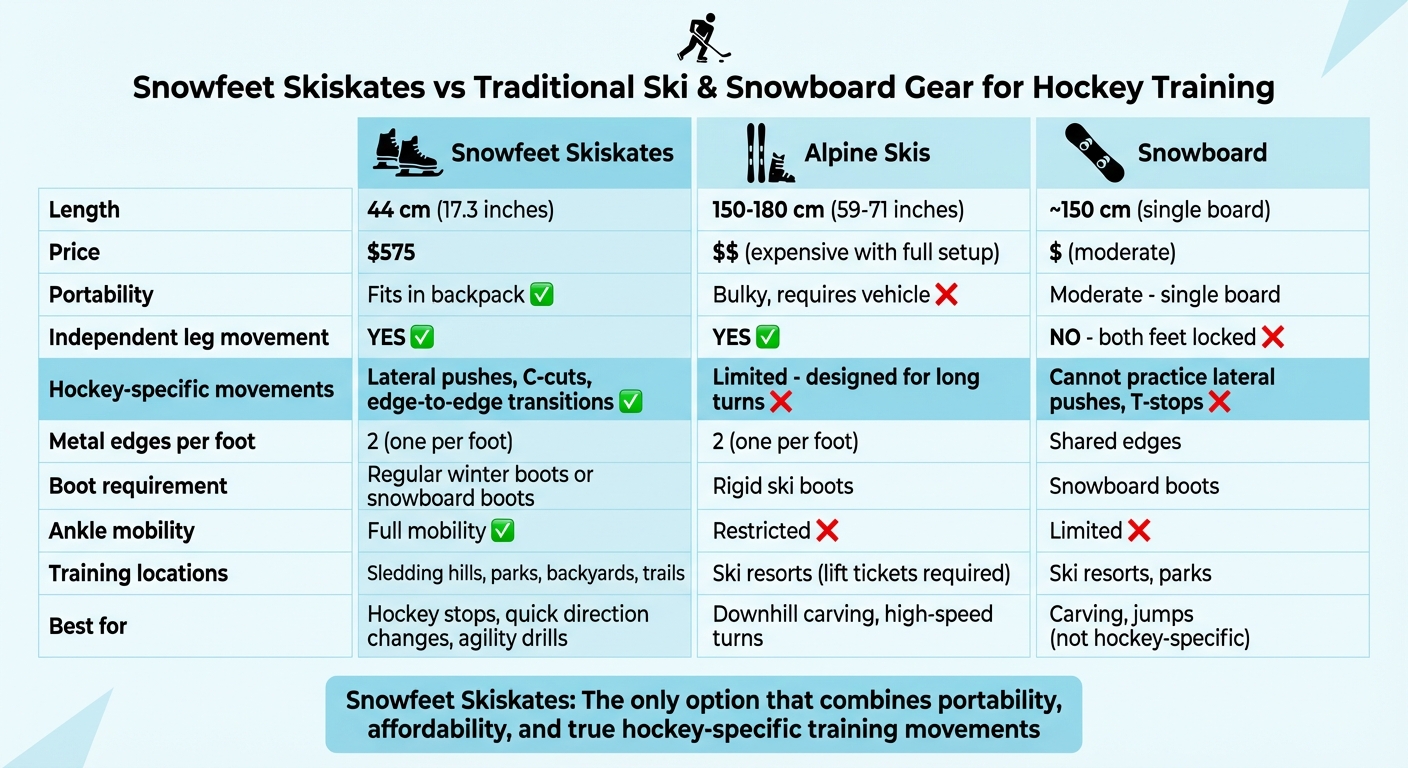
Snowfeet Skiskates vs Traditional Ski and Snowboard Gear for Hockey Training
The First Standard to DOWNHILL SKATING
Why Snowfeet* Skiskates Work for Hockey Training
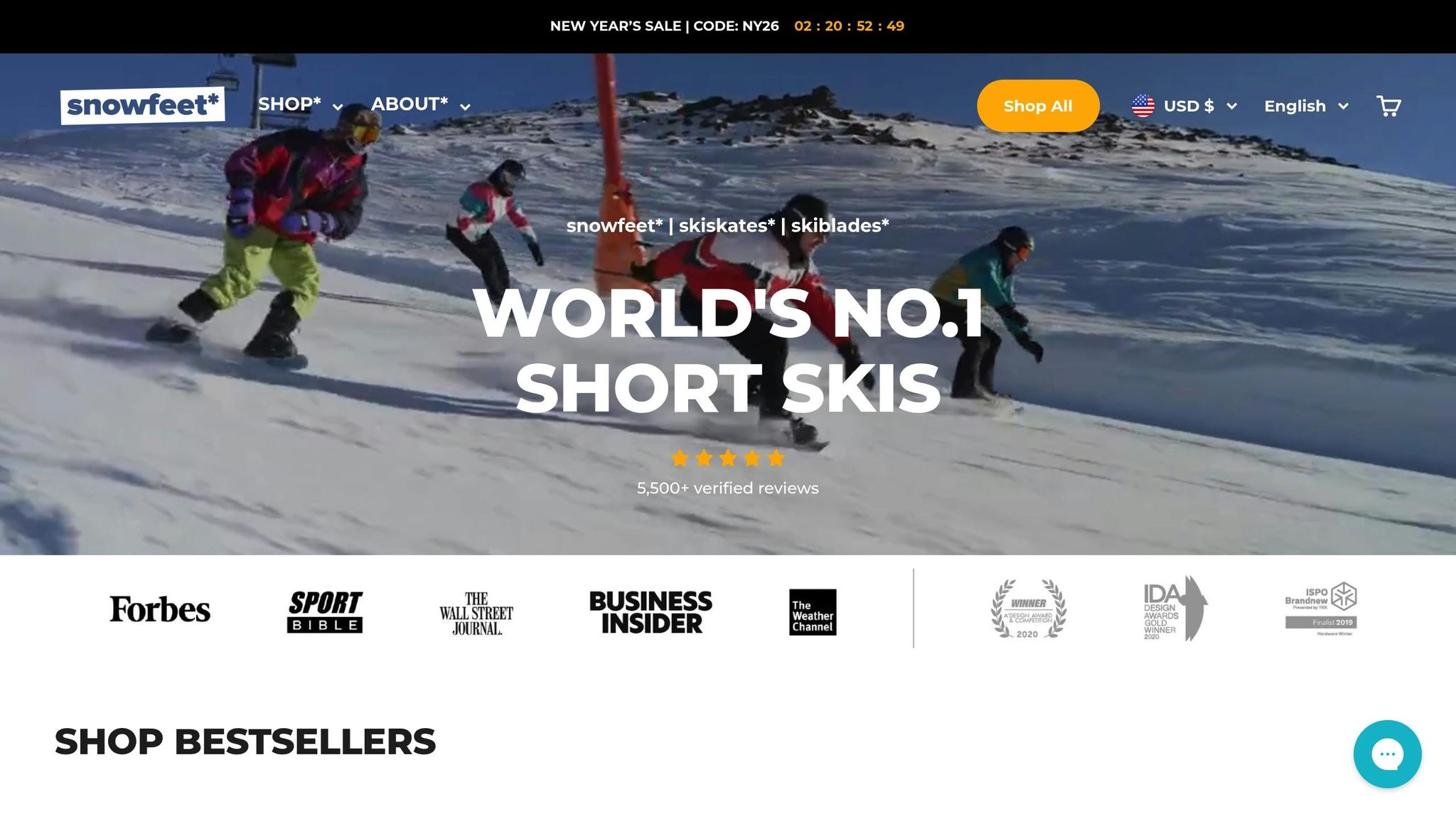
When it comes to off-season hockey training, finding equipment that mirrors the movements of on-ice skating is key. That’s where Snowfeet* Skiskates shine. These skates are designed to keep your feet directly under your hips, just like in hockey skating. This compact setup encourages proper knee bend, forward lean, and sharp edge control - all essential skills for hockey players.
"To start your ride, skate like a hockey player. Push your legs sideways." - Snowfeet Team
The movement pattern is spot-on for hockey training, including lateral push-offs, C-cuts, and quick edge-to-edge transitions. The short contact area means you can’t cheat with sloppy technique - it demands active hip alignment, bent knees, and precise balance. For players who already have skating or inline skating experience, the adjustment is quick. Many users report feeling comfortable within minutes. These qualities make Snowfeet* a standout option compared to traditional gear.
Snowfeet* vs. Traditional Ski and Snowboard Gear
Let’s talk about how Snowfeet* stack up against traditional ski and snowboard equipment. Alpine skis, which are typically 59–71 inches (150–180 cm) long, are built for long, high-speed downhill turns. That length and weight make it tough to practice hockey-specific moves like tight crossovers, explosive starts, or quick direction changes. Snowboards, on the other hand, lock both feet onto a single board, eliminating the independent leg movement crucial for hockey skating. You simply can’t work on lateral pushes, T-stops, or the edge work needed for defensive and offensive maneuvers.
Snowfeet* Skiskates solve these problems. Each foot gets its own set of metal edges, allowing you to focus on inside and outside edge control - just like on the ice. Plus, they’re lightweight and portable. A pair fits in a regular backpack, making it easy to grab them, head to a local hill, and squeeze in a quick training session. No bulky equipment, no expensive lift tickets. And forget about rigid ski boots - Snowfeet* work with regular waterproof winter boots or snowboard boots, maintaining the ankle mobility hockey players need.
Key Features of Snowfeet* Skiskates
Snowfeet* Skiskates are packed with features designed for performance and convenience. At 44 cm long, they have a durable wood core and metal ski edges that grip packed snow for precise carving and quick stops. The adjustable bindings fit U.S. shoe sizes 6–13 and can be easily adjusted with a screwdriver to accommodate different types of boots, whether you’re using warm winter boots or snowboard boots for added ankle support.
This flexibility makes them a great option for players of different ages and skill levels. Beginners or younger players can use more supportive boots and slightly looser bindings to build confidence and reduce the chance of ankle strain. Advanced players, on the other hand, can tighten the setup for a more responsive feel that demands greater balance and control, which translates directly to better on-ice performance. Regardless of the configuration, the design ensures the ankle mobility needed for deep knee bends and explosive acceleration.
The compact size of Snowfeet* opens up training opportunities that traditional gear can’t. You can use them on groomed ski slopes, sledding hills, snow-covered fields, or even in your backyard - anywhere with a few inches of packed snow. This versatility means you’re not tied to expensive facilities or specific locations.
Choosing the Right Snowfeet* Model
If agility and tight turns are your priorities - perfect for forwards working on quick cuts and small-area game skills - the 44 cm Skiskates are your go-to. They’re designed for rapid edge transitions and explosive lateral movements, making them ideal for replicating high-intensity hockey skating patterns. The shorter length demands active balance and quick adjustments, which directly improves on-ice performance.
For those looking for more stability or just starting out, the 65 cm Skiblades are a better fit. They offer a longer platform that’s more forgiving and stable, while still being far more maneuverable than traditional skis. Beginners or younger players can start with these to build confidence and balance before moving on to the shorter, more agile Skiskates.
Elite players, however, will want to dive straight into the 44 cm model to maximize their training potential.
Getting Started with Skiskating
Safety Guidelines and Equipment
Before jumping into the fun of skiskating with your Snowfeet* Skiskates, make sure you’re geared up for safety. Start with a certified snow sports helmet that fits snugly. Add wrist guards to protect your hands during falls, impact shorts for hip protection, and knee and elbow pads to shield your joints. Insulated gloves with a solid grip are a must - they’ll help you handle sticks and get back on your feet after a tumble.
Layer up for warmth and comfort. Go with a moisture-wicking base layer, a fleece or light down mid-layer, and a waterproof outer shell. Wear ski or snowboard socks that extend above your boot collars to avoid discomfort. Pick rigid, supportive, waterproof boots and make sure they’re laced tightly with all binding straps secured.
Before heading out, check your Snowfeet* gear. Look for cracks, loose screws, or worn straps, and clean your boot soles to ensure a secure fit in the bindings. Warm up with 5–10 minutes of dynamic exercises like leg swings, squats, and lunges to get your hips, knees, and ankles ready for action. Keep your first sessions short - 20 to 30 minutes is ideal - to avoid fatigue-related falls. And steer clear of poor visibility or icy terrain until you’ve built up solid edge control.
Once you’ve got your safety measures in check, pick a practice area that matches your skill level.
Selecting the Right Training Terrain
The best place to start skiskating is on gentle, consistent slopes - think small sledding hills or beginner areas at ski resorts that welcome short-ski devices. If you’re in the suburbs, look for gently sloped backyards, school fields (outside school hours), or city park sledding hills. Urban skaters can head to open slopes in large city parks, while those in rural areas might find great spots along pasture edges, mild-grade open fields, or small ditches with gradual sides. Just be sure to steer clear of fences, creeks, or other hazards.
The perfect beginner hill should have a wide, open run-out at the bottom with plenty of space on either side. Check that the snow is at least a few inches deep, mostly packed (not sheer ice), and free of hidden obstacles like rocks, trees, or water. Avoid slopes that cross paths or driveways. A good rule of thumb: if you can’t comfortably walk down without slipping, it’s too steep or icy for your first try. Snowfeet* Skiskates work best in light powder up to about 4 inches deep - anything deeper can bog you down.
Basic Skiskating Techniques
The design of Snowfeet* Skiskates makes them perfect for honing hockey-style balance and stride, so getting the basics down is key.
Start with an athletic stance on flat, packed snow: feet shoulder-width apart, knees bent, hips back, chest up, and eyes forward. Keep your weight centered over the midfoot - never on your toes - to stay balanced and avoid falls. Hold this position for 20–30 seconds while gently rocking your weight from heel to toe and side to side, making sure the edges of your skiskates don’t catch.
"The best way to start your ride is to skate like a hockey player." – Snowfeet Team
Next, try gliding. Begin with two-foot glides on very gentle terrain. Push off with one foot and keep your skiskates parallel. Once you’re comfortable, practice shifting your weight between feet for better balance. To pick up speed, use short V-pushes - position your heels slightly apart with your toes angled inward for that classic hockey acceleration. Keep your glides short, about 5–10 feet, and avoid uphill terrain or soft snow until you’ve nailed edge control.
For edge control, start by standing still. Slowly roll your ankles inward and outward to feel the difference between flat, inside, and outside edges. Keep your knees bent and your hips steady. On mild slopes, practice side-slipping by placing your skiskates across the hill, gently releasing the edges to slide a few inches, and then re-engaging them to stop. To slow down, learn a half-snowplow move: turn one skiskate slightly inward to create drag. Once you’re confident stopping, you’ll be ready to tackle hockey-style drills and take your skills to the next level.
sbb-itb-17ade95
Hockey-Specific Drills with Snowfeet* Skiskates
Here’s how you can use Snowfeet* Skiskates to keep your hockey skills sharp, even in the off-season.
Edge Control and Power Drills
Mastering edge control is key to improving your on-ice performance, and Snowfeet* Skiskates are perfect for this. Start with lateral shuffles on flat, groomed snow. Stand with your feet shoulder-width apart, knees bent, and push sideways using the metal edges to create friction. Focus on keeping your weight evenly distributed to avoid catching the front edge. This drill strengthens your lateral leg muscles, setting you up for explosive crossovers.
Next, try single-leg glides. On a gentle slope, push off and balance on one skiskate for 5–10 feet, keeping your free leg slightly behind. Alternate legs every few glides. This exercise targets the stabilizer muscles you use during single-leg pushes on the ice. To build power, practice hockey stops by pushing both metal edges sideways with balanced weight distribution. Start slow and increase your speed as you gain confidence. Thanks to their compact 44 cm length, Snowfeet* Skiskates allow for quicker stops compared to traditional skis. These drills are the groundwork for the sharp maneuvers we’ll cover next.
Agility and Change of Direction Drills
Quick transitions and tight turns can elevate your game, and Snowfeet* Skiskates help you replicate those movements. Set up a figure-eight pattern with two markers about 15–20 feet apart on groomed snow. Use quick strides to "skate" through the pattern, focusing on smooth weight shifts from edge to edge. The short design of Snowfeet* Skiskates makes them ideal for mimicking the precise footwork required on ice - something longer skis just can’t do.
For S-turns, head to a gentle slope and carve tight, connected turns as you descend. Keep your upper body facing downhill while your legs and skiskates rotate beneath you. This mirrors the hip rotation and edge control needed for weaving through opponents on the ice. Add stop-start drills to the mix: accelerate for 10 feet, perform a quick hockey stop, and immediately push off in a new direction. Repeat this sequence 6–10 times to improve reaction time and explosive power. These exercises directly translate to faster turns and quicker reactions during gameplay.
Conditioning and Endurance Workouts
Once you’ve nailed edge control and agility, it’s time to build your stamina. A typical hockey shift lasts 30–80 seconds and pushes your heart rate above 90% of its maximum. Mimic that intensity with interval training on Snowfeet* Skiskates. Find a moderate slope or flat trail and perform 30-second high-intensity sprints using a skating motion, followed by 30 seconds of active recovery (slow gliding or walking). Repeat this 6–10 times to maximize your conditioning. Keep your knees bent and stay in an athletic stance - the burn in your legs will feel just like a real shift.
For longer endurance sessions, take your Snowfeet* Skiskates to groomed trails or hiking paths. Aim for 15–20 minutes of steady skating to build the cardiovascular base needed for quick recovery between shifts. The compact design of Snowfeet* makes it easy to explore narrow trails that traditional skis can’t access, giving you more options for resistance training. Be sure to keep your weight centered over the middle or back of your feet during these longer sessions to avoid fatigue-related slips. Afterward, dry the metal edges thoroughly to prevent rust and keep them ready for your next workout.
Adding Skiskating to Your Off-Season Training Plan
Pairing gym workouts with Snowfeet* skiskating can help you build strength and convert that power into performance on the snow. Semi-pro hockey player Shane Potter highlights the importance of lower body exercises:
"Lower body work like squats, lunges, and deadlifts have had the biggest impact on my skating. Mix that with plyometrics and single-leg balance drills, and you're setting yourself up for faster acceleration".
The trick is to balance heavy resistance training with skill-based skiskating sessions. This combination helps your body adapt while avoiding burnout, creating a routine that maximizes your off-season progress.
Weekly Off-Season Training Structure
Aim for five training days each week: three focused on strength (think squats, deadlifts, lunges, and plyometric drills) and two or three skiskating sessions lasting 30 to 90 minutes, depending on your skill level. Here's a breakdown of session lengths based on player experience:
- Youth players: 30–45 minutes per session
- High school players: 45–60 minutes per session
- College/advanced players: 60–90 minutes per session
| Player Level | Skiskating Session Length | Weekly Frequency | Strength Training Days |
|---|---|---|---|
| Youth | 30–45 minutes | 2 days | 3 days |
| High School | 45–60 minutes | 3 days | 3 days |
| College/Advanced | 60–90 minutes | 3–4 days | 3 days |
Tracking Progress and Performance
Want to see how you're improving? Start by timing your 30-meter sprints - studies show these times directly relate to on-ice performance. Another great metric is the number of 30-second high-intensity intervals you can complete. Track these every two weeks to gauge your progress and compare it with other off-season training methods.
Skiskating vs. Other Off-Season Training Options
Snowfeet* skiskates are a game-changer. Unlike slide boards, which lock you into repetitive lateral movements on a flat surface, Snowfeet* let you train on actual terrain. This means adapting to slopes and snow conditions, which mimics the dynamic motion of hockey skating.
Compared to traditional skis, Snowfeet* are incredibly portable. Measuring just 44 cm, they fit in a backpack and can be used on local sledding hills, hiking trails, or even your backyard - no pricey ski resorts required. Their compact size also allows for hockey stops and quick direction changes, giving you a skating motion instead of the carving motion you'd get with long skis.
At $575 for the wood core model, Snowfeet* are a more affordable option than a full ski setup while offering better hockey-specific training. With over 5,500 verified reviews averaging 4.9/5 stars and more than 50,000 users, their popularity speaks volumes.
Conclusion
Snowfeet* Skiskates provide hockey players with an effective way to stay sharp during the off-season, especially when ice time is hard to come by. Thanks to their compact 44 cm length and lightweight design, they’re easy to toss in a bag and take to a nearby slope - no need to rely on expensive ice rink sessions. This convenience makes it simpler to keep up a regular training routine instead of waiting for those rare trips to the rink.
What sets Snowfeet* apart is how well they mimic the movements hockey players rely on. From lateral pushes and edge work to quick stops, these skates help build agility, balance, and lower-body strength in a way that traditional skis or snowboards just can’t. Skis focus on long, sweeping turns, and snowboards lock both feet together, limiting the independent leg movement that’s so crucial for skating.
At $575 for the wood core model, Snowfeet* are a budget-friendly alternative to a full ski setup, while offering training that’s much more relevant to hockey. With thousands of glowing reviews, these skiskates are a smart way to bridge the gap between off-ice workouts and real skating performance.
FAQs
How can Snowfeet Skiskates enhance hockey training during the off-season?
Snowfeet Skiskates give hockey players a fresh way to mimic on-ice movements during the off-season - something you just can’t get from regular gym workouts or standard skating drills. These small, lightweight skates (just 17.3 inches long and around 3.5 pounds) are designed to help players work on key hockey skills like maintaining a low center of gravity, mastering edge control, and making quick direction changes. Perfect for groomed snow slopes, they attach easily to winter shoes or snowboard boots, offering a workout that blends cardio, balance, and agility all in one go.
What sets Snowfeet Skiskates apart from typical off-season training? Instead of focusing on isolated exercises like squats or lunges, they let players practice real skating mechanics. This helps build game-speed agility and lower-body strength in a more natural way. Plus, they’re super portable, easier on the wallet, and way less bulky than traditional ski or snowboard gear. For hockey players aiming to stay sharp all year, these skates are a fun and practical option.
Are Snowfeet Skiskates suitable for beginners looking to train for hockey during the off-season?
Snowfeet Skiskates are a fantastic option for hockey players of any skill level, especially during the off-season. They’re lightweight, simple to use, and attach directly to your regular winter shoes - so no need to lug around bulky gear.
Thanks to their compact size and clever design, Snowfeet Skiskates can help you work on agility, balance, and lower body strength - all essential for hockey. Whether you’re fine-tuning your footwork or practicing hockey-specific drills, these skiskates make training not just effective but also enjoyable.
What safety tips should I follow when using Snowfeet Skiskates?
To stay safe while using Snowfeet Skiskates, start by focusing on your posture. Keep your feet about shoulder-width apart, bend your knees slightly, and center your weight over the middle or back of your feet. This stance helps you stay balanced and minimizes the chance of falling. If you're skating backward, shift your weight onto your toes and lift your heels a bit for added control.
Stopping takes a little more finesse with Snowfeet Skiskates compared to traditional skis. Spread your weight evenly and use the heel brake to slow down gradually. Stick to groomed slopes or smooth trails - steep or powdery terrain can make it harder to maintain control.
Before you head out, take a moment to check your skates. Make sure the edges are sharp and properly tuned for a good grip. If you're using ski lifts, be extra cautious when boarding and exiting. Keep your skates secure to avoid any mishaps. With these tips in mind, you're all set for a safe and enjoyable ride with Snowfeet Skiskates!











Leave a comment
This site is protected by hCaptcha and the hCaptcha Privacy Policy and Terms of Service apply.