
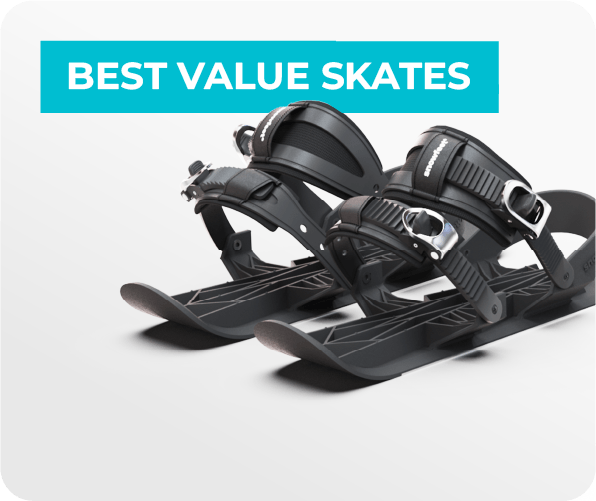
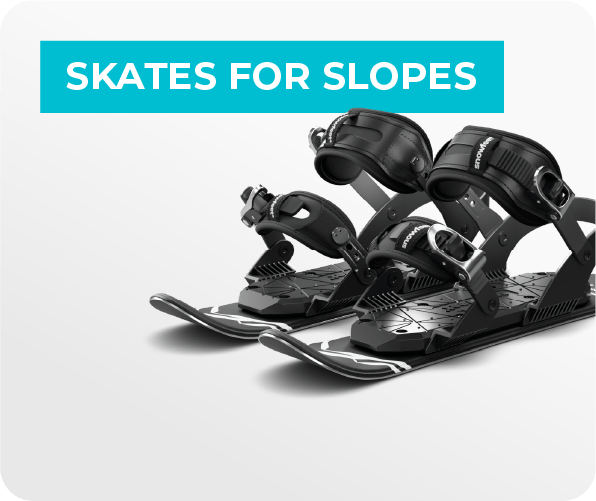
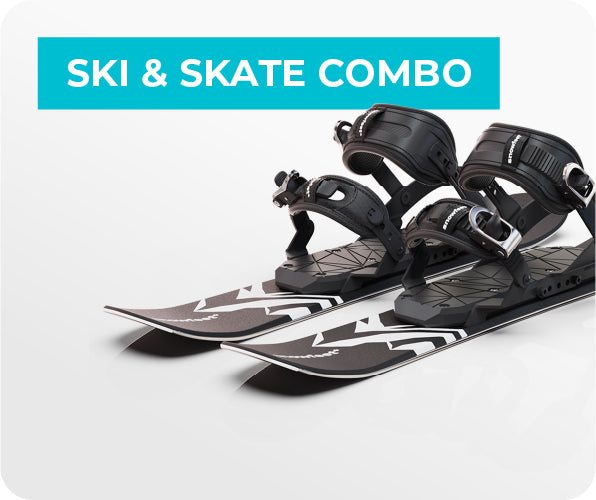
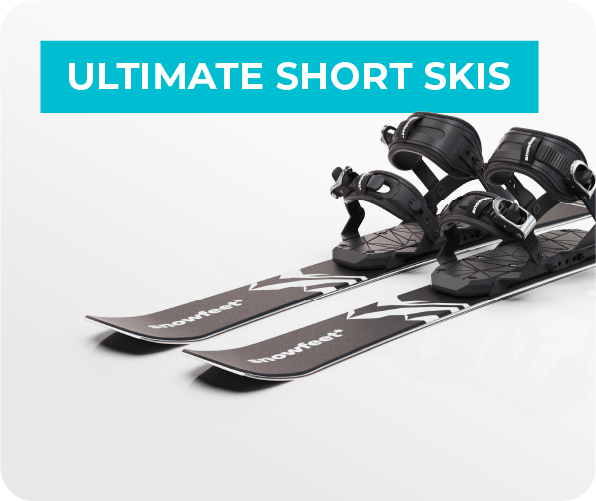
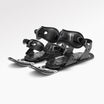
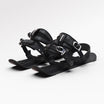
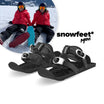
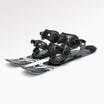
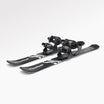
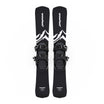
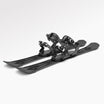
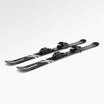
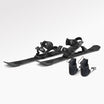
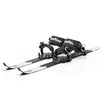
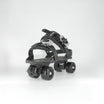
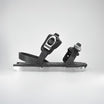
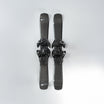
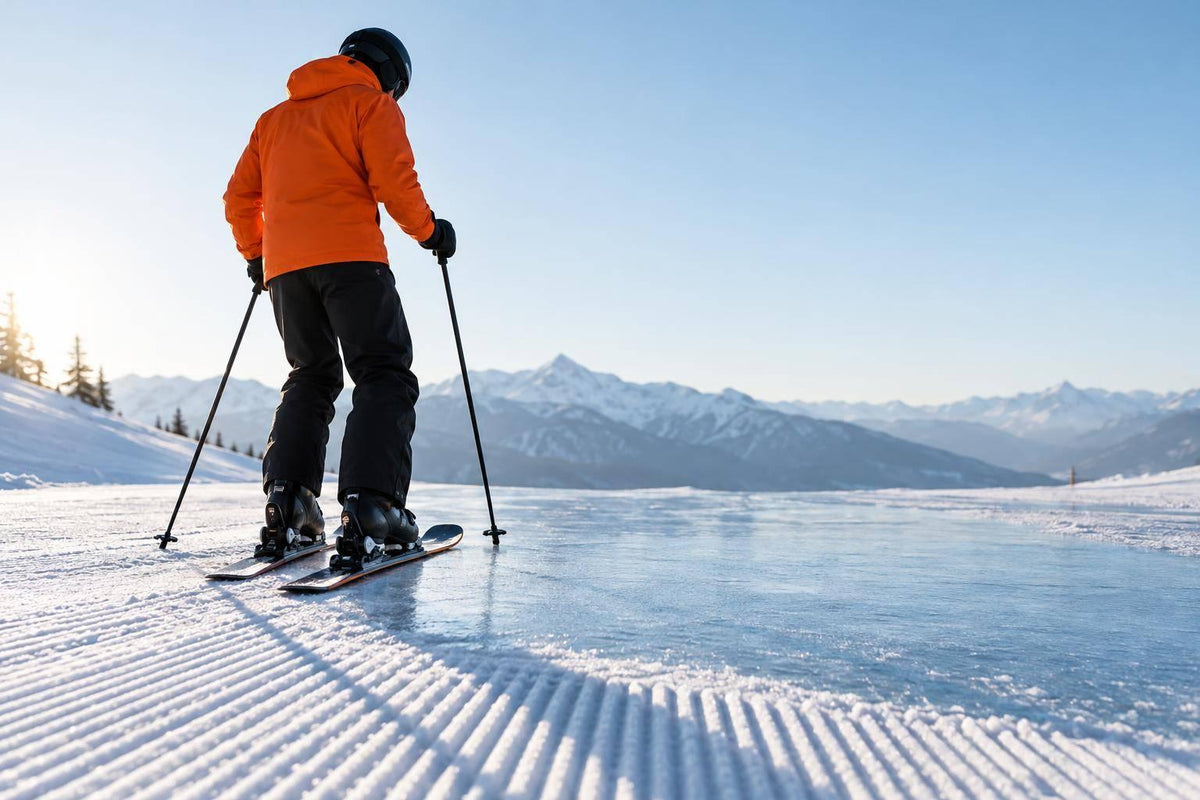
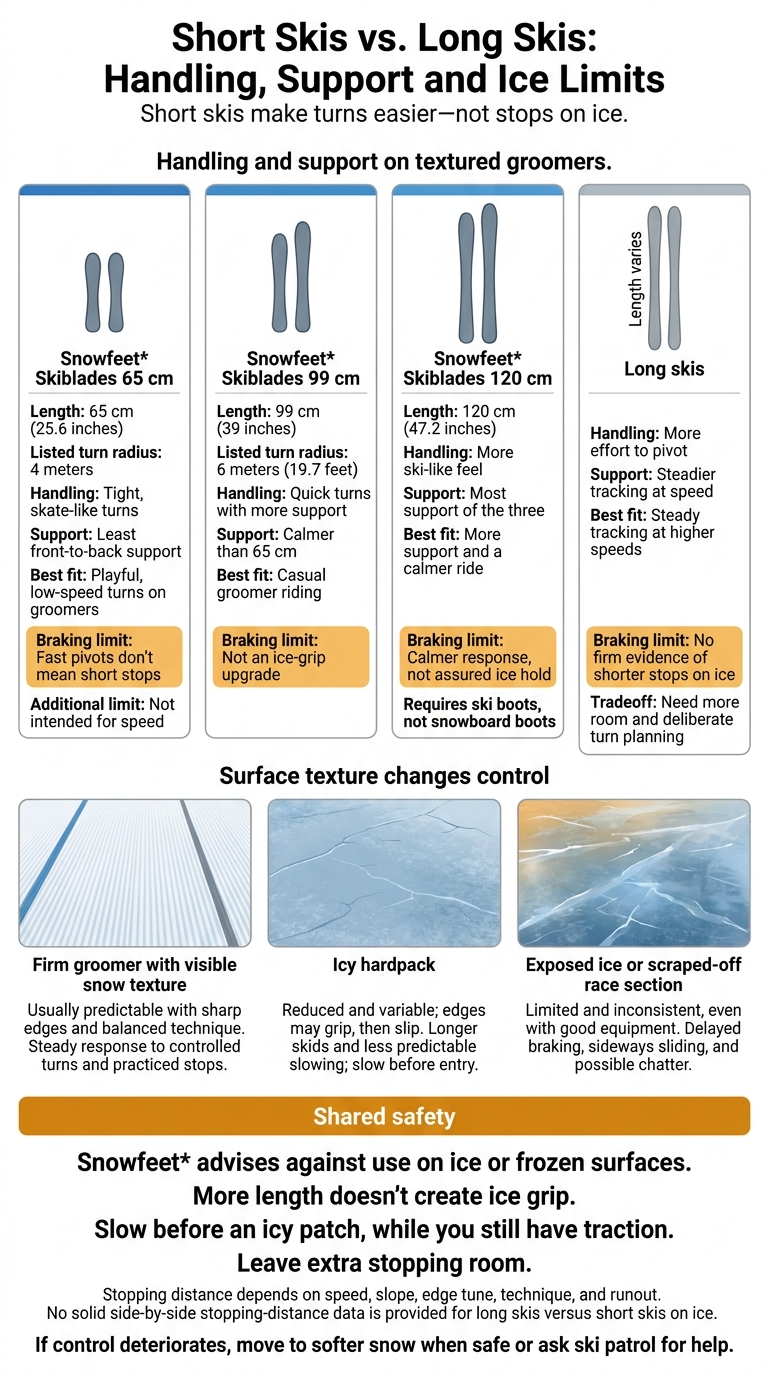
Short skis make turns easier - not stops on ice. On firm, textured snow, Snowfeet* Skiblades offer easy handling at low to moderate speeds. On bare ice, grip drops and stops can take more room. Slow down before slick patches, leave space, and keep edges sharp.
The three lengths - 65, 99, and 120 cm - trade tight turns for added support as they get longer. Long skis tend to track more steadily at speed. But no length guarantees grip, and Snowfeet* advises against use on ice or frozen surfaces.
Quick Comparison
| Ski choice | Handling on groomers | Support and stability | Braking limits |
|---|---|---|---|
| 65 cm (26 in.) | Tight, skate-like turns | Least front-to-back support | Fast pivots don’t mean short stops |
| 99 cm (39 in.) | Quick turns with more support | Calmer than 65 cm | Not an ice-grip upgrade |
| 120 cm (47 in.) | More ski-like feel; requires ski boots | Most support of the three | Calmer response, not assured ice hold |
| Long skis | More effort to pivot | Steadier tracking at speed | No firm evidence of shorter stops on ice |
The takeaway: Pick a length for terrain and pace - not promised ice grip. Edge tune, stance, and smooth turns matter. If stops become hard to control, head to softer snow when safe or ask ski patrol for help.
Short Skis vs. Long Skis: Handling, Support and Ice Limits
Grip and Stopping on Firm Snow vs. Ice
Edge Grip by Surface
Judge the surface by texture, not the trail sign. Firm groomers tend to give your edges something to bite into. Icy hardpack is smoother, with less predictable grip. Shade, traffic, temperature, and moisture can change the surface within a single run.
| Surface | Expected Edge Grip | Braking Behavior | Stability | Suitable Rider Level |
|---|---|---|---|---|
| Firm groomer with visible snow texture | Usually predictable with sharp edges and balanced technique | Steady response to controlled turns and practiced stops | Short skis feel agile at controlled speeds | Beginner to advanced on mellow slopes |
| Icy hardpack | Reduced and variable; edges may grip, then slip | Longer skids and less predictable slowing; slow before entry | Short skis feel twitchier; long skis offer more platform and tracking | Intermediate and above; beginners should stay on gentler terrain |
| Exposed ice or scraped-off race section | Limited and inconsistent, even with good equipment | Delayed braking, sideways sliding, and possible chatter | Hard to control on all equipment; long skis feel steadier but can still slip | Advanced only; not a learning area |
The main difference isn’t whether short skis grip ice better. It’s how much control each length gives you on textured hardpack before the surface gets too slick.
Chatter is edge vibration caused by repeated gripping and slipping. Forcing a turn can make skis wash out instead of bite. The compact platform of Snowfeet* Skiblades favors quick direction changes on textured snow, but ice reduces that advantage.
Braking Control and Stopping Room
Slow before an icy patch, while you still have traction. Start braking early. Leave extra room above other riders, trail merges, and obstacles. Your stopping distance depends on speed, slope, edge tune, technique, and runout. A hockey stop that works on firm snow can become a long skid on ice.
Keep your hands forward and your weight centered, with your ankles, knees, and hips flexed. Apply pressure smoothly. Don’t twist sharply or lean uphill. Practice hockey stops on gentle, snow-covered terrain with a long, flat runout before moving to harder runs.
Steep icy pitches and scraped-off race sections are advanced terrain - not practice terrain. If you can’t stop, traverse, or recover from chatter on firm groomers, move to softer terrain before choosing any short ski.
Texture, edge hold, and stopping room shape how the 65, 99, and 120 cm Snowfeet* models differ.
1. Snowfeet* Skiblades 65 cm
Controlled-Speed Maneuverability
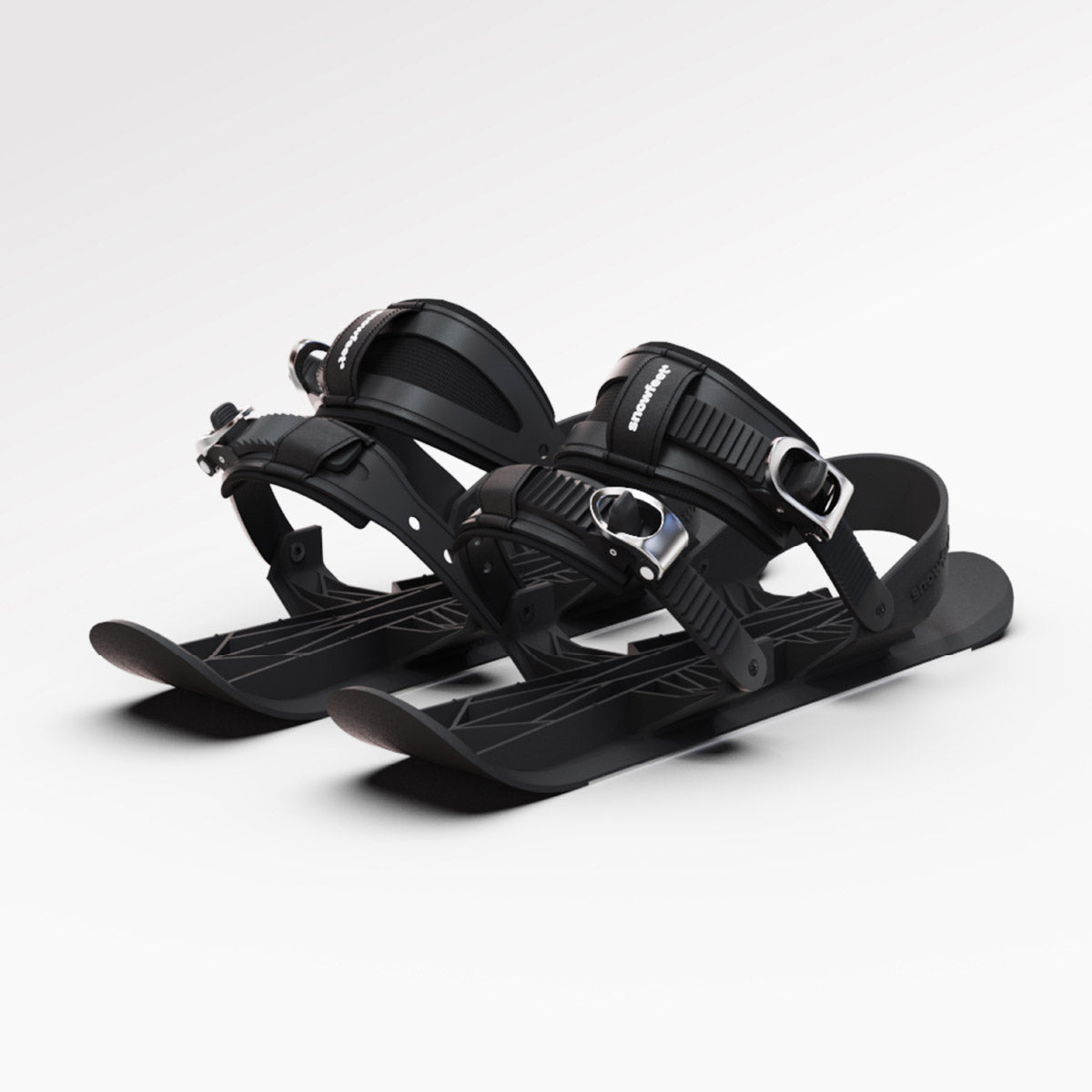
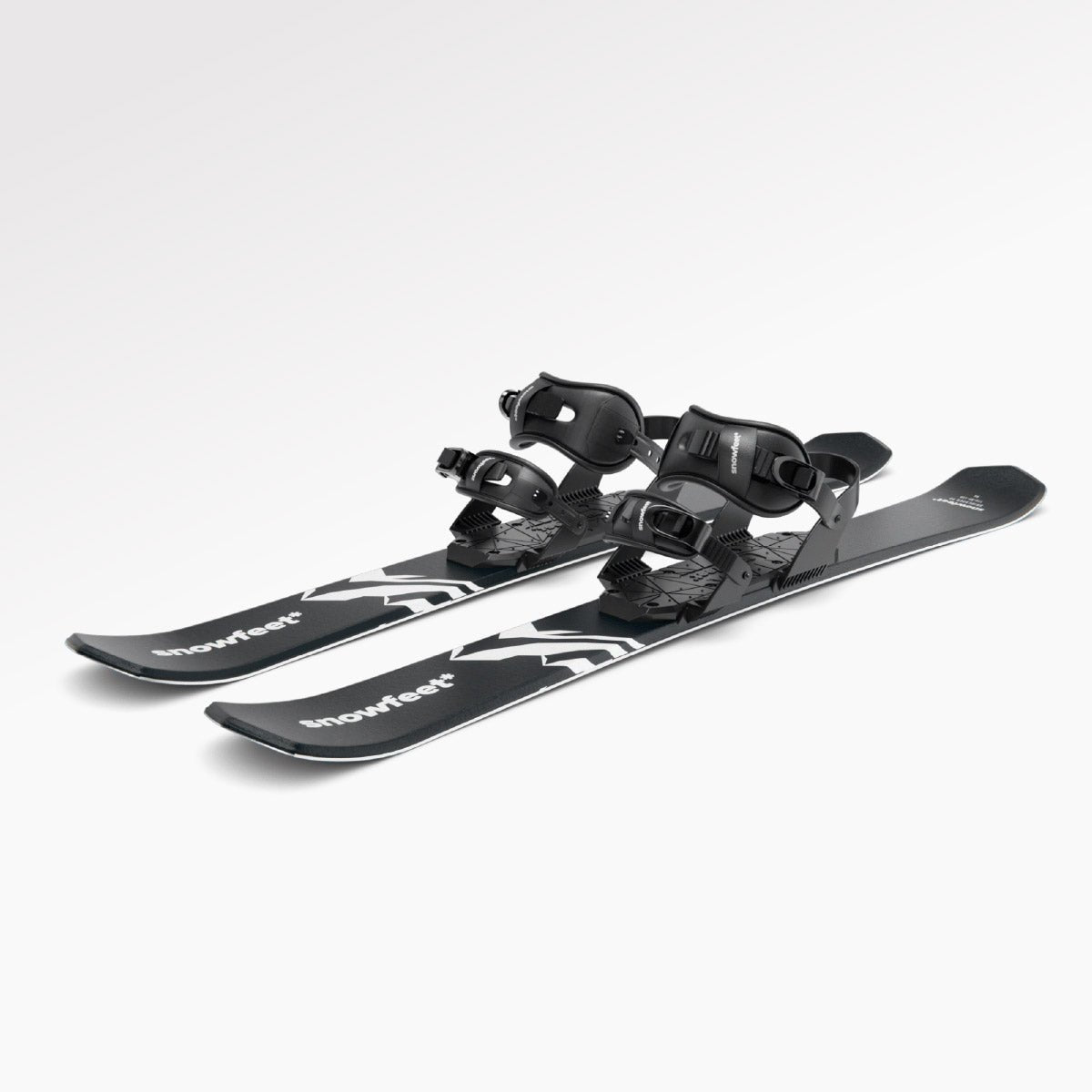
On firm groomers, the 65 cm model feels the most nimble of these options. But ice still limits what any short ski can do. At 65 cm (25.6 inches), it offers the most skate-like feel here. The short length cuts swing weight, while a tight sidecut and rated 4-meter turn radius help with tight turns. Twin tips let you ride forward or switch, but this model is best for controlled turns on groomers - not speed.
Edge Grip
Sharp edges help on textured hardpack, but they don’t make this model reliable on bare ice. Keep the edges sharp and dry.
Braking Control
The 65 cm platform pivots fast, but it puts less ski on the snow for braking. Match your bindings to your boots. Just don’t expect your binding choice to improve grip on ice.
Directional Stability
This is the least forgiving of the three Snowfeet lengths when your weight shifts forward or back. Balance mistakes show up faster on the shortest model. Choose it for tight, controlled turns on smooth, snow-covered terrain. For more support on rougher hardpack, the 99 cm model offers a calmer ride while still making quick turns.
2. Snowfeet* Skiblades 99 cm
Controlled-Speed Maneuverability
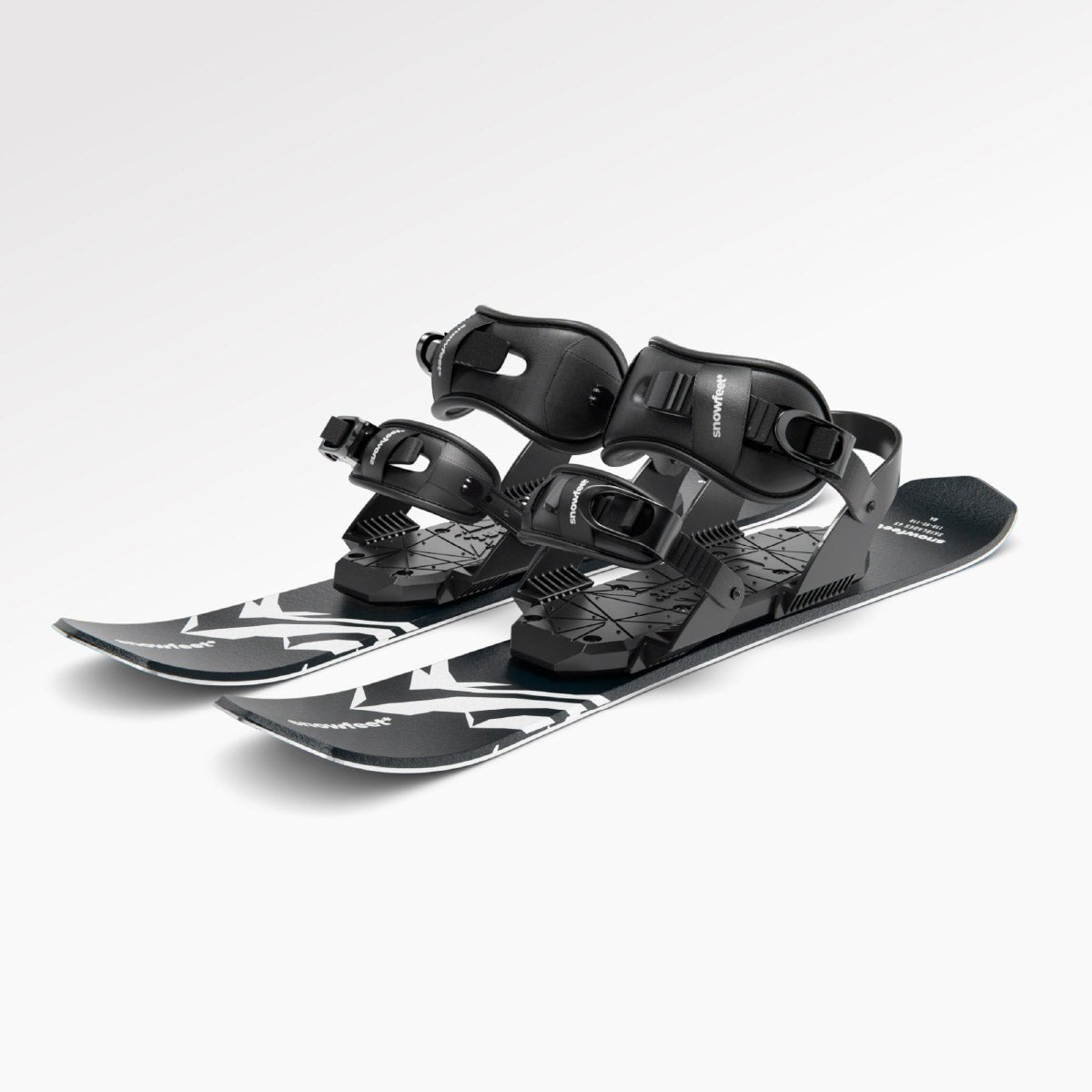
For most riders on groomers, 99 cm (39 inches) hits the sweet spot: quick enough for linked turns, yet steady enough to stay in control. The listed turning radius is 6 meters (19.7 feet).
Directional Stability
The 99 cm model tracks more calmly than the 65 cm model. But long skis still do a better job of damping chatter at speed.
Edge Grip
Sharp edges and camber help you grip textured groomers. But that doesn’t make the 99 cm model reliable on ice.
Before an icy day, have the edges sharpened, remove burrs, and check that the bases are flat. Snowfeet* advises against use on ice or frozen surfaces. If you spot polished patches, ease off or head to softer terrain.
Braking Control
Braking improves on groomers - not ice. Keep your weight centered, make smooth turns, and leave extra room before slick patches.
If you want more support while keeping that short-ski agility, the 120 cm model is the next step.
3. Snowfeet* Skiblades 120 cm
If the 99 cm model feels too quick to turn, the 120 cm version offers the most stability without stepping up to full-length skis.
Directional Stability
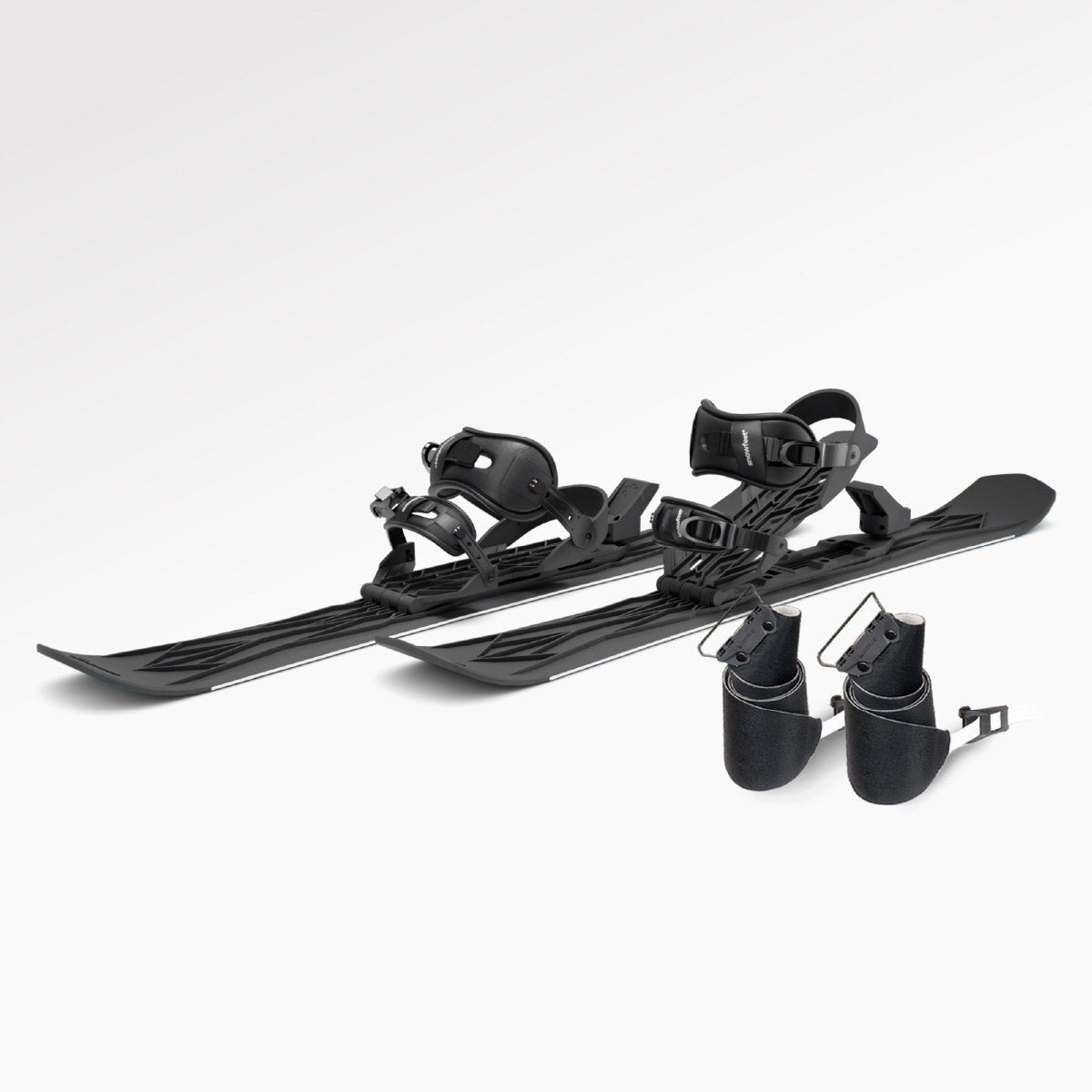
At 47.2 inches (120 cm), this is the most ski-like Snowfeet* model in this comparison. The extra fore-aft support helps you stay centered through controlled turns when firm groomers get choppy. It uses camber with tip-and-tail rocker.
Controlled-Speed Maneuverability
This model feels calmer than the 65 cm and 99 cm versions while staying more agile than full-length skis. It won’t absorb as much vibration at high speeds as full-length skis, but it’s easier to steer at low to moderate speeds.
Edge Grip
More length doesn’t create ice grip. On firm snow, sharp metal edges can bite when you roll onto them smoothly and hold steady pressure. You can still lose grip on polished ice.
Braking Control
The longer platform feels calmer than the 65 cm and 99 cm models during linked turns and controlled hockey stops. That makes its response more predictable - not safer on ice. Stopping distance still depends on speed, slope angle, edge sharpness, snow temperature, technique, and runout.
There’s also a setup tradeoff: this model uses ski bindings and requires ski boots, not snowboard boots. Have a ski shop check the exact binding setup and release settings before you ride.
sbb-itb-17ade95
4. Long Skis
With the Snowfeet* lengths covered, let’s look at what long skis add - and what they don’t change on ice.
Directional Stability
Long skis track more steadily through fast, open turns and long traverses. Their larger platform smooths out small bumps and adds support. But width, rocker, flex, and skier weight still matter.
Edge Grip
A longer effective edge can help grip firm groomers, but length alone doesn’t guarantee hold. Flex, torsional stiffness, camber, sidecut, boot fit, binding alignment, snow conditions, and technique all affect how much grip you get.
Braking Control
There’s no solid side-by-side stopping-distance data for long skis versus short skis on ice. Long skis can feel more stable during hockey stops, snowplow braking, and linked turns. But that doesn’t mean they stop in less distance on slick snow.
Controlled-Speed Maneuverability
Long skis have more swing weight and take more effort to pivot in tight spaces. Snowfeet* Skiblades in 65, 99, or 120 cm (about 26, 39, or 47 inches) remain easier to steer at controlled speeds. The tradeoff comes down to steady tracking versus quick, controlled handling.
Pros, Cons, and Setup for Icy Days
| Setup | Best for | Tradeoffs |
|---|---|---|
| Snowfeet* Skiblades 65 cm (26 in.) | Compact, skate-like riding; easiest to carry | Least fore-aft support |
| Snowfeet* Skiblades 99 cm (39 in.) | Quick handling with more support | Less stable at speed than longer options |
| Snowfeet* Skiblades 120 cm (47 in.) | Riders who want the most support in a short ski | More support, less agility; requires ski boots |
| Long skis | Steady tracking at higher speeds | Need more room and deliberate turn planning |
All of these setups become less reliable on exposed ice. The difference is how much control they offer on textured hardpack.
Getting the setup right comes first. Edge tune and technique matter more than length, and Snowfeet* still advises against ice.
Before heading out, run through this equipment checklist:
- Check edges for rust, burrs, dents, and rounded spots. Let a ski shop fix deep damage or uneven edge angles.
- Check screws, nuts, and binding attachments. Follow your model’s instructions for edge geometry, mounting, boot compatibility, and bindings.
- Have a technician check binding release settings. Some bindings don’t release.
Wax helps you glide; it doesn’t add edge grip on polished ice. Dry metal edges after each session to help prevent rust.
Once your edges are tuned, focus on stance and turn shape. Use this technique checklist:
- Practice on a low-angle groomed run.
- Stay centered, with ankles and knees flexed and hands forward.
- Apply edge pressure smoothly. Keep speed moderate and finish turns across the slope.
- Brake early and leave extra stopping room. Don’t count on a last-second hockey stop.
If you keep losing balance, fall when starting turns, can’t finish turns, or can’t stop predictably, move to gentler terrain with softer snow and seek instruction.
Final Verdict: Choose for Your Riding, Not Promised Ice Grip
Choose for how you ride - not for promised grip on ice. None of these options makes polished ice dependable. Short skis offer easy handling at controlled speeds, but they don’t guarantee better ice grip or shorter stops.
Use this comparison to match your terrain and pace.
| Riding Priority | Recommended Choice | Important Limitation |
|---|---|---|
| Playful, low-speed turns on groomers | Snowfeet* Skiblades 65 cm | Not intended for speed |
| Casual groomer riding | Snowfeet* Skiblades 99 cm | Not an ice-grip upgrade |
| More support and a calmer ride | Snowfeet* Skiblades 120 cm | Requires ski boots |
| Speed, long traverses, aggressive carving, or variable terrain | Traditional long skis | Less portable |
For most groomer riders, 99 cm is the best all-around Snowfeet* choice. Snowfeet* stands out for portability and playful handling. Grip still comes down to ski tune and technique.
If conditions push past your skill level or you start losing control, move from the ice to softer snow if you can do so safely. Otherwise, ask ski patrol for help.
FAQs
How can I spot ice before skiing onto it?
Watch for glossy, shiny, reflective, or darker “glassy” patches. These can point to polished ice or hard, refrozen snow. Skidded or broken tracks can also serve as warning signs.
Slow down before unfamiliar patches or when shifting light makes the snow’s texture hard to read. Be ready for less grip. If a stretch looks slick throughout, or you can’t keep your turns under control, head for gentler terrain.
How often should I sharpen my Skiblades’ edges?
Sharpen your Snowfeet edges every 3 to 5 days of riding to help keep control on icy or hard-packed groomers. Use the fingernail test: if the edge doesn’t catch your nail or shave off a tiny bit, it’s time for a tune-up.
After each day on the mountain, hone the edges with a fine diamond stone to help prevent burrs and rust buildup.
What should I do if I unexpectedly hit ice?
Avoid sudden edge sets, straight-line acceleration, and locked knees. These can make your edges lose grip. Ease off the pressure, stay centered, and steer toward a safer line. Use a controlled sideslip instead of aggressive carving to keep your speed in check.
If you can’t turn or brake with control, stop safely and move to gentler terrain. Practice the hockey stop until you can use it to stop with control. The heel brake only slows you down.


Leave a comment
This site is protected by hCaptcha and the hCaptcha Privacy Policy and Terms of Service apply.