



















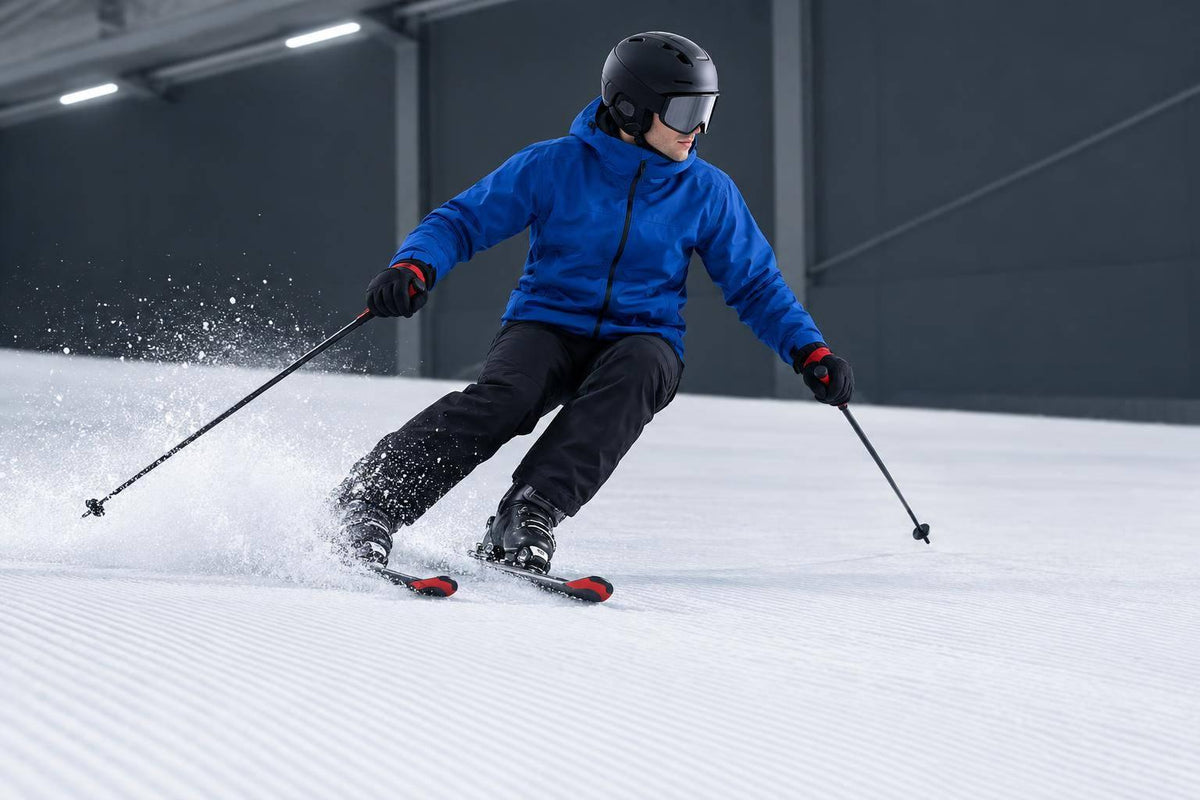
Yes - short skis work on indoor machine-made snow. My advice: check your venue’s gear rules first, then pick a length that lets you turn and stop with control.
Here’s how I’d narrow down the Snowfeet* options:
- 44 cm (17.3 in): For skate-like moves and low-speed play; demands good balance.
- 65 cm (25.6 in): For tight turns and compact practice.
- 99 cm (39 in): My all-around pick for a mix of easy turns and steady tracking.
- 120 cm (47.2 in): For more support and a ski-like feel.
The catch? Easy turns don’t mean easy stops. Longer skis offer more support at speed. On firm indoor snow, I’d focus on sharp edges, secure boots, and a slow first lap - not speed.
<u>Check the surface, too.</u> Machine-made snow isn’t the same as a plastic dry slope or ski treadmill. Each can have its own gear and wax rules. Confirm boot fit, binding type, and lift access before you buy, then practice braking in a clear area. :)
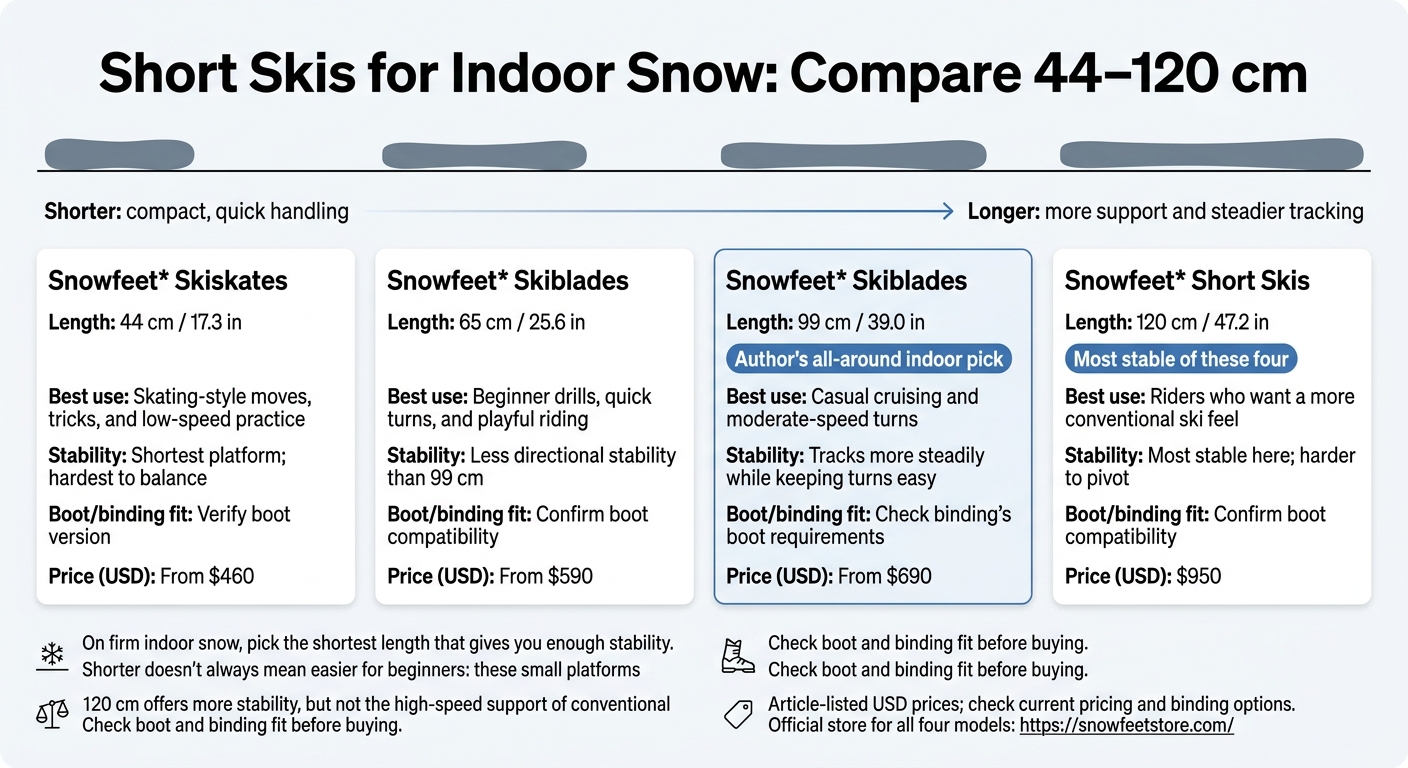
Short Skis for Indoor Snow: Compare 44–120 cm
Snowboarder tries Snowfeet* | Which Snowfeet* Short Ski is the Best? | Snowblades 44, 65, 99 Review
How Firm Indoor Snow Affects Short Skis
Snow firmness changes with grooming, temperature, and traffic. Icy patches often form near lift exits, in busy areas, and through turns. Take one slow lap to check the surface, then slow down before icy or unfamiliar sections. On short skis, firm snow demands more edge control than soft snow.
Edge Grip, Turning, and Stopping
Grip depends on sharp edges and technique - not just ski length. Stay centered and roll your ankles and knees little by little to engage your edges. Sharp edges help on hardpack, but they can still slip on polished ice. Avoid sudden twisting or leaning back. Here, ski length matters more for stability than for turning.
Short skis have less swing weight, so they pivot fast - a good fit for compact indoor runs. The trade-off? Less front-to-back support if your balance shifts. Easy turning doesn’t mean easy stopping. You still need firm edge engagement and enough room to brake. For indoor riding, 44 cm (about 17.3-inch) Skiskates favor playful handling, while 65 cm (about 25.6-inch) Skiblades suit compact practice. Longer options add support.
Start in an indoor beginner or practice area. Work on controlled side-slipping, linked turns in both directions, and stops with an instructor. Add speed only when you can stop reliably in both directions. An instructor can help you get used to very short skis. Before your first run, check that your ski length works with the venue’s rules, your boots, and your bindings.
When Longer Skis Work Better
| Characteristic | Short skis, including Snowfeet* | Conventional longer skis |
|---|---|---|
| Maneuverability | Fast pivots at low speeds; useful on tight runs | Need more deliberate input; suited to smoother, longer turns |
| Portability | Compact and easier to carry and store | Bulkier to transport and handle |
| Stability at speed | Less front-to-back support as speed increases | More stable at higher speeds |
Longer skis are the stronger choice for powerful carving and demanding alpine technique. For casual indoor sessions, Snowfeet* offers compact handling and easy transport for controlled riding.
Choosing a Snowfeet* Length for Indoor Snow
On firm indoor snow, pick the shortest length that gives you enough stability. Start with your riding style. The main indoor options are 44 cm / 17.3 in, 65 cm / 25.6 in, 99 cm / 39.0 in, and 120 cm / 47.2 in.
Use this table to compare lengths, then weigh easy turns against a steadier ride. Check boot and binding fit before buying.
| Model | Length | Best use | Stability | Boot/binding fit | Link | Price (USD) |
|---|---|---|---|---|---|---|
| Snowfeet* Skiskates | 44 cm / 17.3 in | Skating-style moves, tricks, and low-speed practice | Shortest platform; hardest to balance | Verify boot version | Official store | From $460 |
| Snowfeet* Skiblades | 65 cm / 25.6 in | Beginner drills, quick turns, and playful riding | Less directional stability than 99 cm | Confirm boot compatibility | Official store | From $590 |
| Snowfeet* Skiblades | 99 cm / 39.0 in | Casual cruising and moderate-speed turns | Tracks more steadily while keeping turns easy | Check binding’s boot requirements | Official store | From $690 |
| Snowfeet* Short Skis | 120 cm / 47.2 in | Riders who want a more conventional ski feel | Most stable here; harder to pivot | Confirm boot compatibility | Official store | $950 |
44 cm Skiskates and 65 cm Skiblades: Compact Riding
Choose 44 cm Skiskates for skating-style moves or 65 cm Skiblades for compact ski-style practice. Shorter doesn’t always mean easier for beginners: these small platforms demand balance. For steadier tracking and a less twitchy feel, step up to 99 cm.
99 cm Skiblades: An All-Around Indoor Option
The 99 cm model tracks more predictably than the 65 cm model while staying easy to turn. It’s the best all-around indoor pick, with a mix of agility and stability. If you want the calmest feel, consider 120 cm.
120 cm Short Skis: More Stability
Choose 120 cm Short Skis for more stability on firm indoor runs. Just don’t expect the high-speed support of conventional longer skis. Check the product page for the current price and binding type.
sbb-itb-17ade95
Preparing for an Indoor Ski Session
Once you’ve picked a length, check venue rules and boot fit before your first run. Choose equipment based on experience, weight, speed, slope width, and boot type - not height. The right length is only part of the setup. Firm indoor snow also calls for well-fitted boots, correct bindings, and proper tuning.
Venue Rules, Boot Fit, and Bindings
Before booking, confirm that the venue accepts your exact Snowfeet* model, binding system, and boots. Check helmet requirements, binding release and retention rules, brakes or leashes, and lift access. Boot fit and venue approval are separate checks.
The 44 cm Skiskates fit ski or snowboard boots, not regular winter boots. Check the boot requirements for your exact product. Your boots must hold your heels in place, with bindings or straps fully locked. Short skis respond fast to small shifts in balance, so secure boots matter on indoor snow.
Some Skiskates use fixed bindings, so don’t expect them to release during a fall. Have a qualified technician set any alpine release bindings based on your weight, height, boot-sole length, age, and ability.
Once the venue approves your setup, prepare the edges and wax for firm indoor snow.
Edge Care, Wax, and Pre-Run Checks
Sharp edges help grip machine-made indoor snow. Dry-slope surfaces need different care. Check edges for rust, burrs, dents, and dull spots, and inspect bases for deep damage. Let a ski tech handle bent edges or cracks. Choose wax for the snow temperature, not just the air temperature.
Before your first run, check:
- Approval: Confirm equipment, riding areas, and lift access.
- Fit and safety: Secure your boots and have any required helmet, brakes, or leashes in place.
- Condition: Check edges and hardware. Apply snow wax or a venue-approved dry-slope lubricant.
- Practice space: Find a clear area to practice gliding, turning, and stopping.
On firm indoor snow, short skis need clean edge grip to turn and stop, so give edge care extra attention.
After each session, dry the edges and bases before packing. Never leave wet gear in a closed bag. Dry boot liners for 24 hours, and check for new edge damage before your next session.
Conclusion: Short Skis for Controlled Indoor Riding
Snowfeet* works on machine-made indoor snow if the venue allows short skis and the gear fits properly. Synthetic dry slopes and treadmill surfaces have different rules and may require venue-approved gear.
Once you’ve checked the surface, choose your length:
- 44 cm (17.3 in) Skiskates: The most playful, skate-like ride.
- 65 cm (25.6 in) Skiblades: Good for tight turns and beginner drills.
- 99 cm (39 in) Skiblades: The best all-around balance for indoor riding.
- 120 cm (47.2 in) Short Skis: The steadiest feel.
Longer skis still win for sustained speed. Snowfeet* is the better fit for short indoor laps, controlled practice, and easy transport.
Before you buy, check the venue’s rules, boot compatibility, and the store’s current setup options. Visit the official Snowfeet* store for current U.S. pricing and binding packages.
FAQs
Which Snowfeet* length suits my weight and skill level?
Choose based on your skill, terrain, and whether you want stability or agility. The 44 cm (17.3 in) Skiskates are the easiest to maneuver and carry, but they take better balance. The 65 cm (25.6 in) Skiblades give beginners and families more stability and room for error.
For most casual adults, 99 cm (39 in) Skiblades strike a balance between easy turns and stability. Athletic riders who want a ski-like feel on longer, faster runs can opt for 120 cm (47.2 in) Short Skis. They offer the most stability and edge control in the lineup.
How can I tell if my edges need sharpening?
Check your steel edges for heavy rust or deep damage. If you lose grip on hardpack or groomed runs, your edges may need a closer look.
Snowfeet* products need almost no maintenance compared to standard alpine setups. But as you use them more, edge tools can help with upkeep. Keep edges clean and free of major wear to help maintain control, stopping power, and gear life.
What should I do if I lose grip on indoor ice?
Stay centered and don’t lean back - that makes short skis harder to control. Keep your weight spread evenly over both Snowfeet to help you slow down. Use a hockey stop or heel brake to get back in control.
Snowfeet’s metal edges help you grip hardpack and groomed runs. If you often feel unsteady, consider 99 cm (about 39 in) or 120 cm (about 47 in) Skiblades. They give you more edge contact and a more planted feel.











Leave a comment
This site is protected by hCaptcha and the hCaptcha Privacy Policy and Terms of Service apply.