
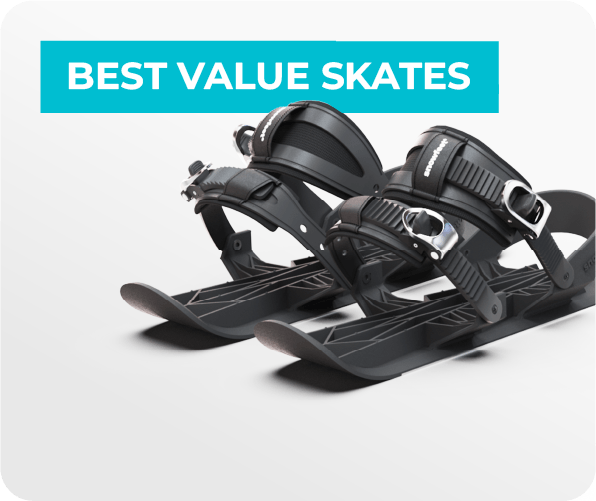
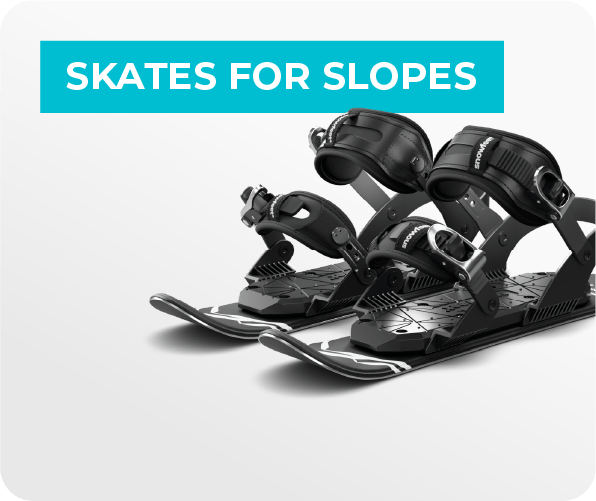
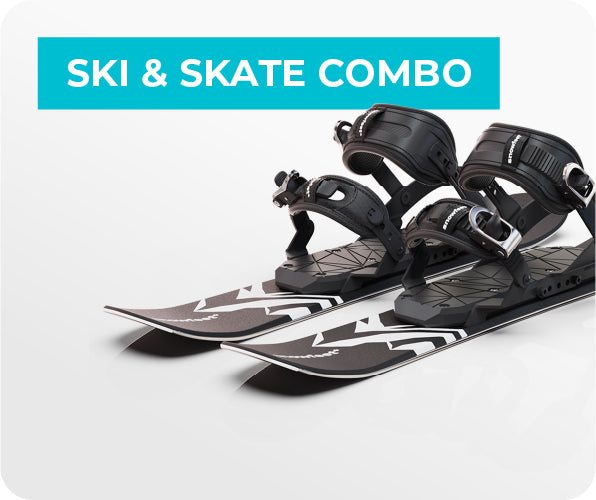
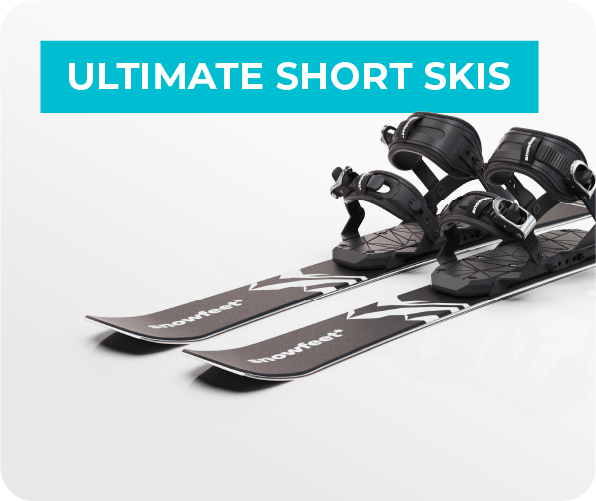
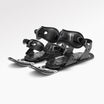
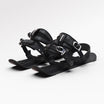
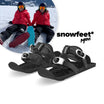
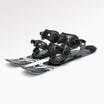
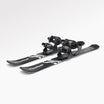
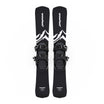
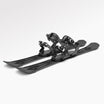
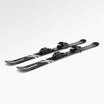
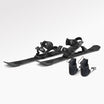
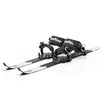
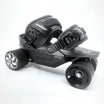
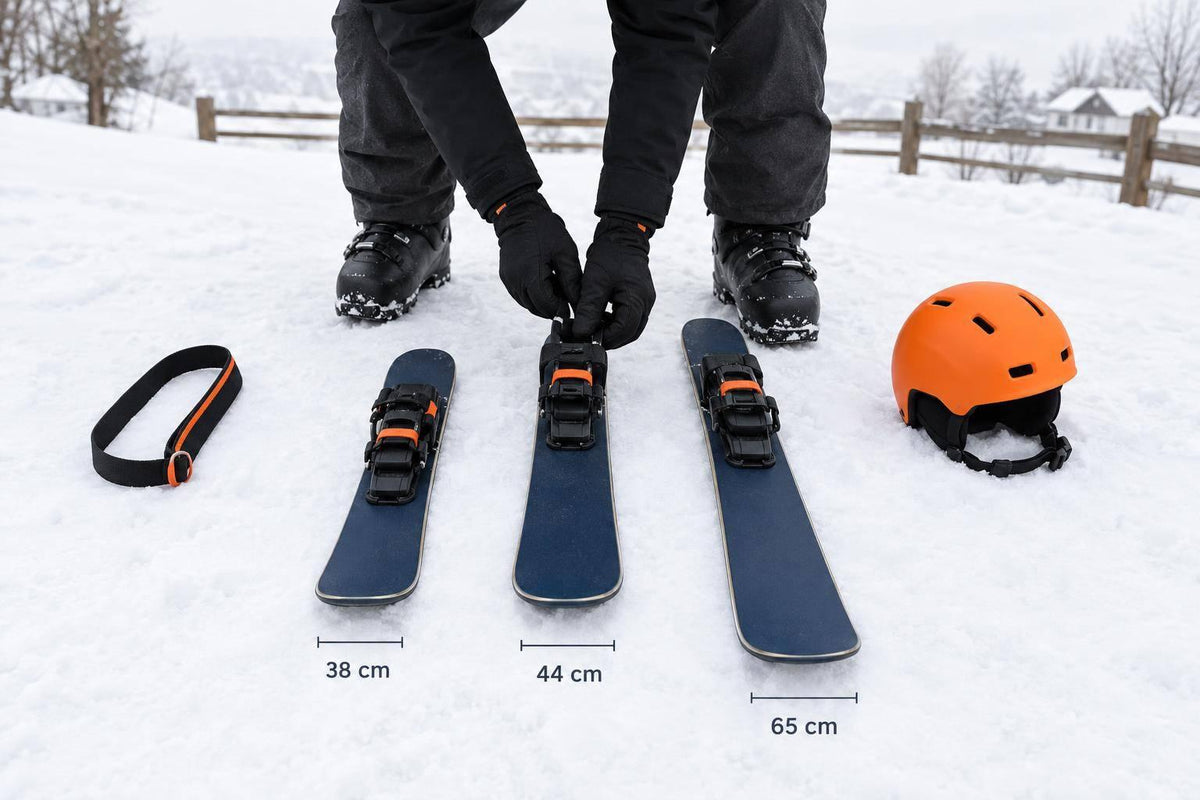
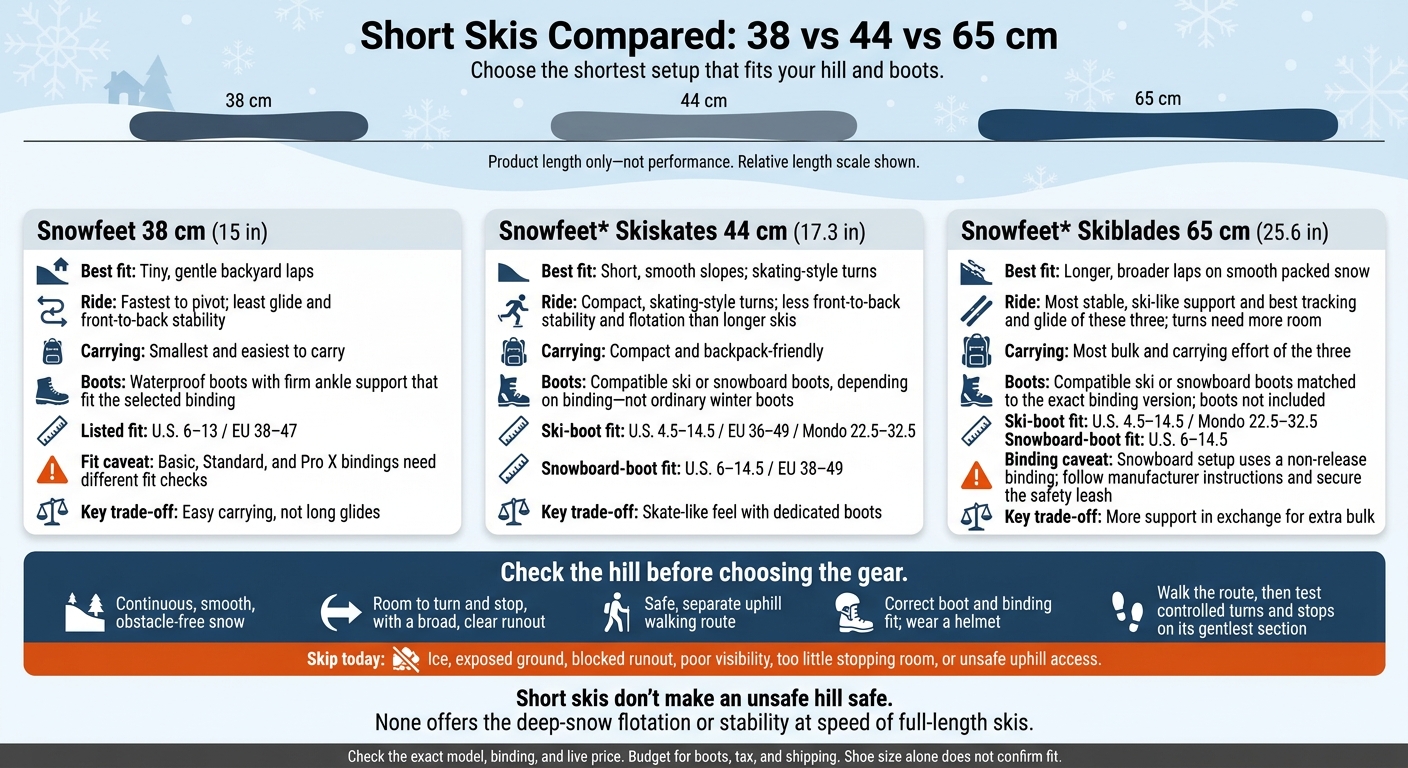
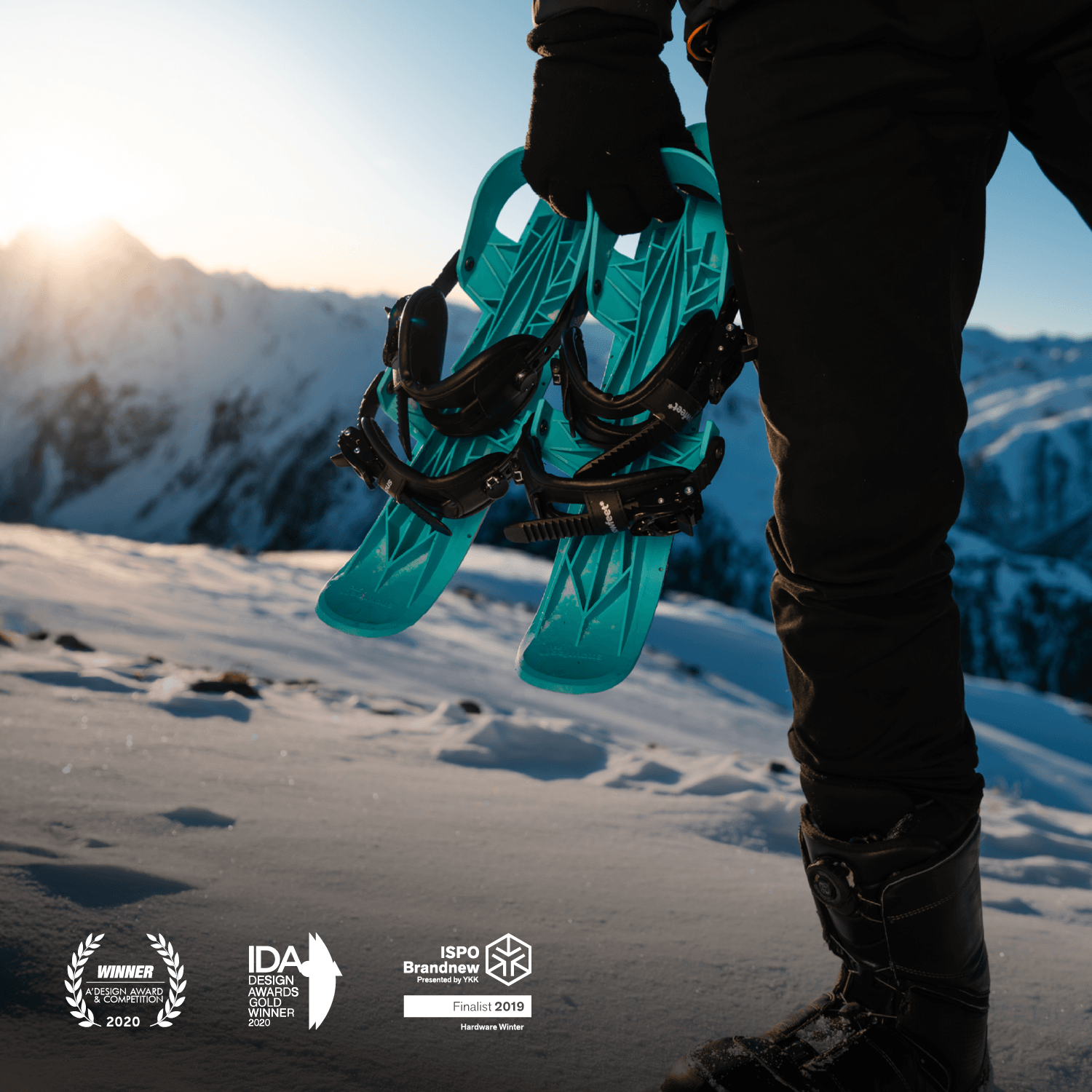
For short backyard laps, pick gear that fits the hill - not just your backpack. Snowfeet’s 38 cm model favors easy carrying, 44 cm Skiskates offer a skate-like feel, and 65 cm Skiblades add glide and support for longer local-hill runs.
All three need smooth, unbroken snow cover, room to turn and stop, and a safe walk uphill. None offers the deep-snow flotation or stability at speed of full-length skis.
Quick Comparison
| Model | Best fit | Boot setup | Carrying |
|---|---|---|---|
| Snowfeet 38 cm (15 in) | Tiny, gentle backyard laps | Compatible boots matched to the selected binding | Smallest and easiest to carry |
| Skiskates 44 cm (17.3 in) | Short, smooth slopes; skating-style turns | Ski or snowboard boots, depending on binding | Compact and backpack-friendly |
| Skiblades 65 cm (25.6 in) | Longer, broader laps; more glide and stability | Ski or snowboard boots, depending on binding | Most bulk of the three |
Prices vary by setup, and the article’s listings show different totals. Check the exact model, binding, and live price, then budget for boots, tax, and shipping.
Before any lap, walk the route and test turns and stops on its gentlest section. Wear a helmet. If there’s ice, exposed ground, a blocked runout, or no safe uphill path, skip the spot. Short skis don’t make an unsafe hill safe.
Short Skis Compared: 38 vs 44 vs 65 cm
1. Snowfeet 38 cm
Slope fit and snow coverage
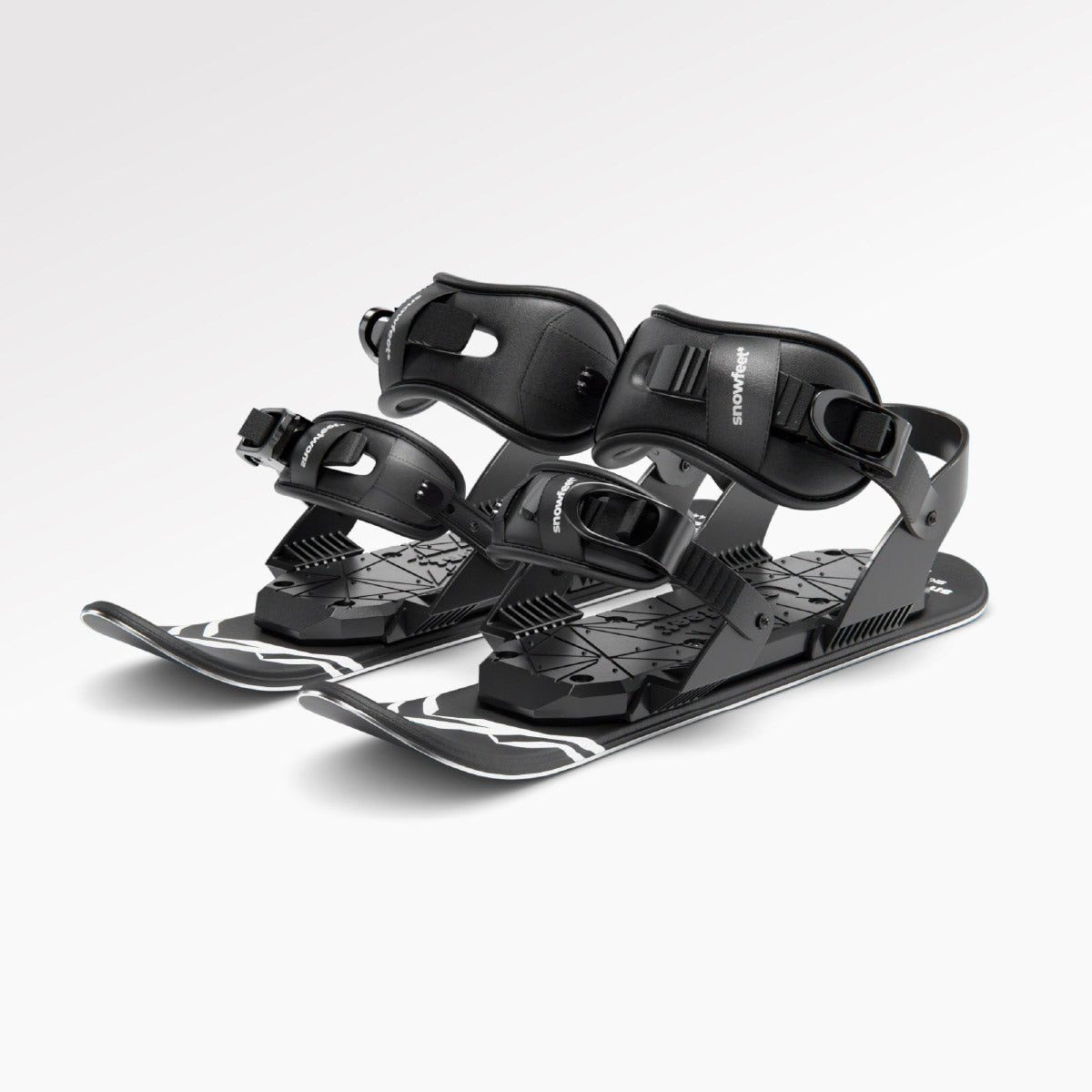
Pick this model for easy carrying, not long glides. Use it only on continuous, obstacle-free snow. It’s the easiest setup to carry uphill for repeat backyard laps, especially on small, simple runs.
| Backyard-lap check | What to look for |
|---|---|
| Slope size | Tiny, gentle backyard slopes or short local-hill runs; avoid steep slopes and long descents |
| Continuous snow coverage | Fully covered, compact snow with no exposed grass, rocks, roots, pavement, or major icy patches |
| Footwear | Waterproof boots with firm ankle support that fit your chosen binding |
| Turning room | Space for repeated gentle S-turns, plus extra room on both sides for an unplanned traverse |
| Uphill carrying | Take off the mini skis and carry them uphill; plan to walk back up in boots |
Turning, stability, and stopping
Packed snow works best. Rough snow can throw off your balance, and these mini skis won’t float as well in powder. If you hit icy patches, end the session. Start at walking speed and check that you can stop on purpose - not just coast until the slope runs out.
Boot setup and uphill carrying
Wear waterproof boots with firm ankle support. Snowfeet lists U.S. 6–13 / EU 38–47 for this setup, but the Basic, Standard, and Pro X bindings each need different fit checks.
For repeat backyard laps, winter shoes make the walk uphill easier. Use snowboard boots for ski-slope use. Before riding, check that the straps reach and your heels stay in place.
U.S. price and availability
The official listing shows $185, on sale from $199, with this stock warning:
“Final Drop - No Restock.”
Check the current Snowfeet 38 cm listings before you order. Price and stock vary by binding version and color.
For a bit more glide and steadiness without switching to full skis, the 44 cm Skiskates are the next step.
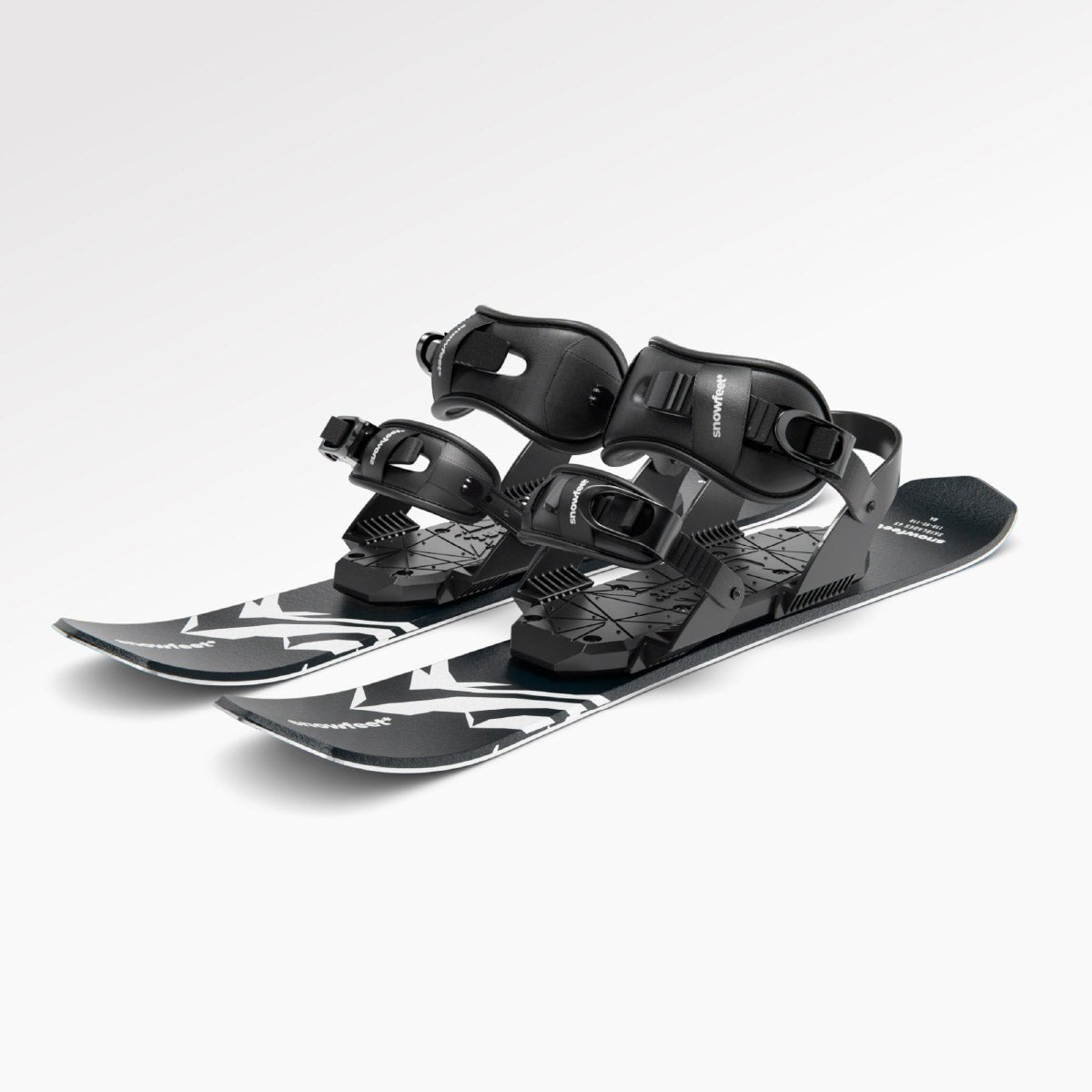
2. Snowfeet* Skiskates 44 cm
Slope fit and snow coverage
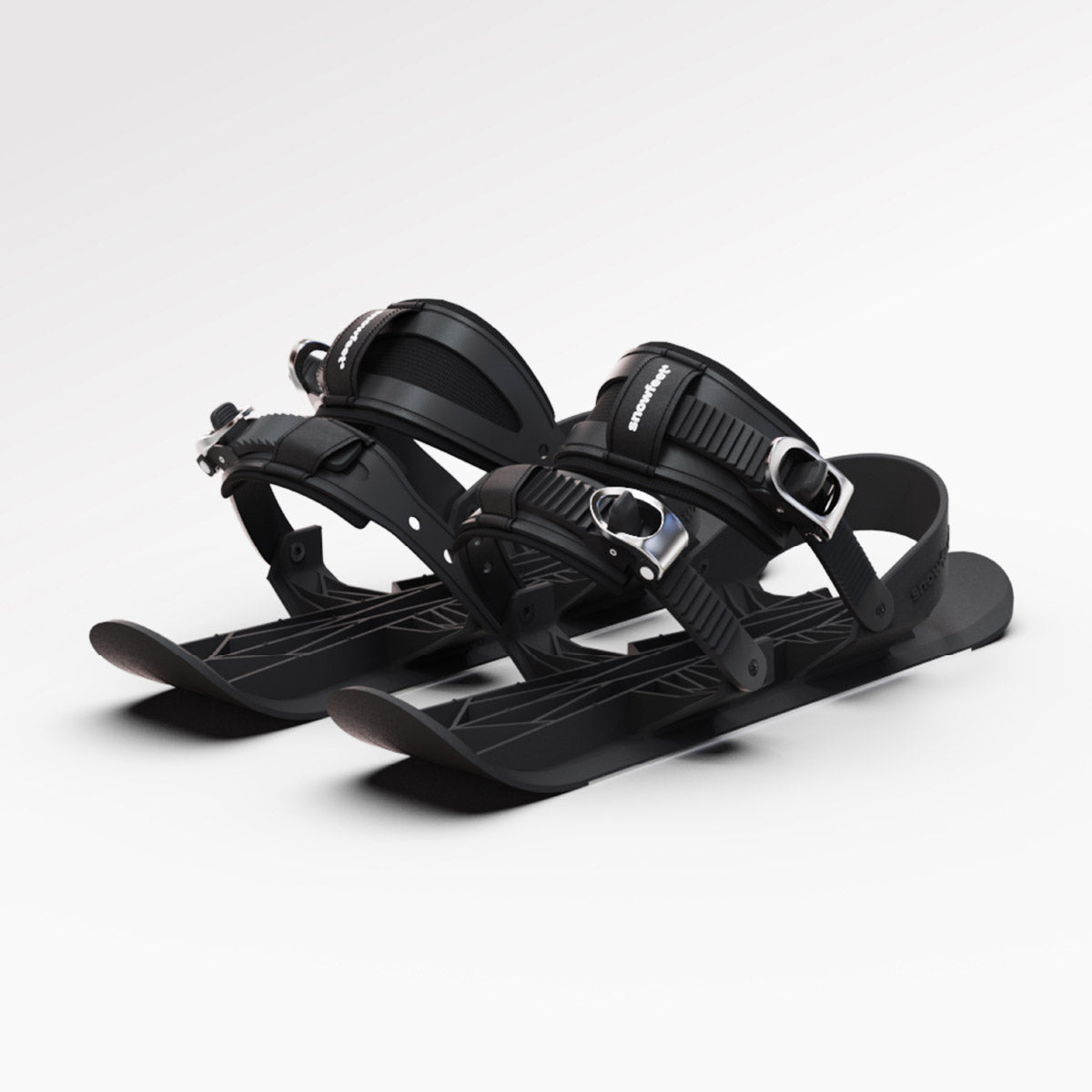
At 44 cm (17.3 inches), Skiskates work best on groomed backyard lanes and short local-hill laps. Think repeat laps, not long descents. They aren’t built for long, steep, fast, or ungroomed runs. Deep snow, heavy slush, deep ruts, thin coverage, and debris can make the short bases sink or hard to steer.
Turning, stability, and stopping
Skiskates turn faster than longer skis, but you lose some front-to-back stability and flotation. Practice on gentle slopes until you can stop in both directions with control. No runout means no lap.
Boot setup and uphill carrying
Match the binding to your boot type, not just your shoe size. The ski-boot version fits roughly mondo 22.5–32.5 (U.S. 4.5–14.5). The snowboard-boot version fits roughly U.S. 6–14.5. Check the exact setup before you order.
For the walk up between laps, use a small bag with the edges covered and your hands free. Stay to the side of the hill, out of the fall line, and clear of downhill traffic.
U.S. price and availability
Official pages list $550 on sale from $590 on one page and $690 on another. Check the live price before buying. Confirm whether you’re getting the ski-boot or snowboard-boot version in the official Snowfeet* Skiskates listings.
For more glide and stability on longer local-hill laps, move up to the 65 cm Skiblades.
All you need to know - Snowfeet* | Skiskates | Skiboards | Snowblades | Skiblades FAQ
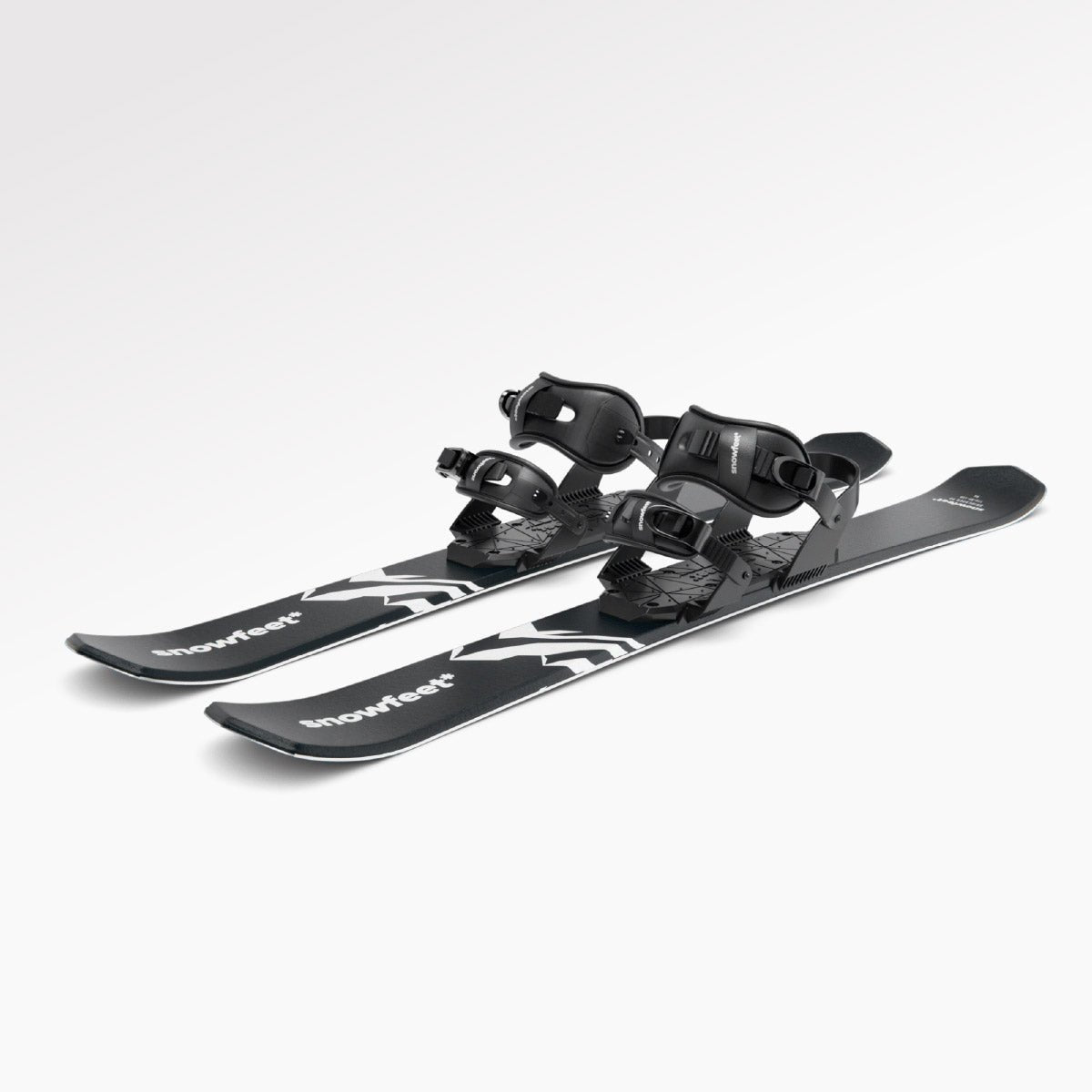
3. Snowfeet* Skiblades 65 cm
When the 44 cm Skiskates feel too short for longer laps, the 65 cm Skiblades are the next step up.
Slope fit and snow coverage
Choose the 65 cm Skiblades if the 44 cm model feels twitchy or lacks glide. Of these three models, they offer the most stable, ski-like ride on longer backyard runs and gentle local hills. They also track more smoothly on packed snow.
| Situation | Snowfeet 38 cm | Snowfeet* Skiskates 44 cm | Snowfeet* Skiblades 65 cm |
|---|---|---|---|
| Tiny backyard slope | Best for compactness | Good for playful turns | Usually more length than needed |
| Longer, gentle hill | Least glide | Middle-ground choice | Best tracking and glide of these three |
| Repeated uphill walks | Easiest to carry | Still compact | More bulk and carrying effort |
Turning, stability, and stopping
The 65 cm model feels more like a ski, with more edge engagement and better tracking on longer runs. The trade-off? Tight turns need more room and slower, more deliberate weight shifts than on the 38 cm or 44 cm models.
Boot setup and uphill carrying
Match the bindings to your boots. Ski-boot versions fit U.S. sizes 4.5–14.5 (Mondo 22.5–32.5), while snowboard-boot versions fit U.S. sizes 6–14.5. Boots aren’t included. The snowboard setup uses a non-release binding, so follow the manufacturer’s instructions and secure the safety leash.
Official listings show package weights from about 3.88 to 5.89 lb. Check the exact setup before ordering. Use a ski strap for the walk uphill. On a tiny hill, the added glide may not be worth the extra weight you’ll carry.
U.S. price and availability
The official U.S. listing shows a $610 sale price and a $650 regular price, though other official pages show different totals based on the setup. Check the live official Snowfeet* 65 cm listings before ordering. Use the comparison below to match terrain, control, boots, and price.
sbb-itb-17ade95
Compare Terrain, Control, Boots, and Price
Compare slope size, control, boot fit, and total cost to find the shortest setup that suits your hill.
Slope fit and snow coverage
| Model | Best fit | Not suitable for |
|---|---|---|
| Snowfeet 38 cm | Very short, gentle laps in a backyard or on a local hill | Rough surfaces or longer runs that need more stability |
| Snowfeet* Skiskates 44 cm | Slightly longer, defined slopes with smooth snow | Icy or crusted lines |
| Snowfeet* Skiblades 65 cm | Broader, smoother hills; best of these options for moderately soft snow | Deep powder or tight turning space |
Flat ground may not provide enough glide. Ice, crust, bumps, and thin snow can reduce control or hide hazards. Snowfeet warns against using models under 50 cm - including the 38 cm and 44 cm models - in powder deeper than 6 inches (15 cm). That’s a manufacturer limit, not a safety guarantee.
Turning, stability, and stopping
| Model | Turning and stability | Control priority |
|---|---|---|
| Snowfeet 38 cm | Fastest to pivot; least forgiving of uneven snow and speed | Keep speed low and make deliberate turns |
| Snowfeet* Skiskates 44 cm | Compact, skating-style turns | Practice speed control before trying a longer lap |
| Snowfeet* Skiblades 65 cm | Most stable on smooth, open slopes | Allow more room for turns |
Start on the gentlest section and practice a controlled stop. Snowfeet warns that the heel brake alone may not stop you. Choose a broad runout, wear a helmet and suitable protection, and avoid routes aimed toward roads, trees, fences, buildings, people, pets, or sledders.
Each lap needs room to stop, reset, and walk back uphill.
Boot fit and uphill carrying
| Model | Listed boot compatibility | Repeated uphill walks |
|---|---|---|
| Snowfeet 38 cm | U.S. 6–13 / EU 38–47; confirm the selected binding and boot type. | Easiest to carry by hand or in a backpack |
| Snowfeet* Skiskates 44 cm | Ski boots: U.S. 4.5–14.5, EU 36–49, Mondo 22.5–32.5. Snowboard boots: U.S. 6–14.5, EU 38–49. | A compact step up in performance, though heavier boots affect walking comfort |
| Snowfeet* Skiblades 65 cm | Check the exact ski-boot or snowboard-boot binding variant | Most ski-like, but least portable |
Shoe size alone doesn’t confirm fit. Check the exact binding and fastening instructions before riding.
Carry the gear uphill separately, including over bare ground or stairs. Take a separate uphill route away from riders, pedestrians, pets, sledders, and vehicles. If there’s no safe uphill route, the spot isn’t suitable for repeat laps.
Price and total setup cost
| Model | Price in supplied product information | Bindings and boots |
|---|---|---|
| Snowfeet 38 cm | $185 sale; $199 regular. | Confirm the included binding configuration; compatible footwear may cost extra |
| Snowfeet* Skiskates 44 cm | $690 sale; $750 regular. | Selected ski-boot or snowboard-boot bindings included; boots extra |
| Snowfeet* Skiblades 65 cm | About $730, depending on configuration. | Confirm the chosen binding configuration; boots normally aren’t included |
Check the exact product page for your chosen variant. Compare the full cost - gear, any needed boots, shipping, and sales tax - rather than just the listed price.
Pros, Cons, and Which Model to Choose
Turn your slope and boot checks into a buy-or-skip decision: choose the shortest setup that fits your hill and boots. Check slope size, snow coverage, and boot fit for short laps you can repeat. Across these three sizes, easier carrying comes at the cost of downhill support.
| Model | Pros | Cons |
|---|---|---|
| Snowfeet 38 cm | Smallest package; easy to pivot; easiest to carry between backyard sessions | Less glide and front-to-back stability; less support on uneven snow or as speed builds |
| Snowfeet* Skiskates 44 cm | Playful, skate-like feel; fits in a backpack | Needs compatible ski or snowboard boots - not ordinary winter boots. Best if you already control your edges and stance. |
| Snowfeet* Skiblades 65 cm | Most ski-like support of the three | Bulkier to carry uphill. Listed pair weight is about 3.88 lb with ski bindings or 4.54 lb with snowboard bindings. Best on smooth packed snow. |
Match the model to your hill below. Here, longer means more glide on a small hill - not higher speed.
| Choose | Slope and snow | Confirmed boot setup | Carrying preference |
|---|---|---|---|
| 38 cm | Very short, gentle descent | Footwear that fits the selected binding | Smallest carry |
| 44 cm Skiskates | Short-to-moderate, maintained slope with firm packed snow; suited to skating-style turns | Compatible ski or snowboard boots matched to the purchased version | Backpack-friendly, but needs dedicated boots |
| 65 cm Skiblades | Longer, broader local-hill lap with smooth packed snow | Boots confirmed to fit the exact binding version | More support is worth the extra bulk |
| Skip today | Exposed ground, ice, blocked routes, poor visibility, too little room to stop, or unsafe uphill access | No boot setup fixes unsuitable terrain | Postpone rather than compromise |
If the route passes these checks, walk it first. Then make one slow trial descent. If you need an obstacle to stop, skip the route. Build up only after several controlled turns and stops. A model with more support doesn’t replace that test.
Conclusion: Choose a Setup for Safe, Repeatable Laps
Let slope size, snow cover, and stopping space guide your choice: 38 cm (about 15 in) for easy carrying, 44 cm (about 17 in) for a skate-like feel, or 65 cm (about 26 in) for more stability. Pick the smallest model that suits your hill and leaves room to turn and stop.
Before each session, check snow cover, runout, boot fit, and your uphill route. Walk back up along the side route or posted uphill path. Keep your first laps slow, and practice stopping on the gentlest section.
Long skis offer better flotation in deep snow and more stability at speed. But for most casual riders taking repeat laps in the backyard or on a local hill, Snowfeet is the better choice when easy carrying and quick turns matter more than full-mountain performance.
FAQs
Which Snowfeet model is easiest for a beginner to learn on?
For most beginners - older kids, teens, and adults - Snowfeet Skiblades 65 cm* are the easiest to learn on. Their larger platform gives you more stability than shorter options. That makes first-day control on packed snow at local hills feel less daunting.
For younger kids, Snowfeet MINI KIDS is the easiest choice for ages about 2–6. Its smaller, steadier setup helps little ones get started.
How can I practice stopping on short skis?
Start on nearly flat, groomed terrain with a clear runout. Move to steeper slopes only when you feel in control.
Keep your knees bent, hips centered, and weight slightly forward. To brake, press your Snowfeet metal edges into the snow*, just as you would with standard skis.
Always wear a helmet and protective gear. If you struggle to stay in control, consider taking a lesson from an instructor.
Do I need permission to ski on a local sledding hill?
It depends on where you go. Rules vary by sledding hill, park, and private property. Before you head out, check posted signs and local ordinances to make sure your gear is allowed.
Snowfeet* short skis give you more control and stopping power than sleds. They’re often welcome where sledding is allowed, but that doesn’t guarantee permission.



Leave a comment
This site is protected by hCaptcha and the hCaptcha Privacy Policy and Terms of Service apply.