



















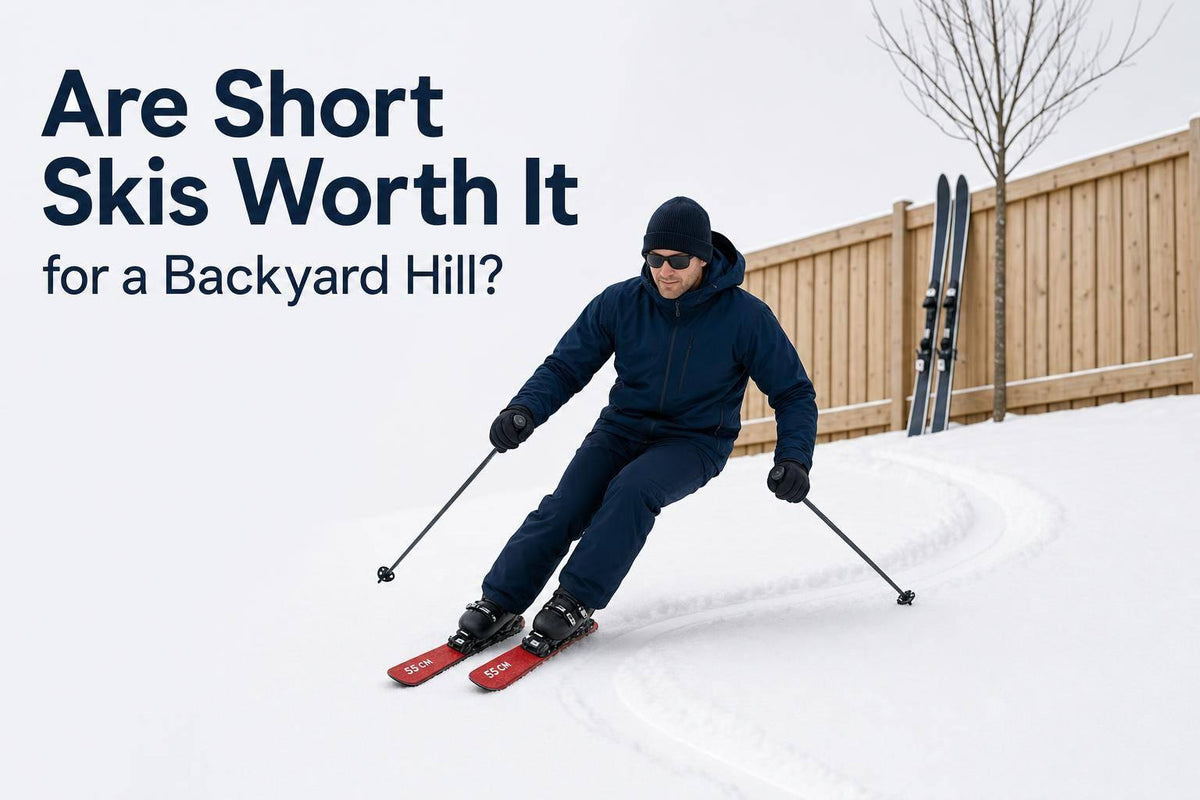
Yes - for most backyard hills, short skis make more sense than full-length skis.
If your run is short, your space is tight, and your goal is fun laps instead of resort-speed skiing, I’d go short. On small slopes, control, easy stopping, and low hassle matter more than top speed. That’s where compact skis in the 17–26 in. (44–65 cm) range beat standard skis in the 59–71 in. (150–180 cm) range.
Here’s the short version:
- Short skis are easier to turn, easier to carry, and simpler for short sessions
- Standard skis still do better at higher speed, deeper snow, and longer runs
- For most yards and sledding hills, 44 cm, 50 cm, or 65 cm is plenty
- Prices in this lineup start at $299 and go up to $590
If I were picking by use, I’d keep it simple:
- 44 cm: best for tiny hills, kids, and tight spaces
- 50 cm: best for most adults and family backyard use
- 65 cm: best if you want more stability on a short run
Snowboarder tries Snowfeet* | Which Snowfeet* Short Ski is the Best? | Snowblades 44, 65, 99 Review
Quick Comparison
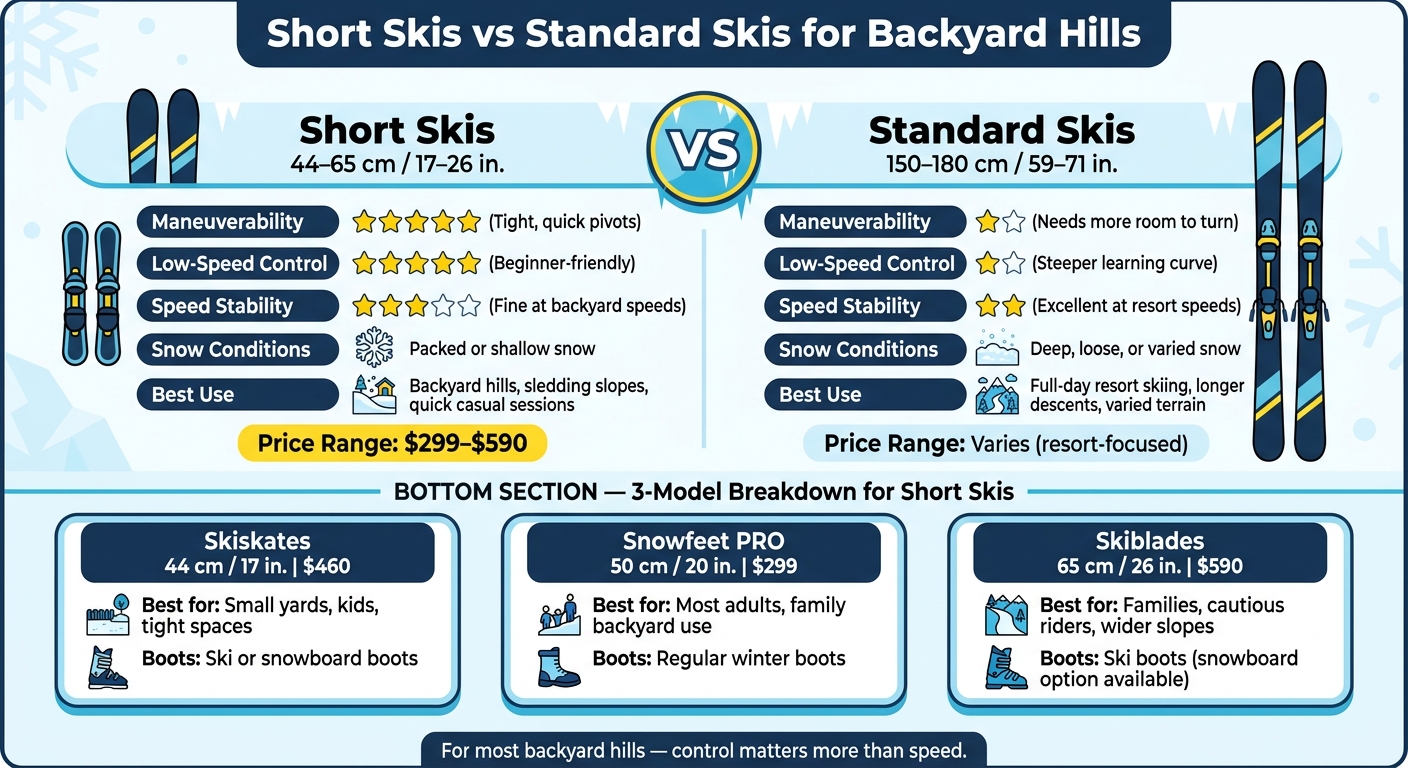
Short Skis vs Standard Skis for Backyard Hills: Which Is Right for You?
| Option | Length | Main upside | Main trade-off | Best fit |
|---|---|---|---|---|
| Skiskates | 44 cm / 17 in. | Fast turns in tight spots | Less stable as speed builds | Small yards, kids, playful laps |
| Snowfeet PRO | 50 cm / 20 in. | Good mix of control and stability | Less ski-like feel than longer models | Most backyard riders |
| Skiblades | 65 cm / 26 in. | More planted feel and better tracking | Needs more room than shorter options | Longer short runs, cautious riders |
| Standard skis | 150–180 cm / 59–71 in. | Better at speed and soft snow | Harder on tight, short hills | Resort runs |
So, if you want gear you can grab, strap on, and use without turning your yard into a gear project, short skis are usually worth it :)
Short skis vs standard skis on a backyard hill
Short skis turn fast and work well in tight spots. Standard skis hold speed better and stay on top of deeper snow. On a backyard hill, though, control usually matters more than speed. And you feel that difference right away.
| Feature | Short skis (44–65 cm) | Standard skis (150–180 cm) |
|---|---|---|
| Maneuverability | Tight, quick pivots; easy obstacle avoidance | Needs more room to turn |
| Low-speed control | Beginner-friendly at low speeds | Steeper; better for developing full alpine technique |
| Speed stability | Fine at backyard speeds; less locked-in at high speed | Excellent at resort speeds; more stable on long runs |
| Snow conditions | Best on packed or shallow snow | Better float in deep, loose snow |
| Best use case | Backyard hills, sledding slopes, quick casual sessions | Full-day resort skiing, longer descents, varied terrain |
How ski length affects control in tight spaces
A short backyard slope changes the game. You’re not laying down big carved turns. You’re making quick, low-speed adjustments so you can stay in control and stop before you run out of hill.
That’s where short skis shine. Their smaller size makes it easier to dodge obstacles, pivot fast, and shut things down in a short runout. Short skis pivot with less effort. On a backyard hill, that can be the whole ballgame.
Standard skis, usually around 59–71 in. (150–180 cm) for adults, are built for speed and longer turns. That works great at a resort. In a backyard setup, not so much. They need more space to turn, and those wider turns can push you past the room you have. At low speed, they can also feel heavier and a bit awkward when you’re side-stepping back uphill. Not fun, unless you enjoy carrying extra ski for no good reason :)
Where standard skis still have the edge
Standard skis do beat short skis in a few clear areas:
- High-speed stability
- Edge hold on steep terrain
- Powder float
That longer ski-to-snow contact helps them stay planted at resort speeds. It also helps them ride over chopped-up or soft snow instead of sinking into it. If you’re skiing a full mountain with long descents, those things matter a lot.
On a backyard hill, though, those upsides seldom show up. Most backyard runs are too short for extra speed stability to make much difference. Most casual riders on a home slope also never hit the kind of speed where short skis start to feel nervous. And unless your yard gets 12 in. or more of loose, ungroomed powder on a regular basis, the float edge of a standard ski won’t matter much either.
That’s why backyard riders usually care more about fast handling than resort-style speed.
sbb-itb-17ade95
Why short skis suit backyard hills for most casual riders
Backyard sessions are short, casual, and low-pressure. So the best gear isn’t the stuff built for big resorts or all-day laps. It’s the gear that’s easy to use, easy to carry, and still fun when you’re moving at mellow speed. On a backyard hill, convenience and low-speed control are what matter most.
Easier learning, less effort, and more fun
Short skis make turning and stopping easier at low speed. That helps beginners build confidence faster and wear themselves out less. There’s also less ski on the snow, which can mean less friction during turns. That helps on the slow, short runs that are common on backyard hills.
And, honestly, the fun part counts for a lot. Little bumps, sled tracks, and random snow piles stop feeling like things to dodge. They become part of the session. That’s half the charm.
Compact gear that is easy to grab and use
When gear feels simple, people use it more. That’s the plain truth. For most families, the main barrier isn’t the weather. It’s the hassle.
Models like the Snowfeet PRO at 50 cm or the Skiskates at 44 cm are easy to toss in a gym bag, carry in one hand, and get running in minutes. Boots on, straps buckled, go. No roof rack. No digging through the trunk like you’re on a scavenger hunt.
Boot compatibility that simplifies short sessions
Skiskates and Snowfeet PRO work with regular winter or snowboard boots. Skiblades use ski boots, which makes more sense for riders who already own ski boots and want a setup with a bit more performance feel.
That also makes life easier for families. You can often use the boots you already have and get outside with less prep. And that sets up the next choice in a pretty simple way: 44 cm, 50 cm, or 65 cm.
Snowfeet* models compared for backyard hills
Once short skis make more sense than standard skis in a tight spot, the next call is length. For a backyard hill, the best pick comes down to three things: how much room you have, what boots you want to wear, and how much stability you want.
Snowfeet* Skiskates 44 cm for very small hills and tight spaces
At 44 cm, or about 17 in, Skiskates are the most compact option Snowfeet makes. That makes them a strong match for very small slopes and tight spaces.
They’re built for quick turns and easy, playful riding at low speed. They’re not made for holding a steady line down a longer run. So if your backyard hill is short, narrow, or full of little twists, they fit the job well.
The catch? Stability. Of the three, they feel the least planted once speed picks up. Skiskates start at $460.
Snowfeet PRO 50 cm for adults and family backyard use
The PRO is the middle-ground option, and for a lot of people, that’s the sweet spot. Its biggest day-to-day perk is boot compatibility: it works with regular winter boots. So you can walk outside, strap in, and go. No boot swap. No extra fuss.
For adults on slightly steeper neighborhood hills or longer backyard runs, that extra 6 cm helps. It adds more front-to-back stability and gives you a smoother carve.
The PRO starts at $299, which makes it the lowest-priced way into this lineup.
Snowfeet* Skiblades 65 cm for more stability on short runs
Skiblades are the most ski-like of the three. At 65 cm, or 26 in, they have a ski-like shape that gives better edge grip and straighter tracking than either shorter model. They use ski boot bindings, and there’s also a snowboard boot option.
On a backyard hill, they make the most sense for families who also want to take the same setup to a small local ski area. They’re less ideal in ultra-tight spaces, where the 44 cm Skiskates have the edge, but on a wider slope with room to carve, they feel more stable and easier to trust.
Skiblades start at $590, which makes them the premium pick in this lineup.
Here’s a quick side-by-side of all three:
| Model | Length | Boot Type | Maneuverability | Stability | Best For | Best On | Starting Price |
|---|---|---|---|---|---|---|---|
| Skiskates | 44 cm (17 in) | Ski or snowboard boots | Highest | Lower | Kids, beginners, playful adults | Very small slopes, tight spaces | $460 |
| Snowfeet PRO | 50 cm (20 in) | Regular winter boots | High | Medium | Casual adults, teens | Mixed backyard, sledding hills | $299 |
| Skiblades | 65 cm (26 in) | Ski boots (snowboard option) | Medium | Higher | Families, cautious riders | Short local runs, wider backyards | $590 |
That leaves one last question: which length matches your hill size and the way you like to ride it?
Bottom line: when short skis are worth buying
For most backyard hills, neighborhood sledding slopes, and short local runs, short skis are worth buying. They’re easier to learn on, easier to carry, and a much better fit for tight, slow backyard laps.
There’s one big exception: if you spend most of your time on long, fast resort runs, full-length skis still do a better job with stability and control. In that case, a short ski is more like a fun second pair, not your main setup.
So, the next step is pretty simple: match the ski length to your hill.
- Small hills and kids: Skiskates 44 cm
- Mixed backyard use and casual adults: Snowfeet PRO 50 cm
- Slightly longer or faster short runs: Skiblades 65 cm
Price helps narrow it down fast:
- Snowfeet PRO: starts at $299 and gives most adults the best mix of uses
- Skiskates: start at $460 for tight spaces
- Skiblades: start at $590 if you want the most stability from a short ski
If your hill gets steady snow, short skis can help you get outside more often, with less gear, and a lot more fun per session :)
FAQs
How do I choose between 44 cm, 50 cm, and 65 cm?
Pick the size based on whether you want a looser, more playful ride or a steadier feel.
- 44 cm: the most playful and nimble option, plus it’s the easiest to carry
- 50 cm: gives you a little more stability while still staying very compact
- 65 cm: the best all-around pick for most beginners and families, with a steadier, more forgiving feel
If you skate or snowboard, 44 cm may feel more natural right away. If you’re brand new, 65 cm is usually the best place to start.
Can beginners use short skis safely on a backyard hill?
Yes - beginners can use short skis on backyard hills safely.
Snowfeet products are more beginner-friendly than long skis because they’re shorter, lighter, and easier to control. That makes a big difference when you’re new. You don’t have as much ski to manage, turns feel simpler, and the whole thing is less intimidating. For a first ride in the backyard, that can help people build confidence fast.
For backyard use, the 38 cm and 44 cm models are great if you want to keep speed down. They’re small, playful, and well-suited for short slopes.
If those shortest options feel a bit twitchy, go with 50 cm or 65 cm instead. Those lengths give you more stability and a more forgiving feel, which can make the learning curve a lot smoother.
What kind of boots do I need for Snowfeet short skis?
It depends on the Snowfeet model and the binding you pick.
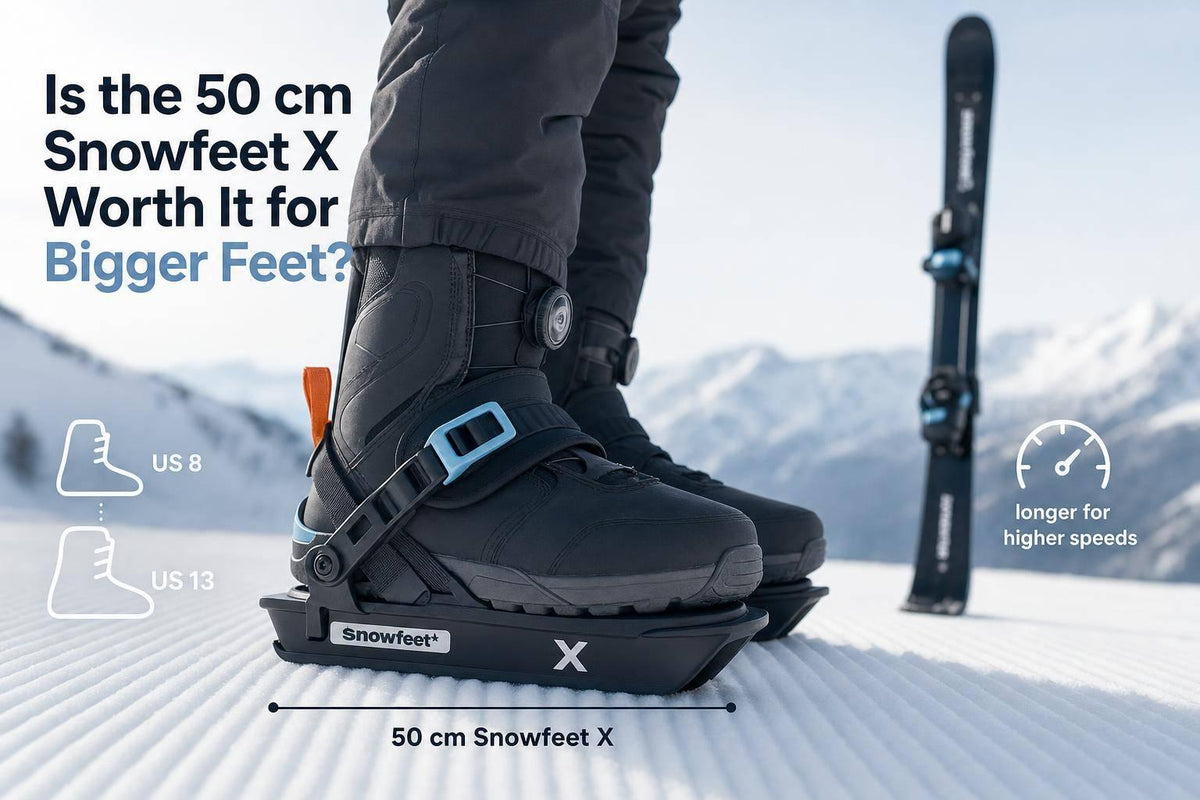
Many models, including the 38 cm and 50 cm versions, strap onto sturdy, waterproof winter or hiking boots. That makes them pretty easy to get started with - no need to hunt down a full ski setup.
The 44 cm Skiskates and 65 cm Skiblades can work with regular winter boots or snowboard boots.
The 99 cm and 120 cm Skiblades usually need standard alpine ski boots for a more secure and stable fit. If you’re using the longer models, that firmer boot connection matters a lot more on snow.











Leave a comment
This site is protected by hCaptcha and the hCaptcha Privacy Policy and Terms of Service apply.