



















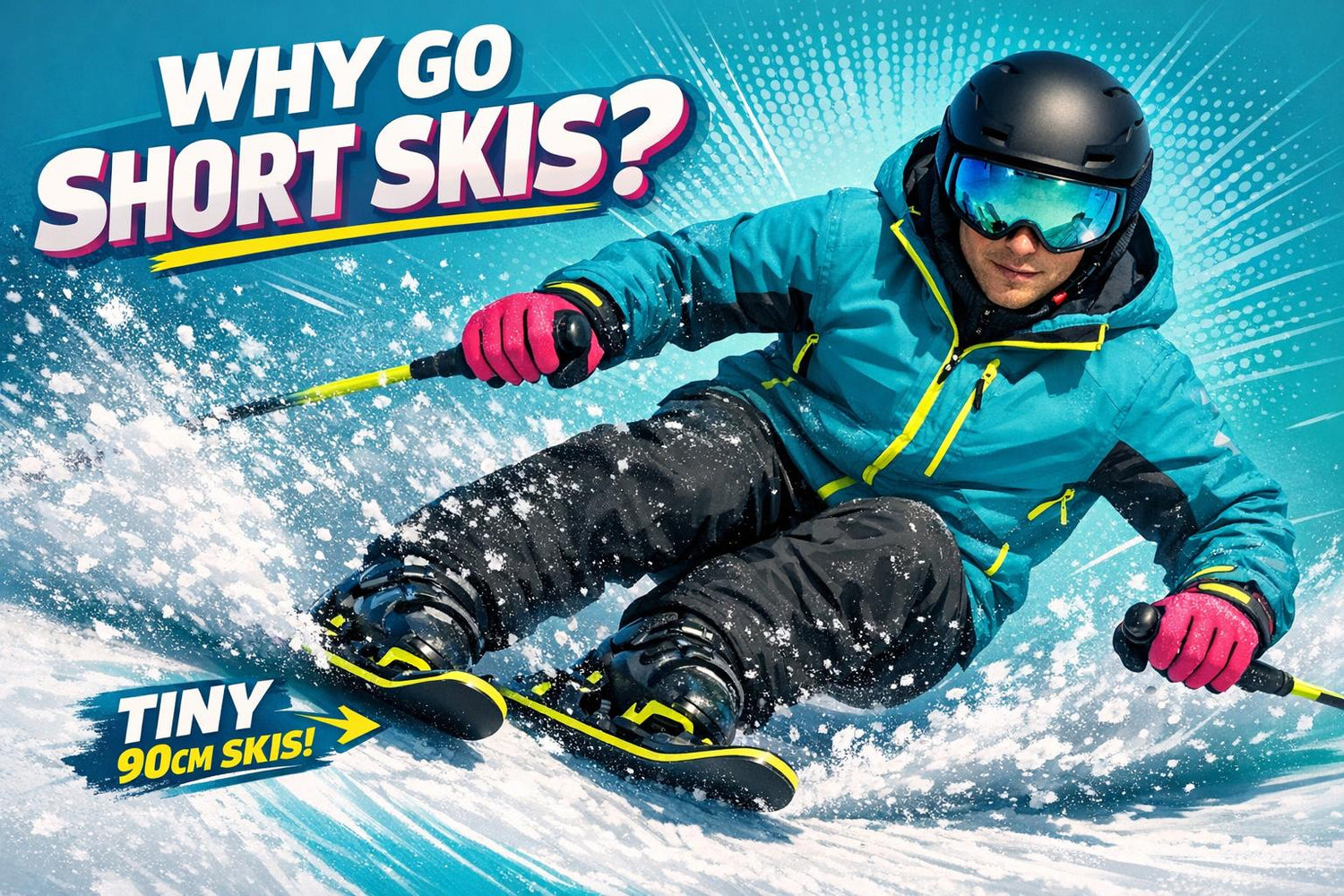
If you’re tired of lugging around long skis or struggling to learn the basics, short skis might be your new best friend. These compact, lightweight alternatives are easier to carry, quicker to learn, and more fun to use. Designed for people of all skill levels, short skis let you navigate tight trails, crowded slopes, and even moguls with ease. Plus, they’re small enough to fit in your car trunk or backpack - no roof racks needed.
Why the buzz around short skis?
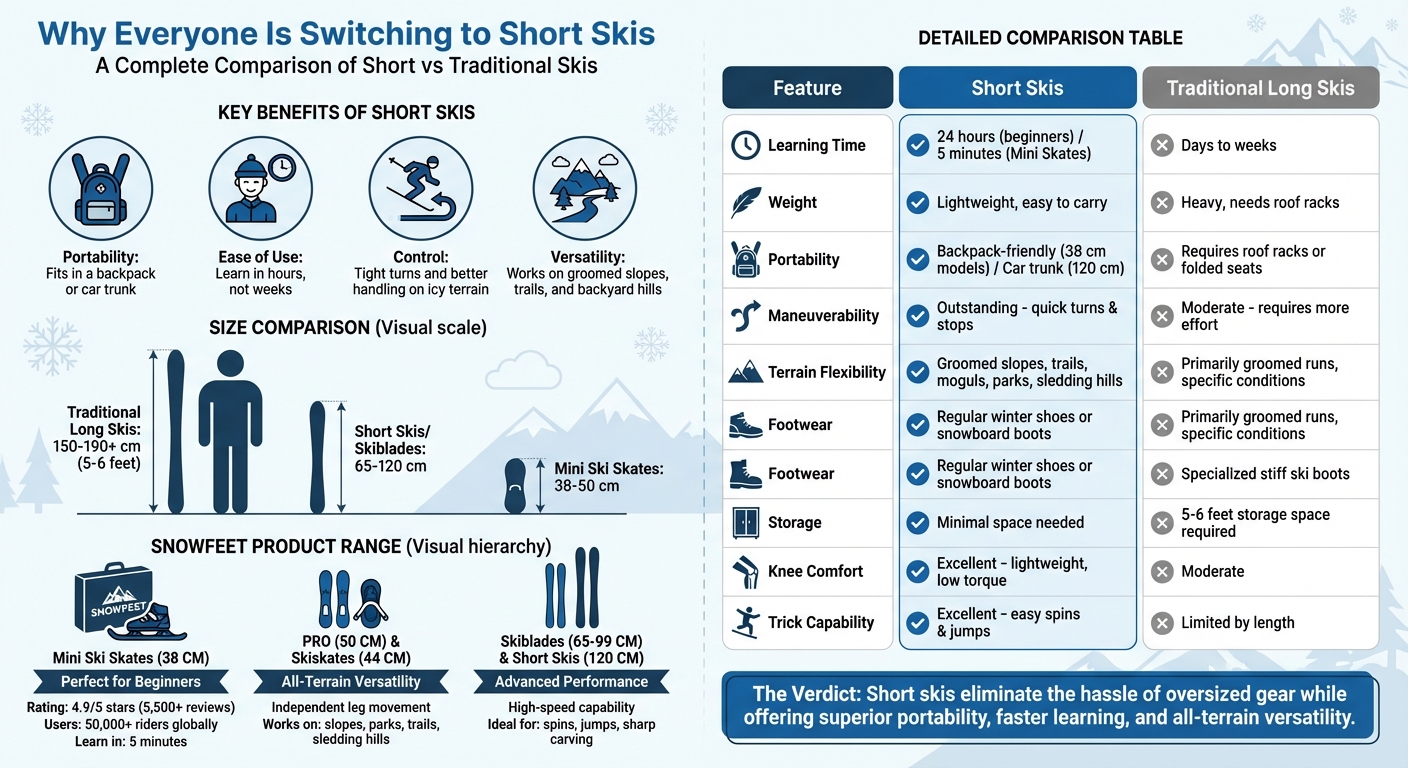
- Portability: Fits in a backpack or car trunk.
- Ease of Use: Learn in hours, not weeks.
- Control: Tight turns and better handling on icy or uneven terrain.
- Versatility: Works on groomed slopes, trails, and even backyard hills.
Whether you're a beginner or a seasoned skier, short skis like Snowfeet Mini Ski Skates (38 cm) or Skiblades (65–120 cm) offer a simpler, more enjoyable way to hit the slopes. Ready to ditch the hassle and dive into the fun? Let’s break it down.
Short Skis vs Traditional Long Skis: Complete Comparison Guide
Are Short Skis Better for Beginners?
Problems with Traditional Long Skis and Snowboards
Traditional long skis and snowboards have been a go-to choice for years, but they come with their fair share of headaches. Their bulky size and specific design create challenges that shorter skis can completely sidestep. Let’s break down these issues.
Hard to Carry and Store
Long skis, often measuring between 5 to 6 feet (150–190+ cm), are a logistical nightmare. They rarely fit in a standard car trunk unless you fold down seats or invest in a roof rack. Hauling them from your car to the slopes? That’s a workout in itself, not to mention the risk of bumping into things - or people - along the way. For those living in smaller homes or apartments, finding a spot to store six-foot skis is no small feat. And if you’re traveling by plane, brace yourself for oversized luggage fees and the hassle of dealing with special baggage. Snowfeet* short skis, with their compact design, solve all these problems, making transport and storage a breeze.
Takes Too Long to Learn
Learning to ski on traditional long skis can be a real uphill battle. Their size and design require mastering specific techniques, like managing the "lever effect" during turns, which can be tricky for beginners. This steep learning curve often leads to more falls, more frustration, and less fun. Snowfeet* short skis, on the other hand, offer a simpler, more intuitive experience, so you can spend less time learning and more time enjoying the slopes.
Don't Work Well in All Conditions
Long skis struggle when the snow or terrain isn’t perfect. Their large turning radius makes maneuvering through tight spaces - like forest trails, moguls, or narrow paths - a challenge. On uneven, slushy, or chopped-up snow, they can feel unstable and hard to control, especially at recreational speeds. Plus, many long skis are built for specific conditions, meaning they can underperform when the terrain changes. This lack of versatility highlights the need for a more adaptable option, like short skis.
How Short Skis Fix These Problems
Short skis tackle some of the biggest challenges traditional skis pose by being lighter, easier to control, and adaptable to different terrains. Here's how they solve these common issues.
Easy to Learn and Use
Short skis make it possible for beginners to get the hang of skiing in as little as 24 hours. Their compact design encourages natural, quick turning, which is a game-changer for newcomers. As the Snowfeet Team puts it:
Shorter skis are lighter and easier to handle, making them more maneuverable than longer skis. For beginners, this ease of handling is crucial as it allows for quicker and more precise turns.
Because they’re lighter, they reduce fatigue and give you better control, making the learning process smoother.
Light and Easy to Carry
Short skis aren’t just beginner-friendly - they’re also super portable. For instance, Snowfeet Mini Ski Skates, which are only 38 cm long, can fit right into a backpack. Even larger 120 cm short skis can be stored in a car trunk without the need for roof racks. That convenience makes them perfect for anyone who’s tired of lugging around bulky gear.
Work on Any Terrain
Snowfeet* products shine when it comes to versatility. Short skis are perfect for tight spaces, offering skate-like maneuverability that allows for quick pivots and sharp turns, even at slower speeds. Traditional skis, on the other hand, often require wide-open spaces to perform well. Short skis also improve edge pressure on icy or hard-packed snow, giving you better grip. Lisa Chandler, Senior Action Sports Specialist at REI, explains:
A longer ski in powder yields floatability, yet a shorter ski provides more control and maneuverability.
What’s more, short skis can handle almost any condition - from groomed slopes and moguls to forest trails, terrain parks, and even backyard hills. They’re the ultimate all-rounder.
sbb-itb-17ade95
Snowfeet*: The Best Short Ski Products
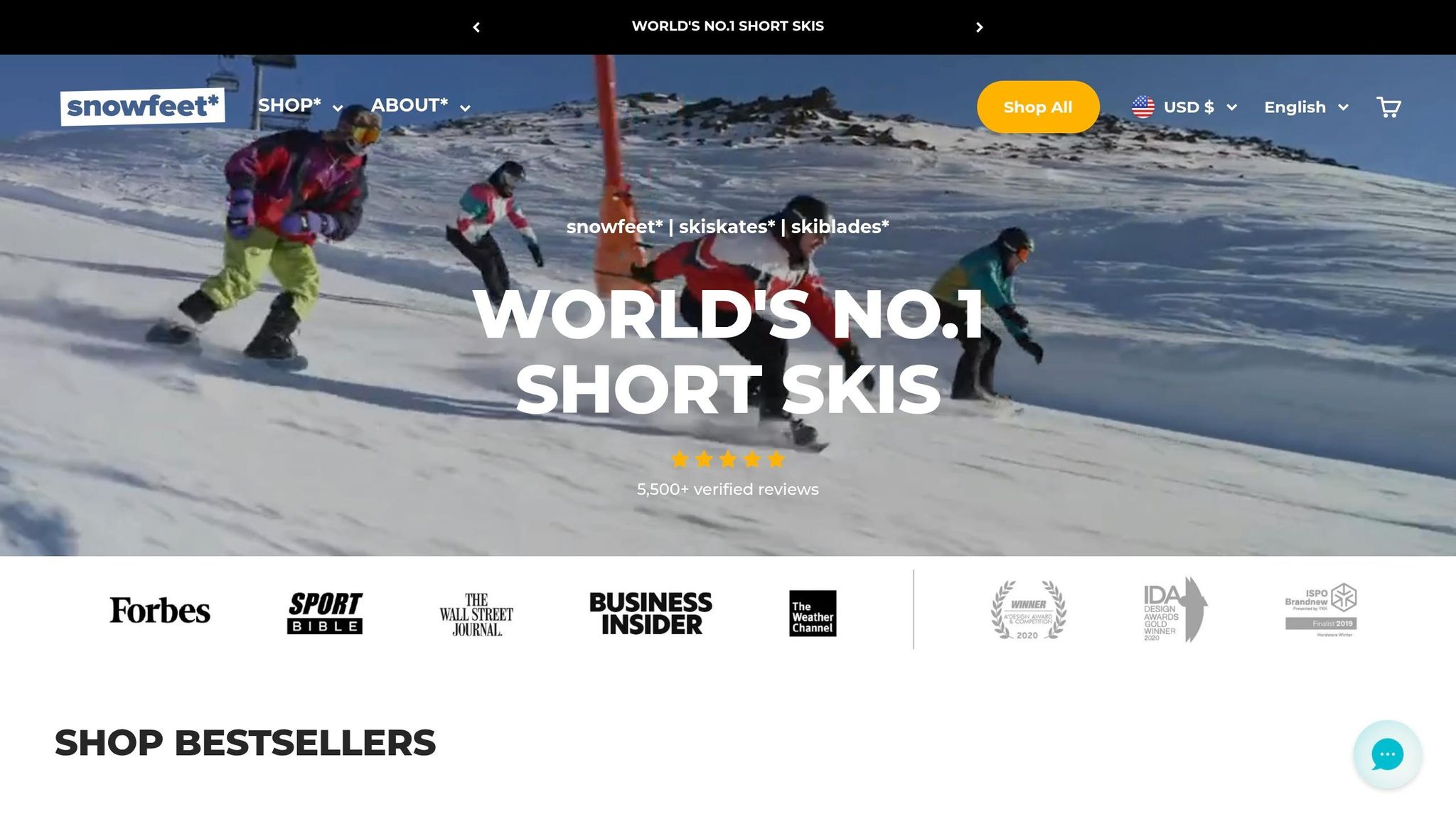
Snowfeet* has made a name for itself in the world of short skis, boasting over 50,000 riders across the globe and maintaining an impressive 4.9/5 rating from more than 5,500 verified reviews. Unlike traditional ski brands that stick to longer designs, Snowfeet* focuses on compact and portable options that make skiing easier and more fun for everyone. Whether you're a beginner, an all-terrain explorer, or a seasoned skier chasing new thrills, Snowfeet* has something tailored just for you.
Snowfeet Mini Ski Skates (38 CM): Perfect for Beginners
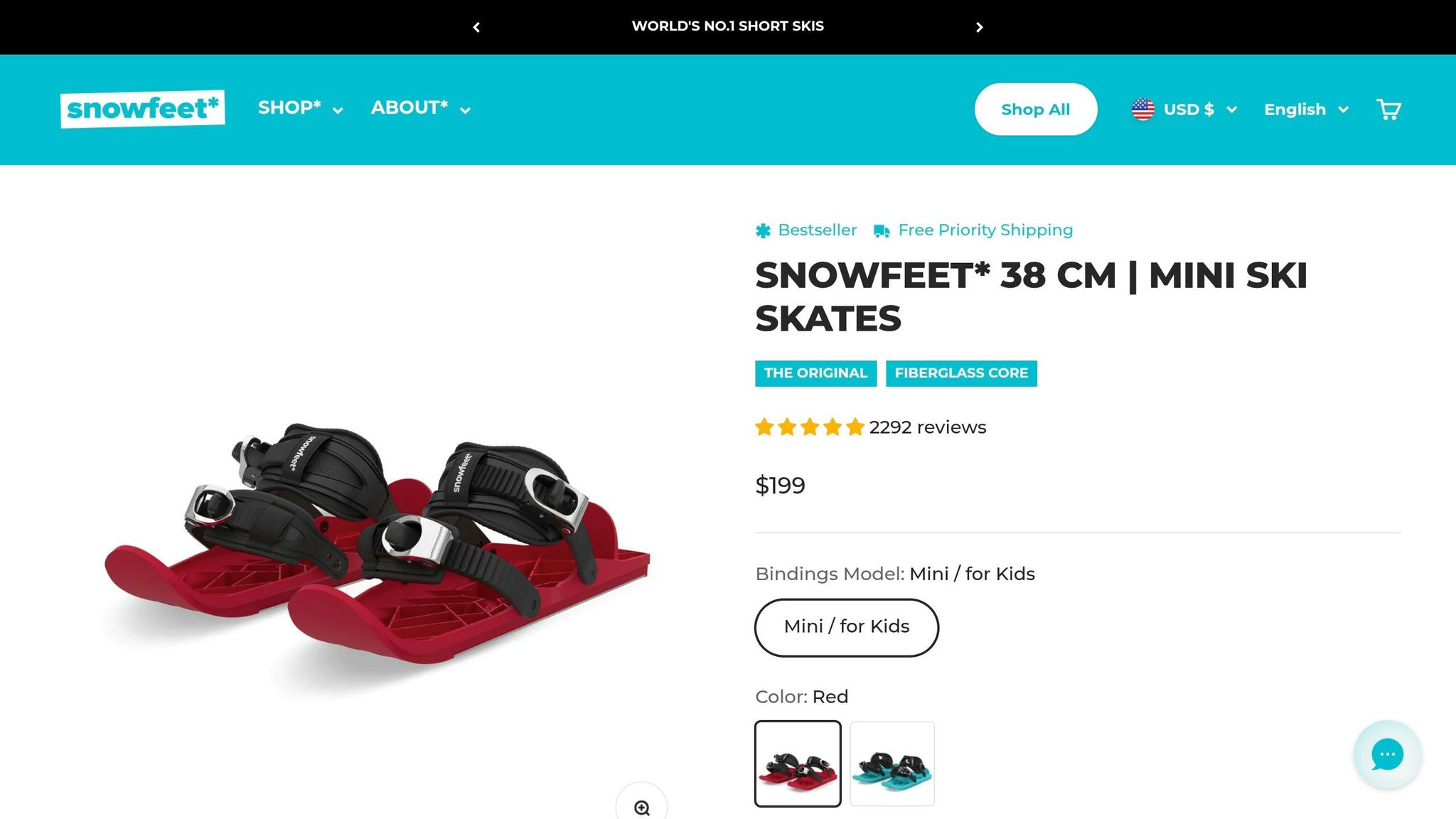
If you're new to skiing or winter sports in general, the Snowfeet Mini Ski Skates are a great starting point. These skates are just 38 cm long, making them super portable - they even fit in a standard backpack. Plus, there's no need for specialized ski boots. You can use your regular winter shoes or snowboard boots, which is a game-changer for convenience. Most people pick up the basics in about 5 minutes, so you can hit the slopes right away. As one happy user, Biba, shared:
Easy to ski even for a beginner!
Here’s how they stack up against traditional long skis:
| Feature | Snowfeet* Mini Ski Skates (38 CM) | Traditional Long Skis |
|---|---|---|
| Weight | Lightweight; easy to carry | Heavier; need roof racks |
| Ease of Use | Quick to learn; no lessons | Takes days or weeks to master |
| Portability | Backpack-friendly | Requires larger bags or racks |
| Footwear | Works with winter shoes or snowboard boots | Needs stiff, plastic ski boots |
Snowfeet PRO (50 CM) and Skiskates (44 CM): Versatility for All Terrain
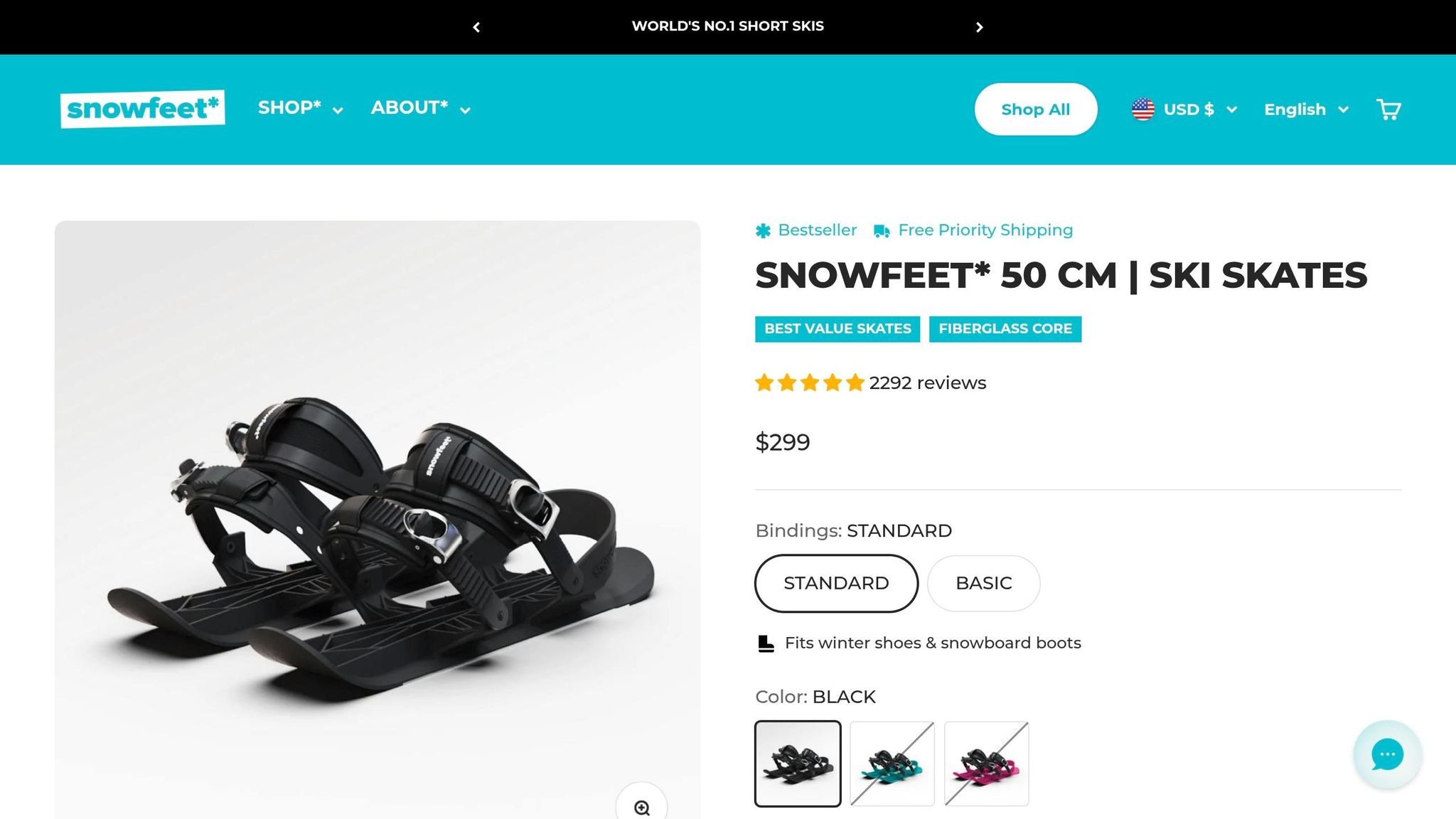
For those who want performance across a variety of terrains, the Snowfeet PRO (50 CM) and Skiskates (44 CM) are excellent choices. These models handle everything from groomed slopes to snow parks, hiking trails, and even sledding hills. Their lightweight design makes them easier on your knees compared to snowboards, and their independent leg movement enhances agility. Mike E., another satisfied user, said:
SUPER comfortable, easy to control, very agile, easy on the knees and ankles because they are so light.
Here’s a quick comparison with snowboards:
| Feature | Snowfeet* PRO (50 CM) / Skiskates (44 CM) | Snowboards |
|---|---|---|
| Agility | Extremely high; independent leg motion | Moderate; feet are strapped together |
| Terrain Flexibility | Groomed slopes, trails, sledding hills | Mostly ski slopes |
| Knee Comfort | Excellent; lightweight and low torque | Moderate |
| Learning Curve | Quick; similar to skating motion | More challenging |
Snowfeet Skiblades (65-99 CM) and Short Skis (120 CM): Thrills for Advanced Skiers
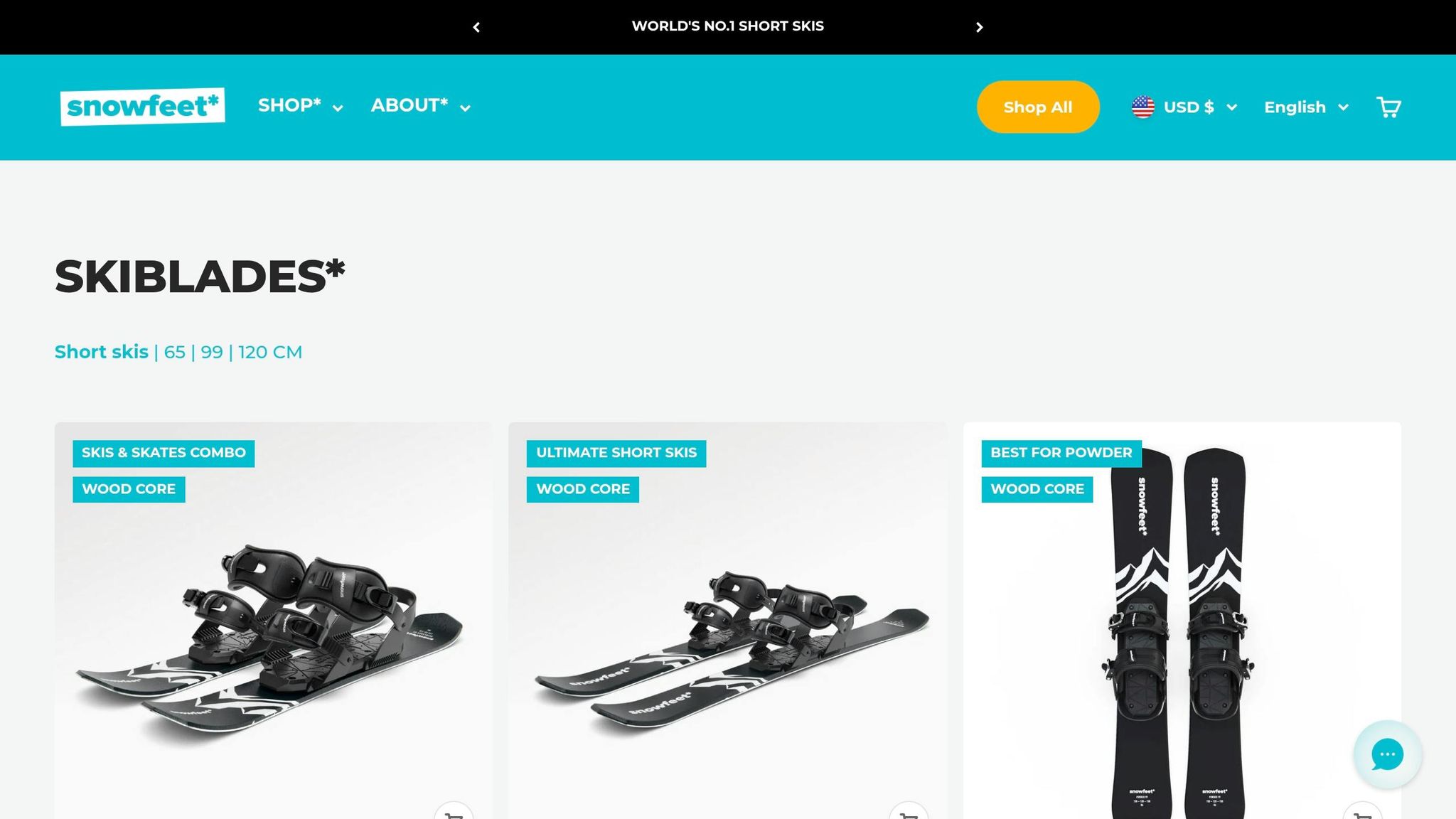
If you're an experienced skier looking for high-speed fun and precision, the Snowfeet Skiblades and Short Skis are where it’s at. These models, available in lengths of 65 cm, 99 cm, and 120 cm, are built for spins, jumps, and sharp carvings on groomed runs or in terrain parks. They deliver the performance you’d expect from traditional skis but without the bulk. Andrew B., a verified user, summed it up perfectly:
These skiblades are so much fun and easy to control. Never going back to regular skis.
Here’s how they compare to traditional long skis:
| Feature | Snowfeet* Skiblades (65-120 CM) | Traditional Long Skis |
|---|---|---|
| Speed | High (slightly less than long skis) | Maximum speed |
| Trick Capability | Excellent; easy to spin and maneuver | Limited; length restricts tricks |
| Terrain Options | Groomed runs, parks, light powder | Groomed runs, deep powder |
| Maneuverability | Outstanding; quick turns and stops | Moderate; requires more effort |
Conclusion
Short skis take the hassle out of dealing with oversized, tricky-to-manage winter gear. If you've ever wrestled with fitting long skis into your car, spent ages learning basic turns, or felt stuck with equipment only suited for groomed trails, short skis - like the ones from Snowfeet* - offer a whole new way to enjoy the slopes.
Snowfeet* has tackled the challenges of traditional ski gear head-on, offering options that redefine how you experience winter sports. Whether it’s the compact Mini Ski Skates (38 cm), the PRO model (50 cm), or the Skiblades (65–99 cm), there’s a Snowfeet* option for every skill level. These shorter skis prove that you don’t need length to enjoy versatile, easy-to-master skiing.
So, if you’re ready to skip the frustration and jump straight into the fun, Snowfeet* has you covered. Grab a pair and get ready for a simpler, more exciting winter adventure.
FAQs
What short ski length should I choose (38 cm, 44–50 cm, 65–99 cm, or 120 cm)?
When picking short skis, your skill level and how you plan to use them make all the difference.
- Beginners and casual skiers: Go for shorter lengths, like 38 cm or 44–50 cm. These are easier to control and great for building confidence on the slopes.
- Intermediate skiers: A length between 65–99 cm offers more versatility, making it a solid choice as your skills improve.
- Advanced skiers: If you're experienced and looking for something more specialized, 120 cm skis might be the way to go.
For most beginners, sticking with the shorter options (38 cm or 44–50 cm) makes skiing more manageable and fun.
Do I need special ski boots, or can I use my winter shoes or snowboard boots?
You don’t need special ski boots to use Snowfeet short skis. They’re made to fit with your regular winter shoes or snowboard boots, keeping things simple and easy for everyone.
Are short skis safe and stable at higher speeds or on icy runs?
Short skis, such as Snowfeet products, provide safety and stability even on icy slopes and at higher speeds - when used properly. They deliver impressive grip, quick maneuverability, and precise control, making them a solid choice for steep, icy terrain. While long skis are often associated with stability, Snowfeet short skis excel by maximizing edge contact and offering exceptional handling. This makes them a great option for advanced skiers or anyone seeking better control on tough slopes.











Leave a comment
This site is protected by hCaptcha and the hCaptcha Privacy Policy and Terms of Service apply.