




















Shorter skis are taking over the slopes, and for good reason. They’re easier to control, simpler to carry, and work well in all kinds of conditions. Whether you’re carving down groomed trails or hitting terrain parks, compact skis offer a fun, hassle-free experience without the bulk of longer setups.
Here’s what makes shorter skis stand out:
- Better control: Short skis (26–47 inches) make sharp turns easier, perfect for crowded slopes or tight spaces.
- Lightweight and portable: Forget roof racks - short skis fit in your trunk or even a backpack.
- Multi-terrain use: From smooth runs to jumps and tricks, they handle it all.
- Beginner-friendly: Easier to learn on and less strain on your knees.
Brands like Snowfeet are leading this movement with options like Skiblades (65–120 cm) and Skiskates (44 cm), which combine performance and convenience. Prices range from $575 to $775, making them a solid alternative to longer, more expensive setups.
Short skis aren’t just gear - they’re changing how people enjoy skiing. Ready to try them? :)
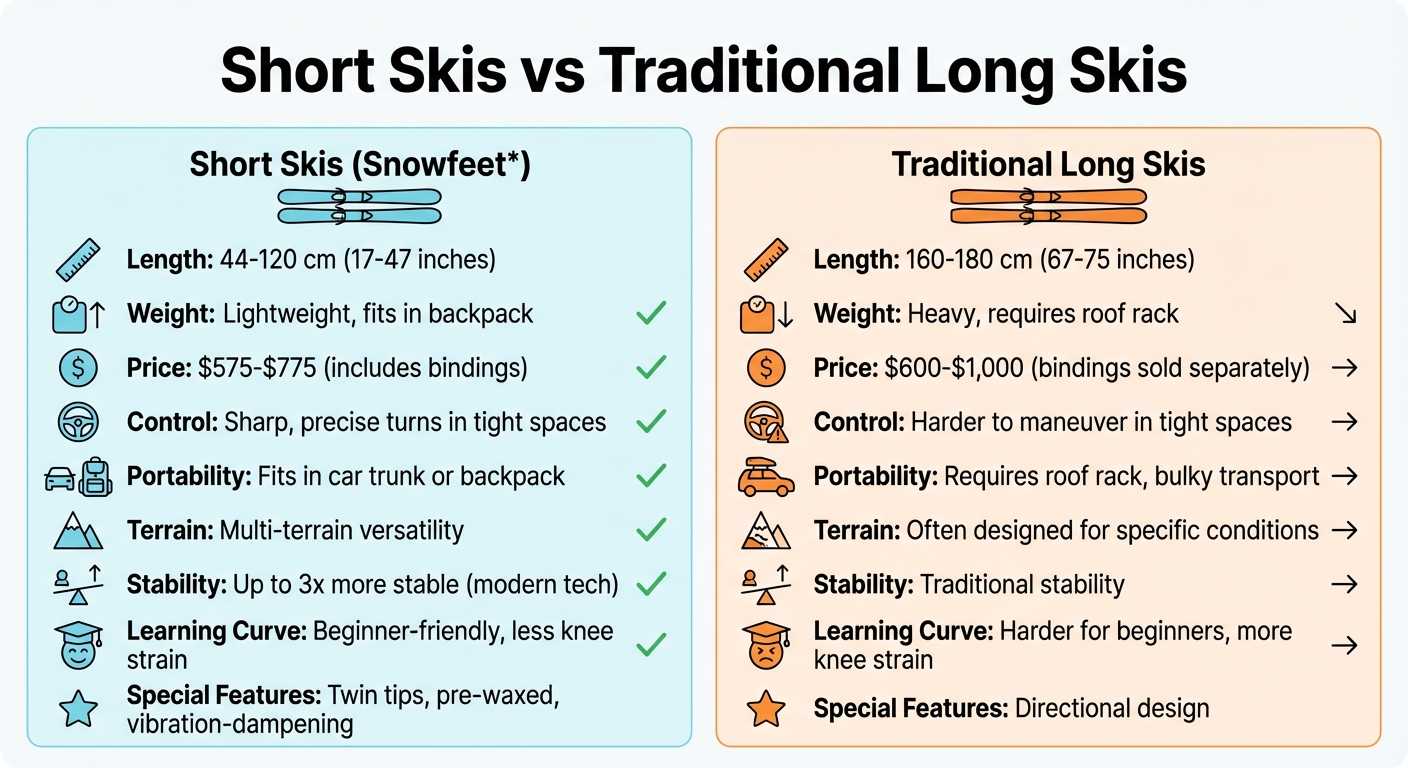
Short Skis vs Traditional Long Skis Comparison
Short Skis vs. Long Skis
Benefits of Shorter Skis
Shorter skis tackle the common issues of control and portability that come with using longer skis. This shift aligns with the growing trend toward gear that's both practical and high-performing.
Better Control and Easier Turns
Short skis - ranging from 26 inches (65 cm) to 47 inches (120 cm) - offer much greater control compared to traditional skis, which often measure between 67 and 75 inches or more. With shorter skis, you can make sharp, precise turns in tight spaces without the struggle of maneuvering a long plank. This makes them ideal for navigating crowded slopes or terrain parks.
For example, Snowfeet* Skiblades, at 99 cm, provide a responsive flex that makes turning effortless. The 65 cm version even mimics the feel of skating, giving you a unique and agile experience. Many Snowfeet* models also come with twin tips, enabling smooth transitions between forward and backward movement - something you won’t get with traditional directional skis from brands like Rossignol or K2.
Lighter Weight and Easy to Carry
Transporting traditional skis can be a pain. They often don’t fit in a car trunk unless you fold down seats, and lugging them through parking lots is no fun. Shorter skis solve this problem.
Take Snowfeet* Skiskates, for example. At just 17 inches (44 cm), they’re small enough to fit in a standard backpack. Meanwhile, the 99 cm Skiblades easily fit in most car trunks, eliminating the need for a roof rack. Their lighter weight also means less strain on your legs, keeping you energized for longer days on the slopes.
Works Well on Different Terrains
Unlike traditional skis from brands like Burton or Salomon, which are often designed for specific conditions - like powder or carving - short skis perform well across a variety of terrains. Groomed runs, terrain parks, hiking trails, or even your backyard, shorter skis adapt to it all.
For instance, the Snowfeet* 99 cm Skiblades have a wider waist design, improving balance and stability during jumps and landings. Plus, modern vibration-absorbing technology makes them up to three times more stable in uneven conditions compared to longer skis. This means you’re not trading performance for versatility; you’re getting both. Whether it’s stability on mixed terrain or adaptability in dynamic environments like terrain parks, shorter skis deliver.
Ideal for Tricks and Terrain Parks
In terrain parks, long skis can feel bulky, making spins, box tricks, and rails harder to pull off. Shorter skis, on the other hand, offer the freedom of movement you need for tricks. Their reduced weight makes it easier to lift your feet for jumps and spins without battling heavy gear.
"Short skis allow you to move with much more ease, they are easy to control and such fun to use. They are lighter than regular skis and their short length allows you to move more freely." - Snowfeet Team
Whether you’re tackling rails, trying 360s, or mastering your first box slide, shorter skis help you progress faster than traditional park skis ever could. They’re your go-to for having more fun and boosting your skills.
Common Myths About Shorter Skis
Short skis, like Snowfeet* Skiblades, are changing the game in ski performance. But some outdated beliefs about stability and speed still hold some skiers back. Let’s tackle these myths head-on.
Myth: Shorter Skis Are Less Stable
Think shorter skis mean wobbly rides? Not anymore. Modern short skis, such as Snowfeet* Skiblades, are built with advanced features like vibration-dampening and wider waist designs that rival the stability of longer skis. In fact, tests indicate that skis with updated stabilization tech can be up to three times more stable in tricky conditions compared to older designs. Snowfeet* Skiblades, for example, use high-quality wood cores that absorb vibrations, helping you stay in control.
"Even tho they have a less surface area they can still go super fast! I learned how to do them on my first day and they were a blast I didn't get injured because with how small they are it's easier to pick them up and it doesn't put stress on your knees as much also making it easier to control and regain balance when falling." - Cameron Asbell, Skier
So, stability? Not an issue.
Myth: Shorter Skis Are Slower
Here’s the truth: speed isn’t about ski length - it’s about skill, snow conditions, and terrain. Short skis can hit the same speeds as traditional long skis. The bonus? They’re easier to maneuver and give you better control, especially on tight or twisty runs.
Snowfeet* products back this up. With more than 5,500 verified reviews and an average rating of 4.9 out of 5 stars, users rave about how "light, fast, and incredibly fun to ride". Their wood core models come pre-waxed, ready for speed right out of the box, while fiberglass models can be waxed for a glide comparable to any traditional ski. Whether you’re rocking the 44 cm Skiskates or the 99 cm Skiblades, you’re not giving up speed - you’re gaining agility that traditional skis from brands like Rossignol or K2 can’t match in tight terrain.
Short skis are rewriting the rules, and these myths? Consider them busted.
sbb-itb-17ade95
Why Snowfeet* Leads the Short Ski Movement
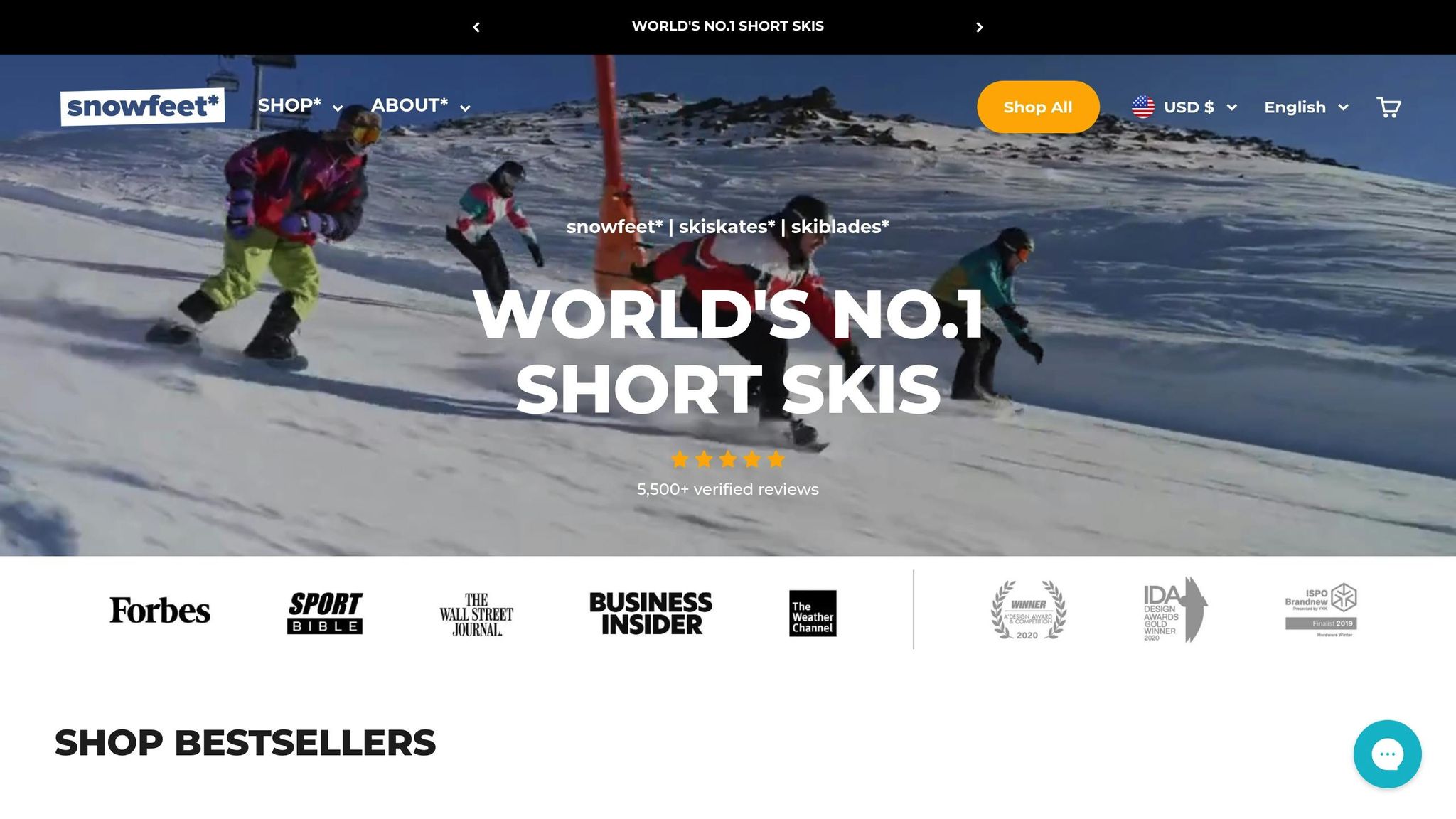
Snowfeet* Skiblades: Fun and Performance Combined
Snowfeet* Skiblades come in three lengths - 65 cm, 99 cm, and 120 cm - offering options for every type of skier. The 65 cm model is super portable, fits in a backpack, and is perfect for tight turns in terrain parks. The 99 cm version strikes a balance between quick maneuverability and stability, making it great for carving on groomed trails. For those who love powder or steeper runs, the 120 cm option delivers excellent performance.
Each Skiblade features a durable wood core designed to reduce vibrations and boost stability. They arrive pre-waxed and ready to hit the slopes, so you can skip the prep and get straight to the fun. Starting at US$635, these skis are a compact alternative to bulky, traditional setups.
Next, let’s look at why Snowfeet* Skiskates are the ultimate portable skiing option.
Snowfeet* Skiskates: Compact and Easy to Use
At just 44 cm in length, Snowfeet* Skiskates are all about portability. They fit easily into a standard backpack, making them ideal for quick trips to the slopes. Starting at US$575, these skiskates are compatible with regular ski boots, so there’s no need for extra gear.
Their short length makes them easier to learn on and reduces physical strain, which is great news for beginners or anyone looking for a lighter, less demanding way to enjoy the snow. They’re a perfect choice for groomed trails and terrain parks.
How Snowfeet* Compares to Traditional Long Skis
Snowfeet* offers a fresh take on skiing compared to traditional long skis. Long skis, typically 160–180 cm, can be heavy, harder to control, and tough on your knees - especially for beginners. Snowfeet* Skiblades and Skiskates solve these problems with their lightweight design and shorter lengths, making turns easier and reducing strain.
Price is another area where Snowfeet* shines. Traditional skis often cost between US$600 and US$1,000, and that’s before factoring in bindings and other extras. Snowfeet* products, priced between US$575 and US$775, come with integrated bindings and are ready to use right out of the box. This mix of affordability, ease of use, and fun makes Snowfeet* a standout choice for skiers looking for something new and exciting on the slopes.
Conclusion: Try Shorter Skis with Snowfeet*
Switching to shorter skis isn’t just a passing fad - it’s a smarter way to enjoy the slopes. Modern skiers are embracing shorter skis for their better control, lightweight feel, and adaptability to different terrains. Concerns about stability or speed? Those melt away once you try them and experience how dynamic and fun they really are.
Snowfeet* is leading this shift with gear designed for today’s skiers. Whether you go for the ultra-compact 44 cm Skiskates, the versatile 99 cm Skiblades, or the performance-driven 120 cm short skis, you’ll find options priced between $575 and $775 that are ready to elevate your time on the mountain.
Unlike traditional long skis, which require extra gear and storage, Snowfeet* offers a lightweight, low-effort way to ski that feels fresh and exciting. It’s not just about skiing - it’s about redefining the experience. With Snowfeet*, shorter skis aren’t a step down - they’re a step up in how winter sports should feel.
FAQs
Are shorter skis as fast and stable as traditional long skis?
Shorter skis, like Snowfeet's Skiblades and Skiskates, can keep up with the speed of traditional long skis while offering better control and stability. The old idea that longer skis are always faster and more stable doesn’t hold up here. Shorter skis shine when it comes to agility, making them ideal for sharp turns, carving, and weaving through busy slopes or tricky terrain.
Snowfeet’s designs show that shorter skis aren’t just capable of high speeds - they also make skiing more fun and versatile. Whether you’re hitting the terrain park or cruising down recreational slopes, shorter skis meet the needs of today’s skiers by focusing on control, fun, and versatility, leaving outdated long-ski stereotypes behind.
Are shorter skis a good choice for experienced skiers or just beginners?
Shorter skis are a solid option for skiers across the board, from beginners to seasoned pros. For those just starting out, or skiers still building confidence, shorter skis make life easier with their better control and a quicker learning curve. But don’t think they’re just for newbies - advanced skiers love them too! Their agility and precision make them perfect for pulling off tricks or tackling tricky, technical terrain.
Models like Snowfeet's Skiblades and Skiskates really shine when it comes to quick movements, tight turns, or hitting up the terrain park. Unlike traditional long skis, these compact options bring a whole new level of versatility and are super easy to carry around - all without compromising on performance. No wonder they’re a hit with today’s winter sports crowd!
What makes Snowfeet products the top choice for skiers looking for shorter skis?
Snowfeet products are changing how people hit the slopes. These lightweight and portable gadgets work with your regular winter boots, so you can skip the bulky, specialized gear that comes with traditional skis or snowboards. Thanks to their compact size, they’re super easy to carry, store, and get set up - perfect for skiers on the go.
What makes Snowfeet stand out is their incredible agility. You can pull off sharp turns, stop on a dime, and even try out some tricks without breaking a sweat. They’re great for terrain parks or weaving through tight spaces. Plus, they’re versatile enough to handle different snow conditions and come at a fraction of the cost of traditional skis. Snowfeet offers a durable, fun, and stress-free way to enjoy winter sports, giving skiers a whole new level of freedom and adventure.












Leave a comment
This site is protected by hCaptcha and the hCaptcha Privacy Policy and Terms of Service apply.