



















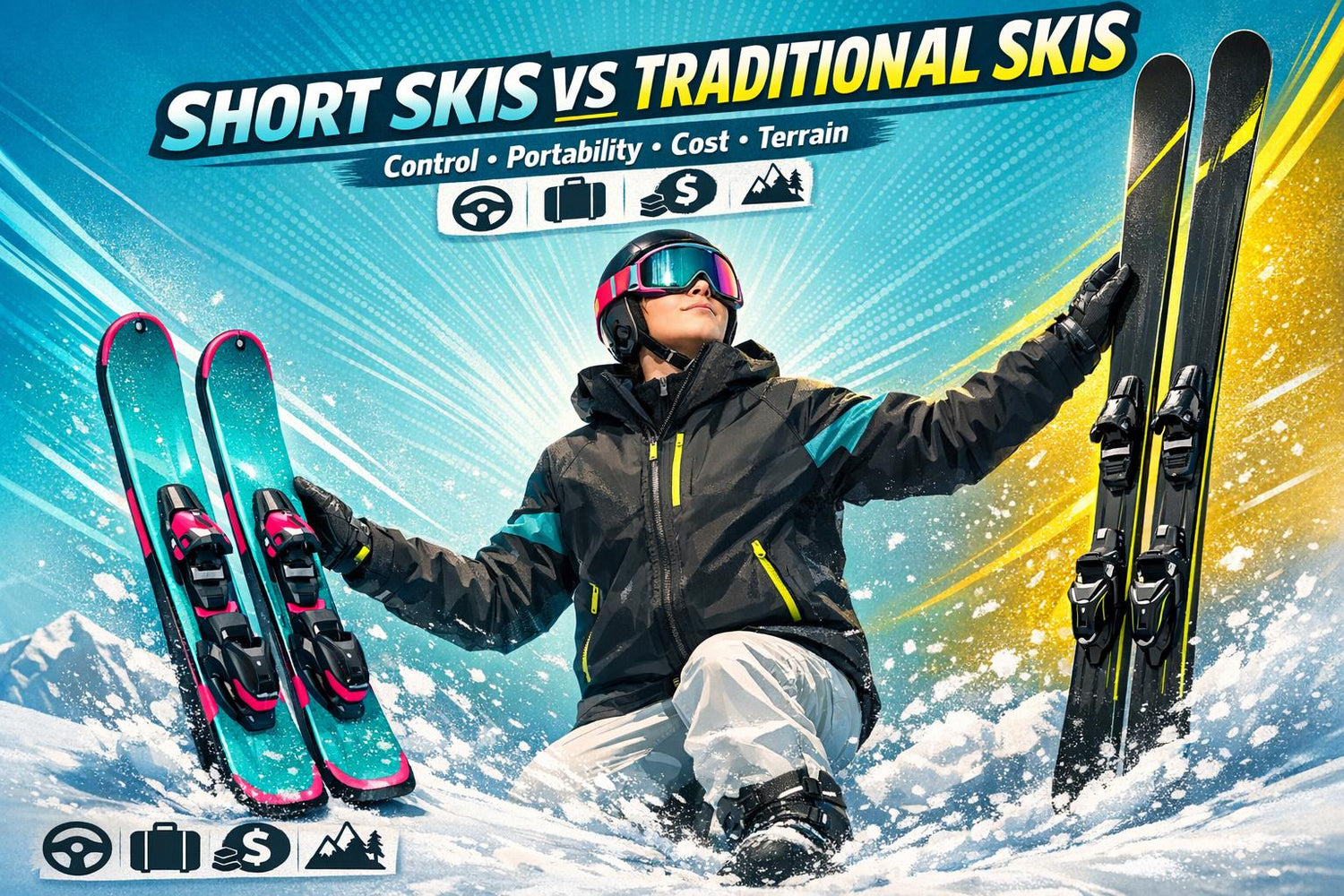
If you’re debating between short skis and their longer counterparts, here’s the quick lowdown: short skis are lighter, easier to control, and way more portable. They’re perfect for beginners, casual skiers, and anyone who hates lugging around oversized gear. On the flip side, longer skis are better for high-speed stability and deep powder, but they’re heavier, harder to transport, and less nimble in tight spots.
Key Points:
- Short Skis: Easier to turn, lighter, fit in a backpack, and work with regular winter boots. Great for learning, tricks, and varied terrains.
- Long Skis: Faster on wide runs and better for deep snow but bulkier and more tiring to maneuver.
Quick Comparison:
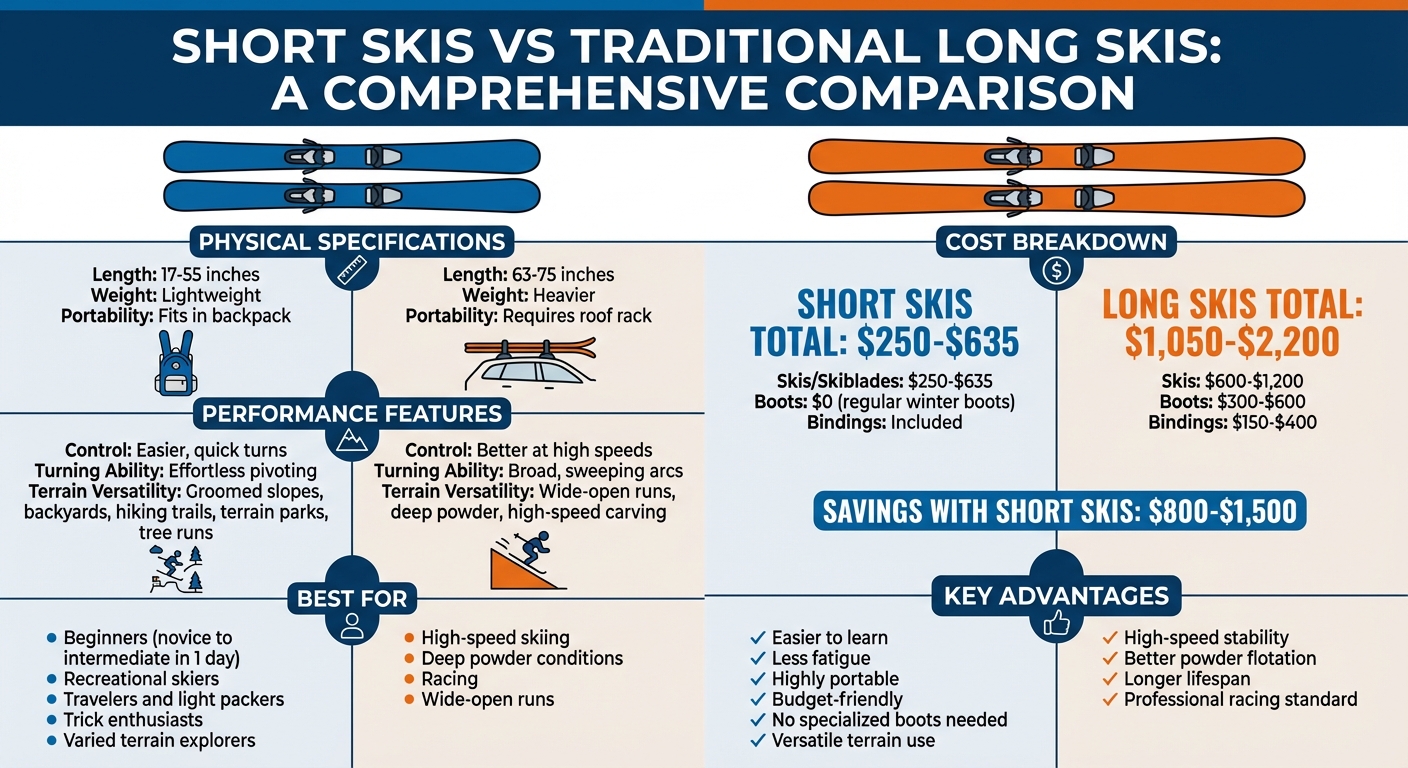
| Feature | Short Skis (e.g., Snowfeet*) | Long Skis |
|---|---|---|
| Length | 17–55 inches | 63–75 inches |
| Weight | Lightweight | Heavier |
| Control | Easier, quick turns | Better at high speeds |
| Transport | Fits in a backpack | Requires roof rack |
| Cost | Starts at $250 | $1,050+ (with gear) |
| Boots Needed | Regular winter boots | Specialized ski boots |
Bottom Line: If you’re all about fun, convenience, and learning quickly, short skis are a no-brainer. But if you’re chasing speed or deep powder thrills, longer skis might be more your style.
Short Skis vs Traditional Long Skis: Complete Comparison Guide
Short Skis vs Long Skis: Main Differences
Control and Turning Ability
Snowfeet* short skis are designed for quick, effortless turns, thanks to their compact size. Unlike traditional long skis from brands like Rossignol or K2, which are typically over 67 inches and require broad, sweeping arcs to change direction, short skis excel in tight spots like moguls or tree runs. They pivot with ease, making them a fantastic choice for skiers navigating tricky terrain.
Weight is another big factor. Traditional skis are heavier, which means they take more effort to control and can tire you out faster. In contrast, Snowfeet* short skis are lightweight, reducing fatigue and making the experience more enjoyable - especially for beginners. Many new skiers find that they can progress from novice to intermediate in just one day, thanks to the forgiving nature of short skis.
"Short skis are the right first step to take on your way to the slopes. They are light, easier to control than longer skis and user-friendly." - Snowfeet Team
This combination of agility and ease of use makes short skis a standout option, especially for those just starting out.
Size and Transport
Traditional skis, often over 67 inches long, can be a hassle to transport. They require roof racks or oversized carrying bags, which isn’t exactly convenient. Snowfeet* short skis solve this problem. The 17-inch model can fit into a regular backpack, and even their longest option - measuring about 55 inches - is still far easier to manage than standard skis.
"Super easy, super light; don't need to lug my skis around and you can wear them pretty much all day. Best purchase this season!!" - Def Acres
This portability makes Snowfeet* a practical choice for skiers who value convenience and simplicity.
Where You Can Use Them
Snowfeet* short skis are incredibly versatile, thriving on terrains where traditional skis can struggle. They perform great on groomed slopes and at ski resorts, but they also shine in less conventional settings like backyards, hiking trails, terrain parks, and tight tree runs. Their compact size allows access to narrow paths that would be off-limits with bulky, traditional skis.
On the other hand, traditional long skis are built with specific conditions in mind. They excel on wide-open runs, in deep powder where floatation is crucial, and during high-speed carving. However, they can become cumbersome on crowded slopes, in dense forests, or on mogul fields. In these scenarios, Snowfeet* short skis take the lead with their playful agility, making them ideal for jumping in terrain parks or navigating bumpy trails. Their adaptability makes them a go-to option for varied terrains, while traditional skis often require more predictable conditions to perform well.
Short Skis vs. Long Skis
Common Myths About Short Skis
Let’s tackle a few misconceptions about short skis and set the record straight.
Myth: Short Skis Are Less Stable
The idea that long skis are inherently more stable isn’t always true. Snowfeet* short skis are designed with features like wood cores and fiberglass flex cores, which minimize vibrations and enhance control. While longer skis might feel steadier at high speeds on wide-open runs, stability in most skiing conditions is more about control than surface area. Smart design ensures that short skis feel solid and responsive, even on varied terrain.
Myth: Short Skis Are Slower
Speed isn’t just about ski length - it’s about skill, terrain, and snow conditions. Snowfeet* short skis can hit impressive speeds when paired with proper technique. Their smaller surface area doesn’t hold them back. In fact, their easy handling allows for quick turns and sustained momentum. With models ranging from 99 cm to 140 cm, Snowfeet* offers options like the 120 cm ski, which balances performance and length perfectly.
Myth: Short Skis Are Only for Beginners
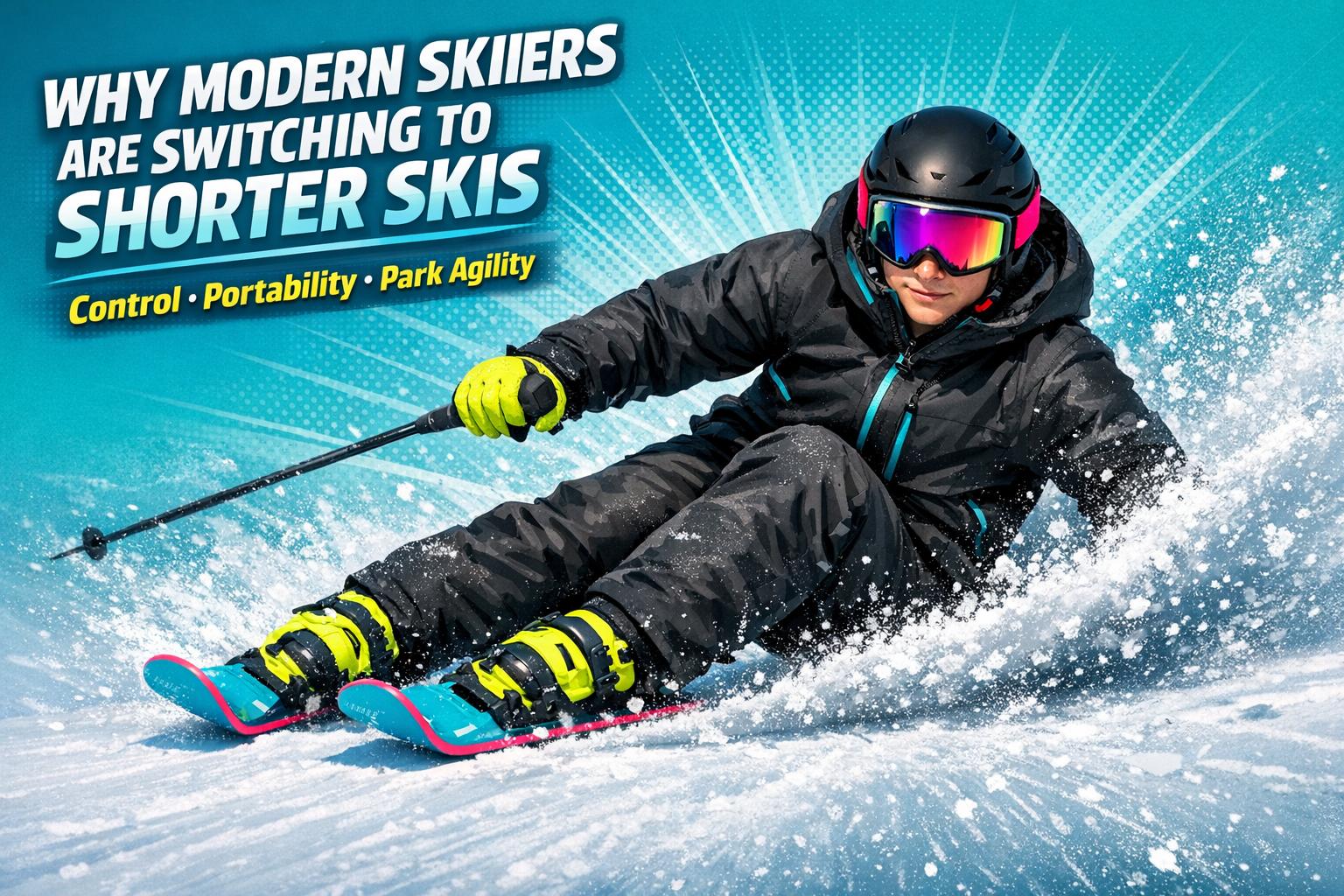
This couldn’t be further from the truth. Snowfeet* short skis cater to all skill levels. Advanced skiers use them for tricks, spins, and backward riding in snow parks or mogul fields. Shorter models (44 cm to 65 cm) are great for aerial tricks, while the 99 cm to 120 cm options excel in carving and control. With the right technique, short skis can deliver a dynamic and thrilling ride that rivals - if not exceeds - that of traditional long skis.
These points help paint a clearer picture of how versatile Snowfeet* short skis really are.
sbb-itb-17ade95
Who Should Choose Snowfeet* Short Skis?
Not every skier needs long, traditional skis. Snowfeet* short skis are designed to meet the needs of specific groups, offering a practical alternative that’s both fun and easy to use.
New Skiers and Recreational Users
If you’re new to skiing or hit the slopes only occasionally, Snowfeet* short skis might be your perfect match. Their compact design makes them much easier to handle, helping beginners get comfortable without the hassle of bulky gear. The shorter length allows for smoother turns and improved control, which means you can focus on having fun rather than wrestling with your equipment. By comparison, traditional skis - often over 63 inches long - require more effort and skill, which can be overwhelming for someone just starting out.
Skiers Who Like Variety
Snowfeet* short skis are great for those who love to mix things up. Whether you're carving down slopes, hitting terrain parks, exploring backcountry trails, or even just playing around in your backyard, these skis are up for the challenge. From Mini Ski Skates to Short Skis, there’s a model to suit your adventure. Unlike traditional brands like Rossignol or K2, which are often designed for specific conditions like speed or powder, Snowfeet* gives you the freedom to explore without needing multiple sets of skis.
Travelers and Light Packers
For travelers, Snowfeet* short skis are a game-changer. They’re compact enough to fit in a backpack or standard luggage, so you can skip the hassle of hauling around oversized ski bags. This makes them ideal for spontaneous trips or city dwellers with limited storage space. Traditional long skis, on the other hand, require dedicated storage and careful transportation planning - two things you won’t have to worry about with Snowfeet*.
Price Comparison: Snowfeet* vs Traditional Skis
Equipment Costs
When it comes to price, Snowfeet* is a clear winner over traditional skis. Starting at just $250, Snowfeet* Mini Ski Skates are an affordable way to hit the slopes. On the other hand, Skiblades start at $635, while traditional long skis can range anywhere from $600 to $1,200 - and that’s just for the skis themselves. Add in boots and bindings, and the total cost for long skis skyrockets.
Here’s a quick breakdown:
| Item | Snowfeet* Short Skis | Traditional Long Skis |
|---|---|---|
| Skis/Skiblades | $250–$635 | $600–$1,200 |
| Boots | $0 (use regular winter shoes) | $300–$600 |
| Bindings | Included | $150–$400 |
| Total Initial Cost | $250–$635 | $1,050–$2,200 |
This means you could save anywhere from $800 to $1,500 right off the bat. Snowfeet* skips the need for pricey extras like specialized boots and bindings, making winter sports much more budget-friendly.
No Extra Equipment Required
One of the best things about Snowfeet* is that you don’t need to invest in additional gear. For Mini Ski Skates, you can use your regular winter boots. For their 65 cm and 99 cm Skiblades, snowboard boots work perfectly. Compare that to traditional ski setups from brands like Salomon or Atomic, which require stiff, dedicated ski boots costing $300 to $600, plus bindings that can set you back another $150 to $400 - and those bindings often require professional installation.
Snowfeet* also makes it easier to get started with flexible payment options. Their bundles start at $250 and include perks like a 2-year warranty, free U.S. shipping on orders over $200, and payment plans through Affirm with 0% APR for 3–12 months. Traditional ski shops, by contrast, usually require full upfront payment or offer financing options with high interest rates, and warranties are typically limited to just one year.
Durability and Lifespan
Snowfeet* isn’t just affordable - it’s built to last. With wood cores, fiberglass construction, and metal edges, these products are designed for durability and come pre-waxed to ensure they’re ready to go right out of the box. They’re built to endure multiple seasons without the need for frequent replacements, keeping long-term costs low.
Customer reviews back this up, with over 5,500 verified reviews and a 4.9/5 star rating. As one happy user, Cassidy Bachman, shared:
"They are durable, fun, light weight and easy to use. Beyond happy with the quality!"
While traditional skis may last longer overall, they come with hidden costs like regular professional tuning, edge sharpening, and waxing. These maintenance expenses can add up fast. With Snowfeet*, upkeep is minimal, keeping your total cost of ownership low from day one.
Conclusion: Why Snowfeet* Is the Better Choice
Main Points
Snowfeet* short skis bring a level of convenience that’s hard to beat. They’re compact enough to fit in a backpack, cutting out the need for bulky, expensive gear. With just one pair, you can tackle everything from wide-open trails to narrow, tree-lined runs - something traditional long skis just can’t offer. Plus, the learning curve is quick. Many beginners can go from zero to confidently skiing intermediate terrain in a single day, rather than spending weeks or months getting the hang of it.
Made with durable wood or fiberglass cores, these skis are built to last and require minimal upkeep. And with a consistent 5.0/5 rating from verified reviews, they’ve proven to deliver an experience that keeps skiers coming back.
How to Decide
When weighing your options, think about what you value most on the slopes. If portability and affordability are at the top of your list, Snowfeet* is an easy choice. They’re perfect for beginners looking to learn quickly, recreational skiers who want variety, and anyone who needs lightweight gear that’s easy to travel with.
Sure, traditional long skis might still be the go-to for racing or carving through deep powder at high speeds. But for most skiers seeking versatility, fun, and simplicity, Snowfeet* stands out as the better option.
FAQs
Are short skis a good choice for beginners and advanced skiers?
Short skis, like those from Snowfeet, are a fantastic option for skiers of all levels. Their compact size makes them easier to handle, which is especially helpful for beginners trying to get the hang of turning and controlling their movements. For experienced skiers, these skis bring a whole new level of agility, making them great for freestyle tricks or navigating tight, technical terrain.
Unlike traditional long skis, short skis are lightweight and easy to carry around. This makes them not only practical but also super versatile for a variety of skiing styles. Whether you're just learning your first turns or tackling challenging runs, short skis provide a fun and approachable way to enjoy the slopes. And with Snowfeet's clever designs, you get a mix of performance, convenience, and excitement that works for everyone!
How do short skis compare to traditional skis in deep powder conditions?
Short skis, like Snowfeet Skiblades, might surprise you with how well they handle deep powder. Thanks to their compact design and rocker profiles, they stay on top of the snow with ease. While traditional skis - usually 170–190 cm long - are built for serious float with their length and width, short skis (ranging from 38–120 cm) shine when it comes to agility and control. They’re especially handy in tight spots or for making sharp, quick turns.
Snowfeet short skis are lightweight, easy to carry, and versatile. They’re a solid choice for light to moderate powder (up to about 4 inches), offering a fun and convenient alternative to traditional skis. If you’re looking for something that combines performance with portability, these are a great pick for powder days.
Why are short skis, like Snowfeet*, more affordable than traditional skis?
Short skis, like Snowfeet*, are easier on the wallet for a few key reasons. First, they require less material to make, which naturally cuts down on production costs. Plus, their smaller size means lower shipping and storage costs, saving money for both retailers and buyers.
On top of that, Snowfeet* are designed to be both versatile and long-lasting, so you’ll likely spend less on repairs or replacements down the line. And here’s the kicker: unlike traditional skis that often need pricey extras like specialized bindings and boots, Snowfeet* keep things simple and affordable - without taking away from the fun or performance you’d expect on the slopes.












Leave a comment
This site is protected by hCaptcha and the hCaptcha Privacy Policy and Terms of Service apply.