







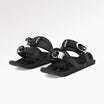












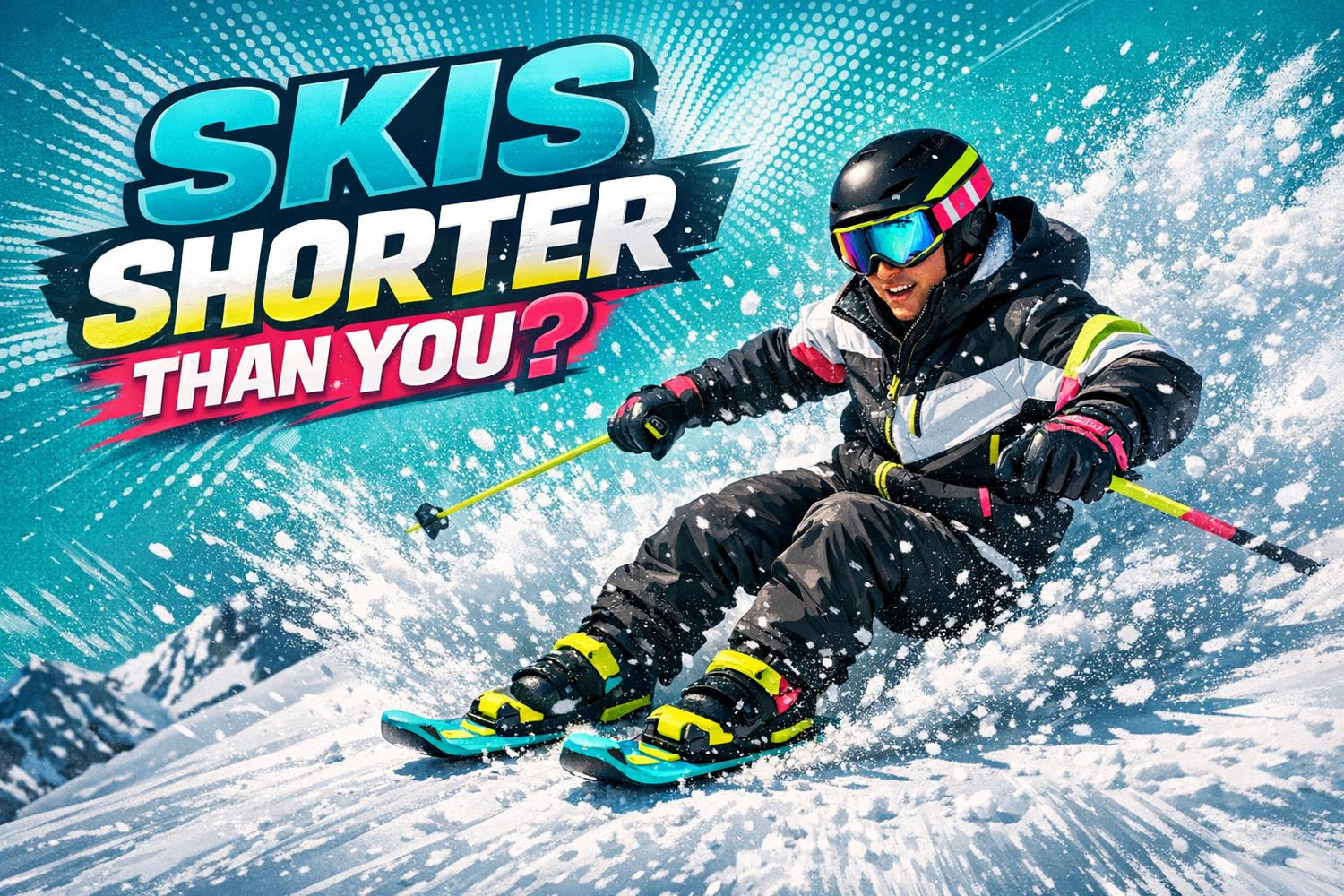
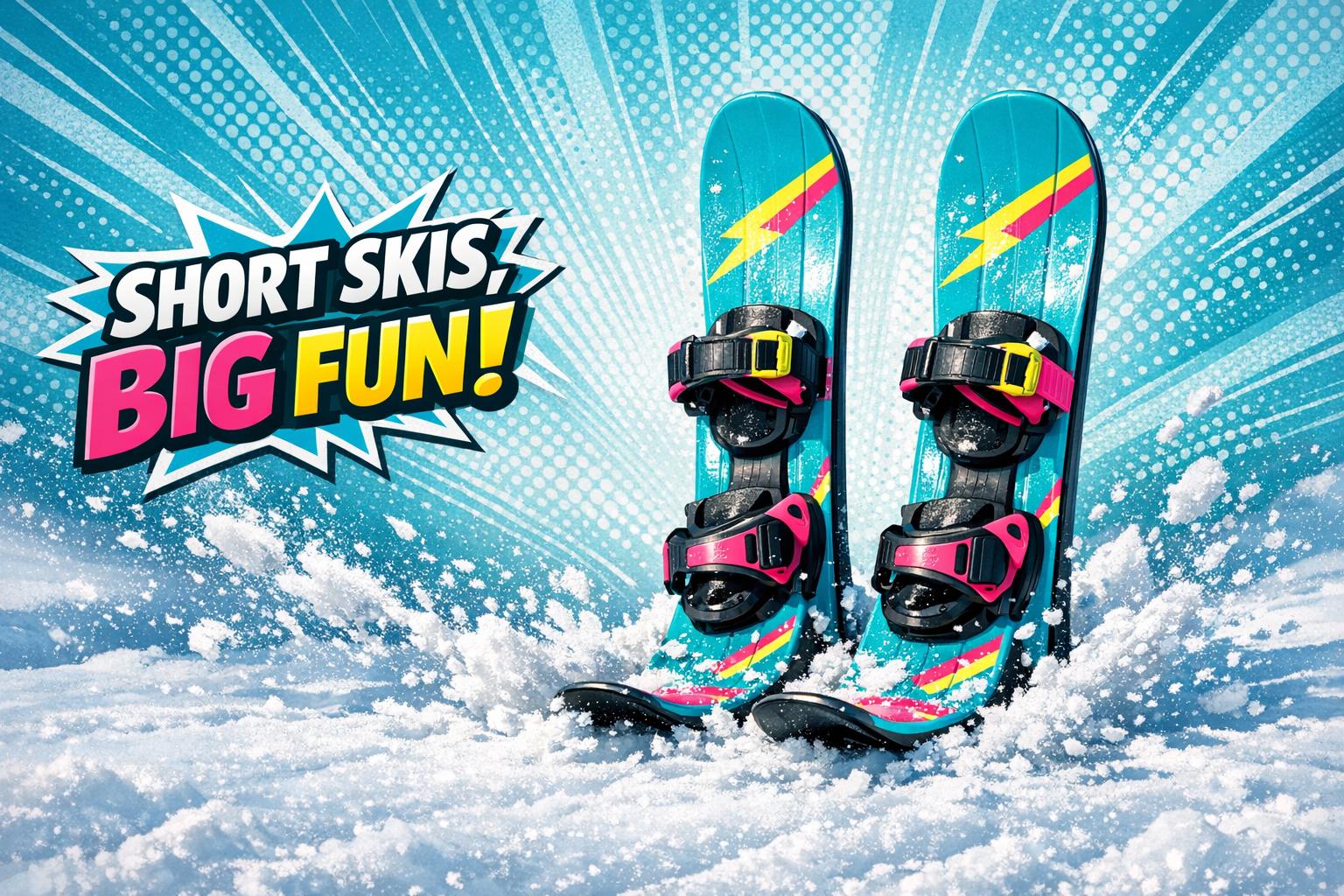
Short skis are a game-changer for anyone looking for easier, more playful skiing. Unlike traditional long skis, which can feel bulky and tough to control, shorter skis - like Snowfeet's Skiblades and Skiskates - are lightweight, easy to maneuver, and perfect for tight turns or quick learning. Whether you're cruising groomed trails, tackling moguls, or experimenting in terrain parks, shorter skis make skiing feel less like a workout and more like fun. Plus, they’re compact enough to fit in a backpack and don’t require expensive, stiff ski boots.
Here’s the deal:
- Easier to Control: Short skis turn quicker and demand less effort, making them ideal for beginners or casual skiers.
- Versatile Terrain Use: They handle groomed runs, moguls, and snow parks well, but aren’t great for deep powder or high-speed stability.
- Affordable & Portable: Starting at $190, they cost less than traditional setups and are easy to transport - no roof racks needed.
- Comfortable: Less strain on your joints and lighter to carry.
If you’re after fun, convenience, and a faster learning curve, shorter skis might be your perfect match. But if you’re chasing high-speed stability or powder days, long skis still hold their ground. Ready to rethink your ski gear? Let’s dive in!
1. Snowfeet Short Skis and Skates
Maneuverability and Control
Snowfeet's compact design - ranging from the 44 cm Skiskates to the 120 cm Short Skis - sidesteps the bulkiness of traditional skis. This makes quick turns and tight maneuvers a breeze, with turn radii as sharp as 4 to 8 meters. Plus, their forgiving flex means that if you slip up, the ski bends with you rather than working against you. The 44 cm Skiskates, in particular, use a skating motion, making them beginner-friendly. You can pick up the basics after just a few rides. This agility makes Snowfeet gear a great choice for tackling all sorts of terrain.
Performance Across Different Terrain
Snowfeet gear shines on groomed slopes, snow parks, and mogul runs. The 99 cm and 120 cm Skiblades handle light powder (up to 4 inches deep) with ease, offering flexibility without the need for bulky, powder-specific skis. Thinner models are perfect for carving on packed snow, while wider options provide better float when the snow softens. Beyond the slopes, these skis are great for hiking trails, sledding hills, and even cross-country paths. You can skate across flat sections or push uphill effortlessly - no awkward shuffling like with traditional skis. This versatility makes for a smoother, less tiring ride overall.
Comfort and Joint Impact
Snowfeet's lightweight and compact design also mean less physical strain during long sessions. They require up to 50% less effort to turn in tight spaces compared to traditional skis. This reduced effort eases the strain on your joints and helps you stay energized longer. On the flip side, traditional skis - especially those over 170 cm - demand serious leg strength for turning, which can leave beginners or casual skiers feeling wiped out.
Cost and Portability
Snowfeet products are budget-friendly compared to traditional ski setups. Prices start at $250 for the 38 cm Mini Ski Skates and go up to $775 for the 120 cm Short Skis. That’s a fraction of what you’d spend on skis, boots, and bindings from brands like Rossignol or K2. The 65 cm to 99 cm Skiblades, priced between $635 and $675, strike a great balance between performance and affordability. Their compact size is another win - they easily fit into a standard backpack or car trunk. Whether you’re flying to a resort or road-tripping, they’re convenient to bring along. Plus, many models work with regular winter or snowboard boots, saving you the extra $400+ you’d otherwise spend on specialized ski boots.
2. Traditional Long Skis and Snowboards
Maneuverability and Control
Long skis, typically measuring between 63 and 74 inches, are built for stability, especially at high speeds. But here’s the catch: they’re not exactly nimble. Turning in tight spaces - like navigating through moguls or weaving between trees - requires a lot of effort and precise technique. Brands like Rossignol and K2 design their race skis to be stiff and demanding, often requiring parallel turning skills that can take years to perfect. While they shine on wide, open runs, they can feel clunky and exhausting in more confined areas.
Performance Across Different Terrain
Long skis have their sweet spots but also some clear limitations. On deep powder, their length provides excellent float, and on hardpack, they grip firmly. But when it comes to moguls, quick turns, or snowparks, they’re not the best choice. Their size makes quick directional changes tricky, and while they offer stable landings for jumps, they’re too unwieldy for tight rail tricks. Groomer-specific skis are designed for hard snow most of the time, which means you may be sacrificing versatility for those rare powder days. By contrast, Snowfeet products offer a balance of agility and adaptability, making them a more versatile option.
Comfort and Joint Impact
The stiffness and bulk of long skis, combined with rigid plastic boots, can take a toll on your body. They’re tiring to use, especially on flat terrain or when heading uphill. Race skis, in particular, are highly responsive but unforgiving - every small mistake can put extra strain on your legs and joints. As one user, Sophia Kane, pointed out:
"I hate getting stuck on a hill in skis because they're so long and bulky. Since these [Snowfeet] are shorter, you can just skate right up."
Another downside? Long skis create more leverage during falls, which can increase stress on your limbs compared to shorter alternatives. And it’s not just the physical strain - there’s also the hassle and cost of traditional setups.
Cost and Portability
Investing in traditional skis means shelling out for the skis themselves, specialized bindings, and rigid plastic boots. Add to that the inconvenience of transporting them - think car racks or oversized bags - and it’s clear they’re not exactly travel-friendly. Spontaneous ski trips or flying with your gear? Let’s just say it’s a lot more complicated compared to Snowfeet, which fit neatly into a regular backpack.
Short Skis vs. Long Skis
sbb-itb-17ade95
Pros and Cons
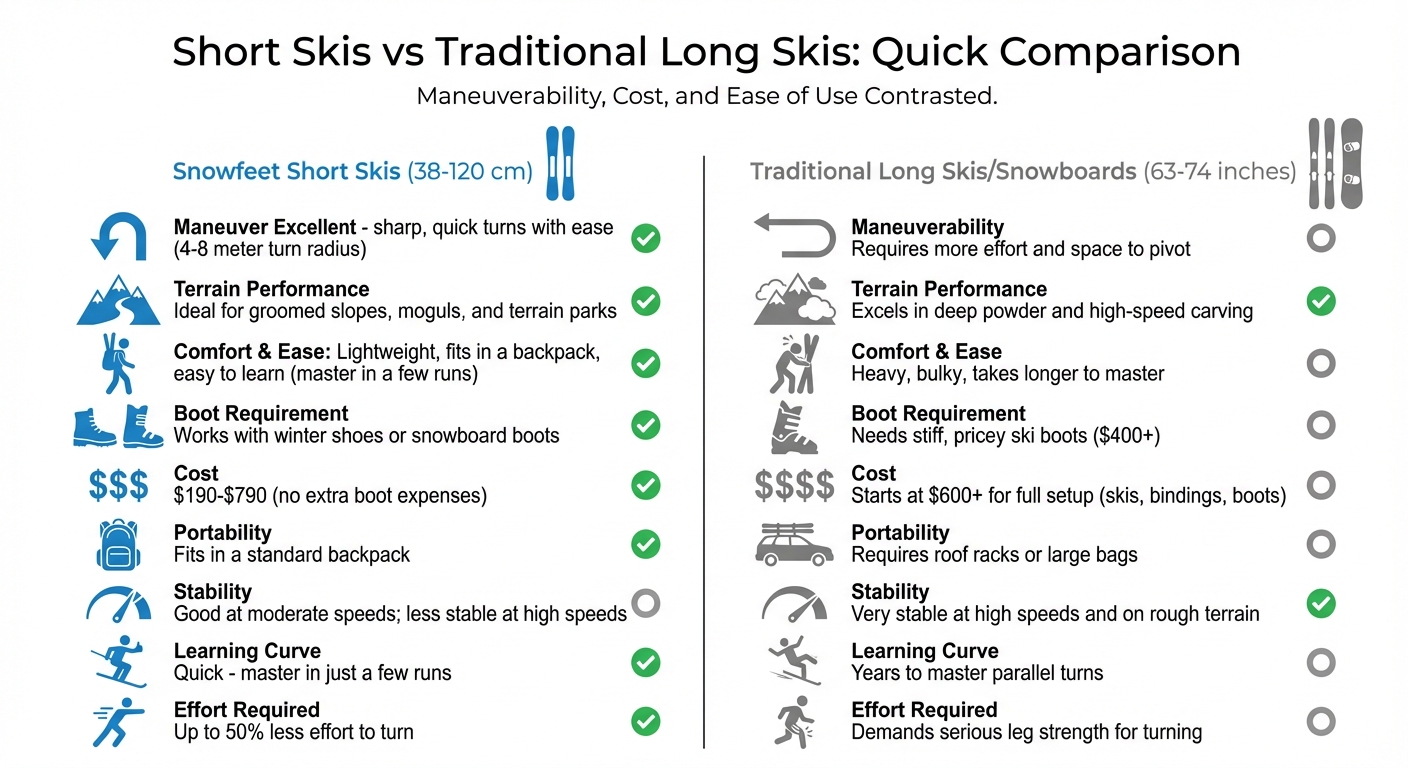
Short Skis vs Traditional Long Skis Comparison Chart
Snowfeet short skis stand out compared to traditional skis and snowboards when it comes to ease of use, versatility across terrains, and affordability.
Take Snowfeet's 44 cm Skiskates ($490) or their 99 cm Skiblades ($590) as examples. These compact skis are incredibly nimble, offering turning radii between 4 and 8 meters. Their small size means you can skate up gentle hills and skip the hassle of roof racks entirely. Plus, you can use standard snowboard boots or even regular winter shoes - no need for those clunky, stiff ski boots.
That said, short skis do have their limitations. They’re less stable at high speeds and don’t perform as well in deep powder. Traditional long skis, ranging from 63 to 74 inches, excel in these areas thanks to their larger surface area, which helps them float in powder and stay steady on groomed runs. But they’re heavier, harder to transport, and require more effort to maneuver.
Snowfeet products range from $190 for Mini Ski Skates to $790 for the 120 cm model, and they don’t require specialized boots. In contrast, a traditional ski setup (including skis, bindings, and boots) often starts at $600, not counting extra gear or transportation costs. Another huge perk? Short skis are much quicker to learn. Most people can get the hang of them in just a few runs, whereas mastering parallel turns on long skis can take years.
Here’s a quick side-by-side comparison to make things clearer:
| Feature | Snowfeet Short Skis (38–120 cm) | Traditional Long Skis/Snowboards |
|---|---|---|
| Maneuverability | Excellent; sharp, quick turns with ease | Requires more effort and space to pivot |
| Terrain Performance | Ideal for groomed slopes, moguls, and terrain parks | Excels in deep powder and high-speed carving |
| Comfort & Ease | Lightweight, fits in a backpack, easy to learn | Heavy, bulky, and takes longer to master |
| Boot Requirement | Works with winter shoes or snowboard boots | Needs stiff, pricey ski boots |
| Cost | $190–$790 (no extra boot expenses) | Starts at $600+ for a full setup |
| Portability | Fits in a standard backpack | Requires roof racks or large bags |
| Stability | Good at moderate speeds; less stable at high speeds | Very stable at high speeds and on rough terrain |
Conclusion
For most recreational skiers, shorter skis bring a level of ease and agility that’s hard to beat. They make learning the basics quicker, are lighter to carry, and are much easier to handle on groomed trails, moguls, and even in terrain parks. With over 50,000 Snowfeet riders worldwide and an impressive average rating of 4.9 out of 5 from more than 5,500 verified reviews, it’s clear that shorter skis live up to the hype when it comes to fun and accessibility.
If you’re a beginner or a casual skier, Snowfeet’s 99 cm (39 in) or 120 cm (47 in) Skiblades are a great choice for balanced and nimble performance. Freestyle fans, on the other hand, might love the responsive 44 cm (17 in) Skiskates or 65 cm (26 in) Skiblades - perfect for executing jumps, spins, and sharp turns. This kind of versatility sets shorter skis apart from the more demanding, traditional setups.
"These skiblades are so much fun and easy to control. Never going back to regular skis." – Andrew B., Verified User
While traditional skis have their place - like carving through deep powder or achieving high-speed stability - shorter skis are often the smarter choice for skiers who prioritize fun, comfort, and portability. They turn the mountain into your personal playground, letting you focus on enjoying the ride rather than wrestling with your gear. Forget the outdated height-based rules and pick equipment that matches your style. Whether you’re just starting out, hitting the park, or cruising the groomers, there’s a Snowfeet model that’ll suit your vibe and make skiing an absolute blast.
FAQs
How do shorter skis affect your skiing technique and learning process?
Shorter skis make skiing feel easier and more approachable. They’re quicker to turn and more responsive, which means less effort to control and pivot. For beginners, this translates to immediate feedback on movements, making it simpler to grasp weight distribution and edge control. In other words, shorter skis help new skiers build confidence and pick up skills faster than they would with longer, traditional skis.
For experienced skiers, shorter options like Snowfeet’s Skiblades or Mini Skates offer a fun and precise ride. They’re great for honing techniques or experimenting with tricks. Plus, their lightweight build reduces fatigue, letting you ski longer without wearing out. And because they’re more forgiving on icy patches or crowded slopes, they’re a solid choice for anyone looking for a smoother, more adaptable skiing experience.
Are short skis good for all types of snow and terrain?
Short skis excel on groomed trails, icy patches, and beginner-friendly slopes. Their easy handling and quick turns make them a breeze to control in these conditions. That said, they can struggle in deep powder, on steep backcountry terrain, or when you're flying down the mountain at high speeds - situations where the stability and larger surface area of longer skis come in handy.
For recreational skiing and a playful, easy-to-use option, short skis (like Snowfeet products) are a great pick. But if you're tackling extreme conditions or advanced techniques, longer skis might still be the better call.
What are the cost and travel advantages of using shorter skis?
Short skis come with two big perks: they save you money and make traveling a breeze. Take Snowfeet’s short-ski lineup, for example. The 44 cm Skiskates start at just $390, the 99 cm Skiblades are priced at $490, and the 120 cm Short Skis come in at $690. Compare that to the typical $800–$1,200 price tag for longer skis, and you can see why these are a great option - especially for beginners or casual skiers looking to keep costs down.
On top of being budget-friendly, short skis are super easy to carry around. Since they’re all under 160 cm, they’re lightweight enough to toss into a regular backpack. No need to mess around with bulky ski bags or car racks. Some models, like the 38 cm Skiskates, even pair up with your regular winter boots, making them extra convenient for travel and storage. With their low price and easy portability, short skis are a no-brainer for anyone wanting a hassle-free skiing experience.












Leave a comment
This site is protected by hCaptcha and the hCaptcha Privacy Policy and Terms of Service apply.