



















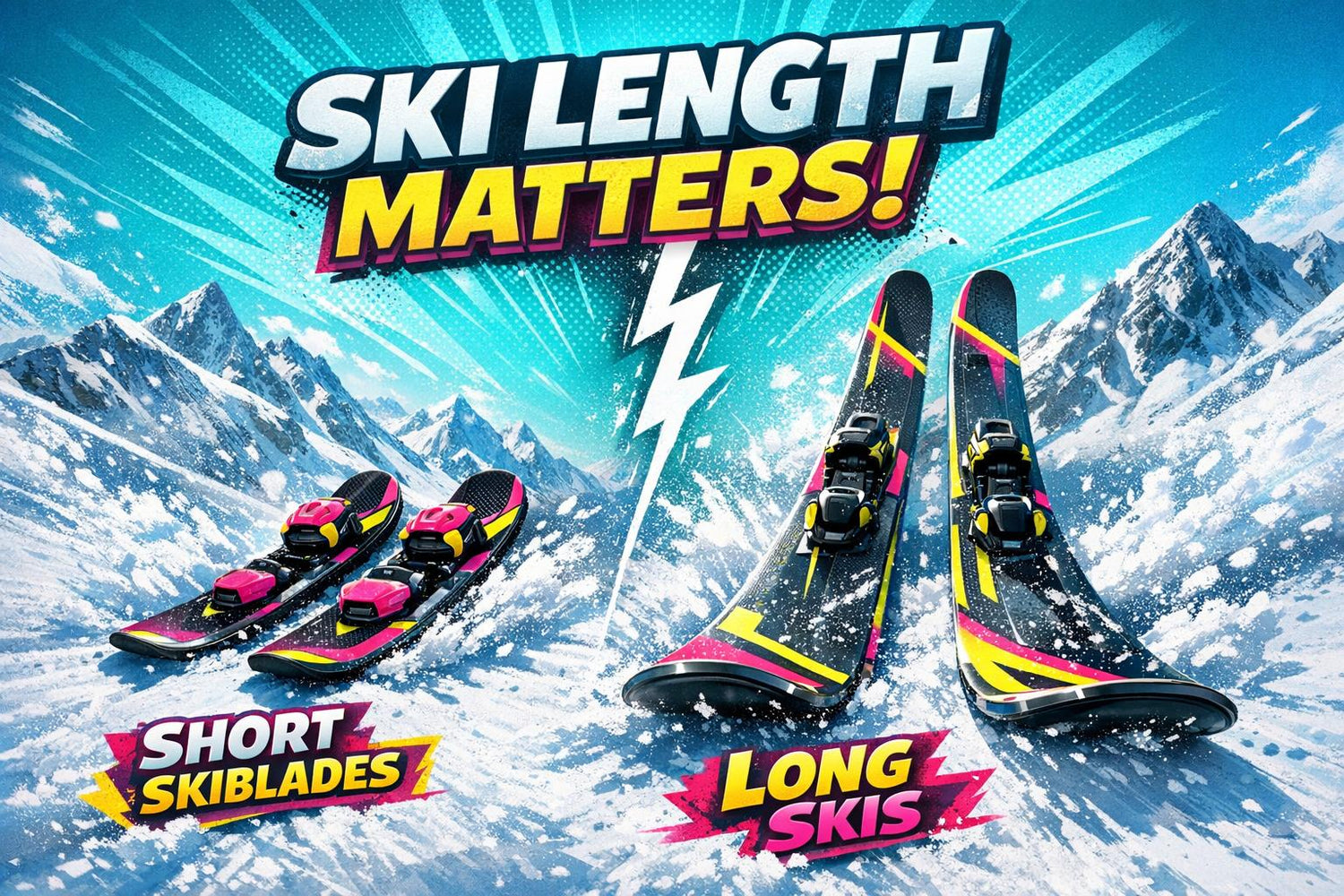
When it comes to skiing, the length of your skis can dramatically change how you balance, turn, and stay in control on the slopes. Here's the quick rundown:
- Long Skis: Great for stability at high speeds and floating in deep powder. They're smooth on wide runs but harder to turn in tight spaces. Best for advanced skiers or those tackling open terrain.
- Short Skis (like Snowfeet): Prioritize agility and quick turns. Perfect for weaving through trees, snow parks, or narrow trails. Easier to carry, learn, and maneuver, but not ideal for deep powder or super high speeds.
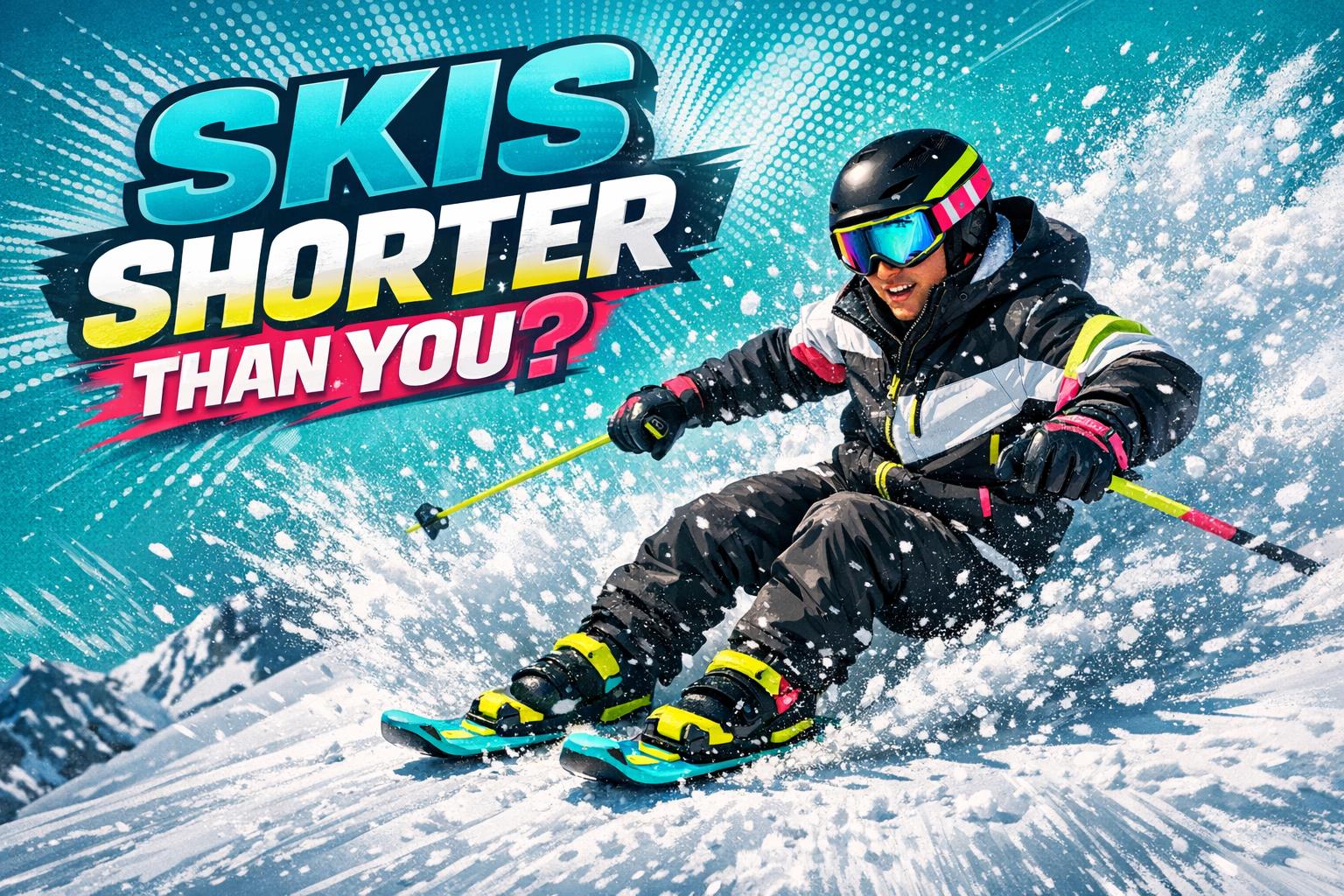
Snowfeet offers a range of short ski options, from ultra-compact 15-inch Mini Ski Skates to 47-inch Short Skis. These cater to beginners and experienced skiers looking for fun, lightweight gear that’s easy to control. Whether you're into sharp turns, playful carving, or just want something portable, shorter skis bring a whole new dynamic to the slopes.
Quick Overview:
- Long Skis: Stability, speed, deep powder.
- Short Skis: Agility, easy learning, tight spaces.
Let’s dive into what makes each type shine!
1. Traditional Long Skis
Balance and Stability
Traditional long skis are all about stability, especially at high speeds. Their longer length creates a broad contact area with the snow, giving you a steady and smooth ride on wide, open runs. For advanced skiers, the ideal ski length typically ranges from floor to eyebrow height. Experts often push it further, opting for skis up to 10 cm (about 4 inches) taller than their own height.
"Longer skis are smoother and provide stability at speed." – Lisa Stocker, Ski amadé
Another perk of longer skis is their ability to absorb vibrations. Thanks to their weight and length, they handle bumps and uneven terrain like champs, offering a dampened, comfortable ride. But there’s a trade-off. In tight spots like moguls or dense tree runs, they can be tough to handle. Beginners, in particular, might find them a bit unwieldy - like trying to steer a "stubborn donkey", as Lisa Stocker puts it.
Turn Performance
When it comes to turning, long skis require some muscle and finesse. They’re not built for quick, snappy turns, especially on short-radius curves. Their length means you’ll need extra strength and polished technique to execute precise turns.
"For many, skis that are too long feel like a stubborn donkey: sluggish on short turns, difficult to control and not at all forgiving." – Lisa Stocker, Ski amadé
Control and Terrain Versatility
Long skis truly shine in deep powder. Their larger surface area gives you the buoyancy you need to float effortlessly on top of the snow. But on steep slopes or narrow trails, they can be less forgiving. A small mistake in technique can throw off your control. While they’re fantastic for high-speed cruising on open terrain and excelling in powder, they lack the quick, agile feel of more compact designs like Snowfeet’s. Up next, we’ll dive into how Snowfeet’s products tackle these challenges with ease.
How to Choose the Right Size Skis (and Why It Matters)
2. Snowfeet Mini Ski Skates (38 cm)
Snowfeet’s design takes a fresh approach to skiing, focusing on agility and precision to outmaneuver traditional skis when it comes to quick turns and tight spaces.
Balance and Stability
Measuring just 15 inches (38 cm), Snowfeet Mini Ski Skates offer a unique skiing experience. Unlike longer skis that provide natural stability, these mini skates require you to actively manage your balance, much like ice skating or inline skating. If you’ve ever tried either, you’ll feel right at home with these.
While they aren’t built for high-speed stability, they shine in areas like groomed runs, snow parks, or hiking trails. Most users get the hang of balancing on them within just five minutes.
Turn Performance
This is where the Mini Ski Skates truly stand out. Their ultra-short length allows for an incredibly tight turning radius, letting you pull off sharp, precise turns that would be nearly impossible with standard skis. Whether you’re weaving through crowded slopes or navigating narrow tree runs, these skates make it effortless.
"Short skis are ideal for skiing on narrow trails or for making quick turns on steeper terrain." – Snowfeet Team
Thanks to their responsive design, even subtle weight shifts translate into quick movements. You can skate up small hills or glide across flat areas without worrying about getting stuck - perfect for busy lift zones or beginner areas. With over 50,000 riders worldwide and an impressive 4.9/5 rating from more than 5,500 verified reviews, it’s clear these skates are winning over skiers everywhere.
Control and Terrain Versatility
Snowfeet Mini Ski Skates thrive on groomed slopes, snow parks, and light powder. They perform best in powder up to 4 inches deep but aren’t suited for deep backcountry snow, where longer skis still have the upper hand. Their compact size makes them easy to carry, and they’re compatible with both winter shoes and snowboard boots.
To get the most out of them, make sure to wax them regularly for a smooth glide. Stick to groomed terrain while you’re learning to master that front-to-back balance. At $250, they’re the most budget-friendly option in the Snowfeet lineup, offering a fun and accessible way to shake up your skiing experience.
3. Snowfeet Skiskates (44 cm)
At 17 inches (44 cm) long, these Skiskates strike a balance between Mini Ski Skates and longer skiblades. Snowfeet describes them perfectly: "long enough to ski, short enough to skate." This design blends agility with stability, thanks to their high-quality wood core construction.
Balance and Stability
The wood core construction offers more stability than the Mini Ski Skates, but you’ll still need to master the front-to-back balance, much like ice skating. Users often mention smoother sliding and quicker recovery after falls compared to traditional long skis. If you’re picking up speed, shifting your weight slightly forward helps reduce unwanted vibrations. Plus, the standard metal ski edges make these skiskates compatible with all ski resorts. The result? A stable platform that makes precise turns feel natural.
Turn Performance
Their short length gives these skiskates a super tight turning radius, making sharp turns a breeze - something bulky traditional skis just can’t do. This agility is perfect for weaving through crowded lift lines, navigating tight spaces, or tackling moguls with confidence. As the Snowfeet team puts it:
"Short skis provide more fun and freedom of movement, they are playful, responsive, lightweight on your feet, easier to stop, and for many skiers easier to ride as opposed to cumbersome long skis." – Snowfeet Team
The combination of their cap and wood core construction makes spins, jumps, and twists feel almost effortless. With a 5.0/5 rating from verified users, these skiskates are consistently praised for their ease of control compared to regular skis.
Control and Terrain Versatility
These skiskates shine on groomed slopes, snow parks, and even light powder up to 4 inches (10 cm). You can choose between ski boot bindings for classic, precise control during aggressive runs or snowboard bindings if you’re looking for more freedom to pull off tricks. At $490, they offer a unique mix of skiing and skating that’s hard to beat.
4. Snowfeet Skiblades (65 cm)
At 26 inches (65 cm), these skiblades strike a great balance between maneuverability and ski-like performance. Built with a wood core and metal edges, they offer a solid, authentic skiing experience. As Snowfeet says: "Long enough to ski, short enough to skate. Easy to Learn and Use." Starting at $550, they blend the freedom of skating with the precision of carving. Let’s dive into how these skiblades combine agility and control on the slopes.
Balance and Stability
Thanks to their wood core, these skiblades provide more stability than shorter options like the 44 cm skiskates, while still requiring the kind of front-to-back balance you’d use in ice skating. With a 9.5 cm waist, they offer a stable platform - something skaters or hockey players will likely appreciate. As the Snowfeet team explains, "If you wish to maintain balance but still enjoy an easy and free ride, opt for longer skiboards. Skiboards have a wider waist which will help you to keep the balance."
Users often describe these skiblades as delivering "ninja-like" agility on the slopes. They’re forgiving when it comes to mistakes, and their lightweight design means you’ll feel less fatigue, even after a full day on the mountain. With a stellar 5.0/5 rating from 66 verified reviews, customers frequently highlight how much easier they are to control compared to traditional skis.
Turn Performance
With a 4-meter turning radius and a deep parabolic sidecut, these skiblades make carving smooth and effortless. Tight turns? No problem. Whether you’re weaving through trees, navigating crowded runs, or tackling moguls, these skiblades respond quickly to weight shifts, making turns feel almost effortless. Andrew B., a verified customer, shared his experience: "These skiblades are so much fun and easy to control. Never going back to regular skis." Their responsiveness also shines across different terrains, as we’ll explore next.
Control and Terrain Versatility
These skiblades deliver precise control while adapting to a variety of conditions. Groomed slopes, snow parks, moguls, or bumpy trails - they handle it all with ease. They’re also capable of managing light powder up to 4 inches (10 cm), though they’re not ideal for deeper powder or extremely steep, ungroomed terrain. Their compact size unlocks areas that longer skis can’t reach, like narrow hiking trails, tight tree runs, and technical lines where agility is key.
You can choose between ski boot bindings for sharper carving or snowboard boot bindings for a more comfortable, trick-friendly ride. Plus, the pre-waxed graphite bases ensure a smooth glide, and the standard metal edges are approved at nearly all ski resorts. These skiblades pack a punch when it comes to performance and versatility.
sbb-itb-17ade95
5. Snowfeet Skiblades (99 cm)
Measuring 39 inches (99 cm), these skiblades hit the sweet spot in Snowfeet's lineup. They combine solid skiing performance with a fun, nimble feel. You can choose between two core options: a wood core for $590 or a fiberglass flex core for $450. Snowfeet's motto, "long enough to ski, short enough to skate", perfectly captures the essence of these skiblades. With a 5.0/5 rating, they bring a fresh level of performance to the slopes. Offering the agility of shorter models with added control, these skiblades are built for serious carving while keeping the ride playful.
Balance and Stability
Designed with a wider waist, these skiblades provide great stability at higher speeds while staying light enough to keep your legs from tiring out. They demand active balance during carving but deliver better control compared to shorter models like the 38-cm or 44-cm options. The 99-cm length strikes a perfect balance - plenty of surface area for stability and still nimble enough for quick moves. Plus, they’re the only shorter skiblades compatible with standard release ski bindings, making them a safer choice for aggressive skiing or fast downhill runs. As Snowfeet explains, "Skiblades / snowblades are basically short skis. They are easier to balance than snowfeet and better for carving, landing in snowparks, and skiing in powder".
Turn Performance
With a turning radius much smaller than traditional long skis, these skiblades are incredibly responsive. They excel in tight spaces like tree clusters, moguls, or crowded slopes. As one happy customer, Nathan F., puts it: "Absolute game-changer! They're light, fast, and incredibly fun to ride". The wood core construction adds flex for sharp carving, while the lightweight build makes it easy to turn with just subtle weight shifts - no need for excessive effort.
Control and Terrain Versatility
These skiblades shine in a variety of conditions, from powder over 4 inches deep to snowparks and everything in between. They handle groomed slopes, uneven terrain, and even backcountry trails with ease. Traditional long skis can feel clunky in these scenarios, but these skiblades keep things smooth. Choose ski boot bindings for precise carving or snowboard boot bindings for added comfort and flexibility, especially for tricks. Their compact design is another win - they’re easy to transport, fitting in a car or backpack without the hassle of roof racks. It’s a practical and fun alternative to bulky ski gear.
6. Snowfeet Short Skis (120 cm)
Measuring 47 inches (120 cm), these short skis are the longest in Snowfeet's lineup and come with a price tag of $775. With over 50,000 riders and an impressive 4.9/5 rating from more than 5,500 verified reviews, they pack a punch in performance while staying lighter and more nimble than traditional long skis. They’re perfect for skiers who want the stability of conventional skis without the extra bulk, striking a sweet spot between traditional skis and super-short skiboard options. Built on the agile foundation of Snowfeet's skiblades, these 120 cm skis blend traditional stability with added maneuverability.
Balance and Stability
The 120 cm model features a wider waist, which helps maintain balance without needing a lot of extra length. It’s equipped with standard release bindings that provide familiar control and an added layer of safety. As Daniel Siouffi, a verified user, shared:
"On my first run, the skis initially shook, but as I shifted my weight onto my toes, I was flying like never before. At speed, I had complete control over every turn and stop."
By leaning forward and shifting your weight, you can minimize the initial wobble and enjoy a smooth, controlled glide. Unlike the clunky feel of traditional skis, these short skis stay responsive during quick maneuvers while offering enough surface area for powder riding. This balance makes them great for skiers looking for reliable, responsive turns.
Turn Performance
With a smaller turning radius than traditional skis, these short skis make sharp, quick turns feel effortless. Whether you’re weaving through tight tree runs or navigating crowded slopes, they’re designed to handle it all. As the Snowfeet Team puts it:
"Short skis are lighter, more fun, and easier to control - long skis are heavier and less playful."
Beginners will appreciate how easy it is to initiate turns without needing tons of practice, while seasoned skiers can enjoy carving aggressively at high speeds. Just remember, proper weight distribution is key for nailing those precise turns.
Control and Terrain Versatility
These 120 cm skis are a great middle ground between traditional skis and ultra-short options, offering versatility across a variety of terrains. They’re built to handle groomed runs, powder, tree glades, and even backcountry trails. While longer skis can feel unwieldy at high speeds, these shorter ones provide stability in powder without sacrificing agility. They’re especially suited for deep powder, unlike the ultra-short skiskates (38–44 cm), which are better for light powder (up to about 4 inches). Plus, the standard release bindings add safety during long runs or fast descents. And if you do take a tumble, shorter skis are less likely to tangle or cause injury, making them a safer option overall.
Pros and Cons
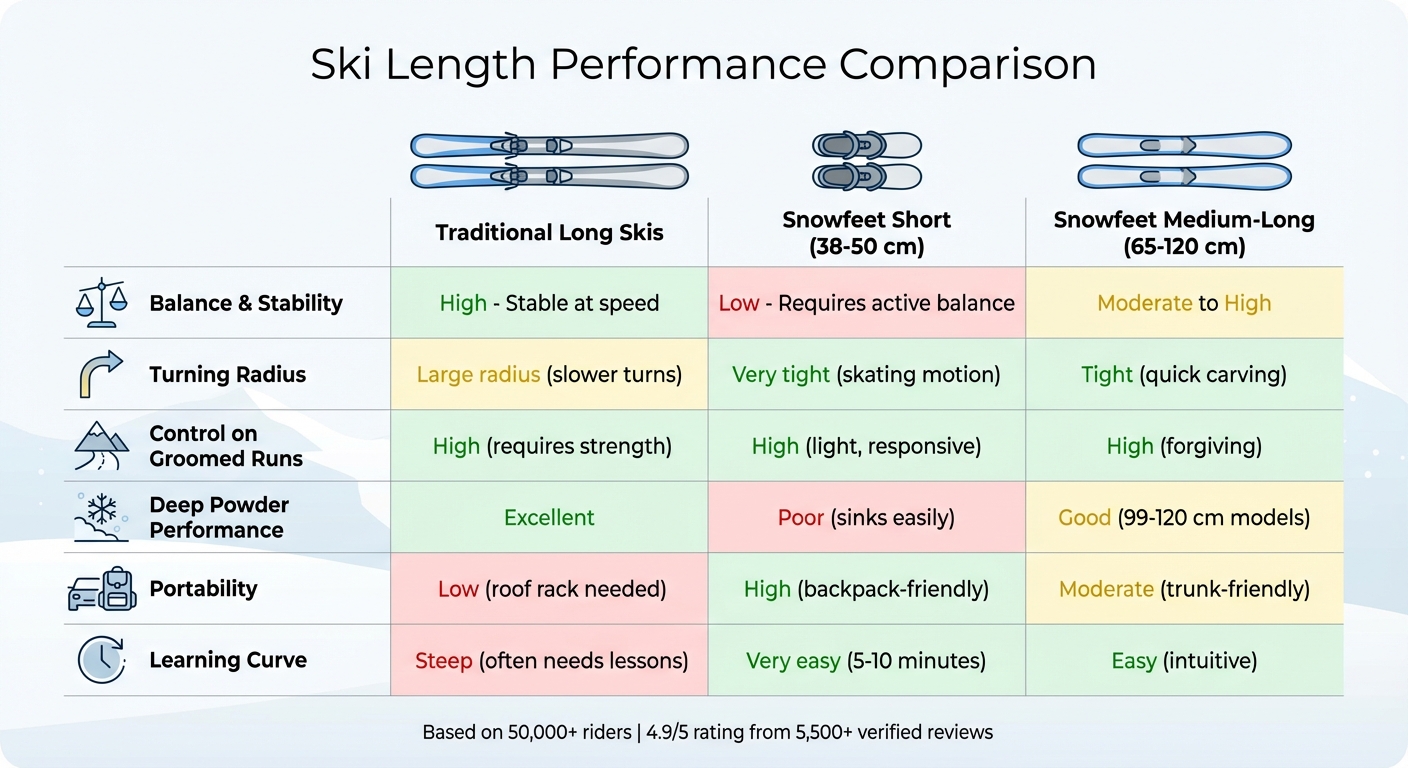
Ski Length Comparison: Traditional Long Skis vs Snowfeet Short Skis Performance Chart
Let’s break down the key differences between traditional long skis and Snowfeet's short ski options to see how they stack up in various conditions.
Traditional long skis - from well-known brands like Rossignol, K2, or Salomon - shine when it comes to high-speed stability and floating effortlessly in deep powder. Their larger surface area makes them a favorite for racing down steep, ungroomed terrain or tackling backcountry powder with confidence. But here’s the catch: they’re heavy, a pain to transport, and demand a steep learning curve.
Now, let’s talk about Snowfeet's short skis, which bring something entirely different to the table. Models like the 38 cm Mini Ski Skates ($250) and 44 cm Skiskates ($490) are compact enough to fit in a backpack and offer a super quick learning curve - perfect for beginners. The trade-off? You’ll need to stay on your toes (literally) to maintain front-to-back balance, and these are best for groomed slopes or light powder under 4 inches.
If you’re looking for more versatility, the 65 cm ($550) and 99 cm Skiblades ($590) step things up with better carving ability and stellar performance in snow parks, all while keeping the agility that traditional skis just can’t match. The 120 cm Short Skis ($775) strike the perfect balance, providing the stability of long skis without the bulk. They handle deeper powder with ease and remain nimble enough to weave through trees and moguls.
Here’s a quick comparison of the key features:
| Feature | Traditional Long Skis | Snowfeet (38–50 cm) | Snowfeet (65–120 cm) |
|---|---|---|---|
| Balance | High (stable at speed) | Low (requires active balance) | Moderate to High |
| Turning | Large radius (slower) | Very tight (skating motion) | Tight (quick carving) |
| Control on Groomed | High (requires strength) | High (light, responsive) | High (forgiving) |
| Deep Powder | Excellent | Poor (sinks easily) | Good (99–120 cm models) |
| Portability | Low (roof rack needed) | High (backpack-friendly) | Moderate (trunk-friendly) |
| Learning Curve | Steep (often needs lessons) | Very easy (5–10 minutes) | Easy (intuitive) |
With over 50,000 riders and a glowing 4.9/5 rating from more than 5,500 verified reviews, Snowfeet proves that shorter skis don’t mean you’re sacrificing performance. Instead, they deliver freedom, agility, and precision that traditional skis just can’t replicate. Whether you’re navigating tight tree runs, hitting the park, or just looking for something easier to carry, Snowfeet’s innovative designs are changing the game for skiers everywhere.
Conclusion
Ski length has a big impact on how you balance, turn, and control your movements on the slopes. Traditional long skis from brands like Rossignol, K2, and Salomon are built for stability at high speeds and perform best in deep snow. That’s why they’re often the go-to choice for professional racers and backcountry skiers tackling tough terrain. But for casual skiers looking for fun and easy-to-use gear, Snowfeet’s lineup of short skis offers a fantastic alternative.
Snowfeet’s designs cater to a range of skiing styles and skill levels. Beginners and intermediate skiers can quickly get the hang of carving with options like the Mini Ski Skates ($250) and Skiskates ($490). These are lightweight, easy to carry, and help build confidence fast. If you’re after more variety, the 65 cm and 99 cm Skiblades are perfect for quick, sharp turns in parks, while the 120 cm Short Skis deliver a more traditional feel with a good mix of stability and control on different terrains.
What’s cool about Snowfeet is that they prove shorter skis don’t mean giving up performance. Whether you’re weaving through moguls, hitting jumps, or just want gear that’s simple to transport and easy to master, their designs make skiing more accessible without the hassle of heavy equipment or a steep learning curve. Snowfeet is changing the game, blending agility and control to give you a fresh way to enjoy the slopes.
FAQs
How do I pick the right ski length for my skill level and terrain?
Choosing the right ski length comes down to your skill level, the terrain you prefer, and how comfortable you are with maneuverability. If you're just starting out, shorter skis (15–47 inches) are a great choice. They’re lighter, easier to control, and make turning feel like a breeze. Snowfeet’s Skiblades, ranging from 65 to 120 cm, are especially beginner-friendly. They strike a nice balance between stability and agility, helping you build confidence fast.
For intermediate skiers, slightly longer options like the 120 cm Skiblades can provide better edge control on steeper slopes. These models offer more surface area for stability but without the bulk of traditional skis (which are often 63 inches or longer). That means you get a smoother ride without sacrificing maneuverability. Even advanced skiers can have a blast with Snowfeet’s shorter skis. Their lightweight design makes them perfect for weaving through tight trees, pulling off park tricks, or just enjoying a playful, easygoing ride.
A simple way to pick your ski length is to start with your height and weight, then factor in your confidence and the type of terrain you’ll be tackling. For instance, a beginner who’s 5'8" and weighs 150 pounds might find a 99 cm Snowfeet Skiblade ideal - it’s stable and easy to turn. If you’re taller or heavier, the 120 cm model offers more support while still being portable and fun. Plus, Snowfeet’s compatibility with both ski and snowboard boots makes them a versatile option for skiers at any level.
What makes Snowfeet short skis better than traditional long skis?
Snowfeet short skis, including models like Skiblades (available in 65 cm, 99 cm, and 120 cm) and Skiskates (44 cm), offer a fresh twist on the traditional skiing experience. Thanks to their compact size, they’re built for quick, precise turns, making them ideal for weaving through tree runs, tackling moguls, hitting terrain parks, or navigating busy slopes. Plus, their lightweight design - often under 5 lbs - means they’re super easy to carry, store, and transport. Even better, they’re compatible with regular winter boots, so you can skip the need for pricey, specialized equipment.
For beginners and intermediate skiers, the shorter length of Snowfeet skis means a smoother learning experience with less knee strain. You’ll likely build confidence faster on the slopes, too. On top of that, they’re a budget-friendly option, with prices ranging from $150 to $690 - much more affordable than many traditional ski setups. While longer skis might shine in deep powder or at high speeds, Snowfeet short skis are all about maneuverability, simplicity, and convenience, making them a solid pick for skiers at any skill level.
Are Snowfeet short skis suitable for skiing in deep powder?
Snowfeet short skis stand out for their quick turns, precise control, and adaptability. They’re a blast on groomed slopes, packed snow, and even playful terrain where agility is key. But, because of their shorter and narrower build, they don’t quite match the floatation you’d get with traditional long skis in deep powder. So, if carving through fresh, deep snow is your goal, longer skis might be a better fit.
That said, Snowfeet products are all about making skiing simpler, more enjoyable, and accessible for everyone, no matter your skill level. They’re especially great when precision and easy maneuverability are what you need most.












Leave a comment
This site is protected by hCaptcha and the hCaptcha Privacy Policy and Terms of Service apply.