




















Short skis are a game-changer for casual skiers. They’re lightweight, easy to carry, and simple to learn - perfect for weekend trips. Unlike long skis, which are bulky and require steep learning curves, short skis let you hit the slopes faster and with less hassle. Whether you’re squeezing in a quick getaway or introducing someone to skiing, these compact skis save time, energy, and frustration.
Why Weekend Skiers Love Short Skis:
- Easy to transport: Fit them in your car trunk - no roof racks needed.
- Quick to learn: Most users master them in minutes, not days.
- Lightweight: Less fatigue means more fun runs.
- Versatile footwear: Use regular winter boots or snowboard boots.
Snowfeet’s lineup includes options from 38 cm Mini Ski Skates ($190) to 120 cm Skiblades ($775). Whether you’re a beginner or an experienced skier, there’s a model that fits your style. These skis are designed to make skiing more accessible and enjoyable for everyone. Ready to ditch the hassle and maximize your slope time? Let’s dive into how short skis solve common skiing challenges.
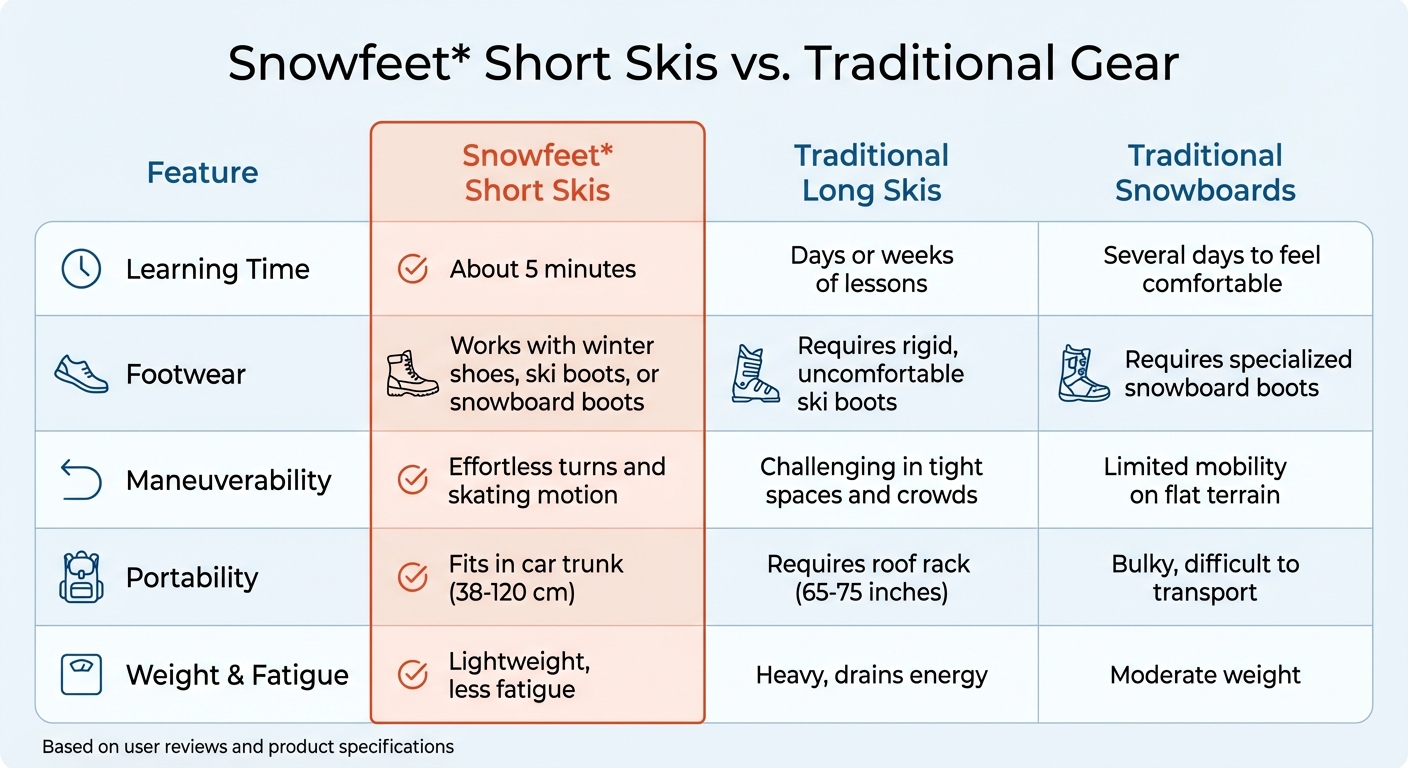
Short Skis vs Traditional Skis Comparison Chart
Problems Weekend Skiers Face with Traditional Skis
Bulky Gear is a Hassle to Transport
Let’s face it - traditional skis and snowboards are a pain to lug around, especially for a quick weekend trip. Most skis are between 65–75 inches long, which makes them awkward to handle and nearly impossible to fit inside a sedan or SUV without a roof rack. If you’re traveling with family, multiply that hassle by the number of people, and you’ve got a logistical nightmare.
Even once you’ve arrived, hauling those bulky skis through crowded parking lots or lodge areas can sap your energy before you even hit the slopes. Zbynek, the founder of Snowfeet, sums it up perfectly:
Short skis solve issues of clunkiness and unnecessary weight.
Long Learning Curve Eats Into Slope Time
Traditional long skis aren’t beginner-friendly. They require lessons, practice, and a whole lot of patience - something weekend skiers don’t have in abundance. The techniques for controlling long skis, like mastering turns and stops, often take an entire day (or more) to learn. For someone who only skis a few times a year, that’s a frustrating way to spend your precious time on the mountain.
Brandon Stanley, a Snowfeet customer, shared how this played out for his family:
I took my wife skiing last season for the first time. She did not enjoy it. This season I purchased these short skis for her and she really enjoy them. So much so that she wants to do it again!
That’s the magic of shorter skis - they’re easier to pick up, so you can skip the steep learning curve and get straight to the fun.
Heavy Equipment Drains Your Energy
Traditional skis don’t just test your skills; they test your stamina. Their weight and length turn what should be a fun day into a workout. All that extra material - especially the unnecessary length at the front and back - adds pounds without adding much to your experience. For recreational skiers, this extra heft makes every movement harder, especially on the hardpack snow common at many U.S. resorts.
Skiers in forums often mention how traditional skis can feel like a "grind" on tired legs, particularly in crowded areas where precise control is needed. And when you’re already fatigued, you’re more likely to call it quits early or skip a session altogether. For weekend warriors with limited time on the slopes, heavy gear is a dealbreaker. Short skis, on the other hand, are lighter and easier to handle, helping you stay energized longer and make the most of your ski days.
How Short Skis Fix These Problems
Easier to Learn and Control
Short skis make learning to ski a breeze. Instead of spending hours struggling with tricky techniques, you can get the hang of the basics in no time. Snowfeet* short skis, ranging from 38 cm to 99 cm, are crafted for easy handling. They ditch the bulk of traditional skis, making turning, carving, and stopping much simpler.
Their movement feels natural, almost like ice skating or inline skating, which many people find second nature. You don’t need to master complex weight shifts or intricate edge control like you would with longer skis. For those who only ski a few weekends a year, this means less time wrestling with your gear and more time enjoying the slopes.
Experts in ski sizing often recommend shorter skis for beginners because they’re easier to handle. Short skis make turning and stopping quicker and smoother, helping you build confidence faster. On groomed trails, their compact size allows for tighter, more precise turns without the challenge of managing long, heavy skis. Plus, they’re less physically demanding, so you can ski longer without wearing yourself out.
Lighter Weight Means Less Fatigue
Short skis don’t just make skiing easier - they also make it less exhausting. Their smaller size and lighter weight take a load off your legs, letting you ski longer without feeling like you’ve run a marathon. This is especially helpful as the day goes on and the snow conditions start to vary.
On hard-packed snow or crowded trails, short skis feel almost effortless to maneuver. You’ll notice the difference as you squeeze in extra runs without the usual fatigue. And here’s a bonus: many Snowfeet* models work with comfy snowboard boots instead of stiff, plastic ski boots. That means walking around the resort, navigating lift lines, and hopping on and off lifts is way more enjoyable.
Easy to Carry and Travel With
Portability is a huge win for short skis. They’re compact enough to fit in your car’s trunk - no need for bulky roof racks or wrestling with long equipment in the parking lot. Snowfeet* skis are small enough to stash in a backpack or the back seat of a sedan, which is super convenient for family trips to the slopes.
Their size also makes them easy to carry through crowded ski lodges. As one happy Snowfeet* user shared:
"I hate getting stuck on a hill in skis because they're so long and bulky. Since these are shorter, you can just skate right up."
- Sophia Kane, Verified User
Snowfeet* designs their skis with travel in mind. Whether you’re packing up your gear for a weekend getaway or storing it at home, their compact size makes life easier. When your equipment is this simple to transport and store, you’re more likely to hit the slopes and enjoy every minute of your ski trip.
Why Snowfeet* Short Skis Beat Traditional Gear
Snowfeet* Product Options
Snowfeet* has a lineup of short skis designed for skiers who want more fun and less hassle on the slopes. Their range includes Mini Ski Skates (38 cm) starting at $190, Skiskates (44 cm and 50 cm) priced between $250 and $490, and Skiblades (65 cm to 120 cm) ranging from $550 to $775. The idea behind these designs is simple: "long enough to ski, short enough to skate."
What makes these skis stand out? Versatility. Unlike traditional skis that tie you down with stiff, uncomfortable ski boots, many Snowfeet* models work with regular winter shoes or snowboard boots. For example, the 44 cm Skiskates come with wood core construction and bindings that fit ski or snowboard boots, giving you multiple options for footwear. The 65 cm Skiblades, on the other hand, add more stability while keeping things quick and agile compared to standard skis. With over 50,000 riders worldwide and more than 5,500 verified reviews averaging 4.9 out of 5 stars, these aren't just a novelty - they’re a proven alternative to bulky traditional gear.
Snowfeet* vs. Traditional Long Skis and Snowboards
Snowfeet* short skis solve many of the problems weekend skiers face with traditional equipment. Here’s how they stack up:
| Feature | Snowfeet* Short Skis | Traditional Long Skis | Traditional Snowboards |
|---|---|---|---|
| Learning Time | About 5 minutes | Days or weeks of lessons | Several days to feel comfortable |
| Footwear | Works with winter shoes, ski boots, or snowboard boots | Requires rigid, uncomfortable ski boots | Requires specialized snowboard boots |
| Maneuverability | Effortless turns and skating motion | Challenging in tight spaces and crowds | Limited mobility on flat terrain |
While brands like Rossignol, K2, and Burton focus on high-speed performance and tackling deep powder, Snowfeet* focuses on what many skiers value most: portability, quick learning, and having a blast on the slopes.
Different Models for Different Skiing Styles
Snowfeet* designs its models to fit a variety of skiing styles, from playful skiskating to serious carving. This makes it easy to find the right gear for your favorite way to hit the slopes.
If you’re into a skating-like experience, the 38 cm Mini Ski Skates and 44 cm Skiskates are perfect for navigating terrain parks or weaving through tight tree runs - places where traditional skis can feel awkward. For a bit more durability and adjustable bindings, the 50 cm Skiskates (Snowfeet_ PRO)* are a great middle-ground option, priced at $275.
For those who want more stability but still love the freedom of short skis, the 65 cm to 99 cm Skiblades offer a carving experience similar to traditional skis, but without the bulk. And if you’re an advanced skier looking for compact yet performance-focused gear, the 99 cm and 120 cm models pack serious carving power into a portable package. As one happy user, Andrew B., put it:
These skiblades are so much fun and easy to control. Never going back to regular skis.
sbb-itb-17ade95
How to Choose the Right Snowfeet* Model
Best Options for Beginners and Casual Skiers
If you're just starting out with short skis or want something easy for weekend trips, the 50 cm Ski Skates are a solid choice. At $275, they offer more stability than the original 38 cm model, thanks to their longer design, which improves front-to-back balance. Most beginners can get the hang of them in about five minutes.
If portability and a "skating on snow" experience are more your style, check out the 38 cm Mini Ski Skates starting at $190. These compact skates are small enough to fit in any backpack. And for those transitioning from traditional skis, the 99 cm Skiblades ($590) are a great pick. They function a lot like regular short skis, making it easier to adapt compared to jumping straight into the skating style. These options make snow sports more approachable and fun, delivering the quick enjoyment Snowfeet* is known for.
Best Options for Parents and Families
When you're skiing as a family, convenience and space-saving gear are key. The 50 cm Ski Skates are perfect for parents managing kids, gear, and limited trunk space. They're lightweight, easy to use, and stable enough to reduce the need for constant assistance. Plus, they’re a budget-friendly alternative to traditional ski equipment.
For even tighter spaces - think small car trunks or public transit - the 38 cm Mini Ski Skates are a fantastic option. Since they work with regular winter boots, you can skip the hassle of renting ski boots or dealing with uncomfortable footwear. These skates are ideal for families who want to make the most of their time on the slopes without the extra baggage.
Best Options for Advanced Skiers
If you're an experienced skier looking for high-performance gear, Snowfeet* has models designed to deliver control and energy return. The 99 cm Skiblades with a wood core, priced at $590, are built for aggressive carving and park jumps. They provide a responsive ride that advanced skiers will love. As one rider, Daniel Siouffi, shared:
My first run the skis did shake but soon thereafter by distributing better my weight on my toes - I was flying like never before. Going fast I was in complete control of every move, turns, and stops.
For those chasing high-speed stability or tackling deep powder, the 120 cm model at $775 is a standout. It combines exceptional performance with portability, and it’s the only model compatible with standard safety release ski bindings. This adds a layer of control similar to traditional downhill skis. Planning some backcountry adventures? The 100 cm Walkski ($690) is designed for off-piste touring while keeping the compact advantage Snowfeet* is known for.
Short Skis vs. Long Skis
Conclusion
Weekend skiers in the U.S. want gear that’s easy to handle and keeps the focus on enjoying the slopes. Short skis check all the boxes. Snowfeet* offers a range of options, from the ultra-compact 38 cm Mini Ski Skates priced at $190 to the high-performance 120 cm Short Skis at $775. These skis bring unmatched portability, a quick learning curve, and less fatigue compared to traditional long skis or snowboards.
With Snowfeet*, beginners can pick up the basics in minutes, while the slightly shorter 5–10 cm design provides excellent control. Whether you're new to skiing, a parent managing kids and gear, or a seasoned skier looking for a more agile ride, these skis deliver exactly what you need.
On groomed runs and at moderate speeds, short skis offer stability and effortless control. Forget the hassle - no need for roof racks, pricey lessons, or clunky plastic boots.
Snowfeet* turns your ski trips into pure fun, all while fitting neatly in your car trunk.
FAQs
What makes short skis a better choice for weekend skiers compared to traditional skis?
Short skis, like Snowfeet’s Skiblades (65–120 cm) and Skiskates (44 cm), are all about keeping things light, fun, and easy - perfect for a laid-back weekend on the slopes. Their compact size makes them a breeze to control, so you can pull off quick turns, spins, and playful moves without breaking a sweat. Even if you’re just starting out, the learning curve is super forgiving. Oh, and did we mention? They’re lightweight - usually under 5 lbs - and compact enough to toss into a backpack. No more dragging around bulky gear!
Now, while traditional skis shine when it comes to high-speed runs, carving precise turns, or tackling deep powder, they can feel like a bit of a workout to manage and take more time to master. That’s where Snowfeet’s short skis come in. They’re perfect for skiers who want to pack as much fun as possible into a short trip. With their unmatched portability and user-friendly design, they’re a dream for those quick weekend getaways. If having a blast with minimal hassle is your goal, short skis are your best bet!
Are short skis suitable for both beginners and experienced skiers?
Short skis are a fantastic option for beginners. Why? They’re much easier to control and make learning faster and less intimidating. Their smaller size helps new skiers turn and stop with ease, giving them the confidence to enjoy the slopes right from the start.
For seasoned skiers, short skis like Snowfeet Skiblades and Skiskates bring a whole new level of fun. They’re incredibly agile and responsive, making them ideal for pulling off tricks, hitting terrain parks, or just having a lively, playful ride. So, whether you’re just beginning your skiing journey or looking to add some flair to your skills, short skis offer something for everyone.
Why are short skis a great option for family ski trips?
Short skis, like Snowfeet Skiblades and Skiskates, are a game-changer for family ski trips. Why? For starters, their compact size - anywhere from 15 to 47 inches - makes them super lightweight and easy to carry. They’re small enough to fit right into a regular backpack, so you can skip the drama of lugging around bulky gear. This means families can pack multiple pairs for everyone - kids, teens, and adults - without worrying about overweight luggage or shelling out for pricey rentals. And here’s the kicker: you don’t need specialized ski boots. These skis work with regular winter shoes or snowboard boots, saving you a chunk of change.
Short skis aren’t just convenient - they’re also perfect for beginners. Their smaller size makes them easier to control, so you can take quicker turns and manage your speed without breaking a sweat. This is especially great for kids or anyone just starting out. With a faster learning curve, you’ll spend less time fumbling with technique and more time actually enjoying the slopes. Whether you’re sticking to gentle beginner trails or diving into more playful terrain, Snowfeet’s short skis bring a new level of ease, affordability, and fun to your family’s ski adventures.













Leave a comment
This site is protected by hCaptcha and the hCaptcha Privacy Policy and Terms of Service apply.