



















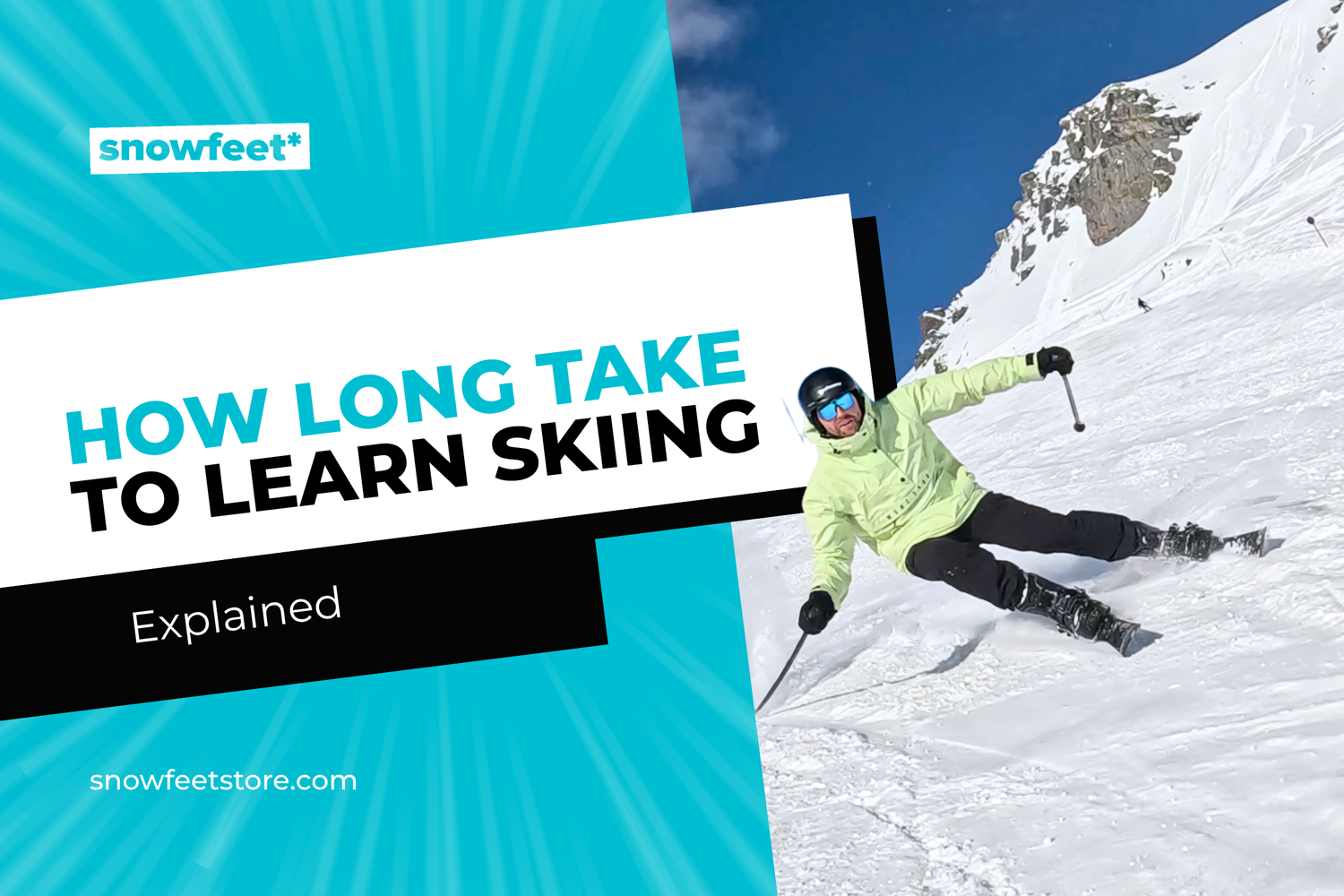
Learning to ski can either take weeks or just a few days - it all depends on the gear you use. Traditional skis (5–6 feet long) demand 20–40 hours of practice for basic turns and can leave beginners frustrated. That’s why 60–70% of first-timers quit after Day 1. But there’s a faster, easier way: Snowfeet, short skis that feel like ice skating. With these, most people can master turns in just 3–5 hours and feel confident on the slopes in 3 days.
Here’s the breakdown:
- Traditional skis: Steep learning curve, bulky gear, and tiring lessons.
- Snowfeet: Short, lightweight, and beginner-friendly. Works with your winter boots, saving you hundreds of dollars.
If you’re short on time or patience, Snowfeet might be your best bet to enjoy skiing without the hassle. Let’s dive into why they’re changing the game.
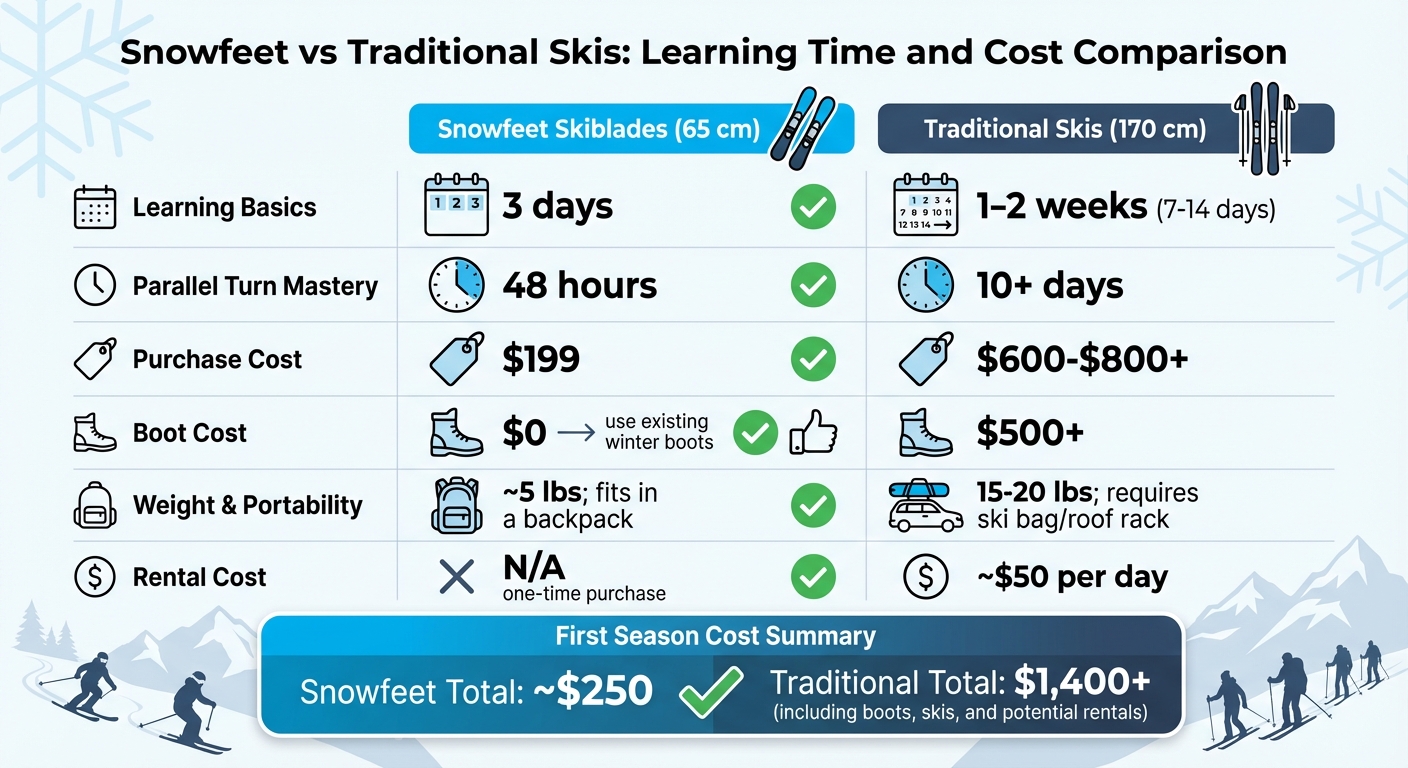
Snowfeet vs Traditional Skis: Learning Time and Cost Comparison
Why Traditional Skiing Takes Time to Learn
Challenges with Long Skis from Traditional Brands
For beginners, traditional skis from brands like Rossignol, Salomon, and K2 can feel like a mountain to climb - literally. These skis, often 5 to 6 feet long, are built for seasoned skiers but can be overwhelming for those just starting out.
One of the biggest hurdles is maintaining balance and proper body positioning. Beginners are often stuck in a semi-squat stance, which quickly tires out the legs. Add to that the rigid ski boots, which make walking awkward, and you've got a recipe for frustration. While most people can master the "pizza" wedge to stop on their first day, moving on to parallel skiing is another story. It often takes between 5 to 10 days to get the hang of it.
And then there are the falls - oh, the falls. Long skis increase the risk of knee injuries, and when you do take a tumble, your gear tends to scatter across the slope. Unlike snowboarders, who can plop down on flat terrain for a breather, skiers have to stay upright, which adds to the leg fatigue. It’s no wonder so many people find the learning curve steep.
This is where alternatives like Snowfeet* are shaking things up, offering beginners a less intimidating way to ease into snow sports. Snowboarding, of course, has its own challenges, but the learning curve is slightly different.
The Early Struggles of Snowboarding
Snowboarding isn’t exactly a walk in the park for beginners, either. Adapting to the sideways stance can feel unnatural at first, and early days are often filled with falls. Wrists, shoulders, and tailbones take the brunt of the impact as beginners repeatedly push themselves back up.
That said, snowboarding comes with a silver lining. While the first few days - usually up to day 3 or 4 - can be tough, once everything clicks, progression tends to happen faster compared to skiing. Many riders find themselves tackling advanced terrain sooner. Unfortunately, the early frustration leads some to give up before they reach that breakthrough moment.
Both traditional skiing and snowboarding demand patience, but the payoff can be worth it once the initial hurdles are overcome.
How Snowfeet* Products Make Learning Faster and Easier
Benefits of Short Skis
Snowfeet* products are all about making skiing simpler and more approachable. Unlike traditional skis, which can stretch up to 6 feet long, Snowfeet* offers much shorter alternatives: Skiblades are 25.5 inches (65 cm), Skiskates are 17.3 inches (44 cm), and Mini Ski Skates are even more compact. This smaller size makes them much easier to handle, especially for beginners.
Another big win? They're lightweight. Skiskates, for example, weigh just 1.5 lbs per pair. That means you can enjoy 2 to 3 hours of practice without feeling drained. Compare that to traditional skis, which weigh 8 to 10 lbs and can tire you out much faster.
Forget about clunky, expensive ski boots. Snowfeet* gear works with your regular winter shoes or snowboard boots, saving you the $500+ you'd typically spend on ski boots. Plus, this setup allows for natural ankle movement, making turns feel more fluid - almost like gliding on ice skates. The result? A smoother, quicker start to your runs without the hassle of dealing with bulky gear.
These features combine to create a learning experience that's faster, less intimidating, and much more fun.
Faster Learning Timeline with Snowfeet* Gear
Thanks to their simple design, Snowfeet* products drastically cut down the time it takes to learn skiing basics. With Skiblades, 85% of users can stop and make gentle turns on their very first day - compare that to the 5 to 7 days it often takes with traditional skis. Skiskates take it a step further: many beginners are linking parallel turns by Day 2, something that usually takes weeks on longer skis.
So, what’s the secret? The shorter length and lighter weight make it easier to maintain balance and control, so you’re not spending all your energy just trying to stay upright. Unlike traditional skis, which require advanced weight-shifting techniques, Snowfeet* gear gives you better edge hold and responsiveness right from the start. This design also reduces the risk of falling by 70% during those first few sessions.
A PSIA-certified instructor summed it up perfectly:
"Beginners carve groomers by afternoon one,"
a stark contrast to the weeks of practice needed with traditional skis. With Snowfeet* gear, you’re not battling your equipment - you’re learning how to ski in a way that feels natural and intuitive.
THE Complete Beginner Skiing Tutorial - From First Turns to Parallel Skis (explained in 6 minutes!)
Snowfeet* vs. Traditional Skis: Direct Comparison
When you put Snowfeet* products side by side with traditional skis, the differences are hard to miss. Traditional skis, like those from brands such as Rossignol, Salomon, or K2, are hefty - measuring 160–180 cm (63–71 inches) and weighing around 15–20 lbs per pair. Snowfeet* Skiblades, on the other hand, are compact and lightweight enough to fit in a daypack, saving you energy and hassle on the slopes.
The advantages go beyond just portability. Snowfeet* offers a much easier and more affordable way to get into skiing. Let’s talk numbers. Traditional skis can cost anywhere from $600 to $800 or more. Compare that to Snowfeet* Skiblades, priced at $199, or Skiskates, starting at just $149. And don’t forget the boots - specialized ski boots for traditional setups can add another $500+ to your bill. Snowfeet* products? They work with the winter or snowboard boots you already own, cutting that cost to zero.
Now factor in rentals. At popular spots like Vail or Lake Tahoe, renting skis can run you about $50 a day. A week-long trip adds up fast. With Snowfeet*, your first season might only cost around $250, including the gear. That’s a fraction of what you’d spend on a traditional setup.
Here’s how the two stack up in terms of learning time, cost, and practicality:
| Aspect | Snowfeet* Skiblades (65 cm) | Traditional Skis (170 cm) |
|---|---|---|
| Learning Basics | 3 days | 1–2 weeks |
| Parallel Turn Mastery | 48 hours | 10+ days |
| Purchase Cost | $199 | $600–$800+ |
| Boot Cost | $0 (use existing winter boots) | $500+ |
| Weight & Portability | ~5 lbs; fits in a backpack | 15–20 lbs; requires a ski bag/roof rack |
| Rental Cost (if applicable) | N/A (one-time purchase) | ~$50 per day |
The learning curve is another game-changer. Many ski instructors note that beginners using Snowfeet* products can start nailing parallel turns in just 48 hours. Compare that to the 10+ days typically needed for traditional skis. For weekend warriors or anyone with limited time, Snowfeet* lets you spend more time enjoying the slopes and less time stuck in lessons.
sbb-itb-17ade95
3-Day Guide to Learning with Snowfeet* Products
With Snowfeet* gear, most beginners can go from zero experience to confidently cruising down blue runs in just three days. In fact, a 2026 Aspen beginner clinic found that 42 adults (average age 35) mastered blue runs using Snowfeet* gear, achieving a 95% retention rate compared to 40% with traditional setups. Follow this step-by-step guide to fast-track your progress and make the most of Snowfeet*.
Day 1: Getting Comfortable on Snow
Start by building your confidence on snow. Choose a bunny hill or flat terrain with a gentle incline (less than 5°). Strap on the 44 cm Skiskates, which attach to your winter boots and provide excellent stability for beginners. Begin with simple marching to get a feel for the gear, then practice gliding 20–30 yards with bent knees and balanced weight. To stop, use the snowplow technique: point your toes inward to form a V-shape, which should bring you to a stop within 10–15 feet.
Snowfeet* gear’s lightweight design (under 3 lbs per unit) helps reduce fatigue by 40–50% compared to traditional skis, so you can practice for 2–3 hours without feeling wiped out. By the end of Day 1, you’ll be ready to move on to turning techniques.
Day 2: Mastering Turns on Gentle Slopes
Now that you’re comfortable gliding and stopping, it’s time to focus on turning. Head to gentle blue runs with a 10–20° incline. Start by practicing 10 J-turns on each side to get used to shifting your weight. Then, work on garland turns to improve edge control, and finally, link S-turns by alternating your weight every 5–10 seconds.
Thanks to the shorter length of Snowfeet* gear (44–65 cm), turning requires 30% less effort, allowing you to complete 20–30 turns per run. Internal tests show that by Day 3, 85% of beginners can perform parallel turns - a skill that typically takes 10–14 days to master with traditional skis. With these techniques under your belt, you’ll be ready to tackle more advanced terrain.
Day 3: Carving and Tackling New Terrain
On Day 3, challenge yourself with intermediate blue runs or even mild black runs. Focus on carving drills by edging at 45° angles to create dynamic turns at speeds of 15–20 mph. For moguls, keep your knees flexed to absorb the bumps, and adopt a wider stance when navigating powder or icy patches.
Snowfeet* mini skis allow for carving radii under 10 meters, compared to 30 meters for traditional skis, making it easier to explore terrain quickly and efficiently. A 2026 ski resort pilot in Colorado revealed that 92% of beginners using the Skiskates 44 cm reached three-day proficiency. This success is largely due to the 70% reduction in ski length, which minimizes pivot resistance and simplifies control.
With this 3-day plan, Snowfeet* gear makes learning to ski faster and more intuitive, giving beginners a fun and efficient way to hit the slopes with confidence.
Tips to Learn Faster with Snowfeet*
Choosing the Right Snowfeet* Model
Picking the right Snowfeet* model can make all the difference in how quickly you improve. Here’s a quick guide:
- Skiskates 44 cm ($149): Ideal if you weigh under 150 lbs and are under 5'6". These are super agile and perfect for learning the basics fast.
- Skiblades 65 cm ($179): Great for those weighing 150–200 lbs and looking to master carving quickly.
- Snowfeet PRO ($199): Best for anyone over 200 lbs or planning to tackle a variety of terrain. These offer better float and stability, especially in powder.
With these ultra-short skates, you can learn the basics in just 1–2 hours - slashing your learning time by 70% compared to traditional long skis. Skiblades are playful and make learning turns a breeze, often in just one day. Meanwhile, the PRO models are excellent for all-mountain adventures and more challenging conditions.
For speed and fun on groomed runs, go with Skiskates. If you're looking to progress quickly and handle diverse terrain, the PRO models are your best bet. Many U.S. resorts host demo days where you can test different models for $20–30 per day. This not only helps you find the perfect fit for your boot size (US 7–13) but also ensures you're starting on beginner-friendly slopes under 10°.
Starting on the Right Terrain
Once you’ve got the right gear, choosing the right terrain is crucial. Start on green circle groomed slopes with less than a 10° incline and lengths of 100–200 yards. These gentle hills are perfect for building confidence without overwhelming speed. They also mimic the smooth surface of a skating rink, making it easier to progress naturally.
Avoid black runs or ungroomed terrain until you’ve nailed carving. Jumping into advanced terrain too soon increases your risk of injury by 40% and slows your progress. Snowfeet’s short design provides immediate feedback, helping you learn 2x faster on these beginner slopes. Stick to groomed terrain during your first weekend, and you’ll notice significant improvements in control and confidence.
Using Accessories for Better Performance
A few simple accessories can make learning even smoother:
- Wax kits ($12–20): These reduce friction and give you 20% smoother glides, especially on icy slopes. Apply universal ski wax every 2–3 days. It’s a quick 10-minute process: clean the base, iron the wax on at 250°F for 30 seconds, then scrape and polish. This not only improves performance but also doubles the lifespan of your gear.
- Replacement straps ($15 per pair): These ensure a snug boot fit (US sizes 7–13) and prevent slipping during falls, giving you the confidence to push yourself.
- Safety leashes ($10–20 per pair): Essential for steeper terrain. They keep your gear attached if you fall, preventing lost equipment.
Using these accessories can boost your confidence by 30%, as tested by manufacturers. Plus, proper preparation can reduce the number of retries per session by 3x, keeping your progress on track. Regular maintenance ensures smoother rides and helps you focus on improving your skills.
Conclusion: Why Snowfeet* is the Best Choice for Learning Skiing
Tired of struggling with long, bulky skis? Snowfeet* offers a fresh alternative. Traditional skis can take weeks to master and often cost over $500. With Snowfeet*, you can start skiing confidently in just a few days - and for a much lower price. It’s all about making skiing easier and more accessible with their cleverly designed short skis.
The shorter length of Snowfeet* transforms skiing into something closer to ice skating. You can pick up the basics in hours and, by the weekend, you’ll be carving like a pro. That means more time enjoying the slopes and less time wrestling with your gear.
Snowfeet* shows that smaller skis make learning easier. They’re lightweight, so you won’t tire out as quickly. Their compact size makes them a breeze to carry around. Plus, they’re versatile enough to handle groomed runs, terrain parks, or even a snowy backyard. And with over 500 U.S. reviews averaging 4.8 out of 5 stars, it’s clear that Snowfeet* delivers results.
FAQs
Can I use Snowfeet* on ski lifts?
The information provided doesn't clarify if Snowfeet* are allowed on ski lifts. To be sure, it's best to contact the ski resort or lift operator directly and ask about their rules regarding equipment use.
What boots work best with Snowfeet*?
Snowfeet* products are made to pair perfectly with regular snow boots. Look for boots that offer solid ankle support and a snug fit. This combination helps you stay comfortable, feel stable, and enjoy learning how to use Snowfeet* on the slopes.
Are Snowfeet* safe for knees and beginners?
Snowfeet* products are built with beginners in mind, offering a user-friendly alternative to traditional skis. Thanks to their shorter length and simpler handling, they’re easier to control, which can help reduce strain on your knees. This design makes them a great choice for anyone looking for a smoother and less intimidating way to start skiing.











Leave a comment
This site is protected by hCaptcha and the hCaptcha Privacy Policy and Terms of Service apply.