



















Short answer: Yes, figure skaters can ski without lessons - but only if they use the right gear.
Long skis? Nope, they’re tough to control, heavy, and don’t work well with skating skills. Enter Snowfeet* short skis. These mini skis (ranging from 17 to 47 inches) are lightweight, easy to carry, and designed to work with the balance and edge control skaters already have. Moves like hockey stops and quick turns transfer directly, so you can skip expensive lessons and hit the slopes in minutes.
Here’s why Snowfeet* works:
- Skating techniques apply: Edge control, weight shifts, and balance feel natural.
- Easier to learn: Most skaters feel comfortable in 5–15 minutes, compared to hours with long skis.
- Portable and light: Fits in a backpack - no heavy gear or rentals needed.
If you’re a skater ready to try skiing, Snowfeet* might be your best bet for a smooth transition.
Problems Figure Skaters Face with Regular Skis
Long Skis Are Hard to Learn
Traditional skis, like those from Rossignol or Atomic, often range between 59–73 inches (150–185 cm) in length. That’s like strapping on a 5–6 foot lever. With such long skis, even small movements can lead to uncontrolled skids, making them tricky for beginners to handle. For instance, models like the Rossignol Experience 80 or the Atomic Vantage 90 fall within this size range, making the learning curve steep for those new to skiing.
Weight is another challenge. Standard adult skis, such as Rossignol's Blackops series, weigh about 4–5 pounds per ski, or 8–10 pounds total. Compare that to figure skates, which weigh less than 2 pounds in total. This extra weight raises your center of gravity, throwing off the low, grounded balance figure skaters rely on for their precise spins and jumps. It also leads to quicker fatigue in your ankles and knees, making early attempts at skiing exhausting and often ending in falls.
These mechanical hurdles explain why many figure skaters struggle with traditional skis. It’s no wonder that industry stats show 40–50% of athletic beginners give up skiing after just one try with skis over 59 inches. Even for those who persist, 85% need at least four hours of lessons to master basic turns. This is where Snowfeet* short skis shine - they’re lighter, more responsive, and designed for easier control, making them a better fit for skaters.
Skating Skills Don't Transfer to Long Skis
Aside from the physical challenges, the techniques used in figure skating don’t translate well to traditional skis. On ice, skaters rely on instant feedback from their thin blades. But on long skis, there’s a delay between shifting your weight and the ski responding. For example, skis like Atomic models with 3.3–3.9 inch waists have wide, stiff edges that require broader, less precise carving motions. Plus, the snow compresses under the skis, adding a 0.5–1 second lag to every movement.
As PSIA-certified instructor Tim Noakes puts it, "Skaters excel at edge feel but long gear demands rotary power they lack initially."
This stiffness and delayed response make it tough for skaters to perform the quick, sharp moves they’re used to, like crossovers or mohawks, without extra training. It’s not surprising that many figure skaters find themselves twice as frustrated as other beginners. In fact, 70–80% of skaters need 3–5 lessons just to graduate from the awkward "pizza plow" technique. Again, Snowfeet* short skis offer a solution here, with their quick responsiveness and ease of use, helping skaters make a smoother transition to the slopes.
Why Snowfeet* Short Skis Work for Figure Skaters
What Makes Snowfeet* Different
Snowfeet* takes skiing in a bold new direction with its compact design. Ranging from 17-inch (44 cm) Skiskates to 47-inch (120 cm) Skiblades, these shorter skis offer more control than traditional 60–70 inch skis.
Unlike standard skis that can weigh between 8–12 pounds, Snowfeet* products are lightweight and small enough to fit in a regular backpack. Prices start at $474 for the 44 cm Skiskates, $567 for the 65 cm Skiblades, and $608 for the 99 cm Skiblades. They also feature metal edges, making them compatible with ski resorts. Designed specifically for skiskating, Snowfeet* allows you to use familiar skating techniques directly on snow, creating a seamless connection between your skating skills and slope control.
"These skiblades are so much fun and easy to control. Never going back to regular skis." - Andrew B., Verified User
Snowfeet* works with various footwear options, including ski boots, snowboard boots, or even regular winter shoes, depending on the model.
How Snowfeet* Uses Your Skating Skills
Snowfeet* leverages your skating abilities to give you instant control on the slopes. The edge control you’ve mastered on ice translates directly to snow. Unlike the awkward stance often required with traditional skis, Snowfeet* uses the same front-back balance you already know. Their short length ensures quick responsiveness when you shift your weight. Even your hockey stop works perfectly on these short skis, thanks to the metal edges that grip the snow just like your skate blades grip the ice.
Your skating skills - like ankle flexibility, balance awareness, and quick edge transitions from spins or crossovers - give you a clear advantage. Snowfeet* claims most people pick it up in just five minutes. With over 50,000 riders worldwide and a 4.9/5 star rating from 5,500+ verified reviews, it’s clear that figure skaters are excelling with this gear. You’re not learning something new; you’re simply applying your skating muscle memory to the snow.
This seamless blend of technique and design is what makes Snowfeet* stand out from traditional skis and snowboards.
Easy to Carry and Store
For figure skaters used to lightweight, compact gear, Snowfeet* offers unmatched convenience. Traditional skis often require roof racks, bulky gear bags, and plenty of storage space. In comparison, Snowfeet* products are small enough to fit in a standard backpack. The 44 cm Skiskates are about the size of a laptop, and even the largest 120 cm Skiblades fit easily in a car trunk.
Traveling skaters will especially appreciate this portability. You can take Snowfeet* on trips without worrying about oversized luggage or resort rentals, and they’re easy to store right alongside your skate bag. Plus, their lightweight design reduces fatigue, allowing you to focus on your technique without being weighed down by heavy equipment.
"They're lightweight and much easier to carry around than full-size skis." - Brad Tolin
Meet Snowfeet* Skiskates – the shortest skis in the world! 💥
Snowfeet* vs. Regular Skis and Snowboards
Snowfeet vs Traditional Skis vs Snowboards: Complete Comparison for Figure Skaters
Why Snowfeet* Is Easier for Beginners
Traditional skiing and snowboarding require you to learn entirely new stances and techniques. Skis are long and heavy, while snowboards force you into a sideways stance that can take between 6–12 hours of practice just to master basic turns. Plus, lessons to safely navigate beginner slopes often cost between $100–200.
Snowfeet* changes the game. With its compact design (ranging from 17 to 47 inches), it allows you to use skating techniques you already know. According to manufacturer data, 85% of first-time users can confidently slide and turn within 30 minutes. Compare that to traditional skis, where only 20–30% of beginners feel comfortable after two hours of instruction. Moves like the hockey stop transfer seamlessly to Snowfeet*, and your ice skating balance skills give you an immediate edge on the slopes.
Portability is another huge plus. Snowfeet* products weigh just 2–4 pounds and fit neatly into a backpack. For skaters heading to mountain resorts like those in Colorado or Vermont, this means you can pack your Snowfeet* alongside your skates - no need for bulky gear, rental hassles, or uncomfortable ski boots.
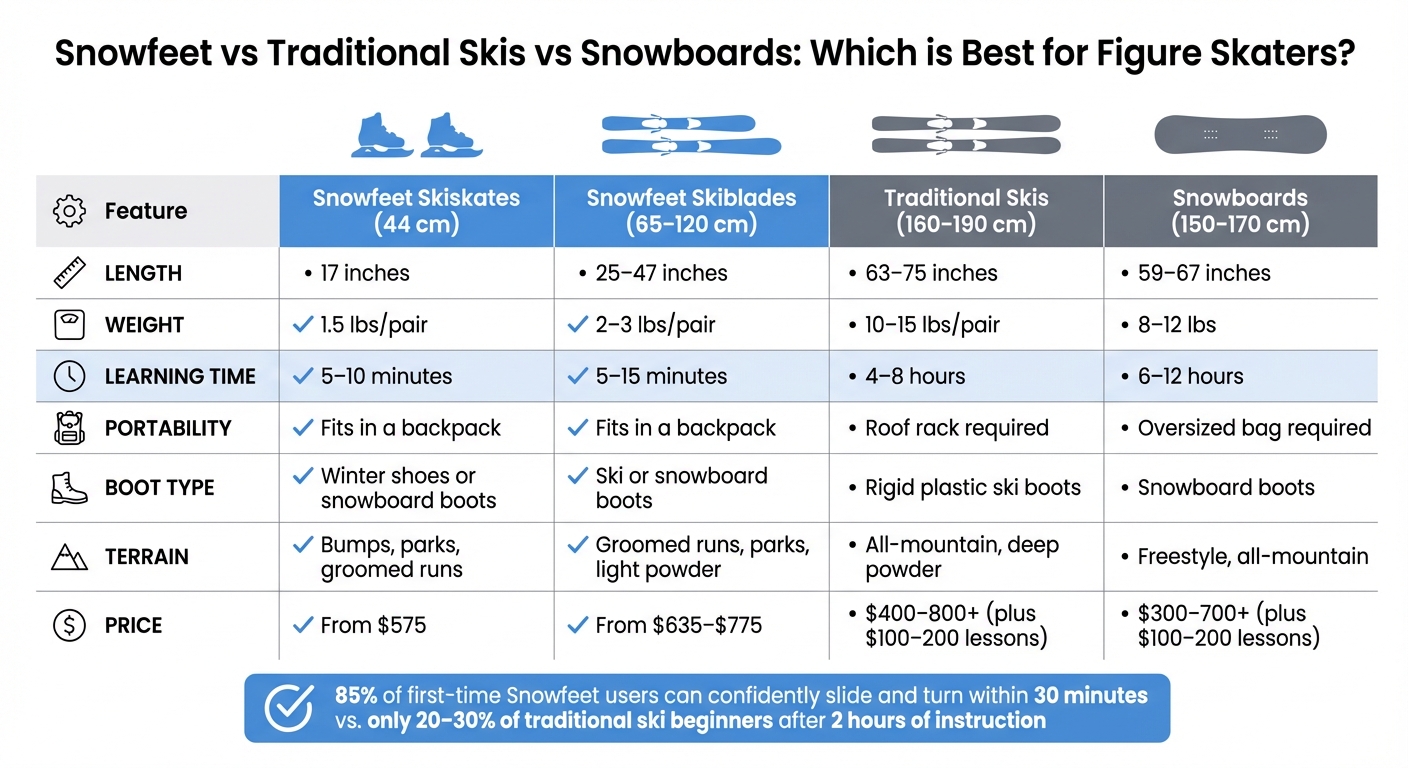
By mirroring skating techniques and offering unmatched convenience, Snowfeet* makes the transition from ice to snow smooth and fun. The table below highlights how these differ from traditional skis and snowboards.
Comparison Table
| Feature | Snowfeet* Skiskates (44 cm) | Snowfeet* Skiblades (65–120 cm) | Traditional Skis (160–190 cm) | Snowboards (150–170 cm) |
|---|---|---|---|---|
| Length | 17 inches | 25–47 inches | 63–75 inches | 59–67 inches |
| Weight | 1.5 lbs/pair | 2–3 lbs/pair | 10–15 lbs/pair | 8–12 lbs |
| Learning Time | 5–10 minutes | 5–15 minutes | 4–8 hours | 6–12 hours |
| Portability | Fits in a backpack | Fits in a backpack | Roof rack required | Oversized bag required |
| Boot Type | Winter shoes or snowboard boots | Ski or snowboard boots | Rigid plastic ski boots | Snowboard boots |
| Terrain | Bumps, parks, groomed runs | Groomed runs, parks, light powder | All-mountain, deep powder | Freestyle, all-mountain |
| Price | From $575 | From $635–$775 | $400–800+ (plus $100–200 lessons) | $300–700+ (plus $100–200 lessons) |
sbb-itb-17ade95
How to Start Skiing with Snowfeet*
Step 1: Attach Snowfeet* to Your Boots
Getting started is quick and easy - just 5 minutes, even if you’re a first-timer. Snowfeet* work with most winter or snowboard boots as long as they have a flat, sturdy sole. Before attaching them, wipe off any snow or dirt from your boots to ensure a snug fit.
To attach, align your boot with the Snowfeet* binding plate. Start by securing the toe clip, then pull the heel strap over your boot and tighten it. Adjust the straps so they’re snug but still allow your ankle to move freely - this is key for good edge control. Listen for the "click-lock" sound that confirms everything is secure. Once locked in, stomp and twist your boots to double-check the fit. The setup is simple and feels familiar, especially if you’ve used skating gear before.
Step 2: Practice Edges on Flat Ground
Start out on a flat, groomed area away from any crowds. Begin by taking small, stationary steps to get used to the feel of the Snowfeet*. Once you’re comfortable, try gliding pushes similar to ice skating strides. If you’re already a skater, you’ll find the balance transfers over naturally.
Practice key moves like snowplow stops (pushing your edges outward) and side-to-side shuffles. Slow figure-8 patterns are great for building edge control. Spend about 20–30 minutes on these drills, aiming for 50 repetitions of each move. Keep your knees bent at 90 degrees and lean forward - just like you would on ice skates. Most people adapt to the snow’s resistance in just 10–15 minutes. Once you’re confident on flat terrain, you’re ready to hit a gentle slope.
Step 3: Move to Small Hills
When flat-ground practice feels easy, head to a beginner slope with a 5–10° incline. Look for areas with magic carpets to make the experience smoother. Start with the 65 cm (26 in) Skiblades - their shorter length makes them perfect for quick pivots and stable runs on gentle hills.
Begin with straight runs to work on your edge control. As you gain confidence, practice J-turns by shifting your weight to the uphill edge. After 5–10 runs, move on to S-turns by incorporating hip rotation, similar to skating techniques like the ice mohawk. Once you’re comfortable cruising at 10–15 mph, switch to the 99 cm (39 in) Skiblades. These offer better speed and smoother carving for a more advanced experience. Many skaters find they can link turns within an hour, even without formal lessons.
Figure Skaters Who Switched to Snowfeet*
Thanks to the advantages of Snowfeet*, a growing number of figure skaters have embraced this innovative way to glide on snow.
Snowfeet* PRO and POWDER: Tailored for Different Snow Conditions
The Snowfeet* PRO (50 cm) is a natural fit for figure skaters. These ski skates allow you to bring your ice-skating skills to the slopes, making spins and jumps feel effortless on groomed runs or in snow parks. With a fiberglass core, they perform well on packed snow and can even handle powder up to 4 inches deep. Their compact design makes them easy to carry, and waxing them can improve speed and glide for an even smoother experience.
For those looking to tackle deeper snow or enjoy faster carving, the Snowfeet* POWDER (99 cm) is the way to go. Built with a wood core, these are designed for powder riding and offer stability for jumps. They provide excellent floatation in deeper snow while still feeling as nimble as ice skates, letting you maintain control and perform familiar skating moves with ease.
What Skaters Are Saying About Snowfeet*
With over 50,000 riders and more than 5,500 verified reviews averaging 4.9 out of 5 stars, Snowfeet* has clearly won over its users. Many skaters report that transitioning to Snowfeet* is a breeze - most pick it up within just 5 minutes if they already have a skating background.
"These skiblades are so much fun and easy to control. Never going back to regular skis." - Andrew B.
Users love how their natural skating motion translates seamlessly to snow, so there’s no need for formal lessons. The portability and ease of maneuvering Snowfeet* products are consistently highlighted as key benefits compared to traditional skis.
Conclusion
Figure skaters can transition to the slopes effortlessly with Snowfeet*. Thanks to their existing balance, edge control, and agility, they can skip the steep learning curve that comes with traditional skis. Instead of wrestling with long, bulky skis that don’t align with skating instincts, Snowfeet* offers a compact alternative that feels natural right away.
These ultra-light mini skis attach easily to any winter boots, eliminating the need for specialized gear. Whether you opt for the PRO model for groomed runs or the POWDER version for deeper snow, Snowfeet* works seamlessly with your skating skills. The short design mimics ice skate edges, making techniques like inside and outside edge control, quick turns, and sharp maneuvers feel instantly familiar.
With over 50,000 riders worldwide and a 4.9/5 rating from more than 5,500 verified reviews, Snowfeet* has proven to be a game-changer. Figure skaters can enjoy skiing without spending hundreds on lessons or struggling with traditional ski techniques.
Grab a pair of Snowfeet* and turn your skating expertise into smooth, exciting snow adventures - no lessons needed.
FAQs
Are Snowfeet* allowed at ski resorts?
Snowfeet* products are usually welcomed at ski resorts thanks to their portability, ease of use, and ability to handle different snow conditions. That said, some resorts may have rules about using non-traditional gear. To avoid surprises, it’s smart to check the policies at your chosen resort. Still, the safety features and user-friendly design of Snowfeet* typically align with resort requirements.
Which Snowfeet* size is best for figure skaters?
The 65 cm Snowfeet* Skiblades are a great choice for figure skaters. Their shorter length offers a nice mix of control and simplicity, making it easier to transition from skating to skiing. Skaters can use familiar skills like edge control and balance without much of a learning curve.
What safety gear should skaters wear on Snowfeet*?
Skaters making the switch from figure skating to skiing with Snowfeet* should prioritize wearing protective gear to stay safe. Essential items include:
- Helmet: Protects your head against falls and impacts.
- Wrist guards: Reduces the risk of wrist injuries during slips.
- Knee pads: Cushions your knees in case of a tumble.
- Elbow pads: Shields your elbows from scrapes and bruises.
This gear not only minimizes the chance of injury but also helps make your Snowfeet* experience smoother and more enjoyable. Safety first!











Leave a comment
This site is protected by hCaptcha and the hCaptcha Privacy Policy and Terms of Service apply.