



















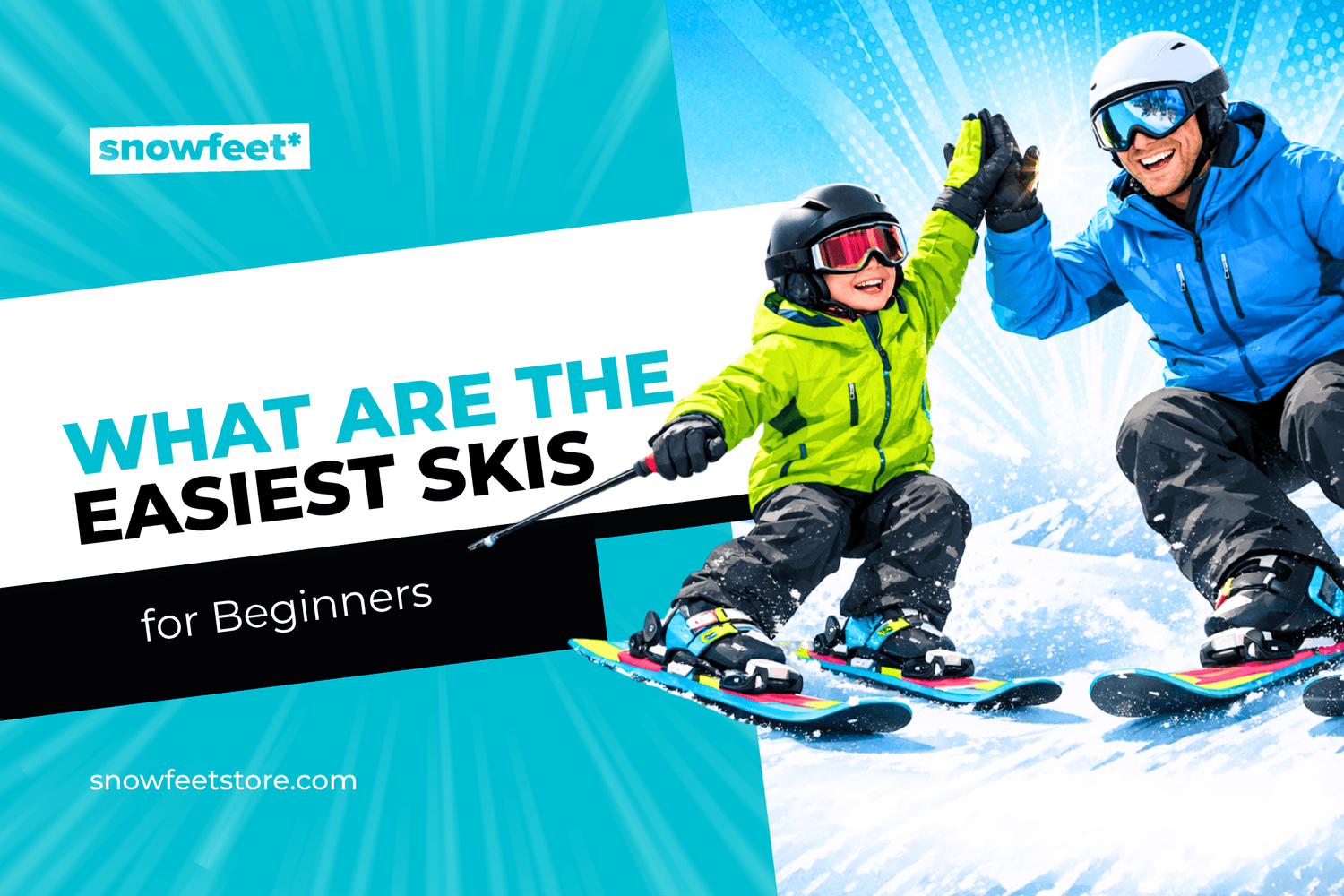
Learning to ski doesn’t have to be hard. Short skis, like Snowfeet Skiskates and Skiblades, make it easier for beginners - both kids and adults - to get started. Why? They’re lightweight, easy to control, and don’t require bulky gear like traditional long skis. Here’s the quick takeaway:
- Short skis are beginner-friendly: Easier to turn, less intimidating, and perfect for slower speeds.
- Portable and light: They fit in a backpack, unlike heavier, longer skis.
- Options for all skill levels: Start with 44 cm Skiskates ($575) or move up to Skiblades (65-120 cm, $635-$775).
Snowfeet products simplify skiing, helping you build confidence from day one. Whether you’re teaching a kid or trying skiing for the first time yourself, these shorter skis make the process smoother and more fun.
Are Short Skis Better for Beginners?
Why Short Skis Are Easier for Beginners Than Traditional Skis
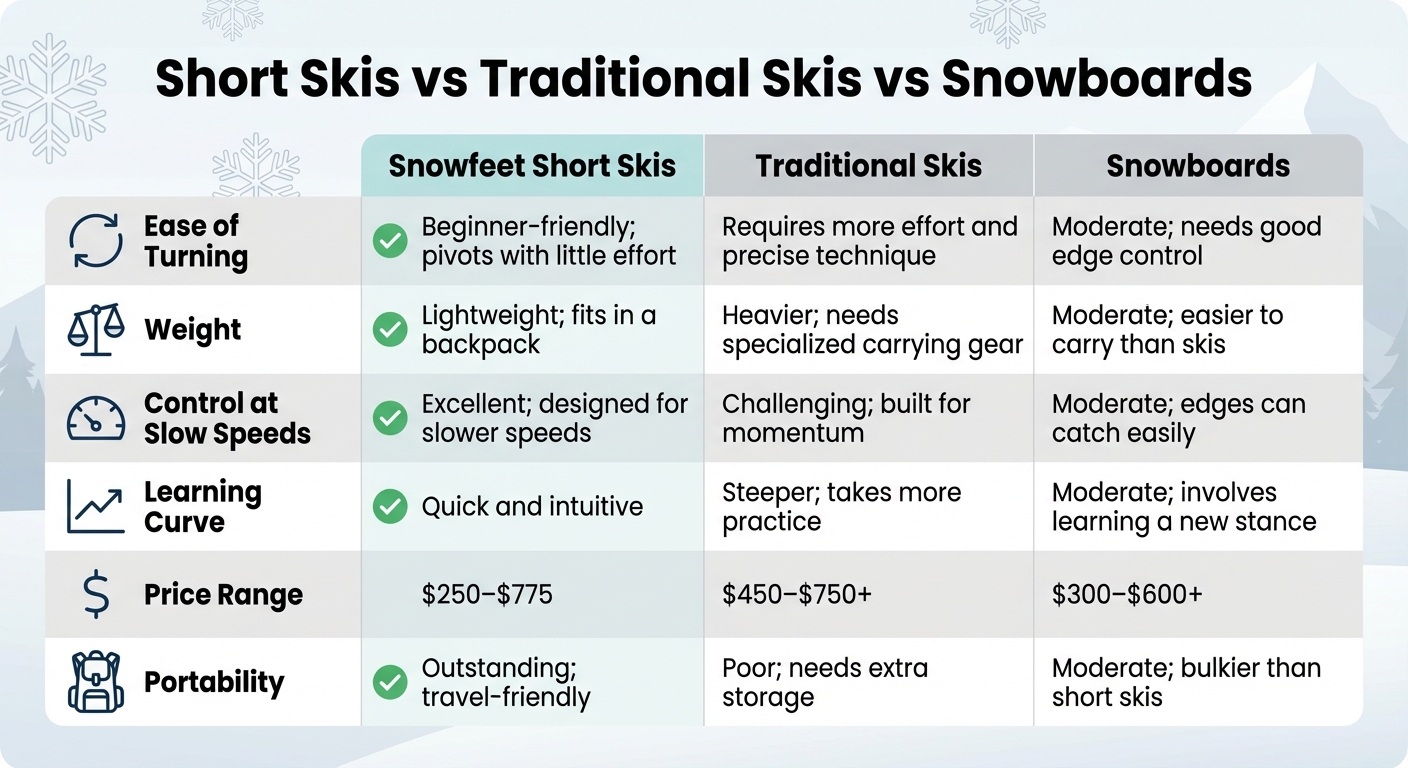
Short Skis vs Traditional Skis vs Snowboards Comparison for Beginners
Easier Control and Faster Learning
Short skis make learning to ski much simpler. They respond well to gentle weight shifts, making turns smoother and less intimidating for beginners.
Traditional beginner skis, like those from Salomon or Rossignol, typically range from 150 to 180 cm in length and have turn radii of about 14–16 meters. While these skis are beginner-friendly, they still require more effort to maneuver. Snowfeet* takes a different approach with their shorter options, such as Skiskates (44 cm) and Skiblades (65 to 120 cm). These shorter designs feel more natural for those with experience in walking or skating. Their reduced swing weight means quicker reactions and less physical effort to control the skis.
This combination of easy control and lightweight design makes short skis a great choice for new skiers.
Lightweight and Easy to Carry
Another perk of short skis is how easy they are to carry. Because they use less material, they weigh much less. Snowfeet* products are compact and light enough to save your energy for skiing instead of lugging gear around.
By comparison, even "lightweight" traditional skis, like the Season Primer ($450) or Salomon QST 94 ($700), often require extra carrying gear like ski bags or roof racks to transport them.
Short Skis vs. Traditional Skis and Snowboards
Short skis from Snowfeet* bring together ease of use and portability, standing out from traditional skis and snowboards. Traditional skis are built for high-speed stability, which appeals to advanced skiers, but Snowfeet* focuses on beginner-friendly control.
| Feature | Snowfeet* Short Skis | Traditional Skis | Snowboards |
|---|---|---|---|
| Ease of Turning | Beginner-friendly; pivots with little effort | Requires more effort and precise technique | Moderate; needs good edge control |
| Weight | Lightweight; fits in a backpack | Heavier; needs specialized carrying gear | Moderate; easier to carry than skis |
| Control at Slow Speeds | Excellent; designed for slower speeds | Challenging; built for momentum | Moderate; edges can catch easily |
| Learning Curve | Quick and intuitive | Steeper; takes more practice | Moderate; involves learning a new stance |
| Price Range | $250–$775 | $450–$750+ | $300–$600+ |
| Portability | Outstanding; travel-friendly | Poor; needs extra storage | Moderate; bulkier than short skis |
Snowfeet* short skis also feature rocker profiles - raised tips and tails that make turning smoother and reduce the chance of catching an edge. While traditional skis like the Rossignol Arcade 88 ($750) also use rocker technology, their longer, heavier design still poses challenges. Snowboards, on the other hand, require learning a completely different stance, which can feel unnatural for beginners who aren't used to having their feet locked in place.
Another bonus? Flexibility. Snowfeet* Skiblades, starting at $635 for the 65 cm model, offer a soft flex that’s forgiving for beginners. Unlike performance skis made with stiff materials like Titanal metal, these short skis are easier to handle and don’t demand advanced techniques right away.
Snowfeet* Skiskates (44 cm): Best Starting Point for Kids and Adults
Key Features of Snowfeet* Skiskates
Snowfeet* Skiskates are just 44 cm long, offering a straightforward way to dive into skiing. Unlike traditional skis that require specialized boots, these skiskates are made to work with your regular winter shoes. That means no need to rent or buy extra gear - just strap them on and go.
The wood core construction keeps them light but tough enough to handle the slopes. Plus, their compact size makes them incredibly portable. Toss them in your backpack, and you're ready for an adventure without lugging around bulky equipment.
Starting at $575, Skiskates streamline your skiing experience. No extra boots, no hassle - just the shoes you already have and a pair of these skates.
This thoughtful design makes learning to ski feel natural and less intimidating.
Why Skiskates Work Well for Beginners
The compact, easy-to-use design of Skiskates makes them perfect for those just starting out.
At 44 cm, their short length makes turning a breeze. With less weight to shift, your legs won't wear out as quickly. And because they allow for quicker turn initiation compared to longer skis, they help tackle one of the biggest hurdles for beginners.
Their high maneuverability means you can make smaller, slower, and more controlled turns. This creates a safer environment to focus on the basics without feeling overwhelmed. It’s a great way to build confidence and enjoy the slopes from day one.
sbb-itb-17ade95
Snowfeet* Skiblades (65 cm, 99 cm, 120 cm): Options for Different Skill Levels
If you've mastered Skiskates and are looking to level up, Snowfeet* Skiblades are the perfect next step. Available in 65 cm, 99 cm, and 120 cm lengths, these skiblades cater to different skill levels while keeping Snowfeet*'s signature lightweight and easy-to-maneuver design. They’re a great way to build confidence and tackle more challenging slopes without the bulk of traditional skis.
Snowfeet* Skiblades (65 cm): Best for Building Confidence
The 65 cm Skiblades are a natural progression from Skiskates, offering more surface area than the 44 cm Skiskates but still incredibly manageable. Priced at $635, they’re perfect for beginners looking to refine their skills and gain confidence.
Their forgiving design makes tight, controlled turns a breeze, even at low speeds. Plus, they’re built to let you pivot or slide without punishing mistakes, which is great when you’re still perfecting your form.
Snowfeet* Skiblades (99 cm and 120 cm): Options for Advancing Skiers
For skiers ready to take on more, the 99 cm ($675) and 120 cm ($775) Skiblades offer enhanced performance. These models add stability at higher speeds and better flotation in soft snow, making them versatile enough for a range of terrains.
"Shorter skis are easier to turn and maneuver, so if you're a beginner skier, select skis on the shorter end of the spectrum that could work for you." - Treeline Review
The 99 cm option is a sweet spot for those who want the agility of shorter skis with a bit more control at speed. Meanwhile, the 120 cm Skiblades provide the most stability in the Snowfeet* lineup, making them great for carving and tackling tougher slopes with confidence.
How to Get Started with Snowfeet* as a Beginner
Choosing the Right Snowfeet* Model
Selecting your first Snowfeet* model depends on a few key factors: your age, how comfortable you feel, and what kind of experience you’re aiming for on the slopes. For kids and adults trying Snowfeet* for the first time, the 44 cm Skiskates ($575) are a great starting point. They’re shorter and easier to control, making them less intimidating than longer models. Think of them as a gentle introduction to skiing.
If you’re an adult who’s already confident on your feet or has a bit of an athletic background, the 65 cm Skiblades ($635) might be a better fit. They’re stable yet easy to handle, helping you build skills without feeling overwhelmed. Ready to take on steeper slopes or pick up some speed? The 99 cm ($675) or 120 cm ($775) models offer more stability while still keeping that nimble, beginner-friendly feel that Snowfeet* are known for.
Once you’ve picked the right model, it’s time to hit the slopes and start practicing.
Tips for Practicing with Snowfeet*
After choosing your Snowfeet*, focus on practice to build confidence and improve your skills. Start with green circle runs, which are gentle beginner slopes. These slopes give you a safe environment to work on balance and turning without worrying about steep drops or high speeds. Snowfeet* are lightweight and easy to maneuver, so you’ll find it simpler to practice "scrubbing" - sliding your skis sideways to control speed. This technique is much harder to learn with traditional long skis.
Keep your stance centered or slightly forward for better balance. Developing good form early on will make it easier to initiate turns and maintain control. The rocker profile on Snowfeet* (raised tips and tails) helps reduce the chance of your skis catching on the snow, making turns feel more natural - even on your first day.
Don’t forget to check your gear. If you’re using Skiblades with bindings, have a professional adjust the DIN settings based on your weight, height, and skill level. This ensures your boots release properly in case of a fall, which is essential for staying safe. Pair your Snowfeet* with soft, comfortable boots to improve both control and comfort while you’re learning.
Conclusion
Learning to ski doesn’t have to mean wrestling with long, unwieldy skis or spending weeks just trying to figure out the basics. Snowfeet* short skis and skates offer an easier way to hit the slopes, giving both kids and adults a quicker and more approachable path to feeling confident out there. Plus, their lightweight design means less fatigue and easy portability.
Unlike traditional long skis, Snowfeet* show that shorter can be better for beginners. Models like the 44 cm Skiskates ($575) and the 65 cm Skiblades ($635) feature rocker profiles and a lower turn radius, helping you pick up essential skills faster. That means more time enjoying the slopes and less time recovering from wipeouts.
Snowfeet* also take the fear out of learning to ski. Long skis and snowboards often require a steep learning curve, but with Snowfeet*, you can start carving turns and having fun on your very first day - whether you’re cruising down beginner runs or trying out a terrain park.
If skiing has always seemed too tricky or pricey to dive into, Snowfeet* might just change your mind. Choose the model that fits your needs, head to the beginner slopes, and see why so many people are skipping the bulky gear in favor of these short skis. With Snowfeet*, skiing becomes simple, fun, and accessible from day one.
FAQs
Are short skis safe for beginners?
Yes, short skis are a safe option for beginners. Their lightweight design and ease of control make them beginner-friendly. Products like Snowfeet Skiblades and Skiskates are designed to help new skiers work on balance and technique, making the learning process smoother and more manageable.
Can I use Snowfeet* with regular winter boots?
Yes, you can use Snowfeet* with your regular winter boots. Thanks to their lightweight and portable design, they’re super easy to control - perfect for beginners. Unlike traditional skis, Snowfeet* don’t need any special bindings, making them a much simpler option for anyone trying skiing for the first time.
Which Snowfeet* length should I start with?
For those just starting out, Snowfeet Skiblades* come in two lengths: 65 cm and 120 cm.
- The 65 cm skiblades are lightweight and super easy to handle, making them perfect for younger riders or smaller beginners.
- The 120 cm option offers extra stability, which works well for taller individuals or those who feel a bit more confident on the slopes.
Your choice should depend on your height, how confident you feel, and whether you prefer easier control or added stability.











Leave a comment
This site is protected by hCaptcha and the hCaptcha Privacy Policy and Terms of Service apply.