



















Teaching your child to ski doesn’t have to cost a fortune or require endless lessons. With compact, lightweight gear like Snowfeet Skiskates or Skiblades, kids can learn the basics quickly - often in just hours. These shorter skis (17–25.5 inches) are easier to handle than traditional ones, making balance, turning, and stopping much simpler. Plus, they work with regular winter boots and fit in a backpack, so you can practice anywhere there’s snow - your backyard, a park, or a local hill.
Key Takeaways:
- Cost-Effective: Skip pricey lessons ($150–$300/day) and expensive ski boots.
- Quick Learning: Natural skating motions help kids grasp balance and turning faster.
- Portable & Convenient: Practice at home or nearby instead of heading to a resort.
- Fun & Flexible: Keep sessions short and engaging with games and challenges.
With Snowfeet, teaching skiing becomes a fun bonding experience while saving money and avoiding the hassle of traditional ski gear.
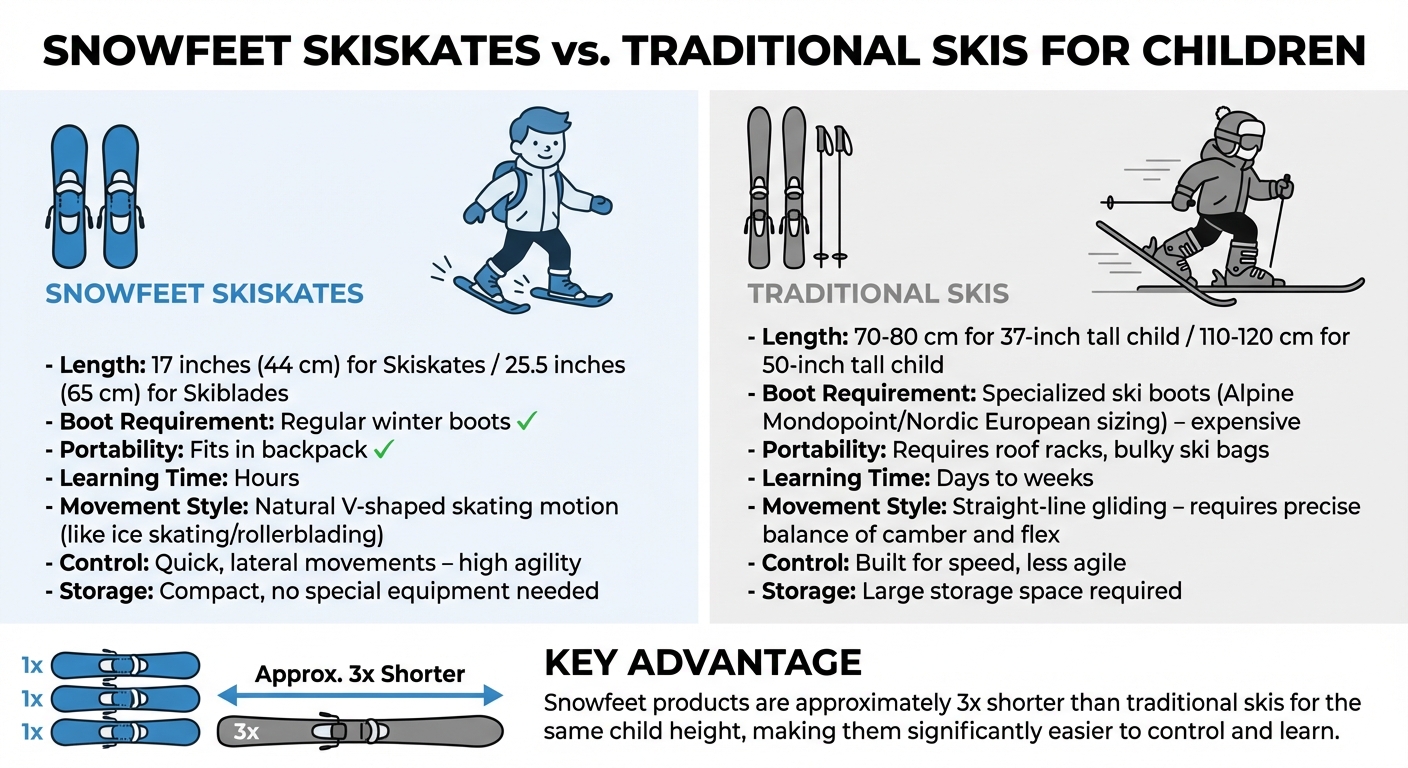
Snowfeet Skiskates vs Traditional Skis: Size and Learning Comparison for Kids
Teach kids Skiing the RIGHT way!
Why Snowfeet* Skiskates Beat Traditional Skis for Kids
Traditional skis can be a bit overwhelming for kids - they’re often long, heavy, and tricky to handle. Snowfeet* Skiskates, on the other hand, are a game-changer. At just 17 inches (44 cm) for Skiskates and 25.5 inches (65 cm) for Skiblades, they’re perfectly sized for kids’ energetic, natural movements.
Short Skis vs. Long Skis: The Control Advantage
Short skis are all about agility. Unlike long skis, which are built for straight-line gliding, shorter ones allow for quick, lateral movements. Carrie McCusker, a Level 2 TrainingPeaks Coach, puts it well:
"Skis for skate skiing are shorter and stiffer to facilitate quick, lateral movements".
With Snowfeet* Skiskates, kids can push off and turn using a natural V-shaped skating motion - think ice skating or rollerblading. Traditional skis, on the other hand, require a precise balance of camber and flex that matches the skier’s weight. If that balance is off, you’re looking at skis that don’t glide or grip properly. Snowfeet* skips that complexity altogether. They’re designed to be less demanding on physical strength, making it easier for kids to pick up the basics and feel in control right away.
Easy to Carry and Store
One of the best parts? Snowfeet* Skiskates are super portable. Unlike traditional skis, which often need roof racks, bulky ski bags, and loads of storage space, Snowfeet* gear fits right into a regular backpack. That means you can take them anywhere - local hills, parks, or even your backyard after a fresh snowfall. This compact design isn’t just convenient; it also means kids can practice more often, which helps them improve faster.
Learn in Hours, Not Days
Carrie McCusker also highlights how the skating motion enabled by shorter gear is "energetic and often appeals to children and adults who like speed and have some time to master the basics". Snowfeet* gear makes it easy for kids to learn. The natural skating motion helps them get the hang of balance and turning in just a few hours. That side-to-side movement keeps things fun and engaging, so kids stay motivated while building confidence. With Snowfeet*, teaching your child to ski becomes an enjoyable and efficient experience, setting them up for success on the slopes.
Teaching the Basics: Position, Balance, and Movement
Once your child straps on their Snowfeet* Skiskates, it’s time to focus on the basics. These short skis make learning the essentials - like body position and balance - much easier compared to traditional skis. Plus, kids can focus on having fun without being overwhelmed by bulky gear.
Getting the Right Body Position
Let’s start with the stance. Have your child stand with their feet about shoulder-width apart, knees slightly bent, and their weight centered over the middle of their feet. Encourage a shallow squat for stability - nothing too deep. Their arms should be relaxed and slightly forward, not stiff at their sides. Thanks to the compact 17-inch (44 cm) length of Snowfeet* Skiskates, maintaining balance is much easier, keeping their center of gravity right where it belongs.
Building Balance and Confidence
Before tackling any slopes, spend some time on flat ground. Have your child practice shifting their weight from one foot to the other while standing still. This helps build the muscle memory they’ll need for turning and stopping later on. Since Snowfeet* Skiskates are much lighter than traditional skis, kids can recover their balance quickly if they start to wobble. Fewer falls mean more confidence!
Encourage them to take small steps and try gentle side-to-side movements. The compact design allows them to really feel what their feet are doing, something that’s much harder with long skis. Once they’re steady, introduce skating motions to help them glide forward.
Using Skating Movements to Glide
Here’s where Snowfeet* really shines. Teach your child to use a V-shaped skating motion - similar to ice skating or rollerblading. Have them angle one ski outward and push off with its inside edge, gliding forward on the other ski. Then, switch feet and repeat. This natural movement is what Snowfeet* Skiskates are built for, making it easy for kids to pick up in hours rather than days.
Start on a gentle incline - something as simple as a slight downhill in your backyard will work. The skating motion keeps kids engaged because it’s active and fun, not just a struggle to stay upright. By the end of one session, most kids will be gliding confidently and begging to pick up speed.
How to Teach Turns, Speed Control, and Safety
Now that your child has a good handle on balance, it’s time to work on turning, controlling speed, and staying safe. Once your little one is gliding confidently, you can introduce these skills. Here’s where Snowfeet* Skiskates shine. Their compact 17-inch (44 cm) length makes directional changes super quick and natural - no need for big, awkward leg movements like with traditional skis.
Teaching Basic Turns
Start by having your child focus on where they want to go. Kids naturally move in the direction they’re looking. Encourage them to turn their head and look toward their target. With Snowfeet*, their shoulders, hips, and skates will naturally follow because the design reacts instantly to body movements. Traditional skis, on the other hand, require more deliberate leg adjustments.
Next, have them practice sliding sideways with their skates parallel. This helps them feel how the edges of the skates grip the snow. Once they understand edge pressure, introduce the snowplow turn - shaping their feet into a pizza slice to control speed while turning. Thanks to the shorter length of Snowfeet*, this move is much easier than with long skis since it doesn’t require as much leg strength. Start on groomed slopes, then let them experiment on gentle backyard hills where there’s no pressure to perform.
Stopping and Slowing Down
To teach stopping, start with the hockey stop. This involves turning both skates sideways to their direction of travel and pressing the edges into the snow. If your child has ice skating experience, this will feel familiar. With Snowfeet*, stops can be done in just a few feet - unlike the long stopping distances needed for traditional skis.
You can also teach heel braking. This involves leaning back slightly and pressing the heels down to dig the back edges into the snow. It works well on gentle slopes and gives kids a reliable way to slow down. Begin practicing stops on flat ground before moving to inclines. Once they master stopping, they’ll feel more confident about managing speed and staying safe on any terrain.
Keeping Kids Safe While Having Fun
Safety starts with choosing the right terrain. Stick to gentle slopes with plenty of space to slow down - think beginner bunny hills or even a small incline in your backyard. Practicing at home can take away the stress of crowded ski resorts and make learning more relaxed.
Make sure your child wears protective gear: a snug helmet, wrist guards, and knee pads. While Snowfeet* Skiskates are more responsive and often lead to softer falls than traditional skis, safety gear is still a must. Keep the vibe positive and low-pressure - celebrate small victories like their first smooth turn or a confident stop. When kids feel safe and encouraged, they’ll be excited to keep practicing. Even a quick five or ten minutes of fun can leave them eager to try again tomorrow. End every session on a high note, and they’ll be ready for more in no time!
sbb-itb-17ade95
Picking the Right Snowfeet* Product for Your Child
Finding the right gear can make all the difference in how quickly your child picks up new skills. Snowfeet* offers two kid-friendly options: Mini Ski Skates (38 cm) and Skiskates (44 cm). These are much shorter than traditional skis, which typically start at 70–80 cm for children around 37 inches tall. This shorter length gives kids better control and makes learning easier.
Mini Ski Skates (38 cm) vs. Skiskates (44 cm)
The Mini Ski Skates (38 cm) are ideal for younger kids or complete beginners. Their lightweight design makes them easy for small children to lift and maneuver with each stride. As outdoor expert Thomas O'Keefe explains:
"Be sure not to go too long with kids who are just learning to skate - they need to be able to pick the ski up for each forward stride".
For kids around 43 inches tall or lighter than average, the 38 cm skates are perfect for building balance without the added weight of larger equipment.
The Skiskates (44 cm) are a step up for kids who are ready to transition from basic balance to faster gliding and sharper turns. These slightly longer skates still offer great control compared to traditional skis. For example, a child standing 50 inches tall would typically use 110–120 cm skis. Snowfeet* products, being about three times shorter, are much easier for kids to manage. Plus, they’re super convenient compared to traditional skis.
Why Snowfeet* Beats Traditional Skis
The compact size of Snowfeet* products isn’t just about ease of use - it’s also about practicality. Traditional skis require specialized boots sized in Alpine Mondopoint or Nordic European measurements, which can be pricey and inconvenient. Snowfeet*, on the other hand, works with your child’s regular winter shoes, avoiding the need for stiff, bulky ski boots. Thomas O'Keefe points out:
"Skiing with the wrong style of boot makes it harder to control the ski resulting in a less enjoyable experience".
Unlike traditional skis that need extra storage space and equipment, Snowfeet* products are lightweight, compact, and fit into a backpack. Kids can carry their own gear, put it on by themselves, and feel more independent. This sense of ownership makes practice fun and keeps them excited to learn.
Making Practice Sessions Fun for Kids
Practice doesn't have to feel like a chore - especially for kids. By keeping sessions short and fun, you can help them learn faster and stay excited. With Snowfeet* products, you’re not tied to a ski resort. You can practice anywhere there’s snow - your backyard, a local park, or a nearby sledding hill. This flexibility means you can squeeze in quick sessions throughout the week, making progress feel natural and stress-free for your child.
Keep Sessions Short and Frequent
Let’s face it, young kids don’t have the longest attention spans. Traditional ski lessons can last 60–90 minutes, which is way too long for most little ones. With Snowfeet*, you can keep things short and sweet. Aim for 15–20 minute sessions, about three times a week. These shorter bursts of practice are perfect for building muscle memory and keeping their enthusiasm high. Want to make it even more engaging? Add challenges like gliding a certain distance or mastering "pizza stops" - it’s learning disguised as play.
Start Flat, Then Move to Slopes
One of the coolest things about Snowfeet* is that kids can start practicing on flat ground. No need for a big hill right away! Your backyard or a flat trail at a local park is an ideal spot for those early sessions. Focus on basic skating movements until they feel steady and balanced. Once they’re comfortable, you can gradually introduce gentle slopes. This step-by-step approach is much less intimidating than jumping straight into traditional long skis, which usually require a slope to get going.
Add Games and Challenges
Kids love games, so why not turn practice into play? Set up simple obstacle courses or play follow-the-leader to help them work on edge control and gliding. You could also have a friendly race on flat ground to practice speed control with hockey-style pushes. Another fun idea is to call out random "stop-and-go" commands like "pizza" or "hockey stop" to test their quick reactions. Thanks to Snowfeet*’s light and easy-to-maneuver design, kids can even try small jumps or twists - something that’s much trickier with traditional skis.
Conclusion
Teaching your child to ski doesn’t have to mean shelling out for pricey lessons, lugging around heavy gear, or dealing with endless frustration. With Snowfeet* Skiskates and Skiblades, your kid can pick up the basics quickly. Their shorter design makes them easier to handle, the lightweight build keeps fatigue at bay, and the fact that they work with regular winter boots? Game-changer. No need to deal with clunky, expensive ski boots.
What makes Snowfeet* stand out is the freedom it gives families. Forget rigid lesson schedules or steep resort fees. You can practice in your backyard, on a local sledding hill, or even on nearby trails - anytime you have 15–20 minutes to spare. Plus, the skating-like movements feel natural for kids, helping them gain confidence fast and keeping the experience fun.
The feedback says it all: Snowfeet* boasts a stellar 4.9/5 star rating from over 5,500 verified reviews. One happy customer shared:
"Absolute game-changer! They're light, fast, and incredibly fun to ride." – Nathan F.
Another added:
"These skiblades are so much fun and easy to control. Never going back to regular skis." – Andrew B.
These glowing reviews highlight how Snowfeet* makes learning simple while delivering loads of fun and performance.
If you’re ready to ditch crowded group lessons and teach your child on your schedule, Snowfeet* has you covered. Unlike traditional ski or snowboard brands that demand specialized gear and resort-based learning, Snowfeet* offers unmatched ease, portability, and quick progress. Whether you go for the 44 cm Skiskates (starting at $575) for younger beginners or the 65 cm Skiblades (from $635) for kids ready to carve, you’re choosing gear that’s compact, versatile, and designed for fast learning. This winter, enjoy teaching your child at your own pace - and have a blast doing it.
FAQs
What age can kids start using Snowfeet*?
Kids as young as 2 or 2.5 years old can start using Snowfeet*, as long as they can stand and their feet fit into children's ski boots. Snowfeet* make skiing accessible and enjoyable for toddlers and little ones, introducing them to the slopes at an early age.
What boots and safety gear do kids need?
Kids need to wear ski boots that fit properly and match their size and skill level. A snug, well-fitting helmet is also a must for safety. If traditional skis feel like too much, Snowfeet Skiskates and Skiblades are beginner-friendly options. They're designed to be easy to control, making them a solid alternative for kids just starting out.
For added protection, don’t forget essentials like gloves, goggles, and padded clothing. These not only keep kids comfortable but also help shield them during skiing or skating adventures. Safety and comfort go hand in hand out on the slopes!
Can my child use Snowfeet* outside ski resorts?
Snowfeet* are built for easy handling and tons of fun on all kinds of snowy terrain. That means your child can use them not just at ski resorts but also in other snowy spots nearby. They’re a great way to make learning and playing in the snow simple and enjoyable, opening up more opportunities to experience the joy of skiing.











Leave a comment
This site is protected by hCaptcha and the hCaptcha Privacy Policy and Terms of Service apply.