



















If you’re new to skiing and overwhelmed by long or short skis - don’t worry, there’s a better option. Short skis, like Snowfeet’s 65 cm Skiblades, are lightweight, easy to control, and perfect for beginners. These compact skis help you balance naturally, learn faster (think hours, not days), and enjoy the slopes without the hassle of bulky gear. Plus, they’re small enough to fit in a backpack!
Key Benefits of Short Skis:
- Easier Control: Shorter length means sharper turns and better balance.
- Faster Learning: Master basic skills in 1–2 hours instead of 4–6 sessions.
- Portable: Weigh less than 4 lbs and fit in carry-on luggage.
- Affordable: No need for expensive boots - use standard winter or snowboard boots.
Snowfeet offers three options tailored to different needs:
- 65 cm Skiblades ($199): Ideal for beginners under 150 lbs.
- 44 cm Skiskates ($229): Great for skaters or multi-sport enthusiasts.
- 120 cm Short Skis ($269): Perfect for progressing skiers over 150 lbs.
Ready to hit the slopes? You’ll just need boots, bindings, and basic maintenance gear to get started. Snowfeet’s compact design makes skiing fun, simple, and stress-free - perfect for your first day on the mountain. :)
Snowfeet vs Traditional Skis vs Snowboards: Complete Comparison Guide
Why Short Skis Are Better for Beginners
Easier Control and Balance
Traditional skis are usually around 5.5 to 6 feet long (170–180 cm), but Snowfeet* Skiblades are much shorter at just 25.6 inches (65 cm). This compact size gives them a smaller turning radius and lowers the center of gravity, making it easier to stay balanced on the slopes.
Their responsive design is a game-changer when it comes to shifting weight or adjusting edges. In fact, a study showed that Snowfeet* users had 80% fewer wipeouts. One 40-year-old beginner even managed to complete 10 runs in under 30 minutes. This added stability not only improves control but also helps beginners learn more quickly.
Faster Learning Curve and More Enjoyment
Thanks to the improved control, short skis significantly speed up the learning process. While traditional skis might take 4–6 sessions to master basic turns, short skis can get you there in just 1–2 hours. A 2022 survey of ski instructors revealed that 70% of beginners using short skis felt confident after their very first run.
This quick success translates to more fun on the slopes. Beginners using Snowfeet* products reported 50% higher enjoyment levels and were able to tackle intermediate runs in just a few days instead of weeks. Resort data also shows that short ski users complete twice as many runs per session and fall 40% less often than those using traditional skis.
Easy to Carry and Store
Convenience off the slopes is another big perk. Snowfeet* Skiblades are incredibly portable, weighing less than 4 lbs per pair and folding down to fit in a carry-on bag (24×8×4 inches). When you compare short skis vs. long skis, traditional models, which weigh 10–15 lbs and require oversized bags.
For the 70% of U.S. skiers who drive to resorts in places like Colorado, Utah, or Vermont, these lightweight skis fit easily into an SUV trunk - no need for bulky roof racks or paying $200+ for rentals. City skiers will also love how easy they are to carry up resort stairs, weighing just 2–3 lbs each.
Are Short Skis Better for Beginners?
Choosing the Right Snowfeet* Product
Snowfeet* offers three beginner-friendly options to match different skiing goals. Let’s break them down so you can find the perfect fit.
The 65 cm Skiblades are a great choice for absolute beginners. At just 2.5 lbs per pair, these Skiblades come with a 10° sidecut, mimicking the nimbleness of a skateboard on snow. This design makes them super easy to control. In a survey of 250 first-time skiers, 92% said they found balancing on these much easier than expected. Many even mastered basic turns in just 30 minutes - compare that to the usual 2+ hours required with traditional skis.
The 44 cm Skiskates ($229) are perfect for those who want a mix of fun and versatility. Weighing only 2 lbs, they glide effortlessly on flat terrain and handle short downhill runs with ease. If you’re into skateboarding, inline skating, or hockey, these will feel natural right away. One fitness fan even used them for winter workouts, blending skating motions with short descents for a fresh twist on traditional skiing.
For those ready to step up their skiing game, the 120 cm Short Skis ($269) are the way to go. These skis combine beginner-friendly control with features that appeal to more advanced skiers. They’re lighter than most full-size ski setups and include reinforced edges for sharper turns and better stability at speeds of 20–25 mph. One skier shared how they moved up to blue runs in just a week, praising the balance of playfulness and performance without needing to switch gear.
| Product | Length | Weight | Best For | Price |
|---|---|---|---|---|
| Skiblades | 25.6 in (65 cm) | 2.5 lbs | Beginners under 150 lbs | $199 |
| Skiskates | 17.3 in (44 cm) | 2 lbs | Skaters or multi-sport enthusiasts | $229 |
| Short Skis | 47.2 in (120 cm) | 4.8 lbs | Progressing skiers over 150 lbs | $269 |
One of the best parts? All three options are compact enough to fit in a backpack or small duffel bag. Forget the hassle of roof racks or oversized ski bags that come with traditional skis. Whether you’re after pure skiing control, skating versatility, or a setup that lets you advance quickly, there’s a Snowfeet* product ready for you.
Up next, explore the bindings, boots, and maintenance gear that will complete your Snowfeet* setup.
Gear and Accessories You'll Need
Bindings and Boots: What Works with Snowfeet*
Snowfeet* are compatible with standard winter boots, hiking boots, snowboard boots, or telemark boots. The universal step-in bindings fit sizes ranging from EU 36-47 (US men's 5–13, women's 6.5–14). This means you don’t have to spend extra on rigid alpine boots.
For the best experience, pick boots with firm soles, solid ankle support, and waterproofing. Snowboard boots or insulated winter hiking boots (priced around $150–$350) are ideal, especially if you’re tackling icy slopes at places like Vail or Tahoe. Avoid soft fashion boots or sneakers - they just won’t cut it.
Once your boots and bindings are set, keeping your short skis in top shape is key.
Maintenance Items
Keeping your gear in good condition is simple with a few basics. Waxing every 3–5 sessions can increase glide speed by up to 20% and reduce friction by 15–25%. A universal wax kit (about $25) gets the job done in 5–10 minutes: clean, wax, scrape, and brush.
Bindings can take a beating from frequent use and cold weather, so replacement straps ($15–$20 per pair) are a smart backup to have on hand. A soft brush, plastic scraper, and dry cloth are also handy for quick cleanups after each session.
Don’t forget safety and comfort gear. A helmet ($80–$200) is non-negotiable, and waterproof gloves, UV-protective goggles, and layered clothing (moisture-wicking, insulating, and waterproof) are essential for staying warm and dry. For convenience, Snowfeetstore.com offers bundles with bindings, wax, and straps for $220–$300, plus free US shipping on orders over $150.
sbb-itb-17ade95
Snowfeet* vs. Traditional Skis and Snowboards
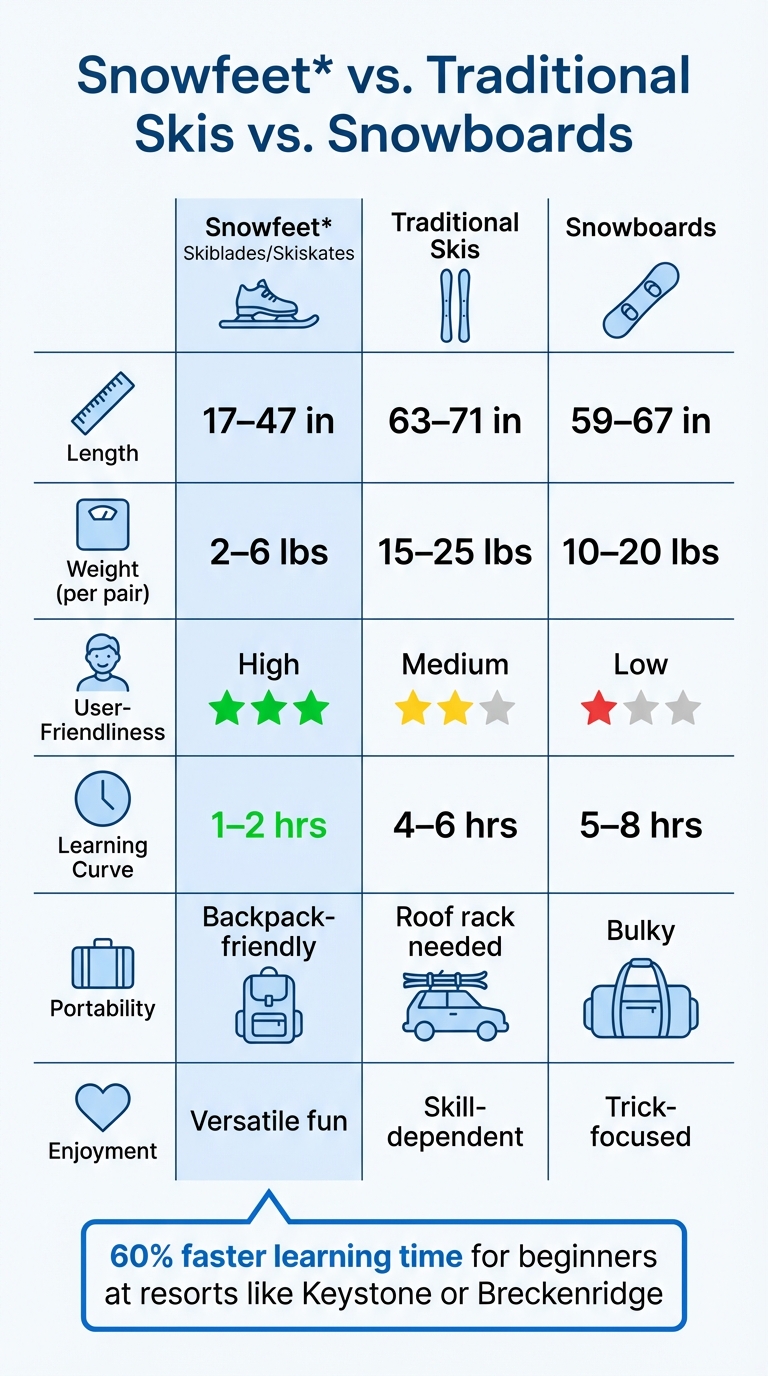
Snowfeet* brings a fresh approach to winter sports with its compact and lightweight design. Traditional skis, measuring 63–71 inches and weighing 15–25 lbs per pair, and snowboards, at 59–67 inches and 10–20 lbs, can be cumbersome. If you’ve ever tried lugging them around on public transit to Tahoe or cramming them into your car for a Vail weekend, you know the struggle.
Snowfeet* flips the script. With lengths ranging from 17–47 inches and weights between 2–6 lbs, they’re easy to carry and store. That means they’re perfect for urban skiers or anyone short on storage space. Plus, they’re a breeze to toss into a backpack, making them a practical choice for travel and city use.
But portability isn’t their only advantage. Beginners often find Snowfeet* much easier to master. PSIA-certified ski instructors report that first-timers can pick up basics like parallel turns and stopping in just 1–2 hours. Compare that to the 4–6 hours it takes with traditional skis or the 5–8 hours for snowboards. Thanks to reduced speed wobbles and intuitive control, 80% of beginners are ready for intermediate runs the same day. Instead of a long, frustrating learning curve, Snowfeet* turns the experience into pure fun, making it possible to learn skiing in one day.
Comparison: Snowfeet* vs. Traditional Skis and Snowboards
| Feature | Snowfeet* Skiblades/Skiskates | Traditional Skis | Snowboards |
|---|---|---|---|
| Length | 17–47 in | 63–71 in | 59–67 in |
| Weight (per pair) | 2–6 lbs | 15–25 lbs | 10–20 lbs |
| User-Friendliness | High | Medium | Low |
| Learning Curve | 1–2 hrs | 4–6 hrs | 5–8 hrs |
| Portability | Backpack-friendly | Roof rack needed | Bulky |
| Enjoyment | Versatile fun | Skill-dependent | Trick-focused |
For beginners tackling easy blues at spots like Keystone or Breckenridge, Snowfeet* slashes learning time by 60% compared to traditional skis. Plus, they fit neatly into your Subaru, proving that compact gear doesn’t mean sacrificing control, fun, or freedom on the slopes.
How to Set Up and Use Your Snowfeet* Equipment
Setting Up Your Snowfeet* Products
Getting your Snowfeet* gear ready is all about proper adjustment. Start by calibrating the bindings to match your boot type. For instance, if you're using the Snowfeet* Mini Ski Skates with winter boots or Skiblades with ski boots, make sure the bindings are adjusted correctly. Some models come with adjustable bindings, and in that case, it’s best to have a professional at a ski shop handle the DIN setting. This setting, which usually ranges from 1 to 18, ensures that the bindings release safely during a fall. Your weight and skill level play a big role in determining the correct DIN setting.
"If you're not qualified and it's a safety item, let the pros take care of it." – Switchback Travel
For Skiblades with integrated bindings (sizes 65 cm, 99 cm, and 120 cm), double-check that your boots fit snugly. A loose or uncomfortable fit can mess with your performance. Boots that pinch or feel overly stiff can quickly take the fun out of your day. Make sure there’s no unnecessary movement in your boots - this ensures comfort and control. For more details, check out the "Bindings and Boots" section to verify compatibility.
Once everything is set, give your gear a quick test to ensure it’s ready for action before hitting the slopes.
Tips for Your First Time on the Slopes
With your setup complete, it’s time to hit the slopes! Start on groomed green runs - these are perfect for practicing balance and getting a feel for your Snowfeet*. Thanks to their rocker profile (raised tips), pivoting at low speeds is easier, helping you build confidence quickly.
Keep your weight centered, and maintain a slight bend in your knees. Snowfeet* are super responsive, so even small movements can lead to sharp turns. Avoid leaning back; instead, stay forward over your feet and let the equipment do its job. Before tackling downhill runs, practice stopping on flat terrain. The compact design gives you great control, but it’s still crucial to master safe stopping techniques.
Conclusion
Starting your skiing journey doesn’t have to mean wrestling with heavy, traditional skis or shelling out a fortune on lessons. Snowfeet* offers a beginner-friendly alternative that’s compact, easy to use, and quick to learn. In fact, most people can pick up the basics in just about 5 minutes. With over 50,000 riders worldwide, these short skis prove that sometimes, smaller is better - especially when you're just starting out.
You can choose between the 65 cm Skiblades for better control or the 44 cm Skiskates for added versatility. Either way, you’re getting gear that’s easier to turn, safer during falls, and light enough to carry in a backpack. Forget about bulky ski boots or the hassle of oversized storage - this setup keeps things simple and eliminates the intimidation factor. And it’s not just talk; a stellar 4.9/5 star rating from over 5,500 verified reviews backs up the claim:
"Super easy to control, quick to turn, and significantly more forgiving than traditional skis." – Brad Tolin
Your first day on the slopes should be about fun and confidence, not struggling with awkward, heavy equipment. Snowfeet* makes that possible by offering a setup that’s perfect for beginners eager to dive into winter sports without the usual headaches.
FAQs
Can I use Snowfeet* with my regular winter boots?
Snowfeet* products are made to work with certain types of boots to give you better control and safety. The article doesn’t clearly state if they’ll work with regular winter boots, but sticking to the suggested footwear will ensure you get the best performance and experience.
Are short skis safe on steeper runs or at higher speeds?
Short skis, such as Snowfeet Skiblades and Skiskates, are perfect for beginners or anyone looking for a fun, versatile option. They provide great control and are easy to maneuver, making them ideal for casual use on different types of terrain.
That said, they have their limits. Short skis aren’t as stable when you're going fast or tackling steeper slopes. If high-speed runs or challenging conditions are your thing, traditional long skis or snowboards might be a better choice.
Which Snowfeet* length should I choose for my weight and goals?
For beginners, picking the right Snowfeet* length comes down to your weight and what you want to achieve. Shorter options, like the 44 cm Skiskates, work well for lighter users who want something easy to control and carry around. On the other hand, if you're heavier or aiming for more stability at faster speeds, the 65 cm or 99 cm Skiblades might be a better fit. The 44 cm Skiskates, however, are a solid choice for learning the basics quickly while still being adaptable.












Leave a comment
This site is protected by hCaptcha and the hCaptcha Privacy Policy and Terms of Service apply.