



















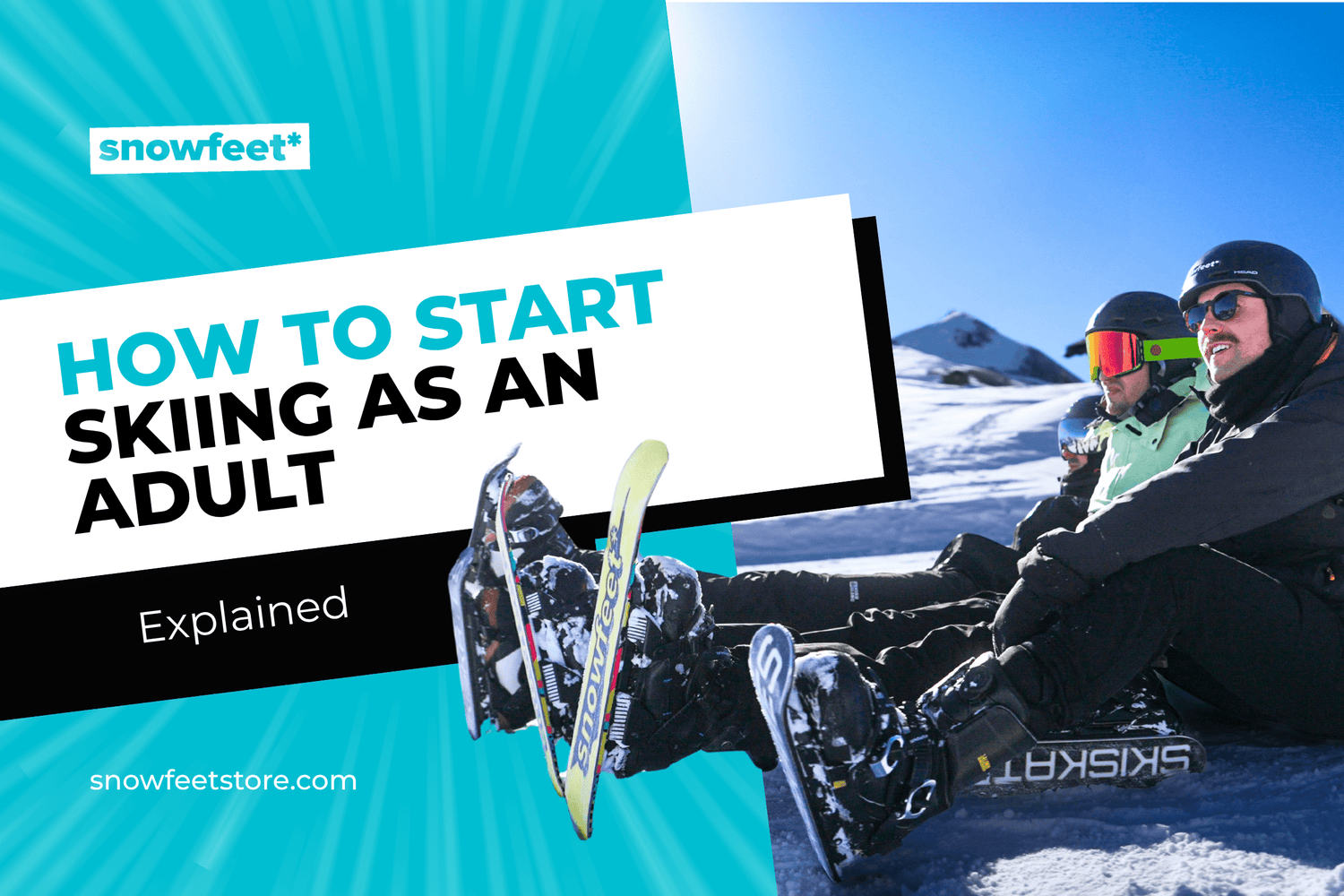
Want to ski but think it’s too late? It’s not. Skiing as an adult can be fun, and with the right gear, it’s easier than you think. Short skis, like Snowfeet’s options, are perfect for beginners. They’re lightweight, easy to control, and less intimidating than longer skis. Plus, you don’t need special boots - your winter or snowboard boots work!
Here’s why adults love short skis:
- Easy to learn: Get started in minutes, not hours.
- Better control: Smaller skis mean smoother turns and fewer falls.
- Portable: They fit in a backpack - no bulky equipment needed.
- Affordable: Starting at $250, they’re cheaper than traditional skis.
Ready to ski? Focus on green runs, practice basic moves like the snowplow, and consider a lesson for a confidence boost. Snowfeet’s beginner-friendly design makes skiing less scary and more fun. Let’s hit the slopes! :)
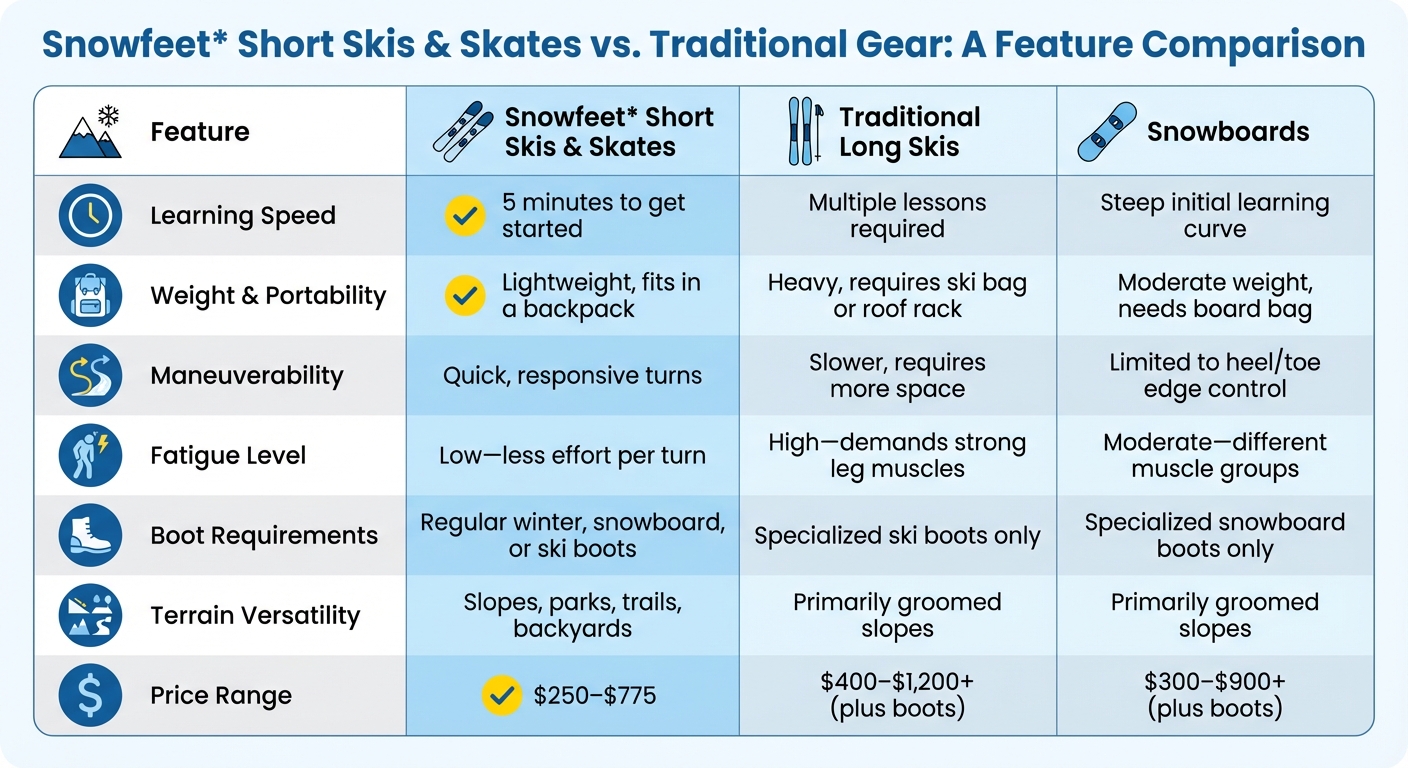
Snowfeet vs Traditional Skis vs Snowboards: Beginner Comparison Chart
How to Ski | 7 Must-Know Tips for Beginners
Picking the Right Gear: Why Snowfeet* Works for Beginners
Starting out as an adult skier can feel daunting, but picking the right gear can make all the difference. Snowfeet* products are designed with beginners in mind, offering an easy way to get comfortable on the snow. Their short skis and skates are lightweight, easy to maneuver, and forgiving - perfect for focusing on fun rather than fuss. Plus, they’re compact enough to fit in a backpack, so no need to wrestle with roof racks or bulky equipment.
What sets Snowfeet* apart is how quickly you can pick it up. These products are designed to get you moving in as little as five minutes. They’re long enough to ski yet short enough to skate, making them intuitive to use. With over 5,500 verified reviews averaging 4.9 out of 5 stars, many adult beginners say Snowfeet* helped them find their footing faster than they expected. This ease of use naturally encourages exploring how shorter skis can improve control on the slopes.
Why Short Skis and Skates Work Better for Adult Beginners
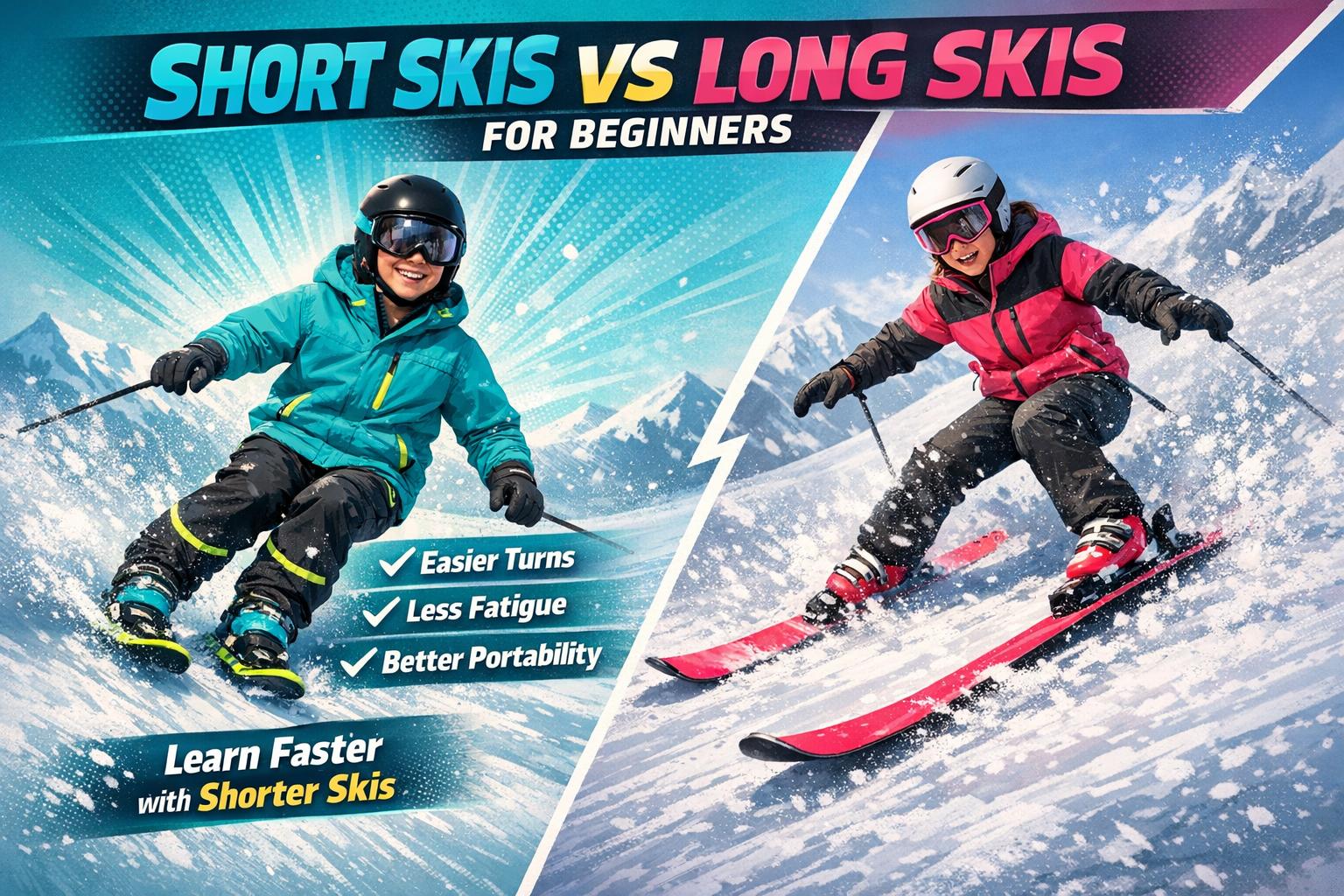
Shorter skis change how you experience the mountain. Snowfeet* Skiblades and Skiskates make turning quicker and handling easier, so you use less energy with each move. For adult beginners who might not have the same leg strength as younger skiers, this means more time on the slopes without feeling wiped out.
Short skis also give you better control. They’re easier to pivot, especially in tight spots or uneven terrain.
As Brad Tolin shared about the 99cm Skiblades: "Super easy to control, quick to turn, and way more forgiving than traditional skis".
Another big plus? Mistakes feel less intimidating. Short skis are more forgiving, reducing the "lever effect" that can make falls on longer skis more dramatic. This makes it easier to experiment and learn without worrying about a tough landing.
Boot compatibility is another win. Many Snowfeet* models work with standard winter boots, snowboard boots, or ski boots. No need to spend extra on specialized footwear just to get started.
Snowfeet* vs. Traditional Skis and Snowboards
Here’s how Snowfeet* stacks up against traditional gear:
| Feature | Snowfeet* Short Skis & Skates | Traditional Long Skis | Snowboards |
|---|---|---|---|
| Learning Speed | 5 minutes to get started | Multiple lessons required | Steep initial learning curve |
| Weight & Portability | Lightweight, fits in a backpack | Heavy, requires ski bag or roof rack | Moderate weight, needs board bag |
| Maneuverability | Quick, responsive turns | Slower, requires more space | Limited to heel/toe edge control |
| Fatigue Level | Low - less effort per turn | High - demands strong leg muscles | Moderate - different muscle groups |
| Boot Requirements | Regular winter, snowboard, or ski boots | Specialized ski boots only | Specialized snowboard boots only |
| Terrain Versatility | Slopes, parks, trails, backyards | Primarily groomed slopes | Primarily groomed slopes |
| Price Range | $250–$775 | $400–$1,200+ (plus boots) | $300–$900+ (plus boots) |
Snowboards bring their own challenges. The sideways stance can feel awkward for beginners, and since both feet are locked in place, falls can be more jarring. Snowfeet* keeps things simple with a forward-facing stance and independent foot movement, making the learning curve much smoother.
Cost is another factor. Traditional skis and snowboards often cost $400–$1,200+ for the gear alone, with boots adding $200–$500 more. Snowfeet* products, on the other hand, range from $250 to $775, and depending on the model, you may not even need special boots.
Which Snowfeet* Model Should You Choose?
Snowfeet* offers a variety of models tailored to different skill levels and preferences. Your choice depends on what kind of experience you’re looking for and how comfortable you are with balance.
- Skiblades (65cm, 99cm, or 120cm): These are great if you want a skiing experience with added maneuverability. The 99cm model is a favorite for beginners - it’s long enough to feel stable but short enough to turn easily. Both the 99cm and 120cm Skiblades can handle light powder (up to about 4 inches). Prices range from $635 to $775.
- Skiskates (44cm) or Snowfeet Mini Ski Skates (38cm or 50cm): Ideal for those with a background in ice skating, hockey, or inline skating. These models offer more freedom of movement and are perfect for tricks, but they require more active balance. The 44cm Skiskates start at $575, while Mini Ski Skates begin at $250.
As Snowfeet* explains: "Go for Skiblades if you want short skis - choose Snowfeet or Skiskates if you want skating on snow".
For stability and progression toward carving, the 99cm Skiblades are a solid choice. If portability and a skating-like experience are your priorities, try the 50cm Snowfeet PRO at $275. Want something in between? The 65cm Skiblades might be just right for you.
Getting Ready for the Slopes
Exercises to Prepare Your Body for Skiing
Start a ski-focused workout plan about 6–8 weeks before hitting the slopes to build the strength and stamina you'll need. If you're already in decent shape, a 4-week program can work just fine. Professional skiers often train for six months ahead of the season, but as a beginner - especially if you're trying out Snowfeet* - you won’t need that level of intensity. Just focus on prepping your muscles for your first day out.
Skiing isn’t just about strong legs. Dr. Molly McDermott, a Sports Medicine Specialist from Cleveland Clinic, explains:
You'll need to strengthen your whole body to be able to do things like pivot or change direction, keep your balance, propel yourself forward and withstand the impact of skiing.
To get ready, focus on exercises that strengthen your lower body, core, and ankles. Incorporate moves like squats, lunges, planks, oblique twists, and calf raises. Aim for 3 sets of 10–15 repetitions per exercise.
Balance and stability are just as important as strength. Dr. McDermott highlights the need to train your brain, nerves, and muscles together for better coordination. Exercises like skater hops (side-to-side single-leg jumps) and hip twisters (standing on one leg while moving the other leg in a circle) can help improve your spatial awareness and control on the slopes.
Don’t forget cardio! Build endurance with 30-minute sessions of activities like running, cycling, swimming, or trail running. Before you start skiing each day, warm up with 5–10 minutes of light jogging or an elliptical workout. Avoid static stretches when your muscles are cold - they’re better saved for after skiing. Post-ski recovery tools like foam rollers, a hot tub, or a sauna can help ease soreness, which is pretty common during those first few days.
While physical prep is critical, don’t underestimate the mental aspect - it’s just as important for a great day on the mountain.
Building Confidence as an Adult Beginner
Once your body’s ready, it’s time to focus on your mindset. For many adult beginners, fear is the biggest obstacle. Travel blogger Mansoureh sums it up perfectly:
The truth is, most adult beginners aren't limited by fitness. They're limited by fear.
Confidence isn’t about being fearless - it’s about feeling in control. Once you know you can stop and turn when needed, the fear starts to fade.
One of the best ways to build that control is by mastering the snowplow stop. Knowing you can slow down or stop at any moment will help keep panic at bay. Snowfeet*’s shorter, lighter design makes stopping feel more natural, which can make learning less intimidating. Stick to green or blue runs until you’re fully comfortable - steeper slopes can throw off your technique and add unnecessary stress.
Taking a lesson is another great idea. Even a few hours with an instructor can give you a solid foundation and boost your confidence faster than trying to figure it out on your own. The right gear can also make a difference. A helmet and high-quality goggles not only keep you safe but also help you feel more relaxed.
Here’s a simple tip: keep your head up. When you’re nervous, it’s tempting to look down at your skis, but this throws off your balance. Instead, focus on the slope ahead so you can react smoothly to what’s coming. If you want to improve quickly, consider filming yourself. Watching your posture can help you spot and fix mistakes right away.
sbb-itb-17ade95
Learning Basic Techniques with Snowfeet*
How to Master the Basics Step by Step
Start with the right stance: bend your knees, keep your weight centered over the balls of your feet, and extend your arms forward for balance. Thanks to Snowfeet*'s compact size, your center of gravity is naturally lower, making it easier to stay balanced compared to traditional skis. Begin by gliding on flat or gently sloped terrain for about 10–20 feet to get comfortable with the movement. Most adults find they can get the hang of it within minutes, not hours. The lightweight design (weighing under 5 pounds per pair) and excellent maneuverability mean you won’t feel bogged down by heavy gear.
Next, focus on learning wedge turns (also known as the snowplow). Point your toes inward to form a V-shape - this helps slow you down and makes turning easier. Shift your weight to one foot as you pivot, aiming to practice about 10 turns on each side. Snowfeet* are designed to be highly responsive, so most people can pick this up in just 15–30 minutes. For adults between 5'6" and 6' tall, the 99 cm Skiblades are a great choice, offering precise edge control that makes turning feel natural.
Remember to keep your hips over your toes and your shoulders facing downhill - don’t lean back. Maintaining forward pressure is crucial to fully benefit from Snowfeet*'s design. Once you get this right, you’ll notice an immediate improvement in your control and movement.
Here’s a pro tip: practice your balance and stance before you even hit the slopes. At home, try standing on one leg for 30 seconds or doing side-to-side shuffles on grass. Because Snowfeet* are so portable, you can even practice backward slides on an ice rink using the 44 cm Skiskates. Building muscle memory ahead of time means you’ll spend less time learning and more time enjoying your time on the snow.
Now that you’ve got the basics down, let’s talk about staying safe out there.
Staying Safe While You Learn
Safety first! Always wear a helmet, padded gloves, goggles, and, if needed, knee or elbow pads to protect yourself and feel more confident.
Stick to green circle runs - these are beginner-friendly slopes with inclines of less than 15°. Avoid icy spots and choose groomed trails where the snow is more predictable. Before hitting the slopes, double-check your bindings every day. Loose bindings can be a serious safety hazard.
Never ski alone, especially when you’re starting out. Having a buddy or instructor nearby ensures help is available if you need it. If you ever feel like you’re going too fast, use the wedge stop to slow yourself down. One of the best things about Snowfeet* is how quickly they let you stop - the shorter length gives you immediate control and minimizes the risk of losing control, which can sometimes happen with longer skis.
Snowfeet* are designed to simplify skiing techniques while keeping safety top of mind, making them perfect for adult beginners looking for a fun and approachable way to hit the slopes.
Improving Your Skills Over Time
How to Practice Effectively with Snowfeet*
Once you've got the basics down, it's time to sharpen your skills with focused practice and a mix of terrain. Start by sticking to groomed green runs to build muscle memory. Spend a few sessions here to solidify your foundation before gradually taking on more challenging slopes. Snowfeet* gear is flexible enough to let you practice pretty much anywhere - groomed trails, terrain parks, or even your snowy backyard - so you’re not limited to expensive resorts.
One great drill to try is the falling leaf. This involves drifting side-to-side as you head downhill, helping you get a better feel for edge control and Snowfeet*'s quick responsiveness. Another helpful exercise is monster turns - these are slow, wide turns on gentle slopes that help you manage both speed and direction. Thanks to Snowfeet*'s compact design, you’ll notice how quickly they respond to your movements, which can be trickier with traditional, longer skis.
As you advance, add in hockey stops and garlands (rounded turns that gradually get smaller) to refine your control and smooth out your movements. Snowfeet* gear is built to handle this progression, giving you the confidence to transition from beginner-friendly slopes to more varied terrain. If you’re ready to explore further, consider using 99 cm Skiblades or 120 cm Short Skis - they provide the balance of stability and maneuverability that’s perfect for building your skills.
Don’t forget about off-slope training, too! Simple exercises like lunges and squats - just 10 minutes a day - can strengthen your legs, making it easier to maintain an athletic stance and stay out on the slopes longer.
Should You Take Lessons?
If you’re looking to level up quickly, professional lessons can be a game-changer. A session with a skilled instructor can help you nail essential techniques like proper turns, stopping methods, and even how to fall safely. Instructors who are familiar with short ski equipment can tailor their teaching to suit Snowfeet* gear, and the compact size of the skis makes demonstrations easier to follow compared to traditional skis.
Lessons are particularly helpful for understanding concepts like carving (using your edges for smooth, controlled curves) versus skidding (sliding sideways to control speed). An instructor can also catch and correct bad habits early - like leaning too far back - so they don’t hold you back later. While Snowfeet* are designed to be user-friendly and great for self-teaching, a professional lesson can give you a confidence boost and prepare you to tackle tougher slopes safely. Plus, many ski schools offer group lessons at affordable rates, making it a smart investment in your skiing journey.
Conclusion: Start Your Skiing Journey with Snowfeet*
Skiing as an adult doesn’t have to feel overwhelming or break the bank. With the right gear, you can be gliding down the slopes in just 5 minutes - and actually enjoy the process. Snowfeet* makes it simple by offering equipment that’s lightweight, portable, and easy to use - everything traditional long skis aren’t.
Snowfeet* takes away the usual hurdles for adult beginners. No more lugging around bulky skis or dealing with complicated chairlift routines. Instead, you get compact gear that fits in your backpack and works with your regular winter or snowboard boots. Perfect for resorts or even your local hill. With a 4.9/5 rating from over 5,500 reviews, it’s clear that adult beginners are loving the experience.
Whether you go for the 44 cm Skiskates for quick, sharp turns, the 99 cm Skiblades for a mix of control and stability, or the 120 cm Short Skis for a more classic feel, Snowfeet* makes learning smoother. Their forgiving design means easier turns, less stiffness, and a more enjoyable learning curve.
Don’t let age or lack of experience hold you back. Plenty of adults have discovered that shorter gear makes skiing less intimidating and more fun. Grab your Snowfeet*, hit the slopes, and make this winter one to remember!
FAQs
Can I use Snowfeet* with regular winter boots?
Yes, Snowfeet* Skiblades and Skiskates work with regular winter boots, which makes them super convenient, especially for beginners. Unlike traditional skis or snowboards that need special boots, Snowfeet* gear lets you hit the slopes quickly and comfortably. With minimal equipment, they’re easy to carry and use - an ideal choice for adults trying out skiing for the first time.
Which Snowfeet* model is best for a true beginner?
The best Snowfeet* models for beginners are the Skiblades in 65 cm or 99 cm sizes. These compact, lightweight skis are easy to handle, super portable, and have a fast learning curve - ideal for adults just starting out on the slopes. Unlike traditional skis or snowboards, Snowfeet Skiblades simplify the process of learning basic techniques and help boost your confidence as you get comfortable skiing.
Are Snowfeet* allowed at most ski resorts?
It’s not clear if most ski resorts allow Snowfeet*. To avoid any surprises, it’s a good idea to check with your chosen resort ahead of time to see if they’re permitted on the slopes.











Leave a comment
This site is protected by hCaptcha and the hCaptcha Privacy Policy and Terms of Service apply.