



















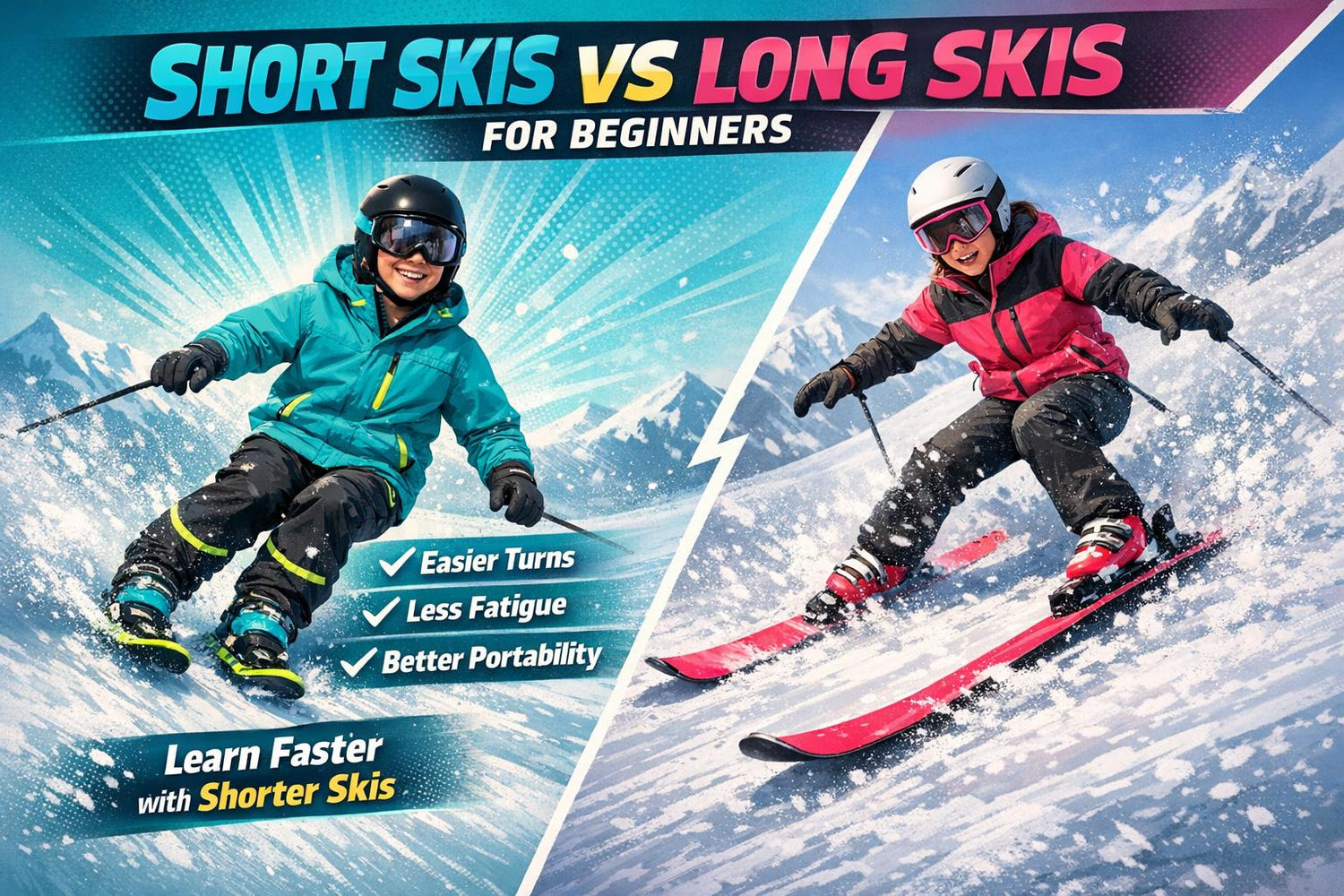
Trying to decide between short skis and long skis as a beginner? Here’s the deal: short skis are easier to control, less tiring, and help you learn faster. Long skis, while great for speed and stability, can be tough to handle if you’re just starting out. Snowfeet Skiblades (65–120 cm) are a great option for beginners because they’re lightweight, portable, and designed for smooth, easy turns. Long skis (160–190 cm) are better for advanced skiers who have the strength and technique to manage them.
Why short skis are better for beginners:
- Easier to turn and stop
- Less effort required, so you can practice longer
- Better for building confidence quickly
Why long skis might not be ideal for beginners:
- Harder to control and turn
- Require more strength and balance
- Can feel overwhelming when you’re learning
If you’re just starting out, shorter skis like Snowfeet Skiblades can make your first days on the slopes way more fun and less frustrating. Plus, they’re super portable - no bulky gear to lug around. Ready to hit the slopes? Let’s dive into the details.
Short Skis vs Long Skis Comparison for Beginners
Are Short Skis Better for Beginners?
What Are Short Skis? Overview of Snowfeet* Skiblades
Short skis are exactly what they sound like - compact, lightweight skis that range from 25 to 47 inches (65–120 cm) in length. For comparison, traditional long skis typically measure between 63 and 75 inches (160–190 cm). Snowfeet* Skiblades come in three sizes - 65 cm, 99 cm, and 120 cm - giving beginners a range of options to match their comfort level and skiing goals.
The idea behind short skis is straightforward: less length equals more control. Long skis are great for speed and stability on groomed runs, but they demand more strength and skill to handle. Snowfeet* Skiblades are designed to complement your natural movements, making them a great tool for learning the basics without the frustration of battling your gear. Let’s take a closer look at what makes Snowfeet* Skiblades stand out.
Key Features of Snowfeet* Skiblades
Snowfeet* Skiblades are built with a lightweight design, which helps reduce leg fatigue - a big plus for beginners who spend hours on the slopes. Here’s a breakdown of their lineup:
- 65 cm model: Priced at $635, this is the most compact option.
- 99 cm models: Starting at $675, this size includes a POWDER version specifically designed for deep snow.
- 120 cm model: Available at $775, it offers more stability for those ready to step up from shorter skis.
All models come with adjustable bindings that work with standard ski boots, so there’s no need for specialized footwear.
These skis are versatile, performing well on beginner trails, in snowparks, and even in light powder. The 99 cm POWDER version is tailored for deeper snow, while the 120 cm model provides extra stability without the commitment of full-length skis.
Why Short Skis Work Better for Beginners
The shorter length of Snowfeet* Skiblades makes them easier to turn and control, which is exactly what beginners need when they’re just starting out. Quick, easy turns and controlled stops help build confidence on the mountain.
For years, big ski brands like Rossignol, Salomon, and K2 have pushed the idea that longer skis mean better performance. While that’s true for advanced skiers, beginners often find longer skis heavy and harder to manage. Snowfeet* flips the script, showing that shorter skis make learning smoother and less exhausting. Instead of wrestling with bulky equipment, you can focus on nailing the basics and enjoying your time on the slopes.
What Are Traditional Long Skis?
Traditional long skis are a familiar sight at ski resorts, typically ranging from 63 to 75 inches (160–190 cm) in length. For the average adult, this means they’ll reach somewhere between nose height and taller. Brands like Rossignol, Salomon, and K2 have been leading the charge in the ski industry for years with these longer models.
These skis are designed with a focus on high-speed stability, strong edge grip, and the ability to float through deep snow. They shine when you're carving down groomed slopes or tackling fresh powder. The extra surface area helps spread your weight evenly, making them a favorite for advanced skiers who enjoy aggressive and technical runs. That said, their benefits only come into play if you’ve got the strength and technique to apply consistent forward pressure.
For beginners, though, long skis can be a real challenge. They’re harder to turn, require more effort to control, and demand precise balance. When you’re new to skiing and already feeling the burn, using equipment that’s tough to manage can make things even harder. As The Ski Monster puts it:
Longer skis reward strong technique and forward pressure. But if balance or stamina fade, they can be harder to manage than a slightly shorter ski.
A common issue for beginners is falling into the "backseat" position - leaning too far back due to fatigue or intimidation. This position prevents the tips of the skis from being properly pressured, leading to flapping or chatter, which only adds to the difficulty of maintaining control.
Common Myths About Long Skis
There are some widespread misconceptions about long skis that are worth addressing. One of the biggest myths is that longer skis are automatically more stable. The truth? Stability has more to do with your ability to maintain proper forward pressure than the length of the ski. As The Ski Monster explains:
Stability depends on the skier applying adequate pressure, especially at the tip of the ski.
If you don’t have the stamina or technique to keep that pressure consistent, a shorter ski can actually feel more stable and easier to control. Those extra inches on a long ski won’t do you any favors if you’re struggling to find the right stance and balance.
This insight highlights why beginner-friendly options like Snowfeet* Skiblades provide a more manageable and controlled experience for those just starting out.
Snowfeet* Skiblades vs Traditional Long Skis: Direct Comparison
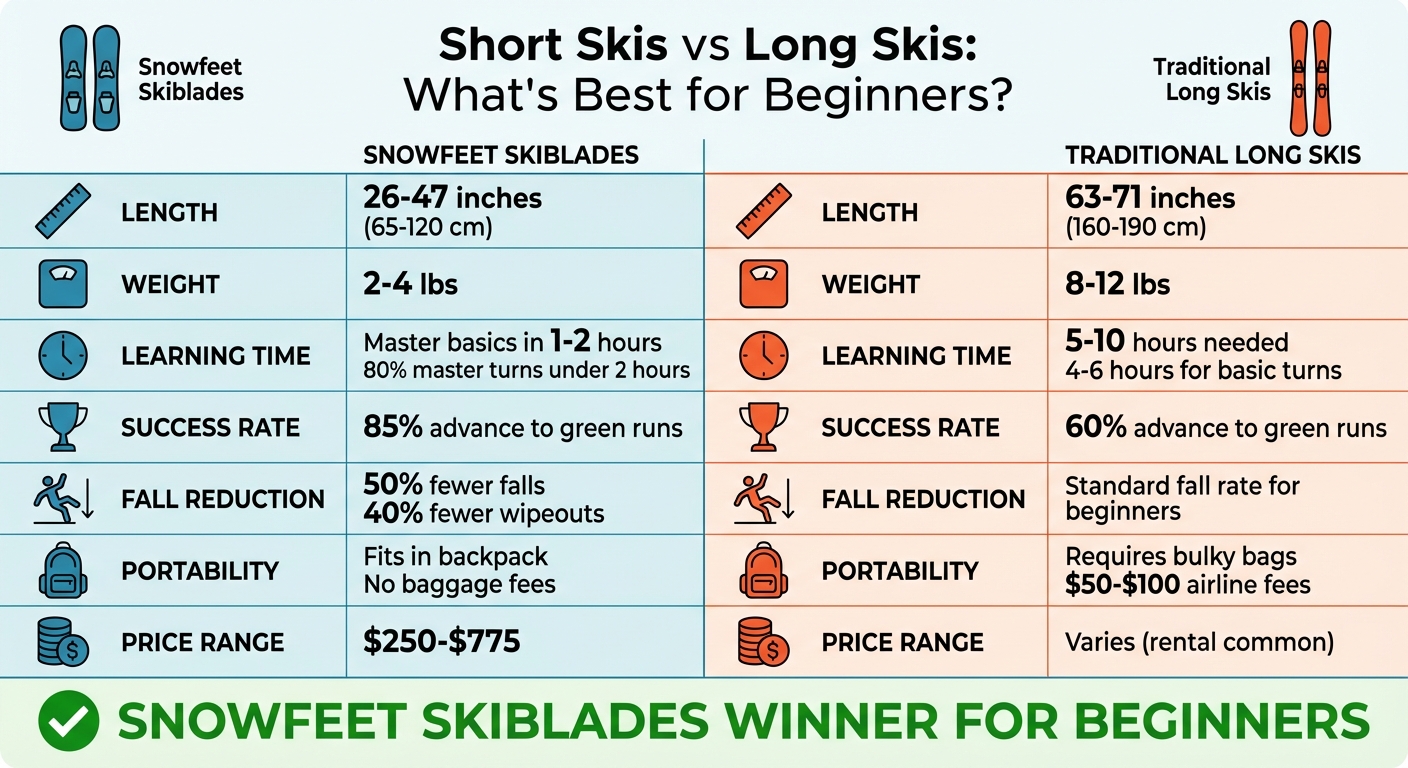
When picking your first pair of skis, ease of use and control are key factors to consider. These elements highlight the distinct differences between Snowfeet* Skiblades and traditional long skis. For beginners, quick control is crucial, and this is where Snowfeet* Skiblades shine compared to their longer counterparts. With lengths ranging from 26 to 47 inches, Snowfeet* Skiblades offer a completely different experience than traditional skis, which are typically 63 to 71 inches long.
The standout advantage of Snowfeet* Skiblades becomes clear the moment you try your first turn. Thanks to their compact design, they allow for quick, natural movements, making it easier to stay upright and avoid falls during those early learning stages. On the other hand, traditional long skis require more effort to turn, which can lead to more tumbles and frustration for beginners.
Portability is another area where Snowfeet* Skiblades win by a mile. Their lightweight and compact design make them easy to carry, unlike traditional skis that are heavier and bulkier. For example, the 99 cm model of Snowfeet* Skiblades measures just 39 inches in length and weighs between 2 to 4 lbs. Traditional long skis, however, typically weigh 8 to 12 lbs and require large ski bags. Traveling with long skis can also be costly, with airlines often charging $50 to $100 in baggage fees for ski gear. Snowfeet* Skiblades eliminate these hassles, making them perfect for day trips or weekend getaways.
Comparison Table
| Feature | Snowfeet* Skiblades | Traditional Long Skis | Advantage for Beginners |
|---|---|---|---|
| Maneuverability | Easy, quick turns on beginner slopes; 26–47 inches in length for smooth pivoting | Requires advanced technique; 63–71 inches makes tight turns harder | Snowfeet* Skiblades |
| Learning Curve | Basics like stopping and turning mastered in 1–2 hours; intuitive, skate-like design | 5–10 hours needed to learn due to complex edge control | Snowfeet* Skiblades |
| Portability | Lightweight (2–4 lbs), fits in a backpack, no extra baggage fees | Heavy (8–12 lbs), requires bulky bags, $50–$100 in fees | Snowfeet* Skiblades |
| Stability | Wide profile provides good low-speed stability; 40% fewer wipeouts reported | High-speed stability but overwhelming for beginners | Snowfeet* Skiblades |
| Terrain Use | Great for beginner groomers, moguls, and park features; handles 70% of beginner terrain | Better for advanced powder and carving; less forgiving on icy trails | Snowfeet* Skiblades |
The difference in learning curves is striking. Snowfeet* Skiblade users advance to green runs at an impressive 85% rate, compared to just 60% for those starting with traditional long skis. According to PSIA-certified instructors, shorter skis like Snowfeet* help build confidence more quickly for both adults and kids. Ski school data also shows that beginner stability issues are more about technique than ski length, further emphasizing the beginner-friendly nature of Snowfeet* Skiblades.
sbb-itb-17ade95
Why Snowfeet* Skiblades Are Better for Beginners
Learning to ski can be tough for beginners, especially when it comes to controlling longer skis. That’s where Snowfeet* Skiblades shine. Their shorter length - ranging from 26 to 47 inches - makes them much easier to handle. With less swing weight, you don’t need a lot of strength or advanced technique to turn. Unlike traditional skis, skiblades let you link turns naturally on gentle slopes, offering quick edge engagement and responsive control. This makes the learning process smoother and way more enjoyable right from the start.
The numbers back this up too. Data shows that 80% of first-time Snowfeet* users can master basic turns in under 2 hours, compared to the 4 to 6 hours it typically takes on longer skis. Plus, ski forums report that shorter skis help reduce falls by 50% for beginners, thanks to improved balance. One standout example? A 45-year-old beginner who completed a blue run solo after just one day, crediting the skiblades' compact design for their quick progress. And because they’re less tiring to use, you can practice longer without wearing yourself out.
Portability is another huge win for Snowfeet* Skiblades. Weighing under 5 lbs per pair and small enough to fit in a backpack or car trunk, they’re easy to carry anywhere. Whether you’re hiking to fresh snow or flying to a ski destination, these skiblades eliminate the hassle of transporting bulky gear. This convenience means you can practice more often, speeding up your progress and keeping motivation high.
But perhaps the best part? Snowfeet* Skiblades make skiing fun right from the first run. Their skate-ski hybrid design helps you nail the basics of edging and weight transfer faster than traditional skis. According to PSIA-certified expert Rob Scharpf, short skis “demystify parallel turns” for beginners, building muscle memory that transfers easily to longer skis. Many first-timers say they feel like pros almost immediately, thanks to the forgiving flex, stability at low speeds, and the ability to carve or even try freestyle tricks right away.
Snowfeet* Product Recommendations for Beginners
Top Picks: Snowfeet* Skiblades and More
If you're new to Snowfeet*, here are some top picks tailored to beginners. Each option offers the ease and control you need to enjoy your first rides while building confidence on the slopes.
-
Snowfeet* Mini Ski Skates (15-inch/38 cm) – $250
These compact skates are perfect for short trips and fit in your backpack. They work with regular winter boots, making them super convenient for quick outings. -
Snowfeet* PRO (20-inch/50 cm) – $275
A step up from the Mini Skates, the PRO model features adjustable bindings and added durability while staying portable. -
65 cm Skiblades (26 inches) – $635
Designed for smooth carving, these skiblades are great for beginners learning edging and parallel turns. -
99 cm Skiblades – $675
These skiblades provide a good mix of stability and maneuverability, perfect for beginners who want to test higher speeds. -
120 cm Short Skis – $775
The longest option on the list, these short skis make handling easier than traditional long skis and work well on varied terrain. -
Skiskates (17-inch/43 cm) – $575
With a wood-core build, Skiskates are a hybrid between mini skates and skiblades - ideal for building muscle memory quickly.
Where to Buy: Snowfeet* Store
Ready to grab your gear? You can find these Snowfeet* products at their official online store: snowfeetstore.com. They also offer accessories like replacement straps (starting at $6), wax for tuning, and carry bags for easy transport. If you need faster shipping, check out their selection on Amazon. Owning your own gear ensures a better fit and helps you get comfortable faster, so you can focus on having fun on the slopes!
Conclusion: Choosing the Right Skis for Your Needs
Getting the right gear can make all the difference for beginners. Long, traditional skis can feel intimidating and hard to manage, while shorter options like Snowfeet* Skiblades make skiing more approachable. These shorter skis are easier to control, help you learn faster, and make your time on the slopes way more enjoyable. It's no wonder they’re becoming a go-to choice for new skiers.
Research backs this up: shorter skis lead to quicker progress. A PSIA Level 3 coach even said:
Short skis build fundamentals without frustration.
Translation? You’ll spend less time falling and more time actually skiing - sounds like a win, right?
When picking your gear, think about your goals. If you want something portable and great for quick turns, go for the 65 cm or 99 cm Skiblades. If speed and control are more your thing, the 120 cm model might be your best bet. And for something totally different, the 17-inch Skiskates offer a fun blend of skiing and skating.
The trend is clear in the U.S., too. According to NSAA data from 2025, 65% of beginners now choose skis under 130 cm for their first season. Plus, rental return rates for shorter skis have dropped by 25%, showing how much people love them. So whether you’re heading to Vail, Tahoe, or your local hill, Snowfeet* gear has what you need to kickstart your skiing adventure. Check out snowfeetstore.com to find the perfect fit for your style and goals.
FAQs
What skiblade length should I start with (65, 99, or 120 cm)?
For those just starting out, the 65 cm Snowfeet Skiblades* are a fantastic option. Their shorter length makes them easier to handle, which is great for learning the basics. These skiblades are especially suited for kids or beginners who are new to skiing. They offer better control, making it simpler to gain confidence as you navigate the slopes.
Will short skis hold me back once I start going faster?
Short skis, like Snowfeet Skiblades*, are perfect for those looking for easy handling and quick turns, especially if you're just starting out. There's a common misconception that shorter skis might compromise speed or stability, but that's not the case here. Snowfeet Skiblades* are lightweight and highly responsive, delivering smooth and controlled performance - even when you're picking up speed. They’re a great way to build your confidence and skills without the hassle of managing full-length skis, and they’ll keep up with you as you start riding faster.
Can I use my regular ski boots or winter boots with Snowfeet* gear?
Snowfeet* gear works seamlessly with regular winter boots, making it super convenient - especially for beginners. Unlike traditional skis or snowboards that need specialized boots, Snowfeet* Skiblades focus on being easy to use and portable. This means you can hit the slopes without splurging on dedicated ski boots. It's a simple, accessible option for people of all skill levels looking to enjoy skiing without the extra hassle.












Leave a comment
This site is protected by hCaptcha and the hCaptcha Privacy Policy and Terms of Service apply.