



















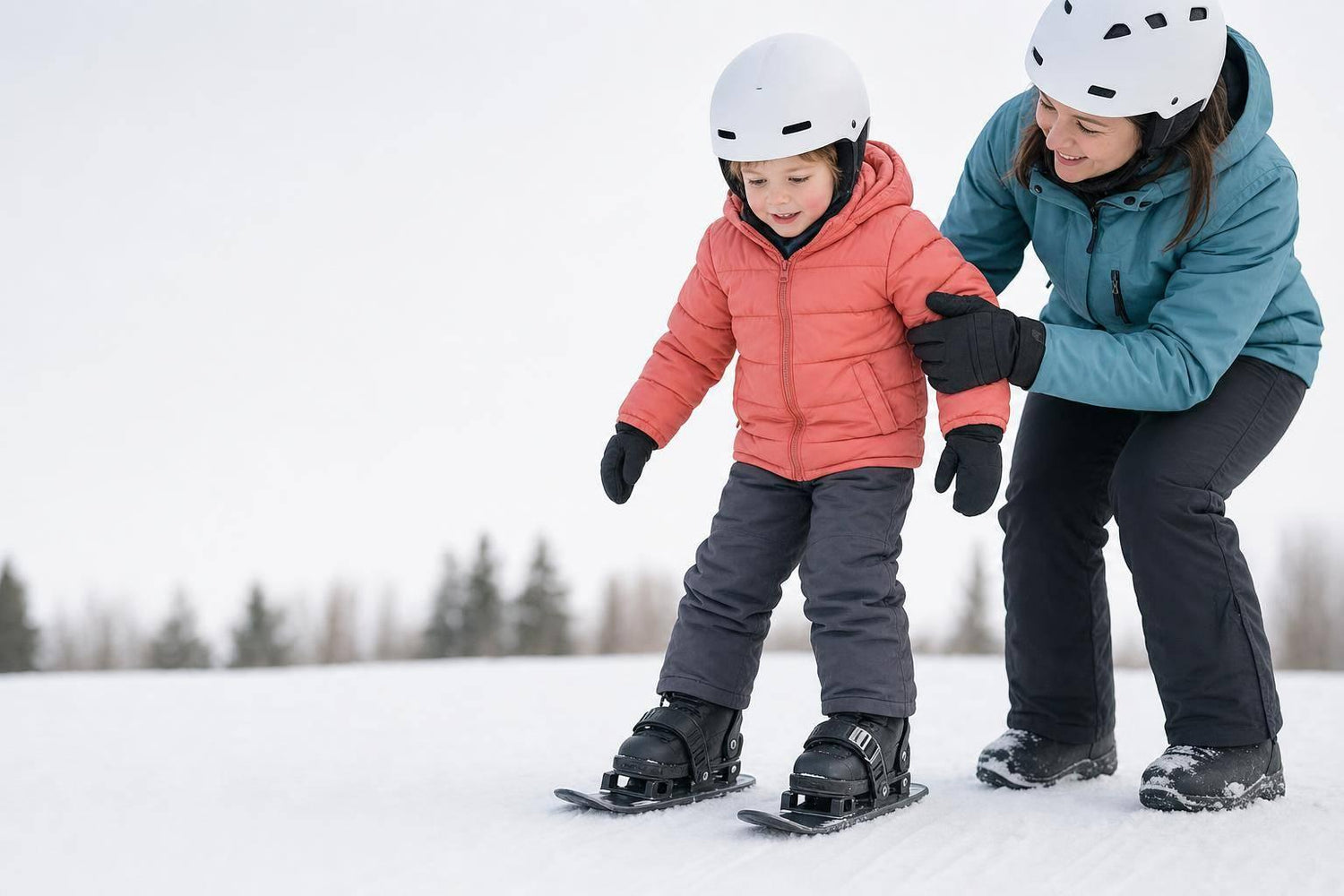
Yes - Snowfeet can be safe for some young kids, but only on easy terrain, with close adult supervision, and a snug fit. If I had to boil it down, I’d say this: low speed, short sessions, mellow hills, and a kid who listens when you say “stop.”
Here’s the short version:
- Best first pick: Snowfeet MINI KIDS
- Best terrain: flat packed snow or the bottom of a bunny hill
- Best session length: 10–20 minutes
- Must-have gear: helmet, gloves, warm layers, eye protection
- Hard no: ice, steep slopes, crowds, fog, slush, terrain parks
A few facts stand out fast:
- MINI KIDS weigh 2.52 lb per pair
- They fit U.S. kids’ size 10 to adult 6
- The first few tries should happen with an adult 1–3 feet away
So, I wouldn’t ask, “Are Snowfeet safe?” I’d ask: Is my child ready, fitted right, and on the right hill? That’s what decides it.
| Model | Best For | Feel on Snow | Best First Use |
|---|---|---|---|
| MINI KIDS | Smallest kids | Most stable, easiest to control | Backyard, flat snow, tiny slopes |
| 38 cm | Older kids with better balance | Fast turning, more responsive | Beginner runs |
| 50 cm PRO | Kids with better stop control | More platform, needs more control | Gentle groomed slopes |
My take: start with the shortest secure option, keep things slow, and quit before your child gets tired or cranky. That’s usually when the wipeouts start :)
Need a little help before the first run? These can help:
- How to teach kids to ski basics on YouTube
- Beginner bunny hill tips on YouTube
- Helmet fit for kids on YouTube
Bottom line: Snowfeet are fine for the right child in the right place - but they’re not a “set it and forget it” toy.
How to Choose the Best Skis for Kids
Why Short Snowfeet Models Are Easier for Beginners
Short models make the first days on snow a lot less messy. They’re easier to steer, easier to stop, and less intimidating for kids who are still getting used to the feel of sliding.
For young children, the goal isn’t speed. It’s control. That’s why MINI KIDS, 38 cm, and 50 cm are the smartest starting points.
Short skis turn in less space than long skis, so kids can control them more easily at low speed. A small shift in body weight can change direction. And on a mellow slope, stopping feels less overwhelming too.
Weight plays a big part here. The Snowfeet MINI KIDS weigh just 2.52 lb (1.144 kg) per pair. That’s light enough for a small child to carry, step into, and use without getting tired too fast. Less fatigue means better focus. Better focus usually means better control. Simple as that.
Why MINI KIDS, 38 cm, and 50 cm Are the Right Starting Points
These three models each fit a different type of beginner. And yeah, picking the right one matters more than many parents think.
| Model | Best For | Main Benefit |
|---|---|---|
| MINI KIDS | Smallest riders | Lightest and easiest to handle |
| 38 cm Snowfeet | Older or more coordinated beginners | Most responsive for coordinated beginners |
| 50 cm Snowfeet PRO | Kids who need a bit more platform | More stable underfoot without losing easy turning |
The MINI KIDS is the clearest first pick for young children. It’s light, simple, and less work to manage.
The 38 cm model works well for an older child who already has decent balance and wants a more responsive feel. If your kid picks things up fast and likes quick turns, this one often clicks.
The 50 cm PRO lands in a nice middle spot. It still turns easily, but the slightly longer platform can help a child who’s still working on balance feel steadier underfoot. Many parents say their kids get used to the short format fast. That tracks. Short gear tends to feel less clunky and more natural right away.
After model choice, the next thing to check is boot fit.
Fit and Footwear in U.S. Sizing
Fit affects control. And control affects safety.
If a boot moves inside the binding, a child loses the ability to steer and stop with confidence. That’s when falls start to pile up.
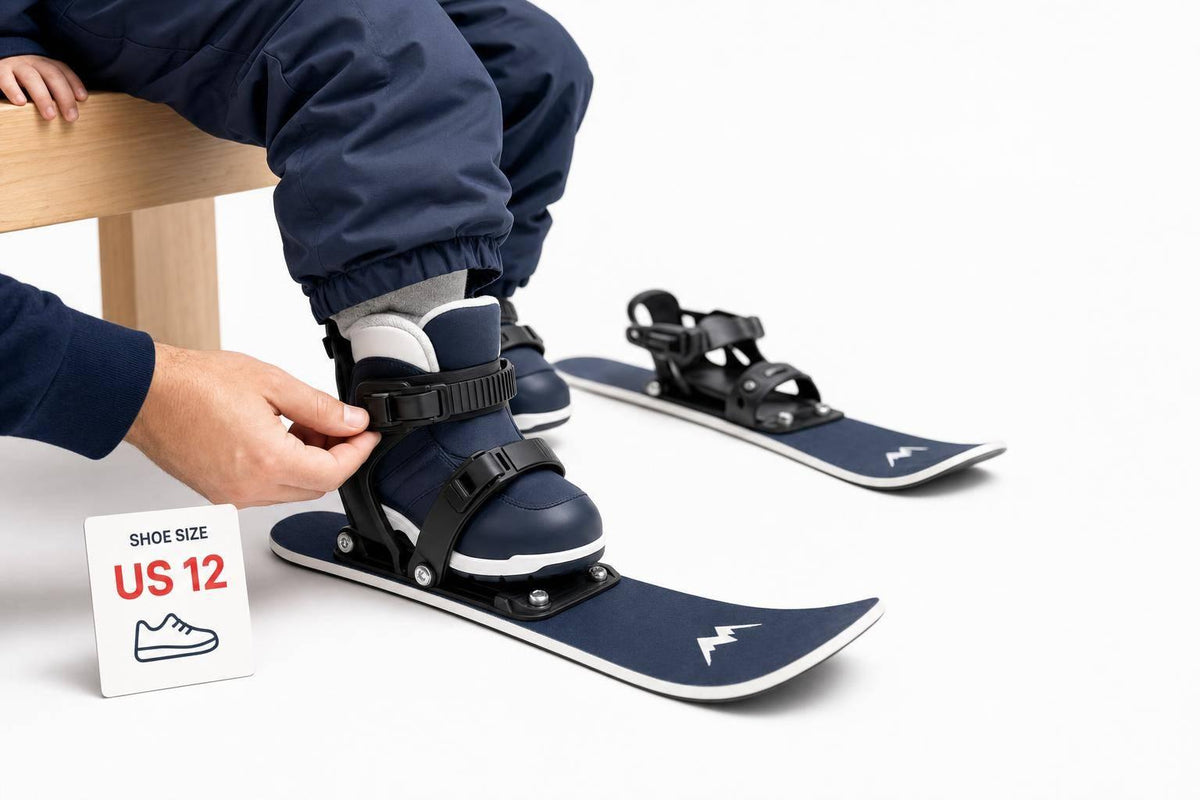
The MINI KIDS fits U.S. shoe sizes 10 (Kids) through 6 (Adult). For snowboard boots, the binding is made for EU sizes 27–33. Larger boots may not fit the binding width.
A good boot should hold the foot in place without slop. No heel lift. No sliding around. If the fit is loose, the setup gets harder to control, fast. That’s one of the easiest safety issues a parent can fix, so it’s worth testing the fit before the first run.
From there, the next step is figuring out where a child should ride and how long each session should last.
When Snowfeet Are a Good Fit for a Young Child
Once you’ve nailed the right size and boot fit, the next piece is terrain and supervision. Fit matters, sure. But after that, the big question is simple: can your child slide in control and stay safe?
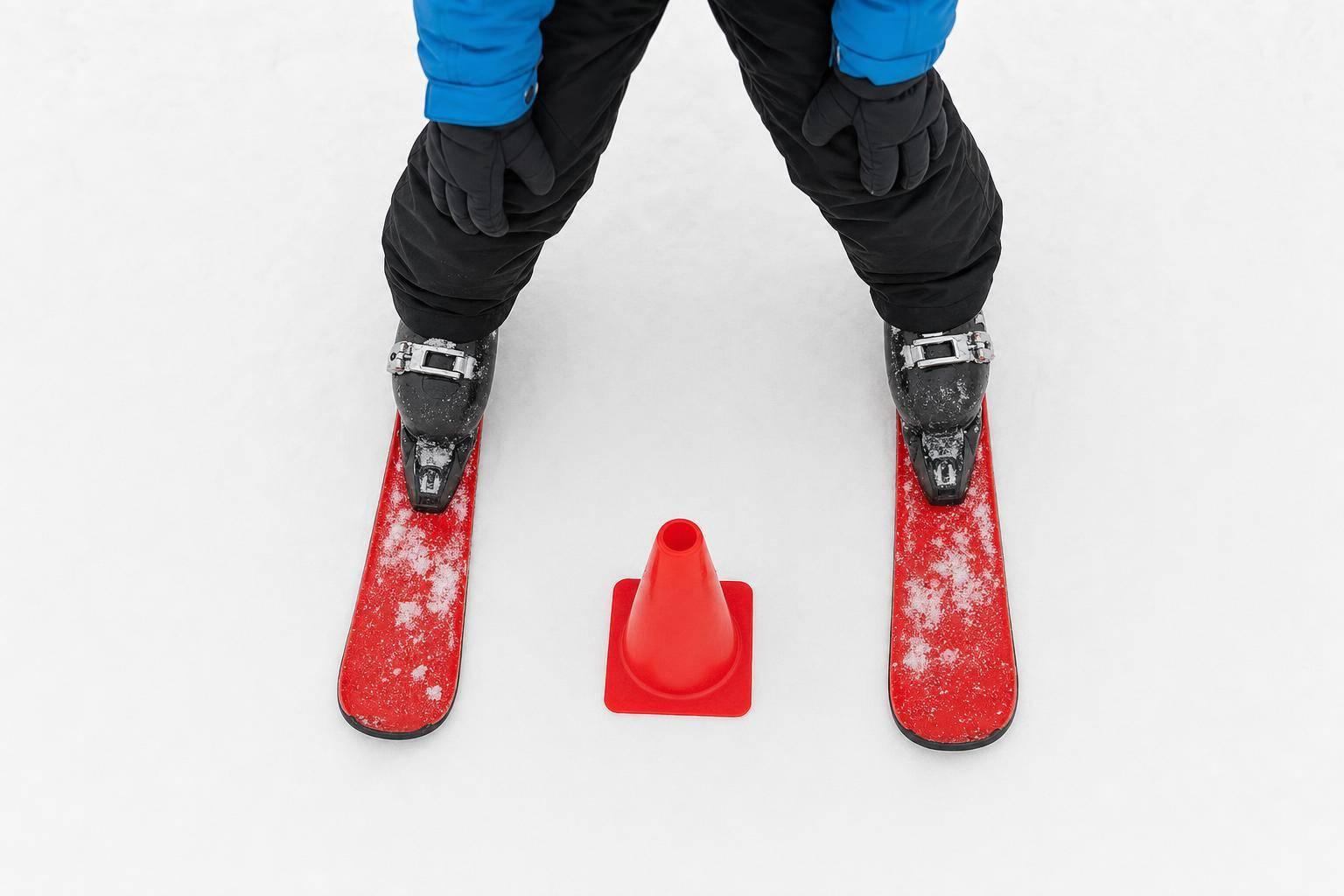
Start on flat snow first. Let them shuffle, slide a bit, and practice stopping when you call for it. No slope yet. Just the basics. If they can do that without getting flustered, you can move to easier terrain.
Best Terrain and Session Length for First Tries
Begin on flat, packed snow or at the very bottom of a bunny hill. Before any incline, your child should feel okay gliding, making small turns, and stopping on flat ground. Then, if things look smooth, try a gentle bunny hill or a magic-carpet area where the snow is packed and speeds stay low.
Keep the first sessions short. Aim for 10–20 minutes of active sliding, split into a few brief runs with breaks between them. Young kids get tired fast, and that’s when things can go sideways. When fatigue kicks in, coordination drops and falls happen more often.
Stop early if your child seems tired, cold, or nervous. Watch for simple warning signs:
- They start leaning backward
- They stop listening to cues
- They fall more on terrain they handled fine a few minutes ago
That’s your sign to pack it up and save the rest for next time.
How Close Adult Supervision Should Be
Even on easy terrain, close adult supervision isn’t optional. For the first few outings, stay 1–3 feet away. That means close enough to grab their arm or jacket if they start to pick up speed.
On flat ground, walk right next to them. On a gentle slope, stand a bit downhill and off to the side so you can step in within one or two strides.
Before each run, keep the routine simple:
- Agree on a clear stop cue, like freeze
- Check that the bindings are snug
- Make sure the helmet fits right
If the area gets crowded or your child stops responding to cues, move to safer terrain right away.
sbb-itb-17ade95
Safety Limits, Main Risks, and Required Gear
Once fit and supervision are sorted, the next issue is simple: where Snowfeet are not safe.
They can be a blast for kids. But they still come with fall and crash risk. The big trouble spots are ice, steep slopes, crowds, poor visibility, and gear that’s loose or fits badly. Snowfeet’s own maker puts it plainly:
"it is more difficult to turn or stop with Snowfeet than it is with skis."
That doesn’t mean kids should stay away from them. It just means safety can’t be an afterthought.
Terrain and Conditions to Avoid
For young kids, some places are just a hard no.
Icy runs cut grip and make it much easier to slide out of control. Steep hills build speed fast, often faster than a child can respond. Crowded slopes add crash risk, and a small child on Snowfeet can be harder for other people to see in time.
It’s not just about slope pitch, either. Snow quality and visibility matter just as much. Flat light can make depth hard to read. Fog and heavy snowfall make it harder for others to spot the child. Heavy wet snow or slush can grab the short base and cause a sudden forward fall. Moguls, terrain parks, and uncontrolled sledding hills all fall into the high-risk bucket, even if the child has done fine on easy terrain before.
If a run fails any of those checks, skip it. No drama. Just move on.
Protective Gear and Pre-Run Safety Checks
A properly fitted ski or snowboard helmet is non-negotiable. Major pediatric groups, including the American Academy of Pediatrics, recommend helmets as standard practice for all children on snow.
Kids also need:
- Waterproof gloves or mittens
- Warm, waterproof layers
- Goggles or sunglasses in bright light
Wrist guards may also help for kids who tend to catch themselves with their hands when they fall.
Before each session, do a quick safety check:
- Binding security - straps fully closed, with no wobble or loose play between the boot and Snowfeet
- Footwear condition - boots dry inside, with ankle support, and the right size; skip oversized boots
- Helmet fit - snug, level, secured under the chin, and sized for the child’s actual head circumference
- Clear path - scan the run for ice patches, obstacles, sudden drops, or heavy traffic before the child starts
With those limits set, the next step is picking the right model for your child.
Best Snowfeet Options for Young Children and Final Recommendation
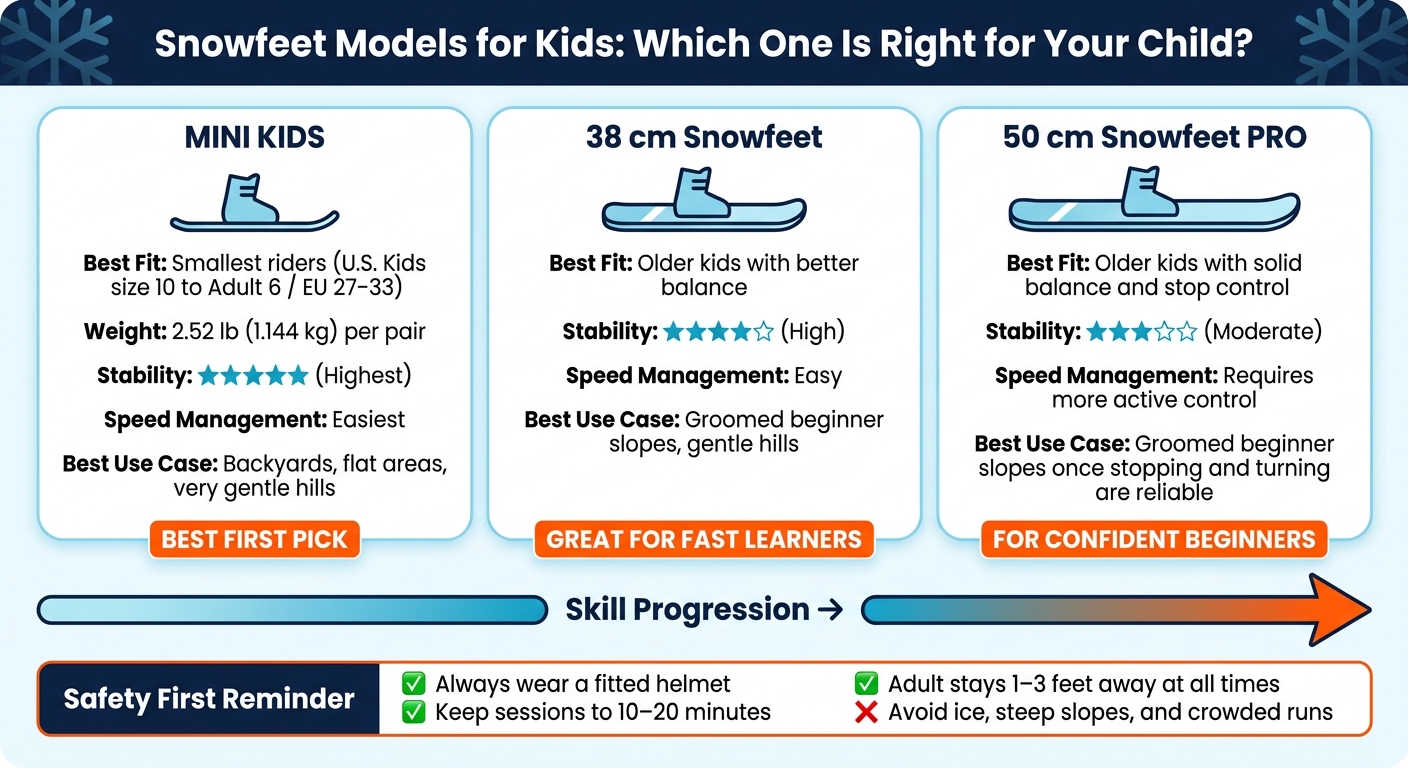
Snowfeet Models for Kids: Which One Is Right for Your Child?
With terrain limits and gear checks out of the way, the last call is simple: which Snowfeet model should your child use?
Which Model Makes the Most Sense for Your Child
The main difference between these three models is how easy they are for a beginner to handle. If your child passes the readiness checks, go with the shortest model that fits well and stays secure.
| Model | Best Fit | Stability | Speed Management | Best Use Case |
|---|---|---|---|---|
| MINI KIDS | Smallest riders / boots | Highest | Easiest | Backyards, flat areas, very gentle hills |
| 38 cm | Older kids with better balance | High | Easy | Groomed beginner slopes, gentle hills |
| 50 cm | Older kids who already have solid balance | Least forgiving | Requires more active control | Groomed beginner slopes once stopping and turning are reliable |
Pick based on balance and stopping ability first. That’s the big thing.
MINI KIDS is the safest first pick for the smallest beginners. It’s light, short, and easy to control. In plain English: it gives kids less to fight with while they learn.
So the progression looks like this:
- MINI KIDS for a first start
- 38 cm for kids who already balance well
- 50 cm for kids who can stop on command and keep their speed under control
If your child is still a bit wobbly, don’t rush to size up. Shorter is usually the better call here. It’s kind of like learning to ride a small bike before hopping on a big one :)
Bottom Line for Parents
Snowfeet can be safe for young children when the fit is right, the terrain is mellow, and an adult is paying close attention. Start with the shortest secure model, stick to gentle terrain, and wrap up before your child gets tired.
Keep the speed low. Keep the slope easy. That’s when Snowfeet can be a fun first step into snow sports for the right child.
FAQs
How do I know if my child is ready for Snowfeet?
Readiness has less to do with age and more to do with balance, listening, and following simple directions. If your child can stand steady in winter boots, move with confidence, and stop when you say so, that’s a good sign they’re ready.
Fit matters too. MINI KIDS are made for ages 3–6, and the 38 cm model fits US shoe sizes 10 to adult 6. Start on flat ground or a gentle hill. Make sure the boots fit snug, and gear up with a helmet, goggles, and close supervision.
What boots work best with Snowfeet MINI KIDS?
Snowfeet MINI KIDS work best with your child’s current waterproof, insulated winter boots or kids’ snowboard boots. No specialized ski boots needed. That means more comfort and a much easier setup for young riders.
For better safety and control, pick boots with:
- solid ankle support
- a snug fit
- enough structure for the bindings to hold the boot with little movement
Skip loose boots or super soft fashion boots. They might look cute, but on snow, they’re not doing your kid any favors :)
When should my child move from MINI KIDS to 38 cm or 50 cm?
Move up from MINI KIDS once your child can balance, turn, and stop on easy, groomed runs. That model is a good fit for toddlers and first-timers ages 3–6. If your child is starting to get the hang of it, 38 cm models give them a bit more stability and room to progress.
The 50 cm PRO is the next step for kids ages 8–14 who want more glide, more speed, and a steadier feel on mellow resort runs, without dealing with the bulk of full-length skis.











Leave a comment
This site is protected by hCaptcha and the hCaptcha Privacy Policy and Terms of Service apply.