



















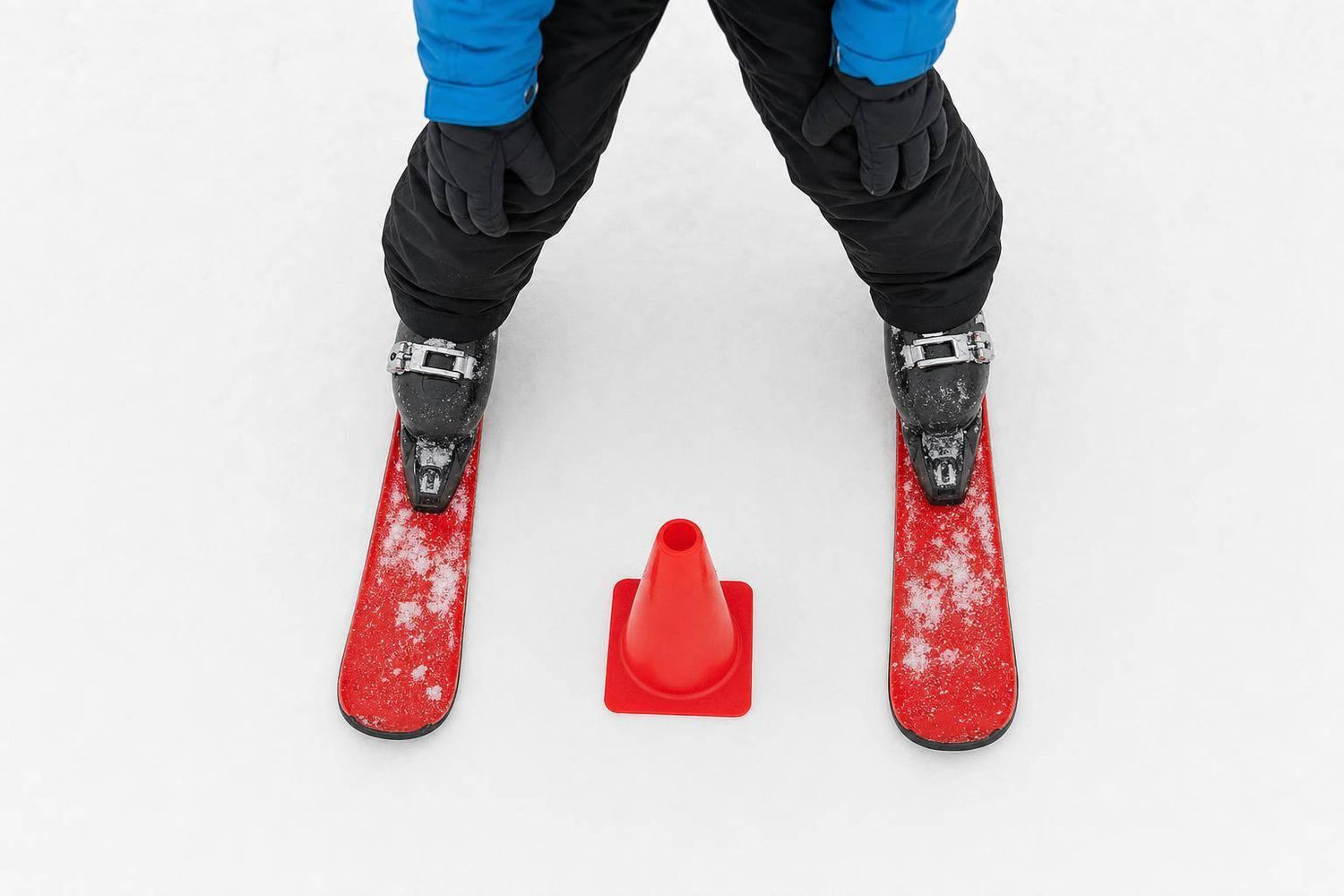
If your kid melts down in ski school, the gear may be the problem - not your kid. I’d look at ski length first. Many rental skis for kids run 90–120 cm long, and for new skiers that can make turning, stopping, and balance feel like a chore.
Here’s the short version:
- Long skis can slow early progress
- Short skis are easier to turn and stop on
- Early small wins often mean fewer tears and more laps
- The best pick depends on age, shoe size, and confidence
If I wanted the plain answer, it’d be this:
- Ages 3–6: go with Snowfeet* MINI KIDS - $250
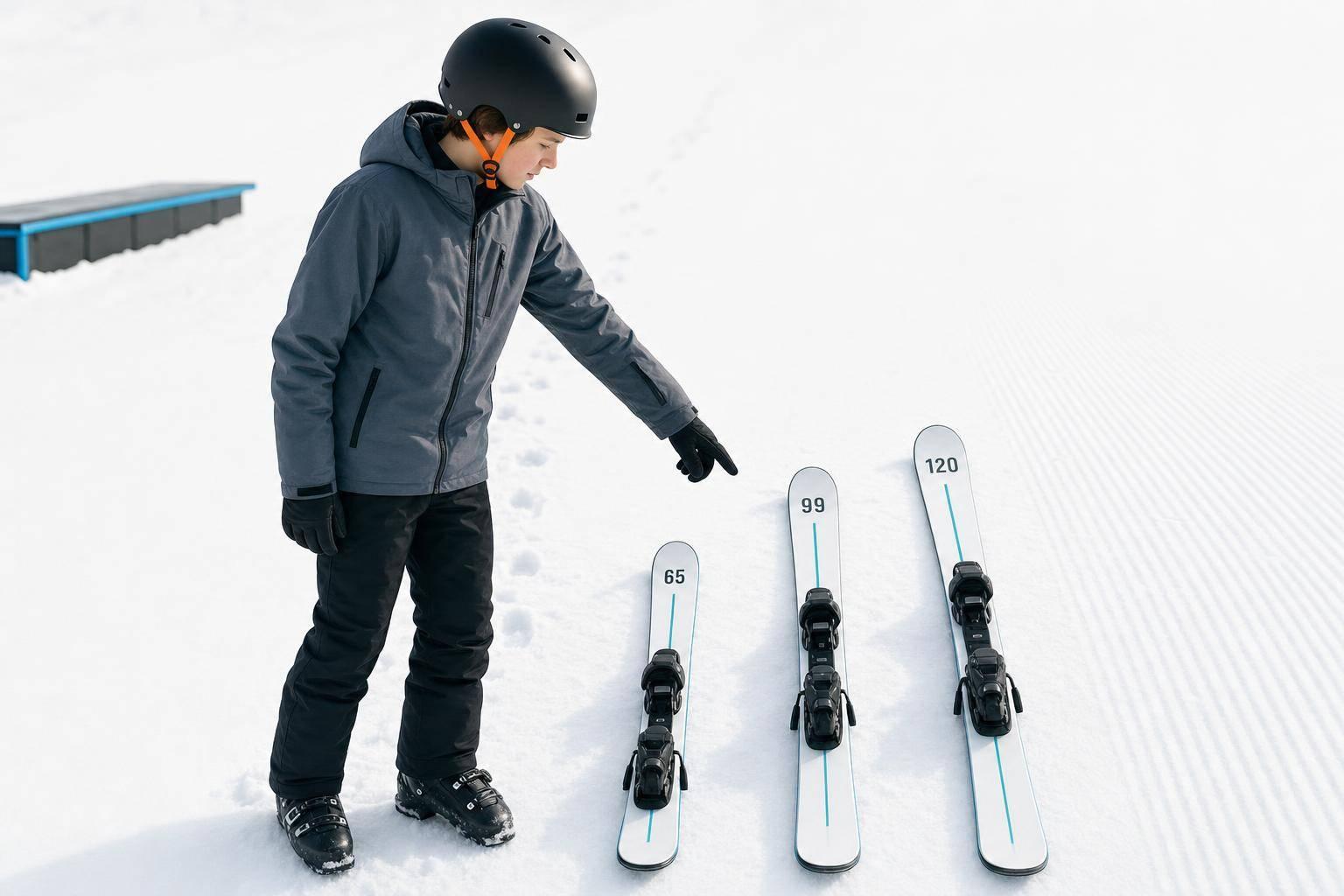
- Ages 6–12: look at Skiskates 44 cm - from $460
- Ages 8–14 and more sure kids: check Skiblades 65 cm - from $590
- Regular kids’ skis: still make sense for kids who are already doing fine in ski school
The ultimate fun skis for kids. 🎿
Quick Comparison
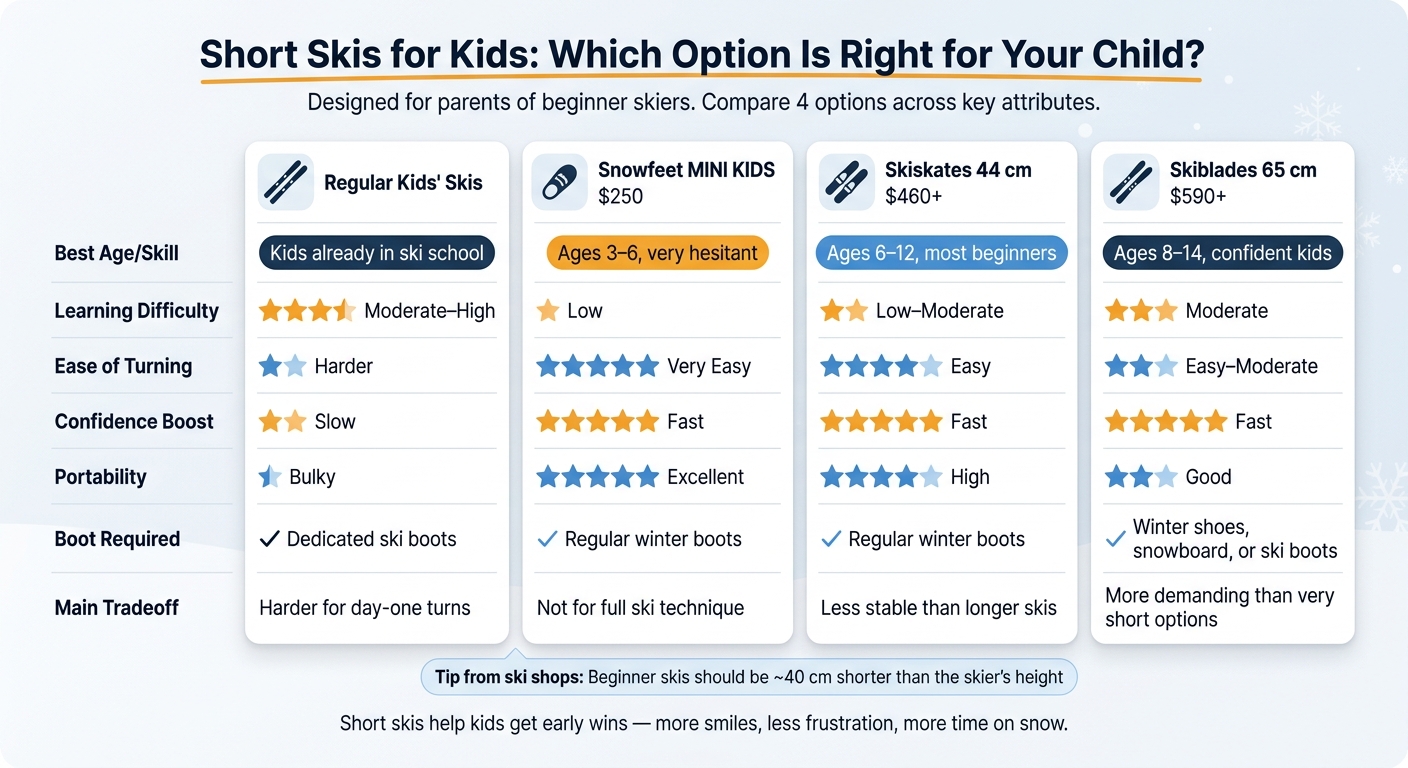
Short Skis vs. Regular Kids' Skis: Which Is Right for Your Child?
| Option | Best for | Main upside | Main tradeoff | Boot setup |
|---|---|---|---|---|
| Regular kids’ skis | Kids already doing okay in lessons | More stable at higher speed | Harder for day-one turns and stops | Ski boots |
| Snowfeet MINI KIDS | Ages 3–6, timid starters | Light, simple, less scary | Not meant for full ski technique | Winter boots |
| Skiskates 44 cm | Ages 6–12, most beginners | Easy turns, easy stops, fun feel | Less stable than longer skis | Winter boots |
| Skiblades 65 cm | Ages 8–14, more sure kids | More support with short length | More demanding than very short options | Winter shoes, snowboard boots, or ski boots |
A simple stat stood out to me: some ski shops suggest beginner skis should be about 40 cm shorter than the skier’s height. That lines up with what many parents see on snow - when skis get too long, kids tire out, lean back, and want out.
So, if your child says skiing is “boring” after 45 minutes, I wouldn’t assume they hate skiing. I’d first ask: are the skis too long?
For a fast visual on short skis for kids, these YouTube links may help:
My takeaway: if your goal is more smiles, less fighting with gear, and more time on snow, short skis are often the easier starting point :)
Why ski school feels hard for kids
Ski school can feel like a lot for young beginners. They’re trying to balance, stay warm, deal with stiff boots, and move around on long skis all at once. That’s a big ask for a kid. Shorter skis take part of that burden off.
Long skis make turning and stopping harder
Longer skis are harder for beginners to turn and stop. More length means more work. A child has to push harder to pivot, change direction, or slow down. At that point, it can feel like they’re wrestling with the skis instead of using them.
That’s when kids start to hesitate. If the skis feel too long to control, they become less willing to try turns. And then the classic beginner problem shows up: instead of leaning forward to steer, they tense up and lean back, which makes control even tougher.
Bulky gear is discouraging before the fun starts
A lot of the struggle begins before the lesson even starts. Standard kids' ski boots and skis are heavy for a child’s size, so walking, carrying gear, or even standing in place can feel like work. Heavy boots and skis can drain a kid’s energy before they make the first run.
When the gear feels lighter, kids have more left in the tank for learning.
Why kids quit when early wins take too long
Kids stick with things when they get small wins early. If a child can’t do a basic stop or turn in the first hour, frustration can show up fast. And it usually doesn’t come out as, “I’m frustrated.” It comes out as, “I’m cold,” “I’m tired,” or “This is boring.”
If they don’t feel some control early on, they start to decide skiing just isn’t fun.
Short skis help lower those early barriers.
sbb-itb-17ade95
Why short skis make learning easier
Shorter skis mean faster turns and earlier confidence
The physics here are pretty simple: shorter skis have less length in front of and behind the boot. That means they take less force to turn, stop, or pull back into line after a wobble. Kids don’t need to wrestle the skis around. Small moves from the ankles and knees can change direction fast.
That quick feedback matters a lot. A child shifts a little, and the ski responds right away. That’s the kind of cause-and-effect feeling that helps beginners learn without getting frustrated.
For example, INTERSPORT Rent says true beginners should use skis about 40 cm shorter than their height. In most cases, that puts the skis around chest height. For a typical 6-year-old, that comes out to about 39–43 inches (100–110 cm).
Short skis can also cut down on crossed tips, snagging in ruts, and rough falls. And those little “whoa... I almost fell, but I saved it” moments? They’re huge. That’s when kids start to feel in control. Once they get that feeling, they usually want another run instead of heading for the lodge.
Comparison table: Regular kids' skis vs. Snowfeet* short-ski options
| Regular Kids' Skis | Snowfeet MINI KIDS | Snowfeet Skiskates 44 cm | Snowfeet Skiblades 65 cm | |
|---|---|---|---|---|
| Learning difficulty | Moderate–High | Low | Low–Moderate | Moderate |
| Ease of turning | Harder | Very easy | Easy | Easy–Moderate |
| Confidence boost | Slow | Fast | Fast | Fast |
| Portability | Bulky | Excellent | High | Good |
| Best for (age/skill) | Kids already in ski school | Ages ~3–6, very hesitant beginners | Ages ~6–12, most beginners | Ages ~8–14, confident kids |
| Boot setup | Dedicated ski boots required | Regular winter boots | Regular winter boots | Winter shoes, snowboard boots, or ski boots |
The Snowfeet MINI KIDS ($250) is the easiest place to start. It’s tiny, light, and built for playful first slides on flat ground or very mellow terrain.
The Skiskates 44 cm (from $460) land in a nice middle zone for a lot of families. They’re short enough to keep turning easy, but still ski-like enough to help kids build solid habits.
The Skiblades 65 cm (from $590) give a bit more surface area and a steadier feel for kids who are ready for more speed, but aren’t quite ready to jump to full-length skis.
Where longer skis still have an edge
Regular kids’ skis still do better in some spots. At higher speeds, they track straighter and give more edge contact. They also grip better on icy or steeper terrain, which starts to matter once a child can link turns with confidence. And if a kid is moving toward racing or advanced all-mountain skiing, the usual ski-school path is still built around full-length skis.
But that stuff tends to matter later.
For kids who are still stuck in the early “this is hard and I’m not sure I like it” stage, high-speed stability isn’t the main issue. Control is. Confidence is. And, honestly, having a reason to come back next weekend is a big deal too.
Short skis help kids get those wins faster. For most casual families, that’s a pretty smart trade.
Which Snowfeet* option fits your child
Pick based on your child’s age, shoe size, confidence, and time on snow. Here’s the quick match-up.
Snowfeet MINI KIDS: best for the youngest and most hesitant beginners
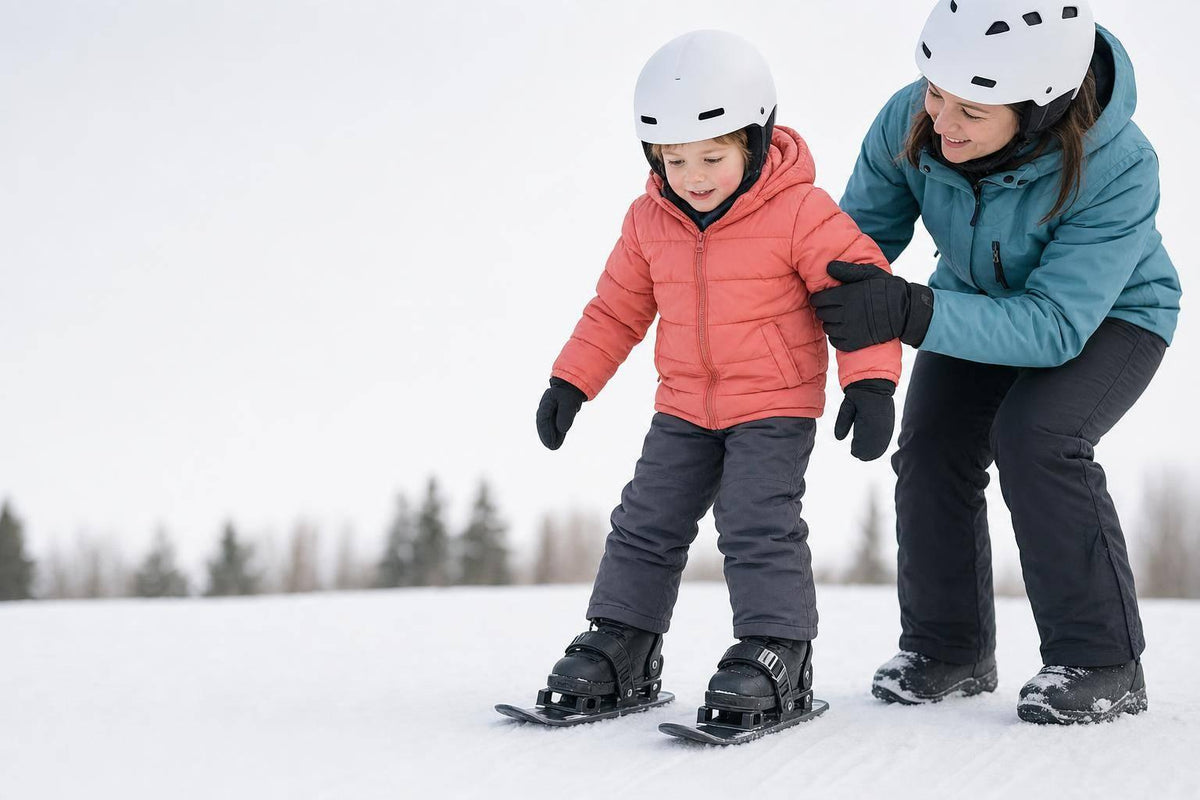
The MINI KIDS ($250) are made for kids in US children’s shoe sizes under 6, usually around ages 3–6. They’re small, light, and built for fun first slides, not ski technique. Kids can shuffle, slide, and play on flat ground or a very gentle slope without dealing with long, heavy skis that feel like too much.
That simple first step helps little kids stay into it instead of getting overwhelmed. And that matters. A lot. Unlike short skis made with adults in mind, MINI KIDS are sized for small bodies. If your child starts wanting a bit more control while sliding, move up to Skiskates 44 cm.
Snowfeet Skiskates 44 cm: a strong pick for many families
The Skiskates 44 cm (from $460) are a good fit for kids around ages 6–12 who want more of a ski feel but still struggle with full-length skis. At 44 cm, they’re less than half the length of the ski-school skis many 6-year-olds use, so turning and stopping feel easier right away.
They also have a skate-like feel, which clicks fast for kids who’ve ice skated before or just have strong balance. On day one or two, that can mean faster direction changes, fewer crossed tips, and more of those “hey, I’m doing it” moments. If your child already wants more stability, Skiblades 65 cm are the next move.
Snowfeet Skiblades 65 cm: best for confident kids who want more stability
The Skiblades 65 cm (from $590) make sense for kids who already feel at home on snow and want something closer to standard skiing. They give more edge contact than the Skiskates 44 cm, which helps with stability while still keeping control simple.
These work well for kids who burn through starter gear fast. They’re still easy to learn on, but they also give kids room to push a bit more. So if your child is ready to progress without jumping straight to full-length skis, this is the sweet spot.
Conclusion: The easiest path to more fun on snow
After looking at the options, one thing stands out: if ski school feels rough for your child, the issue often isn’t the child. It’s the setup. Short skis make it easier to turn, stop, and get those early wins that keep kids smiling.
So the pick gets a lot easier. Snowfeet* gives you three clear beginner choices:
- MINI KIDS for the youngest starters
- Skiskates 44 cm for cautious learners
- Skiblades 65 cm for kids who want more stability
For most families, the goal isn’t fancy technique on day one. It’s simple: more smiles, less frustration, and more time on snow.
Start with the easiest setup. Let your child build confidence first. Then move to longer skis later if they want more. Go with the setup that makes skiing feel easy now; speed and style can wait a bit :)
FAQs
How do I know if my child’s skis are too long?
Your child’s skis may be too long if they feel heavy, awkward to carry, or just plain tiring to use. That’s often when skiing starts to feel like work instead of fun.
A few signs tend to show up fast:
- The tips keep tangling
- Turns feel hard to start
- The skis seem bulky and hard to manage
- Your child looks worn out after a short run
You can usually see it in their body language, too. If they look stiff, nervous, or frustrated, there’s a good chance they’re fighting the skis instead of gliding on them.
In that case, a shorter option like Snowfeet* Skiskates or Skiblades may be a better fit. They’re less intimidating, easier to move around on, and often help kids feel more in control right away.
Are short skis safe for beginners?
Yes. Short skis are usually safer and easier for beginners than long skis. Their smaller size helps cut down on crossed tips, makes balance easier, and takes less muscle to control.
They’re also more forgiving and a lot less scary for new skiers. That means kids can learn to stop and turn sooner, which is a big win on day one :)
For the safest setup:
- Use a helmet that fits well
- Stick to groomed green runs
- Give your child close adult supervision until they can control speed and stop on their own
Can my child use short skis in ski school?
Yes, your child can usually use short skis like Snowfeet* in ski school. Most ski resorts in the United States allow them.
They’re light, easy to turn, and work with regular winter boots. That can make a big difference for kids who feel nervous at first. In many cases, short skis help beginners get the hang of balance, turning, and stopping faster than standard ski gear.
That said, it’s still smart to check your ski school’s own policy before you go. Rules can change from one resort to the next, and a quick check can save you a headache at the base lodge :)











Leave a comment
This site is protected by hCaptcha and the hCaptcha Privacy Policy and Terms of Service apply.