



















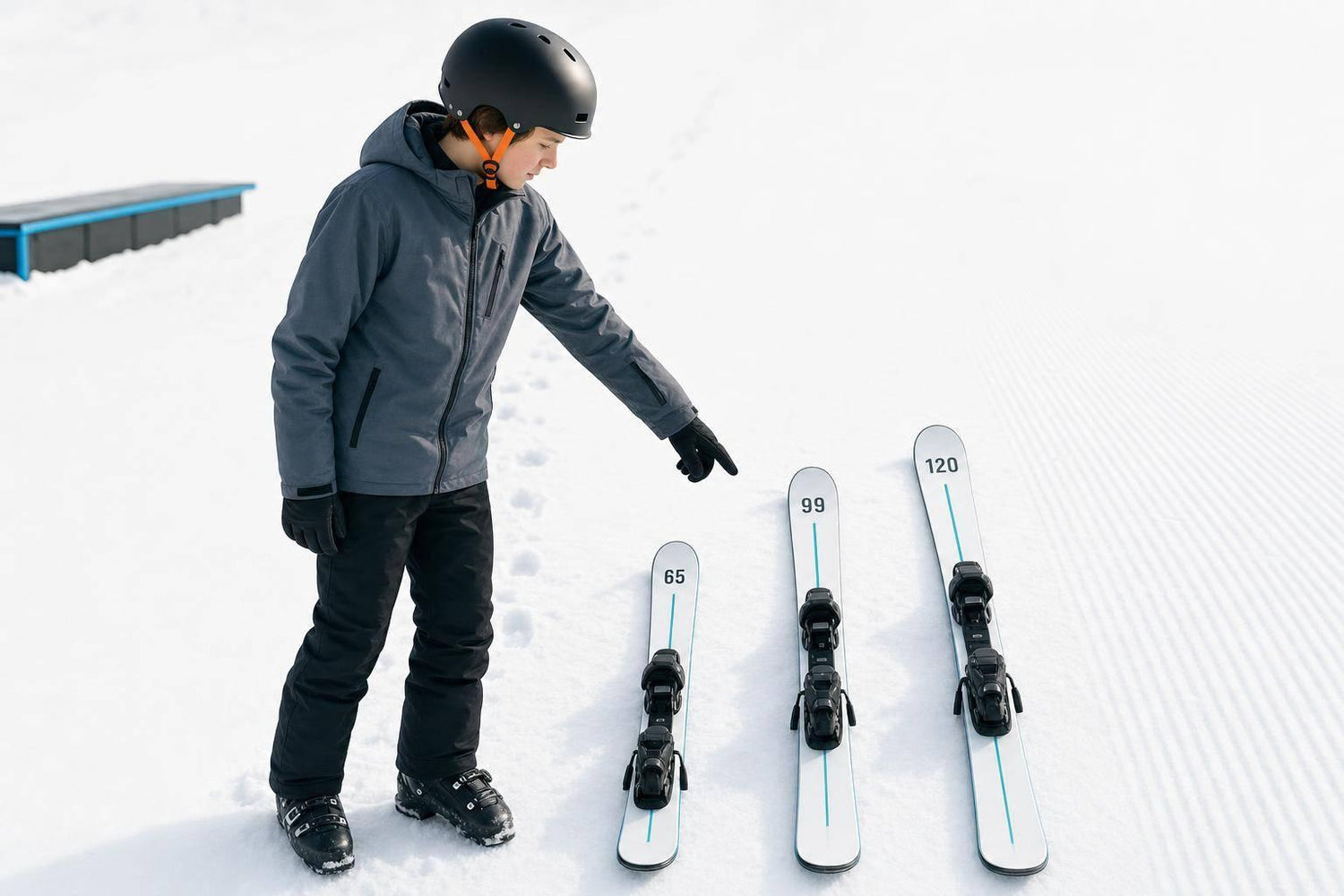
If I had to make this simple: most active teens should start by looking at the 99 cm skiblades first. They give a better mix of control, balance, and play than the very short models, while still feeling much easier to turn than full-size skis. In this lineup, sizes run from 17 inches to 47 inches (44 to 120 cm), far shorter than the usual 59 to 79 inches (150 to 200+ cm) many adults ski on.
If I’m helping a family pick fast, here’s how I’d frame it:
- 44–50 cm: best for skate-like riding, tight turns, and park messing around
- 65 cm: the fun middle pick for teens who want tricks without going too tiny
- 99 cm: best all-around choice for most teens
- 120 cm: best for stronger skiers who want more calm at speed
A few things matter right away:
- Shorter skis are lighter, easier to carry, and often easier for teens to turn
- Longer options in this group feel more planted on blue runs, groomers, and rougher snow
- The smallest models can feel shaky once speed climbs
- Deep powder and icy steeps still favor full-size skis
- Some models use non-release bindings, so a helmet and pads are a smart call every time
Snowboarder tries Snowfeet* | Which Snowfeet* Short Ski is the Best? | Snowblades 44, 65, 99 Review
Quick Comparison
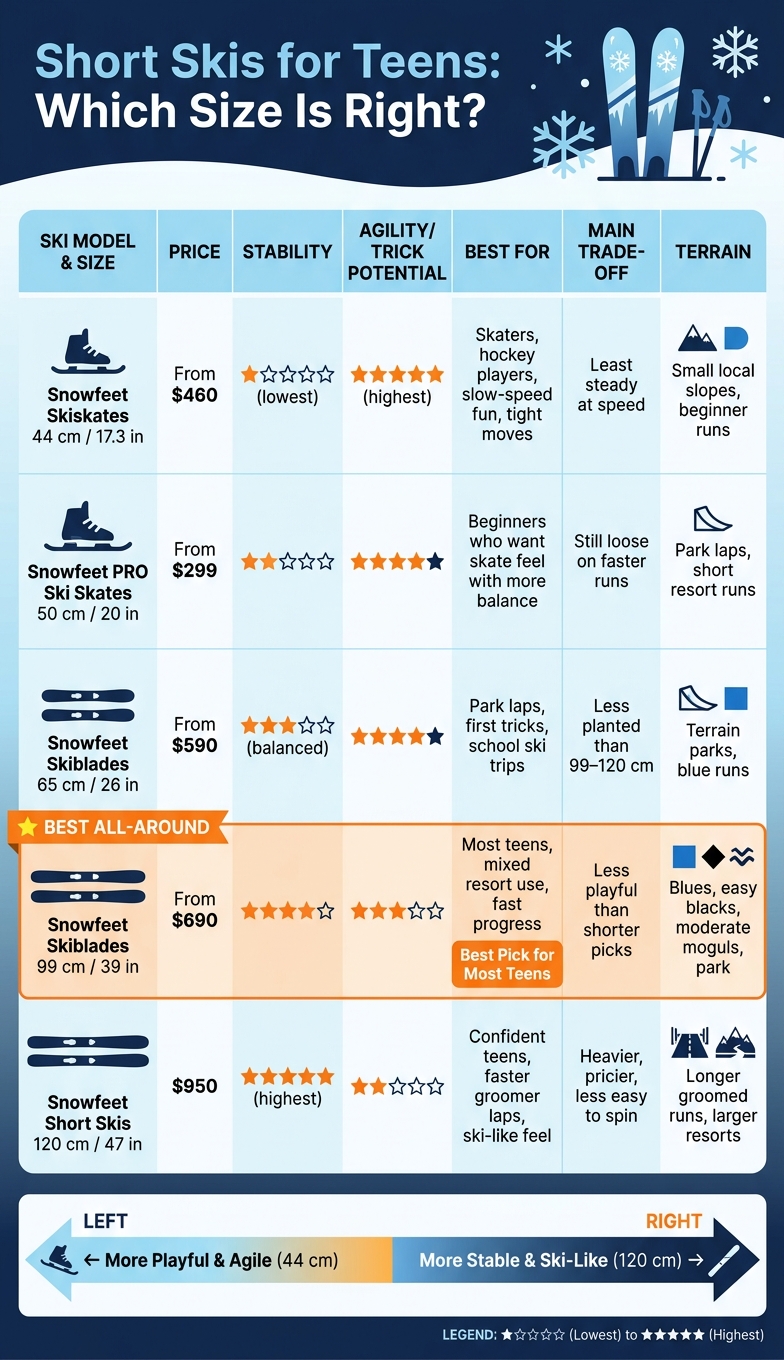
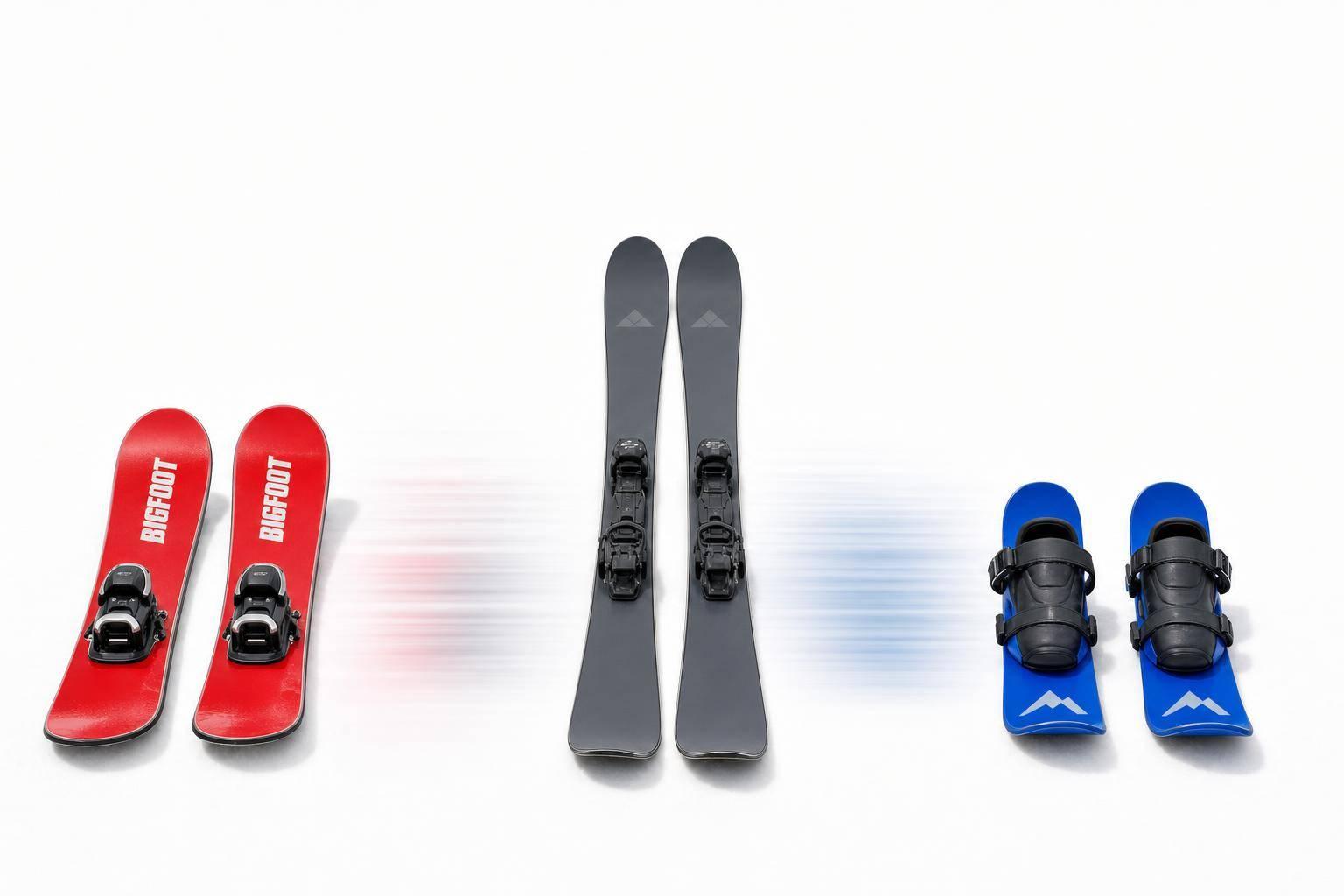
Short Skis for Teens: Size vs. Performance Comparison Guide
| Model | Length | Best For | Main Trade-Off | Price |
|---|---|---|---|---|
| Snowfeet* Skiskates | 44 cm / 17.3 in | Skaters, hockey players, slow-speed fun, tight moves | Least steady at speed | From $460 |
| Snowfeet* PRO Ski Skates | 50 cm / 20 in | Beginners who want a skate feel with a bit more balance | Still loose on faster runs | From $299 |
| Snowfeet* Skiblades | 65 cm / 26 in | Park laps, first tricks, school ski trips | Less planted than 99–120 cm | From $590 |
| Snowfeet* Skiblades | 99 cm / 39 in | Most teens, mixed resort use, fast progress | Not as loose and playful as shorter picks | From $690 |
| Snowfeet* Short Skis | 120 cm / 47 in | Confident teens, faster groomer laps, more ski-like feel | Heavier, pricier, less easy to spin | $950 |
So, if your teen is new but athletic, I’d lean 99 cm. If they live for jumps and spins, I’d look at 65 cm. If they already ski hard and want more grip and calm on snow, 120 cm makes more sense. And if they come from skating or hockey, the 44 cm or 50 cm options can be a blast :)
For a quick feel check before buying, these videos can help:
- Short skis / skiblades basics on YouTube
- Skiskates riding demo on YouTube
- Terrain park skiblades clips on YouTube
I’d treat this whole category as a simple trade: the shorter you go, the more playful it feels; the longer you go, the more stable it feels. That’s the heart of the choice.
1. Snowfeet* Skiskates 44 cm
At 44 cm (17.3 in) long, the Snowfeet* Skiskates are the most skate-like pick in this group.
They use a wood core, steel edges, and a sintered base, so they still feel like actual skis. That matters. Even though they’re tiny, they don’t come off like a gimmick or a toy.
That ski-style build shows up most when you want control, not just a fun one-off ride. Teens who skateboard, snowboard, or inline skate often pick them up fast. New riders can learn too, but it takes some practice, and they work best on groomed runs and firm snow.
For park laps and snappy turns, 44 cm is the most nimble option here. It changes direction fast. The trade-off is less stability once speed climbs. If a teen wants a bit more balance without losing that skate feel, the 50 cm model is the next move.
One nice perk: they’re short enough to fit in a backpack. They also work with boots many teens may already have:
- Ski boots: U.S. 4.5–14.5
- Snowboard boots: U.S. 6–14.5
There’s one big safety note, and it’s worth saying plain and simple: the bindings do not release in a fall. So, these make more sense on moderate terrain, with a helmet and other protective gear every time. Think fun, controlled riding - not bombing down the hill like you’re late for lunch.
2. Snowfeet* PRO Ski Skates 50 cm
At 50 cm (20 in), the PRO gives you more stability than the 44 cm Skiskates, but it still feels small, nimble, and easy to move. That balance makes it a sweet spot for teens who want a bit more confidence without giving up agility.
The build helps here too. Fiberglass reinforcement and metal edges add grip and make turns easier to control on groomed or uneven snow. Its shape also helps turns start with less effort and keeps things steadier when the terrain gets choppy.
For teens who want park laps, small jumps, or spins, the PRO 50 cm is a better fit than the 44 cm model. It’s a bit more forgiving when landings get messy or speed starts to climb.
Adjustable bindings fit winter shoes or snowboard boots, roughly US men’s sizes 6–13 (EU 38–47). Pricing starts at $299.
If a teen wants more stability and a ride that feels closer to a ski, the next move is the 65 cm skiblade.
3. Snowfeet* Skiblades 65 cm
If the 50 cm model feels a bit too much like skating, the 65 cm (about 26 in) version is the clear next move. This is the sweet spot in the lineup. You get a ride that turns faster and feels easier to manage than longer skis, but with more balance than the 44 cm and 50 cm models.
These skiblades do best on groomed runs, beginner-to-intermediate terrain, parks, side hits, and small jumps. They’re not the best pick for steep slopes, icy conditions, or deep powder days.
For skateboarders and snowboarders, the 65 cm length feels like a nice middle ground. It makes spins, hops, and butter-style moves easier than they are on full-length skis. Full-size skis still do better at high speeds and in chopped-up snow, so this length leans more toward control and fun than all-mountain use.
You can get them with ski or snowboard bindings. They fit ski boots from U.S. 4.5–14.5 or snowboard boots from U.S. 6–14.5. Pricing starts at $590.
Next: the 99 cm skiblade, which brings more speed stability and a bit more range.
sbb-itb-17ade95
4. Snowfeet* Skiblades 99 cm
At 99 cm (about 39 in), these Skiblades hit a nice middle ground. They’re more stable than the 65 cm model, but still feel faster edge to edge and easier to turn than the 120 cm option. For teens who are past the first-timer phase and want one ski they can keep progressing on, that’s a pretty sweet spot.
Compared with the 65 cm version, they feel calmer once speed picks up. Compared with the 120 cm model, they stay more nimble and easier to flick around. So, if a teen wants better control without that long-ski feel, this length makes a lot of sense.
Snowfeet markets this size as a versatile carving ski for teens who want control without giving up agility. And the build backs that up. Features like metal edges, sidecut, camber, and twin tips help with grip, smoother turns, and switch riding. The added length also helps with front-to-back balance, which makes rougher snow feel less twitchy.
They work best in spots like:
- Groomed runs
- Side hits
- Moderate moguls
- Casual park laps
They still won’t match full-length skis in deep powder or at top speed. But they’re easier to spin, pivot, and land than standard skis. For a teen who wants a ride that feels playful but not too loose, these fit the bill. And if they want more of that ski-like planted feel, the 120 cm model is the next step up.
Pricing starts at $690.
5. Snowfeet* Short Skis 120 cm
If the 99 cm skiblade feels a bit too loose, the 120 cm version gives you a more locked-in, ski-like ride. At 120 cm (about 47 in), this is the closest thing to a standard ski in the lineup. It’s the best fit for confident teens who want one short ski they can grow with, not just something fun for a few laps. For teens who already ski with ease, or who come from snowboarding, this length will likely feel the most natural underfoot.
That added length puts more ski on the snow. In plain English, that means:
- Better edge hold on hardpack
- Less chatter in chopped-up snow
- Smoother control when speeds pick up
So, parents get a bit more peace of mind, and teens still get a ski that doesn’t feel stiff or boring. If a teen wants to carve clean turns instead of sliding through them, the 120 cm gives them a lot more to work with than the shorter models.
It also makes this size a better match for bigger features and faster laps at the resort. The twin tips and rocker keep things playful for park runs and landings, but the extra length helps on takeoffs, landings, and cleaner turns. That’s a nice middle ground for teens who split their time between groomers and park features.
The build is durable enough for regular resort and park use. This length works best for confident intermediate-to-advanced teens, especially those in the 5'3" to 5'6" range or taller, who spend most of their time on groomed runs, blue trails, softer black runs, and terrain parks. It can handle mild powder well enough, up to about 4 to 6 inches, but it’s not made for deep backcountry snow.
Pricing is $950, which makes it the top-end option in the Snowfeet short-ski range. That price lines up with the strongest mix of stability, control, and all-around use in the lineup. If the goal is more control and more speed, this is the one to beat.
Next, compare all five lengths by control, speed, and best use on snow.
How These Short Skis Compare on Snow
Short skis give up some stability to gain agility. That’s the deal. For teens, that often means an easier learning curve, simpler turns, and more fun on short runs.
Here’s the basic split:
- 44–50 cm: lean hard into agility
- 65 cm: sits in the middle
- 99–120 cm: lean more toward stability
Quick comparison:
| Product | Stability vs Agility | Best Terrain Fit | Trick Potential | Best For |
|---|---|---|---|---|
| Skiskates 44 cm - from $460 | Most agile, least stable at speed | Small local slopes, beginner runs, small park features | Highest - spins, 180s, butters | True beginners who want the easiest first days |
| Snowfeet PRO 50 cm - from $299 | Very agile, slightly more platform than 44 cm | Small local slopes, park laps, short resort runs | Very high - urban-style tricks, small jumps | Beginners and fast learners who want a skate-like feel |
| Skiblades 65 cm - from $590 | Balanced - nimble yet carveable | Terrain parks, blue runs | Strong - spins, rails, grabs, switch | Fast-improving teens, first-season park riders |
| Skiblades 99 cm - from $690 | More stable, still quick-turning | Blues and easy blacks at larger resorts | Good - mix of park and carving | Athletic teens ready to push speed and terrain |
| Short Skis 120 cm - $950 | Most stable, less ultra-quick agility | Longer groomed runs, larger resorts | Moderate - bigger jumps, deliberate spins | Confident intermediates who ski faster and steeper terrain |
The biggest gap shows up when snow gets firm, speeds go up, or fresh snow piles on. Short skis don’t do as well as full-length skis on icy hardpack. They can feel less planted at speed, and they don’t float as well in powder.
That said, the 99 cm and 120 cm models get a lot closer to the feel of a longer ski. They’re more stable, hold an edge better, and feel better when there are a few inches of fresh snow on the hill. But when it’s a true deep-powder day, full-length skis still do that job better. No surprise there.
For families, the split is pretty simple:
- 44–65 cm: best for playful control and tricks
- 99–120 cm: best for more stability and faster resort skiing
That trade-off is what parents and teens should weigh next.
Pros and Cons for Parents and Teens
After looking at each length on its own, here’s the simple parent-and-teen buying guide. This table helps match each option to your teen’s skill level, speed, and riding style.
| Product | Biggest Strengths | Main Compromises | Ideal Teen Profile |
|---|---|---|---|
| Skiskates 44 cm - from $460 | Backpackable, easiest to learn, best for skate-style riders | Least stable at speed, not ideal for steep or icy runs | Beginners with a skate or hockey background |
| Snowfeet PRO 50 cm - from $299 | Lightest of the PRO models, fits snowboard boots or winter boots, lowest price entry point | Less edge grip than longer models | Budget-conscious beginners who want a skate-style feel |
| Skiblades 65 cm - from $590 | Balanced agility and stability, forgiving for first-season riders | Less stable than 99–120 cm at higher speeds | School ski trip teens; park beginners |
| Skiblades 99 cm - from $690 | More edge hold, handles firm snow better, suits larger resorts | Less nimble than shorter models | Athletic, fast-improving teens who mix park and groomer skiing |
| Short Skis 120 cm - $950 | Most stable in the lineup, camber-and-rocker design, closest to a traditional ski feel | Least portable, requires a ski bag, less snappy for tricks | Confident intermediates who ski regularly |
The 44 cm and 50 cm models are the easiest to carry. They’re also the most playful for slow, controlled riding. That makes them a nice fit for quick day trips and easy walks to local hills. The catch? Once your teen starts going faster, both can feel twitchy. Fun, yes. Calm at speed, not so much.
For most families, 65 cm hits the sweet spot. It’s forgiving, easy to handle, and gives a solid mix of agility and control. If your teen is picking things up fast and wants more grip on firmer snow, 99 cm makes more sense. And if stability is the top goal, 120 cm is the step up.
Go with 120 cm only if your teen already skis with confidence and wants the most ski-like ride in the lineup. One practical note for parents: none of these replace full-length skis for deep powder or hard-charging expert terrain. Short skis tend to sink more in heavy snow and give you less edge hold on steep, icy runs. That matters most on steep, icy, or deep-snow days.
Next, the final recommendation narrows this down to the best pick for each type of teen.
Final Recommendation
After looking at control, speed, and where each option works best, here’s the call: for most active teens, the 99 cm Skiblades are the best all-around pick. They hit a nice middle ground. Not too twitchy. Not too long. Just a good fit for a lot of riders.
If your teen wants more park time and likes tricks, go with the 65 cm. If they want the steadiest ride, the 120 cm is the better bet.
Here’s the quick match guide:
| Your Teen | Best Pick |
|---|---|
| Total beginner on a small local hill | Skiblades 99 cm - from $690 |
| Skater, hockey player, or scooter rider | Skiskates 44 cm - from $460, or Snowfeet PRO 50 cm - from $299 |
| Park-focused, loves jumps and tricks | Skiblades 65 cm - from $590 |
| Athletic, improving fast, rides blue runs | Skiblades 99 cm - from $690 |
| Confident intermediate at larger resorts | Short Skis 120 cm - $950 |
One small note: if your beginner is taller or heavier, the 120 cm can be the more stable option. And when it comes to cost, frequent riders usually get more out of owning their gear. If your teen only skis on the odd vacation, renting full-size skis for destination trips may make more sense.
FAQs
How do I choose between 65 cm and 99 cm?
Pick the board that fits your experience level and what you care about most.
The 65 cm works best for beginners and families. It’s easier to turn, more forgiving when you make mistakes, and simpler to carry from the car to the snow. That matters more than people think :)
The 99 cm is the better next step for intermediate riders. You get more stability, stronger edge hold on firm snow, and more support when you want to carve or ride mixed resort terrain. Put simply, the 65 cm feels more playful, while the 99 cm feels steadier when your speed picks up.
Are short skis safe for teens to learn on?
Yes. Short skis are often safer and easier for beginners than longer, standard skis. Their smaller size makes them lighter, simpler to control, and way less intimidating. That means new riders can learn with less of that awkward, wobbly feeling.
Shorter options, like 65 cm skis, also make turning and stopping easier. They can help cut down on crossed tips too, which is a big win when you're just getting started.
Another nice perk: many Snowfeet models work with regular winter boots or snowboard boots. For a lot of beginners, that feels more natural and more fun than dealing with stiff, heavy rental ski boots.
Can short skis replace regular skis on every trip?
Not on every trip.
Snowfeet products are easy to turn, easy to carry, and a blast on groomers, in terrain parks, and on laid-back resort days.
Full-length skis still have the edge in a few spots:
- high-speed carving
- steep terrain
- deep powder
- rough or chopped-up snow
But for most casual resort riders, Snowfeet is the more fun and convenient pick. Think of it like this: full-length skis are built for charging hard, while Snowfeet is more like grabbing the fun line and keeping things simple :)











Leave a comment
This site is protected by hCaptcha and the hCaptcha Privacy Policy and Terms of Service apply.