



















Bigfoot skis didn’t fail. Regular skis got better, and the short-ski idea moved into new gear.
If you want the short answer, here it is:
- Bigfoot skis took off in the 1990s because they were short, fun, and easy to turn.
- Sales jumped to $11.4 million in 1998–99, up from $466,000 the year before.
- They faded when shaped skis and twin-tips gave riders many of the same perks with fewer trade-offs.
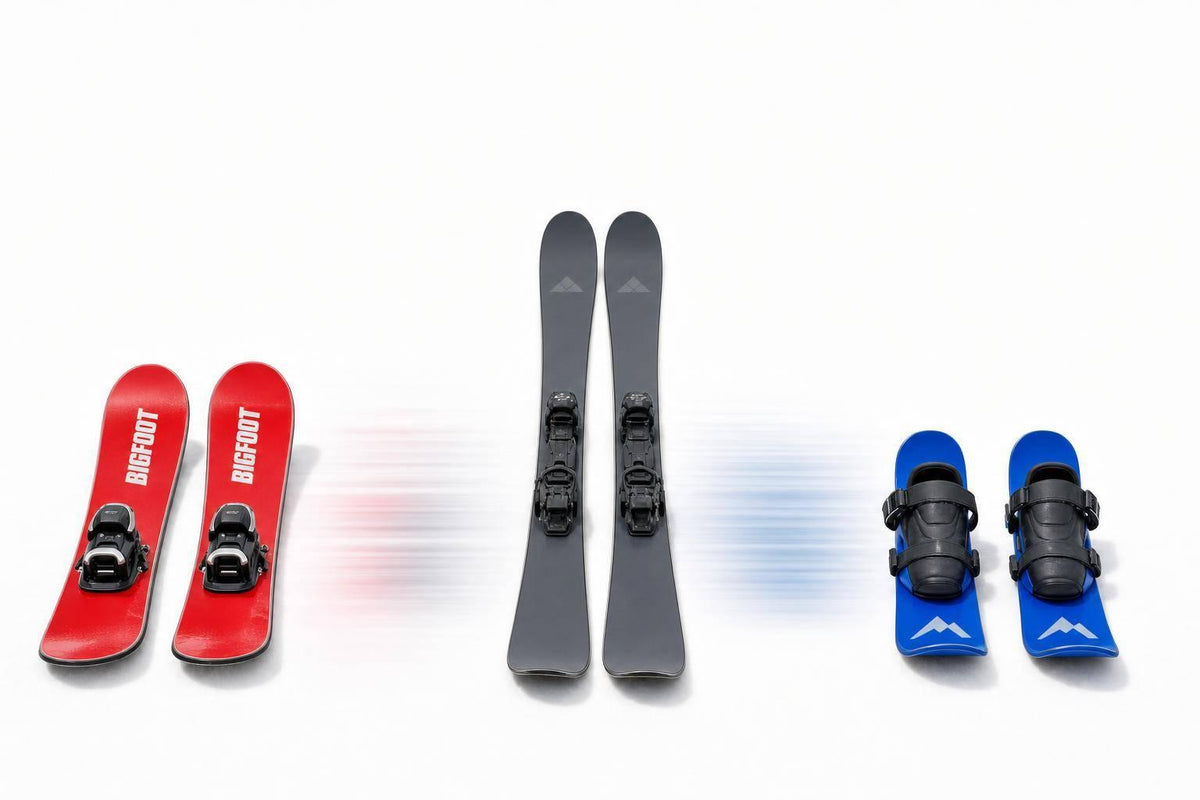
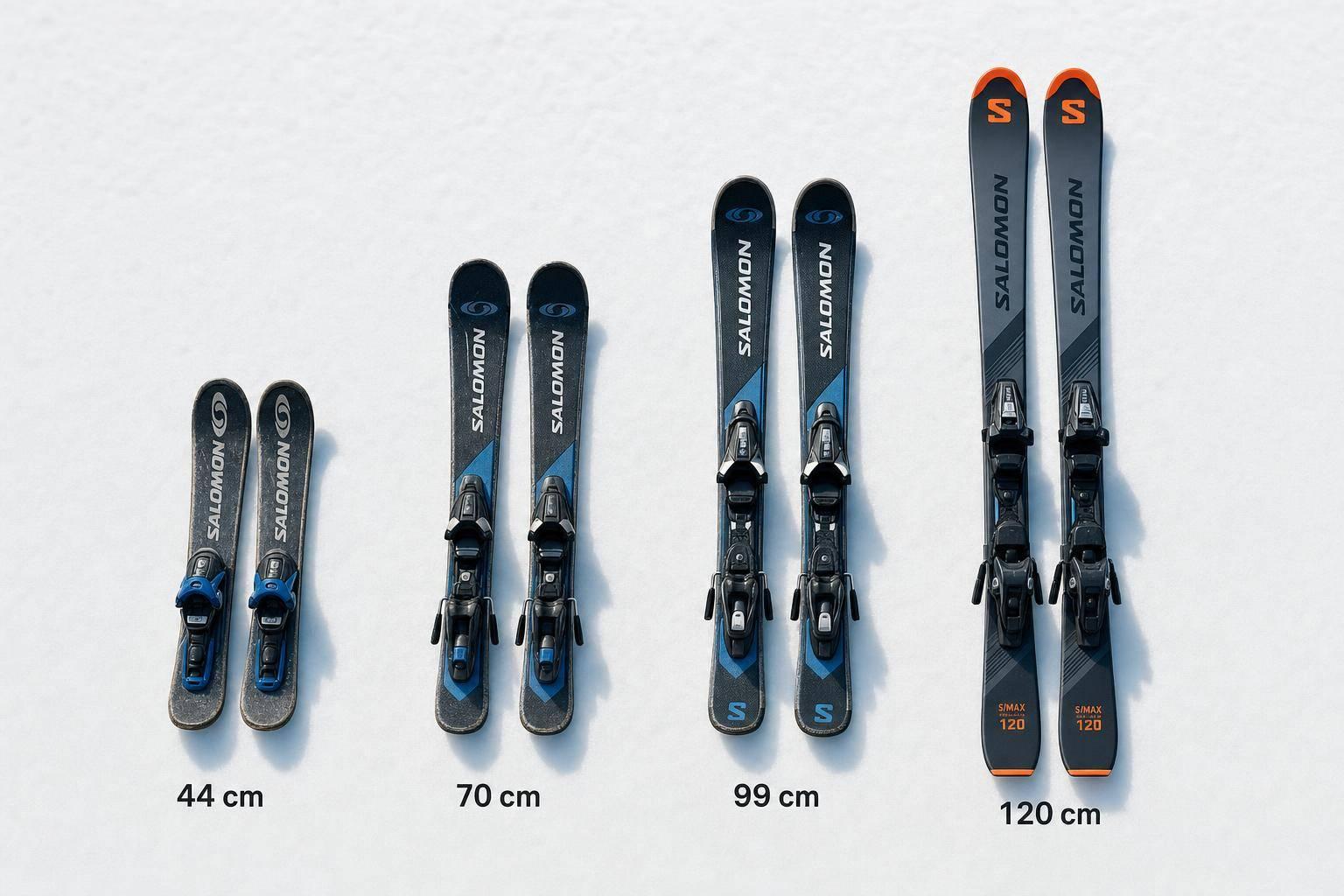
- The idea still lives on in modern short skis, like 44 cm skiskates, 65 cm skiblades, and 99 cm skiblades.
So, if you’re asking whether Bigfoots are gone for good, my answer is: not quite. They’re mostly gone as a product, but the ride feel is still here.
What I’d keep in mind:
- Vintage Bigfoots = fun, retro, but harder to find and more limited on snow
- 44 cm skiskates = most skate-like feel
- 65 cm skiblades = closest match to the old Bigfoot vibe
- 99 cm skiblades = more control and better stability
- Full-length skis = still the better pick for powder and high-speed runs
Bigfoot Skis vs. Modern Short Skis: Which Should You Choose?
Snowboarder tries Snowfeet* | Which Snowfeet* Short Ski is the Best? | Snowblades 44, 65, 99 Review
Quick Comparison
| Option | Best For | Main Trade-Off |
|---|---|---|
| Vintage Bigfoot skis | Nostalgia, groomers, park laps | Less stable, older build |
| 44 cm skiskates | Skaters, park riders, small gear | Very short, less stable at speed |
| 65 cm skiblades | Casual riders, easy turns, Bigfoot-like feel | Not ideal for deep snow |
| 99 cm skiblades | Former Bigfoot fans who want more control | Less backpack-friendly than shorter options |
| Full-length skis | Powder, speed, big mountain days | Bulkier, harder for some new riders |
If you miss Bigfoots, you’re not chasing a dead idea. You’re just looking at its newer form :)
What Bigfoot Skis Were and Why They Caught On
Kneissl's Big Foot showed up around 1990 at about 65 cm long, with a foam core and non-release bindings. That was a huge shift from the 200 cm straight skis that ruled the slopes at the time. These skis weren't built for all-out speed. They were built for fun.
And that idea clicked fast.
Beginners picked them up sooner because the short length made turns easier and cut down on tip-crossing. Park riders liked them for spins, grabs, and fakie runs that felt clumsy or flat-out tough on full-length skis.
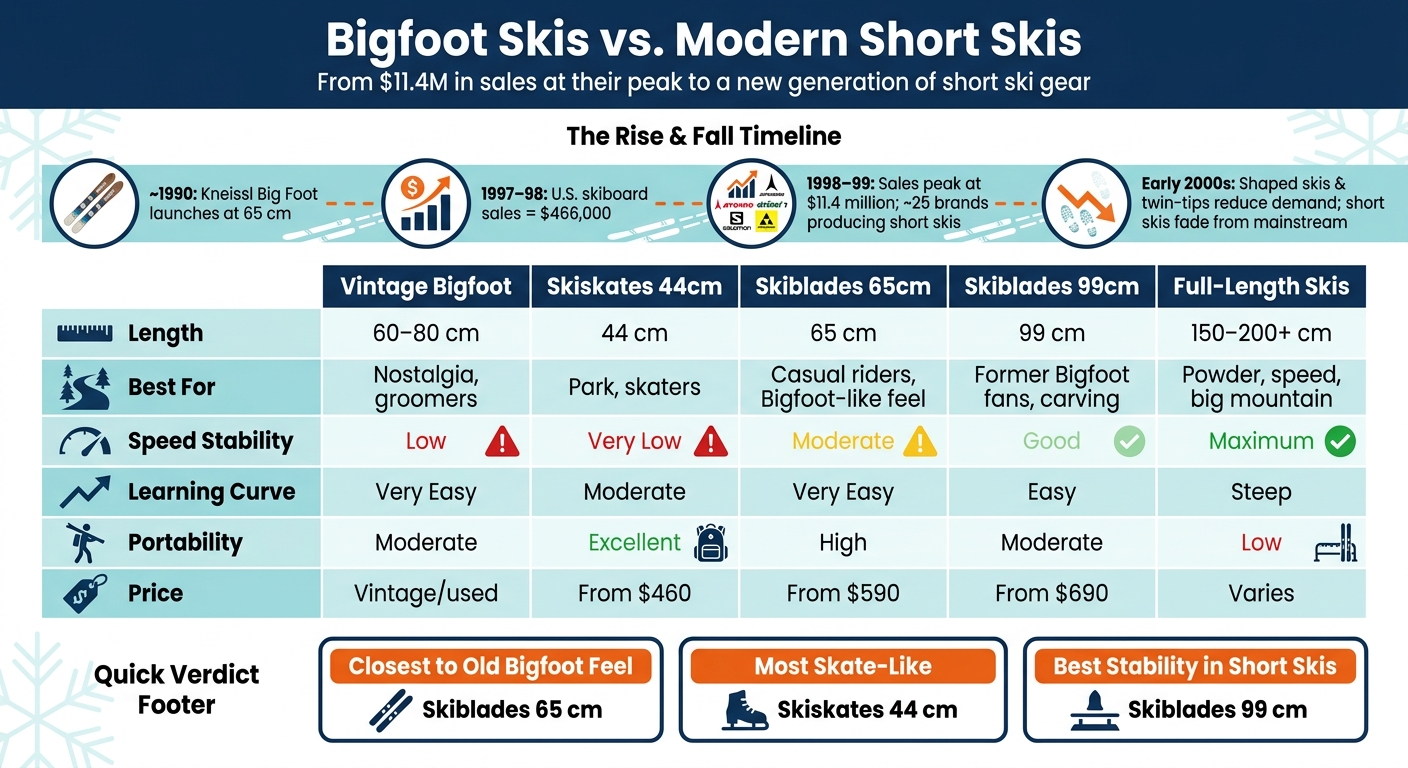
The numbers tell the story. U.S. skiboard sales reached $11.4 million in 1998–99, up from $466,000 the year before. At their peak, about 25 brands made short skis, including Atomic, Salomon, Elan, and Fischer. So, no, demand wasn't the issue. The bigger problem was where these skis worked well - and where they didn't.
How Bigfoot Skis Differed From Full-Length Skis
Bigfoot skis were quick, light, and easy to throw around. In moguls and tight trails, they turned fast and took much less effort. You could even toss them in a backpack, which is kind of wild when you think about hauling around normal skis.
But there was a catch. Push them to higher speeds and they could feel unstable - what riders called "squirrely." In deep powder, the small surface area made them sink instead of float. They weren't made for racing, and they weren't the ski you wanted on a deep storm day.
| Feature | Bigfoot / Short Skis | Full-Length Skis |
|---|---|---|
| Length | 60–120 cm | 150–200+ cm |
| Maneuverability | High | Lower |
| Stability at Speed | Low | High |
| Powder Performance | Poor | Strong |
| Learning Curve | Fast and intuitive | Longer |
| Portability | Fits in a backpack | Requires racks or large bags |
Where Bigfoot Skis Worked Best
Bigfoot skis hit their sweet spot on groomed resort runs and in terrain parks. If the goal was fun, easy turns, and messing around a bit, they made a lot of sense. They were a strong fit for beginners, families, park users, and older skiers because the shorter length meant less strain and a shorter path to feeling in control.
Park riders also leaned on them for tricks that full-length skis just couldn't handle as well.
"The maneuverability... allows you to have the run of your life even in the narrowest residual snow couloirs." - PowderGuide Editor
That same mix of strengths and limits shaped the whole category. Bigfoot worked best on groomers and in parks, but once skiers wanted more speed, more float, and more all-mountain range, the cracks started to show.
sbb-itb-17ade95
Why Bigfoot Skis Left the Mainstream Market
Bigfoot skis didn’t flop. The market moved.
As regular skis changed, Bigfoot skis had less of a job to do. That led to two issues: people saw them as more of a gimmick, and there were fewer situations where they made sense.
The Novelty Label and Performance Limits
Short skis were often treated like a fun side show, not serious gear. That hurt their standing with many skiers.
They also had clear limits. At higher speeds, they weren’t as steady as longer skis. In soft snow, they could struggle too. So while they felt nimble and easy in some spots, they gave up a lot in others.
Then the gear world shifted. And once that happened, short skis lost the edge that had made them stand out in the first place.
How Modern Ski Design Reduced Demand for Short Skis
The bigger change came from regular ski design. In the late 1990s and early 2000s, shaped skis made it much easier for full-length skis to start turns. That was a big deal. Turning had been one of the main reasons people picked short skis, and now standard skis could do that job far better.
Then park skiing changed the picture even more.
Park-friendly twin-tip skis like the Salomon 1080 gave riders that loose, playful feel they wanted for spins and tricks, but without giving up the steadiness and landing support of a longer ski. That mix mattered. You got the fun part of short skis, with fewer trade-offs.
As Jason Levinthal, founder of Line Skis, put it:
"I never really thought of it as skiboarding meeting its end. I just thought of it as continuing to evolve into what skis are today." - Jason Levinthal, Founder of Line Skis
Rental shops moved the same way the market did. Once full-length skis got easier to turn, there was less reason to keep short skis on the wall. And when gear loses shelf space, well, it usually loses mindshare too.
That gap opened the door for the next wave of short skis.
How the Bigfoot Concept Grew Into Better Short Skis
Short skis didn’t stay stuck in the past. The main idea stayed the same, but the gear got a lot better.
You can see that shift most clearly with Snowfeet*. The original Bigfoot skis used foam cores and basic non-release bindings. They were a blast, sure, but they had limits. Today’s short skis use high-quality wood cores, durable metal edges, and binding systems that work with ski boots, snowboard boots, or even winter shoes.
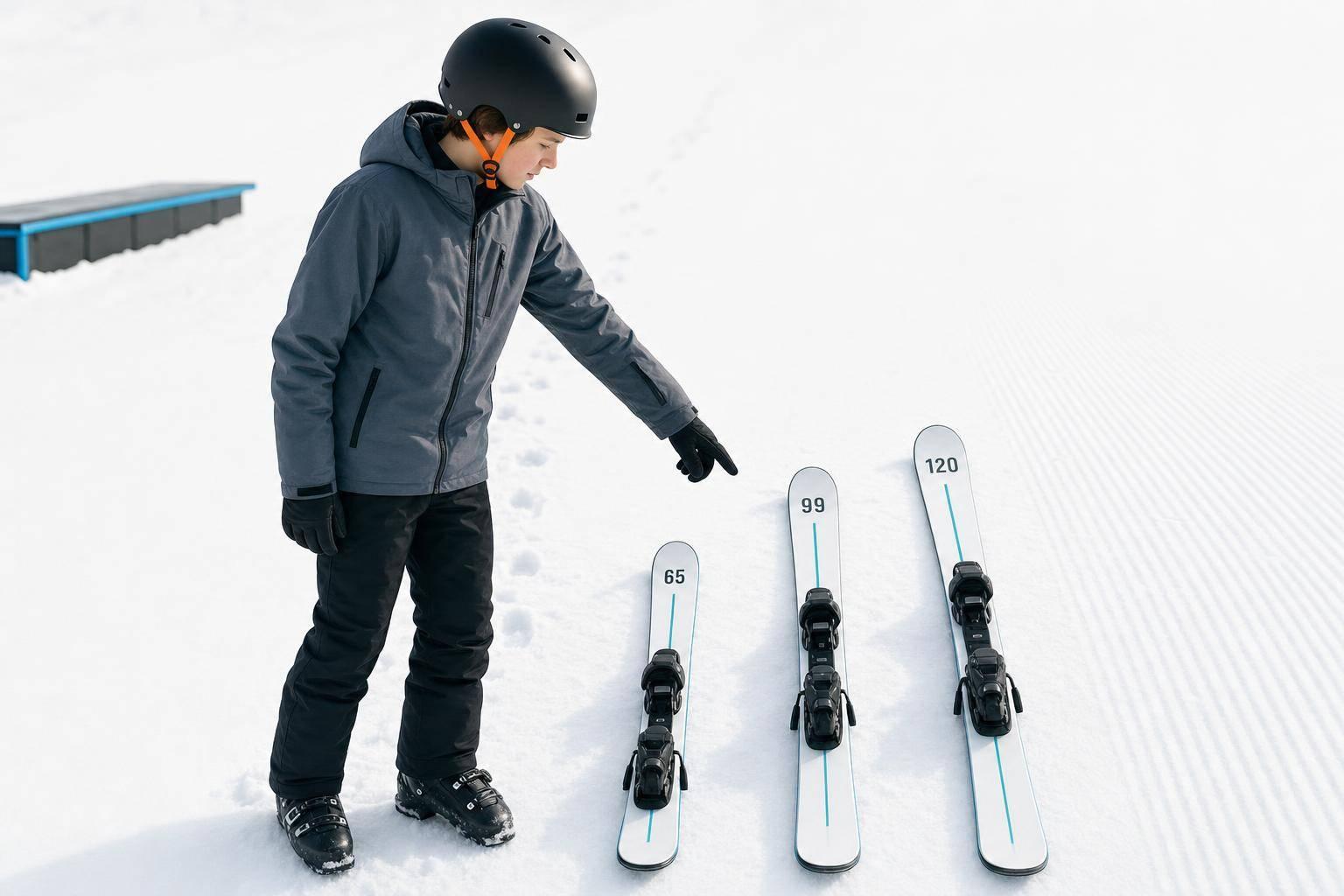
The size range grew too. Bigfoot lived in a tight 60–80 cm window. Modern short skis now stretch from 44 cm skiskates up to 120 cm short skis. That gives riders more room to pick the right model for how and where they ride.
Why Snowfeet* Is the Modern Answer
Snowfeet* is the clearest modern take on the Bigfoot idea. The gear is light, small enough to fit in a backpack, and made for riders who want a fun, easy-to-learn setup without hauling around bulky equipment.
The Best Snowfeet* Options for a Bigfoot-Style Feel
For most riders, it comes down to one thing: length.
The Snowfeet* Skiskates, 44 cm are the shortest skis in the world. They feel the most like skating out of the full lineup. If you’ve spent time on skates, that motion will feel natural fast. They start at $460 and use a wood core for durability.
The Snowfeet* Skiblades, 65 cm are a great pick for riders chasing that playful Bigfoot-style feel with a bit more control. They make turning easy, but still give you enough edge hold to carve clean lines. They start at $590.
The Snowfeet* Skiblades, 99 cm bring more stability while still keeping that short-ski personality. At this length, release bindings are also an option. They start at $690.
Bigfoot vs. Modern Short Skis: What to Buy Now
Comparison Table: Bigfoot Skis vs. Snowfeet* vs. Full-Length Skis
Used Bigfoot skis are hard to find now. And if we're being honest, modern short skis give you better materials, better bindings, and better ride quality. So if you want that old Bigfoot vibe today, the choice isn't just old vs. new. It's vintage nostalgia vs. gear that works better on snow.
| Feature | Vintage Bigfoot Skis | Snowfeet* Skiskates (44 cm) | Snowfeet* Skiblades (65 cm) | Snowfeet* Skiblades (99 cm) | Full-Length All-Mountain Skis |
|---|---|---|---|---|---|
| Length & Feel | 60–80 cm; playful, retro | 44 cm; skating on snow | 65 cm; agile, versatile | 99 cm; stable carving | 150+ cm; high-speed, powerful |
| Boot Compatibility | Ski boots only | Ski or snowboard boots | Ski or snowboard boots | Ski or snowboard boots | Ski boots only |
| Best Terrain | Groomed slopes, narrow couloirs | Parks, flat slopes, hard pack | Groomers, resort trails | All-mountain, carving | Powder, steep racing |
| Speed Stability | Low | Very low | Moderate | Best stability in the short-ski lineup | Maximum |
| Learning Curve | Very easy | Moderate for skaters | Very easy | Easy | Steep |
| Portability | Moderate | Excellent | High | Moderate | Low |
Full-length skis still take the lead in deep powder, racing, and long high-speed carving runs. But Snowfeet* wins where most casual riders spend their day: easy carrying, easy learning, and plain old resort fun.
Which Snowfeet* Model Fits Each Type of Rider
The right Snowfeet* model comes down to one thing: what kind of ride do you want? More skate-like? More carve-focused? More all-around for resort laps? Once you know that, the pick gets a lot easier.
Beginners and casual resort riders will do best with the Snowfeet* Skiblades, 65 cm (from $590). This is the closest match to the old Bigfoot feel, and it's easy to get used to. You hop on, make a few turns, and it clicks fast. The wood core also gives you better edge hold than the old foam-core Bigfoot models.
Skaters, hockey players, and park-focused riders should check out the Snowfeet* Skiskates, 44 cm (from $460). These feel the most like skating. If you've spent years on ice or like a more nimble ride, this setup will feel natural.
Former Bigfoot fans who want more stability and better carving should look at the Snowfeet* Skiblades, 99 cm (from $690). You still get that short-ski feel, but with more control and a stronger edge grip. Put simply: it does what old Bigfoot skis wanted to do, but better.
Conclusion: Bigfoot Did Not Disappear - It Evolved
Bigfoot didn't vanish. It changed shape. The idea lives on in modern short skis, and Snowfeet* shows that better than anything else out there. You get lighter, safer, longer-lasting short skis, plus options that fit beginners, skaters, and casual riders without the quirks of vintage gear.
FAQs
Are Bigfoot skis still worth buying today?
Original Bigfoot skis are mostly collector pieces now. They helped push short skis into the spotlight, and that matters. But on snow, older build methods, limited binding setups, and the need for ski boots can make them feel less steady than newer gear.
For most riders, Snowfeet* products make more sense. They use newer construction, work in more situations, and come in sizes from 44 cm to 120 cm. You can also pick setups that work with winter boots or snowboard boots, which makes life a lot easier.
It’s kind of the difference between a classic car and a daily driver. The classic is fun to look at. The daily driver is what you want when you actually need to get somewhere :)
What’s the closest modern option to Bigfoot skis?
For the closest modern Bigfoot-style ride, Snowfeet Skiskates (44 cm) are your best bet. They give you that short, skate-like, playful feel that made Bigfoot gear so much fun in the first place.
If you want something that leans a bit more toward a short ski, Snowfeet Skiblades 65 cm are the natural next step from the Bigfoot idea. You get better edge control and more stability than you would with vintage Bigfoot gear, without losing that quick, fun feel.
Can beginners still learn easily on short skis?
Yes. Short skis and skiblades are usually easier for beginners than long, standard skis.
Why? They’re smaller, lighter, and much easier to turn. That makes balance feel less awkward and control easier to learn. For a lot of first-time riders, that means more confidence, faster.
Most beginners can feel comfortable on Snowfeet* products within a day. And if you’ve done ice skating or inline skating, you might get the hang of the basics in just minutes.











Leave a comment
This site is protected by hCaptcha and the hCaptcha Privacy Policy and Terms of Service apply.