



















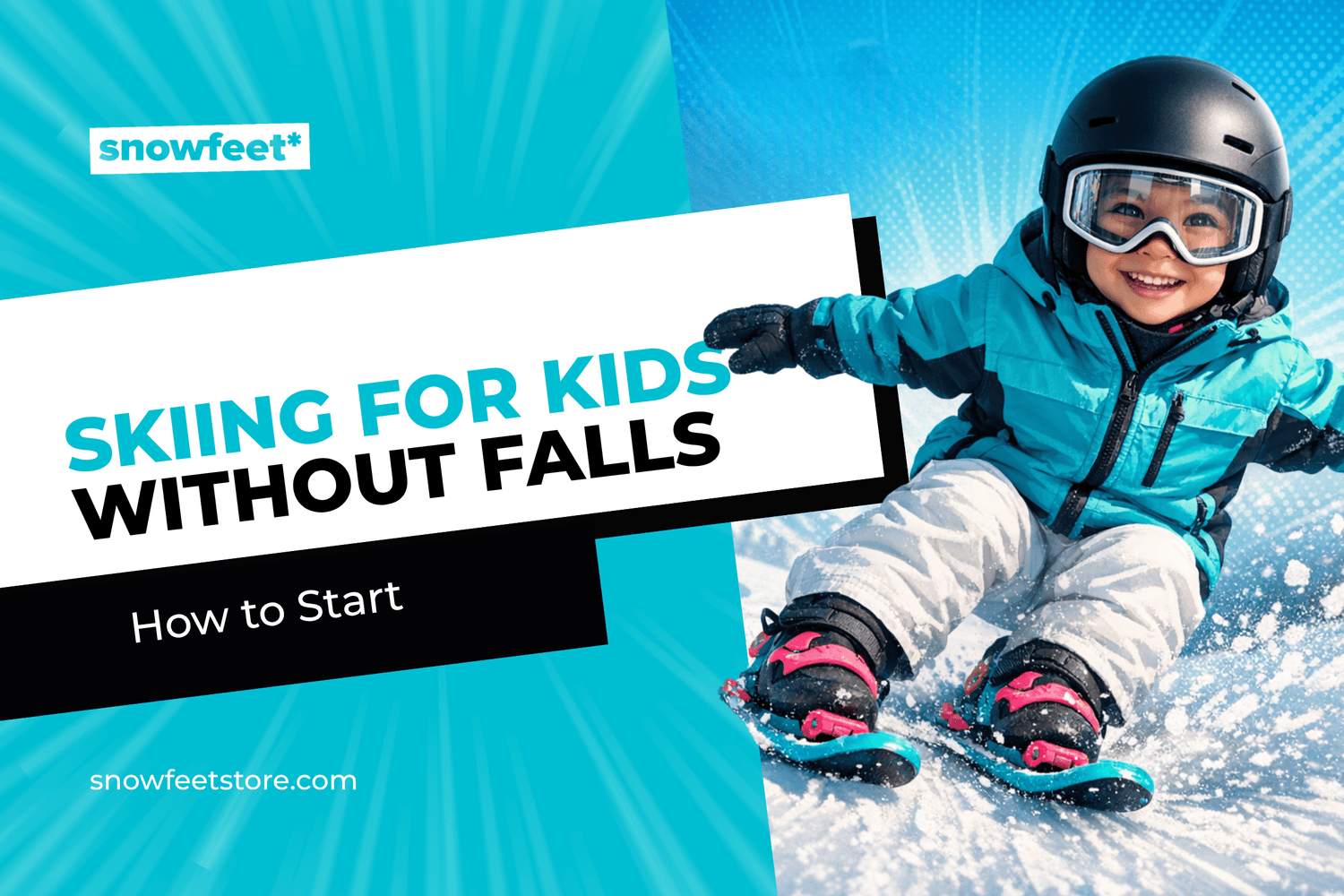
Kids often struggle with bulky skis, tricky techniques, and tough slopes. But compact gear like Snowfeet Skiskates (just 17 inches long) makes skiing easier, safer, and much more fun. These mini skis let kids move naturally, using skating or walking motions instead of complicated sliding techniques. The result? 50–70% fewer falls during practice and faster learning - typically in just 2–3 sessions.
Key takeaways:
- Snowfeet Skiskates are lightweight (1.5–2 lbs per pair) and attach to regular winter boots.
- They help kids avoid common issues like crossed ski tips and awkward stances.
- Safer falls: Short skis reduce joint stress by up to 60%.
- Easy to carry - fits in a backpack, unlike bulky ski gear.
Pair these with a helmet, padded clothing, and beginner-friendly slopes, and your child can enjoy skiing without frustration. Keep sessions short, focus on balance, and let them progress at their own pace.
Ready to make skiing fun from day one? Let’s dive into the details.
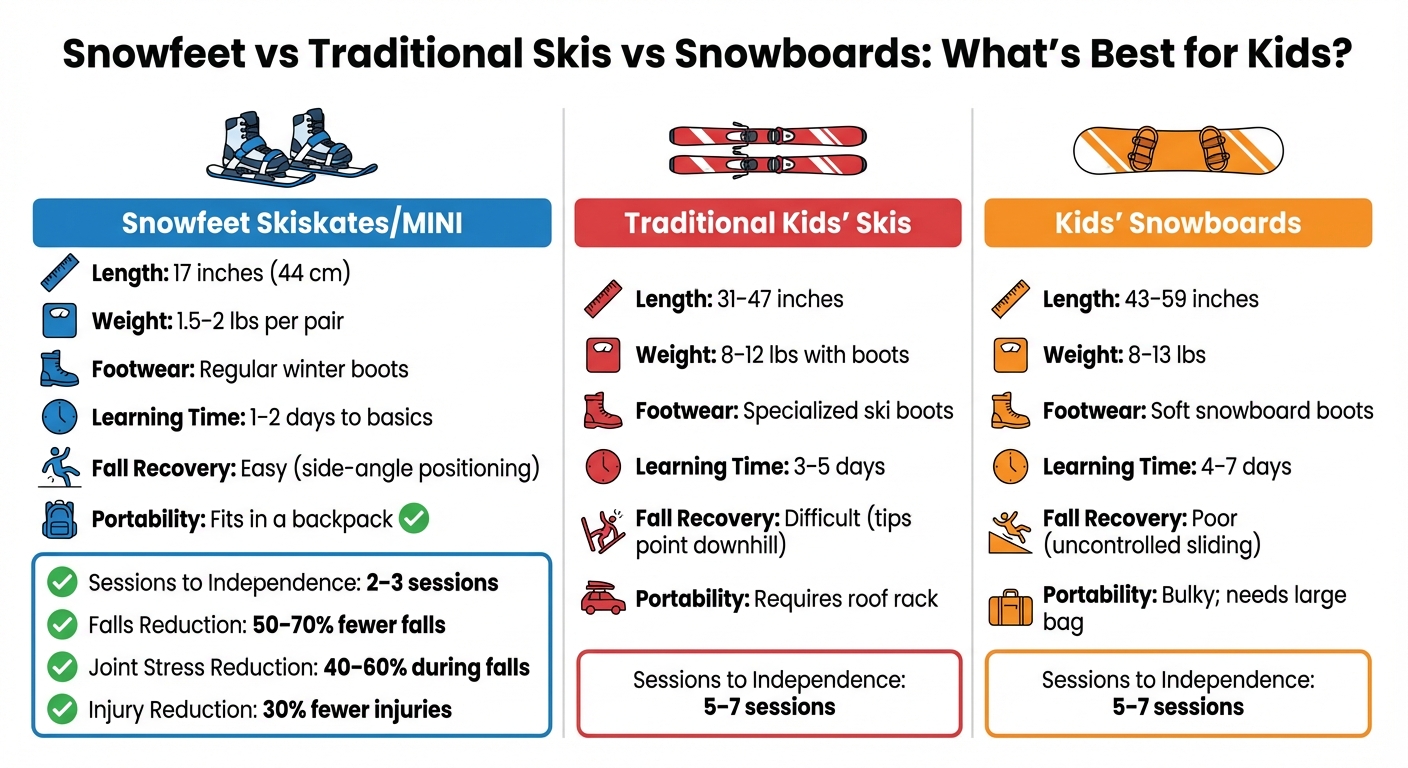
Snowfeet vs Traditional Skis vs Snowboards: Complete Comparison for Kids
How to Teach A Kid To Ski Part 2 | Gear, Clothing and Tips For Parents | Get Prepared
Why Snowfeet* Works Better for Kids Than Traditional Skis
Traditional skis can be overwhelming for young beginners. A typical set of children's skis is about 31–47 inches long and weighs between 8–12 lbs with boots. That’s a lot for small kids to handle. Snowfeet* Skiskates, on the other hand, are just 17 inches long and weigh only 1.5–2 lbs per pair. This lightweight design gives kids more control over their gear, making the experience much easier and more fun.
These differences make a big impact on the slopes. Long skis force kids into awkward stances and require them to learn complicated techniques, like edging. Snowfeet*, however, let them use a simple skating motion, which is much more natural. Parents have even reported 50–70% fewer falls during early practice sessions because kids can turn just by leaning their bodies - no poles or fancy moves needed.
Another big plus? Portability. Snowfeet* fit right into a backpack, so kids can practice almost anywhere - your backyard, a local park, or the bunny hill. Compare that to traditional ski gear, which often needs roof racks, storage space, and rental fees. With Snowfeet*, kids get more time to practice, which helps them build skills faster and avoid frustrating wipeouts.
Main Benefits of Snowfeet* for Children
The compact 17-inch size solves one of the most common beginner problems: "crossing tips." This issue is a leading cause of falls and can create dangerous joint stress. Snowfeet* reduce that stress on ankles and knees by 40–60% during falls, according to biomechanical research on young skiers.
Snowfeet* MINI KIDS models are also super convenient. They attach to regular winter boots (EU sizes 30–40), so there’s no need to invest in expensive ski boots that might cause blisters. This keeps kids comfortable for longer sessions, reducing fatigue and helping them focus on learning. Plus, the lightweight design means kids as young as 4 can glide smoothly and stop easily just by dragging their feet.
When falls happen - and let’s face it, they will - shorter gear makes it much easier for kids to get back up on their own. Unlike long skis, which can twist joints or force awkward recovery positions, Snowfeet* help kids fall safely, land on softer areas, and stand up with their gear naturally angled for support.
Snowfeet* vs. Traditional Skis and Snowboards
The numbers speak for themselves. Kids using Snowfeet* MINI KIDS typically gain slope independence in just 2–3 sessions, while traditional mini skis often take 5–7 sessions. Family ski programs have also reported about 30% fewer injuries with Snowfeet* because they allow for faster recovery from falls and better overall control.
| Feature | Snowfeet* Skiskates/MINI | Traditional Kids' Skis | Kids' Snowboards |
|---|---|---|---|
| Length | 17 inches (44 cm) | 31–47 inches | 43–59 inches |
| Weight | 1.5–2 lbs per pair | 8–12 lbs with boots | 8–13 lbs |
| Footwear | Regular winter boots | Specialized ski boots | Soft snowboard boots |
| Learning Time | 1–2 days to basics | 3–5 days | 4–7 days |
| Fall Recovery | Easy (side-angle positioning) | Difficult (tips point downhill) | Poor (uncontrolled sliding) |
| Portability | Fits in a backpack | Requires roof rack | Bulky; needs large bag |
Certified instructors often recommend Snowfeet* for pre-ski training because they teach kids how to recover from falls correctly. The side-angle positioning they encourage reduces the chance of re-injury by 50%. In contrast, traditional skis often point downhill during recovery, which can lead to collisions. Snowfeet* not only keep kids safer but also help them build the muscle memory they’ll need when they’re ready for steeper terrain. This combination of safety and simplicity makes skiing less intimidating and way more enjoyable for kids, even on their very first run.
Equipment You Need for Safe Kids' Skiing
The right gear can make all the difference between a frustrating first day on the slopes and a fun, confidence-building experience. After discussing how Snowfeet* can help minimize falls, let’s look at the essential equipment every young skier needs to stay safe and comfortable while learning.
Choosing the Best Snowfeet* Model for Your Child
Picking the right Snowfeet* model depends on your child’s age, weight, and experience level:
- For ages 3–7 (22–55 lbs): The Snowfeet MINI KIDS* (35 cm or 14 inches) is perfect. These attach to regular winter boots, so there’s no need for specialized ski boots. They’re ideal for beginners practicing on flat terrain.
- For ages 6–12 (44–110 lbs): The Snowfeet Skiskates* (44 cm) offer better stability and control. They’re designed to help kids learn turning and speed control with a skate-like feel.
- For ages 10+ (55–165 lbs): The standard Snowfeet* (49 cm) works best for older kids who have some balance experience. Always double-check weight limits and ensure a proper fit to align the bindings correctly.
Once you’ve chosen the right model, it’s time to focus on safety gear to keep your child protected.
Must-Have Safety Gear for Beginners
Safety gear is non-negotiable when it comes to skiing. Here’s what your child will need:
- Helmet: A snug-fitting helmet is a must. It should sit securely with the chin strap fastened and leave just 1–2 fingers of space above the eyebrows. Helmets can reduce the risk of head injuries by up to 60%. Make sure to replace it every five years or after any significant impact.
- Padded Shorts and Jackets: Protecting vulnerable areas like the hips, tailbone, and spine is crucial. Look for ASTM-certified padding with impact-absorbing foam and adjustable straps. This type of gear can lower injury risks by 50–70%. Adding wrist guards is also a smart move to protect hands during falls.
- Other Essentials: Don’t forget UV-protective goggles, waterproof gloves, and layered clothing. Start with a moisture-wicking base layer, add an insulating mid-layer, and top it off with a waterproof outer shell. Merino wool socks are a great option - they keep feet warm without adding bulk. Make sure all clothing allows for full movement to help maintain balance.
With the right Snowfeet* model and safety gear, your child will be ready to hit the snow with confidence and protection.
sbb-itb-17ade95
How to Teach Kids Balance and Control on Snowfeet*
Helping kids learn balance and control on Snowfeet* is all about taking it step by step. Start slow, focus on the basics, and let them master each skill before moving on. Snowfeet* make this process simpler compared to traditional skis since they rely on natural walking and skating movements rather than complicated techniques.
Starting on Flat Ground
Begin on completely flat snow - this way, your child won’t accidentally slide away. Have them walk around in their Snowfeet* to get used to the feel and find their balance. Encourage them to practice the "athletic stance": knees slightly bent, weight centered, and legs about shoulder-width apart. As the Snowfeet Store advises:
"The key is to keep the front-back balance. Keep your legs at about shoulder width and slightly bend your knees to have a better balance".
Once they’re steady, introduce side-stepping drills. Stepping sideways across flat ground helps build muscle memory for when they move to gentle slopes. Once they’re comfortable balancing on flat terrain, it’s time to tackle easy inclines.
Moving to Easy Slopes
When your child is ready, transition to a gentle slope like a bunny hill. Look for a wide, beginner-friendly area with a magic carpet lift if possible. Teach them the "pizza" or wedge technique - this involves pointing the tips of their Snowfeet* together in a triangle shape to slow down or stop. Unlike traditional skis, where kids might lean too far forward, remind them to keep their weight centered or slightly back to avoid tipping forward.
For extra support, you can ski backward in front of them or hold a ski pole horizontally for them to grip as they practice. Snowfeet* also come with a heel brake, which kids can dig into the snow to control their speed. After they’ve mastered stopping and staying balanced, you can move on to teaching turns and recovery techniques.
Learning to Turn and Get Up After Falls
Turning is easier to learn with Snowfeet* because of their compact size. Start on flat ground with the step-around method: have your child step their feet in the direction they want to turn. Once they’re on a slope, they can use the pizza wedge and shift their weight to the outside foot - pushing with the left foot to turn right, for example. If they’re familiar with skating, you can show them how to use a push-and-glide turn by angling their feet and leaning into the curve.
Falls are part of the learning process, so teach them how to get back up confidently. The side roll recovery method works well: they should roll onto their side with their feet below their body, pull their knees toward their chest, and push up with their hands to stand. As Family of 4 Adventures puts it:
"Kids who know how to get up feel much more confident".
One advantage of Snowfeet* is that they stay under the child’s center of gravity, so there’s no risk of tangled skis, making it easier for them to recover on their own.
Choosing Safe Slopes and Following Safety Rules
Finding the Right Terrain for Beginners
Once you’ve got the right gear sorted, the next step is picking the perfect terrain to help beginners ease into skiing. Look for green circle trails - they’re designed with gentle slopes (under 10°), wide paths, and minimal obstacles. Bunny hills are another great choice, as they’re specifically made for first-timers.
Snowfeet*’s 44 cm design gives kids excellent control, making it possible for them to practice safely on groomed slopes - or even in your own backyard. Pairing Snowfeet* gear with beginner-friendly slopes helps young skiers feel more secure and builds their confidence in no time.
Be sure to check the daily snow report before heading out. Groomed, packed snow is best for beginners, while icy spots or fresh powder can make things tricky. Timing also matters - morning ice and afternoon slush can turn an easy slope into a tougher challenge. Aim for wide, open areas where kids have plenty of space to practice turning without feeling crowded.
Basic Safety Rules for Kids on Slopes
Once you’ve chosen a safe slope, it’s time to focus on some basic safety rules to keep the experience smooth and, hopefully, free of spills. First, make sure kids maintain a comfortable speed they can handle. Teach them to always yield to skiers who are downhill or ahead of them - the person in front has the right of way.
Stopping safely is another key skill. Kids should stop only in wide, visible areas, avoiding narrow spots or the middle of a run. Before starting down a slope, they should look uphill and check their surroundings - like crossing the street. When passing slower skiers, remind them to leave plenty of space and avoid making sudden moves.
Parents play a big part in enforcing these rules. Stick to the pace of the slowest skier in your group, set clear meeting points downhill, and take regular breaks to avoid exhaustion. Make sure helmets fit snugly, and don’t forget sunscreen - snow reflects UV rays, even on cloudy days. For added safety, try the “safety caboose” method: ski right behind your child so you can monitor their speed and technique while they focus on their run. Combined with the stability of Snowfeet*, these tips create a safe and fun learning experience for kids on the slopes.
Conclusion: Making Kids' Skiing Safer and More Fun
Kids can hit the slopes without constant wipeouts. Snowfeet* products tackle one of the most common beginner issues - crossed ski tips - thanks to their compact 17-inch design. This shorter setup encourages a natural stance, similar to walking or skating, giving kids better control over their movements. They can focus on learning to stop and turn without being weighed down by long, heavy skis. Plus, the lightweight design makes it easier for kids to bounce back after a fall, unlike traditional skis that can make recovery a struggle.
This thoughtful design supports a simple, step-by-step learning process. Start by letting kids practice on flat ground where they can find their balance without the added challenge of a slope. Once they’re comfortable, move on to gentle green circle slopes. This gradual approach builds confidence through small wins, so kids spend more time smiling and less time frustrated.
Using the right gear can cut the risk of injury by up to 50%. Pair Snowfeet* with smart safety habits - like stopping in visible spots, checking uphill before moving, and skiing at a manageable speed - for a smoother introduction to the sport. Keep sessions short, take breaks, and focus on having fun instead of aiming for perfection. With Snowfeet* and these tips, every run down the mountain becomes a safe and enjoyable adventure.
FAQs
Are Snowfeet* allowed at most ski resorts?
Yes, Snowfeet products are generally permitted at most ski resorts across the United States. They're considered a safe and beginner-friendly choice. Designed for easy control on snowy terrain, they offer a fun alternative to traditional skis.
Do kids need ski lessons to use Snowfeet* safely?
Kids don’t always need ski lessons to enjoy Snowfeet* safely. Products like Skiskates and mini skis are designed to be lightweight, beginner-friendly, and easier to handle than regular skis. This makes them a great option for helping kids gain confidence and improve their balance without the same level of risk for falls.
That said, safety gear is a must - helmets, goggles, and pads should always be part of the setup. Stick to gentle slopes for practice, and while lessons can help refine technique, they’re not a must as long as kids are supervised and safety precautions are in place.
How can I tell if Snowfeet* will fit my child’s boots?
Snowfeet* products are designed with adjustable sizing, making them compatible with most kids' boots. For the best fit, check out the size chart and compatibility details available on the Snowfeet website. Getting the right size ensures better comfort and performance on the slopes.












Leave a comment
This site is protected by hCaptcha and the hCaptcha Privacy Policy and Terms of Service apply.