



















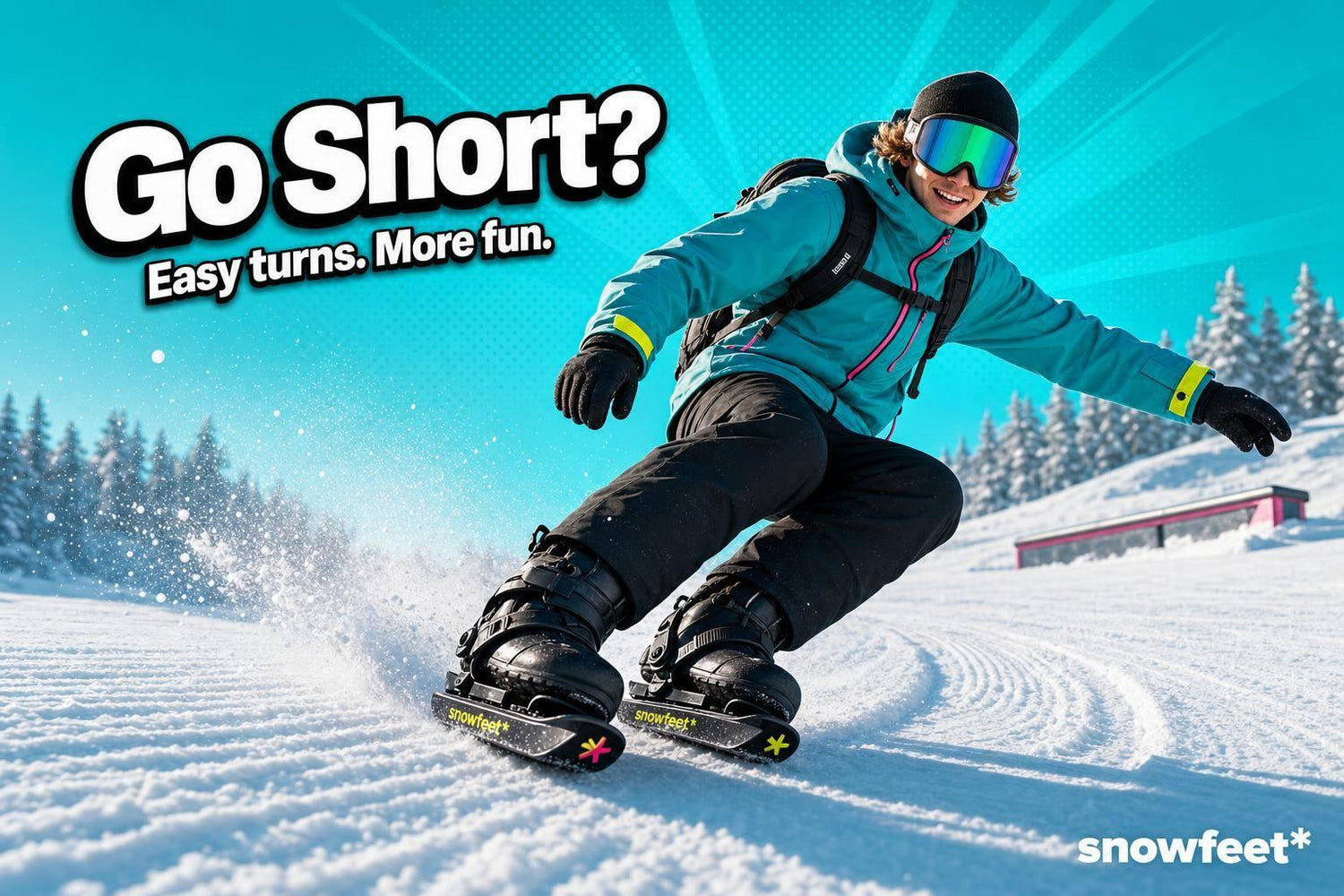
Yes - if you care more about easy turns, fun resort laps, and less gear hassle than top speed and deep powder performance.
I’d put it this way: if you ski groomers, trees, moguls, or the park most of the time, short skis can make your day easier and more fun. If you love bombing steep runs, laying out long carved turns, or skiing deep snow, long skis still make more sense.
Here’s the whole answer in plain English:
- Long skis work best for speed, stability, carving, and powder
- Short skis work best for tight turns, control, park laps, travel, and casual riding
- 44 cm to 65 cm models feel more playful but lose stability as speed builds
- 99 cm to 120 cm models give a better middle ground for most skiers
- Some short ski setups can work with ski boots, snowboard boots, or winter shoes
- Prices in the article range from $460 to $950
If you want the short version of the short skis, uh, here it is: most casual resort riders will get the most out of 99 cm skiblades. They keep the fun of a shorter setup without giving up as much support on firmer snow.
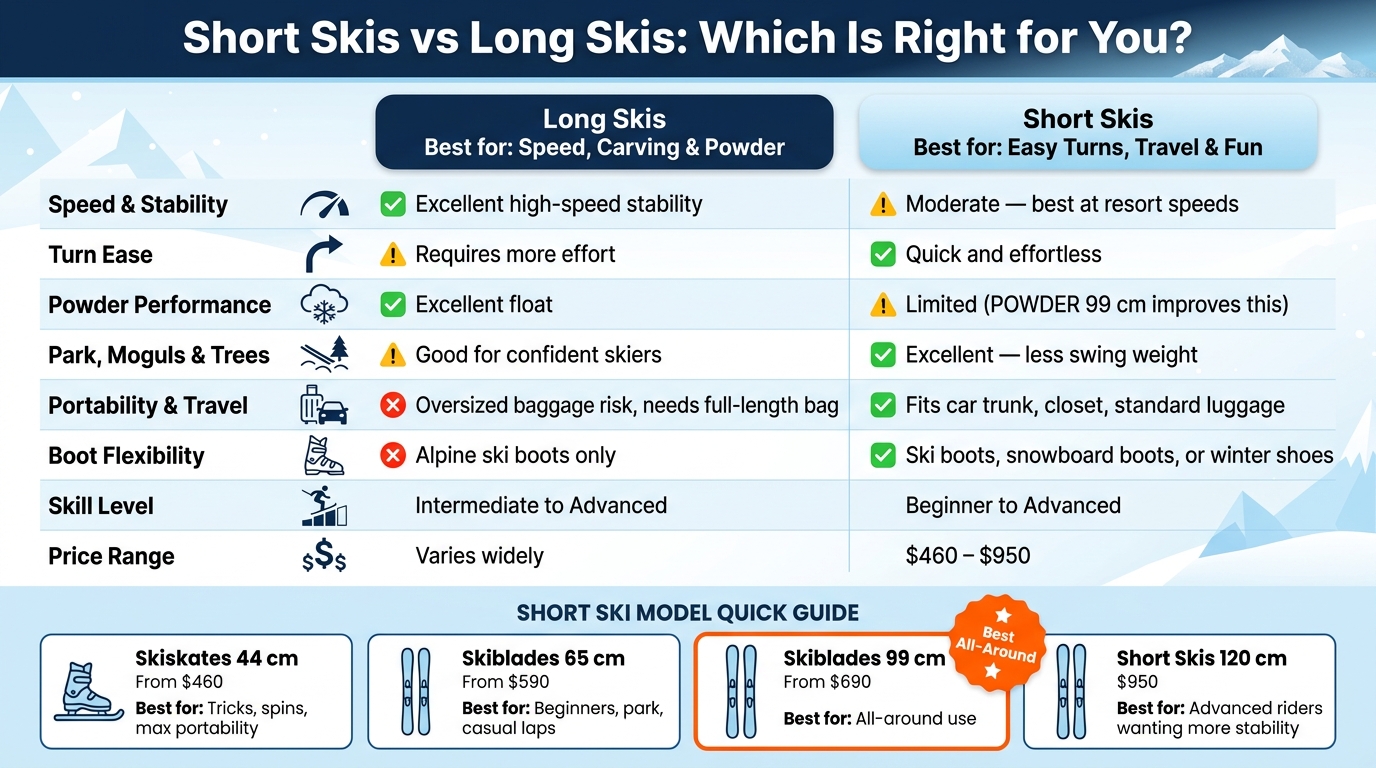
Short Skis vs Long Skis: Which Is Right for You?
Snowboarder tries Snowfeet* | Which Snowfeet* Short Ski is the Best? | Snowblades 44, 65, 99 Review
Quick Comparison
| Ski type | Best for | Main trade-off | Good fit for |
|---|---|---|---|
| Long skis | Speed, carving, powder | More work in tight spots | Strong skiers, powder fans, frontside carvers |
| 44 cm skiskates | Play, spins, tiny gear bag | Least stable at speed | Snowboarders, trick riders, first-timers |
| 65 cm skiblades | Learning, park, casual laps | Less support in rough snow | Beginners, families, mellow resort skiers |
| 99 cm skiblades | All-around short-ski use | Still not as calm as long skis at speed | Most riders switching from long skis |
| 120 cm short skis | Short-ski feel with more support | Less nimble than the shorter models | Skiers who want a closer step from full-length skis |
So, if you’re tired of hauling long skis around the parking lot like yard tools and you don’t ski at race pace, switching can be worth it :)
But if your happy place is fast groomers and deep storm days, I’d keep the long skis as my main setup.
How they feel on snow: control, speed, carving, and conditions
Learning curve and control at normal resort speeds
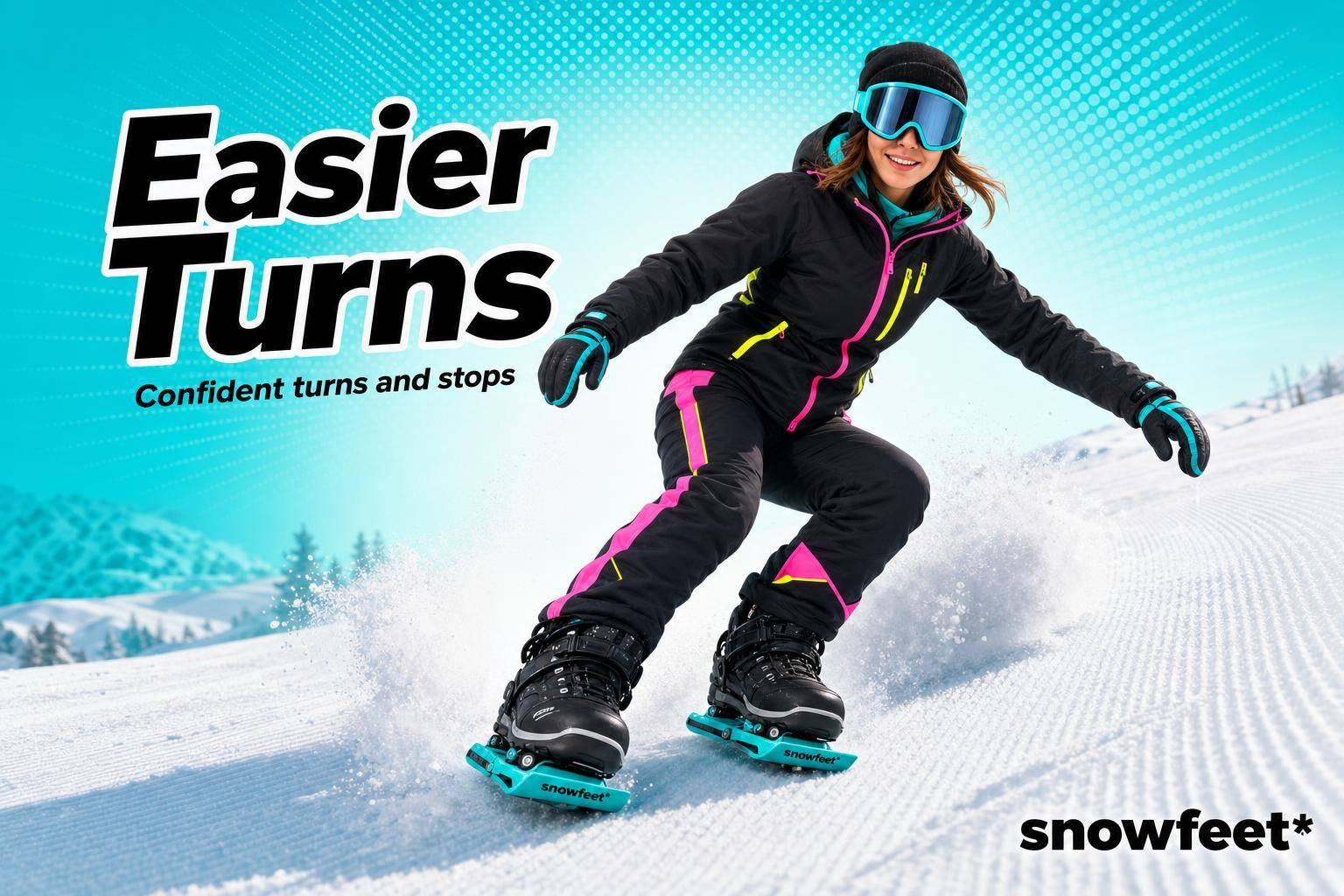
At normal resort speeds, short skis start turns faster and feel easier to place. That’s a big deal on crowded groomers and mellow resort laps.
Here’s the short version: Skiskates 44 cm feel the fastest edge to edge. Skiblades 65 cm are the easiest all-around pick in the short-ski group. Skiblades 99 cm give you more stability without losing that nimble feel.
Long skis feel calmer once you pick up speed and when the snow gets rough. But at low speeds, they ask more from your technique.
| Skiskates 44 cm | Skiblades 65 cm | Skiblades 99 cm | Long Skis | |
|---|---|---|---|---|
| Turn initiation | Instant | Very quick | Quick | Requires more effort |
| Low-speed control | Very forgiving | Forgiving | Comfortable | Less forgiving |
| Skill level required | Beginner-friendly | Best for beginners and casual riders | Intermediate | Intermediate–advanced |
| Ideal rider | First-timers, casual riders | Casual resort skiers | Riders wanting more stable feel | Technique-focused skiers |
So, where do short skis flat-out win? Tight terrain, park laps, and travel. That’s where they feel like a cheat code :)
Stability at speed, carving grip, and deep snow trade-offs
Once speeds go up and the snow gets mixed, longer skis pull ahead. They’re more stable, hold an edge better, and feel safer when the run gets fast or choppy.
Short skis still carve well on firm groomers, mostly when you want tight, clean turns. The Snowfeet* Short Skis 120 cm and Skiblades 99 cm narrow the gap. You get more stability, but still keep that short-ski style. The Snowfeet* POWDER 99 cm adds a wider shape built for softer snow.
For deep powder and high speed, long skis still win. No magic there.
| Long Skis | Short Skis 120 cm | Skiblades 99 cm / POWDER 99 cm | Skiblades 65 cm | |
|---|---|---|---|---|
| High-speed stability | Excellent | Good | Moderate | Least stable at speed |
| Edge hold on firm snow | Strong | Good | Moderate | Least stable at speed |
| Short, quick turns | Requires more effort | Easy | Very easy | Effortless |
| Powder float | Excellent | Decent | Better on POWDER 99 cm | Limited |
You’ll notice this gap even more in trees, moguls, and the terrain park.
sbb-itb-17ade95
Where short skis make more sense: park, trees, travel, and boot flexibility
Terrain park, moguls, trees, and fun factor
These trade-offs show up most in tight terrain and slower-speed riding. Short skis turn and pivot faster when space gets tight. They also have less swing weight, which helps with spins in the park, quick moves through moguls, and fast direction changes in the trees.
The 44 cm and 65 cm models make the most sense for riders who care about spins, jumps, and tricks first. They put playfulness front and center. The 99 cm Skiblades give you more stability but still keep that short-ski feel, so they work well for bigger bumps and faster turns in trees.
| Long Skis | Skiskates 44 cm | Skiblades 65 cm | Skiblades 99 cm | |
|---|---|---|---|---|
| Spin ease | Fair | Excellent | Very good | Good |
| Rails | Good for experienced skiers | Good | Very good | Good |
| Moguls | Fair | Very good | Very good | Good |
| Trees | Good for confident skiers | Very good | Excellent | Very good |
| Playfulness | High for strong skiers | Excellent | Excellent | Very good |
For many casual U.S. resort riders, the 65 cm Skiblades land in a nice middle spot. They’re park-ready, easy in trees, and much less intimidating than a full-length setup.
And there’s a simple bonus here: the smaller size makes them easier to pack, store, and hand off to another rider. That matters more than people think, especially when your garage already looks like a gear bomb went off :)
Portability, storage, airline travel, and boot compatibility
Long skis take up space. You need a full-length bag, more room in the car, and a decent chunk of storage at home. Snowfeet* models are much easier to deal with. They fit in most car trunks and can sit in a closet corner instead of hogging the whole garage.
If you’re flying to a ski trip, this gets even more practical. Long skis are more likely to trigger oversized baggage fees. Snowfeet* models are compact enough that they often check as standard luggage.
Boots are another pain point. Long skis usually mean alpine ski boots, and let’s be honest, those aren’t much fun once you’re off the snow. Some Snowfeet* models work with ski boots or snowboard boots, which opens things up for snowboarders, mixed households, or anyone who doesn’t want one more gear rule to deal with.
| Long Skis | Snowfeet* Skiblades 65 cm | Snowfeet* Skiblades 99 cm | Snowfeet* Skiskates 44 cm | |
|---|---|---|---|---|
| Airline travel | More likely to mean oversized baggage | Compact and easier to pack | Compact and easier to pack | Most compact |
| Car trunk | Needs full-length space | Fits most trunks easily | Fits most trunks easily | Fits most trunks easily |
| Home storage | Needs dedicated wall/floor space | Easy closet storage | Easy closet storage | Very small storage footprint |
| Boot compatibility | Alpine ski boots only | More flexible than long skis | More flexible than long skis | Ski or snowboard boot versions |
| Setup flexibility | Low | Moderate | Moderate | High |
That extra flexibility makes short skis a strong fit for snowboarders, occasional travelers, and families that want less gear and less hassle.
With the use cases clear, the next question is who should actually switch.
Who should switch and which Snowfeet* model fits best
Now that the trade-offs are out in the open, the next step is simple: who gets the most out of short skis?
Beginners, casual skiers, families, and snowboarders
If you care more about easy control, quick turns, and less gear drama than all-out speed, short skis make a lot of sense.
The Snowfeet Skiblades 65 cm* are the easiest pick for learning basic control and parallel turns. They feel less intimidating, which helps a lot when you're just getting started. The Skiblades 99 cm give you a bit more stability but still keep that short-ski vibe.
Snowfeet* MINI KIDS and Kids Skis make the learning process simple and fun. And for snowboarders, there's a nice bonus: you can try a crossover setup without changing your boot setup. That's a pretty smooth way to test something new :)
| Rider type | Best model |
|---|---|
| First-time beginner | Skiblades 65 cm |
| Casual resort skier | Skiblades 99 cm |
| Kids (ages 5–15) | Kids Skis or MINI KIDS |
| Snowboarders | Skiskates 44 cm or Skiblades 65 cm |
For stronger skiers, the choice changes a bit. At that point, it's less about learning and more about speed, terrain, and how much stability you want under your feet.
Experienced skiers, carvers, powder riders, and travelers
For advanced riders, it comes down to one thing: do you want your main ski, or do you want a second setup that's more playful?
If your focus is high-speed carving, steep terrain, or deep powder, keep long skis as your main setup. That's still the better tool for that job. But short skis can still earn their spot in the quiver for park laps, moguls, tree runs, and travel days.
The Skiblades 99 cm or Short Skis 120 cm give advanced riders enough length to feel solid while still keeping that fun short-ski feel.
| Rider type | Best model |
|---|---|
| Advanced carver | Skiblades 99 cm or Short Skis 120 cm |
| Powder rider | Snowfeet* POWDER 99 cm |
| Frequent flyer | Skiblades 65 cm or 99 cm |
| Mixed-use rider | Skiblades 99 cm |
Final verdict: when the switch is worth it and when it is not
Bottom line: short skis make sense for most casual riders.
For casual resort laps, trips where space matters, family days, and plenty of snowboarders making the jump, short skis usually mean an easier, more playful ride. They’re simpler to learn on, easier to turn, and way less annoying to carry from the parking lot to the lift.
Long skis still have the edge in a few spots. They do better at higher speeds, long-radius carving, and deep powder. That’s the trade-off, and it’s why long skis still lead in speed and powder.
Here’s the quick model match:
| Goal | Best model |
|---|---|
| Maximum portability and playful riding | Skiskates 44 cm - from $460 |
| Easy learning and terrain park use | Skiblades 65 cm - from $590 |
| Best all-around short-ski option | Skiblades 99 cm - from $690 |
| Short-ski fun with more stability | Short Skis 120 cm - $950 |
Skiblades 99 cm are the best all-around Snowfeet* pick for most riders moving to short skis. They work well on groomers, in tight terrain, and for park laps, while still staying compact and easy to handle.
FAQs
Can short skis replace my regular skis?
It depends on what matters most to you. But for most casual riders, Snowfeet products are often the easier pick.
Traditional long skis do a better job at high-speed stability and big, sweeping turns. Snowfeet short skis, on the other hand, give you faster response, easier control, and a shorter learning curve.
They work especially well on:
- Groomed runs
- Crowded areas
- Terrain parks
They’re also lighter, easier to carry, and work with standard winter boots or snowboard boots. That makes them a handy option if you want something simple, fun, and less of a hassle :)
What short ski length should I start with?
Choose based on your experience and how you like to ride:
- 44 cm Skiskates: best for total beginners and for max maneuverability and portability
- 65 cm Skiblades: great for newcomers who want quick, fun turns
- 99 cm Skiblades: a solid middle ground for intermediate riders
- 120 cm Short Skis: the closest to regular skis, with more speed and control
Are short skis harder to control at higher speeds?
Not always.
Short skis are often more responsive and easier to move around than longer skis, so a lot of riders find them easier to control. Long skis tend to feel more stable at very high speeds on wide, open groomers. But there’s a catch: they also take more skill and more effort to handle well.
Snowfeet short skis, especially the 120 cm Skiblades, still give you strong control and good stability because of how they’re built. And since they’re shorter, you can react faster to icy patches and obstacles without burning out your legs as fast.
So, if you want skis that feel quick, fun, and less tiring, short skis can be a great pick :)











Leave a comment
This site is protected by hCaptcha and the hCaptcha Privacy Policy and Terms of Service apply.