




















Skiskating is like skating on snow. It uses short skis (under 20 inches) to mimic the feel of hockey or inline skating. For hockey players, it’s a game-changer. Long skis and snowboards are awkward because they don’t match the quick, lateral movements hockey players are used to. Snowfeet Skiskates solve this problem with compact, 44 cm designs that feel just like hockey skates.
Here’s why skiskating works so well for hockey players:
- Familiar Movements: Lateral pushes, edge control, and hockey stops translate easily to skiskates.
- Quick Learning Curve: Most hockey players pick it up in 5 minutes - no lessons needed.
- Compact Design: At 17 inches, Snowfeet Skiskates allow sharp turns, pivots, and stops.
- Metal Edges: These grip snow like skate blades grip ice, giving precise control.
- Comfort & Portability: Use regular winter shoes or snowboard boots, and they fit in a backpack.
Whether you’re carving groomed slopes or tackling a backyard hill, Snowfeet lets you bring your hockey skills to the snow. It’s fast, intuitive, and perfect for players who want to glide without the hassle of bulky gear.
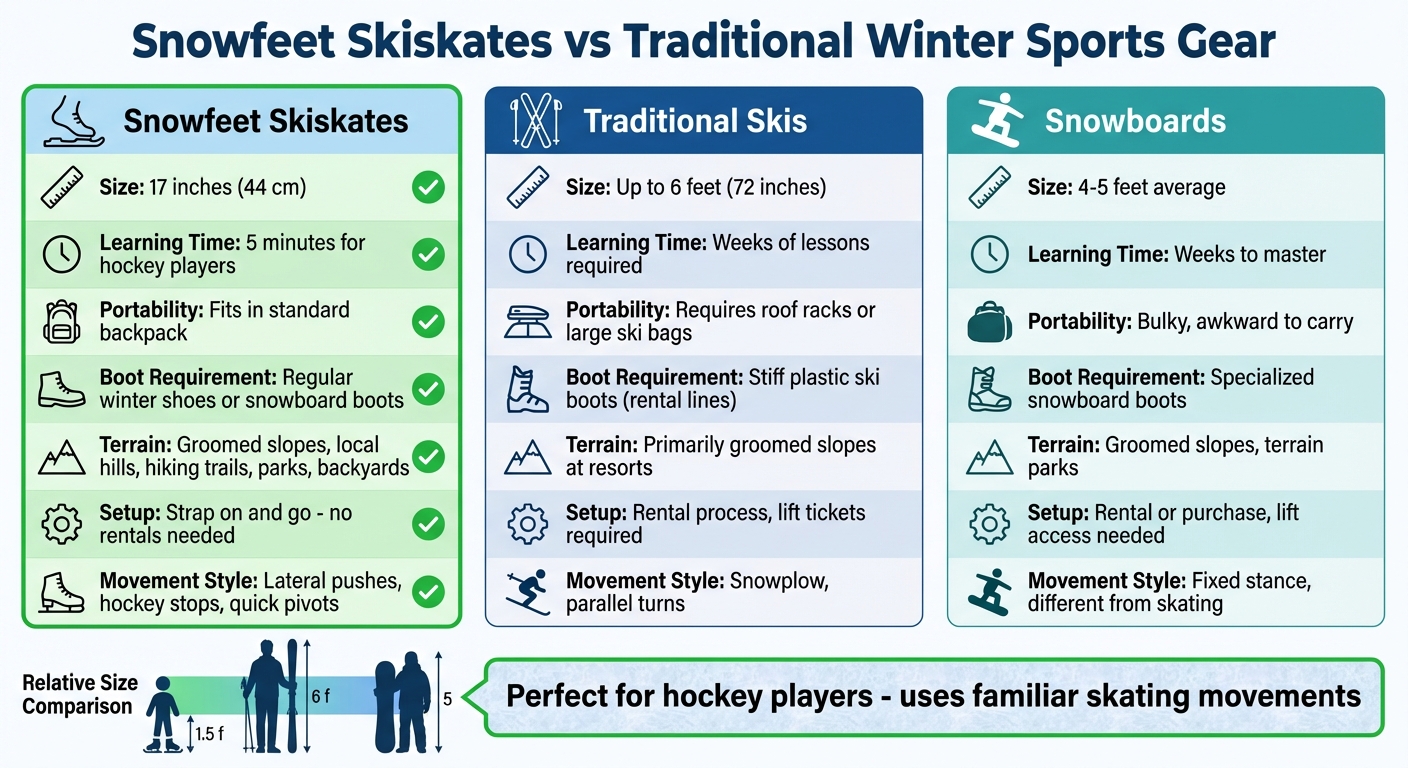
Snowfeet Skiskates vs Traditional Winter Sports: Size, Learning Time & Portability Comparison
Why Skiskating Feels Natural to Hockey Players
Movement Patterns That Match Hockey Skating
Skiskating taps into movements that hockey players already know like the back of their hand. It uses a lateral push-off combined with a low, stable stance - knees bent, weight balanced over the middle or back of the feet. This posture is second nature to hockey players and keeps you steady on skiskates. Even the quick edge transitions and crossovers that are staples in hockey translate perfectly, making the learning curve much shorter. It’s like your hockey instincts were made for this.
How Snowfeet* Skiskates Mimic Hockey Skates
Snowfeet* clearly understood the connection between hockey and skiskating when designing their Skiskates. At just 17 inches (44 cm) long, these skiskates are close in size to hockey skate blades, which are typically 10–12 inches. This compact size makes them perfect for sharp turns and quick pivots - no need to deal with the cumbersome length of traditional skis, which can stretch up to 6 feet.
The metal ski edges are another game-changer. They grip the snow just like the steel blades of hockey skates grip the ice, giving you precise control for carving and even executing hockey stops.
"The movement associated with skiskating is closer to skating on snow more than anything else. So if you are a hockey player or an ice skater, you will find it quite easy." – Snowfeet Team
Plus, the shorter base encourages natural front-to-back balance adjustments. You’re not learning a whole new way to stand or move - you’re simply shifting your skating skills to a snowy surface.
The Faster Learning Curve for Hockey Players
Here’s the best part: most hockey players can pick up skiskating in just five minutes. Yep, five. Your hockey skills immediately kick in, making it easy to control speed and tackle turns. Compare that to traditional skiing, which often takes weeks of lessons to master techniques like the snowplow or parallel turns. Snowboarding? That’s a whole new ballgame with its fixed stance and entirely different movements.
And it’s not just hype. With more than 50,000 Snowfeet* riders around the world and a stellar 4.9/5 rating from over 5,500 verified reviews, the feedback backs it up. No need for expensive lessons or endless practice runs - just strap on your Snowfeet* Skiskates, find a groomed slope, and let your hockey instincts do the rest. It’s no wonder Snowfeet* is the go-to choice for hockey players looking to dive into winter sports.
Hockey Player Tries Snowfeet* Skiskates | See What He Thinks | Skiboards | Short Ski | Mini Ski
Design Features of Snowfeet* That Improve Performance
Snowfeet* takes skiskating to the next level with smart design choices that build on the natural movements of hockey techniques. Let’s dive into what makes them stand out.
Agility and Quick Direction Changes
Snowfeet* Skiskates measure just 17 inches (44 cm), which is a far cry from the bulk of traditional skis that can stretch up to 6 feet. This shorter length means less swing weight, making it easier to pull off rapid pivots, jumps, and spins.
The narrow base is all about fluid movement. If you’re used to the quick edge-to-edge shifts of hockey skates, you’ll feel right at home. Steering becomes second nature, relying on your ankles and knees. Moves like figure-8s, crossovers, and quick stop-and-go patterns feel smooth and intuitive - almost like you’re still on the rink.
Metal Ski Edges for Precision and Control
One of the standout features of Snowfeet* is the metal edges. These edges grip the snow much like steel blades grip ice, giving you precision for carving and sharp turns. Want to pull off a hockey stop on snow? No problem. The metal edges allow you to push sideways, creating friction for a clean and controlled stop.
They also shine on trickier terrain. On steeper slopes or icy surfaces, where plastic-based skates might slide unpredictably, the metal edges give you the grip and control you need to maintain speed and stability. To keep them in top shape, it’s a good idea to tune the edges regularly, dry them after use, and apply a thin layer of oil before storage to prevent rust.
This level of edge control pairs perfectly with the agility of Snowfeet*, giving you a seamless experience on the snow.
Portability and Comfort
Snowfeet* Skiskates are incredibly portable - they’re small enough to fit into a regular backpack. Forget roof racks or oversized ski bags; you can take these anywhere, whether you’re flying, driving, or hopping on a bus. This convenience makes them a great choice for hockey players and winter sports fans who are always on the move.
Comfort is another big win. Unlike stiff plastic ski boots that can leave your feet cramped, Snowfeet* work with regular waterproof winter shoes or snowboard boots. Pro skater Logan (@xskyskaterx) sums it up perfectly:
"Using a snowboard boot gives me great comfortable ankle support and casual walking comfort... they are fast and agile, convenient and light."
And because they’re lightweight, you’ll experience less fatigue during extended sessions. This means you can focus on nailing your technique without worrying about tired legs. The mix of portability, comfort, and performance makes Snowfeet* a must-try for anyone looking to transition from ice to snow seamlessly.
sbb-itb-17ade95
How Hockey Players Can Switch to Skiskating
Transitioning from the ice to the slopes is simpler than you might think - especially if you’ve already spent years perfecting your hockey skills. The movements you’ve mastered on the rink translate almost seamlessly to skiskating. All you need to do is apply those familiar hockey drills to your new snowy playground.
Using Hockey Drills for Skiskating Practice
Stick with what you know. The Snowfeet Team sums it up perfectly:
"The best way to start your ride is to skate like a hockey player."
Begin on flat, groomed terrain. Practice lateral push-offs and quick stops, just like you would during a game. Use your powerful stride for acceleration and work on hockey stops on both your dominant and non-dominant sides. This stop is the go-to technique for Skiskates, so getting comfortable with it is key.
Next, shift your focus to edge control. Tight turns are all about angling your skiskates and shifting your body weight - something hockey players already know well. Snowfeet’s metal edges give you the grip you need to execute sharp turns. Try figure-8s and crossovers to get the hang of direction changes. Keep your knees slightly bent, your stance shoulder-width apart, and one foot slightly ahead to stay stable, even on uneven snow.
Choosing the Right Snowfeet* Model
Once you’ve built up your skills, it’s time to pick the Snowfeet* model that matches your skating style:
- Snowfeet Skiskates (44 cm) – Priced at $575, these are the closest in feel to hockey skates. With a tight turning radius and a durable wood core, they’re perfect for groomed slopes and snow parks. If agility is your top priority, this is the one to go for.
- Snowfeet PRO (50 cm) – At $275, these offer a bit more length, which adds stability without losing that skate-like feel. With a lightweight fiberglass core, they’re versatile enough for varying slope conditions, making them a great choice for hockey players looking to transition.
- Mini Ski Skates (38 cm) – Starting at $250, these are the most compact option. They’re compatible with regular winter shoes or snowboard boots and are ideal for smaller hills, hiking trails, or even backyard practice. Their shorter length makes them super maneuverable, though they might take a little extra balance work at first.
For boots, snowboard boots are your best bet. They provide the ankle support you’re used to from hockey skates. Just make sure to set up your bindings before hitting the slopes.
Practicing on Different Terrains
Start on gentle, groomed slopes to build confidence and refine your technique. The compact snow gives you consistent grip, making it easier to practice hockey stops, quick direction changes, and edge control until they feel second nature.
Once you’re comfortable, try mixed terrain. Hardpack snow works well for sharp edges, while softer snow requires wider movements and more deliberate weight shifts - kind of like skating through slush on an outdoor rink. Spring slush, in particular, is forgiving and great for experimenting with new moves.
Some Snowfeet and Skiskates models can even handle hiking trails and cross-country-style terrain (where allowed). These areas let you build endurance with long strides similar to hockey conditioning. It’s a great way to strengthen your legs and adjust to the different muscle engagement that snow demands compared to ice.
One tip: keep your weight centered over the middle or back of your feet. Unlike traditional skiing, leaning forward can cause the short tips to dig into the snow, throwing off your balance. Stick to short practice sessions at first to let your legs adjust, and always gear up with a helmet and standard ski safety equipment. Trust us - these short skis can feel fast, even at moderate speeds.
Why Snowfeet* Beats Traditional Winter Sports Gear
Learning Curve and Accessibility
If you’ve ever played hockey, you’ll feel right at home with Snowfeet*. The lateral push-off, weight-shifting, and even the classic hockey stop you’ve practiced countless times on the ice translate seamlessly to snow. It’s muscle memory in action. According to experts, skiskates are "very easy for inline skaters, hockey players and people who have experience with shorter skis" compared to traditional ski equipment. There’s no need to wait in long rental lines for awkward boots or spend hours learning the basics on a bunny hill. With Snowfeet*, you can strap them onto your own winter or snowboard boots (depending on the model) and hit the snow immediately. This simplicity not only makes them beginner-friendly but also highlights their unmatched convenience.
Portability and Convenience
Snowfeet* Skiskates are compact enough to fit in a standard backpack. No need for roof racks or extra storage. For instance, a college hockey player living in a dorm can easily stash them in a small space and take them along for quick trips to nearby hills. They’re perfect for spontaneous outings - just toss them in your car trunk or locker, and you’re ready to go. Plus, you can move around ski lodges, climb stairs, and handle chairlifts without the hassle of bulky gear. Forget the awkward shuffle of carrying full-length skis or a snowboard; Snowfeet* let you keep things light and easy.
Performance Across Different Terrains
Snowfeet* deliver where traditional gear often falls short. While full-sized skis work best on groomed slopes, Snowfeet* thrive on a variety of terrains. They’re great for groomed runs, small local hills, hiking trails that allow short skis, and even snow-covered parks or backyards. For hockey players, this means every patch of snow becomes a chance to sharpen your edge control, quick stops, and tight turns - the very skills that improve your game on the ice. The metal edges provide solid grip, just like traditional skis, but without the need for expensive lift tickets or long drives to major resorts. Whether you’re practicing on a nearby hill or carving through an urban park, Snowfeet* make it easy to turn any snowy spot into your personal playground.
Conclusion
If you’ve mastered moves like lateral pushes, weight shifts, or hockey stops on ice, transitioning to Snowfeet* feels natural and effortless. Say goodbye to steep learning curves, expensive gear, or waiting around for rentals - just strap on Snowfeet* and you're ready to glide.
Snowfeet* bring impressive performance to the table. Their compact design offers agility and precision, while the metal edges give you the grip you need for sharp turns and confident stops. Whether you're cruising groomed slopes, tackling the neighborhood hill, or exploring urban parks, these little wonders work just about anywhere. Plus, they’re lightweight, fit neatly into a backpack, and make navigating lodges or chairlifts a breeze - no bulky skis or snowboards weighing you down.
FAQs
How are Snowfeet Skiskates easier to travel with compared to traditional skis?
Snowfeet Skiskates are a game-changer when it comes to portability. At just 15–18 inches long and crafted from lightweight materials, they’re small enough to slip into a backpack or a compact carry bag. Whether you’re heading out on a road trip, catching a flight, or hopping on public transportation, these skiskates eliminate the need for bulky ski bags or roof racks.
Now, compare that to traditional skis. Those typically measure about 60 inches long, weigh significantly more, and require special gear to transport. With Snowfeet Skiskates, you’ve got a compact, easy-to-carry alternative that’s perfect for hockey players and winter sports fans who value convenience and mobility.
Why are Snowfeet Skiskates a perfect fit for hockey players?
Snowfeet Skiskates are tailor-made for hockey players, offering a familiar and natural experience thanks to their compact 17-inch (44 cm) length. This design mimics the short-blade stance hockey players know so well, giving you excellent balance, sharp edge control, and the ability to make quick, precise turns - skills that are second nature to anyone who’s spent time on the ice.
What’s even better? They’re lightweight and easy to carry around. Plus, you can strap them right onto your regular winter boots - no need to haul around heavy ski equipment. Whether you’re cruising down snowy slopes or gliding along icy trails, Snowfeet Skiskates bring the agility and control hockey players thrive on, making the leap to winter sports simple and fun.
Can Snowfeet Skiskates be used on different types of snow?
Snowfeet Skiskates are built to handle groomed slopes, packed trails, and a mix of snow surfaces with ease. Thanks to their compact and lightweight design, they’re super versatile and easy to control, especially on moderate terrain.
That said, they’re not the best choice for tackling steep slopes or deep powder - those conditions call for more specialized gear. But for most snowy adventures, Snowfeet Skiskates provide a fun, straightforward way to glide across the snow.













Leave a comment
This site is protected by hCaptcha and the hCaptcha Privacy Policy and Terms of Service apply.