



















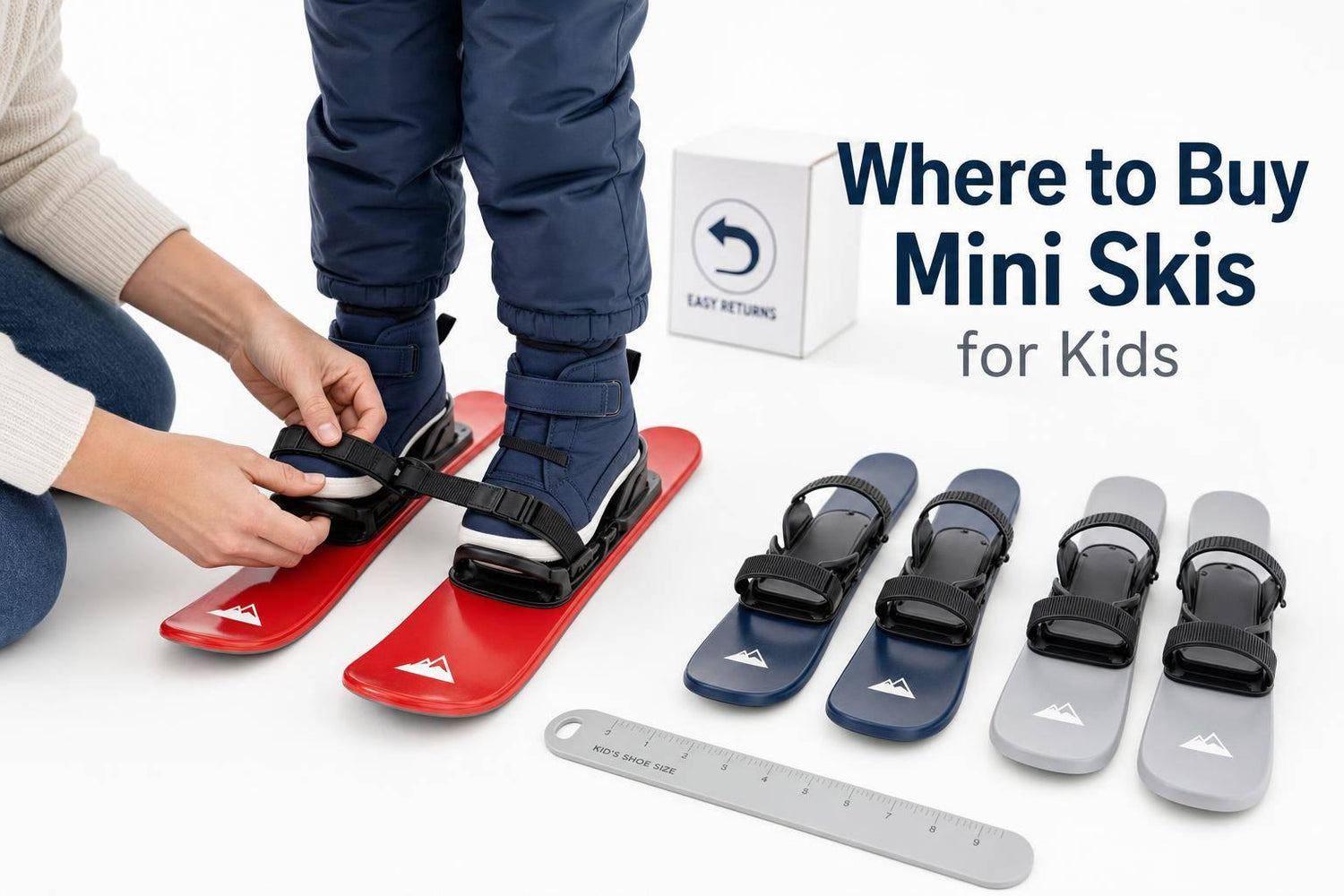
If you want the short answer: I’d buy from the official Snowfeet store first, then match the model by your child’s current shoe size and how they’ll use it. That’s the fastest way to avoid buying the wrong length, the wrong fit, or a listing that leaves out parts.
Here’s the simple breakdown:
- Best place to buy: the official Snowfeet store
- Best for small kids: MINI KIDS
- Best all-around pick: Snowfeet 38 cm
- Best for older or more confident kids: PRO 50 cm
- Best for ski lessons and resort-focused use: long skis, not mini skis
A few facts matter most:
- Snowfeet MINI KIDS fits US kids’ 10 to adult 6
- Snowfeet 38 cm and PRO 50 cm fit US 6–13
- Snowfeet returns are listed at 30 days if the item is unused and in the original packaging
- Snowfeet models are about 15–20 inches long, while standard kids’ skis are often 28–49 inches
So, what would I check before buying?
- Your child’s current boot or shoe size
- Whether they’ll wear winter boots or ski boots
- Where they’ll ride: backyard hill, sledding hill, small slope, or lesson terrain
- The store’s shipping, return rules, and included parts
How to Choose the Best Skis for Kids
Quick Comparison
| Option | Best for | Main thing to know |
|---|---|---|
| Snowfeet official store | Full model choice and brand help | Easiest place to confirm fit and parts |
| Winter sports retailers | Comparing mini skis with long skis | Short-ski stock may be low |
| Marketplaces | Checking price and stock | Double-check the exact listing |
| Model | Fits | Best use |
|---|---|---|
| MINI KIDS | US kids’ 10 to adult 6 | First snow play, flat areas, youngest kids |
| 38 cm | US 6–13 | Family snow days, easy learning, small hills |
| PRO 50 cm | US 6–13 | More confident kids, repeat runs, more glide |
My quick take? If your kid is new to snow, go shorter. It’s often easier to control, less awkward, and a lot less drama when the gloves are wet and everyone’s cold :) If your child is heading into formal ski lessons, long skis still make more sense.
I’ve summed up the key choices below so you can shop faster and with fewer surprises.
1. Where to Buy Mini Skis for Kids
Buy Direct From Snowfeet* for the Best Selection and Support
For most U.S. parents, the official Snowfeet store is the simplest place to buy Snowfeet mini skis. You get the full lineup in one spot, plus size help, live stock info, and U.S. pricing.
Buying direct also makes life easier after checkout. You can use the brand’s fitting guides, reach support if you need help, and add extras like straps, carrying bags, and protective gear. It also gives you a clear look at shipping, delivery, and return terms before you buy. No guesswork. Always nice :)
Use Established Winter-Sports Retailers for Broader Comparison
Big ski shops and outdoor retailers can help if you want to compare mini skis with standard kids' skis side by side. That’s handy when you’re still deciding which setup makes more sense for your child.
The catch? Short-ski stock is often limited.
Standard kids' skis also need ski boots and regular bindings. That usually means a higher total cost and more hassle than Snowfeet’s strap-on design.
Check Shipping, Returns, and Included Parts Before Ordering
Before you place an order, check a few basics:
- U.S. shipping
- Final price in USD
- Return window
- What parts and accessories are included
Snowfeet’s return policy allows returns within 30 days of delivery, but the items must be in original, pristine condition with the original packaging. The customer also pays return shipping.
If you’re buying from a marketplace, slow down and double-check the listing. Model names, included parts, and product details can vary, so it’s smart to confirm everything against the official product page.
Once you know where to buy, the next step is matching the model to your child’s size and confidence.
| Buying option | Best for | Limits |
|---|---|---|
| Snowfeet official store | Full lineup, accurate specs, brand support | Less useful for cross-brand comparison |
| Winter-sports retailers | Side-by-side comparison with standard kids' skis | Limited short-ski stock, less Snowfeet-specific detail |
| Marketplaces | Price and availability checks | Verify exact model and included parts carefully |
From here, pick the Snowfeet model that fits your child’s shoes, age, and experience level.
2. Choose the Right Snowfeet* Model for Your Child
After you pick where to buy, the next step is simple: match the model to your child’s boot size and confidence level.
Snowfeet has three kid-friendly options. The right pick depends less on age alone and more on fit and how comfortable your child feels on snow.
Snowfeet MINI KIDS for Younger Children and Smaller Shoe Sizes
The MINI KIDS is the shortest and lightest option. It fits EU 27–38 / US kids' 10 to adult 6, which makes it a smart starting point for younger children with smaller feet.
Because it’s short and easy to handle, it works well at low speeds. That’s a big plus for backyard snow, flat ground, and gentle slopes. The adjustable bindings also make setup faster, which, let’s be honest, helps a lot when kids are cold and want to get moving NOW :)
Snowfeet 38 cm for Easy Learning and Everyday Family Use
Once a child grows into US size 6 or larger, the 38 cm model fits. It covers US 6–13 / EU 38–47.
This model gives kids more stability without feeling bulky. So if your child can already balance on their own and wants to try slightly longer runs, this length often makes more sense than the shortest option. It’s a nice middle ground for family snow days.
Snowfeet PRO 50 cm for Older Kids or More Confident Beginners
The PRO 50 cm - 20 inches long - is the next step up for older kids or more confident beginners. It fits the same US 6–13 / EU 38–47 shoe-size range as the 38 cm model, so the choice here comes down to skill and comfort, not foot size.
If your child can already control speed and direction on a gentle slope, wants to do repeated runs, or is starting to ask about turning and carving, the PRO can be a better match. Its longer length gives more edge hold and smoother tracking than standard kids' skis.
| Model | Shoe size | Length | Best for |
|---|---|---|---|
| MINI KIDS | EU 27–38 / US kids' 10 to adult 6 | Shortest, lightest option | First snow play, flat terrain, youngest riders |
| 38 cm | US 6–13 / EU 38–47 | 38 cm | Easy learning, sledding hills, everyday family use |
| PRO 50 cm | US 6–13 / EU 38–47 | 50 cm / 20 in | Small slopes, repeated runs, more confident kids |
If you’re stuck between two options, go shorter. Shorter skis are easier for beginners to turn and stop.
Next, check boot fit, age, and terrain before you order.
sbb-itb-17ade95
3. What to Check Before You Buy
Before you order, check three things: boot type, current size, and terrain. Get those right first. Then match the model to your child’s boots and size.
Match the Skis to Your Child's Shoes or Boots
Start with the size chart and boot type for the exact model. This part matters more than people think.
MINI KIDS fits smaller feet. The 38 cm and PRO 50 cm options work with larger boots and give you more room for mixed setups. If your child falls between sizes, measure foot length in cm and match it to the chart. It takes a minute and can save you a headache later.
Once the fit looks good, move to the next filter: your child’s confidence level.
Choose Based on Age, Size, and Confidence Level
Buy for this season, not for next year. I know, it’s tempting to size up and hope they “grow into it.” With kids’ ski gear, that plan can backfire fast.
Use your child’s current shoe size. Then pick the shortest model that matches how they ride:
- MINI KIDS or 38 cm for cautious riders
- PRO 50 cm for kids who already control speed and direction
Shorter skis usually feel less intimidating, which helps kids relax and learn. That’s half the battle, honestly :)
Think About Safety, Terrain, and Parent Supervision
Mini skis work best on flat ground, backyard hills, and gentle slopes. Keep the first sessions simple. Start on the easiest terrain, stay close, and make sure your child wears a properly fitted helmet.
For very active kids, add:
- Knee protection
- Wrist protection
If you’re heading to bigger resort runs or ski-school days, traditional long skis still make more sense.
That leaves one final question: how will your child actually use them?
4. Match the Right Option to How You Plan to Use It
Once fit is set, the next step is simple: match the ski to how your child will use it.
Best for Beginners and Backyard Snow Play
For a child’s first snow sessions, shorter is usually easier. Snowfeet MINI KIDS is a strong place to start because the short length helps cut down on tip catches and tumbles. Kids can shuffle, slide, and stop in a way that feels more natural, which keeps things easy and low-pressure.
Another big plus: MINI KIDS works with regular winter boots. So, you can skip stiff rental boots. That alone makes backyard snow days a lot easier to pull off on a random snowy afternoon :)
Best for Travel and Easy Storage
Let’s be honest. Standard kids’ skis take up space. More bags, more gear, more trunk-room drama.
MINI KIDS and 38 cm models are much easier to deal with. They fit in a duffel or suitcase and can sit in a closet, under a bed, or on a wall hook. That means less hassle when packing, carrying, and storing them for short trips.
If you fly, shorter mini skis can often go as regular luggage instead of oversized sports bags. Setup is easier too. No boot fitting. No binding tweaks. Just less fuss.
Best for Small Slopes and More Active Riding
When your child is ready for repeat runs on a local park hill or a beginner slope, the Snowfeet 38 cm gives solid maneuverability. If they want a bit more glide and smoother tracking on packed snow, the PRO 50 cm is a better match for quicker runs.
Here’s the quick breakdown:
| Use Case | Best Model | Why |
|---|---|---|
| First sessions, backyard play | MINI KIDS | Shortest, lightest, easiest to control |
| Mixed use - local hills + travel | 38 cm | Compact with added stability |
| Small slopes, more active riding | PRO 50 cm | More glide for quicker runs |
| Dedicated resort skiing with lessons | Traditional long skis | Best for ski-school terrain |
For ski-school days and chairlift terrain, traditional long skis are still the better fit. But for many casual U.S. families mixing backyard play, weekend trips, and the occasional small slope, Snowfeet gives you more flexibility without the bulk of a full ski setup.
Next, compare Snowfeet with standard kids' skis before you decide.
5. Snowfeet* vs Standard Kids' Skis and a Final Buying Checklist
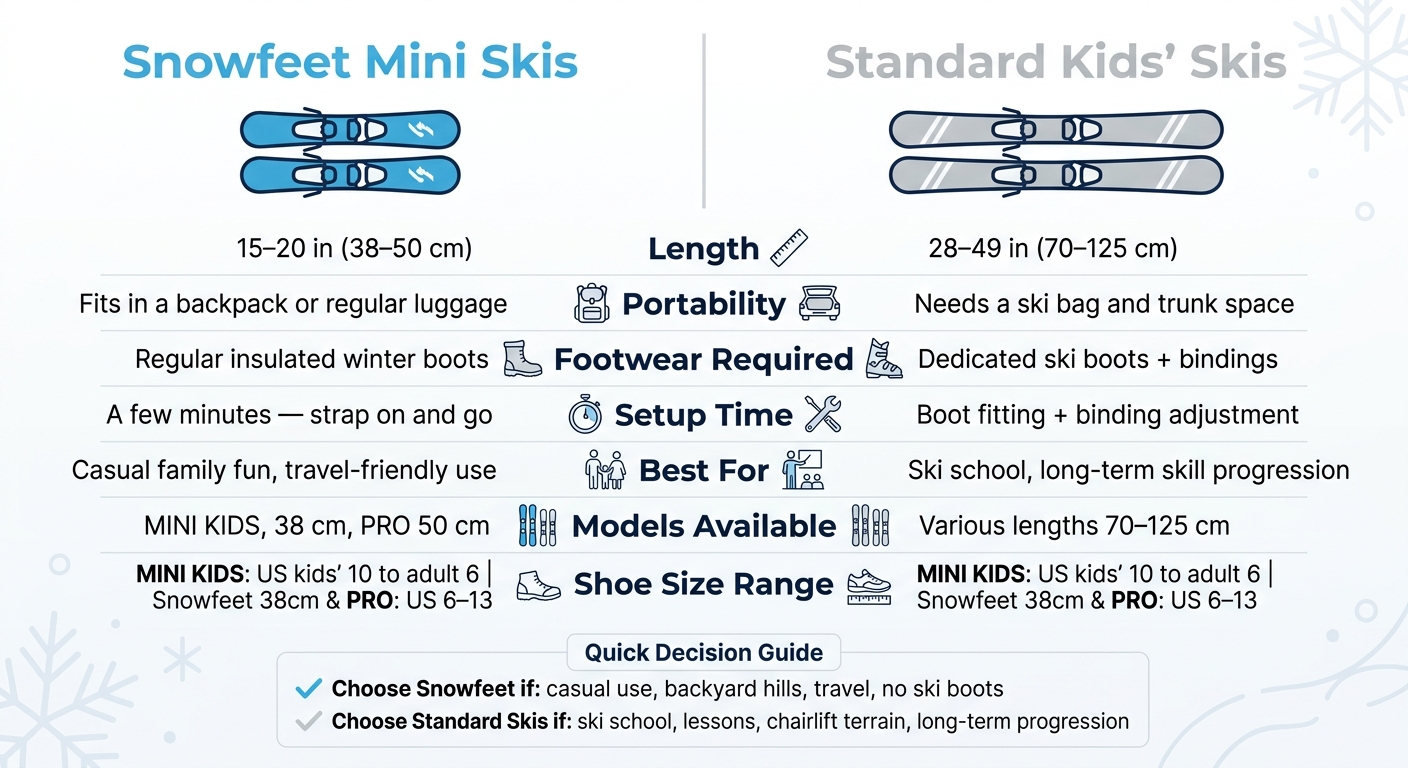
Snowfeet Mini Skis vs Standard Kids' Skis: Which Is Right for Your Child?
Comparison Table: Snowfeet* vs Standard Kids' Skis
If you're stuck between Snowfeet* and standard kids' skis, this is the part that makes the choice a lot easier.
It comes down to how your child will use them.
Standard kids' skis make sense if your child is headed to ski school, wants to move through formal lessons, or may want racing later on. Most traditional kids' skis for younger children are about 70–125 cm long. They’re built for long-term alpine training and skill building.
Snowfeet*, on the other hand, are all about ease. They fit in a backpack or suitcase and work with regular winter boots. For casual family days, that kind of convenience can matter a lot more than lesson-based progression.
So, here’s the simple version: if your goal is ski racing or polished technique, standard skis win. If your goal is easy family fun, travel, and quick snow sessions, Snowfeet* is often the better match.
Here’s the clean side-by-side view:
| Feature | Snowfeet* (MINI KIDS / 38 cm / PRO 50 cm) | Standard Kids' Skis |
|---|---|---|
| Length | 15–20 in (38–50 cm) | 28–49 in (70–125 cm) |
| Portability | Fits in a backpack or regular luggage | Needs a ski bag and trunk space |
| Footwear required | Regular insulated winter boots | Dedicated ski boots + bindings |
| Setup time | A few minutes, strap on and go | Boot fitting + binding adjustment |
| Best for | Casual family fun, travel-friendly use | Ski school, long-term skill progression |
Once you know which setup lines up with your child, do one more quick pass before buying.
Final Buying Checklist for Parents
Before you order, check these off:
- Check your child's U.S. shoe size against the product chart.
- Decide on footwear. Regular winter boots usually mean Snowfeet*. Ski boots usually mean standard skis.
- Pick your main terrain. Backyard hills fit MINI KIDS or 38 cm. Small slopes fit 38 cm or PRO 50 cm. Frequent lessons point to standard kids' skis.
- Review the return policy before checkout. Check the time window, item condition rules, and whether return shipping is covered.
- Compare total Snowfeet* cost in USD with the full price of standard skis, boots, and binding setup. For casual use now and then, Snowfeet* often gives you better value.
- Confirm safety basics: a properly fitted helmet and adult supervision on any hill or slope, no matter which gear you choose.
FAQs
Can my child use mini skis with snow boots?
Yes. Snowfeet mini skis strap onto regular winter boots or snowboard boots, so your child usually won’t need special ski boots.
For example, the 38 cm Mini Ski Skates fit winter boots or snowboard boots. The 50 cm PRO and other standard models also work with winter shoes or snowboard boots.
Just pick the model and binding that match your child’s boot size and boot type.
How do I know which Snowfeet model fits best?
Choose based on your experience, the terrain you ride, and how you plan to travel with them.
For beginners, 38 cm Mini Ski Skates and 44 cm Skiskates usually feel the most natural. That’s extra true if you’ve spent time on ice skates or inline skates. They’re short, playful, and easy to get a feel for.
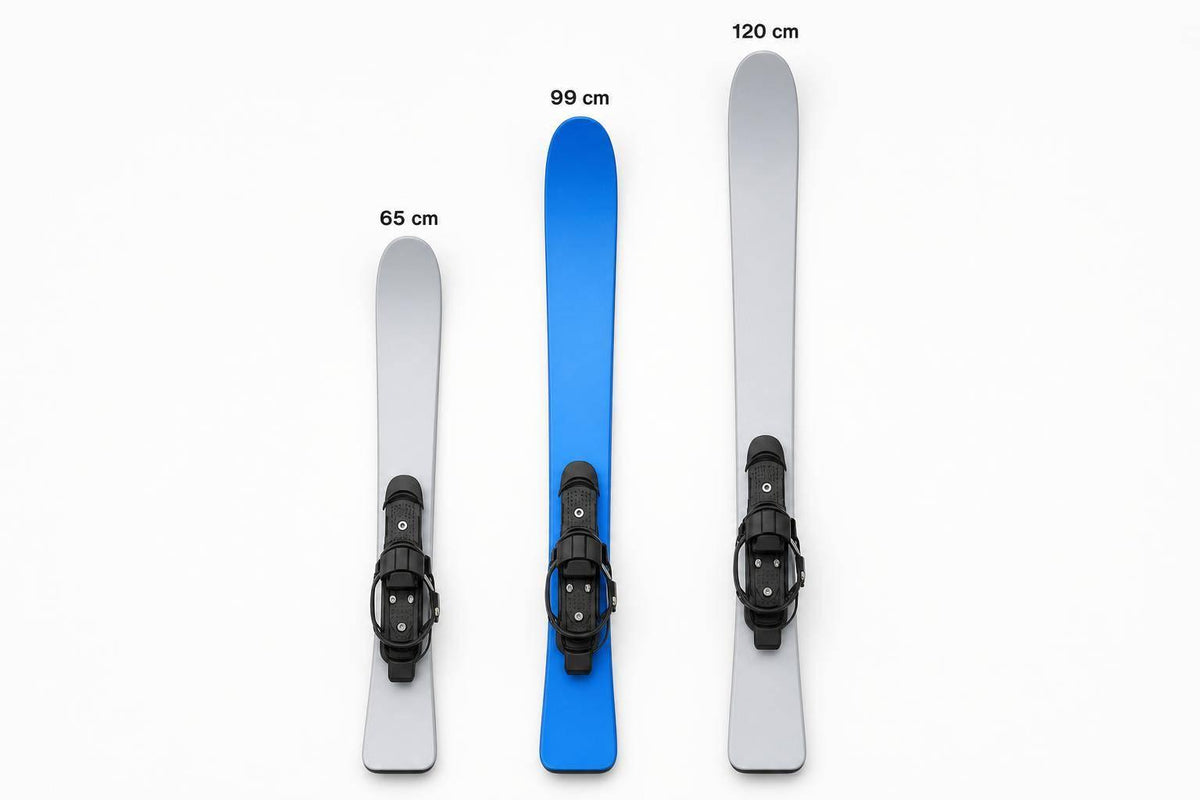
If you want more stability and a ride that feels closer to skiing, go with the 50 cm PRO or 65 cm Skiblades. Those tend to work better on groomed slopes, where that added length helps things feel a bit more planted.
Boot fit matters too. Here’s the quick version:
- 38 cm and 50 cm models work with regular waterproof winter boots or snowboard boots.
- 44 cm and 65 cm models come in ski-boot or snowboard-boot versions.
That one detail can save you a headache later, so it’s worth checking before you buy.
Are mini skis good for ski lessons?
Yes - mini skis can be a good pick for ski lessons, especially for beginners.
Snowfeet* mini skis are simple to get started with, and many users learn basic turning and stopping in about five minutes. That’s a pretty friendly learning curve :)
They also strap onto regular winter boots or snowboard boots, so there’s no need for stiff ski boots. That makes setup easier and can help kids build balance and confidence faster than they might on long skis.











Leave a comment
This site is protected by hCaptcha and the hCaptcha Privacy Policy and Terms of Service apply.