



















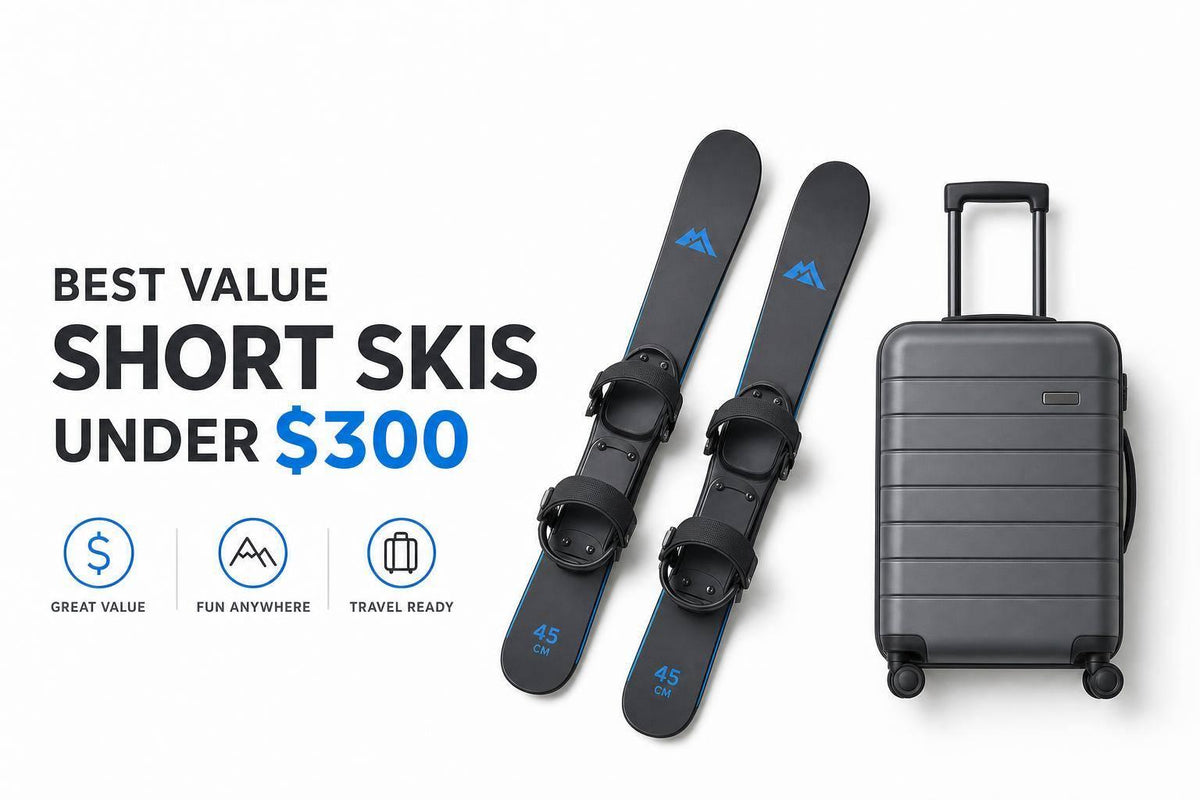
If I had to pick one right away, I’d go with the Snowfeet* Mini Ski Skates 38 cm at $199. They hit the best mix of price, pack size, and on-snow control for most riders.
Here’s the short version:
- Best overall under $300: Snowfeet* Mini Ski Skates 38 cm - small, light, and easy to use
- Lowest price: Snowfeet* Mini Ski Skates (Entry) - about $190
- Most stable under $300: Snowfeet* PRO Ski Skates 50 cm - $299
- Best sale-only stretch pick: Snowfeet* Skiskates 44 cm
- Most ski-like feel: Snowfeet* Skiblades 65 cm - but new pairs sit far above this budget
What matters most is simple:
- Shorter = easier to pack
- Longer = more stable
- Some models work with winter boots
- Others need ski or snowboard boots
So if you want fun laps on groomers, easy travel, and no ski boot hassle, the 38 cm model is the one I’d point you to first. If you want a calmer ride and can spend the full budget, the 50 cm PRO is the next step up.
Snowfeet* Review: Are Skiskates Worth It? | Mini Ski | Skates for Snow | Skating Ski | Short Ski
Quick Comparison
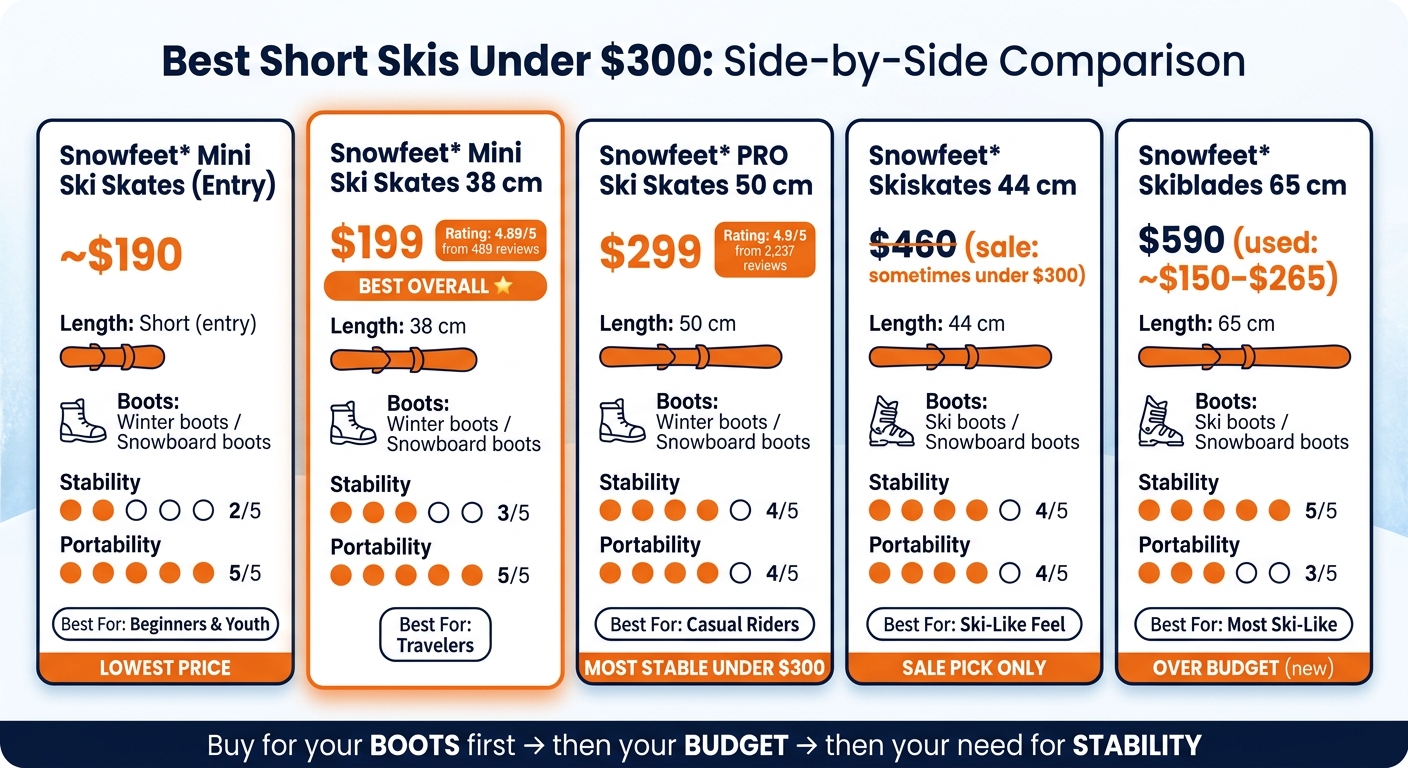
Best Short Skis Under $300: Side-by-Side Comparison
| Model | Price | Main Upside | Main Trade-Off | Boots |
|---|---|---|---|---|
| Snowfeet* Mini Ski Skates (Entry) | ~$190 | Lowest cost | Least stable | Winter boots / snowboard boots |
| Snowfeet* Mini Ski Skates 38 cm | $199 | Best all-around pick | Less planted at speed | Winter boots / snowboard boots |
| Snowfeet* PRO Ski Skates 50 cm | $299 | More control underfoot | Bigger to pack | Winter boots / snowboard boots |
| Snowfeet* Skiskates 44 cm | $460 full price; sometimes under $300 on sale | More ski-like feel | Usually over budget | Ski boots / snowboard boots |
| Snowfeet* Skiblades 65 cm | $590 new | Most like skis | Well over budget new | Ski boots / snowboard boots |
A few numbers stand out too: the 38 cm model is $199, the 50 cm PRO tops out at $299, and both stay inside the budget cap. That’s why they lead this list. The 44 cm and 65 cm models are here more as price-reference options than core budget picks.
If I’m keeping this simple, I’d say: buy for your boots first, then your budget, then your need for stability. That saves a lot of regret later :)
1. Snowfeet* Mini Ski Skates (Entry Model, Under $300)
The entry-level Snowfeet* Mini Ski Skates are the easiest way into the Snowfeet* lineup. Put simply, this is the lowest-cost Snowfeet option.
Price
The basic Mini Ski Skates sell for about $190 on Snowfeet*'s official store, and the price can drop during sales. For that money, you get metal edges and adjustable bindings.
Stability
These skates feel best at low to medium speeds on groomed green and blue runs. Their short length makes turning easy and forgiving, which is great for beginners or casual laps.
There’s a catch, though. The shorter size means less edge contact on icy patches and steep terrain. So while they’re easy to handle, they won’t feel as planted when conditions get rough. That’s the trade-off, and it’s pretty clear: the big win here is how easy they are to carry around.
Portability
This is where the entry Mini Ski Skates shine. They fit into a standard suitcase or duffel with no drama, which means you can skip oversize baggage fees and leave the ski bag at home.
They’re easy to pack for trips, and they take up much less space than the 44 cm Skiskates or 65 cm Skiblades. If you travel a lot, that matters more than people think.
Boot Compatibility
The entry model uses adjustable bindings that work with regular winter boots or snowboard boots, so you don’t need ski boots. Most versions fit about U.S. men's sizes 6–13 (EU 38–47).
For better control, use stiff winter boots or snowboard boots. If you want a bit more control but still want something compact, the next step up is the 38 cm version.
2. Snowfeet* Mini Ski Skates 38 cm
If the entry model feels a bit too twitchy, the 38 cm version is the easiest next step. You get more stability, but you still stay under $300. Nice sweet spot.
Price
The 38 cm model is listed at $199 on Snowfeet*'s official store. It also has a 4.89/5 rating from 489 verified reviews, which says a lot about how people feel about the fun, durability, and overall value.
Stability
Compared with the entry model, the extra length gives these skates a bit more stability without taking away the quick, forgiving feel that makes short skis so fun. They work well for beginners on mellow slopes and for park laps where tight turns matter more than top speed. So if you want something that feels easier to settle into, this model makes sense.
Portability
At 38 cm, these skates fit into a small duffel or backpack with no drama. You can strap them to a backpack or toss them in a car trunk, and the compact size can help you avoid oversize baggage fees.
Boot Compatibility
The 38 cm Mini Ski Skates work with winter shoes or snowboard boots, and the adjustable bindings fit U.S. sizes 6–13 (EU 38–47). Snowfeet* recommends waterproof footwear with firm ankle support for the best control and safest fit. If ski boots sound like overkill, snowboard boots can be a nice middle ground. You get more support than casual winter shoes, without that stiff, locked-in ski boot feel.
3. Snowfeet* PRO Ski Skates 50 cm
If the 38 cm version feels a bit too twitchy, the PRO 50 cm gives you more control without jumping out of the budget tier. It’s the first real step up if you want a calmer ride but still want to stay under $300.
Price
The PRO 50 cm is listed at $299 on Snowfeet*’s official store, which puts it at the top of the budget range in the Snowfeet* lineup. Snowfeet* also shows promo pricing around $207. On Skiskates.com, the PRO model has a 4.9/5 rating from about 2,237 reviews.
Stability
At about 20 inches long, the PRO 50 cm lands right between the 38 cm mini skates and the 65 cm Skiblades. That added length gives you better front-to-back stability than the 38 cm model. In plain English: it feels less nervous when you’re moving. The PRO also comes with metal ski edges, which help with edge hold and control on packed snow and ice.
Portability
Even at 50 cm, these are still easier to pack than 65 cm Skiblades. They can fit in a backpack or suitcase with less hassle, which is nice for fly-in ski trips or quick weekend getaways.
Boot Compatibility
It uses the same winter-boot and snowboard-boot setup as the 38 cm model, so most riders can skip ski boots and rentals.
Next up is the 44 cm Skiskates, which sit between the PRO 50 cm and the longer 65 cm Skiblades.
sbb-itb-17ade95
4. Snowfeet* Skiskates 44 cm
The 44 cm Skiskates feel the closest to actual skis out of the Snowfeet* options in this group. One catch: they only land under $300 when they're on sale.
Price
At full retail, the 44 cm Skiskates start at $460. But sale prices can drop them into the $130–$300 range. So the value here comes down to timing and what kind of ride you want. If the mini models feel a bit too twitchy, this extra length can be worth it.
Stability
At 44 cm (17 inches) long and about 1.8 lb per ski, or 3.5 lb per pair, these feel more planted than the 38 cm mini skates. You get a more ski-like feel, which helps on groomed runs.
The wood core stays stiffer over time and gives more even edge hold. That makes them a good fit for moderate-speed resort laps and basic parallel turns. But let's be honest: 44 cm is still short. On icy snow or steeper terrain, edge hold drops off, so these aren't made for hard charging or sharp carving.
Portability
These are still easy to live with. The 44 cm length and low weight make them simple to toss in a backpack or checked suitcase, and you don't need a ski bag. Packing them is way less of a headache than dealing with longer bladed gear.
Boot Compatibility
This is the big split between the 44 cm Skiskates and the smaller ski skates: you need ski boots or snowboard boots. Regular winter shoes won't work.
You can pick from two binding versions:
- Ski boot version: US sizes 4.5–14.5
- Snowboard boot version: US sizes 6–14.5
Check the boot version and size range before you buy. That part matters more than people think.
If you want more stability and don't mind giving up a bit of portability, the 65 cm Skiblades are the next move.
5. Snowfeet* Skiblades 65 cm
The 65 cm Skiblades are the most ski-like option in the Snowfeet lineup. You get a wood core, metal edges, a graphite base, and a camber profile. So, yeah, these are built more like actual skis than mini snow toys. The downside is the price. New pairs land well above this guide’s $300 limit.
Price
New pairs start at $590.
Used or like-new pairs can show up for $75 to $450. But if you're trying to stay under $300, the more realistic target is around $150 for a used pair or a clearance price near $265. Just note that you may still need to pay for tuning or mounting.
Stability
At 65 cm, these feel much steadier than the 44 cm Skiskates. The deeper sidecut and twin tips help them turn with less fuss and feel more planted on groomed runs.
Still, let’s be honest: they won’t give you the same straight-line stability or steep-slope confidence as full-length skis. That’s why this model sits in a nice middle spot. It’s the bridge between mini skates and a more ski-like ride.
Portability
A ski-binding pair weighs about 3.79 lb, which keeps travel pretty easy. At 26 inches, they can fit in standard luggage or a compact ski bag.
That’s a nice perk if you hate hauling big gear through airports or stuffing your car like you’re packing for a weeklong road trip.
Boot Compatibility
The 65 cm Skiblades work with ski or snowboard boots. The snowboard-binding version adds about 2 lb, so the ski-binding version is the lighter pick.
If you ride in snowboard boots, the snowboard-binding setup may make more sense. If you’re trying to stretch your budget, though, it’s smart to factor in that extra weight along with the total setup cost. Next, the comparison breaks down which length fits beginners, travelers, and riders who want the most value under $300.
Which Option Fits Your Needs - and What Are the Trade-Offs?
Now that the specs are out of the way, let’s make this simple.
This chart gives you the fastest path to the right pick based on how you ride and what boots you plan to use.
| Model | Beginners | Youth Riders | Travelers | Casual Riders | Snowboarders |
|---|---|---|---|---|---|
| Snowfeet* Mini Ski Skates (Entry) | Good | Excellent | Excellent | Good | Excellent |
| Snowfeet* Mini Ski Skates 38 cm | Very Good | Very Good | Excellent | Very Good | Very Good |
| Snowfeet* PRO Ski Skates 50 cm | Good | Moderate | Very Good | Excellent | Very Good |
| Snowfeet* Skiskates 44 cm | Very Good | Good | Very Good | Excellent | Very Good |
| Snowfeet* Skiblades 65 cm | Moderate | Moderate | Good | Excellent | Good |
The big dividing line here is boot setup.
The entry model and the 38 cm model work with winter shoes or snowboard boots. The 44 cm and 65 cm models need ski boots or snowboard boots.
If you're stuck between short skis and standard skis, here’s the plain-English version: short skis give you more control, easier turning, and way less hassle when you travel. Full-length skis give you better stability at speed and work across more types of terrain.
So, yeah, it’s kind of a backpack-vs-roof-rack choice :)
| Factor | Short Skis (38–65 cm) | Full-Length Skis |
|---|---|---|
| Learning curve | Very easy; quick to feel in control | Slower; more technique required |
| Turning in tight spaces | Excellent; quick pivots | Cumbersome in crowded or narrow areas |
| Carrying & storage | Fits luggage, small trunks, closets | Needs roof racks, large bags, more space |
| Speed stability | Good at moderate speeds; twitchy when fast | Excellent at high speed and on steeper runs |
| Terrain range | Groomers, parks, gentle slopes | Groomers, bumps, moderate powder, mixed conditions |
Before you buy, check these four things:
- Binding and boot compatibility - Make sure the model uses the right setup for you, whether that’s universal straps, snowboard-style bindings, or alpine ski bindings.
- Terrain fit - If you spend most of your time on groomed green and blue runs at a U.S. resort, any of these models can do the job. If you plan to ride steeper runs or go faster on a regular basis, lean toward the 65 cm Skiblades.
- Durability - The 50 cm and 65 cm models are better picks for frequent use and added stability.
Next, weigh the pros and cons of each option.
Pros and Cons
Here’s the short, honest version on value, trade-offs, and where each option fits.
The main choice comes down to this: how much portability do you want, and how much control do you need? That’s the whole game.
This table keeps the focus on budget, while showing where each model shines and where it gives a little back.
| Product | Pros | Cons | Best For |
|---|---|---|---|
| Snowfeet* Mini Ski Skates (Entry) | Lowest price; easy fun on green runs | Weakest stability on hardpack | Beginners |
| Snowfeet* Mini Ski Skates 38 cm ($199) | Best value under $300; playful feel for skaters and snowboarders | Less forgiving for true first-timers | Travelers |
| Snowfeet* PRO Ski Skates 50 cm ($299) | Compact but more controlled; stays under $300 | Can be awkward in small luggage or tight storage | Casual riders |
| Snowfeet* Skiskates 44 cm (from $460) | More ski-like feel than mini skates | Well above the $300 budget ceiling | Budget stretch |
| Snowfeet* Skiblades 65 cm (from $590) | Most ski-like option in this lineup | Far above the $300 budget ceiling | Budget stretch |
So, from here, the call is pretty simple: go lighter and cheaper, or pay more for better stability and a feel that’s closer to skiing.
Conclusion
After you look at price, length, and boot setup, the pick is pretty clear. For most U.S. riders shopping under $300, the 38 cm Snowfeet* Mini Ski Skates offer the best overall value. They’re easy to learn on, easy to pack, and you don’t need ski boots.
If travel matters most, go with the 38 cm Mini Ski Skates. The 44 cm Skiskates are harder to justify unless they’re on sale. Want a bit more control underfoot? Move up to the 50 cm PRO model.
The Snowfeet* PRO Ski Skates at 50 cm ($299) feel more planted than the shortest options, but still stay under the $300 mark.
There is one clear trade-off. Ultra-short ski skates can feel loose on icy or steeper terrain. They’re made for groomed runs and casual resort use, not high-speed expert runs.
The bottom line: if you want the most fun per dollar under $300, start with the Snowfeet* Mini Ski Skates. They’re compact, beginner-friendly, and the top fun-per-dollar pick in this price range.
FAQs
Which Snowfeet* model is best for complete beginners?
For complete beginners, the Snowfeet Mini Ski Skates (38 cm) are the best pick. They’re small, lower in price, and simple to get used to. A lot of riders learn how to turn and stop after just a few runs, which is a pretty sweet start :)
If you want a bit more stability while you learn, or you plan to ride on rougher snow, the Snowfeet PRO (50 cm) is a great option too. Both are beginner-friendly, easy to carry, and work with regular winter boots or snowboard boots.
Can I use regular winter boots with these short skis?
Yes - most Snowfeet short skis work with regular winter boots, which is a big change from standard skis that need alpine boots.
Models like the Mini Ski Skates (38 cm) and PRO Skates (50 cm) are built to work with your own waterproof winter shoes or snowboard boots.
That said, snowboard boots are the better pick if you want the best ride. They give you more ankle support and a steadier feel. Soft shoes or low-cut boots can feel a bit wobbly, which isn't much fun once you get moving.
Are short skis under $300 stable enough for faster riding?
Short skis under $300 are made more for agility, easy carrying, and plain old fun on groomed runs than for charging fast with a locked-in feel.
That’s the trade-off.
Models like the 44 cm Skiskates and 50 cm PRO tend to feel calmer and easier to control than the 38 cm version. But even then, they’re still less stable at higher speeds than full-length skis.
If speed is your top priority, go with the 50 cm PRO. In this price range, it’s the best pick because the extra length and metal-frame binding help it feel more planted on firm snow.











Leave a comment
This site is protected by hCaptcha and the hCaptcha Privacy Policy and Terms of Service apply.