



















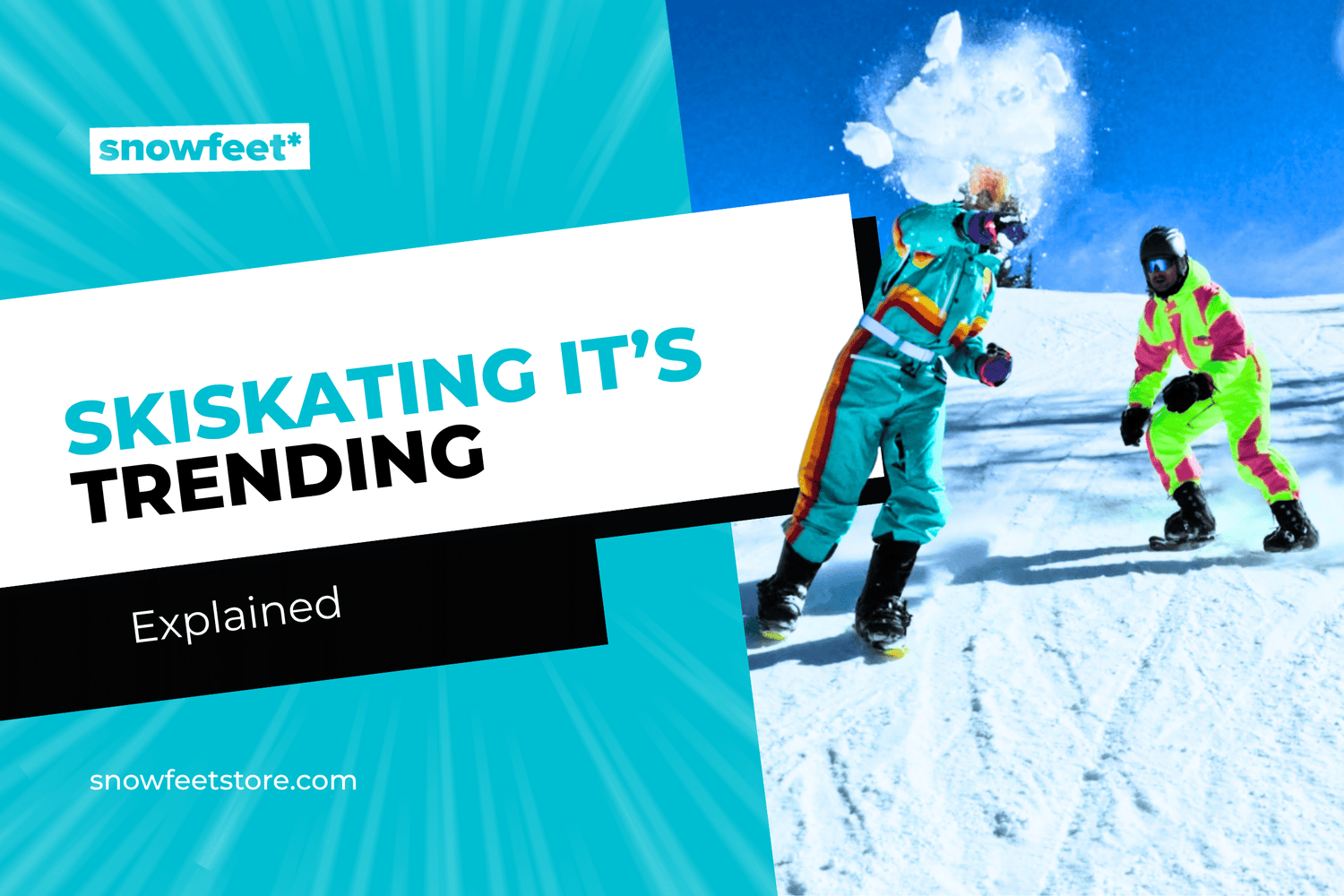
Skiskating is the winter sport everyone’s talking about. Think ice skating meets skiing - using compact skis (as short as 17.3 inches) to glide, turn, and even tackle slopes. It’s easy to learn, works with regular winter boots, and skips the bulky gear and high costs of skiing or snowboarding. Perfect for beginners and pros alike, you can use skiskates anywhere there’s snow - local hills, parks, or even your backyard.
Why is it trending? Social media has exploded with jaw-dropping stunts using shorter skis, showing off how portable, fun, and creative this sport can be. Snowfeet’s skiskates, starting at $199, are leading the charge with two models: the 44 cm Skiskates for casual riders and the 50 cm PRO for steeper terrain. They’re lightweight, packable, and ready to use with your regular boots.
Want a simpler, more fun way to enjoy the snow? Skiskating is your answer.
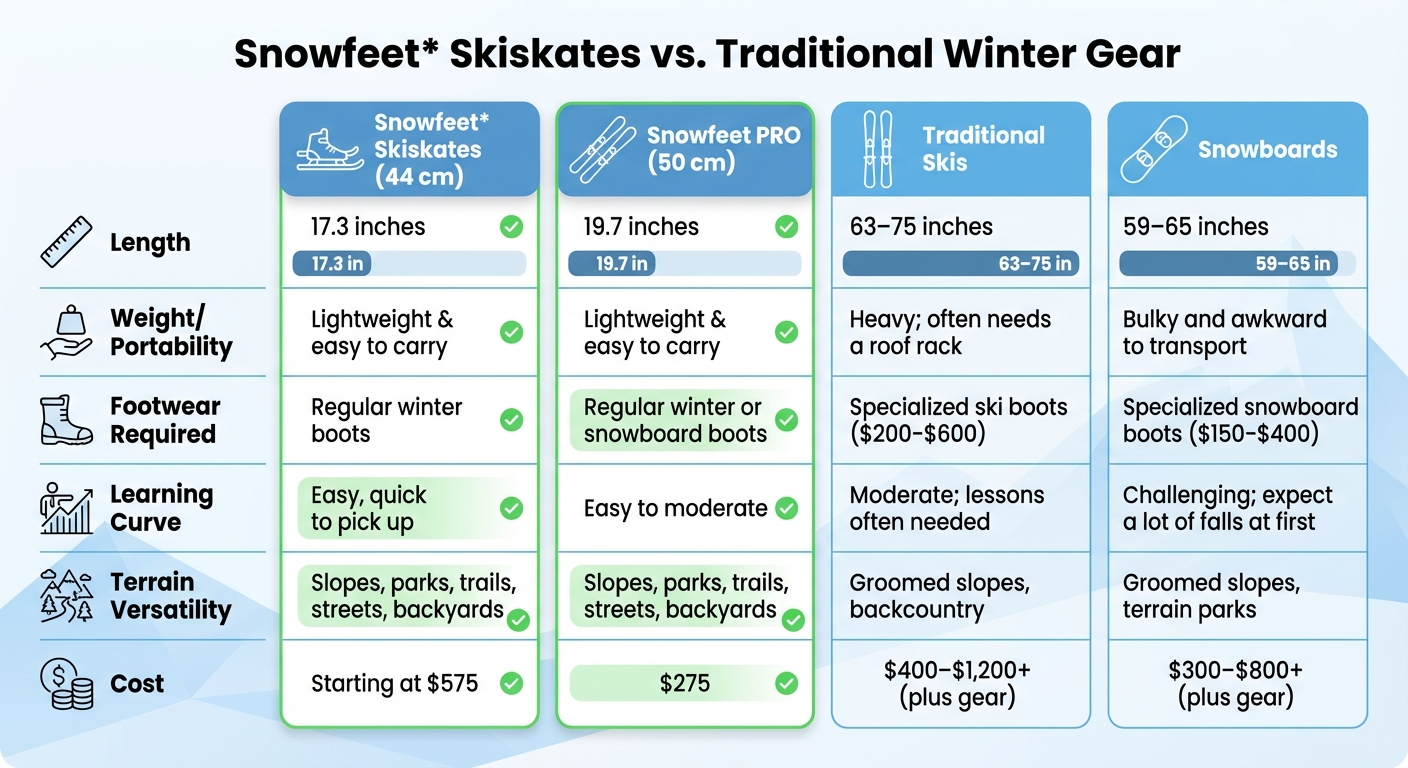
Snowfeet Skiskates vs Traditional Skis and Snowboards Comparison
What Is Skiskating?
Skiskating is a winter sport that blends the side-to-side motion of ice skating with skiing techniques. Instead of sticking to the usual parallel stance or diagonal stride used in traditional skiing, skiskating uses a V-shaped skating step. You push off the inside edges of your skis - just like you would with ice skates or inline skates - to build momentum. This creates a smooth, rhythmic motion, combining gliding strides with an upper-body workout through a coordinated double pole push. The result? A dynamic, fluid way to move across the snow.
Modern skiskating stands out thanks to its compact, easy-to-handle gear. Snowfeet* has taken the lead with their skiskates, which come in two sizes: 17.3 inches (44 cm) for the Snowfeet* Skiskates and 19.7 inches (50 cm) for the Snowfeet PRO. This shorter design makes it easier to maneuver and eliminates the hassle of ski tips crossing.
How Short Skis Work for Skiskating
Snowfeet* skiskates are designed with gliding in mind, skipping the need for a central grip zone. Their compact lengths - 44 cm and 50 cm - are perfect for the wide, sweeping movements of skiskating. The shorter skis make edge-to-edge transitions quick and smooth, whether you're coasting on flat terrain or tackling moderate slopes. They also make tight turns a breeze, making these skates ideal for a variety of terrains, from groomed slopes and terrain parks to local hills and even hiking trails.
Who Can Skiskate?
Skiskating is for everyone - whether you're a total beginner or a seasoned athlete with a background in ice or inline skating. The approachable design makes it easy for all ages to enjoy, whether you're gliding down gentle slopes or cruising flat areas - no expensive lift tickets needed. Experienced skiers and snowboarders will also find it a fun, fresh way to explore familiar terrain.
Traditional skate skiing can be tough to learn and physically demanding, but Snowfeet* skiskates lower the barrier. Their compact design offers excellent control and maneuverability, making it easy to pick up this exciting sport. Plus, they're lightweight and portable enough to fit in a backpack, so you can take them anywhere. Skiskating offers a great workout without the steep learning curve, making it a perfect activity for anyone looking to try something new on the snow.
Why Skiskating Is Trending
Skiskating is catching on fast because it’s a fun, budget-friendly alternative to traditional skiing and snowboarding. Think about it - no need to shell out big bucks for lift tickets, no clunky hardshell boots, and no pricey gear rentals. With Snowfeet*, you can hit the snow practically anywhere - local hills, hiking trails, even your backyard. You don’t need a season pass or lessons, which makes it easy for beginners and seasoned snow lovers to dive right in.
Easy to Learn and Minimal Gear Needed
One of the biggest perks of skiskating is how simple it is to get started. Traditional skiing and snowboarding come with a laundry list of gear - skis, poles, bindings, boots - and let’s not forget those stiff, uncomfortable hardshell boots. Snowboarding, in particular, can be tough for beginners, with hard falls that can be a major turn-off. Enter Snowfeet*. These compact skates work with your regular winter boots, so there’s no need for custom fittings or lugging around bulky equipment. The gentle learning curve means you can practice just about anywhere there’s snow - no chairlifts required. Plus, they’re super portable. Toss them in your backpack, and you’re good to go.
Social Media Buzz
Social media has played a massive role in skiskating’s rise. In March 2025, Norwegian Olympic champion Birk Ruud posted a jaw-dropping video of himself landing a double cork 720 on cross-country skis to his 277,000 Instagram followers. The clip, highlighting the challenge of smaller ski surfaces, racked up 5.5 million views. Around the same time, freeskier Anders Backe took on the Lillehammer Olympic Sliding Centre bobsled track on thin skis, pulling in over 3 million views in just seven days. These viral moments show that shorter skis aren’t just practical - they’re fueling a new wave of creativity and excitement in winter sports content on platforms like Instagram and YouTube.
Why Shorter Skis Are a Game-Changer
Snowfeet* skates are redefining what people expect from ski gear. The old idea that longer skis mean better performance? Not so much. Shorter skis offer better maneuverability, control, and portability - perfect for the quick, dynamic movements that skiskating demands. Traditional skis can be a hassle to transport and store, but Snowfeet* skates (17.3 inches/44 cm) and Snowfeet PRO (19.7 inches/50 cm) are compact and easy to handle. Their size eliminates issues like crossed tips, allows for fast edge-to-edge transitions, and lets you explore terrain that would be tricky with traditional gear. It’s this combination of practicality and fun that’s making skiskating such a hit - and proving why Snowfeet* stands out from the usual ski and snowboard options.
Snowfeet* Skiskates vs. Traditional Skis and Snowboards
Snowfeet* skates bring a fresh twist to winter sports, offering a unique blend of convenience and versatility. Let’s break down how they stack up against traditional skis and snowboards.
First off, size and portability are game-changers. Traditional skis are typically 63 to 75 inches long, and snowboards measure around 59 to 65 inches. That’s a lot of gear to lug around, store, or fit in your car. Snowfeet* Skiskates, on the other hand, measure just 17.3 inches (44 cm), and the Snowfeet PRO comes in at 19.7 inches (50 cm). They’re small enough to toss in a backpack or stash in your trunk without any fuss.
But it’s not just about size. Snowfeet* skates shine in their ability to handle a variety of terrains. While skis are great for groomed slopes or backcountry trails, they’re not exactly practical for snow-covered fields, neighborhood streets, or even horse racetracks. Snowfeet* skates handle all of these with ease, plus they’re perfect for navigating obstacles like slalom gates or jumps ranging from 2 to 7 feet high. Whether you’re a casual snow lover or an adrenaline junkie, Snowfeet* skates offer something for everyone.
Comparison: Snowfeet* vs. Traditional Winter Gear
Here’s a quick look at how Snowfeet* skates compare to traditional skis and snowboards:
| Feature | Snowfeet* Skiskates (44 cm) | Snowfeet PRO (50 cm) | Traditional Skis | Snowboards |
|---|---|---|---|---|
| Length | 17.3 inches | 19.7 inches | 63–75 inches | 59–65 inches |
| Weight | Lightweight & easy to carry | Lightweight & easy to carry | Heavy; often needs a roof rack | Bulky and awkward to transport |
| Footwear | Regular winter boots | Regular winter or snowboard boots | Specialized ski boots ($200–$600) | Specialized snowboard boots ($150–$400) |
| Learning Curve | Easy, quick to pick up | Easy to moderate | Moderate; lessons often needed | Challenging; expect a lot of falls at first |
| Terrain | Slopes, parks, trails, streets, backyards | Slopes, parks, trails, streets, backyards | Groomed slopes, backcountry | Groomed slopes, terrain parks |
| Cost | Starting at $575 | $275 | $400–$1,200+ (plus gear) | $300–$800+ (plus gear) |
One of the best perks of Snowfeet* skates? You can use your regular winter boots. No need to spend extra on specialized ski or snowboard boots, which can cost hundreds of dollars. That alone makes Snowfeet* a practical and budget-friendly option for winter sports enthusiasts.
sbb-itb-17ade95
How to Start Skiskating with Snowfeet*
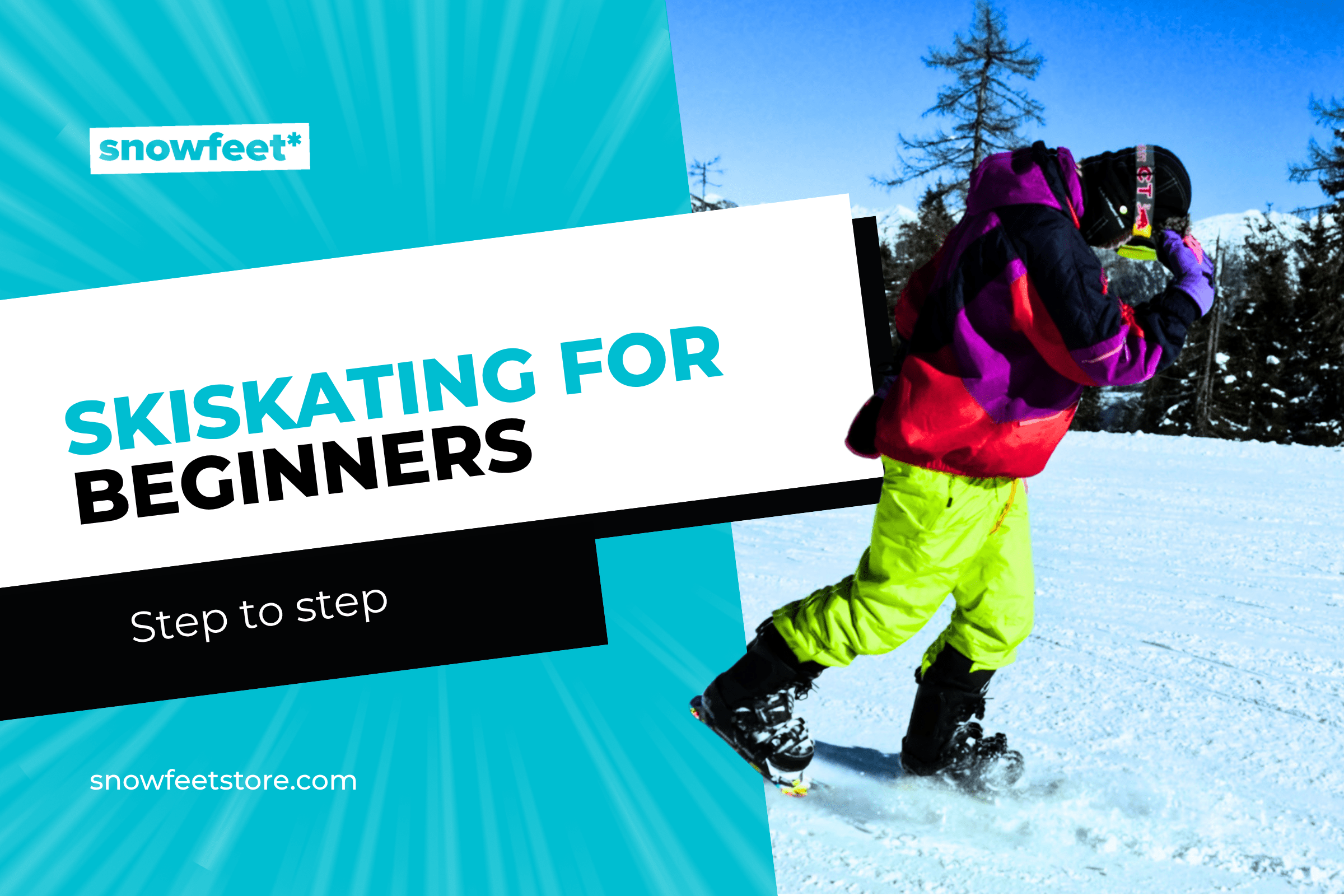
Ready to dive into skiskating? With Snowfeet* skates, it’s surprisingly easy to get started. No need for fancy boots, pricey lessons, or weeks of training. Most beginners can link their first turns within a single day!
Picking Your Snowfeet* Model
The first step is choosing the right Snowfeet* model for your needs. There are two main options:
- Snowfeet* Skiskates (44 cm): These compact, lightweight skates are ideal for beginners and casual riders. They’re super agile, perfect for flat trails or gentle slopes, and make dodging obstacles a breeze. Think of them as the "skate-like" option for quick acceleration and sharp maneuvering.
- Snowfeet PRO (50 cm): If you’re more experienced or planning to tackle steeper terrain, the PRO model is the way to go. Its longer base offers better stability, edge hold for carving, and improved flotation in powder snow. It’s built for those who want to push their limits on challenging runs or deeper snow.
Pricing starts at $199 for the Skiskates and $249 for the PRO, with discounts of 10–25% often available in November and December. Once you’ve picked your match, you’re ready to gear up!
Using Snowfeet* Skates: Step-by-Step
Getting Snowfeet* skates ready is quick and straightforward:
- Attach to Your Boots: These skates work with standard winter boots (EU sizes 36–47) or snowboard boots. Just loosen the adjustable bindings, slide your boot in (toe first, then heel), and tighten the straps evenly. Make sure the binding flexes naturally for a snug fit.
-
Master the Basics:
- Start in a snowplow stance (toes in, heels out) for balance.
- Push off sideways, like ice skating, to build momentum.
- Turn by leaning your weight into the edges to carve.
- Stop with either a hockey-style slide or the classic snowplow technique.
- Build speed by alternating V-pushes, beginning on flat terrain before trying gentle inclines.
With consistent practice - just 1–2 hours for most beginners - you’ll have the basics down and be ready to explore more exciting terrain.
Skiskating on Different Terrains
Snowfeet* skates perform well across various conditions:
- Groomed Slopes: Expect smooth gliding and, with the PRO, extra speed for those who crave it.
- Ungroomed Trails: Skiskates shine here with their agility, letting you navigate obstacles effortlessly.
- Powder Snow: The PRO’s longer base helps you float better, but remember to keep your tips up for control.
- Snowparks: Both models excel on jumps and rails, offering a skate-like pop that’s hard to match with traditional skis or snowboards.
To keep your skates performing at their best, apply temperature-specific wax weekly for a smoother glide. And don’t forget safety: always wear a helmet, gloves, goggles, and layered clothing for those chilly 20–30°F days.
With Snowfeet*, you’re not just learning a new activity - you’re redefining how you enjoy the snow. Have fun out there!
Conclusion
Skiskating changes the way you enjoy the snow. Whether you're new to winter sports or a seasoned pro looking for something different, this activity offers simplicity, quick learning, and loads of fun. Forget about expensive lift tickets or heavy gear. Just strap on your Snowfeet* skates and get ready to carve, jump, and explore in a way that's totally different from skiing or snowboarding.
Snowfeet* is leading the charge in rethinking winter sports. Their compact 44 cm Skiskates and the versatile 50 cm PRO models prove that smaller gear can deliver a dynamic and exciting experience. Unlike traditional skis that focus on length and speed for open slopes, Snowfeet* prioritizes portability and agility. It's lightweight, easy to carry, and offers unmatched control - perfect for both groomed trails and backyard adventures.
And here's the kicker: you can get started for just $199. No need for pricey setups or special boots - your regular winter boots will do. Snowfeet* is breaking down the barriers that can make winter sports feel out of reach.
So, why wait? Grab your Snowfeet* skates, hit the snow, and see for yourself why so many are making the switch. Once you try it, the slopes will never feel the same.
FAQs
Where can I skiskate near me?
You can try skiskating near Mansfield, CT, where winter fun like skating, skiing, and sledding is a big hit. If you're up for more adventure, check out other spots in Connecticut by visiting local outdoor recreation areas or winter sports centers. Many of these places have the right kind of terrain for skiskating, making it simple to dive into this exciting winter activity.
Do I need special boots or poles for Snowfeet* skiskates?
Nope, you don’t need any special boots or poles to use Snowfeet* skiskates. They’re made to fit regular winter shoes, so you can strap them on and go. Plus, poles aren’t necessary, which keeps things simple whether you’re new to winter sports or have plenty of experience. This ease of use is a big reason why Snowfeet* skiskates have become such a hit.
Which model should I choose: 44 cm or 50 cm PRO?
Choosing the right skiskates comes down to what you’re looking for in terms of control and performance. The 44 cm model is lighter and easier to handle, making it a great choice for beginners who are just getting the hang of things. On the other hand, the 50 cm PRO provides more stability and speed, which experienced riders will appreciate for a smoother, faster glide. Both options are built for fun and adaptability, but if you're starting out, go for the 44 cm. If you're all about pushing limits, the 50 cm is your match.











Leave a comment
This site is protected by hCaptcha and the hCaptcha Privacy Policy and Terms of Service apply.