




















Looking for skiblades that perform well and last? Here’s what you need to know before buying:
- Blade Length Matters: Shorter blades (65 cm) are agile for tricks and tight turns. Medium (99 cm) balances control and stability, while longer ones (120 cm) handle speed and deeper snow better.
- Materials Count: High-quality skiblades use durable cores (like wood), metal edges for grip, and smooth bases for speed. Snowfeet* models are a standout here.
- Bindings Are Key: Adjustable bindings compatible with snowboard or ski boots make life easier. Some even fit regular winter shoes.
- Performance Across Terrains: From groomed runs to light powder, skiblades offer versatility. Their shorter design makes them easier to control.
- Portability Rules: Weighing under 6.6 lbs and fitting in a backpack, they’re perfect for travel and storage.
Bonus Tip: Snowfeet* is a trusted brand with over 50,000 riders and glowing reviews. Their skiblades combine lightweight design, durability, and performance. Whether you’re a beginner or seasoned skier, there’s a model for you. Prices range from $190 for mini skates to $775 for premium 120 cm blades.
Quick Comparison:
| Feature | 65 cm Skiblades | 99 cm Skiblades | 120 cm Skiblades |
|---|---|---|---|
| Best For | Tricks, quick turns | All-around use | Speed, deeper snow |
| Price | Starts at $550 | Starts at $590 | Starts at $775 |
| Boot Compatibility | Ski/snowboard boots | Ski/snowboard boots | Ski boots only |
| Weight | Lightest | Moderate | Heaviest |
| Terrain | Groomed, parks | Groomed, light powder | Groomed, moderate powder |
Want compact, easy-to-use gear that’s fun on the slopes? Skiblades might be your answer. Keep these tips in mind, and you’re good to go! 😊

Skiblade Length Comparison: 65cm vs 99cm vs 120cm Features and Specifications
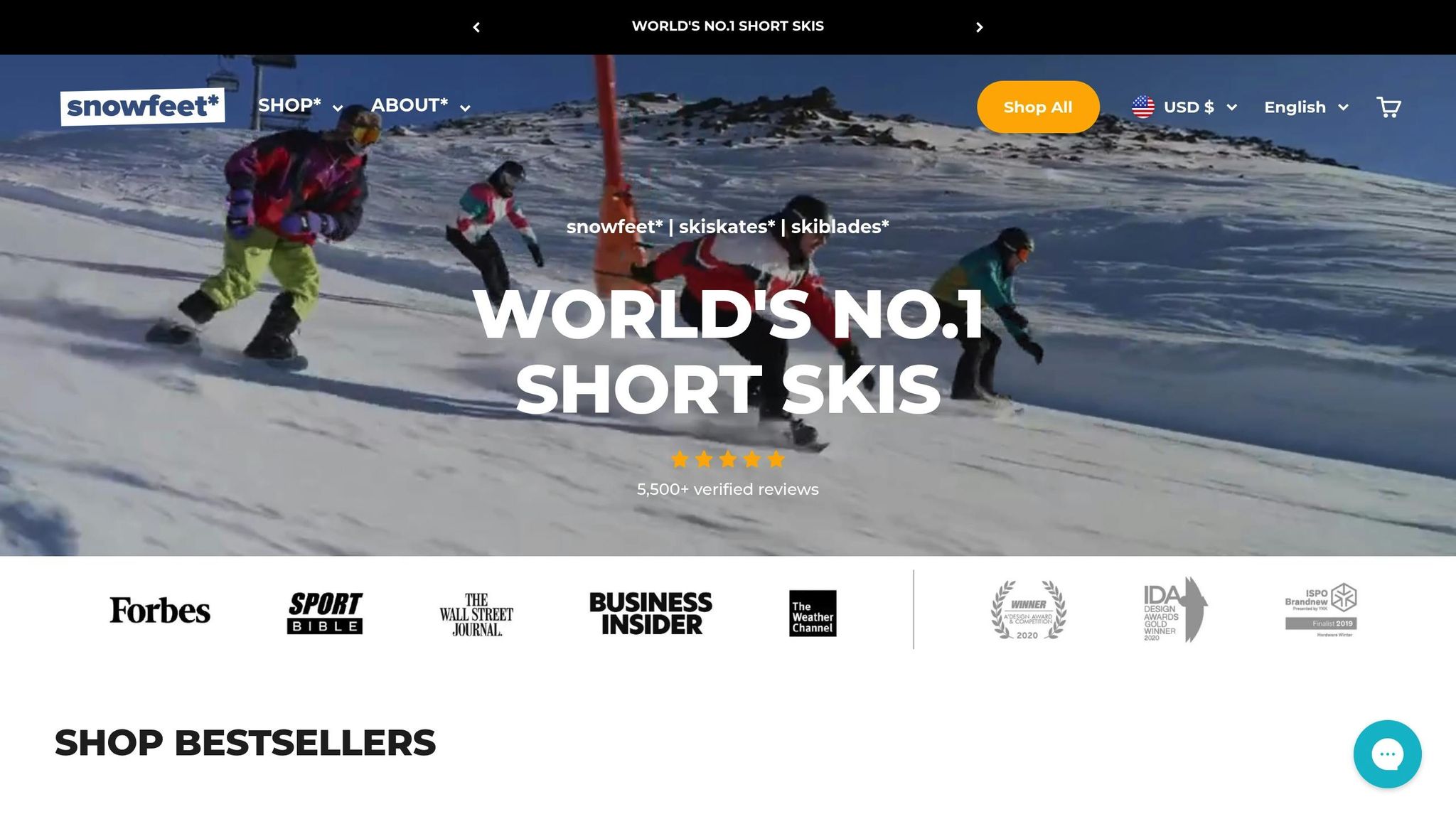
How to choose Snowfeet* Snowblades | Skiblades | Skiboards | Short Ski
1. Choose the Right Blade Length
When it comes to skiblades, blade length plays a huge role in how they perform across different terrains. Picking the right length depends on your riding style - whether you're zipping down groomed slopes, pulling tricks in the park, or weaving through moguls. Unlike traditional skis that usually range from 59 to 75 inches (150 to 190 cm) and lock you into one riding style, Snowfeet* offers three sizes - 65 cm (26 in), 99 cm (39 in), and 120 cm (47 in) - each tailored to specific terrains and skill levels. Let’s break down what each length brings to the table and how Snowfeet* blends performance with portability.
Comparing the Length Options
- 65 cm Skiblades: These are made for quick, snappy turns and fast edge-to-edge transitions. They shine on groomed runs, in snow parks, moguls, and tight tree lines where agility is key. Perfect for freestyle tricks and sharp direction changes, they’re all about control with minimal effort. However, their short length means they don’t float well in powder deeper than about 4 inches (10 cm) and might feel shaky at higher speeds.
- 99 cm Skiblades: This is the all-arounder, offering a sweet spot between agility and stability. Whether you’re carving, hitting jumps, or cruising through light powder, these blades handle mixed terrain - groomers, park features, or even a bit of off-piste - with ease. At $675, they’re a solid pick for riders who want versatility without committing to one specific style.
- 120 cm Skiblades: If you’re looking for stability and speed, this is your jam. These blades mimic the feel of traditional skis but are far easier to maneuver. They’re great for longer turns, higher speeds, and deeper snow, making them ideal for open groomed slopes, moderate powder, and even light backcountry adventures. Priced at $775, they’re a fantastic choice for advanced riders or anyone transitioning from traditional skis who wants the benefits of speed and control without the bulk.
How Snowfeet* Skiblades Stack Up Against Traditional Skis
Traditional skis, with their 59–75 inch (150–190 cm) length, can be heavy, bulky, and a bit daunting for beginners. Snowfeet* flips the script by offering shorter, purpose-built skiblades that adapt easily to different terrains.
The 65 cm model is so compact it can fit into a backpack and weighs just a fraction of what standard skis do. Meanwhile, the 120 cm option delivers the stability of traditional skis but without the hassle of lugging around oversized gear. For U.S. riders who want performance without sacrificing convenience, this lineup offers the perfect balance - no need to clutter your garage with multiple pairs of skis when Snowfeet* has you covered for every condition.
2. Check the Materials and Construction
Skiblades are all about packing durability and performance into a compact design, and the materials used play a huge role in achieving that balance.
What Makes Skiblades Durable
When choosing skiblades, there are four key things to look out for: a sturdy core (wood or fiberglass-reinforced), metal edges, a tough topsheet, and a high-quality base. For example, Snowfeet* premium models use certified sustainable wood cores, offering top-tier performance without the bulk of traditional skis. Their 65 cm models start at $550, 99 cm at $590, and 120 cm at $775.
"To ensure the highest lasting quality, Skiblades are handmade from certified sustainable wood in the mountains in the heart of Europe." - Snowfeet Team
Fiberglass-reinforced polyamide is another solid option, especially if you're looking for something durable but more budget-friendly. Snowfeet* offers 38 cm Mini Ski Skates starting at $190 and 50 cm models from $250, both built with this material. These models also feature metal edges, just like traditional skis, ensuring sharp carving ability and reliable stopping power while meeting ski resort standards.
The base material is equally important. Snowfeet* premium models use graphite bases for better speed and glide. Wood core models come pre-waxed like regular skis, while fiberglass models need more frequent waxing to keep them in peak condition.
These thoughtful material choices not only make skiblades last longer but also enhance their nimble performance. Compared to traditional skis, Snowfeet* models clearly stand out for their smart construction and practicality.
Snowfeet* vs. Traditional Skis: Material Comparison
| Feature | Snowfeet* Wood Core Models | Snowfeet* Fiberglass Models | Traditional Skis |
|---|---|---|---|
| Core Material | Certified sustainable wood | Fiberglass-reinforced polyamide | Wood or composite |
| Edges | Metal ski edges | Metal ski edges | Metal ski edges |
| Base | Graphite base | Waxable polyamide | Sintered or extruded base |
| Build Type | Cap construction | Reinforced molded | Cap or sidewall construction |
| Weight | Lightweight and backpack-friendly | Ultra-light and portable | Heavier, often requiring a roof rack |
| Price Range | $550–$775 | $190–$450 | $400–$1,200+ |
With over 5,500 verified reviews averaging 4.9 out of 5 stars and more than 50,000 riders globally, Snowfeet* has shown that you don’t need oversized gear to experience high-performance skiing.
3. Look at Binding Quality and Compatibility
When it comes to performance and convenience, bindings play a crucial role in what makes Snowfeet* stand out from traditional ski setups. A great binding system ensures safety, comfort, and versatility, keeping you secure on the slopes while adapting to different boot types. Unlike traditional skis that often require stiff, uncomfortable ski boots, Snowfeet* skiblades completely change the game.
Choose Adjustable Bindings for Any Boot Type
Snowfeet* bindings are built to be flexible, working seamlessly with snowboard boots, ski boots, and even regular waterproof winter shoes. Depending on the model, you’ll find different binding options:
- 65 cm model: Choose between simple non-release ski boot bindings or specialized snowboard boot bindings.
- 120 cm model: Comes exclusively with standard release ski bindings for maximum safety and ankle support at higher speeds.
- 99 cm model: Offers two options - lightweight non-release bindings (must be paired with a safety leash) or release bindings for added security.
The size range is impressive. Ski boot bindings accommodate sizes 4.5 to 14.5 US (36 to 49 EU), while snowboard boot bindings fit sizes 6 to 14.5 US (38 to 49 EU). For those with smaller feet, snowboard boots often provide a snugger and more comfortable fit compared to winter shoes.
"Snowboard bindings give you more flexibility while performing all kinds of tricks. They're super comfortable, and you can walk with them anywhere without a problem, which makes the ski trip a much more pleasant experience." - Snowfeet Team
Snowfeet* offers three binding tiers to suit different needs and budgets:
- Basic: Affordable and compatible with most boots.
- Standard: Includes extra straps for larger boots.
- Pro X: The most adjustable and durable option.
You can adjust these bindings at home using strap holes or a screwdriver for a custom fit, so no need for on-mountain tweaks. This flexibility and ease of use make Snowfeet* bindings a clear winner over traditional ski systems.
Binding Systems for Every Skill Level
Traditional ski bindings often require professional adjustments and specific DIN settings. Snowfeet* bindings, on the other hand, are refreshingly simple. Their snowboard-style systems feature quick entry, secure straps, and an anti-slip surface for excellent boot grip. For models under 100 cm, non-release bindings must be used with a safety leash to keep the blade attached during falls.
Release bindings, available on some 99 cm models and standard on the 120 cm model, work like regular ski bindings by disengaging during a fall to enhance safety. While they’re heavier and slightly pricier, they’re essential for longer blades and higher speeds. For riders who prefer lightweight gear and aggressive carving, the non-release option is a great alternative.
One of the standout benefits of Snowfeet* is the walkability of snowboard boots compared to traditional ski boots. Whether you’re heading to the lift, grabbing lunch, or strolling around the resort, snowboard boots make transitions between the slopes and leisure time a breeze. With over 5,500 reviews averaging 4.9 stars, Snowfeet* riders consistently highlight the ease, comfort, and versatility of the binding system over the rigid setups of traditional skis.
sbb-itb-17ade95
4. Test Performance Across Different Terrains
When it comes to versatility, Snowfeet* skiblades shine across a variety of terrains. Thanks to their smart design and quality materials, they’re built to handle everything from smooth groomed runs to terrain parks and even light powder. Unlike traditional long skis, which are often tailored to one specific type of skiing, Snowfeet* skiblades give you the freedom to explore different conditions without the hassle of switching gear.
How Skiblades Handle Different Snow Conditions
Snowfeet* skiblades prove their worth in almost every snow scenario. Let’s break it down:
- Terrain Parks and Moguls: The 65 cm model is a standout here, with its quick edge-to-edge transitions making it perfect for tricks, tight turns, and navigating moguls. The metal edges ensure a solid grip on icy patches, all while maintaining excellent maneuverability.
- Groomed Slopes: For smooth carving on hardpack surfaces, the 99 cm and 120 cm models deliver. Their narrower profiles (60–75 mm) allow for sharp, precise turns with less effort compared to traditional longer skis.
- Powder Conditions: While the standard Snowfeet* skiblades handle typical resort powder well, deeper snow calls for the 99 cm POWDER model or the 120 cm variant, which offer better flotation thanks to their larger surface area. While they may not outperform long skis in deep backcountry powder, they’re more than capable for most resort conditions.
- Mixed Conditions: Whether you’re transitioning from groomed runs to park features or dipping into some light off-piste powder, Snowfeet* skiblades adapt effortlessly. You can carve, jump, and explore without feeling like your gear is holding you back.
Why Shorter Skis Have the Edge
The shorter design of Snowfeet* skiblades isn’t just about convenience - it’s a game-changer for performance. With lengths ranging from 65 cm to 120 cm, they offer a mix of freestyle agility and stable carving that’s hard to beat. Here’s why shorter skiblades stand out:
- Quick Responsiveness: Shorter skis react instantly to weight shifts and direction changes, making it easier to navigate tight turns, moguls, or tricky terrain.
- Better Balance and Control: With less ski in front and behind you, maintaining balance feels more natural, especially on steep slopes, choppy snow, or in terrain parks where precision is key.
- Reduced Fatigue: Snowfeet* skiblades are lighter, which means less strain on your legs and more energy for longer runs.
The proof is in the feedback: with a 4.9-star rating from over 5,500 reviews, riders consistently praise their versatility and control across various conditions. Unless you’re heading into deep backcountry powder (over 12 inches), Snowfeet* skiblades are a reliable choice for everyday adventures on the slopes.
5. Check Weight and Portability
Let’s face it - lugging around heavy, oversized skis can turn a fun trip into a logistical nightmare. Snowfeet* skiblades solve this problem by weighing less than 6.6 lbs per pair. This lightweight design makes every trip to the mountain feel like a breeze.
Compact Size for Easy Transport
With lengths ranging from just 38 cm to 120 cm, Snowfeet* skiblades are compact enough to fit in a regular backpack. Compare that to traditional skis, which typically measure between 150–180 cm and require bulky storage solutions like ski bags or roof racks. For skiers in the U.S., especially those driving smaller cars or flying to their favorite slopes, these skiblades eliminate the hassle of oversize baggage fees and wrestling with gear in crowded airports or shuttles.
But it’s not just about storage. Their lightweight build makes them much easier to carry through tight spaces like elevators, narrow doorways, or even public transit. At under 6.6 lbs per pair, they’re a whole lot friendlier on your arms and shoulders than traditional gear.
Perfect for Travel and Everyday Use
Snowfeet* skiblades aren’t just great for travel - they’re a game-changer for daily use too. Their compact size means they fit neatly into car trunks, apartments, or even dorm rooms, making storage simple and reducing the risk of theft. College students can stash them under their bed without losing precious space, and families can easily manage multiple pairs without breaking a sweat.
The lighter weight also means less fatigue during long days at the resort. Instead of burning energy hauling heavy gear, you’ll have more stamina for carving up groomed runs, hitting terrain parks, or exploring side trails. Plus, their portability makes spontaneous trips a reality - toss them in your backpack after work, and you’re ready to hit the slopes.
When you combine their easy-to-carry design with their precise handling and durable construction, it’s clear why Snowfeet* skiblades are a smarter choice than traditional skis.
Conclusion
When picking out skiblades, focus on binding compatibility, durable materials, and the right length to match your skills and terrain preferences. Skipping these steps can lead to poor control, a bad fit, and an unstable ride on U.S. slopes.
Spending a little more on quality materials and construction is worth it for gear that lasts. Look for skiblades with strong construction that can handle hard-packed snow and unpredictable conditions often found at American ski resorts. A solid warranty (at least 2 years) and easy access to replacement parts show that a brand stands by its product for more than just one trip. Snowfeet* checks all these boxes with every model they offer.
Whether you’re after the nimble handling of a 65 cm blade or the stability of a 120 cm one, Snowfeet* has something for every type of skier. Their skiblades feature sustainable wood cores, metal edges, and graphite bases, all packed into a lightweight design that’s easy to carry in a backpack. With over 50,000 riders and a 4.9/5 rating from 5,500+ reviews, Snowfeet* has proven itself on groomers, in terrain parks, and in mixed conditions across the country. They’re easier to transport than traditional skis and built to keep up with you for countless days on the mountain.
FAQs
Why are Snowfeet skiblades easier to carry than traditional skis?
Snowfeet skiblades are a breeze to carry compared to traditional skis. Why? They’re much shorter, lighter, and more compact. With lengths ranging from just 25 to 47 inches, they’re tiny compared to standard adult skis, which often stretch beyond 5 feet. This small size means you can easily fit them into a backpack, carry-on, or even a small travel bag - no need for oversized ski bags.
On top of that, Snowfeet skiblades come with lightweight, built-in bindings, keeping the total weight under 5 pounds. Traditional skis, with their separate bindings, can easily tip the scales at over 15 pounds. This portability makes Snowfeet perfect for travel - whether you’re hopping on public transit, catching a flight, or tossing them in your car trunk. No more struggling with bulky ski gear!
How well do Snowfeet skiblades perform in different snow conditions?
Snowfeet skiblades are built to handle a range of snow conditions with ease. Their reinforced steel edges give you solid grip and stability when navigating icy patches, while the lightweight, compact design makes quick, sharp turns a breeze on groomed trails. With shorter blade lengths - like 25 inches, 39 inches, and 47 inches - you can carve smoothly and stay in control, whether you're a beginner finding your groove or a seasoned rider chasing thrills.
In softer, unpacked snow, their flexible design absorbs bumps and keeps you moving, ensuring a smooth ride even when the terrain gets unpredictable. Compared to traditional skis, Snowfeet skiblades are more portable, easier to handle, and impressively versatile. From hard-packed snow to fresh powder, these skiblades let you take on the slopes with confidence and style.
How do I choose the right skiblade length for my skill level and riding style?
Choosing the right skiblade length comes down to your skill level, body size, and the type of terrain you want to explore. Shorter blades (around 25.5 inches) are a great choice for beginners. They’re easier to control, turn, and balance, especially on gentle slopes or packed snow. If you’re an intermediate rider, medium-length blades (35–39 inches) offer a nice balance of stability and smoother carving. For advanced riders aiming for high speeds or tackling backcountry terrain, longer blades (47 inches or more) provide the stability and control needed for those challenges.
Your height and weight also play a role. Taller or heavier riders often do better with longer blades, as these help maintain proper edge pressure. On the other hand, lighter riders might find shorter blades easier to handle, as they’re more maneuverable. Snowfeet skiblades cater to all levels with designs tailored to different needs. For instance, the 65 cm model is beginner-friendly, featuring a reinforced core and safety-focused bindings. The 99 cm option offers a lightweight design that’s perfect for smooth carving and versatility. Advanced riders will appreciate the 120 cm blade, built with high-strength carbon fiber for top-notch stability and easy portability.
By choosing the right skiblade length based on your skill level and physical characteristics, you’ll enjoy a smoother ride and quicker progress on the slopes.












Leave a comment
This site is protected by hCaptcha and the hCaptcha Privacy Policy and Terms of Service apply.