



















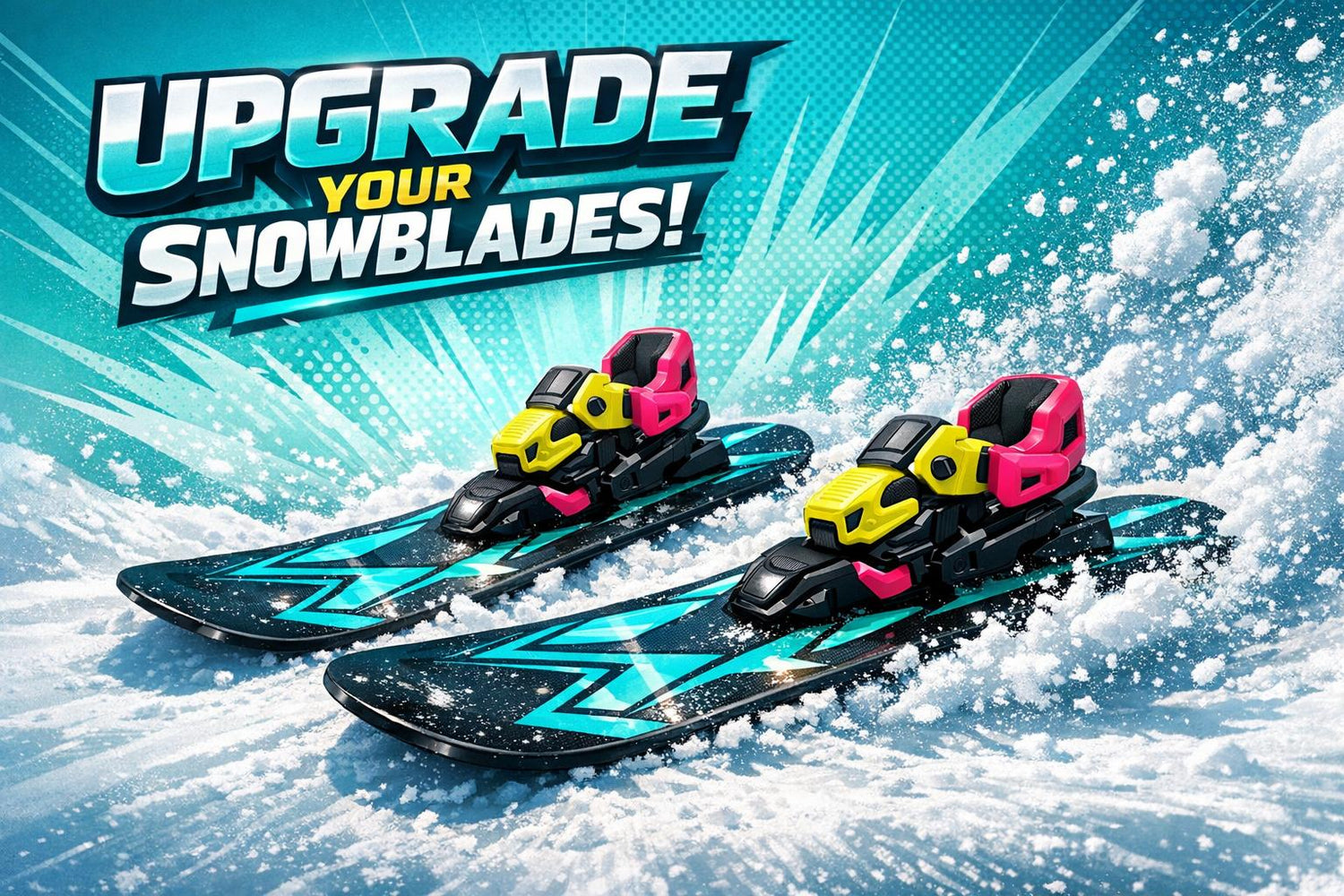
Looking to upgrade your snowblades for the 2026 season? Here’s the deal: shorter skis like Snowfeet* models (65–120 cm) are lighter, easier to handle, and a breeze to transport compared to long skis or snowboards. Whether you’re into quick turns, freestyle tricks, or carving through powder, there’s a Snowfeet* model for you.
Here’s a quick breakdown:
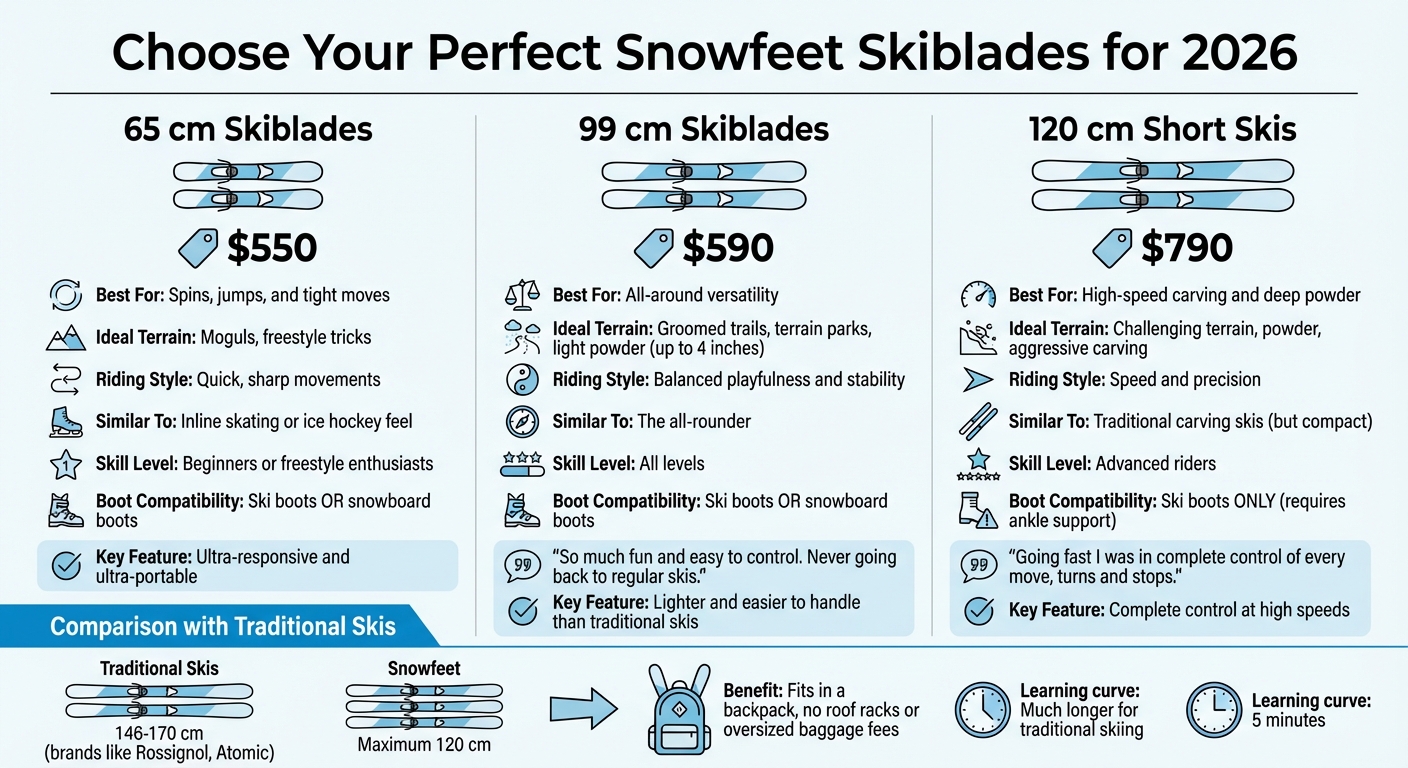
- 65 cm skiblades: Perfect for spins, jumps, and tight moves ($550).
- 99 cm skiblades: Great all-rounders for trails, parks, and light powder ($590).
- 120 cm short skis: Best for high-speed carving and stability in deeper snow ($790).
To get the most out of your gear, check your edges, bindings, and boots. Upgrade to modern bindings like the Pro X for durability, and consider snowboard boots for comfort or ski boots for precision. Daily maintenance (waxing, drying, and edge checks) will keep your blades in top shape all season.
Want to ditch bulky skis and oversized baggage fees? Snowfeet* skiblades fit in a backpack and are ready to hit the slopes in minutes. Let’s make this your best winter yet!
Evaluating Your Current Snowblades
What to Check on Your Current Snowblades
Let’s start with the edges. If they’re dull or showing rust, it’s time to sharpen them up. Sharp edges are key for gripping icy terrain and staying in control.
Next, take a look at the base. If waxing doesn’t stop snow from sticking, your base material - often fiberglass - might be damaged and need replacing.
Check your bindings too. Look for frayed straps or loose screws. Bindings generally last 8 to 10 years, but straps tend to wear out sooner. And don’t forget about boot compatibility. If you’re still using those stiff, old-school plastic ski boots, you’re missing out on the comfort of snowboard boots or other modern options.
Lastly, think about the length and stability of your blades. If they feel unstable at high speeds or sink in powder, it could mean they’re not the right length or material for your current skill level. Upgrading to a wood core model from a basic fiberglass option can make a big difference in stability and overall performance.
Spotting these issues will help you decide when it’s time to upgrade.
When You Need to Upgrade
If your edges are beyond sharpening, it’s a clear sign your snowblades are past their prime. Heavy, unresponsive gear is another major cue that it’s time to move on.
Pay attention to how your blades handle different terrain. Sinking in soft snow? That’s a sign they lack enough surface area for proper flotation. Struggling with quick turns or tricks? Your blades might be too long or too heavy for your style. And if your boots feel outdated and uncomfortable, it’s time to rethink your binding setup.
Bulky, outdated gear can sap the fun out of your time on the mountain. Modern short skis are lighter, reduce fatigue, and open up more possibilities for enjoying your runs.
How Snowfeet* Compares to Traditional Skis and Snowboards

Snowfeet* offers a whole new level of portability and agility that traditional skis just can’t match. While brands like Rossignol or Atomic make skis that range from 146 to 170 cm, Snowfeet* tops out at just 120 cm. That means you can toss them in a backpack instead of wrestling with roof racks or paying oversized baggage fees.
Maneuverability is where Snowfeet* really shines. They let you make quick turns, carve through tight moguls, and navigate busy slopes with ease - something that’s much harder to do with longer skis.
Another big perk? Boot flexibility. Traditional skis often lock you into stiff plastic boots, but Snowfeet* works with ski boots, snowboard boots, or even sturdy winter shoes. That means you can focus on comfort without giving up performance. Plus, most riders get the hang of Snowfeet* in just five minutes - way faster than the learning curve for traditional skiing.
These differences show why Snowfeet* stands out as a smarter, more versatile choice compared to traditional gear.
Ultimate Short Skis 🎿 Snowfeet* Skiblades 99 CM
Selecting Your Snowfeet* Skiblades for 2026
Snowfeet Skiblades Comparison Guide: 65cm vs 99cm vs 120cm Models
Picking the right skiblades is all about matching your gear to your riding style and the terrain you want to tackle. Unlike brands like Rossignol or K2, which focus on body measurements to determine ski length, Snowfeet* puts the spotlight on how and where you ride. With thousands of riders singing their praises, Snowfeet* offers three main skiblade lengths - 65 cm, 99 cm, and 120 cm - each designed for a specific experience. Let’s break down what makes each one special.
Snowfeet* Skiblades 65 cm
If you’re into quick, sharp moves and love the feel of inline skating or ice hockey, the 65 cm skiblades are your match. These are built for tight spins, jumps, and moguls, offering a level of agility that traditional skis can’t touch. Their shorter length means they’re ultra-responsive but require a bit of balance finesse. Starting at $550, they’re great for beginners or anyone transitioning from skating sports. Plus, they’re super portable and perfect for freestyle tricks.
Snowfeet* Skiblades 99 cm
Think of the 99 cm skiblades as the all-arounder of the lineup. They’re versatile enough for groomed trails, terrain parks, and even light powder (up to 4 inches). This model strikes a balance between the playfulness of shorter blades and the stability needed for carving and speed. One happy rider summed it up perfectly:
"These skiblades are so much fun and easy to control. Never going back to regular skis." - Andrew B.
Priced at $590, the 99 cm skiblades are lighter, easier to handle, and more portable than traditional skis, making them a hit with riders of all skill levels.
Snowfeet* Short Skis 120 cm
For those craving the feel of traditional carving skis but in a more compact size, the 120 cm short skis are the way to go. They shine when it comes to high-speed stability and powder performance, while still being nimble enough for aggressive carving. Riders rave about the control they offer:
"Going fast I was in complete control of every move, turns and stops." - Daniel Siouffi
At $790, these skis are designed for advanced riders tackling challenging terrain. Unlike the 65 cm and 99 cm models, which work with both ski boots and snowboard boots, the 120 cm skis require ski boots for the extra ankle support needed at higher speeds. If you’re looking for confidence and precision on the slopes, this is your go-to for the 2026 season.
sbb-itb-17ade95
Upgrading Bindings, Boots, and Accessories
Snowfeet* Binding Systems
Snowfeet* offers three binding options that outshine traditional ski bindings in terms of flexibility and ease of use. Here's the breakdown: the Basic model is budget-friendly and fits most boots, the Standard adds an extra strap for larger boots and is the most popular choice, while the Pro X is built for durability and features easy adjustability for a snug fit. Unlike the bulky release bindings you'd find on skis from brands like Rossignol or Atomic, Snowfeet* bindings let you pick based on your riding style.
For shorter models, non-release bindings are a lightweight, tool-free option. They're also easier on the wallet and include safety leashes, but they work best for skis under 100 cm since they don't release during falls. If you're into high-speed carving with longer models, go for regular release bindings. While they’re heavier and cost more, they’re available for the 99 cm and 120 cm models. Keep in mind, the 120 cm models work best with ski boots for proper ankle support.
"If you prefer ski boots and don't plan on winning the Super G slalom, these simple [non-release] bindings are good enough for you." - Snowfeet Team
Snowfeet* snowboard bindings are another standout feature. They're designed to be less bulky than standard snowboard bindings from brands like Burton or Ride. With an anti-slip surface, they keep you securely in place, making them ideal for tricks and terrain parks where flexibility is key.
Boot Options for Your Setup
Once you've upgraded your bindings, the next step is picking the right boots to match. The boots you choose have a big impact on your skiblade performance. For comfort and convenience, snowboard boots are a great choice. They're flexible, easy to walk in, and perfect for jumps or casual resort exploration - they won’t leave your feet aching like ski boots can. On the other hand, ski boots offer unmatched stability and precision for fast, aggressive riding, though they’re not exactly comfortable when you're off the slopes.
For the original Snowfeet* models (38 cm and 44 cm), high-quality waterproof winter shoes are a solid option. They’re great for hiking or sledding as long as they provide solid ankle support.
"I love how easy it is to put snowboard boots on and walk with them, they don't hurt like ski boots, and I feel more flexible during the ride." - Snowfeet Team
Snowfeet* bindings accommodate US sizes 6–13 for snowboard boots and US 4.5–14.5 for ski boots. If your feet are on the smaller side, snowboard boots tend to offer a more secure fit than winter shoes.
Accessories You Need
To get the most out of your upgraded bindings and boots, a few accessories can make a world of difference. The top three essentials are liquid wax ($29), edge sharpening stones ($15), and replacement straps (starting at $12). Waxing daily keeps your ride smooth and prevents sticking, while sharpening the edges pre-season (and as needed) improves grip.
Replacement straps are a lifesaver if you need to fine-tune the fit for larger snowboard boots or replace worn-out parts to keep your bindings secure. After each session, dry the metal edges to prevent rust, and before storing them for the off-season, give them a quick wipe with oil.
With over 5,500 verified reviews averaging 4.9 out of 5 stars, Snowfeet* riders consistently rave about how these simple upgrades can transform their experience. Compared to the high-maintenance routines of traditional long skis, these enhancements make for a hassle-free, enjoyable season on the slopes.
Maintaining Your Snowfeet* Skiblades for the 2026 Season
Want to keep your Snowfeet* skiblades in top shape for the 2026 season? A little care goes a long way. Here’s how to keep them performing like new.
Pre-Season Setup
Before hitting the slopes, give your skiblades a thorough check-up. Look for deep scratches, core shots, or any signs of oxidation on the bases. Got major gouges? Fix them right away to avoid water damage. Use a citrus-based cleaner to remove dirt, then do a hot wax scrape to clean off any leftover residue.
When waxing, choose an all-temperature ski wax that works for U.S. resort conditions (10–32°F). Use a waxing iron (not a household one - those can get too hot and ruin your base) and set it to the wax manufacturer’s recommended temperature. Once the wax cools, scrape it off from tip to tail with a plastic scraper, then brush with nylon or horsehair to open up the structure for a smoother glide. If your edges are looking rusty or dull, a shop tune-up can restore them to their original sharpness, giving you better control on the slopes.
Once you’ve set everything up, you’re good to go. Just keep up with regular maintenance to keep your gear running smoothly.
Regular Maintenance During the Season
Taking care of your skiblades daily will keep them performing their best all season long. After each day on the snow, dry them thoroughly - especially the edges and screws - to avoid rust. Store them in a dry, room-temperature spot overnight to prevent any damage or delamination.
Do a quick once-over after every use. Check for scratches or dings on the base and edges, and make sure the mounting screws are still tight. Reapply wax every 3–5 days you’re on the snow - or even sooner if you’re riding on the abrasive, man-made snow found at many resorts. If you hit ice or rocks, use a gummy stone or fine diamond stone to smooth out any burrs on the edges. This keeps your edge grip reliable, especially on hardpack.
If you’re into park riding, pay extra attention to the edges around the tips and underfoot. Cracks or compressed edges can sneak up on you, so catch them early and get them fixed before they worsen. For minor base scuffs, a quick buff with a Scotch-Brite pad or fine sandpaper followed by waxing should do the trick. Got a bit of rust on the edges? A gummy stone can take care of that before it spreads.
Off-Season Storage
When the season wraps up, it’s time to prep your skiblades for hibernation. Start by cleaning off dirt, salt, and slush with warm water, then dry them completely. Apply a thick “storage coat” of hot wax to protect the base from air and humidity. Lightly detune any sharp burrs on the tips and tails to avoid accidental cuts or snagging during storage. Loosen binding straps and reduce spring tension slightly to prevent stress on the plastic and springs.
Store your skiblades in a cool, dry, and shaded spot - skip the hot attic or damp garage. Keep them off bare concrete by using a rack, wooden blocks, or shelves to avoid moisture seeping into the edges. For extra protection, use ski sleeves or a padded bag to shield the topsheets and bindings from scratches and dust. If you’re storing them with other gear, secure the skiblades with a light rubber band or Velcro strap, keeping the bases facing each other and the edges covered by the wax coat.
With these steps, your Snowfeet* skiblades will be ready to shred when the snow falls again!
Conclusion
Switching to Snowfeet* skiblades for the 2026 season means leaving behind bulky gear that holds you back. With over 50,000 riders worldwide and more than 5,500 verified reviews averaging 4.9/5 stars, it’s clear that sometimes, shorter really is better.
Whether you’re eyeing the agile 65 cm model for tricks and jumps, the versatile 99 cm for smooth carving, or the 120 cm model for an all-around skiing adventure, each option offers a lighter, more responsive, and more portable alternative to traditional skis. The convenience factor is huge - these skiblades fit right into a backpack, making transport a breeze. And if you go for the snowboard binding models, you can finally say goodbye to stiff, uncomfortable ski boots. Most users pick up the technique in just five minutes, so you’ll spend less time learning and more time tearing up the slopes.
The feedback says it all - riders love the control and fun that Snowfeet* brings to their winter adventures. With competitive pricing and glowing reviews, upgrading your gear has never been easier.
Explore the full range of Snowfeet* products and find your perfect match for the 2026 season. Once you experience the freedom and fun of skiblades, those long, cumbersome skis will be a thing of the past. It’s time to redefine how you hit the slopes!
FAQs
Why should I choose Snowfeet* skiblades over traditional skis for the 2026 season?
Snowfeet* skiblades are a game-changer for the 2026 season, offering a lightweight, compact alternative to traditional skis. With lengths of 65 cm, 99 cm, and 120 cm, they’re incredibly portable - no need for roof racks or bulky gear storage. Plus, their design makes quick, intuitive turns and stops a breeze, which is perfect for beginners and freestyle enthusiasts alike.
Packed with smart features like adjustable bindings, reinforced edges, and vibration-dampening cores, Snowfeet* skiblades deliver impressive edge control, reduce fatigue, and provide a smoother ride. Their compact size shines in tight spaces, park features, and powder, giving you the kind of flexibility that traditional skis just can’t match. Whether you’re carving up the slopes, tackling off-piste terrain, or hitting the park, Snowfeet* skiblades bring agility, convenience, and top-tier performance to every adventure.
How do I choose the right Snowfeet* skiblade length for my skiing style?
Choosing the right Snowfeet* skiblade length comes down to your height, weight, and how you like to ski. Let’s break it down:
- Freestyle or playful riding: Go for the 65 cm (about 26 in) skiblades. These are great for quick turns, park tricks, and are super beginner-friendly thanks to their easy maneuverability.
- All-mountain versatility: The 99 cm (about 39 in) skiblades are a solid choice for intermediate riders tackling mixed terrain. They strike a nice balance between stability and agility.
- High-speed carving: If you’re an advanced skier aiming for speed and smooth, long turns, the 120 cm (about 47 in) skiblades deliver excellent carving performance.
Not sure which size to pick? Here’s a tip: shorter blades are more agile, while longer ones give you better stability. If you’re still undecided, try them out on a gentle slope first - this way, you can see how they feel and make sure they suit your style before committing to a full day of shredding.
What are the key steps to maintain my Snowfeet* skiblades for peak performance?
To keep your Snowfeet* skiblades in top shape and ready for action, follow these straightforward tips:
- Clean and inspect after every use: After hitting the slopes, give your skiblades a quick wipe with a damp cloth to remove dirt, salt, and grit. Make sure they’re completely dry to avoid rust forming on the edges or bindings. Check the base for any scratches and the edges for burrs - fix any damage right away to keep your rides smooth.
- Sharpen and wax as needed: Keep the edges sharp for better grip, especially if you’re dealing with icy conditions. Plan to sharpen them every 5–10 rides or sooner if needed. For waxing, it depends on how often you ride: occasional users can wax 1–2 times per season, while regular riders should aim for every 4–6 sessions. If you’re a heavy user, wax after each day on the slopes. Use a universal wax for most conditions, or pick a temperature-specific wax if you’re dealing with extreme cold.
- Store them the right way: When the season’s over or you’re taking a break, store your skiblades in a cool, dry, and dark spot. Loosen the bindings to relieve pressure, and either stand them upright or lay them flat - just avoid putting pressure on the camber. A layer of storage wax on the base and edges will protect them until your next adventure.
Thanks to their compact size, Snowfeet* skiblades are a breeze to maintain and store. That means less hassle for you and more time to enjoy carving up the slopes!












Leave a comment
This site is protected by hCaptcha and the hCaptcha Privacy Policy and Terms of Service apply.