



















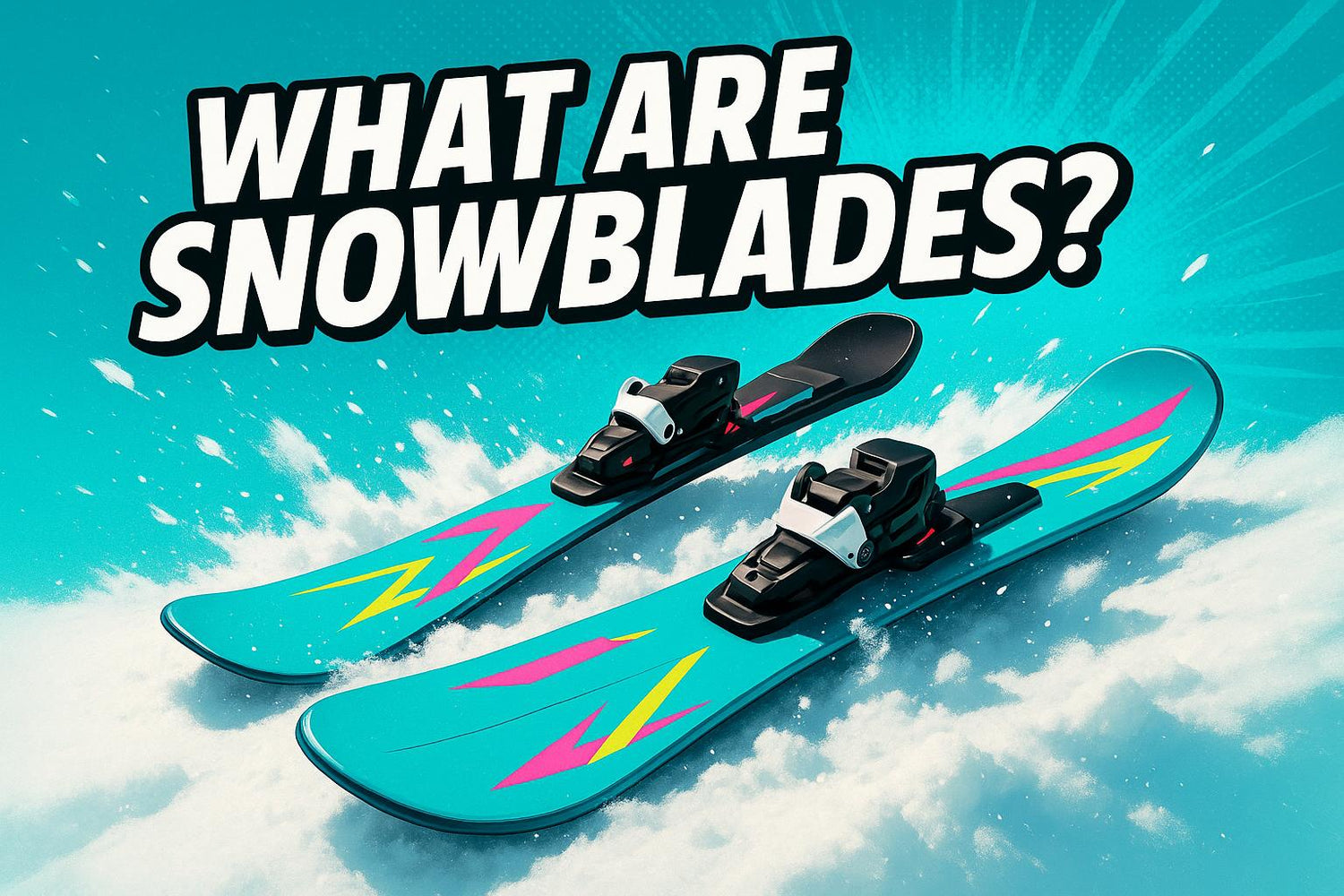
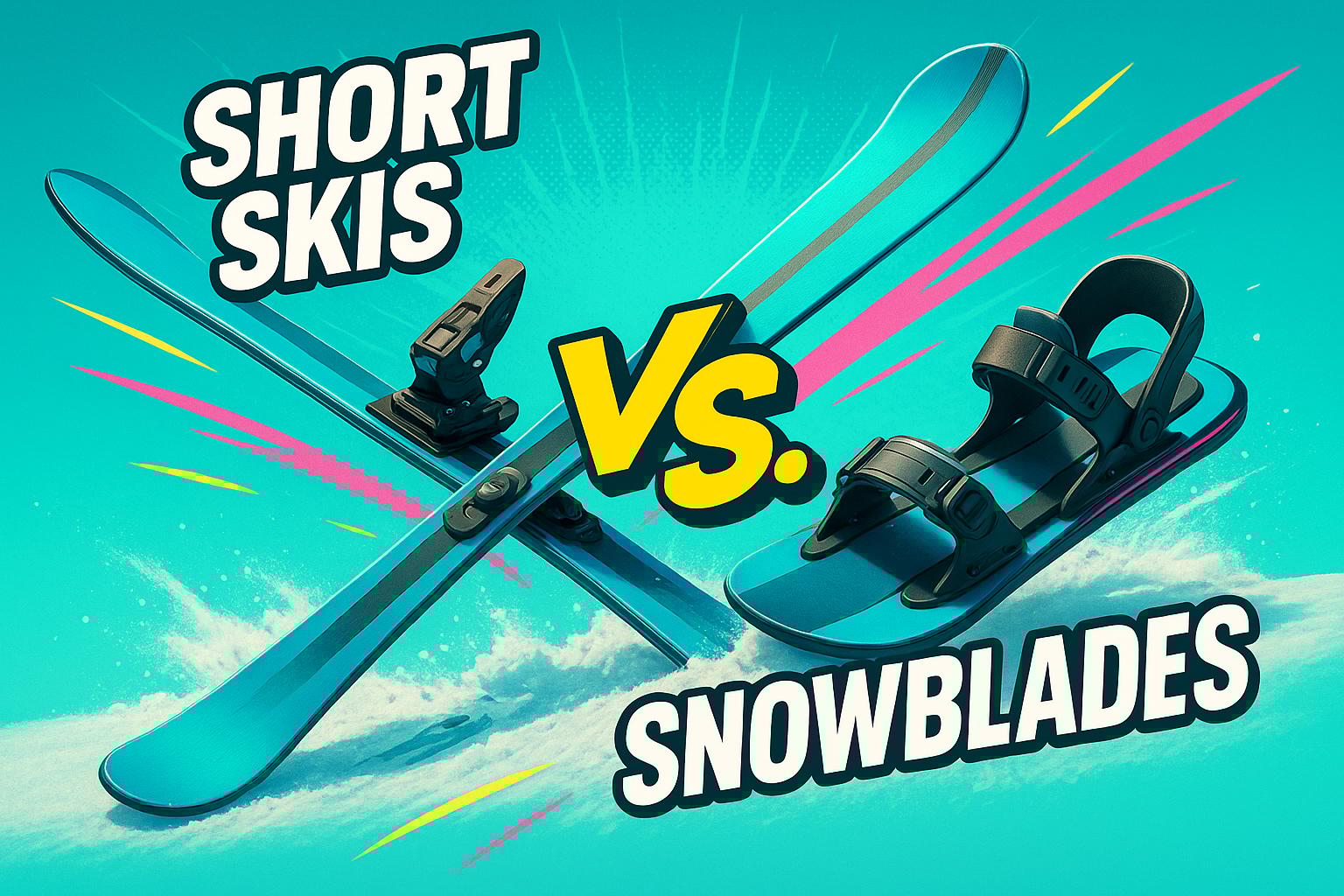
Snowblades, also called skiboards or mini skis, are short, lightweight skis (26–47 inches long) designed for fun, agility, and ease of use. Perfect for beginners and experienced skiers alike, they’re making a big comeback in 2026 thanks to their portability, affordability, and versatility on the slopes. Snowfeet*, a leading brand, offers models starting at $250, with options for different skill levels and terrains.
Here’s the quick rundown:
- Lengths: 26", 39", and 47" for different riding styles.
- Bindings: Compatible with ski, snowboard, or winter boots.
- Best For: Quick turns, tricks, and casual skiing.
- Price Range: $199–$790.
Snowblades are easier to control, require less gear, and fit in a backpack, making them a great alternative to longer skis. Whether you’re hitting groomed runs, terrain parks, or light powder, they’re all about making skiing simple and fun.
Ready to learn more? Let’s dive in!
Features and Benefits of Snowblades
Design and Construction
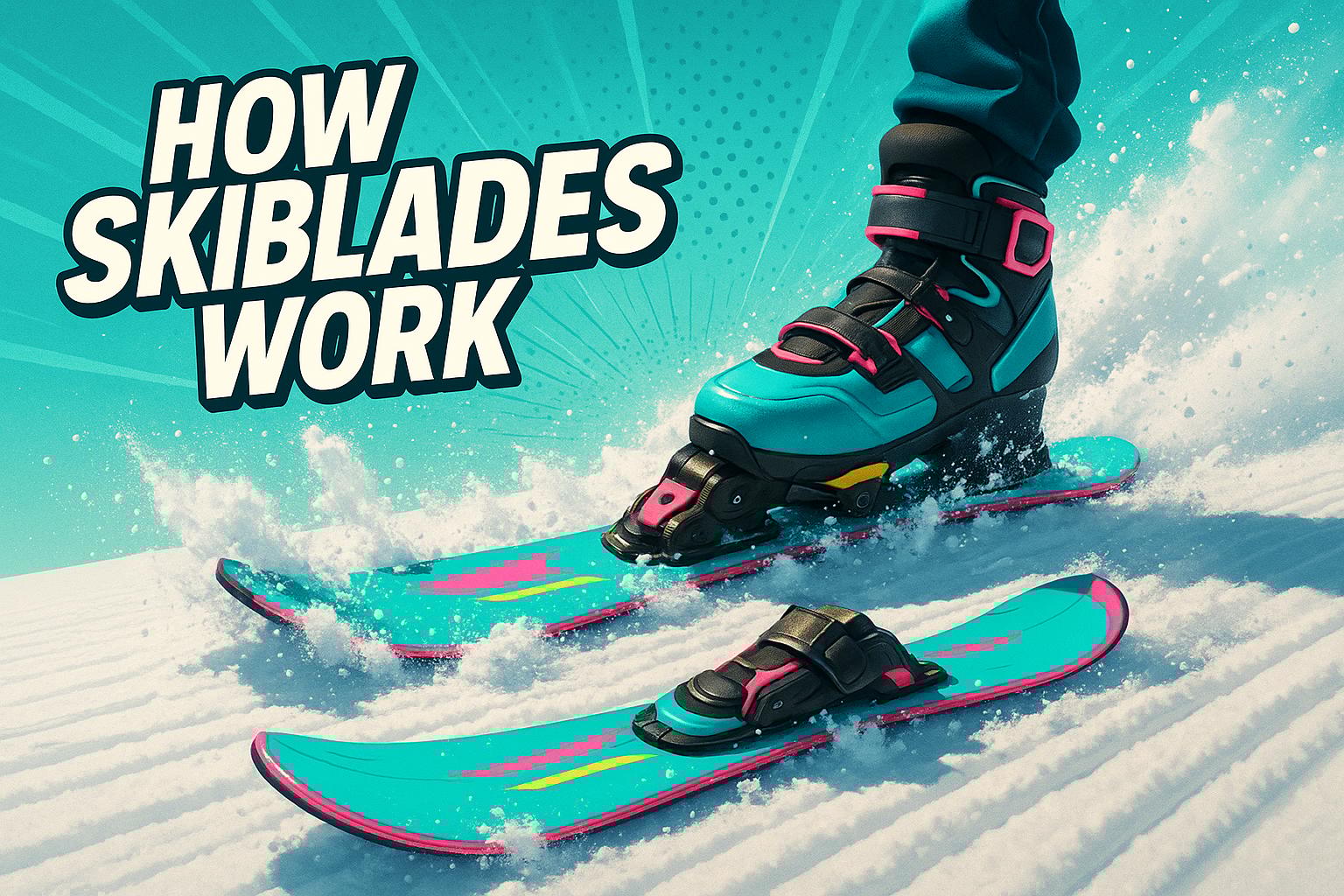
Since their big comeback in 2026, Snowfeet* skiblades have been turning heads with their smart design and tough build. Snowfeet* has carved out a niche in the market with compact skiblades that feature metal edges for excellent grip on icy surfaces. Made from top-notch materials, these skiblades are built to last. Each pair is handcrafted using certified sustainable wood, paired with graphite-capped cores and reinforced layers to handle everything from terrain parks to rugged backcountry trails. According to the company, their skiblades are "almost indestructible", which is a bold claim but one that speaks to their commitment to durability.
Snowfeet* offers a range of sizes and designs to fit different needs. Their compact mini ski skates, measuring about 15 inches (38 cm), are small enough to fit in a backpack, making them incredibly portable. On the other hand, their longer skiblades, stretching up to 47 inches (120 cm), are perfect for floating through powder. The wood core models come pre-waxed, just like traditional skis, while fiberglass-reinforced versions can benefit from an extra waxing session for better speed and glide.
Bindings and Boot Compatibility
One of the standout features of Snowfeet* skiblades is their versatile bindings, which work with ski boots, snowboard boots, and even standard winter boots. Many models are equipped with traditional ski bindings, making them a breeze to pair with your regular ski boots. For snowboarders, Snowfeet* has designed specialized bindings that are adjustable to fit all snowboard boot sizes. These bindings aren’t just practical - they’re also designed with an anti-slip surface to keep your boots securely in place. This versatility ensures a snug fit and better control, giving you the confidence to tackle any slope.
Performance and Learning Curve
Snowfeet* skiblades shine when it comes to performance and ease of use. Thanks to their shorter length, they’re lighter and more maneuverable, making them perfect for beginners who want to quickly get the hang of turning, balancing, and controlling their speed. But they’re not just for newbies - experienced riders will appreciate the playful, dynamic feel these skiblades bring to the slopes. Whether it’s making sharp, tight turns or navigating crowded terrain parks, Snowfeet* skiblades deliver a smooth and responsive ride that keeps things fun and exciting.
Snowboarder tries Snowfeet* | Which Snowfeet* Short Ski is the Best? | Snowblades 44, 65, 99 Review
How to Choose the Right Snowblades
Snowblades Size Comparison Guide: 65cm vs 99cm vs 120cm
Choosing the Right Length
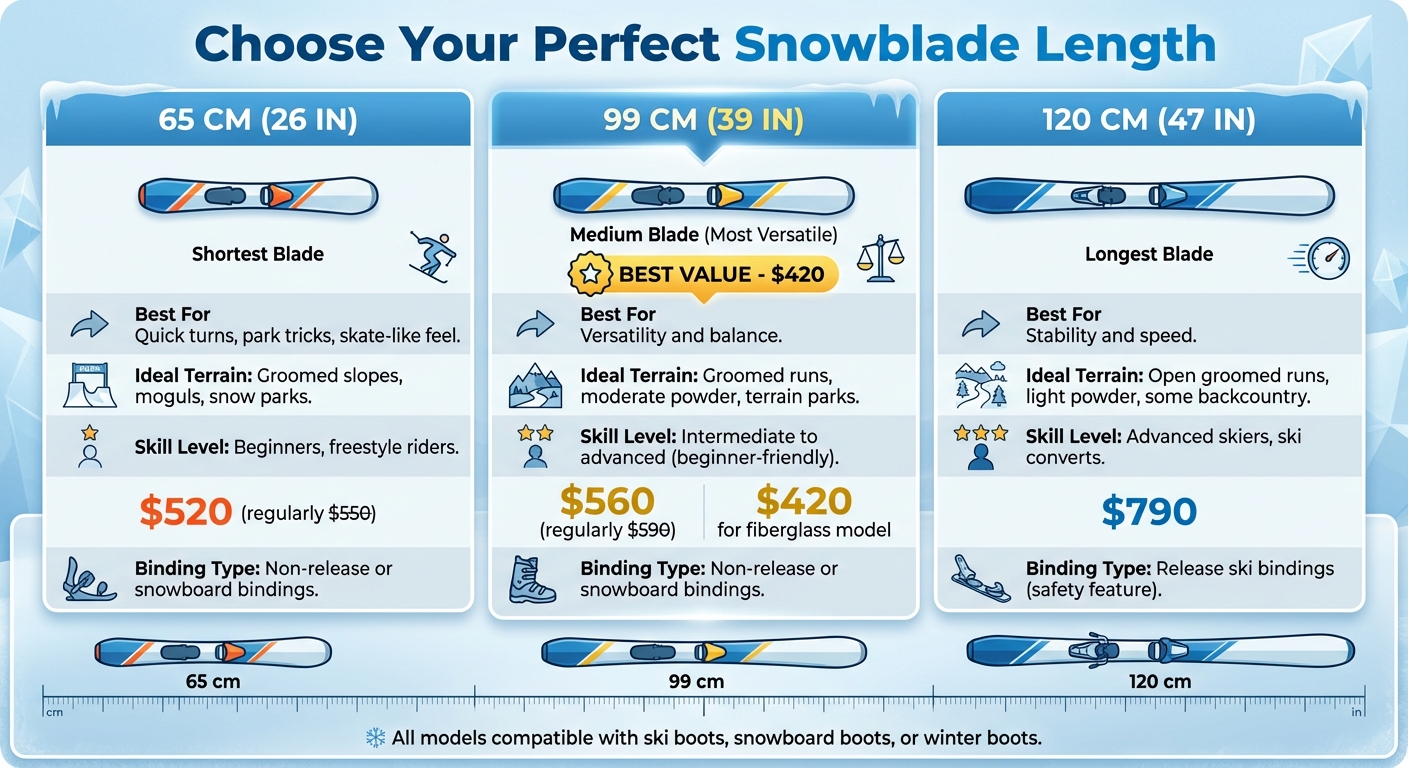
The length of your snowblades plays a big role in how they perform, especially when it comes to turning speed and stability. Snowfeet* offers three main lengths: 65 cm (26 in), 99 cm (39 in), and 120 cm (47 in). Each is tailored to specific riding styles and skill levels.
- 65 cm (26 in): Perfect for beginners and park riders, these shorter blades are super agile and give off a skate-like vibe. They're a dream for groomed slopes, tight tree runs, moguls, and snow parks - basically anywhere that quick turns and tricks are the name of the game.
- 99 cm (39 in): If you're looking for a balance between control and stability, this is your sweet spot. These are great for groomed runs, moderate powder, and terrain parks. They suit intermediate to advanced skiers but are also forgiving enough for beginners who need a bit more support.
- 120 cm (47 in): Designed for advanced skiers or those transitioning from traditional skis, these longer blades offer more stability, better control at higher speeds, and improved performance in light powder.
Here’s a quick breakdown to help you decide:
| Snowblade Length | Best For | Ideal Terrain | Skill Level |
|---|---|---|---|
| 65 cm (26 in) | Quick turns, park tricks, skate-like feel | Groomed slopes, moguls, snow parks | Beginners, freestyle riders |
| 99 cm (39 in) | Versatility and balance | Groomed runs, moderate powder, terrain parks | Intermediate to advanced (also beginner-friendly) |
| 120 cm (47 in) | Stability and speed | Open groomed runs, light powder, some backcountry | Advanced skiers, ski converts |
Once you’ve chosen the right length, the next step is finding the right bindings and boots.
Selecting Bindings and Boots
Pairing your snowblades with the right bindings makes all the difference. Snowfeet* offers three types of bindings - release ski bindings, non-release bindings, and snowboard bindings - so you can pick what works best for your style, speed, and boots.
- Release ski bindings: These are designed to release your boot if you take a fall, reducing the risk of injury. They’re an essential feature for high-speed rides, which is why all 120 cm models come equipped with them.
- Non-release bindings: A simpler, more budget-friendly option, these are ideal for casual riders sticking to moderate speeds on gentler slopes. You’ll find these on the 65 cm and 99 cm models.
- Snowboard bindings: If you prefer soft boots, these bindings are a great fit. They’re adjustable, comfortable, and compatible with all snowboard boot sizes. Plus, they feature anti-slip surfaces to keep your boots secure. These bindings are available for the 65 cm and 99 cm models.
Budget and Sizing Tips
Here’s a look at the pricing for Snowfeet* models:
- Snowfeet 50 CM Ski Skates: $199 (regularly $250)
- 100 CM Skiblades with Fiberglass Flex Core: $420 (regularly $450) – Best Value
- 65 cm Skiblades: $520 (regularly $550)
- 99 cm Skiblades: $560 (regularly $590)
- 120 cm Short Skis: $790
The type of bindings you choose will also impact the total cost. Non-release bindings are the most budget-friendly, while release ski bindings cost more due to their added safety features. Snowfeet*'s snowboard bindings sit somewhere in the middle, offering a versatile and adjustable option.
As one reviewer put it, these skiblades are "far more portable and affordable than traditional skis or snowboards".
Now that you know how to pick the right snowblades, bindings, and boots, you’re all set to hit the slopes with confidence!
sbb-itb-17ade95
Snowblades vs. Traditional Skis and Snowboards
Performance and Terrain Comparison
Snowblades and traditional skis bring very different vibes to the slopes. Long skis (typically 150–200+ cm) are all about stability, smooth carving, and handling deep powder like a pro. They shine in backcountry terrain and advanced techniques, making them the go-to for seasoned skiers tackling challenging conditions. Snowblades, on the other hand, are all about fun and agility. They’re quick, easy to control, and perfect for groomed runs or terrain parks. The shorter length gives them a rollerblade-like feel, which can help reduce fatigue and make them super playful. But when it comes to deep powder, traditional skis still take the cake, thanks to their added length and better floatation. Each style has its strengths, depending on what kind of day you’re after on the mountain.
Travel and Storage Benefits
Snowblades, especially Snowfeet* skiblades, win big when it comes to portability. Traditional skis are, well, kind of a hassle - they’re long, heavy, and awkward to carry. Think crowded airports, tight lodge hallways, or lugging them through parking lots. Snowblades, being shorter and lighter, are a breeze to transport. They’re easy to carry around, store neatly in small spaces, and won’t leave you drained before you even hit the slopes. Whether it’s fitting them in your car trunk, under the bed, or in a closet, their compact design makes life simpler. Plus, they’re easier on your shoulders and arms during a long day of skiing. If portability matters to you, snowblades are hard to beat.
Cost and Gear Requirements
Let’s talk money and gear. Snowfeet* skiblades offer a more budget-friendly alternative to traditional skiing or snowboarding. High-quality snowblades are often cheaper to buy or rent than long skis.
As the Snowfeet Team says, "you can get the same experience as with long skis but for the cost of lighter and more enjoyable skiing".
Traditional skiing involves a lot of extras - poles, specialized boots, and pricey bindings. Snowblades cut down on all that. You don’t need ski poles, and they’re compatible with regular winter boots, snowboard boots, or even your existing ski boots. That flexibility means you’re not tied to expensive, specialized gear. Plus, Snowfeet* products are built with durable, lightweight materials, which can save you money on maintenance or replacements over time. Between the lower upfront costs, reduced gear needs, and sturdy construction, snowblades pack a lot of value into a smaller, simpler setup.
Using and Maintaining Snowblades
How to Ride Snowblades
Riding snowblades might look a little different than traditional skiing, but it’s surprisingly easy to pick up. Start by pushing your legs sideways, blending a skating motion with skiing. Need to slow down? Point the tips inward and press on the inner edges for smooth, controlled movement. Turning is all about shifting your weight - lean on the leg opposite the direction you want to go. Stopping? Think hockey stop: a sharp side turn with both snowblades does the trick.
If you’re just starting out, longer snowblades can give you extra stability. For example, Snowfeet* offers models at 99 cm and 120 cm, which are great for beginners or anyone who wants a steadier ride. Once you’re more confident, shorter blades, like the 65 cm version, are perfect for quick turns and tricks. The learning curve is gentle, making snowblades a fantastic option for beginners and older skiers looking for a simpler, more stable alternative to traditional skis. Just remember to focus on safety as you practice these moves!
Safety Considerations
Good news: most U.S. ski resorts are snowblade-friendly, especially if your blades have metal edges. That said, some resorts might ask for a retention device, like a leash, particularly if your snowblades use non-release bindings. It’s always smart to check the specific policies at your resort before heading out.
For added peace of mind, Snowfeet* equips their longer models (99 cm and 120 cm) with standard release bindings, which can improve both safety and control. And don’t forget to follow the National Ski Areas Association's "Your Responsibility Code." Key points? Stay in control, yield to others, and avoid stopping in spots where visibility is limited. Oh, and wear a helmet - it’s a simple step that can make a big difference. Studies show snowboarders face double the risk of head injuries compared to skiers (6.5 per 100,000 visits vs. 3.8 per 100,000 visits).
Care and Maintenance
Keeping your snowblades in top shape is straightforward and pays off in performance and durability. After each day on the slopes, give them a quick wipe with a damp cloth and make sure they’re completely dry before storing - this helps prevent rust. Take a look at the edges now and then; if they’re looking worn, it’s time for a tune-up.
For smooth gliding, apply hot wax evenly across the base. Let it sit for 5–10 minutes, then brush off any excess. You can handle basic maintenance at home with tools like a whetstone and edge sander, but an annual professional service is a great idea, too. Snowfeet* skiblades are built to last, but a little care goes a long way. At the end of the season, add a layer of wax before storing them in a dry spot, like a garage or closet. This simple step keeps them in great condition and makes them ready to go when winter rolls around again.
Conclusion
Snowblades are shaking up the world of winter sports in 2026. They’re lighter, easier to handle, and far more beginner-friendly than traditional skis or snowboards. Whether you’re new to the slopes, an older skier, or just someone looking for a more relaxed and playful ride, snowblades offer a fantastic option.
Snowfeet* snowblades come in three sizes - 65 cm, 99 cm, and 120 cm - each tailored for different needs, whether it’s pulling off tricks, enjoying versatility, or prioritizing stability. Their compact design fits neatly in a backpack, and with prices starting at $635, they’re a budget-friendly alternative to bulky ski gear. This combination of smart design and user-friendly features keeps Snowfeet* leading the charge in the snowblade trend.
With their reliable performance and low-maintenance design, Snowfeet* snowblades bring fun and freedom to your winter adventures. Whether you’re weaving through crowds, exploring the terrain park, or just trying something new, these snowblades are built to deliver - and to last.
FAQs
How are snowblades different from traditional skis?
Snowblades, often called skiblades or short skis, are much shorter than traditional skis, typically measuring between 65 cm and 120 cm. Thanks to their compact size and wider shape, they’re easier to handle, making turns and quick maneuvers a breeze. This makes them a great choice for beginners or anyone wanting a playful, laid-back experience on the slopes. Plus, they’re lightweight, great for tricks, and require less effort, which is perfect for casual, recreational skiing.
On the flip side, traditional skis are longer and narrower, designed for speed, stability, and more advanced techniques. They shine on challenging terrains, in deep powder, and during high-speed runs, making them the go-to for seasoned skiers. Snowfeet skiblades, in particular, are known for their simplicity and agility, offering beginners a fun and easy way to enjoy the slopes without the steep learning curve of traditional skiing.
How do I pick the right snowblade length for my experience level?
Choosing the right snowblade length comes down to your skill level and how you want to use them. Shorter snowblades (about 65 cm) are great for beginners or anyone who values easy handling and quick, sharp turns. On the other hand, if you're more advanced, love high speeds, or plan to take on powder, longer snowblades (99–120 cm) provide better stability and a smoother ride.
Snowfeet's snowblades strike a great balance between control and versatility, making them suitable for all skill levels. On top of that, their compact size makes them super convenient compared to traditional skis or snowboards.
Can snowblades handle deep powder snow?
Snowblades can handle deep powder quite well, particularly models like the Snowfeet Skiblades 99 POWDER. Their shorter length gives them solid flotation and makes them super agile in soft snow, offering great control even in powder up to 4 inches deep. Plus, they’re easier to maneuver than regular skis, adding a playful and lively feel to your ride through fresh snow.











Leave a comment
This site is protected by hCaptcha and the hCaptcha Privacy Policy and Terms of Service apply.