



















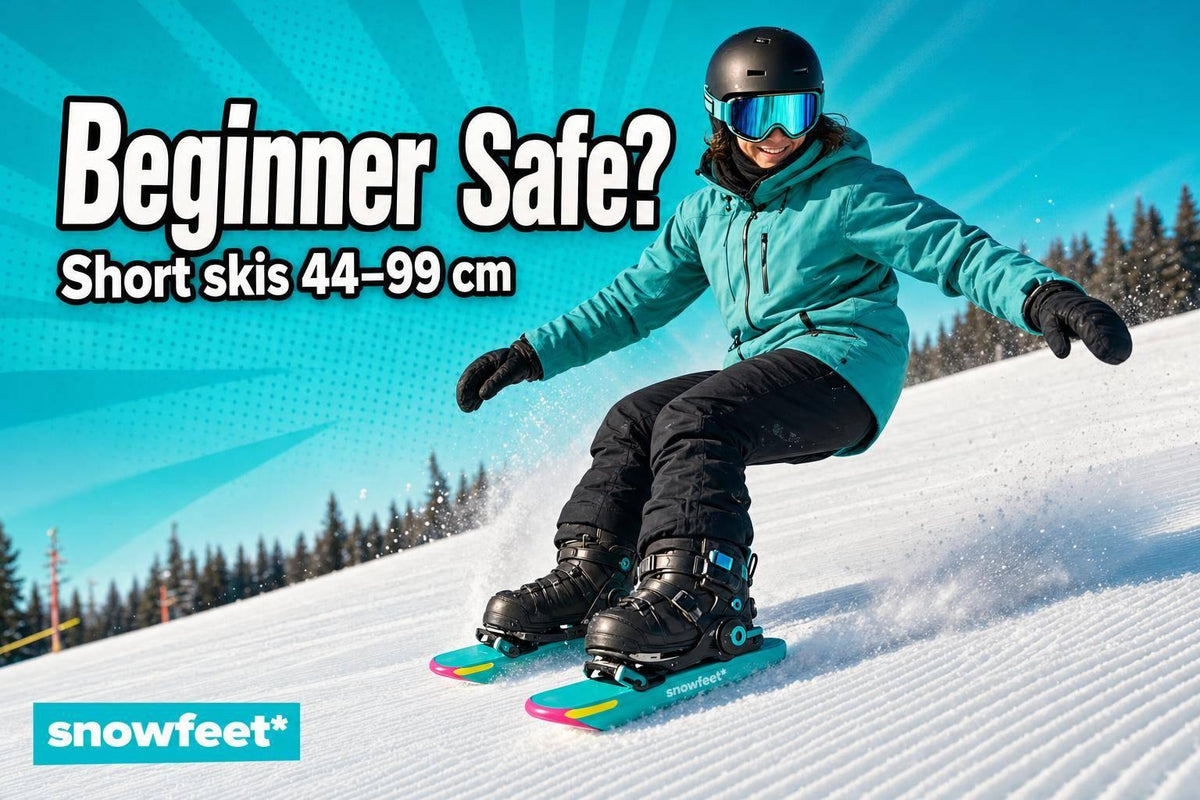
Yes - in most beginner cases, short skis are a safe pick. If you're on groomed green runs, keeping speed low, and learning the basics, shorter skis often feel less scary than full-size skis because they’re easier to turn, easier to stop, and less tiring on your legs.
Here’s the short version:
- 44 cm Skiskates: best if you already skate and have solid balance
- 65 cm Skiblades: best if you want a playful feel on groomed runs
- 99 cm Skiblades: best for most first-time riders who want more stability
- Short skis work best on bunny hills, green runs, and smooth snow
- Short skis are less safe at high speed, on ice, in chopped-up snow, and in deep powder
A few facts from the article stand out:
- The 44 cm model is about 17 inches long
- The 44 cm Skiskates handle light powder up to about 4 inches (10 cm)
- Compared with standard beginner skis at 140–160 cm, short skis in the 44–99 cm range are much easier to pivot
If I were helping a new skier in the shop, I’d put it like this: shorter skis give you more control at slow speed, but less calm when things get fast or rough. That’s the trade-off.
Are Short Skis Better for Beginners?
Quick Comparison
| Model | Best For | Feel | Main Watch-Out |
|---|---|---|---|
| Skiskates 44 cm | Skaters, hockey players, strong balance | Very nimble | Less room to recover from mistakes |
| Skiblades 65 cm | Beginners who want easy turns | Lively and light | Less stable than 99 cm |
| Skiblades 99 cm | Most first-time riders | More stable and forgiving | Not as nimble as shorter options |
So, if you want the safest starting point, I’d lean toward the 99 cm Skiblades. If you want max agility and already feel steady on your feet, the 44 cm or 65 cm options can make sense. Just keep the terrain mellow, wear a helmet, clip in the safety leashes, and don’t treat a green run like the X Games :)
Why Short Skis Often Feel Safer for Beginners
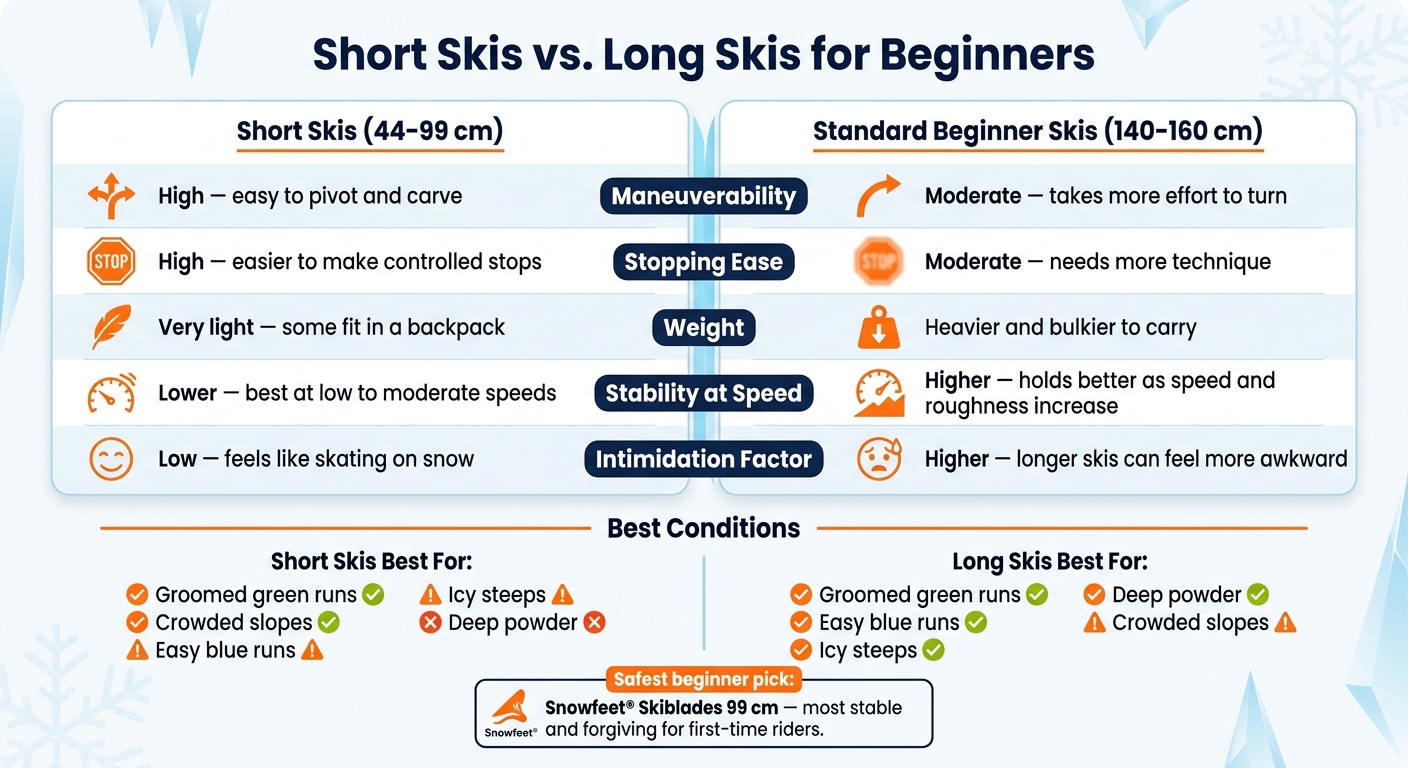
Short Skis vs Long Skis for Beginners: Safety & Performance Comparison
Short skis often feel safer because they’re easier to steer, slow down, and save when your balance shifts. That ease of control is a big reason they feel less scary on groomed beginner runs.
Easier Turning, Easier Stopping, Less Fatigue
A shorter ski has a smaller turning radius and less edge length to handle. So, changing direction takes less effort and less body movement than it does with longer skis. That makes quick turns easier. It also helps you dodge obstacles and get back in control when your stance slips out of place.
Stopping feels simpler too. Since there’s less ski on the snow, it’s easier to make short, controlled stops. And for beginners, that kind of control matters a lot on groomed runs. It’s also why Snowfeet* models can feel less intimidating than full-length skis for first-time riders.
Short skis are lighter than full-length skis, which helps more than people think. Your legs don’t tire out as fast, so you stay sharper for longer. Less fatigue can mean:
- better decisions
- fewer late-day falls
- less messy technique from tired legs
For lighter riders, that lower weight can make it easier to stay in control for more of the day.
Short Skis vs. Long Skis: Side-by-Side Comparison
For most beginners on groomed slopes, short skis are usually the easier pick.
| Feature | Short Skis (44–99 cm) | Standard Beginner Skis (140–160 cm) |
|---|---|---|
| Maneuverability | High - easy to pivot and carve | Moderate - takes more effort to turn |
| Stopping Ease | High - easier to make controlled stops | Moderate - needs more technique |
| Weight | Very light - some fit in a backpack | Heavier and bulkier to carry |
| Stability at Speed | Lower - best at low to moderate speeds | Higher - holds better as speed and roughness increase |
| Intimidation Factor | Low - feels like skating on snow | Higher - longer skis can feel more awkward |
That’s why Snowfeet*’s shorter models are often the easiest place for beginners to start. The tradeoff is speed and rough snow. Once things get faster, bumpier, or deeper, longer skis still do a better job.
Where Short Skis Require More Caution
Knowing the limits helps you stay safe. That’s the big thing here.
High Speed, Rough Snow, and Powder Are the Main Limits
Short skis feel easy and playful on mellow terrain. But that easy feel starts to fade when speed picks up or the snow gets messy.
As one buyer, Brad Tolin, put it:
"Only trade-off is at higher speeds, where longer skis still feel more stable - but for overall fun and maneuverability, these are hard to beat."
- Brad Tolin
That lines up with how short skis behave on snow. With less edge in contact with the ground, they can feel twitchier at higher speeds. On tracked-up snow, they tend to bounce off ruts instead of slicing through them. It’s a bit like driving a small cart over potholes. You’ll feel more of the terrain.
Powder is another limit. Less ski under your feet means less float. Snowfeet* says the 44 cm Skiskates work in light powder up to about 4 inches (10 cm), but deeper snow calls for a longer model.
Which Conditions Suit Short Skis and Which Suit Long Skis
| Condition | Short Skis (44–99 cm) | Long Skis |
|---|---|---|
| Groomed green runs | ✅ Ideal | ✅ Ideal |
| Easy blue runs | ⚠️ Workable with caution | ✅ Ideal |
| Crowded slopes | ✅ Ideal - easier to weave and stop | ⚠️ Workable |
| Icy steeps | ⚠️ Workable with caution | ✅ Better edge hold |
| Deep powder | ❌ Not the best beginner choice | ✅ Better float and stability |
So, short skis make the most sense at low speeds on smooth, groomed runs. As the snow gets faster, rougher, icier, or deeper, they give you less margin for error. That’s when setup starts to matter a lot more for your first ride.
sbb-itb-17ade95
How to Set Up Short Skis Safely as a First-Time Rider
Short skis are easier to learn on, but that doesn’t mean you can wing it. Safe setup still comes down to your bindings, boots, helmet, and the slope you pick. For a first-time rider, the safest setup is the one that fits both the person and the terrain.
Bindings, Boots, and Helmet Basics
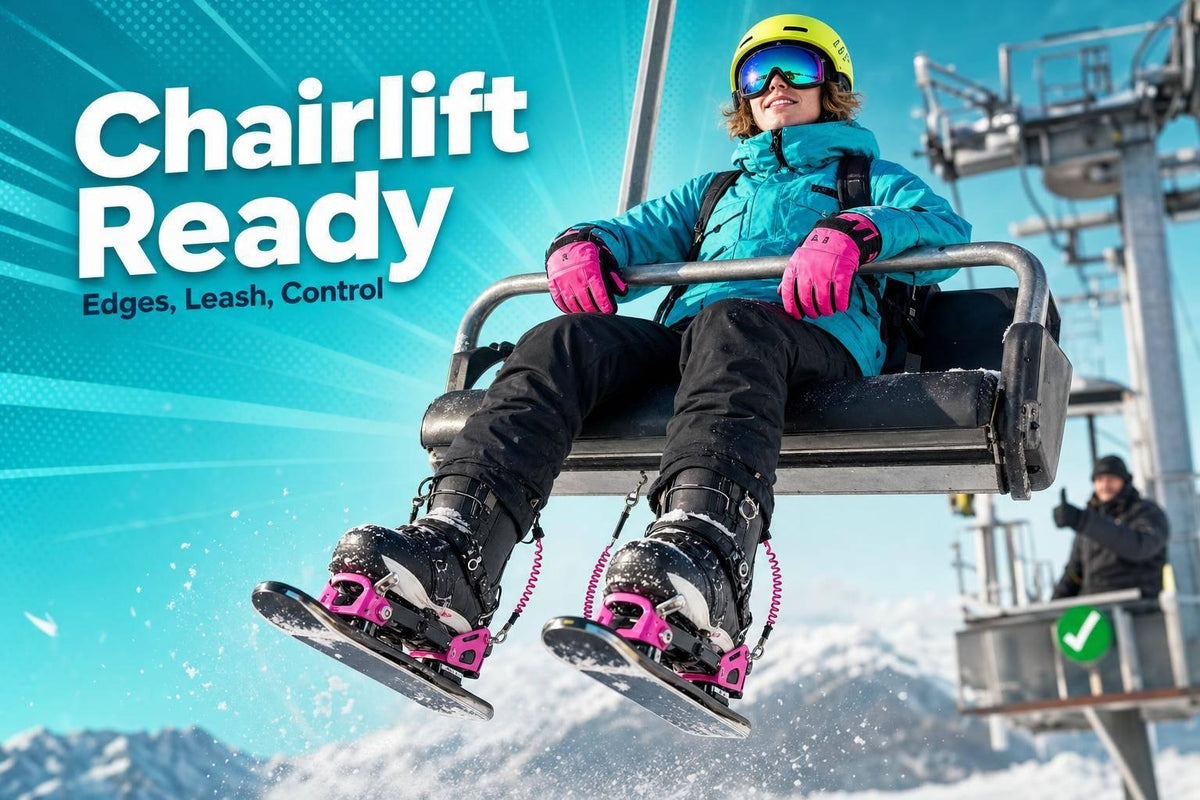
Snowfeet* models use non-release, tool-free adjustable bindings, so the included safety leashes matter - always clip them in before you start.
Your boots change how the ride feels. Snowfeet* fits standard ski boots and snowboard boots. Snowboard boots feel softer and more comfortable, while ski boots give more stability. If you want a more relaxed feel, snowboard boots are often the easier place to start. If you want firmer support, go with ski boots.
And yes, wear a helmet on every run. Every single one. Even on the bunny slope. That’s just smart skiing :)
Move from Flat Ground to Easy Green Runs
Start on flat ground first. Get used to gliding. Practice stopping. Then move up to wide, groomed green-circle runs.
That step-by-step path makes a big difference:
- Flat ground lets you get a feel for balance without much speed
- Easy green runs give you room to turn and slow down
- Wide, groomed snow is more forgiving than narrow or chopped-up terrain
With the setup right, the next decision is length: 44 cm, 65 cm, or 99 cm.
Best Snowfeet* Models for Beginners by Confidence and Terrain
Once you've sorted out bindings, boots, and where you'll ride, the next big safety call is length. This part matters more than people think. Pick a length that matches your balance and the terrain you plan to ride. Pick the wrong one, and day one can feel a lot tougher than it needs to.
Snowfeet* Skiskates 44 cm: Best for Short Slopes and Low-Speed Learning
At 17 inches long, the Skiskates 44 cm are the shortest and most maneuverable Snowfeet* model.
They move edge to edge fast. So if you already ice skate, play hockey, or inline skate, this model can feel pretty natural right away. On short green slopes and groomed beginner runs, they're easy to turn and stop.
But here's the catch: that quick, snappy feel helps most when you already have decent fore-aft balance. With a shorter platform under your feet, small mistakes show up fast. In plain English, they don't give you as much room to recover.
So, the 44 cm model is best for beginners who:
- already skate
- have strong balance
- want the most agile feel
If you want max agility and you're steady on your feet, this is the one.
Snowfeet* Skiblades 65 cm vs. 99 cm: Which One Fits Most New Riders?
For most U.S. resort beginners, the main choice is 65 cm or 99 cm. Both are easier to learn on than long skis, but they don't feel the same on snow.
The 65 cm Skiblades feel more playful and agile. They're a good pick for groomed trails and for riders who want a lively, quick feel underfoot.
The 99 cm Skiblades feel more stable and more forgiving for true beginners. They also have a deeper curve for easier carving, which helps on longer groomed resort runs. If this is your first time, 99 cm is the safest place to start.
That makes 99 cm the safest Snowfeet* starting point for most first-time riders. It’s the model that gives new riders a bit more calm underfoot, which, honestly, can save a lot of awkward first-run moments :)
| Skiblades 65 cm | Skiblades 99 cm | |
|---|---|---|
| Stability | Medium | High |
| Stopping | Easy | Easy |
| Ideal Terrain | Groomed slopes | Groomed resort runs |
| Best For | Agile, casual riders | First-time riders wanting maximum stability |
That sets up the final takeaway on which short ski fits your first day best.
Conclusion: Short Skis Are Safe When the Model Matches the Rider
Short skis are generally safe for beginners on groomed green runs at controlled speeds. They’re easier to turn and stop than full-length skis, but they give up some stability and float in rough or deep snow.
So, the right pick comes down to one thing: how much stability you want underfoot. Match the model to your skill, balance, and terrain:
- Snowfeet* Skiskates 44 cm - best for very short slopes and low-speed learning
- Snowfeet* Skiblades 65 cm - best for beginners who want quick turns on groomed resort terrain
- Snowfeet* Skiblades 99 cm - best all-around beginner choice for steady progress on groomed terrain
Put simply, Snowfeet* gives beginners an easy path from first turns to confident control. That’s the trade-off: short skis favor control and ease at low speed, while long skis still win on stability as speed goes up. Stay on groomed runs, wear a helmet, and match ski length to your balance and terrain.
FAQs
Do short skis help reduce falls for beginners?
Yes - short skis can help cut down on falls for beginners because they feel less intimidating and easier to handle. Their shorter length makes Snowfeet skis easier to maneuver than long skis, which can feel clunky and more likely to have the tips cross.
They also make turning and stopping easier, which helps new riders keep control on groomed green and blue runs. And because they take less effort to steer, they can ease leg fatigue too. That matters, because tired legs often lead to sloppy moves and wipeouts.
Can I use short skis for my first ski lesson?
Yes. Short skis are often a better pick for beginners than long, standard skis. They’re easier to turn, lighter to carry, and feel less scary on the snow.
For a first lesson, Snowfeet Skiblades 65 cm* are a strong place to start. They give you a nice mix of stability and easy turning on groomed green runs. If you want a bit more stability, 99 cm Skiblades are also a forgiving choice.
What boot type feels best with Snowfeet* for beginners?
For most beginners, snowboard boots feel like the easier starting point with Snowfeet* models that use snowboard-boot bindings, such as the Skiskates 44 cm and Skiblades 65/99 cm. They’re softer and more comfortable than stiff ski boots, which makes those first runs feel a lot less awkward :). You still get good speed control and easy turns on mellow slopes.
If you want more stability and firmer control, go with ski boots instead. Just make sure the boot matches the binding. Snowboard boots work only with snowboard-boot setups, and they won’t fit ski-boot bindings.











Leave a comment
This site is protected by hCaptcha and the hCaptcha Privacy Policy and Terms of Service apply.