



















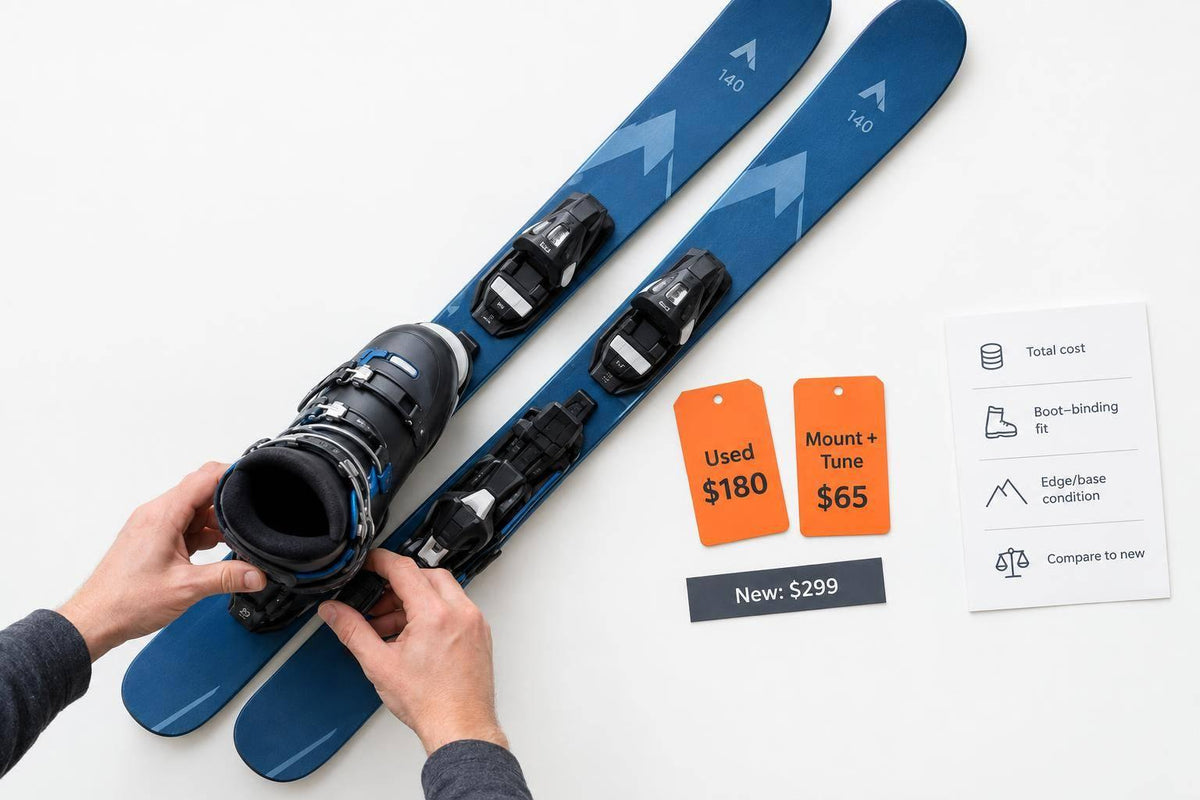
I’d buy used short skis only if the total cost stays well below a new pair that fits your boots. Add tax, shipping, repairs, and binding work before you pay. A binding mount alone can cost $88–$110 at REI Seattle - enough to eat up a small discount.
Here’s my buying checklist:
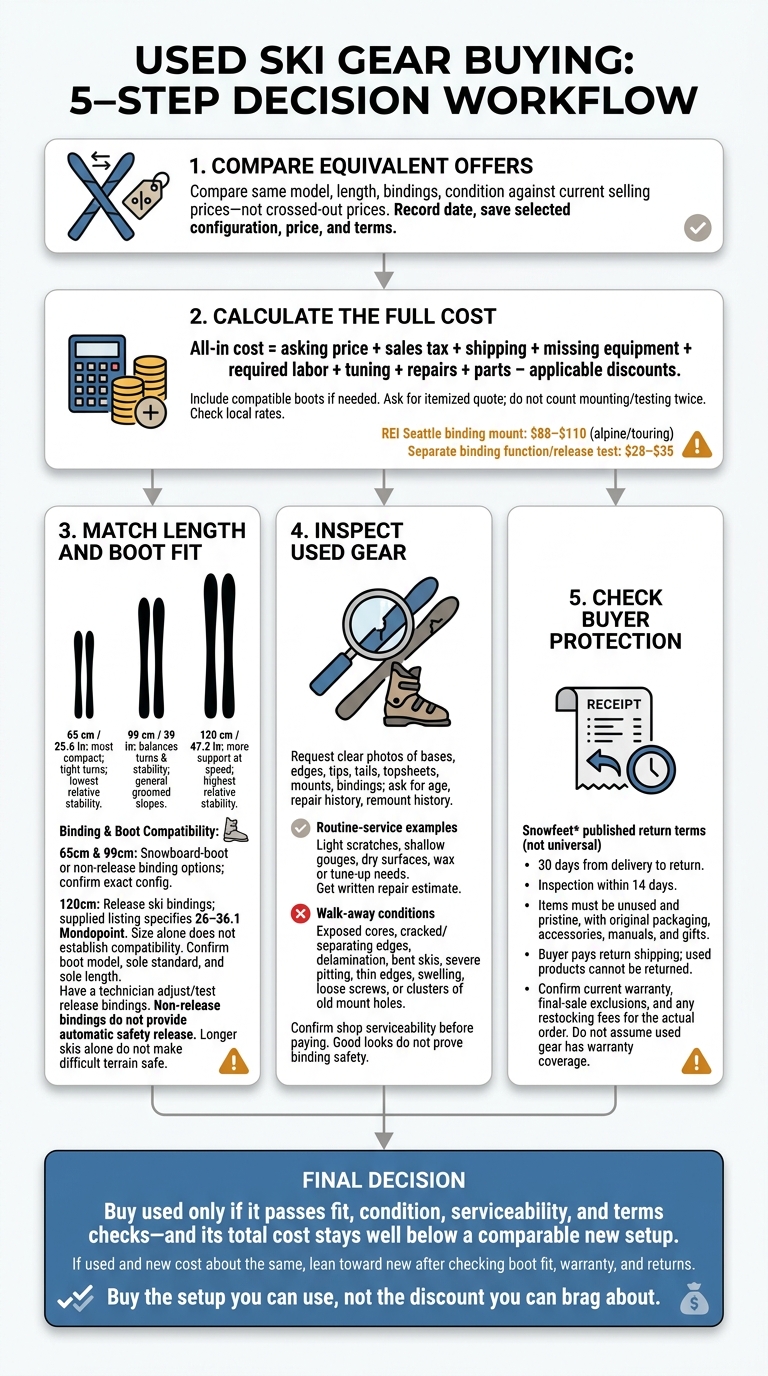
- Compare like for like. Check the same model, length, bindings, and condition against live prices - not a crossed-out price.
- Pick your length. Snowfeet* 65 cm (25.6 in) packs small and suits tight turns; 99 cm (39 in) balances turns and stability; 120 cm (47.2 in) offers more support at speed.
- Check your boots. Confirm the exact binding setup. Non-release bindings don’t release on their own; release ski bindings need a technician’s adjustment and test.
- Inspect used gear. Ask for clear photos and repair history. I’d pass on cracks, loose mounts, or bindings a shop won’t service.
- Read the terms. Snowfeet* lists a 30-day return window, but items must be unused and in their original packaging. Buyers pay return shipping.
My rule: <u>buy the setup you can use, not the discount you can brag about.</u> If used and new cost about the same, I’d lean toward new - after checking boot fit, warranty, and return terms.
Short Ski Buying Checklist: Is It Really a Good Deal?
Ultimate Short Skis 🎿 Snowfeet* Skiblades 99 CM
Calculate the Full Purchase Cost
Price every missing item before you compare offers. Add sales tax, shipping, bindings, mounting, a binding release test, tuning, repairs, and parts. If your boots don’t work with the bindings, add compatible boots to the total.
Ask for an itemized setup quote so you don’t count mounting or a binding release test twice. Professional setup can wipe out a small discount. REI Seattle lists $88–$110 for an alpine or touring binding mount and $28–$35 for a separate binding function/release test. Before buying, check local rates and confirm that the shop will service the exact binding.
Check Whether the Discount Is Real
Compare the same model, length, binding package, and condition with the manufacturer’s current selling price and one or two similar listings. A “from” price may apply to just one binding option.
Missing bindings, final sale terms, nonrefundable deposits, and obsolete equipment can cancel out the savings. Save screenshots of your selected configuration, price, and terms before checkout.
Compare New Snowfeet* and Used Short Skis
Search results have shown changing and conflicting prices. Check each live product page before buying, and record the date you checked it.
| Option | Advertised price | Included bindings | Setup costs to check | Warranty and returns | Estimated total* | Wear risk |
|---|---|---|---|---|---|---|
| New Snowfeet* Skiblades 65 cm | From $590, reference only | Check the selected binding configuration | Any adjustment, preparation, or missing equipment | Confirm written warranty and return eligibility | $590 + extras | Lower than used |
| New Snowfeet* Skiblades 99 cm | From $690, reference only | Check the selected binding configuration | Any adjustment, preparation, or missing equipment | Confirm written warranty and return eligibility | $690 + extras | Lower than used |
| New Snowfeet* Short Skis 120 cm | From $950, reference only | Check the selected binding configuration | Any adjustment, preparation, or missing equipment | Confirm written warranty and return eligibility | $950 + extras | Lower than used |
| Used short skis | Actual seller’s asking price | Ask for the model, age, mounting history, and whether the bindings are still serviceable | Inspection, testing, tuning, repairs, or replacement bindings | Check seller’s terms; don’t assume coverage | Asking price + extras | Depends on wear and serviceability |
“Extras” means sales tax, shipping, missing equipment, required labor, tuning, repairs, and parts, less applicable discounts. These totals are starting points for your math - not delivered quotes.
A used pair is a good buy only if the cost after inspection and service stays well below new Snowfeet*. A small discount isn’t worth repair risk, uncertain bindings, or return problems.
If two offers cost about the same, compare length and binding fit next.
Match Ski Length and Bindings to Your Needs
When two offers cost about the same, ski length and binding fit can make one a better buy.
Choose Between 65, 99, and 120 cm
Pick a length for the riding you do most - not your fastest run.
| Model | Length | Portability | Relative stability | Best-fit use |
|---|---|---|---|---|
| Snowfeet* 65 | 25.6 in / 65 cm | Highest | Lowest of the three, especially at speed | Casual riders, beginners, tight turns, compact travel |
| Snowfeet* 99 | 39 in / 99 cm | High | Moderate | General groomed slopes, mixed casual riding, one setup for several uses |
| Snowfeet* 120 | 47.2 in / 120 cm | Moderate | Highest of the three | Experienced riders, faster groomed runs, light powder, and moderate off-piste use |
Speed, snow conditions, and technique all matter. Beginners should stick to speeds they can control and forgiving terrain. Longer skis alone won’t make a tough run safe.
For most groomed runs, the 99 cm is the most balanced choice. It’s also a solid value pick if its bindings fit the boots you already own.
Check Boot and Binding Compatibility
A low price isn’t a deal if the bindings don’t fit your boots. Options vary by model: the 65 cm and 99 cm models use snowboard-boot or non-release bindings, while the 120 cm model uses release ski bindings. Returns, swaps, or technician work can wipe out those savings.
Before buying, confirm the binding type, whether it comes mounted, and whether it accepts your exact boot sole standard. Snowboard boots need snowboard-specific bindings.
The supplied 120 cm listing specifies 26–36.1 Mondopoint. Check compatibility with your exact boots - size alone isn’t enough. Send the seller your boot model, size, and sole length. Have a technician adjust and test release bindings with your boots.
Non-release bindings don’t provide automatic safety release. Follow the manufacturer’s instructions for any retention strap or other retention system.
After checking fit, review the gear’s condition and the seller’s buyer protections before paying.
sbb-itb-17ade95
Check Used Equipment, Warranty, and Returns
Once you’ve confirmed the fit, check the gear’s condition and your buyer protection before you pay.
Inspect Bases, Edges, Mounts, and Bindings
Ask for well-lit photos of both bases, edges, tips, tails, topsheets, mounts, and bindings. Get close-ups of any damage, too. Ask for the ski and binding model, age, seasons used, storage details, repair or remount history, reason for selling, and proof of purchase or service records. Save the listing and seller’s messages. Missing photos or vague answers mean more risk.
Know the difference between wear and damage. Light scratches, shallow gouges, dry surfaces, and wax or tune-up needs usually call for routine service. Get a written repair estimate before buying. Walk away from exposed cores, cracked or separating edges, delamination, bent skis, severe pitting, thin edges, swelling, loose screws, or clusters of old mount holes.
Check binding plastic, hardware, adjustment tracks, and boot-contact points for cracks, corrosion, missing parts, and wear. Ask a shop to service the exact binding model before you pay. Many release bindings lose manufacturer support at around 10 years old, but there’s no universal cutoff. Good looks don’t prove safety.
If the pair passes inspection, check whether the warranty and return terms protect your money.
Read the Warranty and Return Terms
Check how long coverage lasts, whether it’s limited to the original owner, and what exclusions apply to used or modified gear. For Snowfeet*, confirm whether bindings, straps, and accessories have separate coverage. Snowfeet*’s published safety information says its warranty applies to products with no signs of use, modification, or damage. Customers also pay warranty-claim shipping. Keep your receipt and inspect the shipment before changing anything.
Snowfeet*’s published return terms allow returns within 30 days of delivery. Buyers pay return shipping, and products must be in pristine condition with their original packaging. Used products can’t be returned. The terms also require inspection within 14 days and the return of all accessories, manuals, and gifts in the original package.
Confirm the terms for your order, including any restocking fees and final-sale exclusions. Then compare the used pair’s total cost, including repairs, with a new Snowfeet* setup.
Conclusion: Choose the Best-Value Setup
Compare delivered cost, fit, condition, and buyer protection before you decide. Buy used only when the total cost is clearly below a comparable new Snowfeet* setup. Compare complete packages that fit your boots - not skis alone. Otherwise, new Snowfeet* is the better value for most casual riders.
Make Your Final Buying Check
Use this table to compare the full setup. Check the current delivered U.S. price at checkout and note the date you checked.
| Option | All-in price check | Boot compatibility | Condition risk | Warranty and returns | Riding feel and portability |
|---|---|---|---|---|---|
| Used setup | Price plus shipping, tax, repairs, and binding work | Confirm exact bindings and test the fit with your boots | Depends on inspection and testing | Only what the seller confirms in writing | Depends on length and model |
| New Snowfeet* 65 cm | Current checkout total for your chosen configuration | Confirm binding type and adjustment range | New and unused | Published warranty and return terms | Most compact; quick turns |
| New Snowfeet* 99 cm | Current checkout total for your chosen configuration | Confirm boot type, sole length, and fit | New and unused | Published warranty and return terms | Balanced stability and maneuverability |
| New Snowfeet* 120 cm | Current checkout total for your chosen configuration | Confirm exact binding requirements | New and unused | Published warranty and return terms | More support and smoother tracking |
Check the model’s exact boot standard and sole-length range. Then confirm the binding type before checkout.
Read the exact warranty and return terms shown at checkout. Returns may require unused items, original packaging, and buyer-paid shipping.
Before checkout, confirm the length, bindings, and included hardware. Add up the delivered cost, check boot fit and equipment condition, and save the seller’s written terms. For Snowfeet*, check that your chosen setup fits your budget, boots, and riding style.
FAQs
How much cheaper should used short skis be?
Used short skis often sell for 30% to 60% of their new retail price, but the sticker price doesn’t tell the whole story. A $75–$200 pair can cost more than $300 once you add tuning, binding mounting, or repairs. Over three seasons, total costs can reach $310–$540.
Used gear often comes without a warranty and may need costly replacement parts. New Snowfeet gear offers reliable condition, warranty coverage, and lower maintenance costs. For most casual riders, that makes buying new the cheaper choice.
Can I switch bindings on Snowfeet* skiblades?
When you buy Snowfeet* skiblades, you can choose your binding type. Many models offer simple ski boot, pro ski boot, or snowboard boot bindings.
These bindings are made for the skiblades and come included. That means no separate parts to buy or aftermarket compatibility to check. Choosing your bindings at purchase keeps setup simple and avoids the safety risks and mounting problems that can come with swapping bindings on used gear.
How do I check boot fit before buying online?
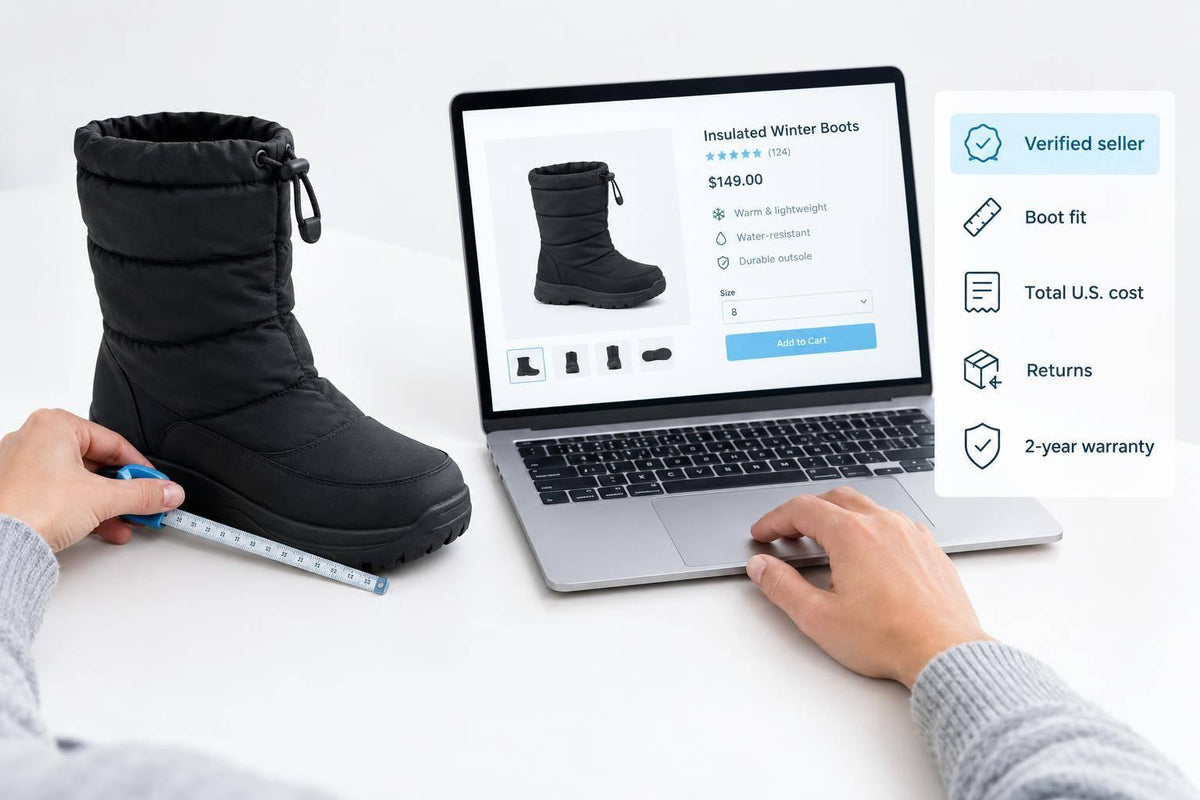
Check which boots fit your chosen Snowfeet* model. Some models need ski boots; others work with snowboard or winter boots.
Check the product page for size limits, such as US men’s 4.5–14.5 for alpine bindings or US 6–13 for strap-on systems. Compare your boot’s sole length with the binding specs, too.
Not sure about the fit? Ask the retailer’s chat support to confirm your boot type and size before checkout.











Leave a comment
This site is protected by hCaptcha and the hCaptcha Privacy Policy and Terms of Service apply.