
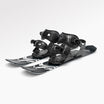
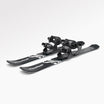
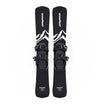
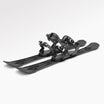
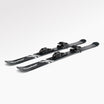
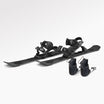
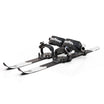
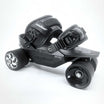
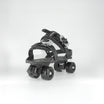
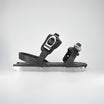
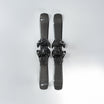
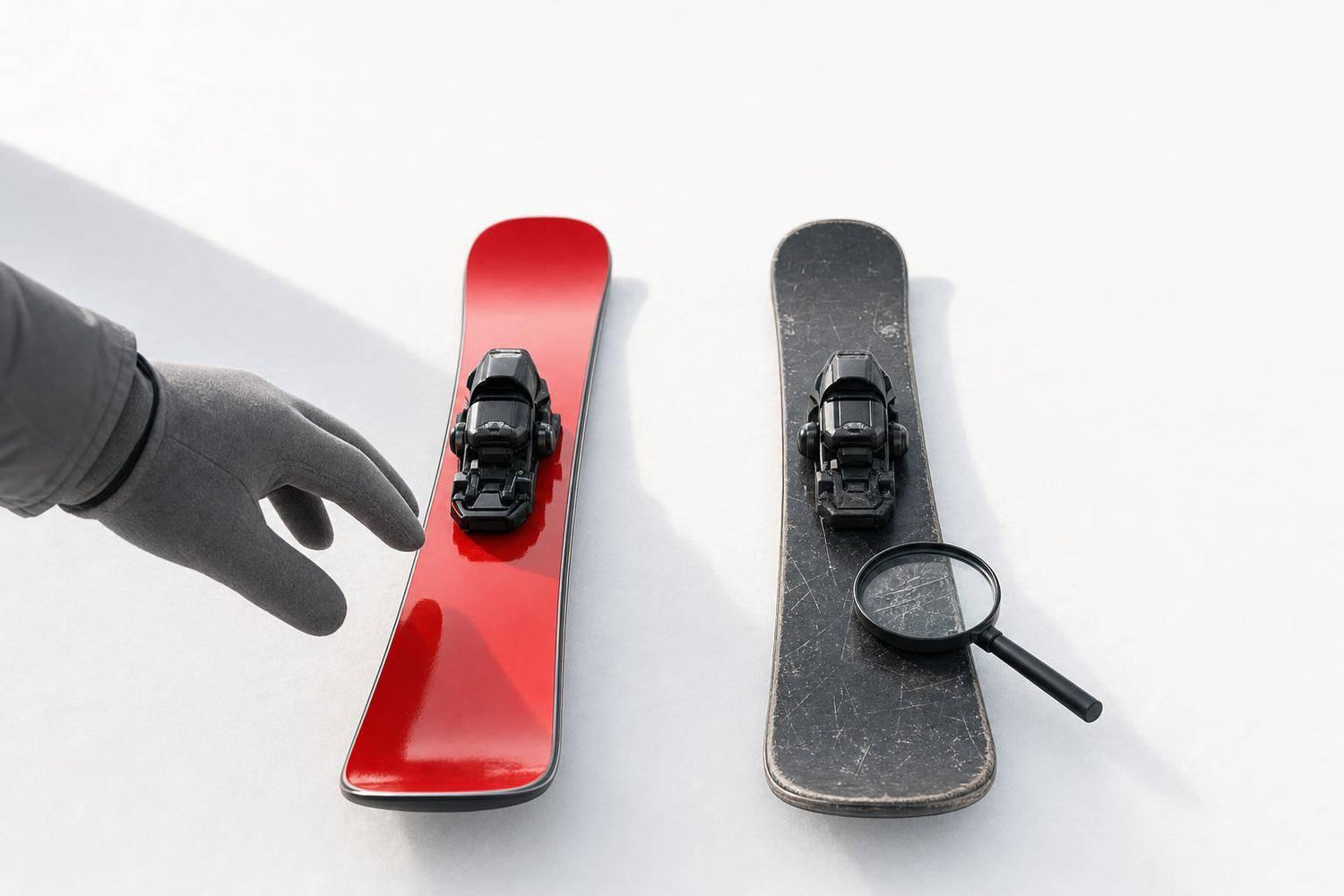
If you want the short answer: most buyers are better off with new short skis, and used only makes sense if the gear passes a full safety check.
I’d look at it like this: a used pair at $75–$200 can turn into $300+ after a tune, binding work, or repairs. New short skis cost more up front - about $460 to $790+ for the Snowfeet* models listed here - but you get known condition, warranty coverage, and fewer surprise costs. That’s a big deal if you ski 3–5 days a season, travel often, or just want to get on snow without messing around.
Here’s the whole article in plain English:
- Price: Used looks cheap at first. Hidden shop costs can eat the savings fast.
- Safety: Old bindings, deep base damage, edge cracks, and delamination are the main red flags.
- Performance: New short skis feel more consistent. Used pairs can feel fine - or beat up. It depends on wear.
-
Best fit:
- 44 cm for packing light and playful riding
- 65 cm for beginners and tight turns
- 99 cm for more balance
- 120 cm for more stability and a feel closer to standard skis
- Best buyer for used: Someone who knows how to inspect skis and accepts more risk.
- Best buyer for new: Beginners, families, casual riders, and travelers.
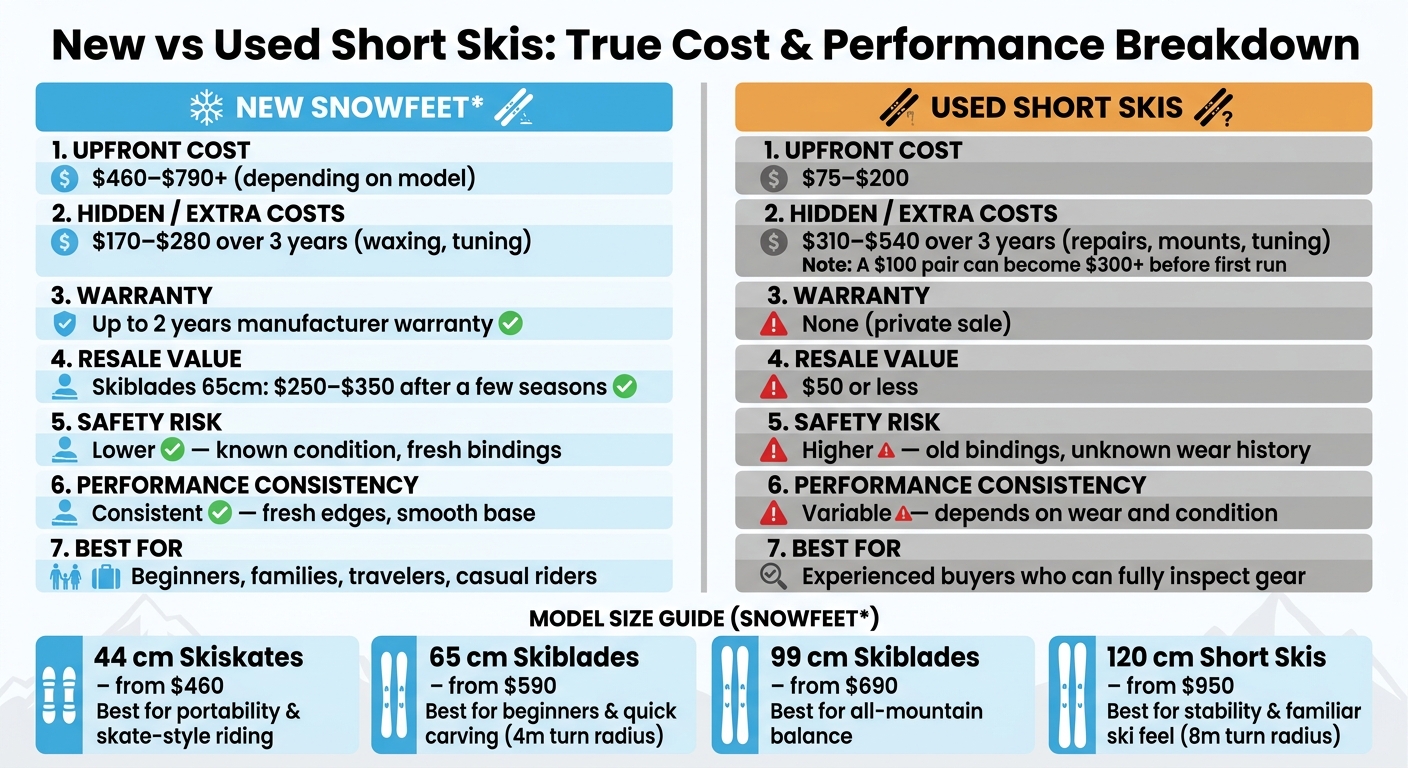
New vs Used Short Skis: True Cost & Performance Breakdown
All you need to know - Snowfeet* | Skiskates | Skiboards | Snowblades | Skiblades FAQ
Quick Comparison
| Option | Upfront Cost | Extra Costs | Safety Risk | Feel on Snow | Best For |
|---|---|---|---|---|---|
| New Snowfeet* | $460–$790+ | Lower | Lower | More consistent | Beginners, families, travel, casual use |
| Used Short Skis | $75–$200 | Often higher | Higher | Hit or miss | Experienced buyers who can inspect gear |
| Full-Length Skis | Varies | Varies | Depends on condition | Better at speed and powder | Skiers who want more stability at higher speed |
So, if you want the safest and least annoying path, I’d lean new. If you find a used pair that’s clean, solid, and has serviceable bindings, then sure - it can work. Just don’t let a cheap sticker price fool you. Skis have a funny way of saying, “Surprise, I need $180 in shop work” :)
2. Price, Hidden Costs, and Long-Term Value
What Used Short Skis Typically Cost
Used short skis and snowblades often show up at about 33% to 50% of the new retail price. At first glance, that can look like a steal. On SidelineSwap, a used pair of Snowfeet Skiblades (65 cm) with bindings has sold for as little as $75. On eBay, pre-owned snow blades show up around $94.50.
But here’s where things get sneaky: the low list price doesn’t always stay low for long.
A lot of used short skis need work right away before they’re safe, smooth, and fun to ride. A full tune at a shop like Christy Sports costs $75–$80, and binding mounting or remounting adds $85–$100. If the bases have gouges, tack on another $20–$60 for repairs. And if the bindings are old, worn out, or don’t fit your boots, a new set can cost $150–$300+ by itself.
So, yeah, that $100 pair can turn into a $300+ buy before you even make your first run. For most casual riders, that’s the number that matters.
Over three seasons of casual riding - about 10 days per season - used short skis usually end up costing $310–$540 in total maintenance. New Snowfeet* gear usually adds about $170–$280 over that same stretch, mostly for waxing and the occasional tune-up.
Why New Snowfeet* Can Be the Better Deal
With the Snowfeet* prices above, new gear gives you something simple: you know what you’re getting. No mystery damage. No guessing how hard the last owner rode them. No “uh, I think the bindings are fine” energy.
New Snowfeet* models usually come with manufacturer warranty coverage, while private used sales usually come with none. If something goes wrong after you buy used gear - delamination, edge pull-out, binding failure - that repair bill lands on you.
There’s also resale value. Snowfeet* gear tends to hold value better than generic snowblades. A new pair of Skiblades 65 cm can still resell for $250–$350 after a few seasons, while older snowblades may bring $50 or less.
Here’s the side-by-side cost picture:
| New Snowfeet* | Typical Used Short Skis | |
|---|---|---|
| Upfront price | $460–$950 depending on model (Skiskates 44 cm to Short Skis 120 cm) | $75–$200 |
| 3-year upkeep | $170–$280 (waxing, tuning) | $310–$540 (repairs, mounts, tuning) |
| Warranty | Up to 2 years | None |
| Typical remaining life | 5+ seasons with normal care | Often only a few seasons for a lightly used pair |
| Resale value | $250–$350 for Skiblades 65 cm after a few seasons | $50 or less |
Price alone doesn’t tell the whole story. Condition is what separates a smart buy from a money pit. If used gear still looks tempting, the next step is to check the base, edges, and bindings.
sbb-itb-17ade95
3. Used Short Ski Inspection Checklist: Condition and Safety
Before you buy used short skis, take 10–15 minutes and inspect them in person. That time can save you money, hassle, and maybe a bad crash. Short skis often get used in parks and on rails, so damage can run deeper than it first appears. A fast look-over won’t cut it. Check the base, edges, and bindings before you decide the price makes sense.
Base, Edge, and Topsheet Damage to Look For
Start by wiping the base clean. Then run your fingernail along it, nice and slow. If your nail catches in a groove, that scratch is deep enough to matter. Walk away from any core shot - where the base is worn all the way down to the wood or foam below it. Also pass on a dry, gray base from oxidation or sloppy P-tex repairs that aren’t bonded well.
Now check the edges. Sight down each ski from tip to tail. You want edges that look straight, continuous, and still have some life left in them. A little surface rust is usually no big deal. Cracks, edge separation from the base or sidewall, and deep rust pitting are a different story. If you spot edge cracks underfoot, that’s a hard no. Those cracks can spread when the ski is under load, and fixing them usually doesn’t make financial sense.
For the topsheet, small chips around the outside are often fine. Bubbling or lifting layers are not. That points to delamination. Press lightly on any raised spot. If the topsheet moves on its own or makes a creaking sound, skip it - most of all if it’s near the binding area.
| Inspection Area | What to Check | Green Flags | Red Flags | When to Walk Away |
|---|---|---|---|---|
| Base | Clean surface in bright light; run a fingernail over scratches and repairs | Shallow scratches that don't catch, smooth base, even P-tex repairs | Deep gouges, dry/chalky/gray base, poorly bonded repairs | Core shots present, or the base is thin across large sections |
| Edges | Sight down tip to tail; feel for flat spots or bends | Straight, continuous edges with only light surface rust or minor burrs | Cracks, edge separation, heavy rust pitting, or edges worn paper-thin | Cracks underfoot, significant separation, or severely weakened edges |
| Topsheet | Look for chips, bubbling, and lifting layers | Small chips around the perimeter, no lifting layers | Large chips exposing fiberglass, bubbling, or delamination | Delamination near bindings or spreading along edges |
| Camber / Structure | Press base-to-base and compare both skis; check for twist or warping | Matching camber or rocker profile, symmetrical flex | One ski flatter than the other, dead-flat or reverse-cambered profile, visible warp | Any twisting, warping, or major mismatch between skis |
| Bindings / Mounts | Check age, screws, heel/toe function, AFD, brakes, and boot compatibility | Modern, intact bindings, smooth function, one or two well-plugged mounts | Cracked housings, loose or stripped screws, worn AFD, or multiple drilled patterns | Non-serviceable or damaged bindings, or a heavily drilled mount area |
To check camber, press the skis base-to-base and squeeze them at the waist. Mismatched camber between the two skis, or one that sits completely flat, usually means the core is worn out. On a short ski, that shows up fast. You’ll feel it in shaky tracking and weak edge hold. In plain English: the ski won’t feel right, and you’ll notice.
Bindings, Mounting Holes, and Safety Risks
Bindings are the main safety system on any ski. They decide whether you stay in when you should - and release when you need them to. With used short skis, this is the part where a “deal” can turn ugly.
First, check how old the bindings are. Many ski shops stop servicing bindings after about 10 years. If no shop will service or test them, then no shop is checking the release settings either. That’s a real injury risk, not shop drama. Ask the seller for service records, or look up the model online to get a rough age.
Then inspect the mounting holes. One or two old mounts that were plugged well is usually okay. But if the ski looks like it’s been drilled over and over, slow down. Multiple hole patterns, cracked plastic around screw heads, or screws that spin without biting into the ski can mean the structure is shot. On short skis, the mounting zone is already tight, so more than two or three mount patterns can raise the odds of a binding pulling out under load.
Check the toe and heel pieces by hand. They should move smoothly. Look at the AFD pad too - it should be there and not worn down too much. Watch for cracked housings, bent metal, or missing brakes.
If the bindings don’t pass this check, add in the cost of replacement and remounting before you compare that used setup with new Snowfeet* Skiskates 44 cm (from $460) or Skiblades 65 cm (from $590). If the setup looks good, then compare it with new Snowfeet* models based on how you ride and what kind of feel you want.
4. Performance Compared: New Snowfeet* vs Used Short Skis vs Full-Length Skis
Once the gear passes inspection, the next test is simple: how does it feel on snow? That’s where the truth shows up.
New Snowfeet* feels lighter, easier to steer, and more nimble at low to mid speeds. Used short skis can still do the job, but only if they’re in top shape. Full-length skis still take the lead for speed, powder, and racing. On groomed runs, shorter gear turns faster and feels less awkward. And with used gear, condition can make or break the ride. New Snowfeet* gives you more steady performance and less guesswork.
| Performance Factor | New Snowfeet* | Used Short Skis | Full-Length Skis |
|---|---|---|---|
| Maneuverability | Very high | Moderate to high (condition-dependent) | Lower |
| High-speed stability | Moderate | Moderate (if edges are intact) | Very high |
| Edge hold | Consistent, fresh edges | Variable - worn edges reduce grip | High on groomed snow |
| Ease of learning | High - short platform reduces intimidation | Moderate - depends on binding fit and wear | Lower - longer skis take more time to control |
| Portability | Very high - highly compact and easy to transport | Moderate | Low |
| Deep powder performance | Lower | Lower | High |
If you're leaning toward new gear, the best Snowfeet* length depends on where you ride and what kind of feel you want.
Which Snowfeet* Model Fits Your Riding Style
This part is pretty straightforward: 44 cm for portability, 65 cm for quick learning, 99 cm for balance, 120 cm for more stability.
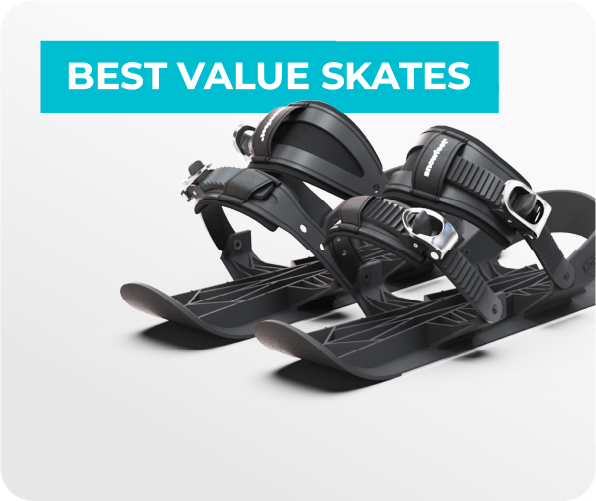
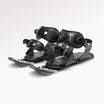
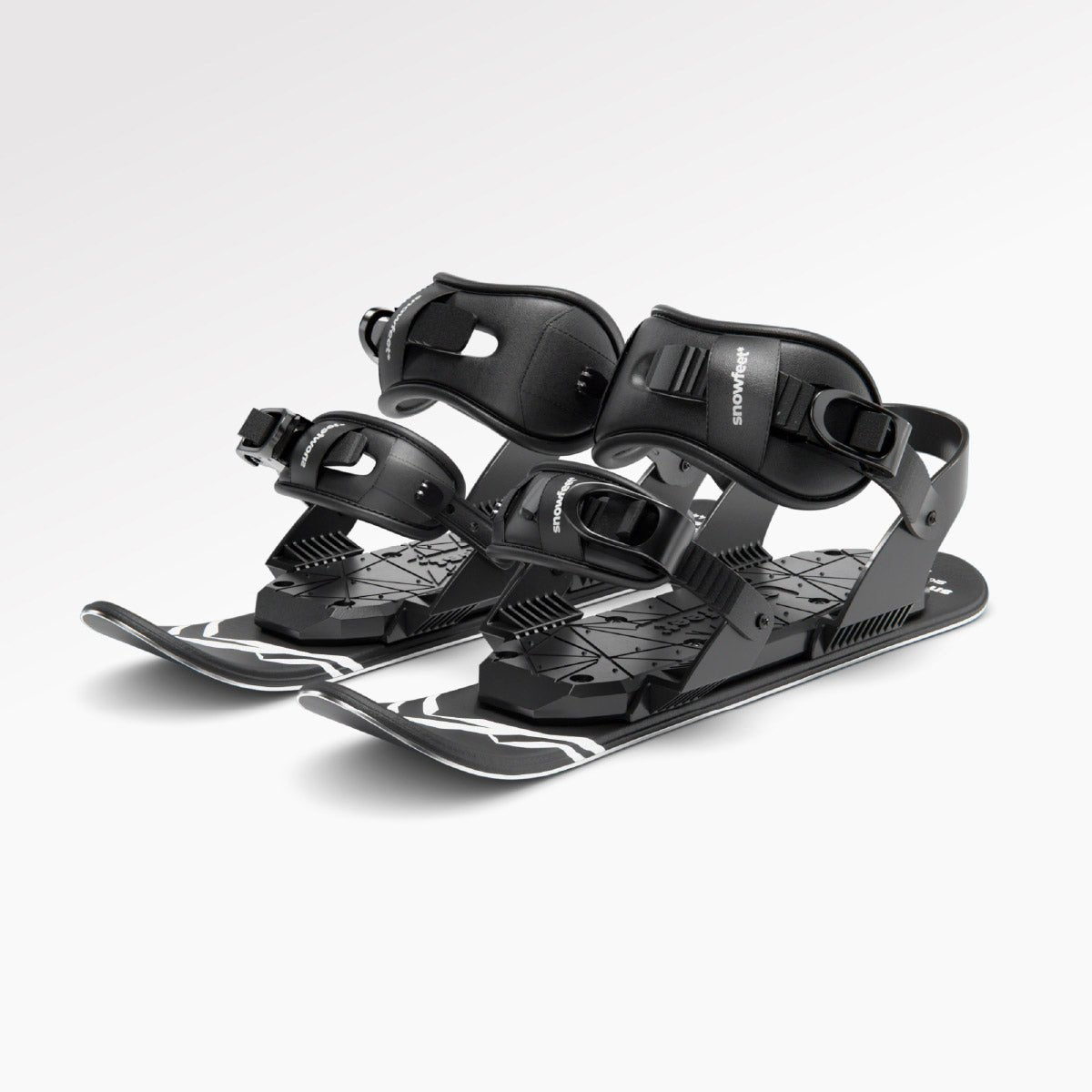
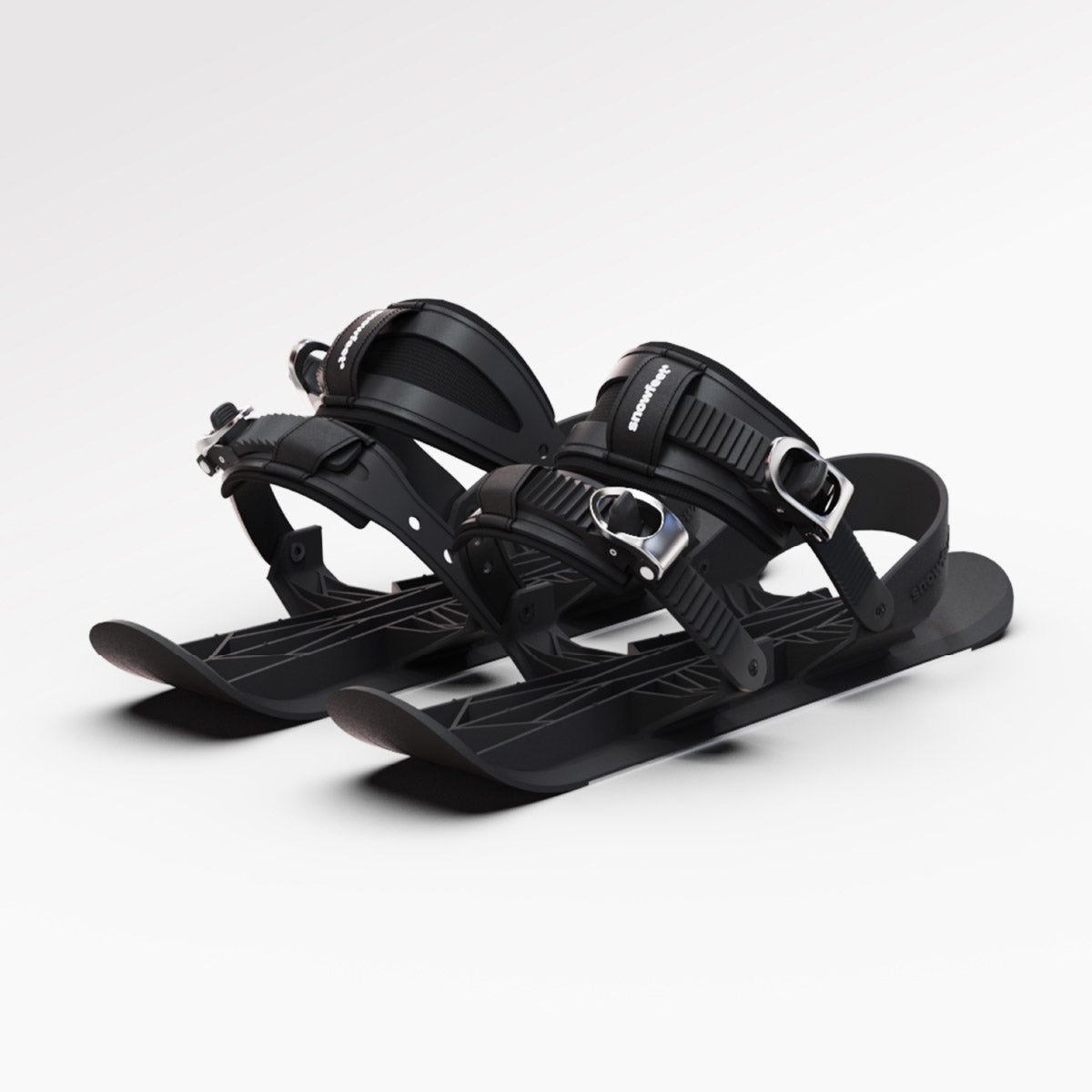
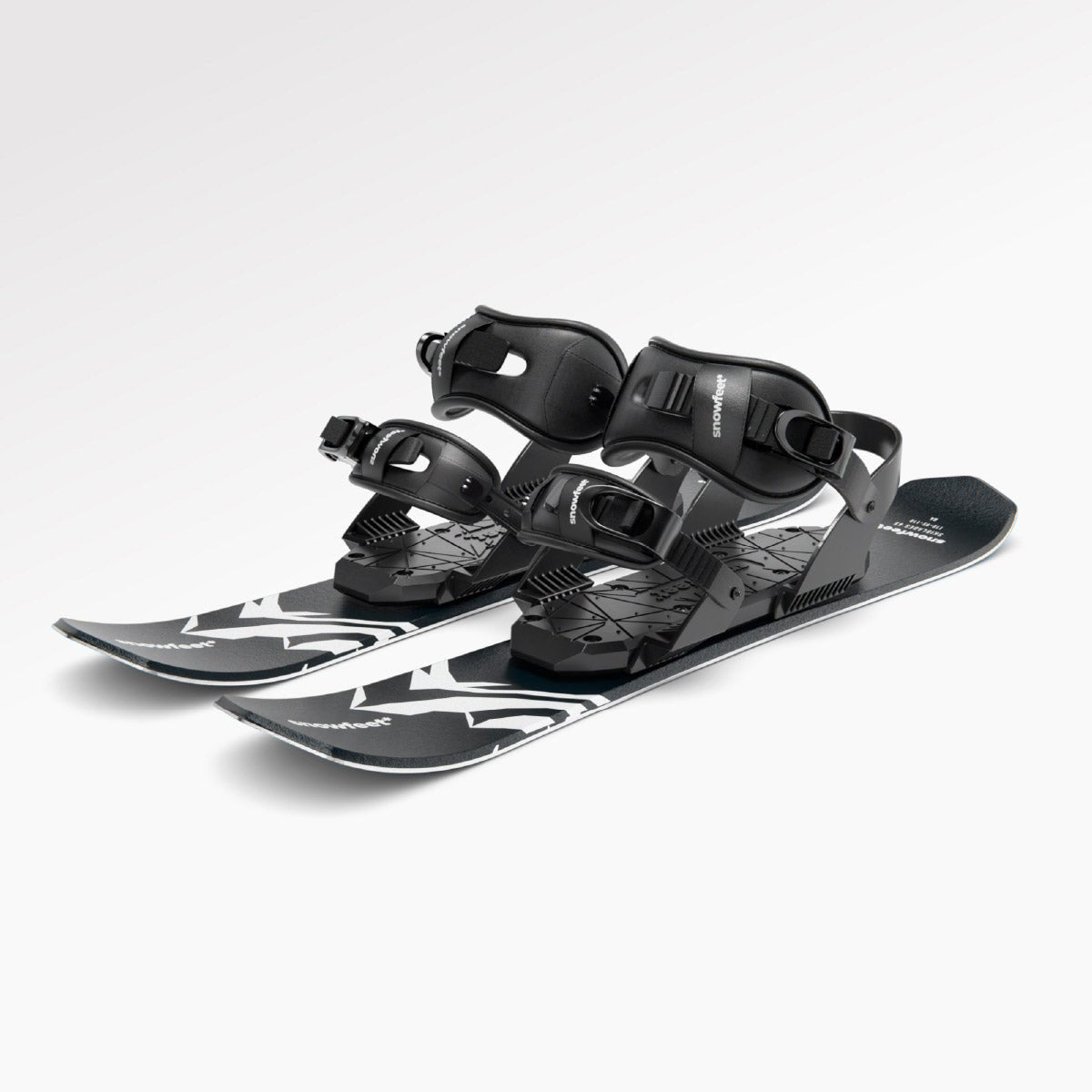
Skiskates 44 cm (from $460) are the smallest option. They give you skate-like control and are the easiest to toss in a bag and bring along.
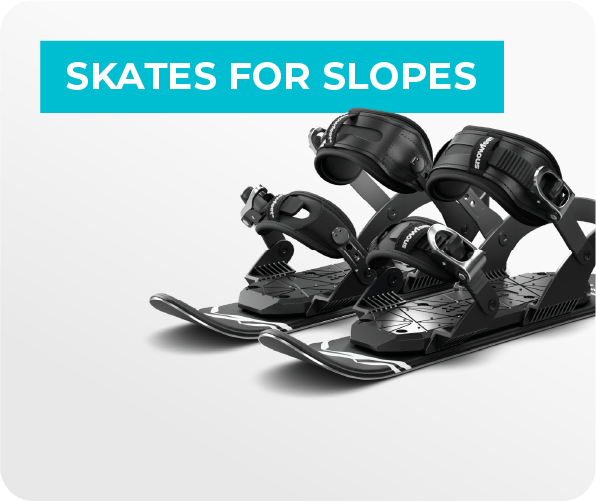
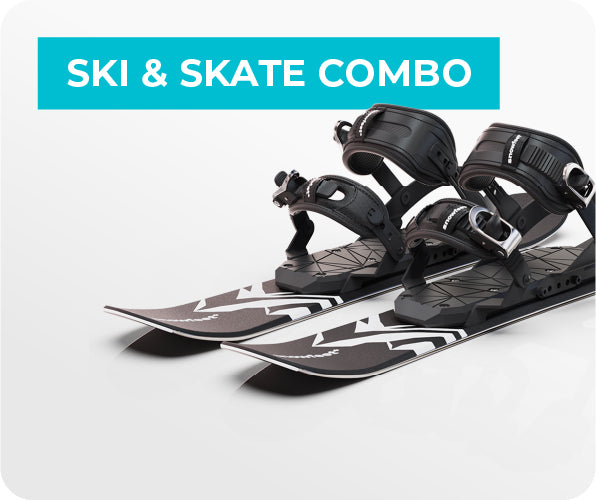
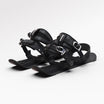
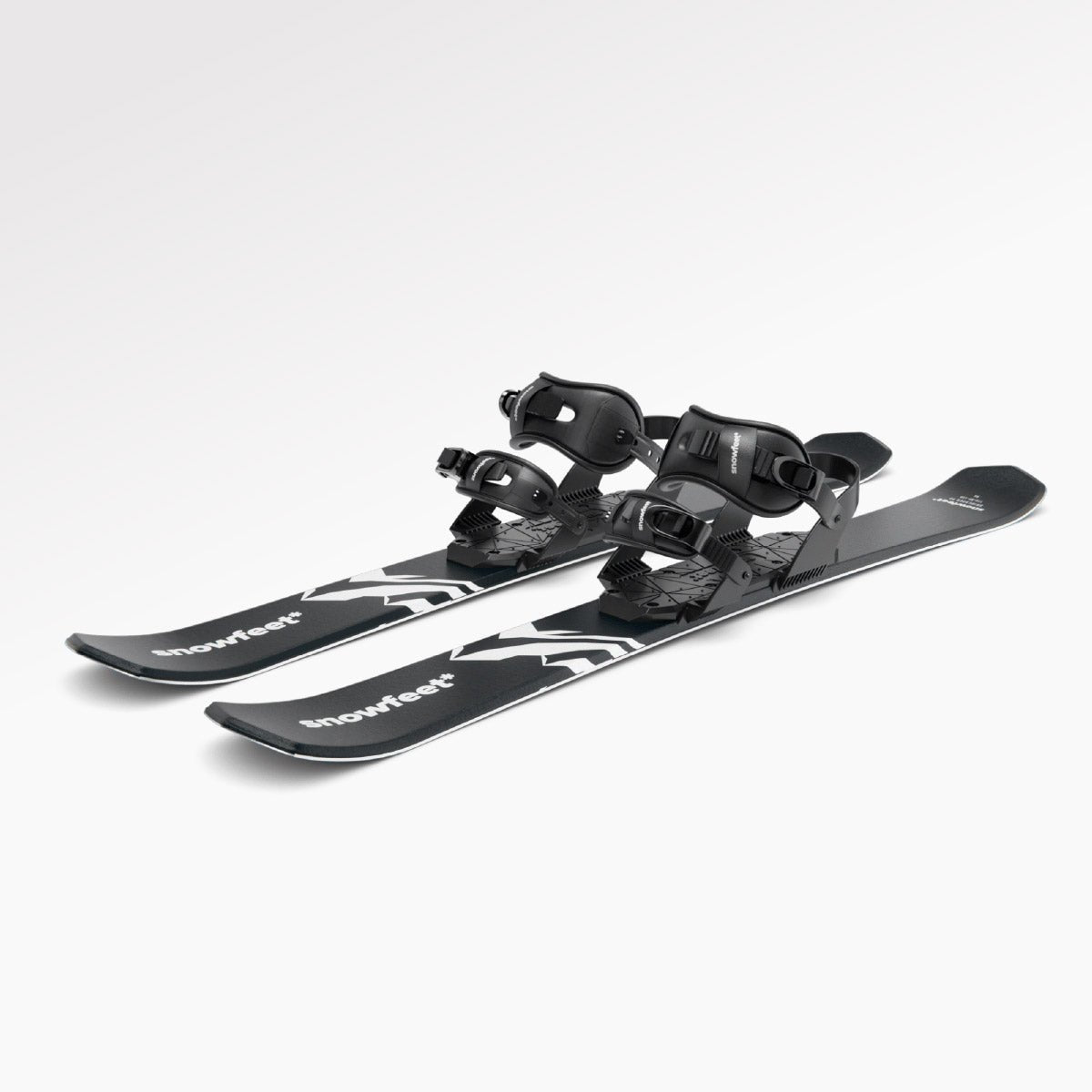
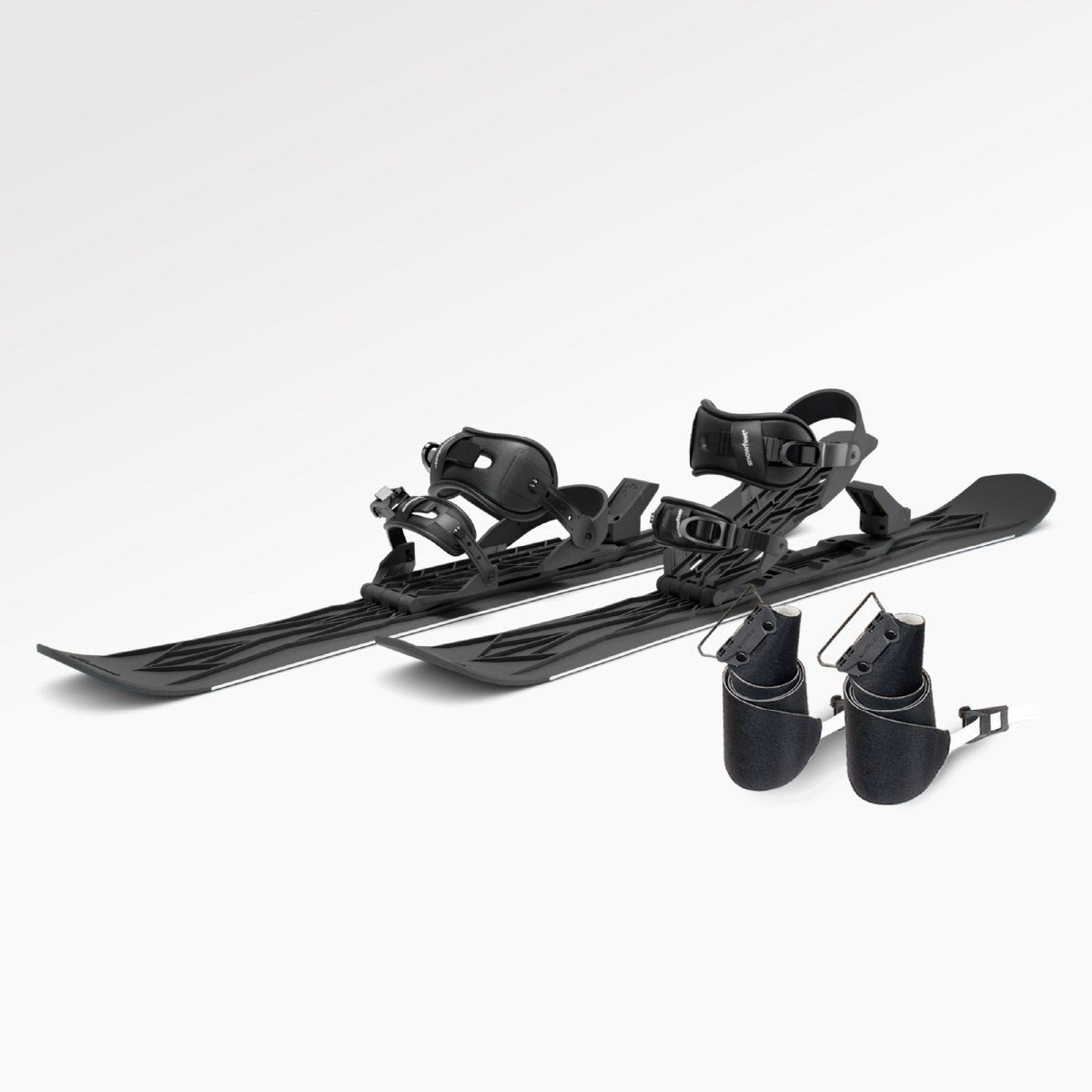
Skiblades 65 cm (from $590) are a sweet spot for fast carving and an easy start. They come with a 4-meter turn radius, so they’re made for tight, snappy turns on groomed runs. That means a much faster turn response than longer short skis.
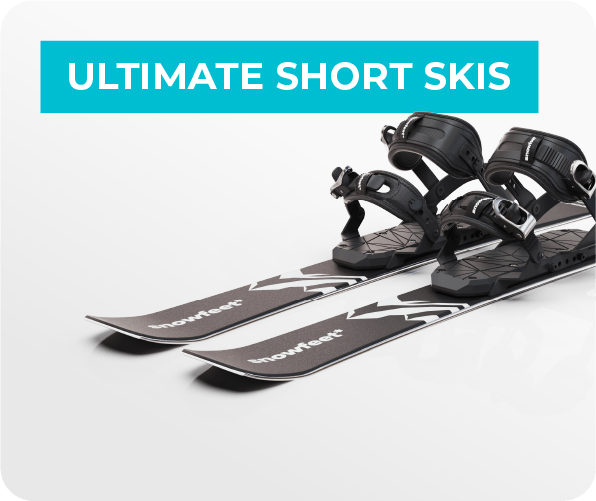
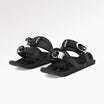
If you want more all-mountain range, the Skiblades 99 cm (from $690) add more stability underfoot but still keep that short-ski feel. And if you’re coming from full-length skis and want something that feels more familiar, Short Skis 120 cm ($950) give you the most stability in the Snowfeet* lineup. They’re still much shorter than standard skis, but the 8-meter turn radius feels more planted when you pick up speed.
Where Used Short Skis Fall Short
This is where used gear can get a little sketchy. Performance drops fast when a ski is worn out. Edge wear cuts grip. Base wear hurts glide. And if you don’t know the ski’s history, you’re guessing.
That’s the big upside with new Snowfeet*. You skip the mystery. Fresh edges and a smooth base make the ride feel more steady from one run to the next. For beginners and casual riders, that kind of consistency can make a big difference. It’s one less thing to worry about when you’re just trying to have a good day on the mountain :)
5. When to Buy New and When Used Is Still Worth It
Once you look at price, condition, and how the skis ride, the choice gets pretty simple: used short skis can make sense, but new Snowfeet* is the safer, easier pick for most people.
Buy New If You Want Fewer Surprises
If you're a beginner, buying for your family, heading out on weekends, or packing light for trips, new gear is usually the better call. It cuts out the guesswork around bindings and helps you dodge surprise shop bills.
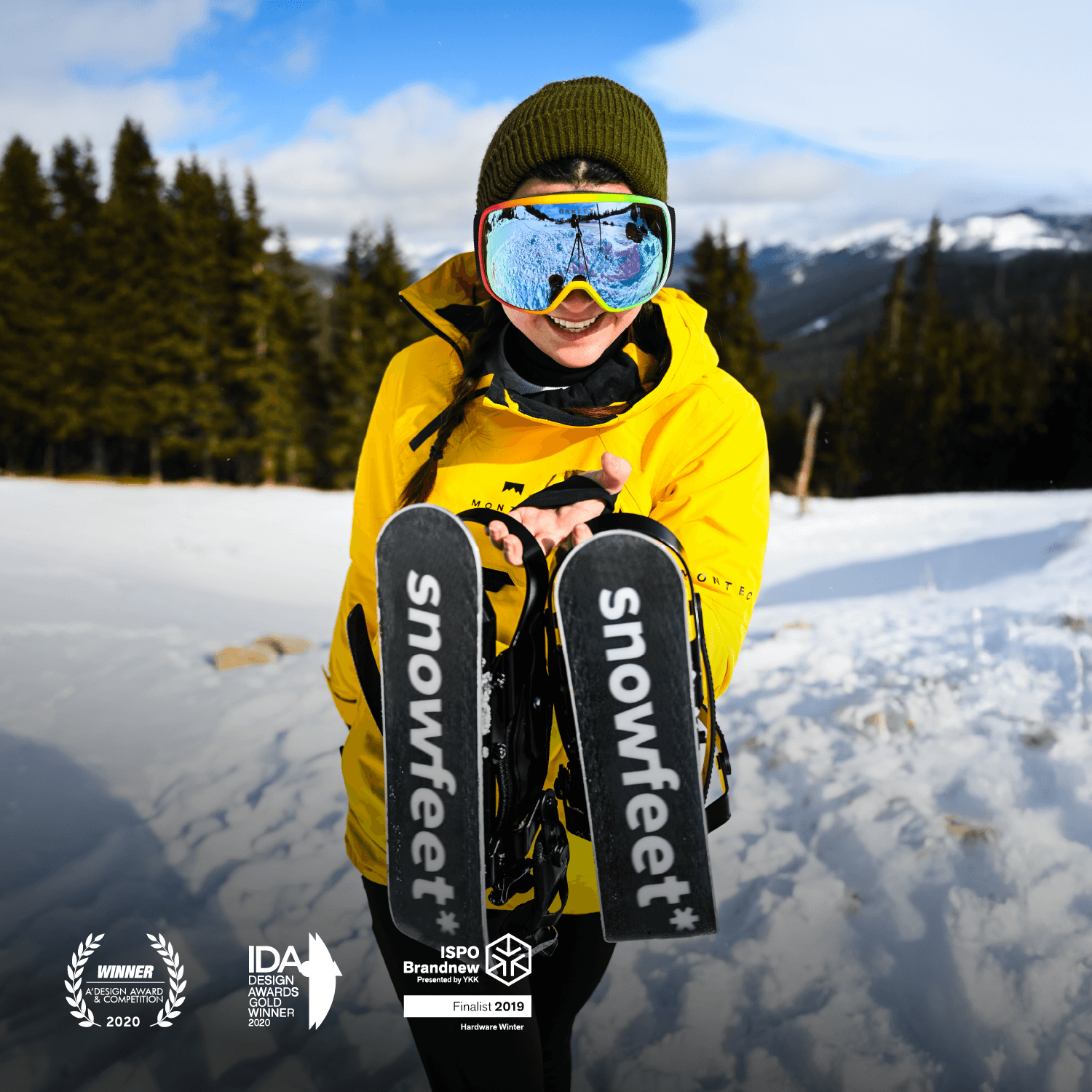
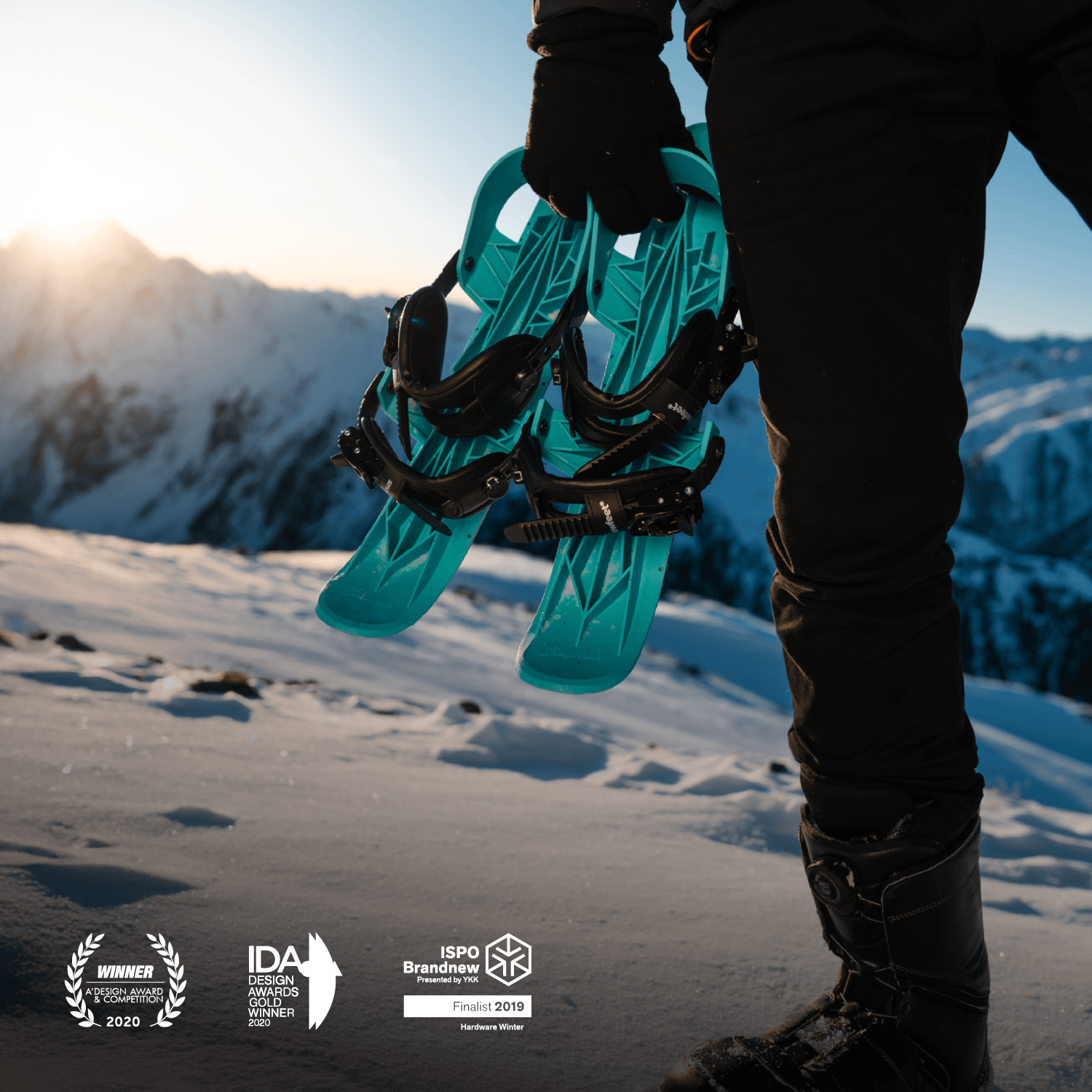
Snowfeet* models are compact, easy to store, and ready to ride. That matters more than people think. For casual riders, that mix of less risk, less setup hassle, and more dependable fun is a big win. That's where models like the Skiskates 44 cm and Skiblades 65 cm stand out.
Buy Used Only If the Gear Passes a Full Inspection
Used gear is only worth it if it clears the full checklist. The base, edges, and bindings all need to be in good shape before a used setup starts to look like a smart deal.
If not, tuning or repairs can eat up the money you thought you saved. And, well, that cheap find doesn't look so cheap after that. That's the main case where used gear can go head-to-head with new Snowfeet*.
Here’s the fastest way to choose.
| Rider Type | Risk Tolerance | Better Choice |
|---|---|---|
| Beginner on green/blue runs | Low | New Snowfeet* |
| Casual weekend rider | Low to medium | New Snowfeet* |
| Frequent traveler | Low | New Snowfeet* |
| Family sharing gear with kids | Low | New Snowfeet* |
| Experienced rider who can inspect gear | High | Used - only if it passes full inspection |
For most U.S. shoppers, new Snowfeet* gives you the best mix of value, safety, and convenience.
FAQs
How do I know if used bindings are still safe?
Used bindings are tough to check with confidence. A lot of secondhand pairs don’t have the certified, adjustable release parts you usually get with new gear. And standard ski bindings need a pro to set the DIN right. When you buy used, that setting is often off, and that’s not a small detail.
There’s also the stuff you can’t see at a glance. Used gear can have hidden structural damage, and in most cases, there’s no warranty to back you up if something goes wrong.
For the safest pick, go with new Snowfeet* models. They offer specialized release bindings for longer blades, plus reliable, purpose-built non-release options for shorter models.
Which short ski length is best for my skill level?
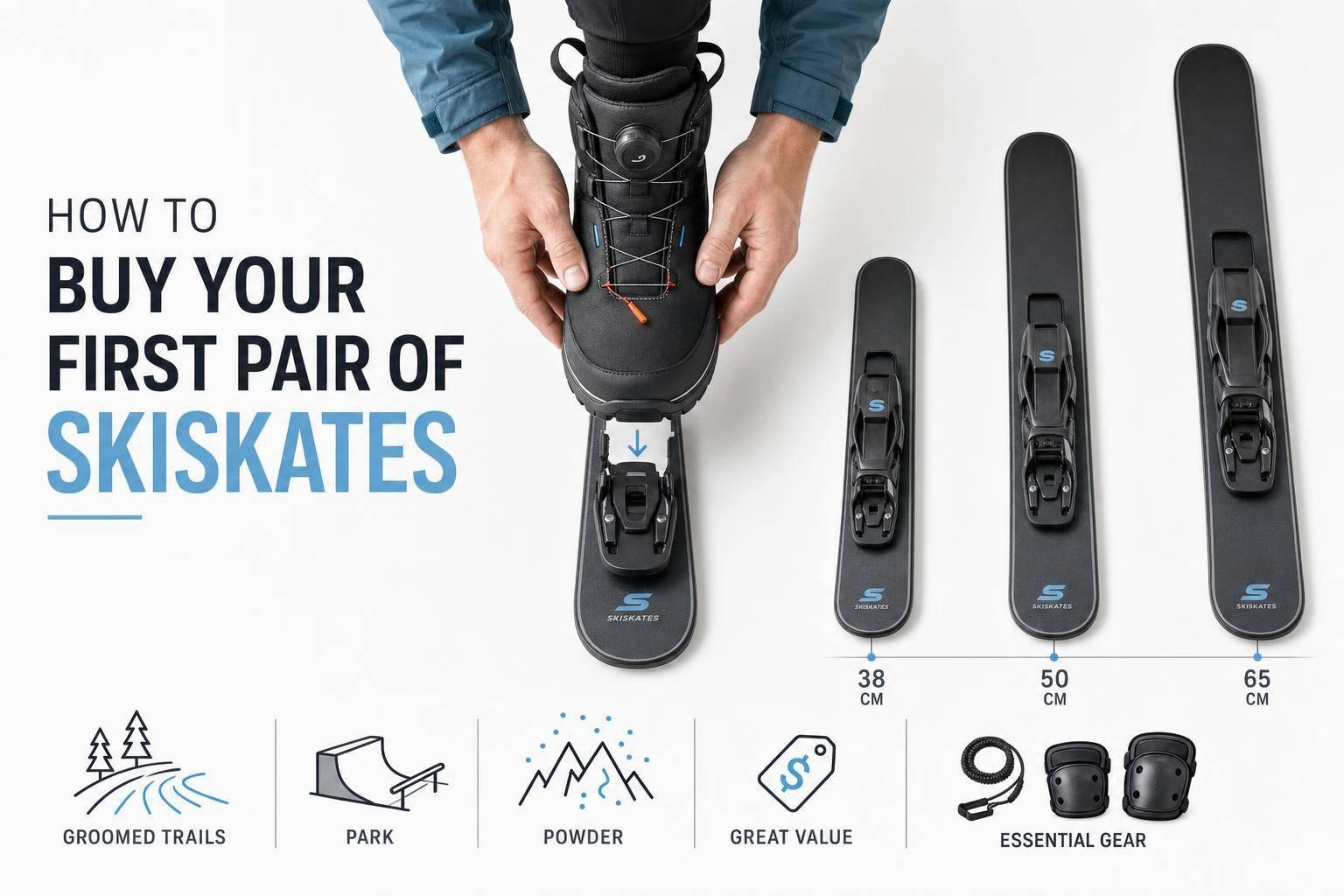
Most beginners do best on the 38 cm Mini Ski Skates. They’re the easiest to learn on and feel less intimidating at first.
If you want a bit more balance and a ride that forgives small mistakes, the 50 cm PRO is a smart pick. It gives you more stability without feeling like too much ski.
For intermediate riders, the sweet spot is usually the 44 cm Skiskates or the 50 cm PRO. Both give you a nice mix of control and room to progress.
Advanced riders, and people coming from regular skis, will usually get the most out of 65 cm, 99 cm, or 120 cm Skiblades. Those longer options give you more speed, cleaner carving, and better stability. Think of it like this: the more ski under you, the calmer things feel once you know what you're doing.
Are new short skis cheaper long-term?
Yes - especially Snowfeet models. New short skis can save you money over time compared with a standard ski setup, which can easily go past $1,000 once you add skis, stiff boots, and travel gear.
Snowfeet products cost between $150 and $490. And because they work with winter boots or snowboard boots you may already have, they can cut down on boot costs, packing hassles, and storage space too.


Leave a comment
This site is protected by hCaptcha and the hCaptcha Privacy Policy and Terms of Service apply.