



















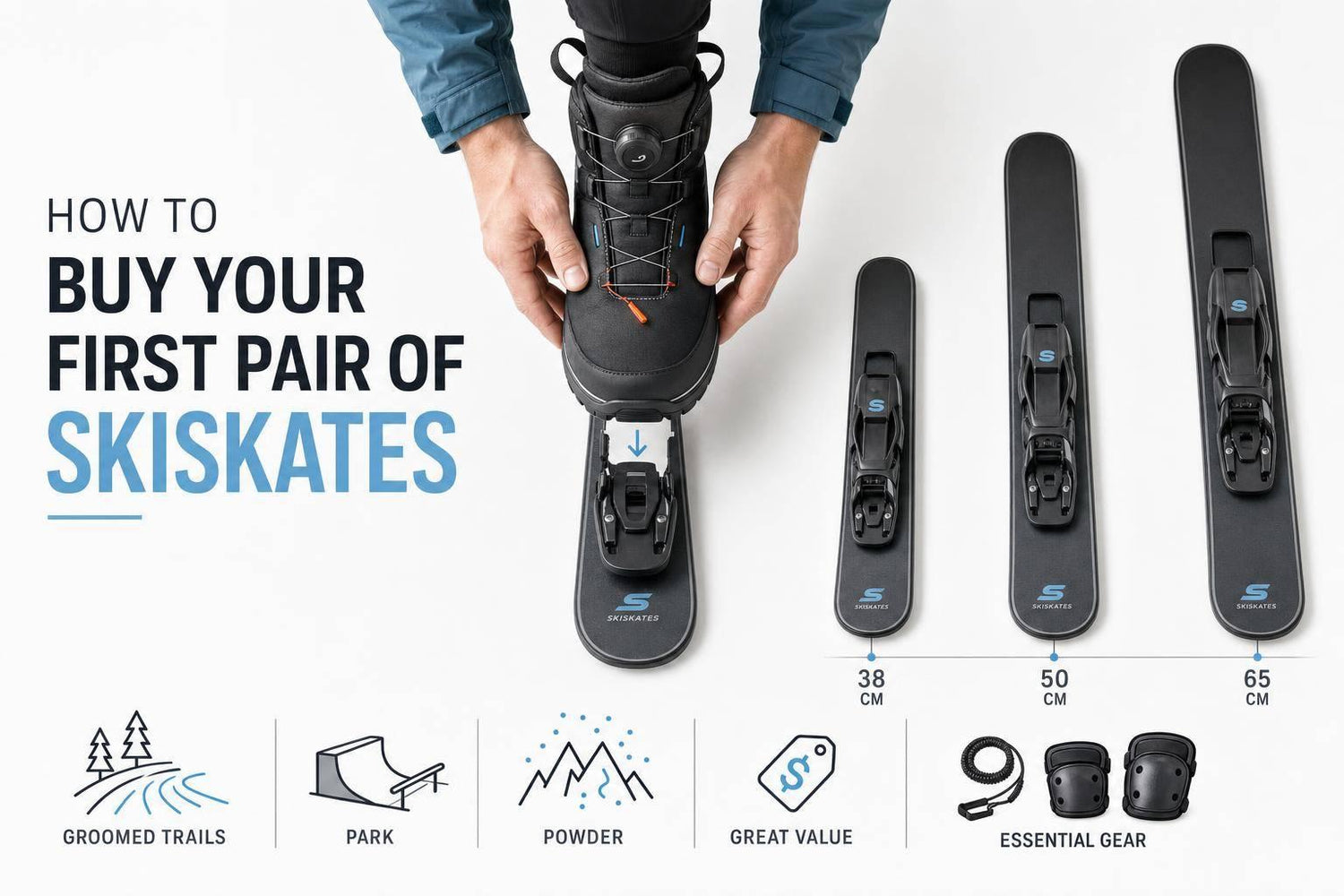
If I had to make this simple: pick your first pair based on boots first, terrain second, length third. That one rule will save you money, stress, and a bad first day on snow.
Here’s the short answer:
- If you only have winter shoes or want the lowest buy-in, go with Snowfeet* 38 cm
- If you want the best first pick for groomed resort runs, look at Skiskates 44 cm
- If you want a bit more calm underfoot, choose PRO 50 cm
- If you want the most ski-like ride of these four, pick Skiblades 65 cm
I’d also keep this in mind: standard skis are often 140–180 cm (55–71 in) long, so even 65 cm is still very short by ski standards. That means these models are easier to carry, easier to store, and less of a pain in the parking lot :) But the trade-off is simple: shorter = more playful, longer = more stable.
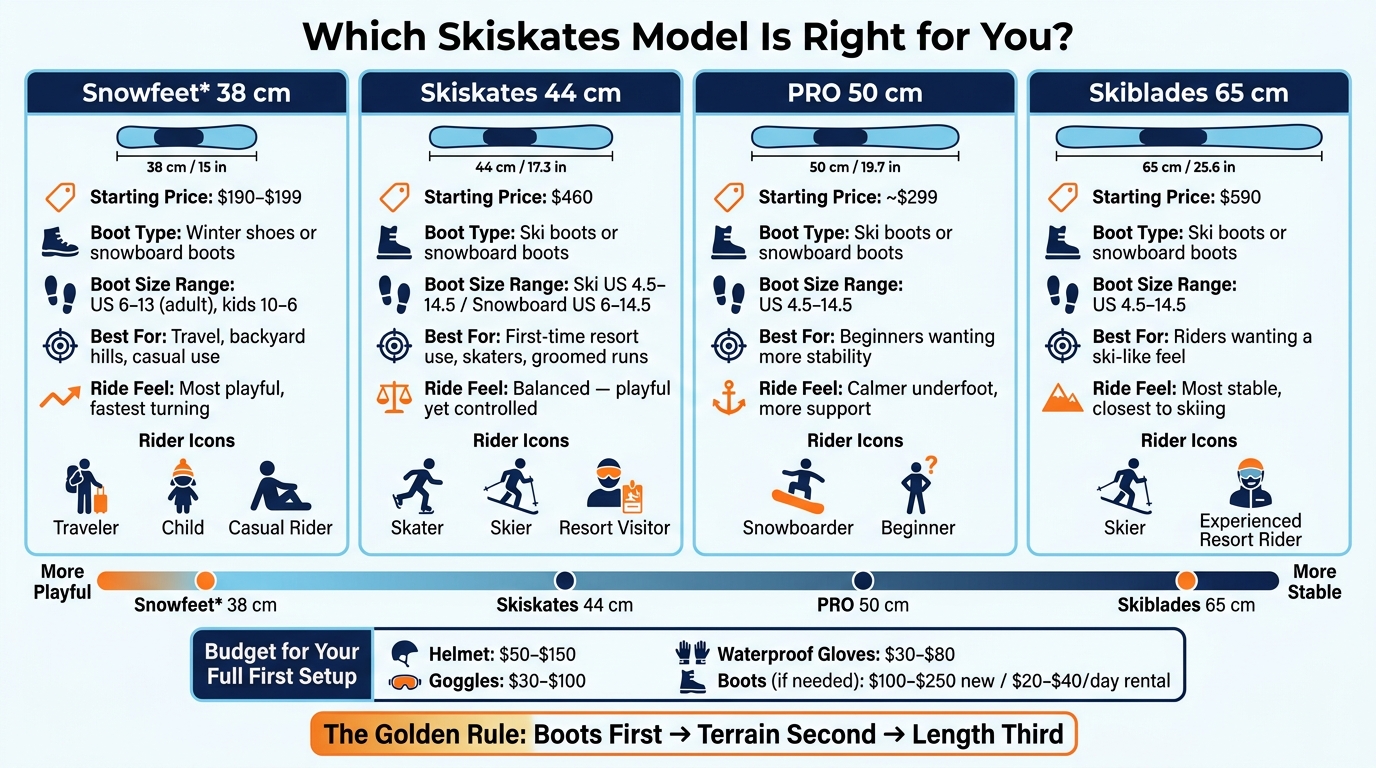
Skiskates Comparison Guide: Which Model Is Right for You?
Snowfeet* & Skiskates Complete Guide | All you need to know about Skiskating
Quick Comparison
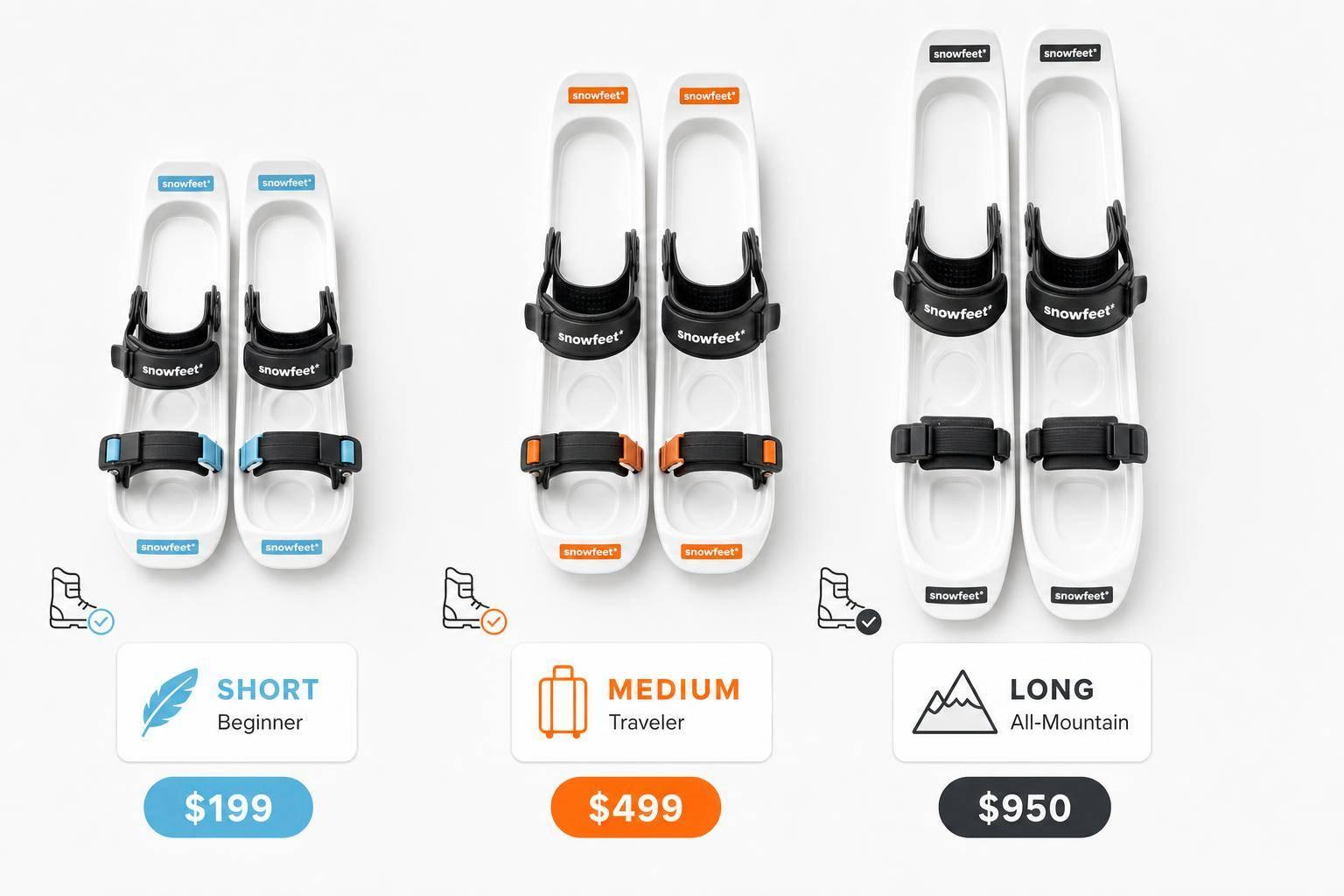
| Model | Length | Best For | Boot Type | Starting Price |
|---|---|---|---|---|
| Snowfeet* | 38 cm / 15 in | Travel, backyard hills, casual use | Winter shoes or snowboard boots | $190–$199 |
| Skiskates | 44 cm / 17.3 in | First-time resort use, skaters, groomers | Ski boots or snowboard boots | $460 |
| PRO | 50 cm / 19.7 in | Beginners who want more support | Ski boots or snowboard boots | ~$299 |
| Skiblades | 65 cm / 25.6 in | Riders who want a more ski-like feel | Ski boots or snowboard boots | $590 |
What I like about this setup is that the choice isn’t hard once you ask the right questions:
- What boots do you already own?
- Where will you ride 80% of the time?
- Do you want playfulness or more stability?
- What’s your full budget after helmet, goggles, gloves, and maybe boots?
A full first setup can go past the base price fast. Add about $50–$150 for a helmet, $30–$100 for goggles, $30–$80 for gloves, and $100–$250 for boots if you need them. So, uh, the “cheap” option doesn’t always stay cheap if your boot setup is wrong.
My take? Most first-time buyers should start with the 44 cm or 50 cm models if their boots fit. They give you a better mix of control and comfort on groomed slopes. The 38 cm makes sense when portability and simple setup matter most. And the 65 cm is the move if you want something closer to skiing without hauling full-length skis around.
If you’re buying your first pair, don’t overthink it. Match the gear to the day you’ll actually have, not the dream run in your head.
Step 1: Match Your First Pair to Your Experience, Boots, and Terrain
Use three simple filters: your riding background, your boots, and the terrain you’ll ride most.
Choose Based on Your Riding Background
Your riding background tells you a lot about which model will feel easiest on day one.
If you skate or inline skate, you’ll likely get used to shorter, more nimble setups fast. The Snowfeet* 38 cm and Skiskates 44 cm line up well with the balance and edge control skaters already know.
If you snowboard, a more centered stance often feels better right away. That’s why the PRO 50 cm or Skiblades 65 cm can feel like a smoother match.
If you ski, you already know a lot about edging and balance. For many skiers, the 44 cm Skiskates feel like a nice middle ground when moving into short-ski riding.
If you’re a total beginner, go for the easiest option that fits both your boots and your terrain. Starting with 44 cm or 50 cm gives you more control and a bit more stability than the 38 cm. The 38 cm is fun and easy to pack, but it’s better saved for later if this is your first day on snow.
For kids, boot fit comes first. Then look at stability on groomed terrain. A light, short setup is easier for a child to handle, but it still has to match their boot size and give enough support on gentle groomed slopes. At this stage, feeling at ease on easy terrain matters most.
Check Boot Compatibility Before Anything Else
The “best” model means nothing if your boots don’t fit the binding. Simple as that.
| Model | Compatible Boot Type | U.S. Size Range | Ideal Rider Type |
|---|---|---|---|
| Snowfeet* 38 cm | Winter shoes or snowboard boots | US 6–13 (adult); kids' sizes 10–6 | Casual riders, travelers, kids |
| Skiskates 44 cm | Ski boots or snowboard boots | Ski boot sizes: US 4.5–14.5; snowboard boot sizes: US 6–14.5 | Skaters, skiers, snowboarders |
| PRO 50 cm | Ski boots or snowboard boots | US 4.5–14.5 | Beginners wanting more stability |
| Skiblades 65 cm | Ski boots or snowboard boots | US 4.5–14.5 | Resort riders, nervous first-timers |
The 38 cm is the most flexible pick if you only have winter shoes or snowboard boots and don’t want to rent or buy ski boots. That’s a big plus if you want to keep things simple.
The other models are built for ski or snowboard boots. That setup gives you better edge control and a more secure feel underfoot. In plain English: less wobble, more connection.
Once you know your boots work, shift to the terrain you’ll ride most.
Pick the Terrain You Will Actually Ride Most
For a first setup, groomed runs are the safest bet. The 44 cm Skiskates do well on groomed runs, while the 65 cm Skiblades give you a bit more stability and a more ski-like feel if you want extra support at the resort.
The 38 cm is the easiest carry-and-go pick for backyard hills and gentle slopes. Toss them in the car and go. Terrain parks and small features can also work with the shorter models if you already have some board-sport coordination.
Be honest with yourself here. If you plan to ride powder, steep terrain, or rough snow, traditional skis still do that job better. Compact skiskates are fun, portable, and great for groomed terrain and casual resort laps. They’re not a full replacement for full-size skis in every condition.
So, pick the model for the runs you’ll actually ride, not the wild dream line in your head :)
With your experience, boots, and terrain narrowed down, it’s time to compare the 38 cm, 44 cm, 50 cm, and 65 cm models side by side.
sbb-itb-17ade95
Step 2: Compare the Best Snowfeet* Models for a First Setup
Snowfeet* 38 cm vs. Skiskates 44 cm: The Two Easiest Starting Points
These are the two easiest models to start with in the Snowfeet* lineup. But they fit slightly different riders. If you already know what boots you own and where you’ll ride, the pick comes down to one thing: how much control you want.
The 38 cm Snowfeet* are strap-on mini skis that work with regular winter shoes, hiking shoes, boots, and winter boots. That makes them the simplest setup by far. The downside? You get less edge grip at speed, and they can feel less sure-footed on steeper or icier terrain.
The 44 cm Skiskates use ski or snowboard boots. In return, you get better edge control, which helps a lot on groomed runs.
| Feature | Snowfeet* 38 cm | Skiskates 44 cm |
|---|---|---|
| Control at speed | Moderate | Better - more edge grip |
| Best terrain | Beginner hills, groomed slopes, small terrain-park features | Groomed resort runs, mild steeps |
| Starts at | Lower entry cost | $460 |
So, here’s the simple version:
- Pick the 38 cm if you want the easiest setup and the lower entry cost.
- Pick the Skiskates 44 cm if you already own ski or snowboard boots and want more control on groomed resort runs.
The 44 cm model costs more, sure, but for many riders that extra control is worth it.
When to Choose Snowfeet* PRO 50 cm or Skiblades 65 cm Instead
If the 44 cm feels a bit short for what you want, move up.
The PRO 50 cm, starting at $299, gives you more stability while still keeping that compact feel. It’s a nice middle ground if you want something a bit calmer under your feet without jumping all the way to a ski-like setup.
The Skiblades 65 cm, starting at $590, lean more toward the ski side of things. They handle carving, bumps, and park features better.
That’s the trade-off in plain English: longer models give you more stability and range; shorter models feel quicker and more playful. Kind of like the difference between a nimble go-kart and a car with a longer wheelbase.
Snowfeet* vs. Generic Mini Skis and Other Ski Brands
Snowfeet* has a clear edge for first-time buyers because the bindings are built for the product, and the boot fit is clearly spelled out. That matters more than people think. Nothing kills the fun faster than gear that sort of fits... but not quite.
Compared with bulkier ski setups, Snowfeet* is easier to pack and simpler to match with the boots you already own. For most casual riders, that makes it the easier first buy.
Next up: fit, budget, and accessories.
Step 3: Choose the Right Fit, Budget, and Accessories
Fit and Control: What to Focus On Instead of Sizing Charts
Once you’ve narrowed down the model, look at fit, price, and the gear you still need to buy. This part matters more than most people think.
Boot fit and binding security come first. Firm boots give you better control. Loose boots do the opposite. If the boot shifts, you’ll feel it right away. On short skates like these, even a little slack can turn into wobble.
Set the boot in the center of the binding and tighten everything evenly. No gaps. No looseness. Think of it like a bike wheel with a loose axle. It might still roll, but it won’t feel solid.
There’s also a clear difference between lengths. The 38 cm model turns the fastest, but it’s also less steady when speed picks up. The 44 cm and 50 cm models hit a nicer middle ground between playful and steady, which is why nervous beginners often feel better on those.
What Your First Setup Will Cost in U.S. Dollars
Here’s the first-time budget in plain English.
| Model | Base Price (USD) | Likely Extra Gear |
|---|---|---|
| Snowfeet* 38 cm | $190–$199 | Helmet, goggles, gloves; sturdy winter boots if needed |
| Snowfeet* PRO 50 cm | ~$299 | Snowboard or winter boots if not owned; helmet, goggles, gloves |
| Skiskates 44 cm | From $460 | Snowboard or winter boots if not owned; helmet, goggles, gloves |
| Skiblades 65 cm | From $590 | Ski boots if not owned; helmet, goggles, gloves |
Past the skates themselves, plan for a few basics if you don’t already own them:
- Helmet: about $50 to $150
- Goggles: about $30 to $100
- Waterproof gloves: about $30 to $80
- Boots: about $100 to $250 new, or about $20 to $40 per rental day at a U.S. resort
If you only ride a couple days each season, renting boots can be the cheaper move. If you’re heading up for a few weekends, owning a pair that fits well usually makes more sense. Better fit, less hassle, warmer feet. Hard to argue with that :)
Accessories Worth Buying with Your First Pair
After the skates, stick to the gear that helps with control and comfort. No need to go wild on day one.
Start with:
- a certified helmet
- anti-fog goggles
- waterproof insulated gloves
That’s the simple setup. Snowfeet* keeps it pretty clean: one compact product, then just the basics.
It’s also smart to grab wax and an edge tool early. Snowfeet* sells accessories like wax, straps, and an edge tool starting at $12. Wax them on a regular basis, sharpen the edges when grip starts to fade, and dry the metal parts after each run. That small bit of upkeep goes a long way.
Conclusion: The Best First Snowfeet* Setup for Different Types of Riders
Short version: your boots and riding background should guide your first pick.
If you already know what boots you’ll use and where you plan to ride, this table makes the choice simple.
| Rider Type | Best First Model | Why |
|---|---|---|
| Skater / hockey player | Snowfeet* 38 cm or Skiskates 44 cm | Short platform feels close to skating, with fast edge-to-edge response |
| Snowboarder | Snowfeet* PRO 50 cm | Fits snowboard boots and gives you more stability |
| Casual resort visitor | Skiskates 44 cm | Good balance of control for groomed resort terrain |
| Traveler / packing light | Snowfeet* 38 cm | Small enough to pack without a hassle |
| Teen or child | Snowfeet* 38 cm | Lowest-cost way in and easy to handle |
| Existing skier wanting something new | Skiblades 65 cm | More stable and closer to the feel of skis |
There’s still one clear limit: these aren’t the top pick for every kind of skiing. Long skis still do better at high-speed carving, deep powder, and race-focused riding.
But for most people reading this - casual resort riders, travelers, skaters moving onto snow, and families that want to skip ski-boot rentals - Snowfeet* skiskates are portable and easy to learn.
So, start with the model that fits your boots and terrain. Then think about length. Go longer only if you want more stability. Boots first, terrain second, length third.
FAQs
Do I need ski boots for skiskates?
No. Snowfeet Skiskates don’t need special ski boots.
Depending on the model and binding version, you can ride in snowboard boots or even regular waterproof winter shoes.
If you want more precision and hard, aggressive carving, ski boots can also work on the 44 cm Skiskates.
For most riders, snowboard boots hit the sweet spot. They give you a solid mix of support, comfort, and flex.
A good rule of thumb:
- Pick boots with a stiff or semi-stiff sole
- Make sure they come up at least to your ankle
Which skiskate length is easiest for beginners?
For beginners, the 38 cm Snowfeet Mini Ski Skates are the easiest and most budget-friendly way to start.
Want a ride that feels more stable and less wobbly? Go with the 50 cm Snowfeet PRO. It’s a forgiving first pick and gives you a bit more control while you learn.
The 44 cm Skiskates feel more nimble, but for most first-timers, 38 cm and 50 cm are the best places to begin.
Are skiskates good for kids and teens?
Yes - Skiskates are a great pick for kids and teens.
They’re compact, lightweight, and pretty easy to learn on. That matters a lot with younger riders. Less gear to wrestle with means more time having fun on the snow :)
The Snowfeet MINI KIDS model is made for younger riders or smaller feet. It fits US size 6 or smaller and works with smaller snowboard boots or regular winter shoes in EU sizes 27–33.
They also feel less intimidating than long skis. That’s a big deal for beginners. And you don’t need bulky, pricey, or uncomfortable ski gear to get started.











Leave a comment
This site is protected by hCaptcha and the hCaptcha Privacy Policy and Terms of Service apply.