



















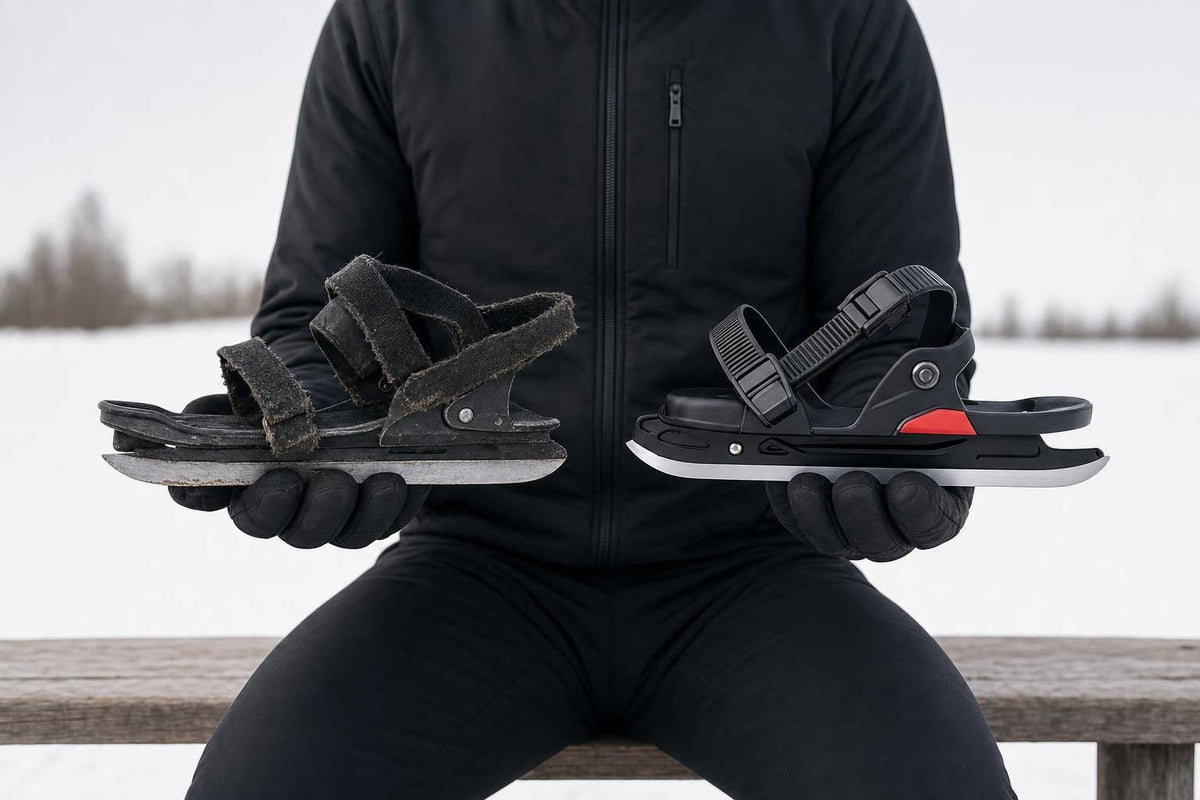
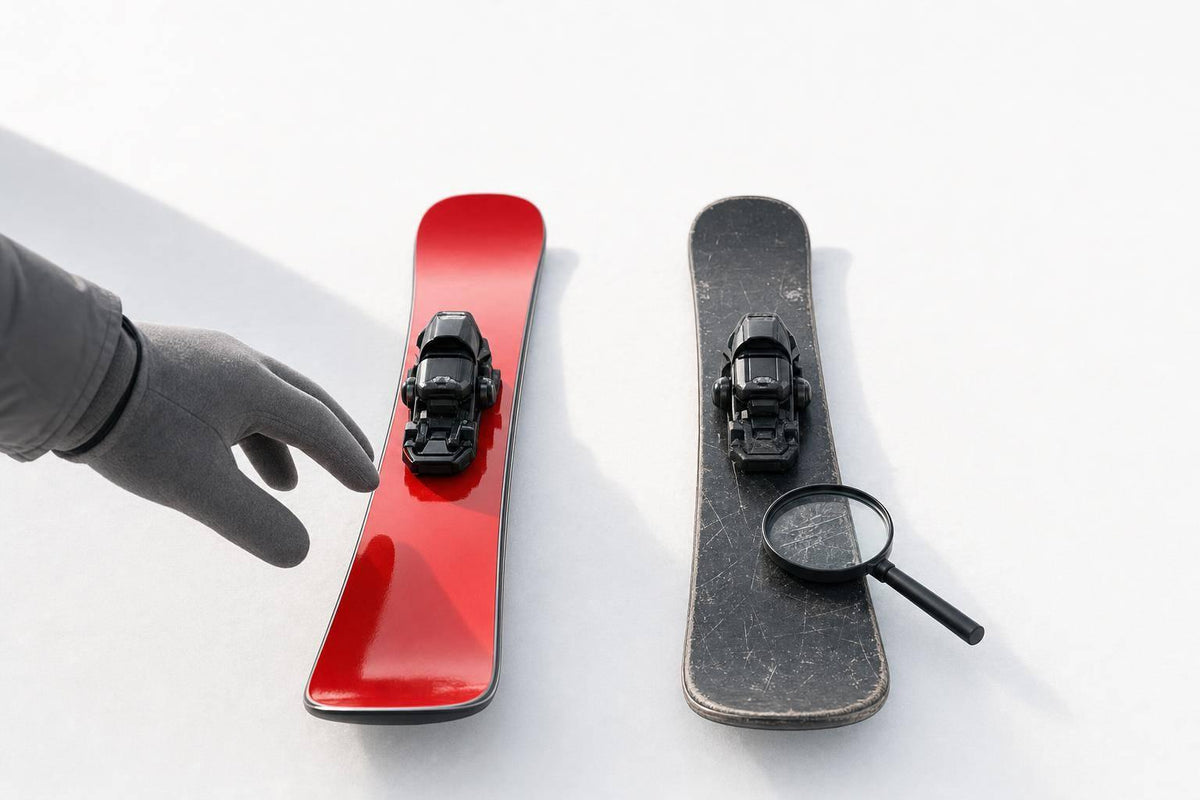
Short answer: no, most cheap knock-off skiskates aren’t worth it.
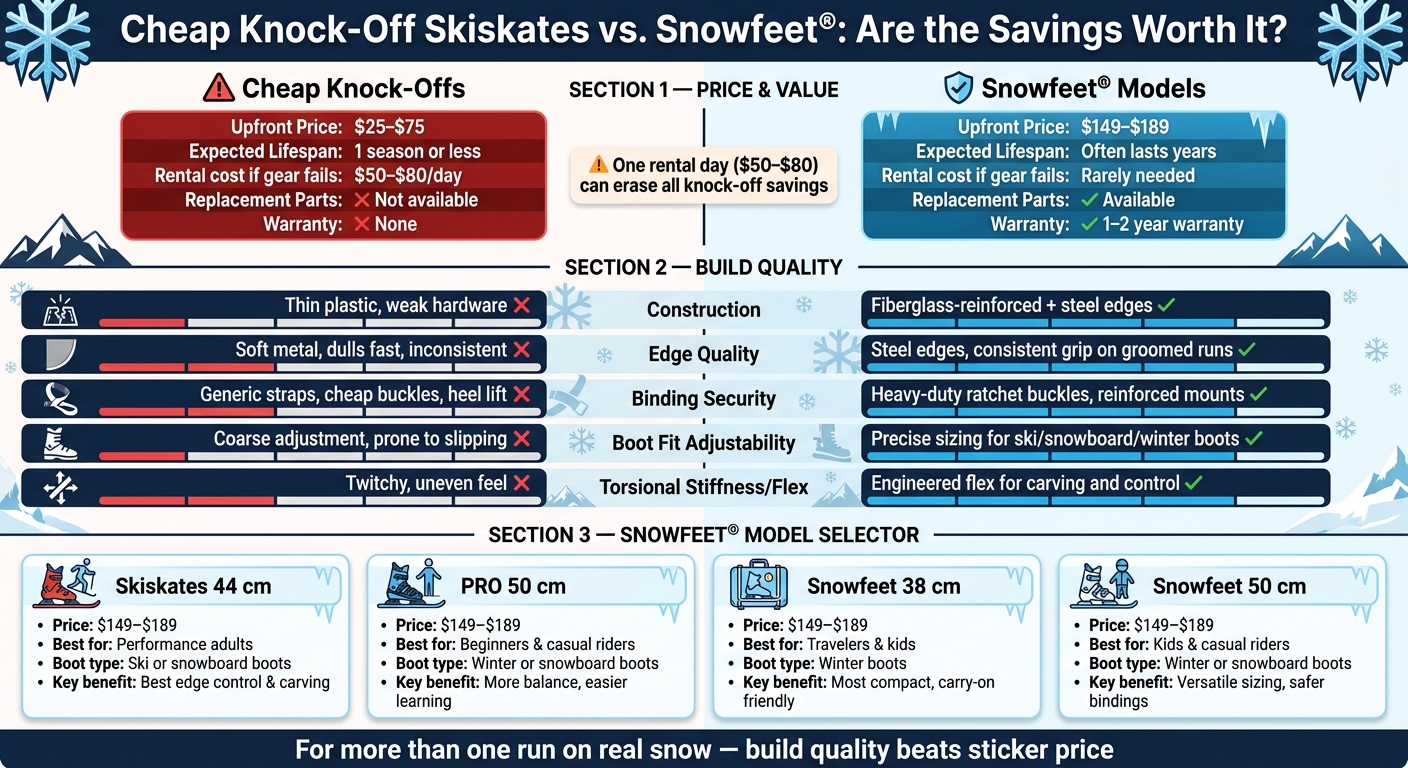
If I’m choosing between a no-name pair for $25–$75 and Snowfeet* models in the $149–$189 range, I’d skip the bargain bin. The low price can come with weak straps, poor edge grip, short lifespan, and more slip in the bindings. That can turn one cheap buy into a broken setup, a lost day, or even a $50–$80 rental bill.
Here’s the simple takeaway:
- Cheap knock-offs: low upfront cost, but often poor fit, weak parts, and less control
- Snowfeet* Skiskates 44 cm: best pick if you want a more ski-like ride and stronger edge hold
- Snowfeet PRO 50 cm: easier for newer riders who want more balance
- Snowfeet* 38 cm / 50 cm: good if you want small gear that works with winter boots
If you plan to use skiskates for more than one mellow run, build quality and binding hold matter more than sticker price. That’s the whole game.
Cheap Knock-Off Skiskates vs. Snowfeet: Full Comparison
Snowfeet* & Skiskates Complete Guide | All you need to know about Skiskating
Quick Comparison
| Model | Price | Best For | Boot Type | Main Trade-Off |
|---|---|---|---|---|
| Cheap knock-offs | $25–$75 | One-time, slow backyard use | Varies; often loose fit | Lower grip, weaker straps, short lifespan |
| Snowfeet* Skiskates 44 cm | $149–$189 | Adults who want more control | Ski or snowboard boots | Costs more upfront |
| Snowfeet PRO 50 cm | $149–$189 | Beginners and casual resort riders | Winter or snowboard boots | Less ski-like than the 44 cm |
| Snowfeet* 38 cm / 50 cm | $149–$189 | Travel, kids, winter-boot use | Winter or snowboard boots | Pick size based on balance vs pack size |
So, if you want gear that feels stable, grips better, and doesn’t quit when it gets cold, I’d put my money on the Snowfeet* options and move on with my day :)
Price vs. Real Value
Sticker price isn’t the full story. What matters is what you pay over time, not just what you pay on day one.
Why Saving $100 Upfront Can Cost More Later
Generic knock-offs usually sell for about $25–$75 on marketplaces. Snowfeet* Skiskates and PRO models usually cost $149–$189. So yes, the gap up front is real.
But that’s only half the picture.
Cheap knock-offs often use brittle plastic and weak hardware. One crack, one snapped strap, or one failed binding can burn through those early savings fast. And if that failure sends you to the rental shop, a single day of ski rentals can cost $50–$80. That can wipe out the discount in one trip.
Snowfeet* products use fiberglass-reinforced material, high-quality metal edges, and secure adjustable bindings. They’re built for repeat use and often last for years. That usually leads to a lower cost per season than a knock-off that may last one season, or less.
There’s another piece people miss: replacement parts. Snowfeet* offers them. Most knock-offs don’t.
So, cheap gear can look like a bargain at first. Then the strap breaks, the plastic cracks, and suddenly that “deal” doesn’t feel like much of a deal :)
| Product Type | Typical Price | Materials | Bindings | Boot fit | Expected Longevity | Support |
|---|---|---|---|---|---|---|
| Snowfeet* (Authentic) | $149–$189 | Fiberglass-reinforced plastic, high-grade steel edges | Heavy-duty adjustable buckles | Most winter/snowboard boots | Often lasts for years | 1–2 year warranty; spare parts available |
| Cheap Knock-offs | $25–$75 | Lower-grade plastic, low-grade or no edges | Flimsy plastic straps | Limited; prone to slipping | 1 season or less | None; replacement parts usually unavailable |
That price gap matters most when the gear has to handle repeat days on snow.
When Snowfeet* Makes More Financial Sense
This is where the math starts to lean in Snowfeet*’s favor.
- For travelers: compact gear may help you avoid oversized bag fees.
- For parents: adjustable bindings can keep working as kids grow.
- For casual riders: gear that works well and keeps working is often worth more than the lowest price tag.
Resale value helps too. Authentic Snowfeet* tends to hold resale value better than no-name copies.
Price matters. But build quality decides if the savings stick once you’re out on the snow.
sbb-itb-17ade95
Build Quality, Edge Control, and Binding Security
The real gap comes down to build quality: edges, fit, and binding security. That shows up fast on snow, especially in edge hold and how locked-in your boots feel.
Why Poor Edge Quality Is a Big Problem
A lot of cheap knock-off skiskates either skip proper metal edges or use soft, rough-finished metal that dulls fast and varies in thickness from tip to tail. In a product photo, the edge might look fine. On firm morning snow or a groomed run, though, the story changes. It may grip for a second, then let go out of nowhere.
That kind of inconsistency is brutal for beginners. When you're learning, you need to trust that if you lean into a turn, the skiskate will react the same way each time. Weak edges break that trust. You get surprise sideways skids in the middle of a turn, stops that feel random, and that weird feeling that the skiskate has its own plans. Not fun. And yeah, confidence can disappear in a hurry.
Snowfeet* Skiskates 44 cm use a reinforced build and steel edges for steady grip on groomed snow. Snowfeet PRO 50 cm and Snowfeet 38 cm / 50 cm models also use quality metal edges and durable construction built to balance maneuverability, stability, and portability. On short skiskates, edge quality matters even more because you have less edge length working for you. On firm snow, weak edges make control feel random.
Boot Compatibility Is Not a Small Detail
Cheap knock-offs often say they work with ski boots, snowboard boots, and regular winter shoes. Sounds nice on paper. In practice, the bindings are often generic, with limited adjustment and not enough strap length or heel support for bulkier boots. That leads to heel lift, side-to-side movement, and a foot that shifts during the run.
Snowfeet* takes a more direct route. Skiskates 44 cm are built for ski-boot setups, with fit ranges clearly listed: ski boots about US 4.5–14.5; snowboard boots about US 6–14.5. The Snowfeet PRO 50 cm and Snowfeet 38 cm / 50 cm models are made to work with regular winter footwear and snowboard boots, with bindings shaped and sized to match.
That split between models matters. A boot-binding fit that’s actually dialed in is what gives you edge control to begin with. If the fit is loose, control gets weaker before you even leave the top of the run.
Ride Feel Depends on More Than Just Size
Two skiskates can both say "44 cm" or "50 cm" and still feel nothing alike on snow. Flex pattern, torsional stiffness, edge finish, and binding placement all change how the skiskate reacts under your feet. Cheap copies often miss that balance.
The Snowfeet* Skiskates 44 cm are built for a more ski-like feel, with stiff construction and metal edges set up for slope performance and carving on groomed runs. Generic copies that only copy the length often miss the reinforcement around the bindings and the exact mix of stiffness and flex. The result? They can feel twitchy, flat, or uneven from one turn to the next.
| Feature | Snowfeet* Skiskates 44 cm | Snowfeet PRO 50 cm / Snowfeet 38 cm / 50 cm | Cheap Knock-Off Skiskates |
|---|---|---|---|
| Construction | Reinforced build, steel edges | Durable composite build, quality edges | Thin plastic, weak hardware |
| Edge Quality | Steel edges with consistent grip on groomed runs | Quality metal edges for balanced control | Often no proper metal edges or soft metal that dulls quickly |
| Binding Design | Multi-strap, high-quality ratchet buckles, reinforced mounts | Supportive strap system with solid buckles and good heel retention | Generic straps, cheaper buckles, weak mounts |
| Fit Adjustability | Precise adjustment for ski or snowboard boots; wide size range | Flexible sizing for different boot types | Coarse adjustability, common heel lift and side-to-side play |
| Intended Use | Carving, controlled braking, regular slope use | Versatile resort fun and casual riding | Gentle terrain or occasional novelty use |
When those parts give out, control goes with them. That’s the kind of thing you feel right away, usually at the worst moment :)
Safety Concerns and the Few Cases Where Knock-Offs Might Work
How Cheap Copies Can Feel Unsafe on Snow
Performance flaws are annoying. Safety flaws are the real problem.
Fit and edge issues don’t stay in the “minor hassle” lane for long. Once fit and edge hold go bad, it stops being about comfort and starts being about staying upright.
Loose bindings or stretched straps let your boot shift inside the binding. That extra movement makes turns less predictable, which bumps up your fall risk. And on snow, a small wobble can turn into a fast spill.
It gets worse when the boot sits off-center. Poor alignment makes you compensate without even thinking about it. That chips away at control and makes falls more likely.
Hard snow shows the same problem in a new light. On hardpack, thin materials can chatter instead of grip. So when you need to stop, the ride can feel sketchy and less sure.
When a Knock-Off Might Be Good Enough
There’s one very narrow case where a cheap knock-off might do the job: one slow run on soft backyard snow.
If someone knows they’re buying a short-life item, not actual snow gear, then sure, a bargain copy can serve that one small purpose. But that’s about it.
That’s why most buyers should skip copies and go with a dependable Snowfeet* model instead. For most people, the next step is pretty simple: buy the model made for actual use.
Best Choice for Most Buyers
Once you rule out disposable copies, the next step is simple: pick the Snowfeet* model that fits your boots and how you like to ride. After the cheap stuff is gone from the list, it mostly comes down to boot type, control, and packability.
Choose Snowfeet* Skiskates 44 cm for the Most Ski-Like Feel
The Snowfeet* Skiskates 44 cm give you the most ski-like feel in the lineup. If you want clean carving and better control on groomed runs, this is the pick. They work with ski or snowboard boots across a wide size range, and the steel edges add the grip and response that cheap copies just don't have.
They’re also light enough to toss in a bag, which is nice. No one wants gear that skis well but feels like hauling bricks :)
Choose Snowfeet PRO 50 cm or Snowfeet 38 cm / 50 cm for Easier, More Flexible Use
Snowfeet PRO 50 cm makes sense if you want to skip the gamble of a cheap copy but don’t need a more performance-driven setup. The longer platform helps with balance, which is a big plus for beginners, and it’s made to last across many seasons. It costs more than a knock-off, sure, but it also won’t crack, loosen, or give up on you halfway through the day.
Snowfeet* 38 cm / 50 cm models are a good match for travelers, parents shopping for kids, and anyone riding in sturdy winter boots. The 38 cm version is the most compact and fits carry-on bags more easily. Kids can use boots they already own, as long as they’re within the size limits.
Here’s the quick breakdown:
| Rider Type | Best Model | Key Reason |
|---|---|---|
| Performance-focused adults | Skiskates 44 cm | Best edge control, ski/snowboard boot fit |
| Beginners & casual resort visitors | PRO 50 cm or Snowfeet 38 cm / 50 cm | Easier balance, durable build |
| Frequent travelers | Snowfeet 38 cm | Most compact, carry-on friendly |
| Parents buying for kids | Snowfeet 38 cm / 50 cm | Works with winter boots, safer bindings |
Cheap knock-offs may save money at first, but they fall short where it counts: durability, control, and binding security. That’s the stuff that makes skiskates worth taking to the mountain in the first place. Snowfeet* gives you more for your money if you plan to use them for more than a test run.
FAQs
How long do cheap knock-off skiskates usually last?
Usually not for long.
Cheap knock-off skiskates are often made with low-grade, brittle plastic that can crack during normal use. That’s a pain on its own, but it can also turn into a safety issue fast.
You’ll also see stuff like:
- metal edges that are loose, weak, or missing
- flimsy bindings that fail often
Compared with trusted products like Snowfeet, these knock-offs are less durable, less reliable, and a lot more likely to leave you frustrated on the hill.
Which Snowfeet* model is best for beginners?
For beginners, the Snowfeet PRO 50 cm is the best pick. The extra length gives you more stability, a smoother ride, and better balance. That means less of that shaky, wobbly feeling a lot of first-time riders get.
It also comes with a built-in heel brake, which helps a lot when you're learning to stop and turn. And if you weigh 170–220 lbs, this model is an especially good fit because it gives better weight distribution and grip.
Can I use regular winter boots with skiskates?
Yes - if the boots fit the skiskate’s binding and give you solid ankle support.
Snowfeet* can strap onto regular waterproof winter boots or snowboard boots, based on the model. For example, Snowfeet PRO works with regular winter shoes.
For safety and comfort, make sure the fit is snug and the binding is fastened tight. If your boot slides around, that’s a red flag. You want it to feel secure, not loose and floppy :)











Leave a comment
This site is protected by hCaptcha and the hCaptcha Privacy Policy and Terms of Service apply.