




















When shopping for used skis, here’s the deal: you can save a ton of money and help the planet by reusing gear. But, it’s not as simple as picking the first pair you see. You’ll need to check for wear and tear, ensure bindings match your boots, and figure out what type of skiing you’re planning to do. Oh, and don’t forget - short skis like Snowfeet® Skiblades are a game-changer for beginners or anyone who values portability.
Key Takeaways:
- Condition Check: Look for scratches, gouges, and binding wear.
- Ski Type & Length: Match your skill level and terrain. Short skis are easier to control and store.
- Bindings & Boots: Ensure compatibility and test release mechanisms for safety.
- Costs: Used skis range from $200–$800, but Snowfeet® starts at $150 and skips the need for special boots or gear.
If you’re tired of lugging around bulky skis, Snowfeet® gear might be your answer. Compact, lightweight, and versatile, they’re perfect for casual skiers or anyone short on storage space.
So, whether you’re hunting for long skis or exploring shorter options like Snowfeet®, this guide has you covered. Let’s get into the details and help you make the right pick!
Pot of gold or a trap for the unwary!? - Buying second hand skis
How to Check Used Ski Condition
Start with the topsheet - that’s the protective layer on top of the ski. Small scratches and scuffs? No big deal, they’re just cosmetic. But if you spot deep gouges that cut through the topsheet, that’s a red flag. Exposed cores can let moisture in, which isn’t good news for the ski’s longevity.
After that, take a close look at the base, edges, and flex. These details can tell you a lot about the ski’s overall condition and performance potential.
Checking Bindings and Boot Compatibility
Bindings are the connection between you and your skis, so getting them right is absolutely key. A proper check here is just as important as inspecting the skis themselves - it’s all about ensuring a safe and enjoyable ride. While traditional alpine skis often require specific ski boots, shorter skis like Snowfeet* Skiblades offer a more flexible option. They work with regular winter boots or even snowboard boots you might already have on hand.
Match Bindings to Your Boots
For traditional bindings, make sure they’re compatible with your boot sole size and meet your DIN (Deutsches Institut für Normung) requirements. You’ll usually find an ISO certification number stamped on the binding - this confirms it meets safety standards.
Snowfeet* bindings, on the other hand, are much simpler. They’re designed to work with sturdy winter boots, as long as the soles aren’t too bulky for the binding mechanism. This means you can skip the need for specialized ski boots and head straight to the slopes with gear you already own.
Once you’ve confirmed the boots and bindings are a match, the next step is testing how well the bindings function.
Test Binding Function
Safety is everything when it comes to bindings, especially for traditional skis. A proper release mechanism can prevent injuries caused by twisting forces during a fall. To test this, step into the bindings and check for a secure toe click, then twist slightly to ensure the heel releases correctly.
Inspect the bindings for any visible damage, such as cracked plastic, bent metal, or missing screws. If the DIN settings are hard to adjust or seem worn, it’s probably time to get them serviced by a professional.
With Snowfeet*, things are a bit easier. Their bindings are straightforward and designed to handle the lower speeds and forces typical of their shorter skis. Just make sure the straps are in good shape and the ratchet or buckle systems work smoothly.
Once you’ve ensured the bindings are in working order, it’s worth considering any potential remounting costs for traditional skis.
Calculate Remounting Considerations
Traditional skis can come with hidden costs if the bindings are worn out or incompatible with your boots. Remounting bindings isn’t cheap, and it’s something to factor into your overall budget.
Snowfeet* bindings, however, avoid these headaches. They’re built specifically for their shorter ski design and are compatible with the winter boots you already own. Plus, the lower forces involved mean they rarely need replacement or adjustment.
While used traditional skis might seem like a bargain upfront, the extra costs for specialized boots and possible remounting can add up fast. Snowfeet* products offer a more straightforward and cost-effective option, letting you hit the slopes without the extra hassle or expense.
Picking the Right Ski Type and Length
Getting the right ski type and length can make or break your time on the slopes, especially when you're shopping for used gear. Here's the deal: longer skis aren't always better. In fact, many skiers are finding that shorter skis can be more fun, easier to control, and quicker to master.
Short Skis vs. Long Skis
Short skis are all about convenience and agility. Traditional skis usually fall in the 60–71 inch (150–180 cm) range, but Snowfeet* takes things in a different direction with options between 15–47 inches (38–120 cm). For example, Snowfeet* Mini Ski Skates are just 15 inches (38 cm) long and can easily fit in a backpack. Compare that to traditional skis, which often need bulky roof racks or oversized bags. With short skis, you can take them hiking, to the park, or even on public transportation - no sweat.
Short skis also shine when it comes to learning. Long skis often require more leg strength and refined technique, especially at slower speeds. Short skis, on the other hand, are easier to control and stay stable even at a crawl, making them a solid choice for beginners.
And then there’s versatility. Long skis from brands like Atomic or Völkl are often specialized - like powder skis for deep snow or carving skis for groomed runs. Snowfeet* gear, however, is built to handle almost anything. Groomed slopes? Check. Snow parks? Yep. Hiking trails or even your backyard? Absolutely.
Choose the Right Ski Length
If you're going for traditional skis, the rule of thumb is they should hit somewhere between your chin and forehead. But Snowfeet* takes things to another level with ultra-short sizes that give beginners immediate control.
For advanced skiers, longer skis are often the go-to for high-speed carving or deep powder. But even seasoned pros are discovering the perks of Snowfeet* Skiblades. Available in lengths like 25.6 inches (65 cm) or 38.6 inches (99 cm), these shorter skis offer quick, responsive maneuverability that’s perfect for tight turns and fast adjustments.
The terrain you plan to tackle also matters. If you're sticking to groomed local hills, models like the 17.3-inch (44 cm) Skiskates or the 19.7-inch (50 cm) Snowfeet* PRO are excellent. For more varied terrain, including powder, the 38.6-inch (99 cm) Snowfeet* POWDER model strikes a balance between traditional short skis and longer gear.
What really sets Snowfeet* apart is their flexibility. You’re not locked into one type of skiing. Their shorter lengths are designed to handle a variety of snow conditions and terrains, making them a great all-around option.
Understanding Ski Width and Shape
Width plays a big role in how skis perform. Narrow skis (under 80 mm) are great for groomed runs but struggle in deep snow. Wider skis (over 100 mm) excel in powder but can feel clunky on hard-packed trails. This can make choosing used traditional skis tricky - you often have to pick one strength over another.
Snowfeet* skis simplify this by using an optimized sidecut and width that make quick, controlled turns a breeze, no matter the conditions. Unlike traditional skis, which come with varying rocker and camber profiles for specific uses (like full camber for carving or full rocker for powder), Snowfeet* gear is designed with profiles tailored to their shorter lengths. This ensures balanced performance wherever you ski.
If you're looking at used traditional skis, you'll need to carefully match the width and shape to your preferred conditions. But with Snowfeet*, you’re getting gear that’s already tuned for versatility and fun across a range of terrains and snow types. When deciding, keep these factors in mind along with pricing and maintenance costs to find the perfect fit for your skiing style.
sbb-itb-17ade95
Snowfeet* vs. Long Skis and Snowboards
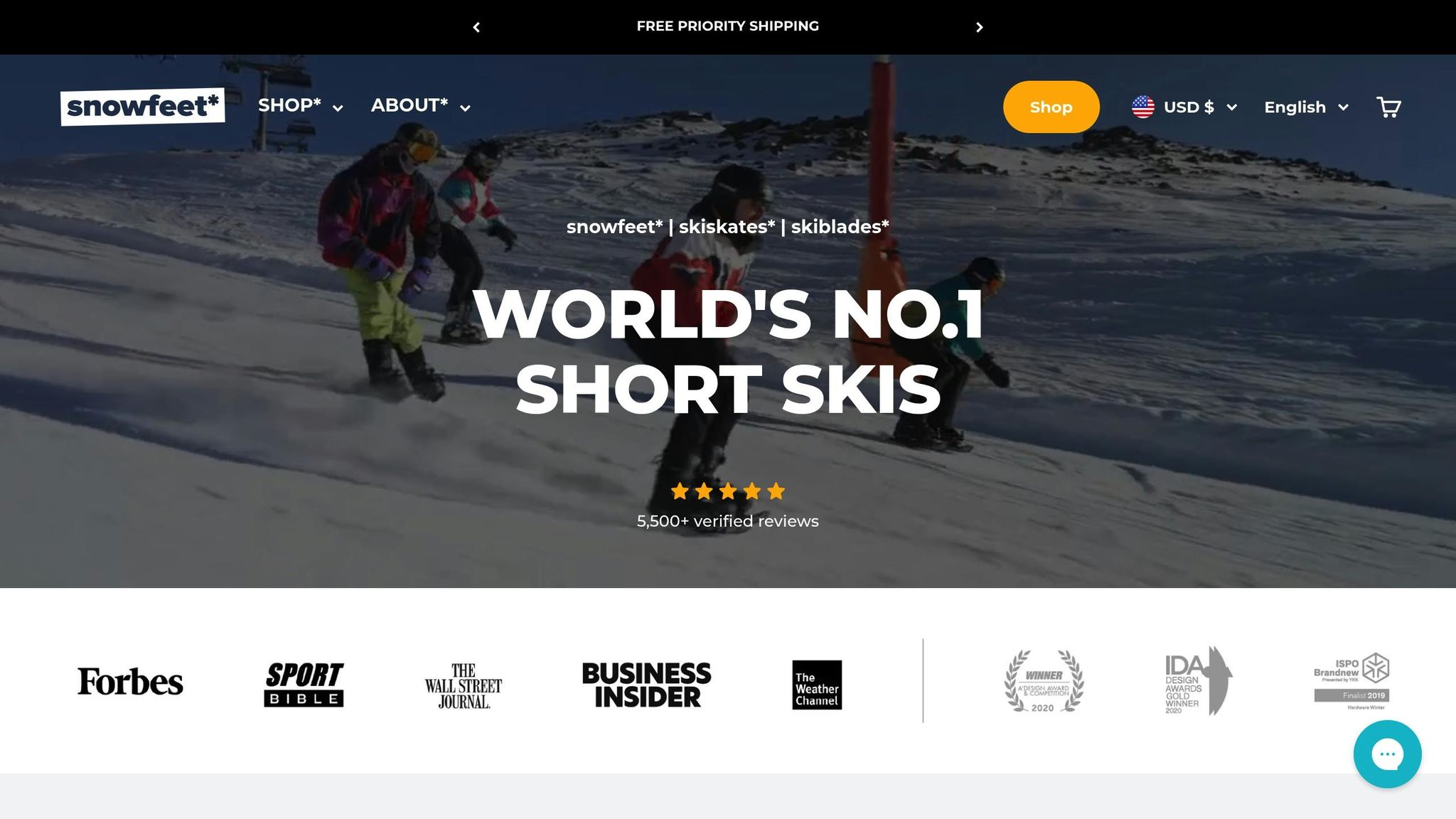
Once you've assessed the condition and compatibility of used gear, it's worth comparing how Snowfeet* stacks up against traditional skis and snowboards. For a long time, the winter sports world has leaned heavily into the idea that "bigger is better." But Snowfeet* flips that script, offering gear that's all about portability and versatility.
Most recreational skiers stick to groomed runs at their local slopes rather than chasing extreme speeds or tackling backcountry terrain. For these folks, shorter and more agile equipment makes a lot of sense. Snowfeet* caters to this crowd with gear that's easy to use and incredibly convenient.
Side-by-Side Comparison: Snowfeet* vs. Traditional Gear
Let's break it down. Here's a quick comparison of Snowfeet* and traditional long skis and snowboards, highlighting the key differences:
| Factor | Snowfeet* | Traditional Skis | Snowboards |
|---|---|---|---|
| Learning Curve | Easy to control, especially at slower speeds | Requires lessons; less responsive at low speeds | Tough to learn, with frequent falls |
| Portability | Compact and fits in a backpack (15–47 inches) | Bulky; needs a roof rack or ski bag (60–71 inches) | Large and awkward to carry (55–65 inches) |
| Boot Compatibility | Works with winter shoes, ski boots, or snowboard boots | Requires specialized ski boots | Requires snowboard boots |
| Terrain Flexibility | Great for slopes, parks, trails, and even backyards | Best on ski slopes | Primarily for ski slopes |
| Storage | Fits in a closet or under a bed | Needs garage or basement space | Similar large storage needs |
| Maintenance | Low upkeep; minimal tuning | Regular waxing and edge work needed | Same as skis - frequent maintenance required |
| Fun Factor | Highly maneuverable; great for quick turns | Thrilling at high speeds | Fun once you master it |
| High-Speed Stability | Ideal for moderate speeds and casual use | Excellent at high speeds | Stable at faster speeds |
Snowfeet* shines when it comes to portability. Take the Snowfeet* Mini Ski Skates, for example - they're only 15 inches long, making them super easy to carry around. No need for a roof rack or a big storage space.
Another big win? Snowfeet* works with the winter boots you already own. That means no extra spending on specialized boots, which is a relief for your wallet.
In terms of where you can use them, Snowfeet* takes the prize again. Unlike traditional skis and snowboards that are mostly limited to ski resorts, Snowfeet* gear - like Skiskates or Skiblades - works just as well on a sledding hill, in your local park, or even in your backyard after a snowstorm. You don’t need a lift ticket or a trip to a crowded resort to have fun in the snow.
Of course, traditional long skis do have their strengths. They're excellent for high-speed stability and deep powder, which can be great for expert skiers tackling challenging runs. But for most intermediate skiers, the ease of use, versatility, and lower maintenance of Snowfeet* gear make it a better fit.
Speaking of maintenance, traditional gear requires regular waxing, tuning, and edge work, which can get pricey and time-consuming. Snowfeet*, on the other hand, keeps things simple with minimal upkeep, saving you both time and money in the long run.
When you add up the total cost - boots, bindings, maintenance, and transportation - Snowfeet* often comes out ahead. It's not just about saving money; it's also about having gear that's easy to use, versatile, and perfect for everyday winter fun. For most recreational skiers, Snowfeet* checks all the right boxes.
Price and Value Guide
When it comes to ski equipment, the price tag is just one part of the story. You also need to think about maintenance, how long it’ll last, and how often you’ll actually use it. That’s where shorter options like Snowfeet* really shine compared to traditional long skis and snowboards. Let’s break it down and see why Snowfeet* might be the smarter pick.
Used Ski Price Ranges
If you’re shopping for used traditional skis, you’ll find prices typically range from $200 to $800. Demo models, which are slightly used but still in good shape, usually fall between $400 and $600.
Snowfeet* gear, on the other hand, offers a more budget-friendly alternative. Brand-new Snowfeet* models start as low as $150 for the Mini Ski Skates and go up to $690 for their Short Skis. In the middle, you’ve got popular options like the Snowfeet PRO at $199 and Skiskates starting at $390. If you’re looking at the used market, you can often snag these items at a discount, making them even more affordable.
What’s more, Snowfeet* helps you avoid the extra gear costs that come with traditional skis. There’s no need for expensive ski boots, roof racks, or ski bags. That means lower upfront costs and fewer ongoing expenses.
Maintenance and Durability Costs
Traditional skis require regular upkeep - think tuning, edge sharpening, and waxing. Over time, these maintenance tasks can add up. Snowfeet* gear, however, is designed with durability in mind. They’re made with fiberglass-reinforced construction and metal edges, which help reduce wear and tear. Plus, their compact size makes them easier to care for.
While traditional skis can last for years with proper maintenance, their performance tends to decline over time. Snowfeet* products are built to handle the rigors of use without sacrificing performance, ensuring they stay reliable season after season.
Why Used Gear Makes Sense
Buying used gear can be a great way to save money, especially if you’re just testing the waters with a new kind of skiing. Snowfeet* equipment is a solid choice in the used market because it holds its value well. Its lightweight and portable design make it convenient for spontaneous trips, eliminating the hassle of transporting bulky skis.
Traditional skis come with extra costs - maintenance, specialized boots, and transport gear like ski bags and roof racks. Snowfeet* skips all that. They’re compatible with regular winter boots, which is a huge plus for families. Kids can use their regular boots, so there’s no need to buy pricey ski boots they’ll outgrow in a season. This makes Snowfeet* not just easier to use but also more affordable and accessible for everyone.
Making the Right Choice
Buying used skis doesn’t have to be complicated if you balance your budget, skill level, and specific needs. While traditional long skis dominate the secondhand market, shorter alternatives like Snowfeet* products offer some real advantages you might not have considered. Let’s break it down and revisit the key points to help you decide.
Main Points to Keep in Mind
When shopping for used skis, start with a thorough condition check. Inspect the edges, look for deep scratches on the base, and make sure the bindings are in good working order. That said, Snowfeet* gear changes the game a bit.
Unlike traditional skis, Snowfeet* bindings are compatible with regular winter boots or snowboard boots. This eliminates many of the usual hassles that come with traditional ski bindings.
Snowfeet* products are also designed with shorter, more forgiving lengths that work well for a variety of users. For example, the Snowfeet PRO measures just 50 cm, and Skiskates are even shorter at 44 cm. These compact options make them versatile and easy to handle for most people.
Another big plus? Their small size. Snowfeet* gear doesn’t require roof racks or bulky ski bags, making it perfect for last-minute trips and easy storage.
Your Next Steps
Think about the kind of skiing experience you’re after. If you’re drawn to the freedom and ease of shorter skis, take a closer look at the Snowfeet* lineup. Their options range from the ultra-portable Mini Ski Skates, priced at $150, to the 120 cm Short Skis, which go up to $690. Whether you’re on a budget or looking for high-performance gear, there’s something for everyone.
Don’t forget to factor in the total cost of ownership. Beyond the initial purchase price, consider maintenance, boot compatibility, and transport needs. In many cases, Snowfeet* products offer a more practical solution, especially for those who value convenience and portability.
Finally, think about your lifestyle and storage space. If you live in a small apartment, travel often, or just want gear that fits seamlessly into your life, Snowfeet* products are a smart choice. Their compact design is a stark contrast to the bulkiness of traditional skis.
While the used ski market is full of deals on conventional gear, Snowfeet* takes a different approach to snow sports. They focus on making skiing fun, accessible, and convenient, challenging the old idea that longer skis are always better. Whether you go with new or used gear, Snowfeet* offers a fresh, exciting way to hit the slopes.
FAQs
What should I check to make sure used skis are in good condition before buying?
When you're shopping for used skis, there are a few key things to check to make sure you're getting a solid pair. Start with the edges - these need to be sharp and free from rust, cracks, or bends. A quick trick: run your fingernail along the edge to feel for any ridges or damage.
Next, take a look at the bases. Watch out for deep scratches, core shots (those are spots where the base material is damaged down to the core), or any signs of warping. Warped skis can mess with both your performance and safety on the slopes. Don’t forget the topsheet - chips or heavy wear can hint at how much the skis have been used.
Lastly, make sure the skis are in good structural shape and match your needs. If you're after something lighter and more portable, you might want to check out shorter options like Snowfeet products. They’re super easy to use, lightweight, and a fun alternative to traditional skis. Perfect for keeping things simple while still enjoying the slopes!
Why is Snowfeet® gear a great choice for beginners compared to traditional skis?
Snowfeet® gear is a great choice for beginners because it's shorter, lighter, and more compact than regular skis. This makes it way easier to control and far less intimidating, helping you build confidence on the slopes faster. Its clever design also makes learning the basics - like balancing and turning - a much smoother process.
Traditional skis can be long, stiff, and tricky to manage if you're just starting out. Snowfeet® flips the script with its simple, fun design. The easy-to-use bindings and added stability make it a fantastic pick for anyone new to winter sports. If you want a stress-free and fun way to dive into skiing, Snowfeet® has you covered!
What extra costs or maintenance should I expect with used traditional skis compared to Snowfeet® products?
Used traditional skis can come with extra expenses for upkeep - think regular waxing, edge tuning, and the occasional repair. Over time, these costs can pile up. On the other hand, Snowfeet® products are built to keep things simple. They only need minimal care, like a quick wax now and then, making them a much easier option to maintain.
Price-wise, traditional skis can set you back anywhere from $400 to $3,000 - and that’s before you add bindings and boots. In comparison, Snowfeet® products usually cost between $150 and $300. That means they’re not just cheaper upfront but also a more wallet-friendly option in the long run. Add in their small size and versatility, and you’ve got a fun, practical alternative to those bulky traditional skis.













Leave a comment
This site is protected by hCaptcha and the hCaptcha Privacy Policy and Terms of Service apply.