




















Thinking about skiing but worried about the gear? Short skis might be your answer. They’re lighter, easier to control, and way less intimidating than long, traditional skis. Plus, they’re perfect for beginners - especially adults picking up skiing for the first time.
Here’s the deal: Snowfeet’s short skis make skiing feel more like skating or rollerblading, which means less stress on your knees and a quicker learning curve. They’re also super portable - you can toss them in a backpack instead of wrestling with bulky ski bags.
Quick breakdown of Snowfeet’s options:
- 44 cm Skiskates: Smallest, great for skating-like moves and tricks.
- 65 cm Skiblades: A balance of skiing and skating, ideal for beginners.
- 99 cm Skiblades: Stable and easy to control, perfect for carving on slopes.
- 120 cm Skiblades: Closest to traditional skis but still beginner-friendly.
Each model has its own perks, but all aim to make skiing fun, easy, and less of a hassle. Ready to hit the slopes? Let’s dive into the details!
Are Short Skis Better for Beginners?
1. Snowfeet* Skiblades (65 cm)
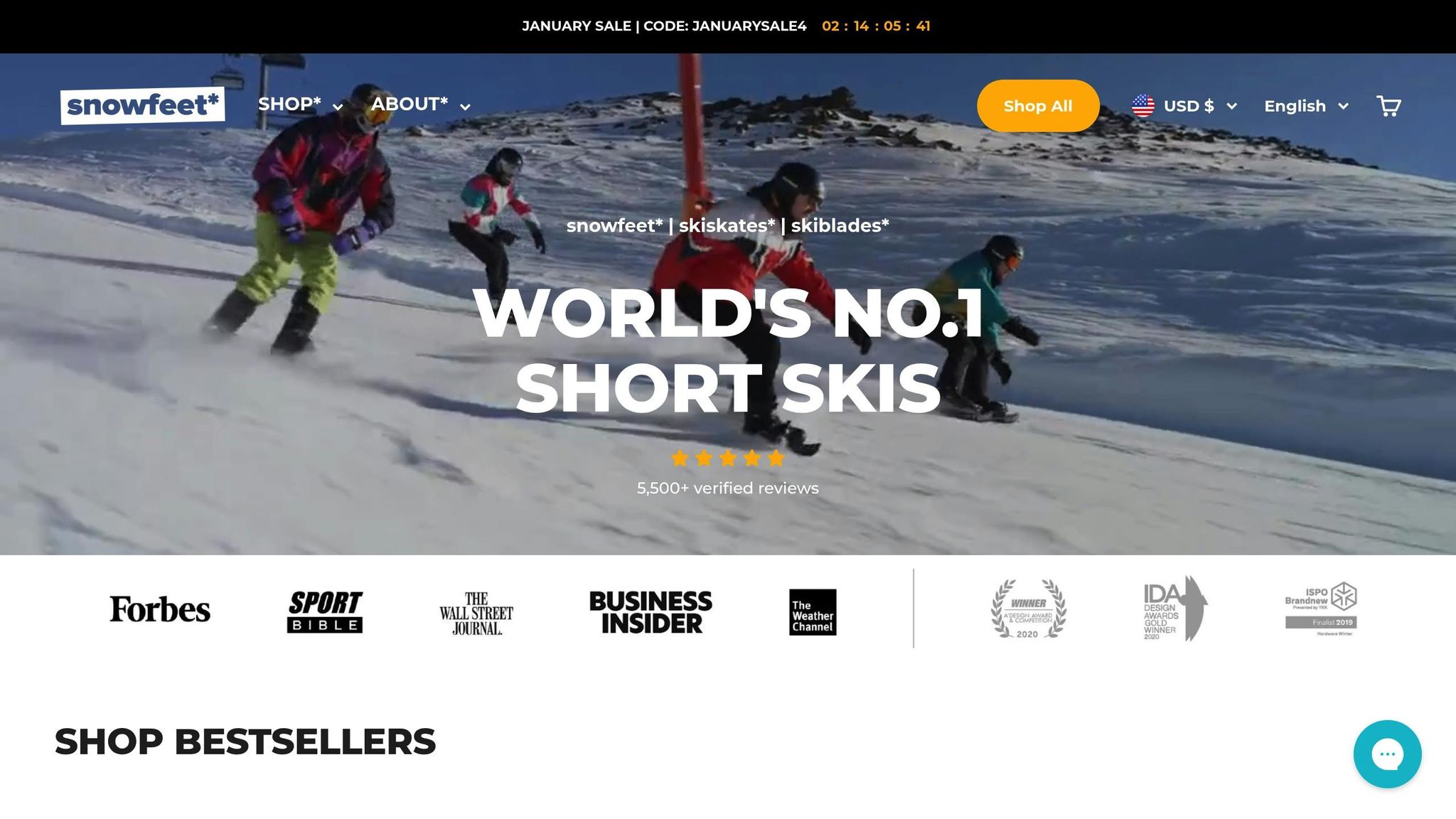
The 65 cm Skiblades strike a sweet spot for adult beginners. They're long enough to ski comfortably yet short enough to let you skate with ease. Plus, they’re much lighter than traditional skis, which can feel intimidating when you’re just starting out. Unlike standard skis that require more advanced techniques, these skiblades allow for a natural skating motion - perfect if you’ve ever tried ice skating or rollerblading.
Learning Curve
These skiblades make learning a breeze. Their shorter length reduces the leverage that can make turning or stopping a challenge, so moves like hockey stops and heel brakes feel natural. Andrew B. sums it up perfectly:
These skiblades are so much fun and easy to control. Never going back to regular skis.
While staying centered and maintaining front-to-back balance is key, most adults get the hang of it quickly.
Portability
Say goodbye to bulky roof racks and oversized ski bags. The 65 cm Skiblades are compact enough to fit in a standard backpack. That means they’re easy to transport whether you’re driving, hopping on public transit, or storing them in a small apartment. Def Acres shares:
Super easy, super light; don't need to lug my skis around and you can wear them pretty much all day.
This portability makes them a great choice for skiers on the go.
Terrain Versatility
These skiblades shine on groomed slopes, snow parks, sliding hills, and hiking trails. They’re designed for packed snow and can handle light powder up to about 4 inches deep. For deeper powder, Snowfeet* suggests upgrading to the 99 cm or 120 cm models. As you gain confidence, it’s best to avoid steep or heavily mogul-filled terrain until you’re more experienced.
Confidence-Building Features
The 65 cm Skiblades come with non-release ski boot bindings or optional snowboard bindings, letting you choose between better control or easier walking. Their shorter design minimizes tangling during falls and reduces stress on your joints. Cameron Asbell highlights their benefits:
I didn't get injured because with how small they are it's easier to pick them up and it doesn't put stress on your knees as much also making it easier to control and regain balance when falling.
Priced at $635, these skiblades are a solid option for beginners who want to skip the steep learning curve of traditional skis. As your skills grow, you can explore other models tailored to different terrains.
2. Snowfeet* Skiblades (99 cm)
The 99 cm Skiblades strike a balance between stability and ease of control. They’re much shorter than standard skis (which usually range from 63 to 71 inches) but still provide enough surface area to handle different types of terrain with confidence. Compared to the 65 cm model, the 99 cm version offers a bit more stability while keeping the intuitive control Snowfeet* is famous for. Starting at $675, they’re compatible with both regular ski boot bindings and snowboard boot bindings. This means you can comfortably walk around the resort between runs - no awkward waddling required.
Learning Curve
These skiblades are known for their quick "5-minute learning curve." They combine skating-like movements with extra stability, making them easy to pick up for anyone familiar with ice skating or rollerblading. The shorter length reduces the leverage that often makes turning tricky with longer skis, so carving and stopping feel much more natural. Nathan F. sums it up perfectly:
Absolute game-changer! They're light, fast, and incredibly fun to ride.
With a 5.0/5 rating, it’s clear these skiblades win fans for their effortless control and fun performance.
Portability
The 99 cm model isn’t just easy to use - it’s also easy to carry. They fit neatly into a car trunk or even a large backpack, making them a great choice for adults who might not have a lot of storage space. Their lightweight design also makes them simple to transport and store, whether you're heading to the slopes or tucking them away at home.
Terrain Versatility
These skiblades shine across a variety of terrains, from groomed runs to light powder (up to about 4 inches deep). While they’re not built for deep backcountry powder, their 99 cm length is the only option that works with standard release ski bindings. This added safety feature is a big plus for adult learners who are just starting out. Their ability to handle diverse conditions helps build confidence with every run.
Confidence-Building Features
The durable wood core in these skiblades delivers performance that rivals high-end traditional skis. They’re designed to reduce strain on your knees and joints, making them a more forgiving option for extended sessions on the slopes. Plus, their compact size makes it easier to recover from falls without worrying about your equipment twisting awkwardly. It’s all about making the ride smoother and more enjoyable.
3. Snowfeet* Skiblades (120 cm)
The Snowfeet* 120 cm Skiblades, priced at $775, offer a larger surface area for a more traditional skiing feel while staying more maneuverable than full-length skis. These skiblades are compatible with standard ski boots (EU sizes 36-49) and come equipped with resort-approved metal edges for safety and performance.
Learning Curve
These skiblades are a solid choice for beginners. Their wider design gives extra support and stability, helping you gain confidence as you find your balance. As the Snowfeet team explains:
120 cm Skiboards are perfect in case it's your first time on the slopes. As a beginner, you will surely appreciate their length and wider shape providing support but still maintaining a light and easy ride.
The added width and length offer the reassurance new skiers need to get started without feeling overwhelmed.
Portability
Despite their longer length compared to shorter skiblades, the 120 cm model remains easy to transport. They fit effortlessly into a car trunk, eliminating the hassle of roof racks. Plus, their lightweight design makes carrying them from the parking lot to the lift a breeze.
Terrain Versatility
The 120 cm Skiblades shine in versatility, handling a range of snow conditions with ease. They’re particularly well-suited for powder and deep carving, making them a great option as you progress to more advanced terrain. The wider base ensures excellent float in fresh snow, while the shorter length allows for quick, precise turns on narrow trails. As the Snowfeet team puts it:
the ultimate skis for carving, offering a full skiing experience.
This combination of features enhances performance and builds confidence as you tackle different types of runs.
Confidence-Building Features
These skiblades are especially helpful for adult learners. Using standard ski boots provides better ankle support and improves snow contact, creating a stable platform for beginners. The longer length adds stability and reduces joint strain during falls, making the learning process smoother and less intimidating. Whether you’re just starting out or looking to improve, these skiblades are designed to help you feel secure on the slopes.
sbb-itb-17ade95
4. Snowfeet* Skiskates (44 cm)
The Snowfeet* 44 cm Skiskates are a compact and agile option, offering a unique twist on skiing. Priced at $575, these ultra-short skates are the smallest in the Snowfeet* lineup. Their design prioritizes maneuverability and portability, delivering an experience that feels closer to ice skating than traditional skiing. Plus, they’re super versatile when it comes to footwear - you can use ski boots, snowboard boots, or even winter boots.
Learning Curve
Getting the hang of these skiskates is pretty straightforward. If you’ve ever ice skated, rollerbladed, or played ice hockey, you’ll notice the movement feels very similar. That familiarity makes it easier to pick up the basics quickly. As Cameron Asbell explains:
I didn't get injured because with how small they are it's easier to pick them up and it doesn't put stress on your knees as much also making it easier to control and regain balance when falling.
Their short length minimizes the lever effect you’d get with longer skis, which means less strain on your knees and a more controlled experience. It’s a win for both beginners and seasoned skiers looking for something different.
Portability
One of the standout features of the 44 cm Skiskates is how portable they are. They’re so compact they can fit into a regular backpack - no need for bulky ski bags or awkward roof racks. Def Acres sums it up perfectly:
Super easy, super light; don't need to lug my skis around and you can wear them pretty much all day.
The lightweight wood core construction adds to their portability, making them easy to carry without wearing you out. Compared to traditional skis from brands like Rossignol or K2, these are a breeze to transport.
Terrain Versatility
When it comes to terrain, these skiskates are best suited for groomed slopes, snow parks, and hiking trails. They can handle light powder (up to about 4 inches), but they’re not built for deep, ungroomed snow or backcountry conditions. If you’re sticking to resorts or looking to try playful tricks, they’re a great choice. The metal edges meet resort standards, so you won’t have any trouble at ski lifts. However, for deeper snow, traditional all-mountain skis from brands like Burton or Salomon are still the go-to.
Confidence-Building Features
For adults who might feel nervous about skiing, these skiskates offer features that make the experience less intimidating. The built-in heel brake works similarly to inline skating stops, giving you a sense of control. Combined with their compact size, they also reduce knee strain, making them a comfortable option for beginners. It’s no surprise they’ve earned a 5.0/5 star rating from over 5,500 reviews. If you’re looking for a smooth and enjoyable way to ease into skiing, the 44 cm Skiskates are a solid choice.
Pros and Cons
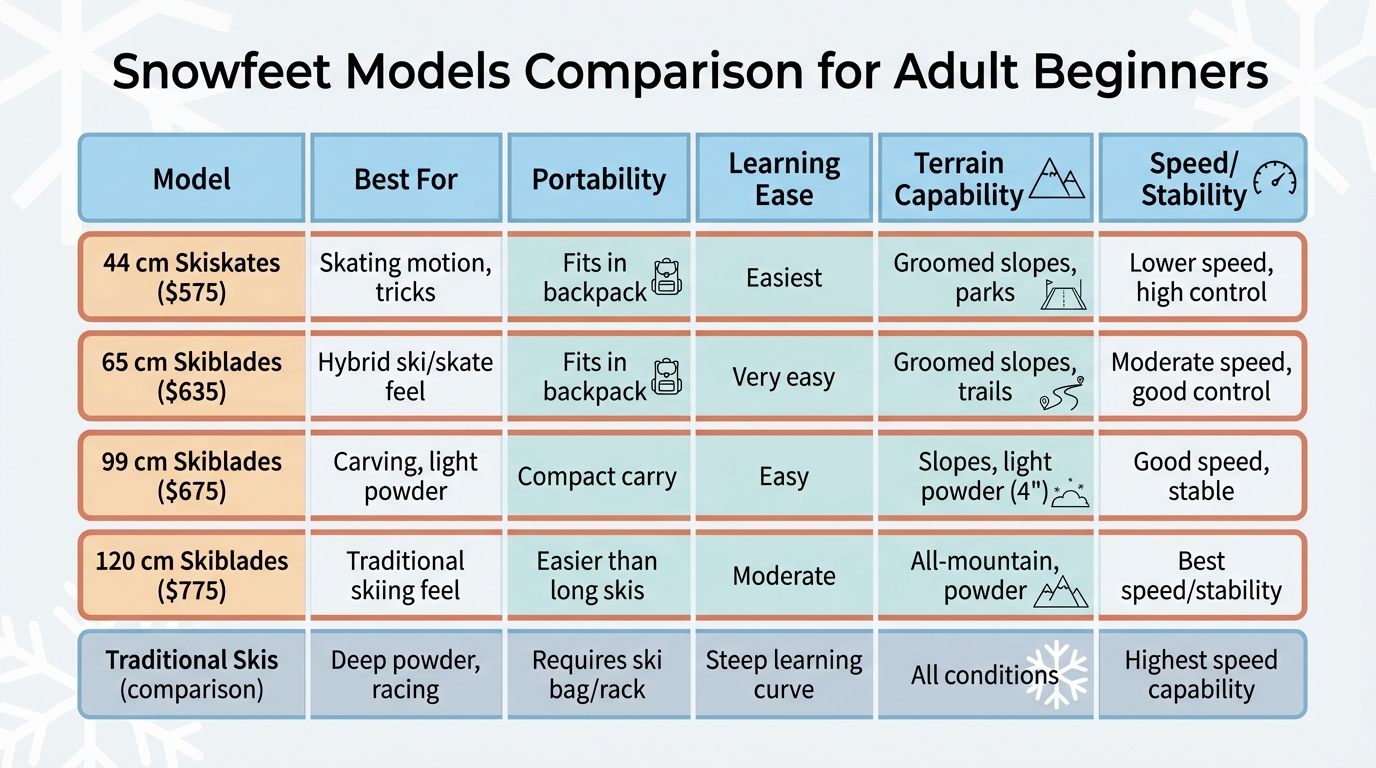
Snowfeet Ski Models Comparison Chart for Adult Beginners
Choosing between the different Snowfeet* models comes down to understanding how they compare to traditional skis and what fits your needs best. Each model has its strengths, and knowing the trade-offs can help you decide based on your experience level and the terrain you plan to conquer.
Portability is a standout feature across all Snowfeet* models. The 44 cm Skiskates are ultra-compact, while even the 120 cm Skiblades are much easier to carry than standard skis. This makes them a breeze to transport, whether you're navigating crowded parking lots, using public transit, or just storing them at home. This convenience ties in with the design features already discussed.
The learning curve varies noticeably between models. The 44 cm Skiskates feel similar to ice skating or rollerblading, making them very beginner-friendly. The 65 cm model offers a blend of skating and skiing that’s still easy to pick up. Moving to the 99 cm and 120 cm Skiblades, you’ll encounter mechanics closer to traditional skiing, yet they remain more maneuverable than long skis. Traditional skis, on the other hand, often require professional lessons and weeks of practice to master, giving Snowfeet* models an edge for quick learning.
Terrain versatility is where the models differ the most. The 44 cm and 65 cm options excel on groomed slopes and in snow parks. They can handle light powder up to about 4 inches but aren’t meant for deeper backcountry snow. The 99 cm Skiblades perform better in light powder, while the 120 cm model offers the closest experience to all-mountain skiing. That said, for regular off-trail adventures, traditional all-mountain skis still have the upper hand.
When it comes to speed and stability, shorter models naturally have less stability at high speeds compared to traditional skis. The 120 cm Skiblades offer the best stability among Snowfeet* options but aren’t designed for aggressive downhill racing. For beginners, this actually works in their favor, as it reduces the risk of going faster than they can manage. Plus, all Snowfeet* models put less strain on your knees, which is a big perk, especially for older skiers or those concerned about joint health.
| Model | Best For | Portability | Learning Ease | Terrain Capability | Speed/Stability |
|---|---|---|---|---|---|
| 44 cm Skiskates | Skating motion, tricks | Fits in backpack | Easiest | Groomed slopes, parks | Lower speed, high control |
| 65 cm Skiblades | Hybrid ski/skate feel | Fits in backpack | Very easy | Groomed slopes, trails | Moderate speed, good control |
| 99 cm Skiblades | Carving, light powder | Compact carry | Easy | Slopes, light powder (4") | Good speed, stable |
| 120 cm Skiblades | Traditional skiing feel | Easier than long skis | Moderate | All-mountain, powder | Best speed/stability |
| Traditional Skis | Deep powder, racing | Requires ski bag/rack | Steep learning curve | All conditions | Highest speed capability |
Conclusion
Picking up skiing as an adult doesn’t have to feel overwhelming or require clunky, heavy equipment. Short skis can make the learning process much smoother by reducing the fear factor and cutting down on physical strain. Their smaller size takes the pressure off your knees and makes them easier to control, so you can focus on enjoying the ride.
Each Snowfeet* model brings something different to the table for adult beginners. The 44 cm Skiskates offer quick, skating-like movements. The 65 cm Skiblades strike a great balance between agility and control. The 99 cm skis are perfect for carving up groomed trails, while the 120 cm skis deliver a more traditional skiing experience with added stability.
Snowfeet* gear works for all ages and has earned high praise from thousands of satisfied riders. Unlike standard skis, these designs are lighter and more intuitive, making it easier to dive into skiing without the usual hassle. Get ready to enjoy skiing with less effort and more fun!
FAQs
Why are short skis a great choice for adults learning to ski later in life?
Short skis are a great choice for adults who are just starting out on the slopes. Why? They’re easier to control, which helps new skiers build confidence and improve balance more quickly. Snowfeet’s short skis, ranging from 44 cm to 120 cm, are lightweight and attach to regular winter boots. This means no need for bulky, specialized gear, making them far less intimidating than traditional skis.
Beyond being beginner-friendly, short skis are super portable and versatile. They let new skiers practice on different terrains without the hassle of lugging around heavy equipment. Plus, they make turning and balancing much simpler, allowing beginners to pick up proper techniques faster while minimizing the chance of falls. For adults wanting to dive into skiing without the steep learning curve of long skis, short skis - like those from Snowfeet - offer a fun, stress-free way to hit the slopes.
Why are Snowfeet skiblades easier to learn on compared to traditional skis?
Snowfeet skiblades are all about making skiing easier and more approachable, especially for beginners. Their compact size - ranging from 44 cm to 120 cm - gives you more control, making balance and turns feel smoother compared to traditional long skis. This design helps cut down on the intimidation factor, giving adults who are learning later in life a boost of confidence on the slopes.
Plus, their lightweight and compact build means you can skip the bulky gear and specialized boots. This keeps the learning experience simple and less overwhelming. Unlike traditional skis, which often demand more technical skills and practice, Snowfeet skiblades are designed to help you grasp the basics quickly and start enjoying the slopes right from the start.
What Snowfeet model is best for different types of terrain?
Snowfeet has crafted short skis that work well across different terrains, making them a solid pick for beginners or adults who are just getting into skiing. Let’s break down their lineup:
- 44 cm Snowfeet Skiskates: These are all about fun and flexibility. Thanks to their small size, they’re perfect for tricks, navigating terrain parks, or squeezing through tight spots. Plus, their maneuverability is top-notch.
- 65 cm Snowfeet Skiblades: If you’re after something that balances agility and stability, this is the sweet spot. They handle groomed slopes beautifully and can even take on moderate off-piste conditions.
- 99 cm Snowfeet Skiblades: For those craving control at higher speeds or when tackling deeper snow, these longer skiblades offer a smoother, more stable ride.
What sets Snowfeet apart from traditional long skis or snowboards is their shorter length. This makes them easier to pick up, less intimidating for newbies, and super portable. Whether you’re hitting the park, cruising the slopes, or venturing onto mixed terrain, Snowfeet’s designs aim to make skiing enjoyable and stress-free.













Leave a comment
This site is protected by hCaptcha and the hCaptcha Privacy Policy and Terms of Service apply.