



















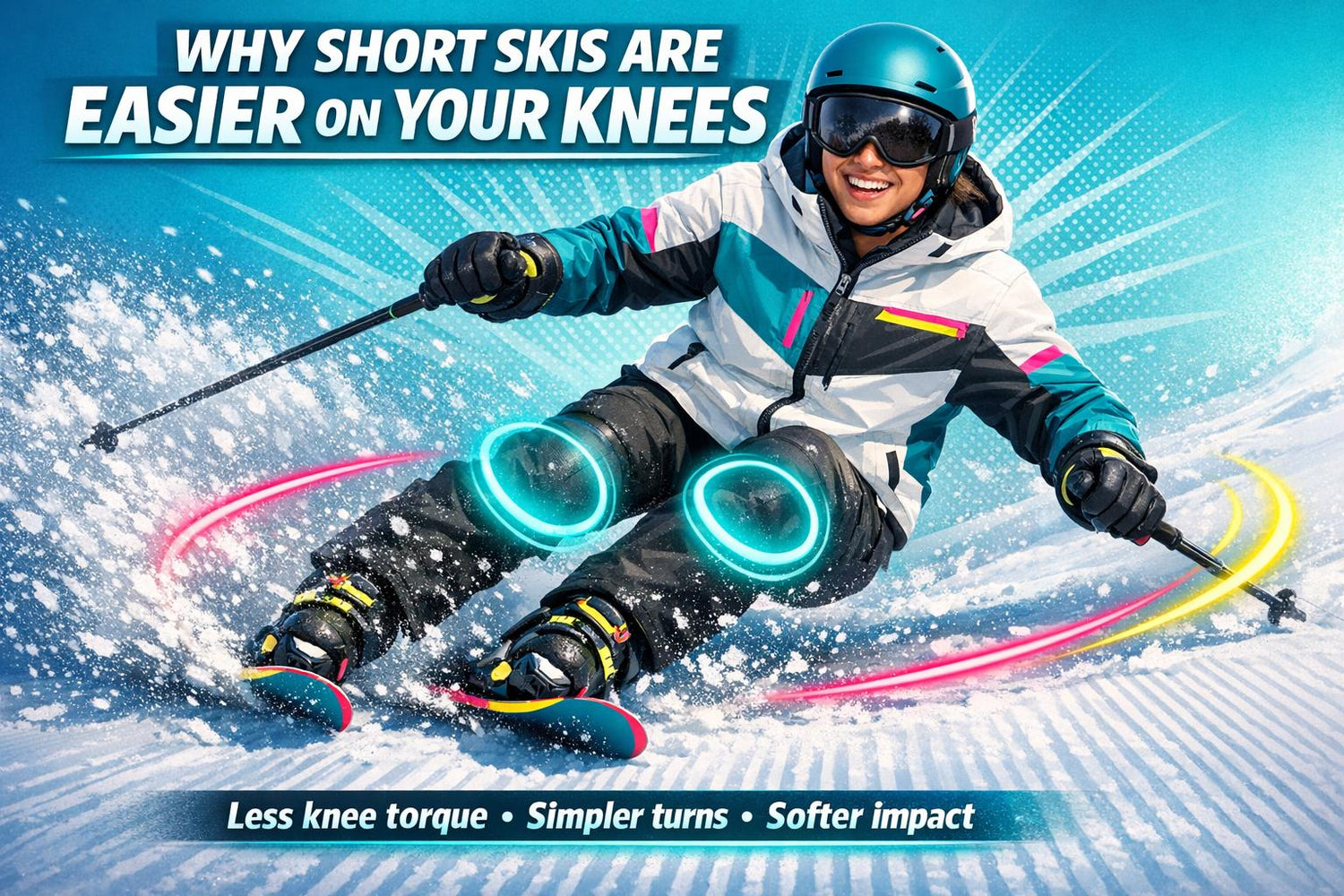
Short skis can make a big difference for your knees on the slopes. Unlike longer skis, which act like levers and increase stress on your joints, shorter skis reduce twisting forces, lower impact, and make turning easier. This means less strain on your knees and a smoother, safer ride.
Here’s why short skis, like Snowfeet Skiblades (65–99 cm), are a smart choice:
- Reduced Torque: Shorter length means less twisting force on your knees during turns.
- Easier Turns: Smaller turning radius requires less effort, cutting down joint strain.
- Lower Impact: Lighter weight minimizes shock and pressure on your knees.
Snowfeet Skiblades are lightweight, easy to carry, and compatible with regular ski boots. Whether you’re recovering from an injury or just want a more comfortable skiing experience, short skis might be the solution you didn’t know you needed.
Short Skis vs Traditional Long Skis: Knee Impact Comparison
How to Prevent Knee Injuries with Skiing
How Short Skis Protect Your Knees
When it comes to skiing, your knees take on a lot of stress. The way short skis are designed helps reduce that stress by addressing three key factors: torque, turning effort, and impact forces. Let’s break it down.
Less Torque on Your Knees During Turns
Think of your skis as levers attached to your legs. The longer the ski, the more twisting force - or torque - it places on your knee joints. According to the Snowfeet Team:
"When you are skiing on longer skis, there is more leverage on the joints, which can put more strain on the knees."
Short skis, like Snowfeet* Skiblades (available in lengths from 26 inches to 39 inches), cut down on this leverage. With less distance from the boot to the ski tip, there’s less mechanical force working against your knees. This makes a big difference, especially during quick stops or sudden direction changes when the risk of ACL and MCL injuries is higher.
Easier Turns Mean Less Joint Strain
Short skis naturally have a tighter turning radius. This means you don’t have to put in as much effort to make turns, which reduces the twisting forces on your knees. The Snowfeet Team explains:
"Shorter skis... have a smaller turning radius and require less effort to turn. This means that there is less twisting and torque on the knees, which can help to reduce the risk of injury."
This improved maneuverability doesn’t just make skiing easier - it also helps with balance and lowers your risk of falling. By reducing the strain on your joints during turns, short skis give your knees a much-needed break.
Lower Impact Forces on Your Knees
When skiing downhill, your knees absorb a lot of force - anywhere from 1.5 to 2 times your body weight. Your outside leg takes on most of that load, handling 60% to 75% of the impact. Short skis help here too. They’re lighter, which means less momentum and reduced force on your joints during stops and sharp turns.
Many short skis, like Snowfeet* Skiblades with their wood core construction, also have a forgiving flex pattern. This helps absorb shocks before they reach your knees, making for a smoother, less jarring ride.
Snowfeet* Skiblades: Designed for Knee Comfort
What Makes Snowfeet* Skiblades Different
Snowfeet* Skiblades are available in two lengths: 26 inches (65 cm) and 39 inches (99 cm). Both sizes feature a wood core construction that offers a soft flex for smoother rides while staying responsive on the slopes. Pricing starts at $635 for the 65 cm model and $675 for the 99 cm version. Impressively, both models boast a perfect 5.0 out of 5 user rating, especially from those transitioning from traditional long skis.
These skiblades are compatible with standard ski boots, making them a great choice for beginners and seasoned skiers alike. Unlike traditional skis from brands like Rossignol or K2 - typically measuring 59 inches or longer - Snowfeet* Skiblades keep you closer to the ground, offering a more controlled and comfortable experience.
Why Snowfeet* Products Are Easier on Your Joints
The compact design of Snowfeet* Skiblades significantly reduces strain on your knees. Traditional long skis can create a leverage effect, increasing twisting forces during turns. Snowfeet* models, with their shorter 26–39 inch length and wider base, absorb shocks from uneven terrain before they reach your joints.
Their lightweight design also lowers momentum, which means less impact during stops and turns. This is particularly helpful because your outside leg absorbs 60–75% of the total ground reaction force while turning. Plus, the forgiving flex pattern ensures smoother rides, reducing stress on your knees and enhancing overall comfort.
Easy to Carry and Use Anywhere
Portability is another standout feature of Snowfeet* Skiblades. They can fit into a regular backpack, eliminating the need for roof racks, oversized ski bags, or complicated car-loading routines. The 26-inch model, in particular, is much lighter than standard skis, making it easy to carry from your car to the slopes or even to remote backcountry spots.
This convenience not only simplifies transportation but also cuts down on the physical effort needed to haul heavy gear. By reducing pre-ski fatigue, you can save your energy for the slopes. Whether you're gliding down groomed runs or tackling varied terrain, Snowfeet* Skiblades deliver a smooth ride while keeping your knees happy and protected.
sbb-itb-17ade95
Snowfeet* vs. Traditional Long Skis
Snowfeet* Skiblades offer a fresh take on skiing, especially when you compare them to traditional long skis. Let’s break it down.
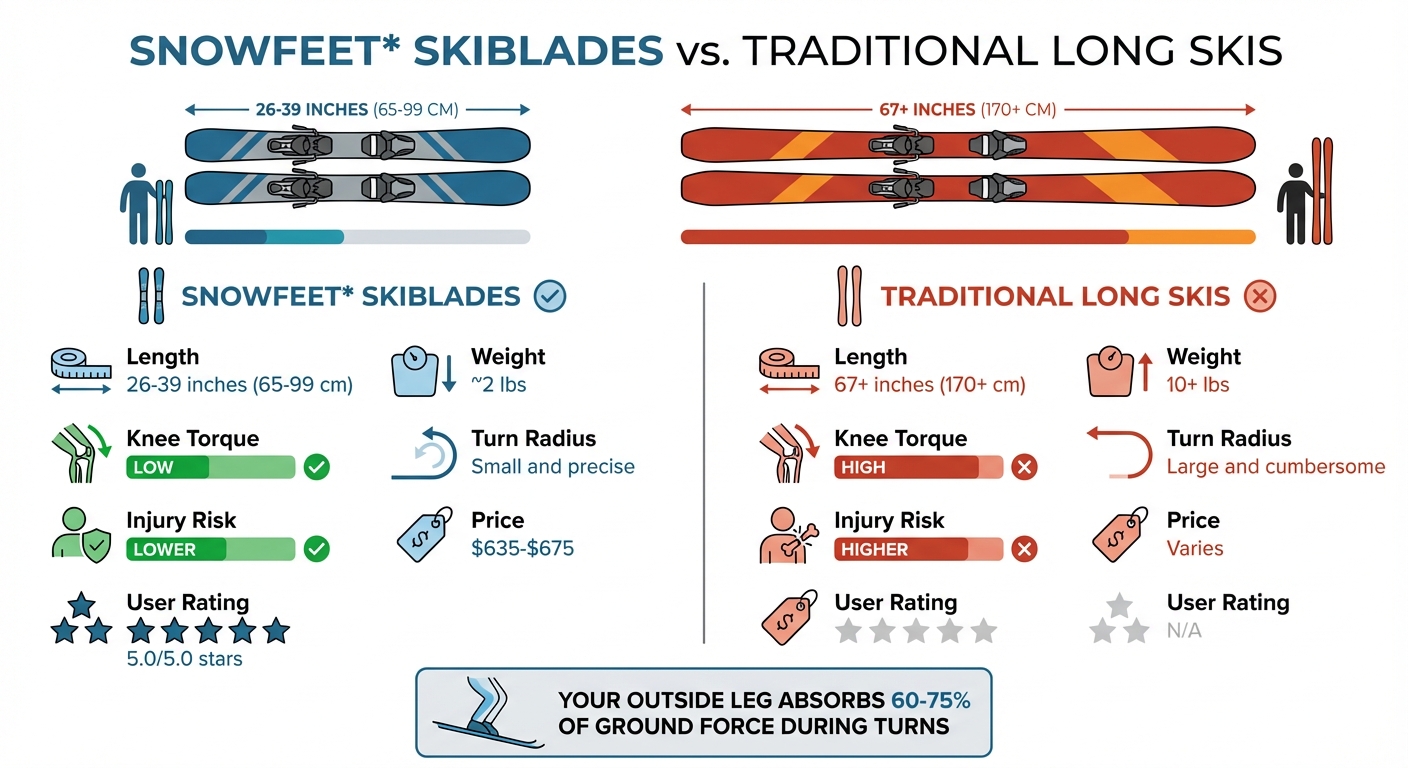
Traditional skis, like those from Rossignol or K2, are typically over 67 inches (170 cm) long. This length acts like a lever, increasing the twisting forces on your knees with every turn. In contrast, Snowfeet* Skiblades come in much shorter sizes - about 26 inches (65 cm) and 39 inches (99 cm). This compact design significantly reduces the leverage on your knees, making them much easier on your joints.
Weight is another big factor. A pair of traditional skis weighs over 10 pounds, while Snowfeet* Skiblades are a fraction of that at around 2 pounds. That’s a huge difference! The lighter weight not only makes them easier to handle but also cuts down on leg strain and reduces the impact on your knees during turns and stops.
Side-by-Side Comparison
Here’s a quick look at how they stack up:
| Feature | Snowfeet* Skiblades | Traditional Long Skis |
|---|---|---|
| Knee Torque | Low | High |
| Weight | Lightweight (~2 lbs) | Heavy (~10+ lbs) |
| Turn Radius | Small and precise | Large and cumbersome |
| Injury Risk | Lower | Higher |
Thanks to their compact size and lightweight design, Snowfeet* Skiblades let you make quick, tight turns with ease. On the other hand, traditional long skis require wider, more physically demanding turns, which can put extra stress on your knees. If you’re looking for a smoother, more knee-friendly skiing experience, Snowfeet* Skiblades might just be the better choice.
How to Protect Your Knees While Using Snowfeet*
Snowfeet* are designed to reduce knee strain, but good technique is key to keeping your joints safe on the slopes. Let’s go over some tips to help you protect your knees while enjoying your Snowfeet*.
Keep Your Knees Aligned and Your Posture Correct
Proper posture is everything. Since Snowfeet* and skiskates are shorter than regular skis, staying balanced from front to back is crucial. This helps prevent falls and keeps unnecessary strain off your joints. Keep your knees bent between 30° and 80° - this range supports natural movement and absorbs the stresses of turning.
Avoid leaning too far back. Keep your weight centered to avoid putting pressure on your tibia, which could increase the risk of ACL injuries.
"Control is really going to come from about two or three muscle groups in your body... quadriceps and hamstrings... hip stabilizing muscles, the abductors, and then thirdly the core strength."
- Dr. David Rothberg, Orthopedic Surgeon, University of Utah Health
When turning, your outside leg takes on 60% to 75% of the total force from the ground. Engaging your core and leg muscles helps you stay in control and aligned. Start your day with a warm-up to get blood flowing to your joints, and take breaks when you feel tired - fatigue often leads to sloppy technique and increases the risk of injury.
Strengthen Your Legs to Support Your Knees
Strong legs are your best defense against knee injuries. Recreational carving can put forces on your body that are 1.5 to 2 times your weight. Building strength in your legs helps your muscles absorb these forces and prevents your knees from moving into risky positions.
Focus on strengthening your glutes, quadriceps, hamstrings, and core. These muscles help you stay steady on uneven terrain. Train within the 30° to 80° knee flexion range to mimic the movements you’ll use while skiing. Stronger muscles also help you adapt to changing snow conditions, like icy patches or soft powder, reducing strain on your knees.
Incorporate exercises like squats, lunges, and core workouts to make the most of your Snowfeet* experience.
Pick the Right Snowfeet* Product for You
Choosing the right Snowfeet* gear can also make a big difference in protecting your knees. Beginners should consider the 15-inch (38 cm) Mini Ski Skates (starting at $250) or the 17-inch (44 cm) Skiskates (starting at $575), which are easier to control as you learn. For extra stability, the 39-inch (99 cm) Skiblades (starting at $675) provide a larger surface area, helping with balance while keeping knee strain low.
Intermediate riders might prefer the 26-inch (65 cm) Skiblades, which offer a balance of stability and the knee-friendly benefits of shorter skis. On hard-packed snow, avoid wide-waisted products, as they can throw off your knee alignment. Snowfeet* products consistently receive high ratings (4.9 to 5.0 stars), with users praising their ability to reduce knee stress compared to traditional skis.
Conclusion
Short skis bring clear benefits to the table: they reduce the strain on your joints, make turning easier, and lower the twisting forces that can harm your knees. Instead of wrestling with long, heavy skis that wear you out, shorter skis give you better control and a smoother ride on the slopes.
Snowfeet* products take these advantages up a notch. Their shorter length means less torque during turns, the lightweight build eases physical strain, and the design helps absorb shocks before they reach your joints.
With over 50,000 riders worldwide and an impressive 4.9 out of 5 stars from more than 5,500 verified reviews, the feedback speaks for itself. Many users praise these short skis for being gentler on their knees compared to traditional long skis, with some saying they’ll never go back to regular gear. These stories highlight how the right equipment, paired with good technique, can make a big difference for your knees.
Snowfeet* is here to help protect your knees. Whether you’re recovering from an injury, looking to prevent future issues, or just want a more enjoyable day on the mountain, short skis provide the comfort and performance you’re after. Combine Snowfeet* gear with proper technique and leg-strengthening exercises to keep your knees happy and make the most of every run.
FAQs
Why are short skis better for protecting your knees?
Short skis, like Snowfeet’s 65 cm and 99 cm Skiblades, are gentler on your knees because they cut down on the strain caused by leverage and torque when you’re turning or stopping. Thanks to their shorter length and lighter weight, they’re easier to handle, which helps take some of the pressure off your joints.
Compared to traditional long skis, which can increase the forces acting on your knees, short skis provide a more manageable and forgiving ride. They’re a great option for anyone wanting to enjoy winter sports with more comfort and less chance of injury.
Are Snowfeet Skiblades a good choice for beginners?
Snowfeet Skiblades are a fantastic option for beginners. Their compact size and lightweight build make them much easier to handle compared to traditional skis or snowboards. This means you can focus on mastering the basics - like balance, turning, and stopping - without feeling overwhelmed.
One big perk? You can use them with regular winter boots, so there’s no need to invest in bulky ski boots. That’s a win for comfort and convenience, especially if you’re just starting out. Plus, their shorter length puts less strain on your knees, making the whole experience smoother and more enjoyable.
Why are Snowfeet Skiblades better for your knees than traditional skis?
Snowfeet Skiblades offer a great alternative to traditional skis, especially if you’re looking to ease the strain on your knees. With their compact design - available in 65 cm and 99 cm lengths - they create less twisting force and reduce joint torque when you’re turning or stopping. Compare that to traditional skis, which can range from 150 to over 200 cm, and it’s clear why Snowfeet Skiblades are easier on your knees.
On top of that, these skiblades are lightweight (under 2 pounds per ski) and super easy to maneuver, making them less physically demanding overall. Plus, you don’t need stiff ski boots to use them. Snowfeet Skiblades work with regular winter boots or snowboard boots, offering more comfort and better alignment to help reduce joint stress even further. Whether you’re a beginner, have sensitive knees, or just want a more relaxed way to enjoy the slopes, Snowfeet Skiblades make an excellent choice.












Leave a comment
This site is protected by hCaptcha and the hCaptcha Privacy Policy and Terms of Service apply.