



















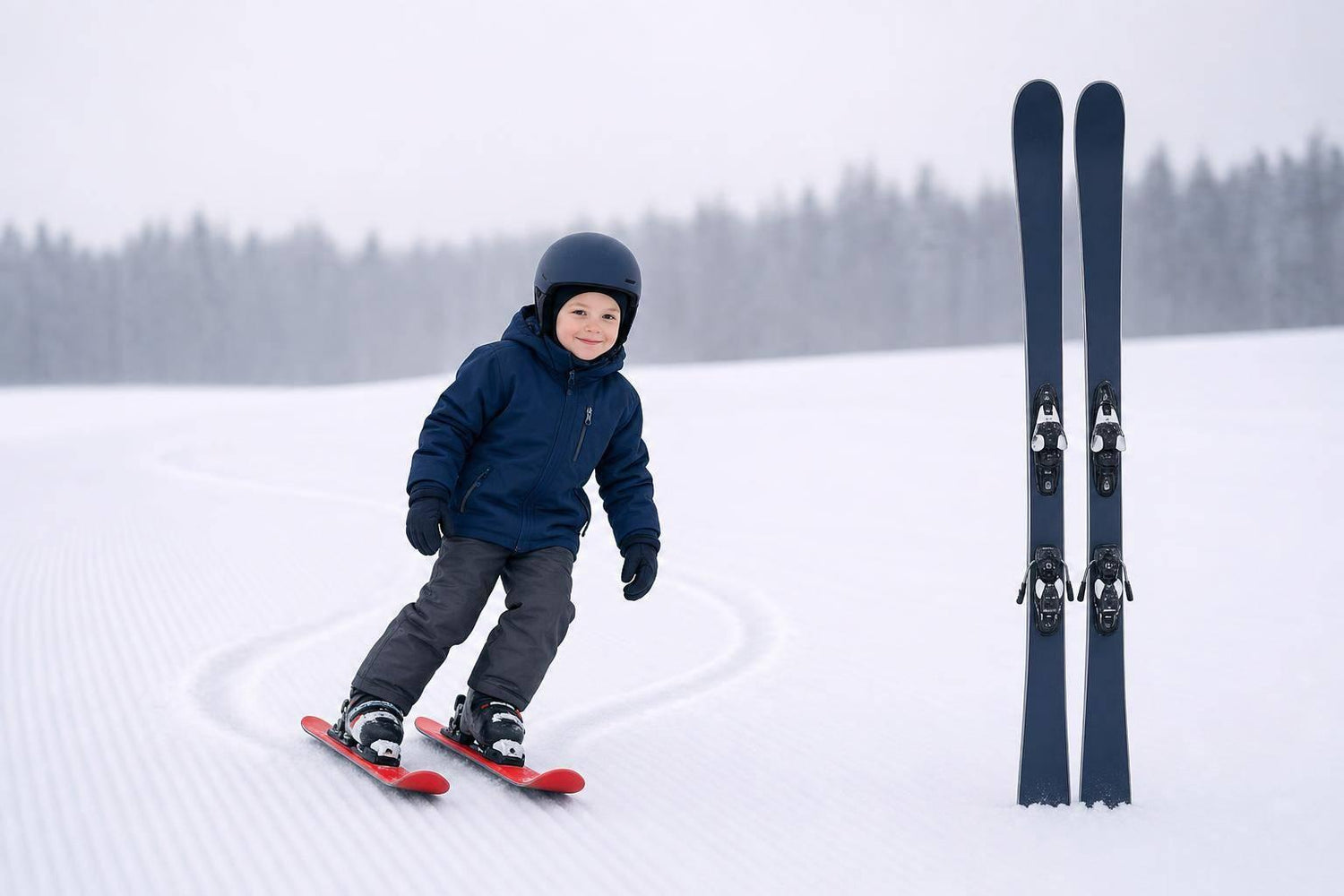
Yes - in most cases, kids learn more easily on shorter skis.
If I had to boil the whole thing down fast, here’s the answer: shorter skis are lighter, easier to turn, and less intimidating for new kids on snow. That usually means faster first turns, easier stops, and fewer tip-crossing wipeouts.
Here’s the short version for U.S. families:
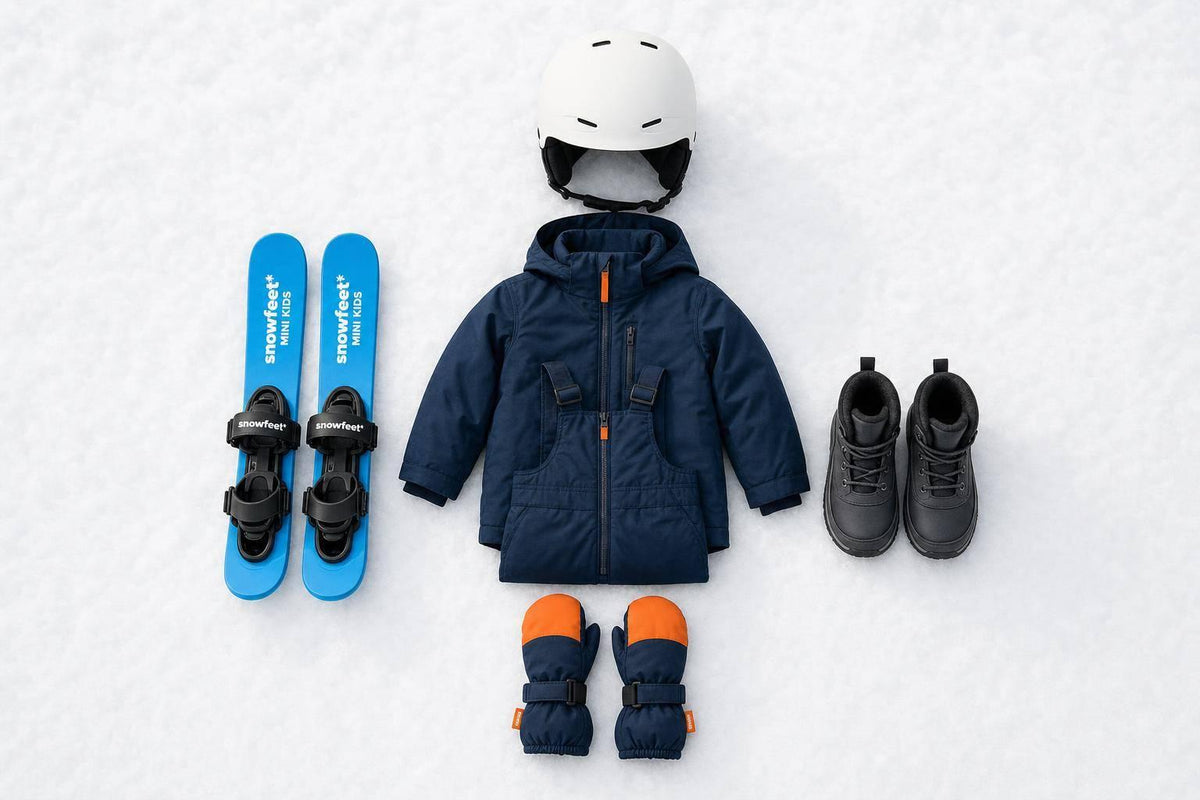
- Ages 3–5: very short options work best for first sliding and backyard hills
- Ages 5–8: short kids’ skis or 65 cm skiblades often make learning feel simpler
- Older kids who already ski well: 44 cm skiskates can be fun, but they’re not the best first step
- Once speed goes up: longer skis start to feel steadier on green and blue runs
So, if your child is brand new, I’d keep it simple: start short, stay on gentle terrain, and move longer later. That’s usually the smoothest path - and it saves a lot of “my skis are stuck together!” moments :)
What matters most isn’t just ski length. It’s fit, confidence, and where your kid will ski. A chest-high beginner ski is one thing. A super-short 17-inch skiskate is another. Both are “short,” but they serve very different jobs.
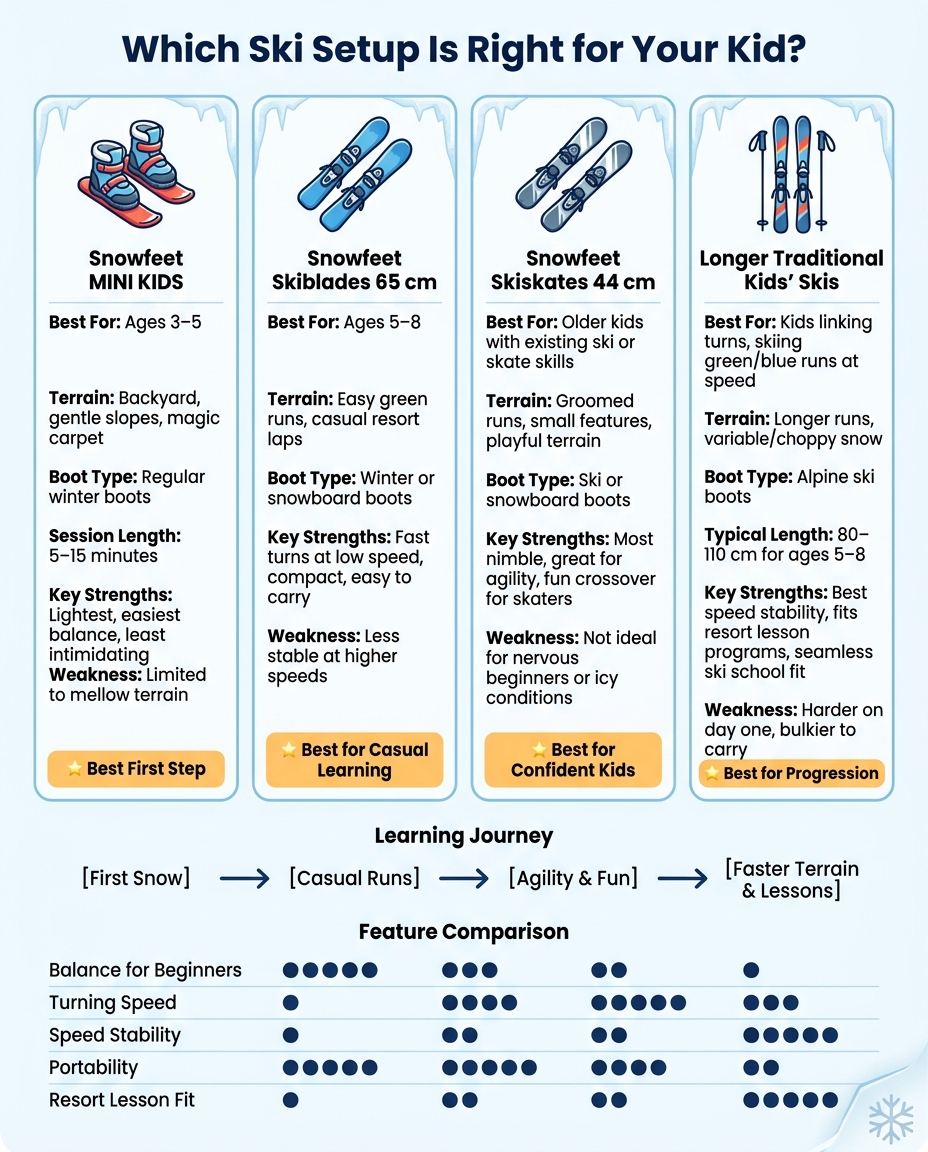
Kids' Ski Gear Comparison by Age & Skill Level
How to Choose the Best Skis for Kids
Quick Comparison
| Setup | Best for | Main upside | Main downside |
|---|---|---|---|
| Short kids’ skis | New skiers in lessons | Easy learning path | More gear to carry |
| MINI KIDS | Ages 3–5, short snow play | Light and simple | Limited to mellow terrain |
| 65 cm skiblades | Ages 5–8, casual runs | Fast turns, low fuss | Less steady at speed |
| 44 cm skiskates | Older skilled kids | Very nimble | Harder for nervous beginners |
| Longer kids’ skis | Kids skiing faster on bigger runs | Better stability | Harder on day one |
A good rule of thumb: if your child is learning to balance, wedge, and stop, shorter gear usually helps. If they’re already linking turns and skiing faster, it may be time to size up.
If you want a quick visual on kids’ beginner skiing, these can help:
- Beginner kids’ ski lesson basics on YouTube
- How kids learn the snowplow on YouTube
- Short skis and skiblades for kids on YouTube
That’s the whole idea in plain English: shorter skis help most kids start. Longer skis help later.
Why Shorter Skis Usually Help Beginners
Balance Is Easier with Less Ski in Front and Behind
Shorter skis make balance simpler. There’s less ski sticking out in front and behind, so beginners can stay centered without fighting the gear.
On long skis, tiny balance mistakes can snowball fast. A small lean back can lift the tips and jam the tails into the snow. For little kids, that’s tough to fix on the fly because they often don’t have the leg strength yet. Shorter skis cut down that lever, so balance and recovery feel much easier.
Think of it like normal shoes versus clown shoes. The longer the shoe, the easier it is to trip. Ski sizing guides point the same way. A common rule for true beginners is height minus 35–40 cm, which puts a lot of kids around chest height. So if a child is 47 inches tall, or about 120 cm, a good starting point is usually 90–100 cm skis.
With a shorter setup, like Snowfeet* Skiblades 65 cm, kids can shuffle, step sideways, and pick up their feet without battling long tips and tails. Parents often spot the difference right away: fewer crossed tips and less drama walking on flat snow.
Turning and Stopping Come Faster at Low Speed
Once balance clicks, the next win is turning and stopping. Shorter skis pivot faster, which helps kids learn both sooner.
In a snowplow, kids push the tails out into that classic "pizza" shape. If there’s less ski pushing back against that move, the wedge forms faster and holds with less fuss. That quick response matters. Kids move, the skis react, and the lesson starts to make sense.
On Snowfeet* Skiskates 44 cm, kids can also use skate-like foot movements to slow down fast. If they’ve been on ice skates or inline skates before, that motion can feel familiar.
Kids Build Confidence When Gear Feels Less Scary
This extra control can make day one feel way less intimidating. When a child puts on Snowfeet* MINI KIDS or Snowfeet* Skiblades 65 cm, the setup feels much closer to “boots with a little extra length” than full alpine skis. That matters. Gear that feels manageable helps kids stay on the snow longer and keep learning.
There’s also less swing weight, so kids tire out more slowly. They can squeeze in more runs before their legs turn to noodles. That usually means cleaner practice, a better mood, and faster progress. Kids recover faster, spend more time practicing, and usually improve sooner.
sbb-itb-17ade95
Short Skis vs. Longer Kids' Skis: Trade-Offs Parents Should Know
Once kids can balance and turn, the big question shifts a bit: when do short skis still help, and when is it time for longer skis? Short skis are great at the start. But as speed climbs and terrain opens up, longer skis start to pull ahead.
Where Longer Kids' Skis Still Do Better
When a child can load a chairlift with confidence and starts skiing faster, longer skis start to make more sense. They track better at speed and feel steadier in rough snow. That added length helps when runs get longer and the snow gets choppy.
They also fit more naturally into the way most formal ski lessons are taught. So if your kid is moving through a resort program, longer skis usually line up better with that path.
Where Snowfeet* Short Skis Make More Sense
Snowfeet* short skis work best for casual, low-speed fun. They’re a smart pick for first-timers, nervous kids, short family sessions, or backyard practice when a full ski setup feels like, well, a lot.
The Snowfeet* Skiblades 65 cm and MINI KIDS are small enough to pack for travel, easy to carry, and can be used with winter boots or snowboard boots. That makes them handy for families who want something simple and low-fuss. Kids who already skate or snowboard often get the hang of them faster.
Comparison Table: Short Skis, Skiblades, Skiskates, and Longer Kids' Skis
The chart below shows the trade-off at a glance.
| Feature | Longer Kids' Skis | Snowfeet* MINI KIDS | Snowfeet* Skiblades 65 cm | Snowfeet* Skiskates 44 cm |
|---|---|---|---|---|
| Balance for beginners | Harder | Easiest | Easy | Easy for confident kids |
| Turning at low speed | Slower | Fast | Fast | Very fast |
| Stopping | Standard | Easier for beginners | Simple | Harder for beginners |
| Speed stability | Best | Limited | Moderate | Limited |
| Terrain fit | Better for longer runs and variable snow | Backyard / gentle terrain | Casual laps and easy terrain | Casual laps and playful sessions |
| Boot setup | Alpine ski boots | Winter boots | Winter or snowboard boots | Ski or snowboard boots |
| Portability | Bulky | Very compact | Compact | Most compact |
| Resort lesson fit | Seamless | Limited | Limited | Limited |
| Best for | Intermediate+ kids | Ages 3–5, first snow | Ages 5–8, casual runs | Older kids, agility/fun |
One caveat: if a ski is too short for the child, wedge braking can get harder. So yes, shorter skis can make learning feel easier, but fit still matters.
Next, match the setup to age, confidence, and terrain.
Which Setup Makes the Most Sense by Age, Skill Level, and Terrain
Pick the setup based on three things: age, confidence, and where your kid will ski. That keeps the choice simple and avoids buying gear that looks fun but ends up sitting in the garage.
Ages 3 to 5: Snowfeet* MINI KIDS for First Sliding and Backyard Use
For toddlers and preschoolers, the main goal is simple: help them feel okay on snow. At this stage, comfort matters more than technique. You want balance, low fear, and short wins.
Snowfeet* MINI KIDS fit regular winter boots, so you can skip stiff ski boots. That alone makes life easier for both kids and parents. They’re also light, which matters a lot when a small child is trying to shuffle, step, and slide without getting frustrated.
They work best on backyard slopes, local parks, and gentle magic carpet terrain. Think short sessions, around 5 to 15 minutes, where the focus is on sliding a bit, stepping around, and having fun, not carving clean turns. If your family only gets out a few times each winter, this is a simple, low-stress way to start.
Ages 5 to 8: Short Kids' Skis or Snowfeet* Skiblades 65 cm
Once kids move past that first sliding stage, the choice usually goes in one of two directions: lesson-friendly skis or shorter, more playful gear.
Standard short kids' skis - usually 80 to 110 cm for this age group - are still the easiest fit for ski school at U.S. resorts. In plain English, they match how most lessons are taught. They’re also easy to rent, and if you buy used, local swaps often have options for about $200 to $300.
Snowfeet* Skiblades 65 cm fit a different kind of family. They make more sense if lessons are already handled and you want something fun for casual resort days. They’re easier to carry, easier to turn, and less intimidating than full-length kids' skis. That’s a nice combo when your child wants to play around on snow without wrestling with long gear.
A few practical perks stand out:
- They’re small enough to fit in a car trunk or checked bag.
- They help kids make quick turns at low speeds.
- They work with snowboard boots, which is handy if your kid already rides.
Confident Older Kids: Snowfeet* Skiskates 44 cm for Agility and Fun
For older kids who already ski with control and want something more nimble, this is where the shortest setup starts to make sense. The tradeoff is simple: more agility, less stability.
Snowfeet* Skiskates 44 cm are the most specialized option in this group. At 17 inches, they feel closer to skates than skis. They tend to click fastest for kids who already have solid balance and can link controlled parallel turns. If a kid skates, skateboards, or inline skates, there’s often a nice crossover here.
They do best on groomed runs, small hills, and small jumps and features where fast pivots and edge changes matter more than staying planted at speed. They’re not the best first setup for a nervous beginner. And on icy days, longer skis or Skiblades are usually the safer call. This is the kind of gear you bring in once your child already skis with confidence and wants a more playful feel.
Conclusion: The Easiest and Safest Choice for Most Kids
Here’s the simple version:
Short skis are usually the easiest place for young beginners to start.
They’re lighter, easier to turn, and a lot less scary for kids. That means many children learn to stop and steer sooner. And that matters. Early wins build confidence fast.
Longer kids' skis still have their place. Once a child starts skiing faster and heads onto bigger terrain, those skis give them more stability. So, think of short skis as the right tool for the learning phase, not a forever swap for standard skis as kids get older and improve.
Quick age-based recap:
| If your child is… | Choose… |
|---|---|
| Ages 3–5, backyard or gentle slopes | Snowfeet* MINI KIDS |
| Ages 5–8, learning linked turns on green runs | Snowfeet* Skiblades 65 cm |
| Older, controlled skiing, more agility | Snowfeet* Skiskates 44 cm |
| Green and blue runs, ready for higher speeds | Transition to longer traditional kids' skis |
Start on gentle slopes. Keep sessions short. Stay close and supervise the whole time. And always use a helmet.
FAQs
How do I know when my child is ready for longer skis?
Your child is ready for longer skis when they have steady control on their current setup and start wanting more stability or a bit more speed. A few simple signs help here: they can balance well, get up after a fall on their own, and steer without help.
If they’re on 38 cm or 44 cm models and look calm and steady on gentle slopes, but now want to try green or blue runs, 65 cm Skiblades make sense as the next step.
The big thing? Make the switch based on how confident they feel right now, not where you hope they’ll be soon. That usually leads to a smoother, happier move up the hill :)
Are short skis allowed in kids’ ski lessons at most U.S. resorts?
Most U.S. resorts have clear rules about what ski gear you can use in formal lessons. Short skis like Snowfeet can be a good fit for parent-led learning and solo practice on beginner slopes. But before you book a lesson, check with the resort first.
Here’s the big reason: many ski schools want students on standard-length junior skis. Those skis line up with the release bindings used in rental fleets and lessons. If your gear falls outside that setup, it may not make the cut.
So, while non-standard gear can be fun for casual practice, it may not be allowed in group lessons.
What boots work best with Snowfeet* MINI KIDS and Skiblades?
Snowfeet* MINI KIDS work with regular winter boots. That makes them a simple, comfy pick for young beginners. No bulky ski boots. No big extra cost. Just strap them on and go.
For older kids stepping up to Snowfeet* Skiblades, both ski boots and snowboard boots can work.
- Snowboard boots feel softer and more flexible, so they’re often more comfortable
- Ski boots feel stiffer and more locked-in, which gives a ride closer to classic skiing
It comes down to how your kid likes to ride and what feels best on their feet :)











Leave a comment
This site is protected by hCaptcha and the hCaptcha Privacy Policy and Terms of Service apply.