
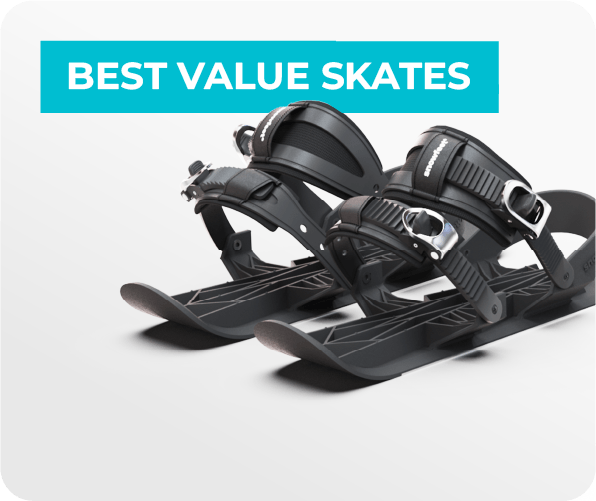
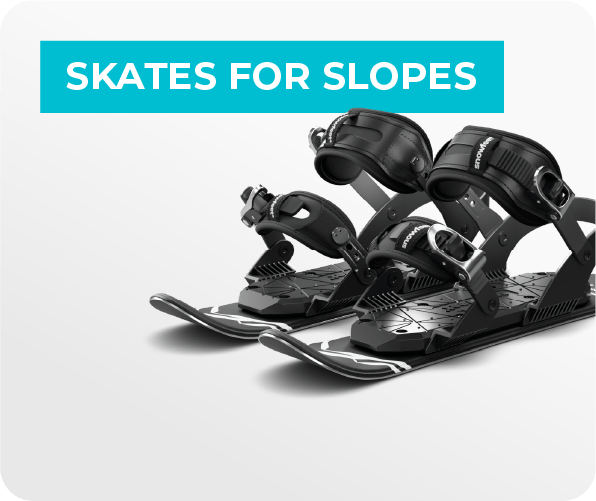
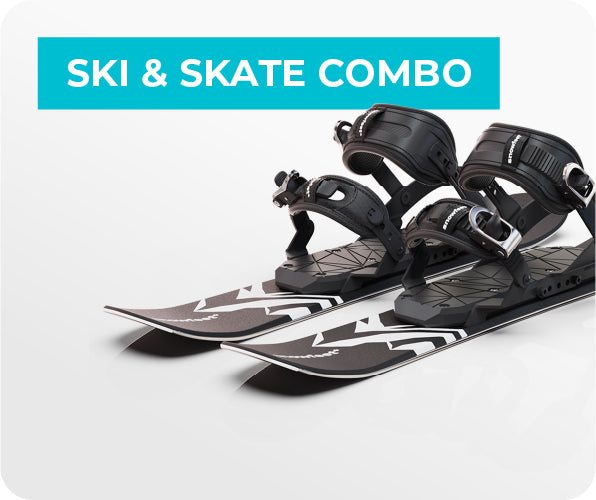
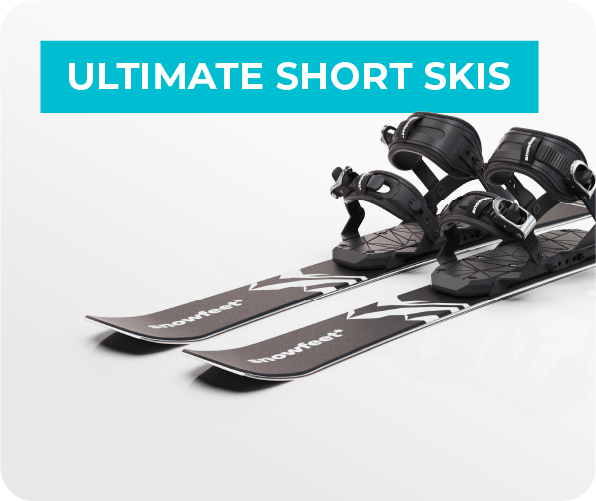
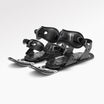
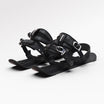
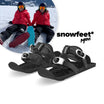
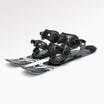
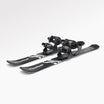
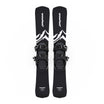
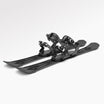
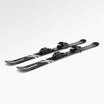
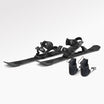
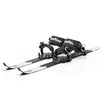
My pick for most casual riders in 2026? Start with 99 cm snowblades. They balance easy turns with more stability than the 65 cm model. But I’d choose based on your boots, riding style, and total cost - not the year alone.
Here’s how I’d sort the three Snowfeet* options:
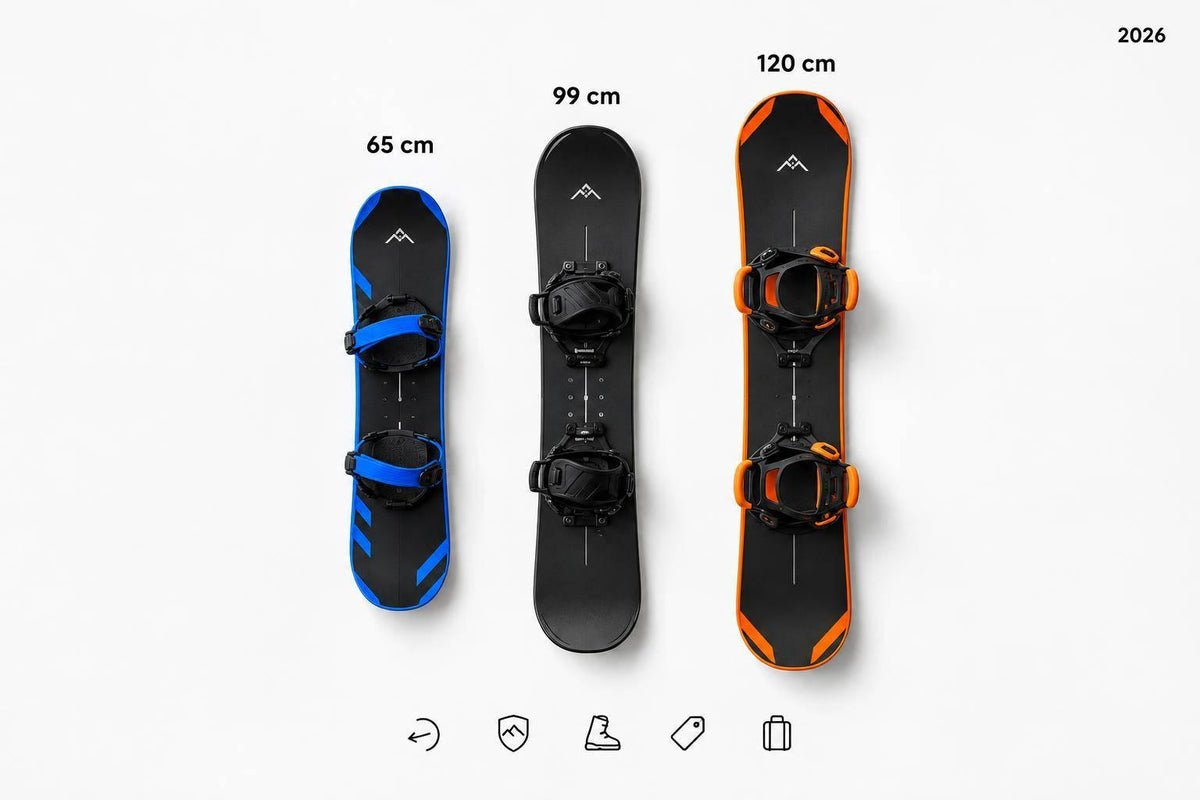
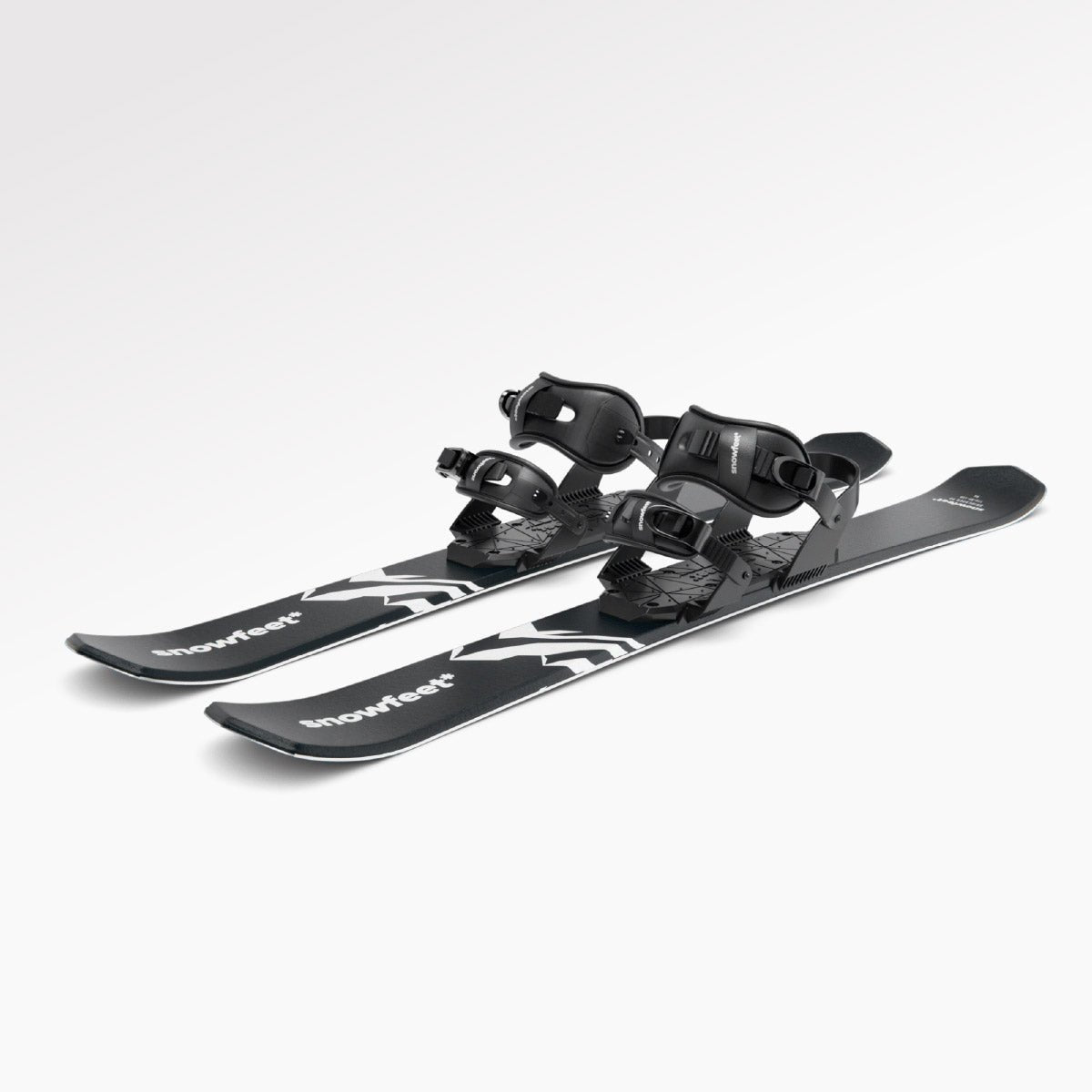
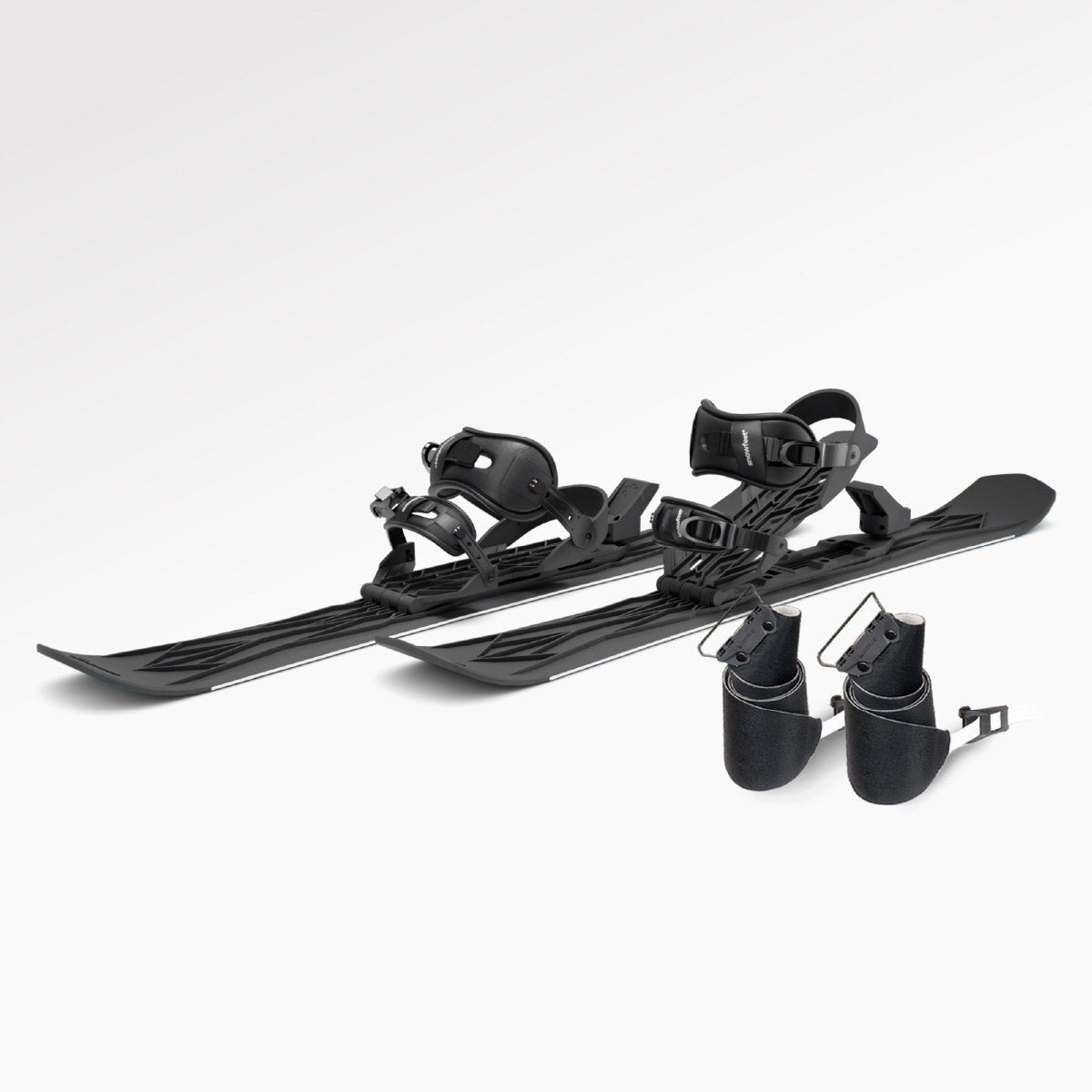
- 65 cm (25.6 in): For skate-like turns, spins, and the smallest packing size. Starts at $550.
- 99 cm (39.0 in): For casual carving, resort laps, and some park use. Starts at $750.
- 120 cm (47.2 in): For a more ski-like feel and the most stability of these three. Listed at $1,190.
Quick Comparison
| Model | Best fit | Boot options | Main tradeoff |
|---|---|---|---|
| 65 cm | Tricks and compact packing | Ski or snowboard boots | Least stable at speed |
| 99 cm | Mixed resort riding | Ski or snowboard boots | Takes more bag space than 65 cm |
| 120 cm | More ski-like carving | Ski boots only; Pro Ski bindings | Less nimble for spins |
Prices reflect the article’s U.S. listings as of October 24, 2026; binding packages can change the total.
Before buying, I’d <u>check the exact binding and boot fit</u>. The 65 cm fixed ski bindings don’t release in a fall. I’d also check resort rules and bag limits - short skis aren’t a free pass for carry-on travel. :)
Want sustained speed and long carving turns? I’d stick with long skis.
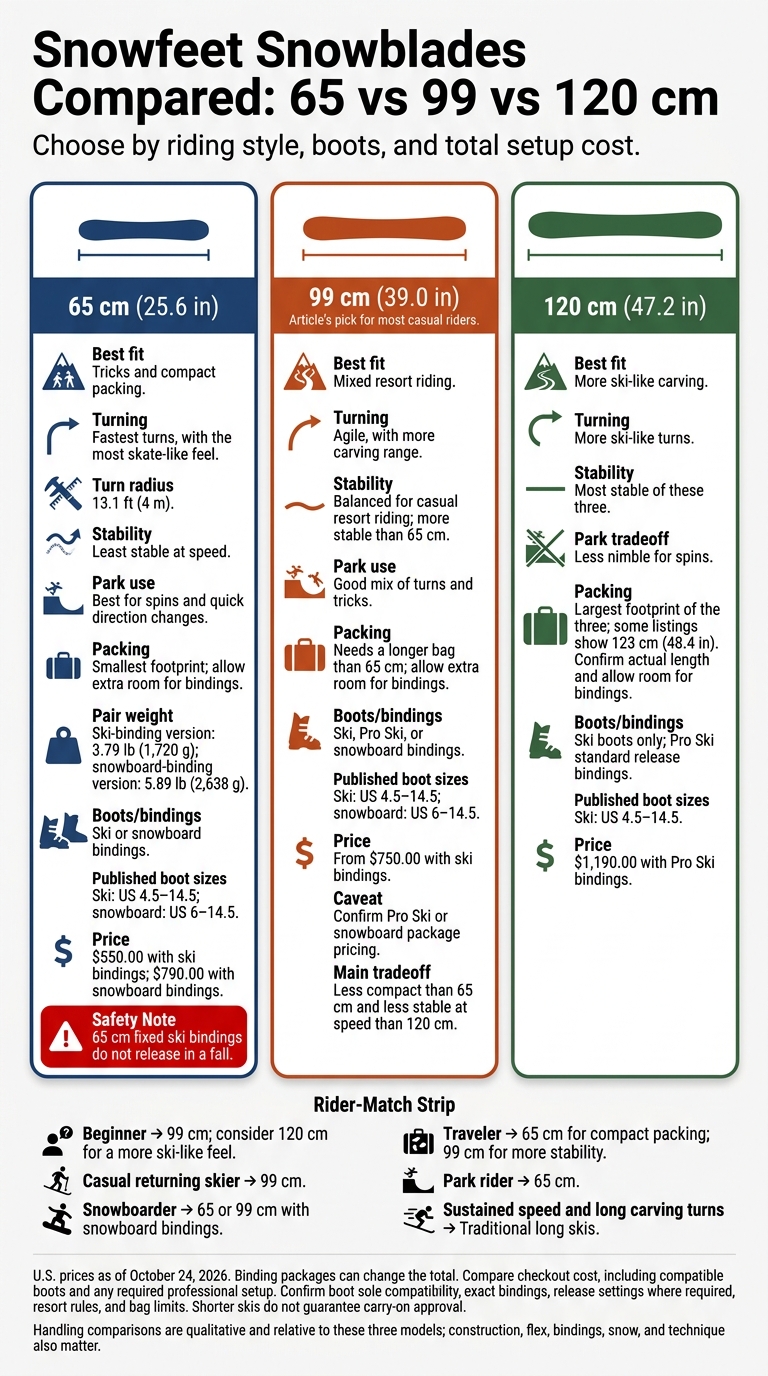
Snowfeet Snowblades Compared: 65 vs 99 vs 120 cm
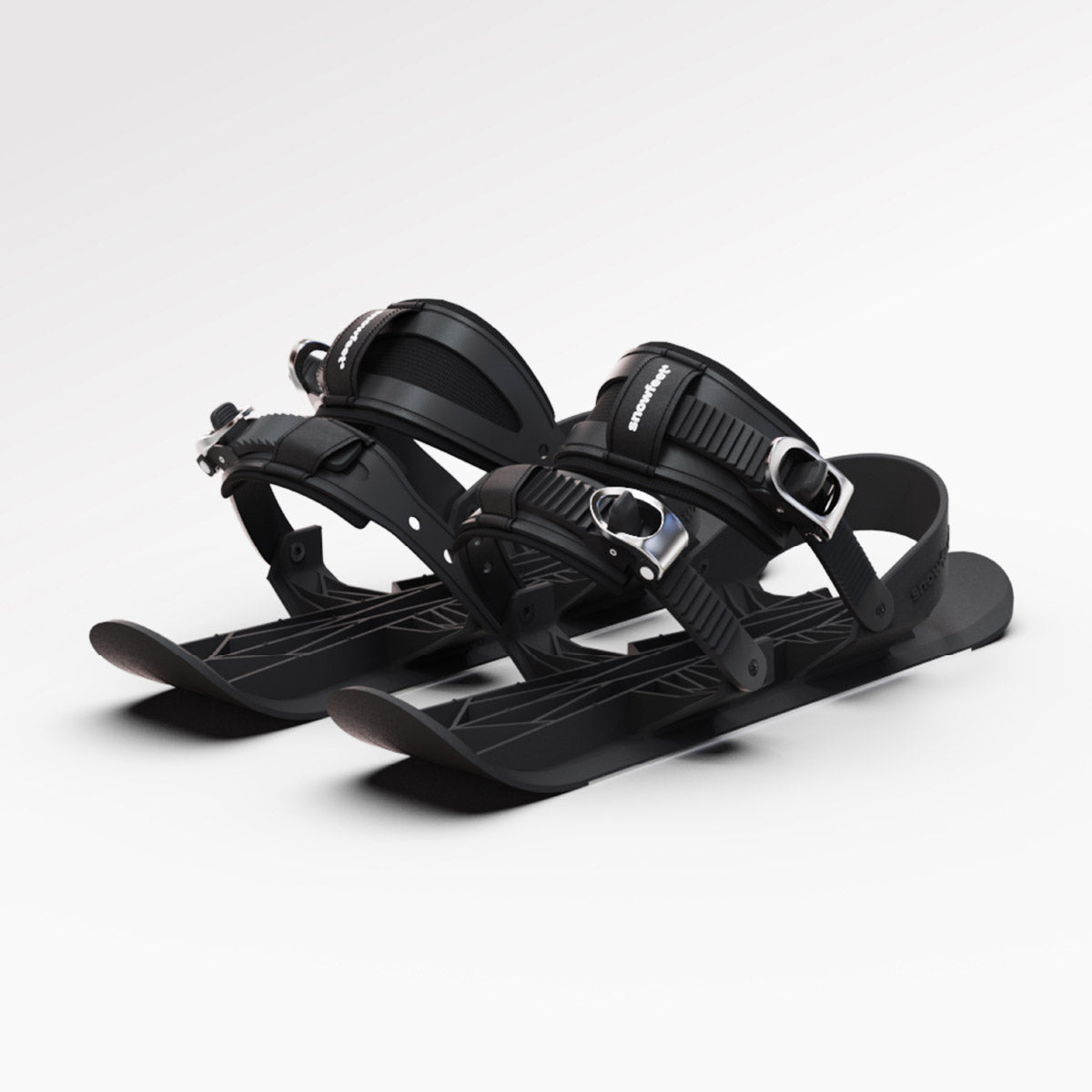
1. Snowfeet* Skiblades 65 cm
Turning and Stability
With a 13.1 ft (4 m) turn radius, the 65 cm model is the most agile in the lineup. It’s best for tight turns, moguls, and spins. That fast handling comes at the cost of stability, so it’s less suited to high-speed carving or deep powder.
It suits beginners, park riders, and returning skiers who care more about easy turns than speed.
Portability
At 25.6 in (65 cm), this is the shortest and lightest model in the lineup. Per pair, the ski-binding version weighs 3.79 lb (1,720 g), while the snowboard-binding version weighs 5.89 lb (2,638 g).
Boot and Binding Compatibility
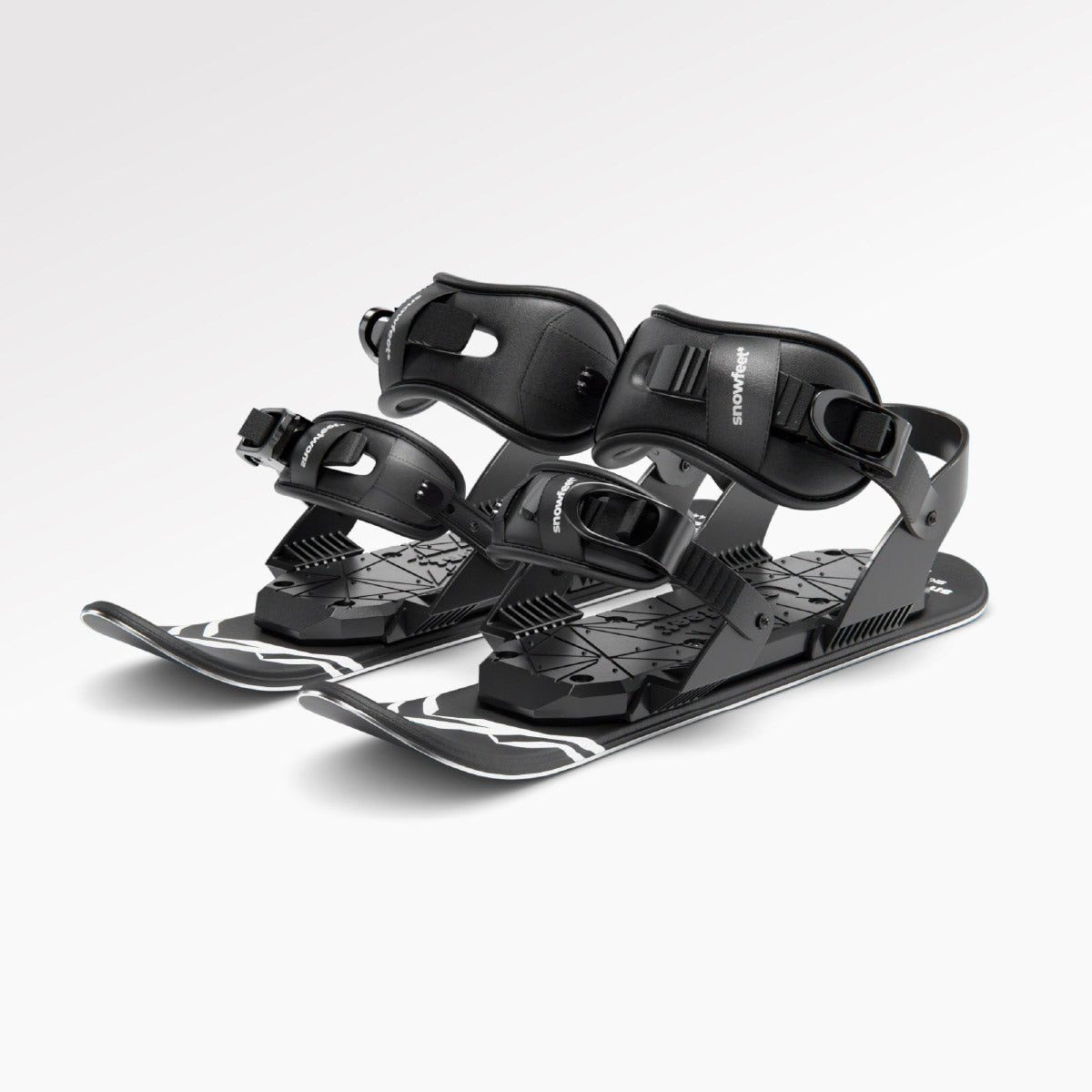
The fixed ski bindings fit US boot sizes 4.5–14.5. The snowboard-boot bindings fit US sizes 6–14.5. Match your boots to the right setup, and note that the ski bindings don’t release in a fall.
Price
As of October 2026, the U.S. listing starts at $550.00. The snowboard-binding version is listed at $790.00. Check the exact binding setup before checkout.
For more stability without giving up easy turns, the 99 cm model is the next step up.
Snowboarder tries Snowfeet* | Which Snowfeet* Short Ski is the Best? | Snowblades 44, 65, 99 Review
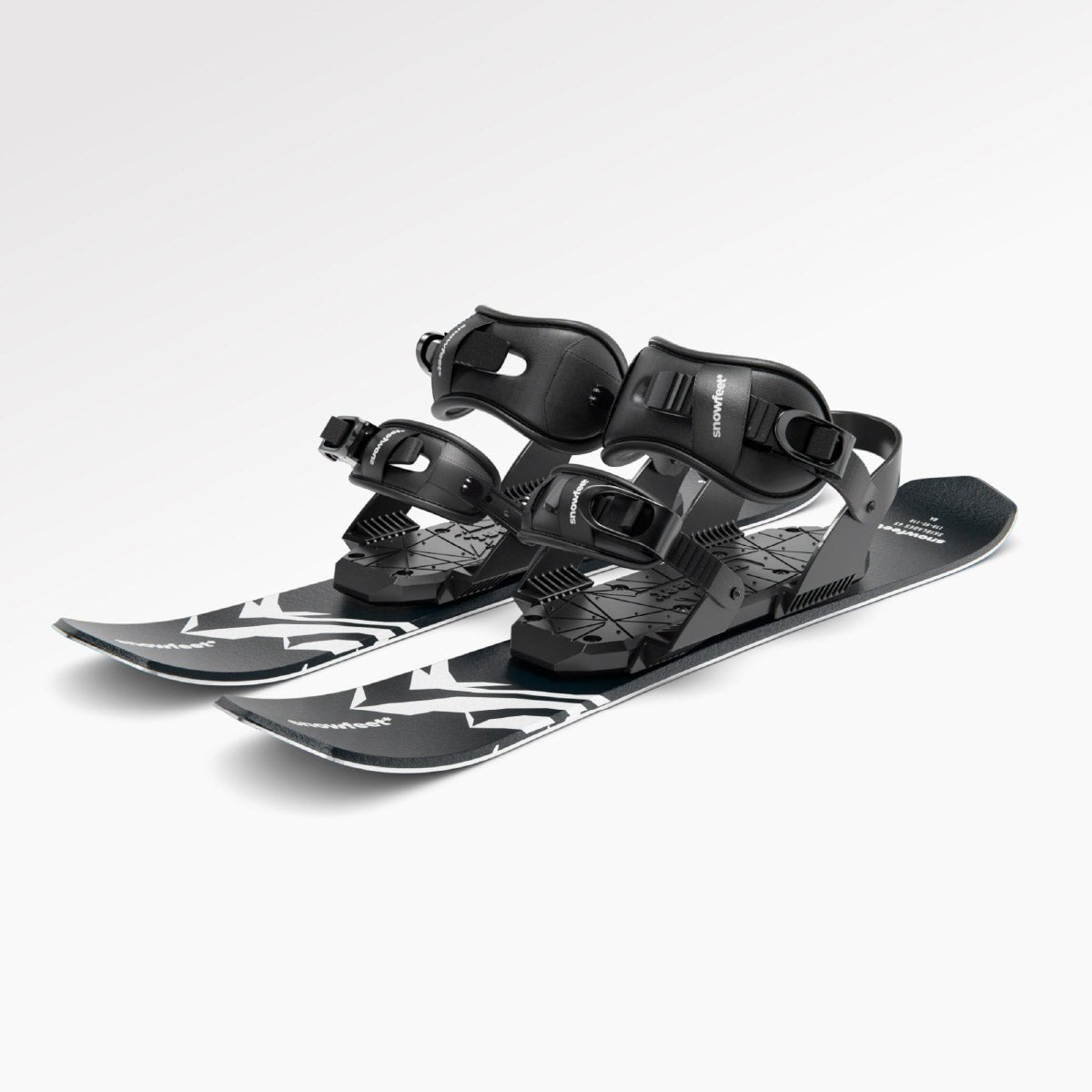
2. Snowfeet* Skiblades 99 cm
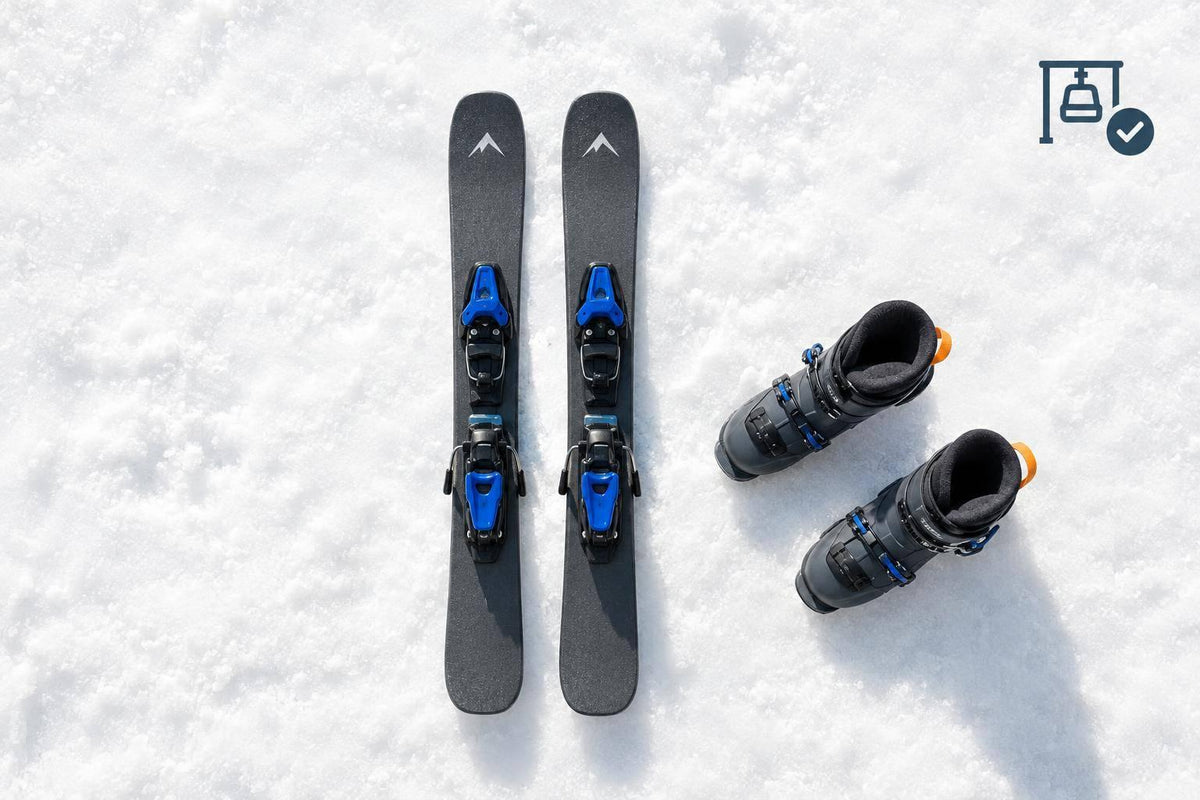
If 65 cm feels too twitchy, the 99 cm model adds stability while keeping that short-ski feel.
Turning and Stability
The 99 cm model sits in the middle of the Snowfeet* range. It’s more stable than the 65 cm model and easier to turn than full-size skis. It suits casual carving, small park jumps, and mixed resort laps.
In 2026, it’s an option for returning skiers, beginners, and snowboarders who want one compact setup for resort laps, travel, and occasional park use.
Portability
At 99 cm (39.0 in), it’s still easy to carry, with more on-snow confidence than the 65 cm model.
Boot and Binding Compatibility
Choose from ski, Pro Ski, or snowboard bindings. Fit ranges depend on the setup: US 4.5–14.5 for ski boots and US 6–14.5 for snowboard boots.
Current Price
As of October 24, 2026, the U.S. listing starts at $750.00. That puts it between the 65 cm model at $550.00 and the 120 cm model at $1,190.00.
For more carving speed and a longer, more ski-like feel, the 120 cm model is the next step up.
3. Snowfeet* Skiblades 120 cm
Turning and Stability
The 120 cm (47 in) model feels the most like a ski and offers the most stability at higher speeds in the Snowfeet* lineup. It suits returning skiers who want a familiar carving feel without switching to full-length skis. Your boots and where you ride still matter when choosing a model.
Portability
This model takes up the most space in the lineup, but it’s still easier to carry than full-length skis. Some listings show 123 cm, so check the length before buying a bag.
Boot and Binding Compatibility
It uses Pro ski bindings (standard release bindings) and fits ski boots in US sizes 4.5–14.5. Snowboard-boot compatibility isn’t listed for this model.
Current Price
The U.S. price is $1,190.00 as of October 24, 2026.
sbb-itb-17ade95
4 Differences to Consider Before You Buy
In 2026, the question isn’t whether snowblades still work. It’s which Snowfeet* length fits how you ride. Here’s how the three setups compare on turning, stability, packing, boots, and price.
Turning and Stability
| Model | Turning feel | Stability at speed | Park use |
|---|---|---|---|
| Snowfeet* 65 cm (25.6 in) | Fastest turns, with the most skate-like feel | Least stable at speed | Best for spins and quick direction changes |
| Snowfeet* 99 cm (39.0 in) | Agile, with more carving range | Balanced for casual resort riding | Good mix of turns and tricks |
| Snowfeet* 120 cm (47.2 in) | More ski-like turns | Best of these three for longer groomed runs | Less nimble for spins |
| Traditional long skis | Less compact for quick pivots | Best for sustained speed and long carving turns | Varies by ski design |
Length makes the biggest difference. Snowfeet* favor agility, while long skis still win for sustained speed and long carving turns.
Packing, Carrying, and Travel
| Model | Packed length | Packing and carrying tradeoff | Travel note |
|---|---|---|---|
| Snowfeet* 65 cm (25.6 in) | 25.6 in (65 cm), plus binding clearance | Smallest footprint | Check backpack dimensions |
| Snowfeet* 99 cm (39.0 in) | 39.0 in (99 cm), plus binding clearance | Needs a longer bag than the 65 cm | Check the bag’s interior length |
| Snowfeet* 120 cm (47.2 in) | Check listing: 47.2 or 48.4 in (120 or 123 cm), plus binding clearance | Largest footprint of the three | Confirm actual length before buying a bag |
| Traditional long skis | Varies by model | Usually need more storage space and a larger bag | Check ski-bag and transport requirements |
Check both bag length and room for the bindings. Shorter skis don’t guarantee carry-on approval.
Boot and Binding Compatibility
| Model | Compatible boot types | Binding options | Published size range |
|---|---|---|---|
| Snowfeet* 65 cm (25.6 in) | Ski boots or snowboard boots | Ski or snowboard bindings | Ski: US 4.5–14.5; snowboard: US 6–14.5 |
| Snowfeet* 99 cm (39.0 in) | Ski boots or snowboard boots | Ski, Pro Ski, or snowboard bindings | Ski: US 4.5–14.5; snowboard: US 6–14.5 |
| Snowfeet* 120 cm (47.2 in) | Ski boots only | Pro Ski bindings | Ski: US 4.5–14.5 |
Boot size is only part of the fit check. Match the binding to your boot sole standard, and have a professional check release settings where required.
U.S. Prices and Total Setup Cost
These prices match Sections 1–3 as of October 24, 2026.
| Model | Listed U.S. price | Included binding package | Additional costs to consider |
|---|---|---|---|
| Snowfeet* 65 cm (25.6 in) | $550.00 ski; $790.00 snowboard | Ski or snowboard bindings, respectively | Compatible boots if needed; professional setup or adjustment where required |
| Snowfeet* 99 cm (39.0 in) | From $750.00 with ski bindings | Ski bindings at the starting price; confirm Pro Ski or snowboard package pricing | Compatible boots if needed; professional setup or adjustment where required |
| Snowfeet* 120 cm (47.2 in) | $1,190.00 | Pro Ski bindings | Compatible ski boots if needed; professional setup or adjustment where required |
Compare the checkout total, not just the listed price. Include your exact binding version, compatible boots, and any required setup before matching a package to your riding style.
Pros, Cons, and Rider Recommendations
Pick a length that suits how you ride - and which tradeoffs you’re willing to make.
Pros and Cons by Length
| Snowfeet* model | Main advantage | Main tradeoff |
|---|---|---|
| 65 cm | Best for ski-skating, tricks, and quick turns | Least stable at high speeds; built for easy turns, not fast cruising |
| 99 cm | A balanced choice for casual carving and quick direction changes | Less compact than 65 cm and less stable at speed than 120 cm |
| 120 cm | Most ski-like feel and the most stability at speed | Harder to spin |
Length isn’t the whole story. Construction, flex, bindings, snow, and technique also affect how the skis feel.
65 and 99 cm models use ski or snowboard bindings. 120 cm models use Pro Ski bindings.
Match the Setup to Your Riding
| Rider | Best starting point |
|---|---|
| Beginner | 99 cm; choose 120 cm only if you want a more ski-like feel |
| Casual returning skier | 99 cm |
| Snowboarder | 65 or 99 cm with snowboard bindings |
| Traveler | 65 cm for compact packing; 99 cm for more stability |
| Park rider | 65 cm |
| Speed-focused skier | Long skis for sustained speed and long carving turns |
The next section breaks down which Snowfeet* length fits each rider type best.
Verdict: Choose Snowblades for Your Riding Style
The right length comes down to how you ride. In 2026, Snowfeet* gives casual riders three choices: 65 cm for skate-like turns and easy carrying, 99 cm for the best all-around balance, and 120 cm for the most ski-like feel. All three suit riders who want gear that’s easy to carry, playful, and easy to turn.
If you prefer sustained speed and long carving turns, go with long skis instead.
Before checkout, confirm current U.S. prices, boot compatibility, binding type, and resort rules. Starting prices are $550 for 65 cm, $750 for 99 cm, and $1,190 for 120 cm. The 65 cm and 99 cm models offer more binding options, while the 120 cm model uses Pro Ski bindings only.
FAQs
Does my height or weight affect which snowblade length I need?
No. Unlike standard alpine skis, Snowfeet snowblades are chosen by riding style, skill level, and terrain - not height or weight*.
Beginners and park riders often prefer the nimble 65 cm (about 26-inch) model. For more stability, carving, and higher speeds, riders often choose the 99 cm (about 39-inch) or 120 cm (about 47-inch) options. Both offer a feel closer to standard skis.
How hard is switching from snowboarding to snowblades?
Switching from snowboarding to snowblades is usually simple, especially with Snowfeet* options that fit your existing snowboard boots. The 65 cm (about 26-inch) Skiblades are the easiest place to start for snowboarders. The 99 cm (about 39-inch) models give you more stability as your confidence grows.
Many riders find lift lines and chairlift boarding easier to handle on snowblades than on a snowboard. And with a short learning curve, you can spend less time getting the hang of things and more time enjoying the mountain.
How can I check whether my resort allows snowblades?
Most resorts allow snowblades, but check your resort’s policy before you go. Visit its official website or call guest services to confirm that short skis or skiboards are allowed on both the slopes and in terrain parks.
If staff have questions, explain that your gear offers a modern, stable alternative to standard skis and is made for resort riding.



Leave a comment
This site is protected by hCaptcha and the hCaptcha Privacy Policy and Terms of Service apply.