


















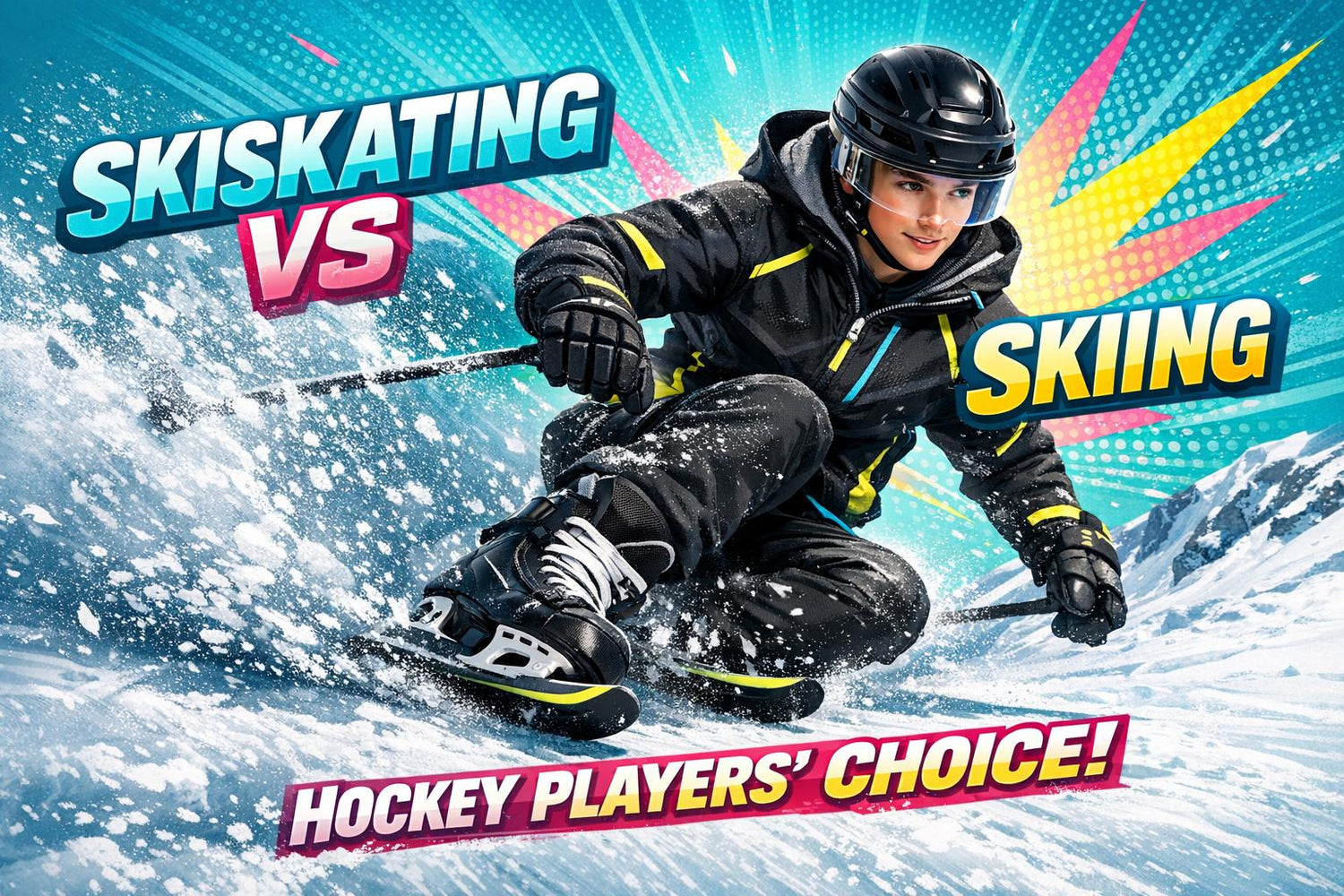
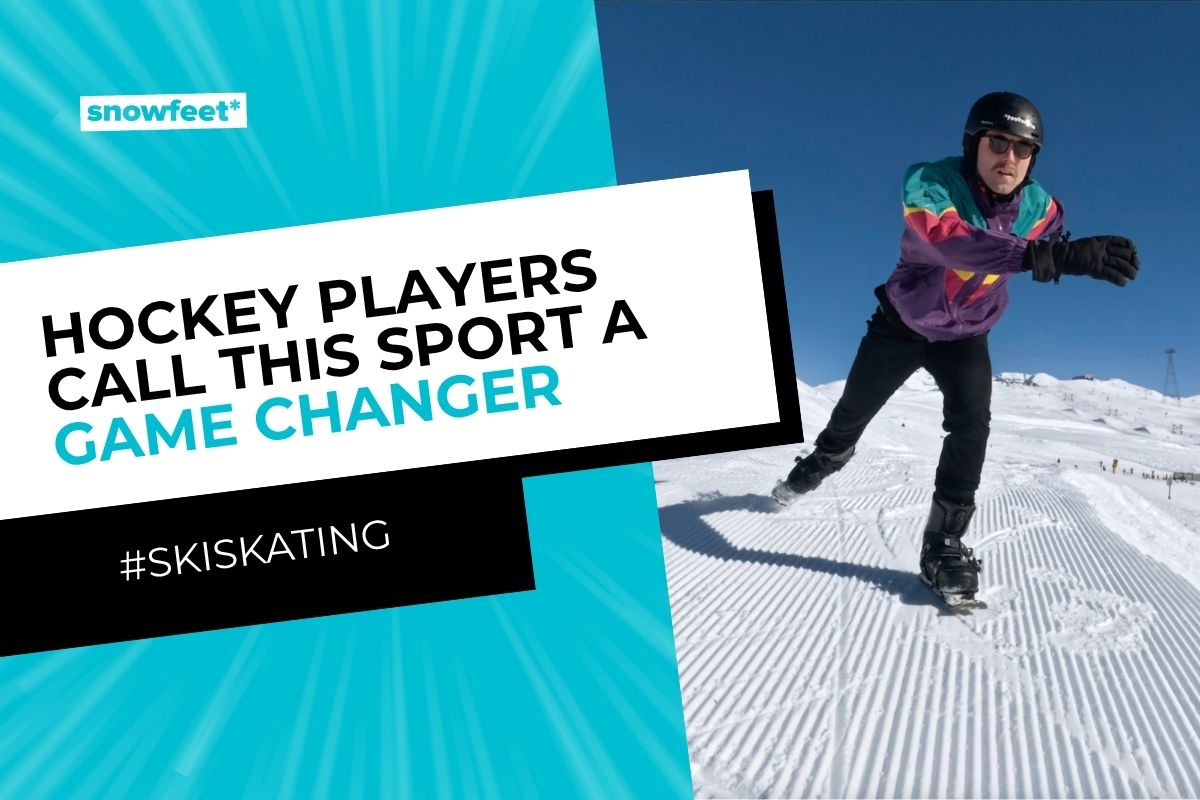
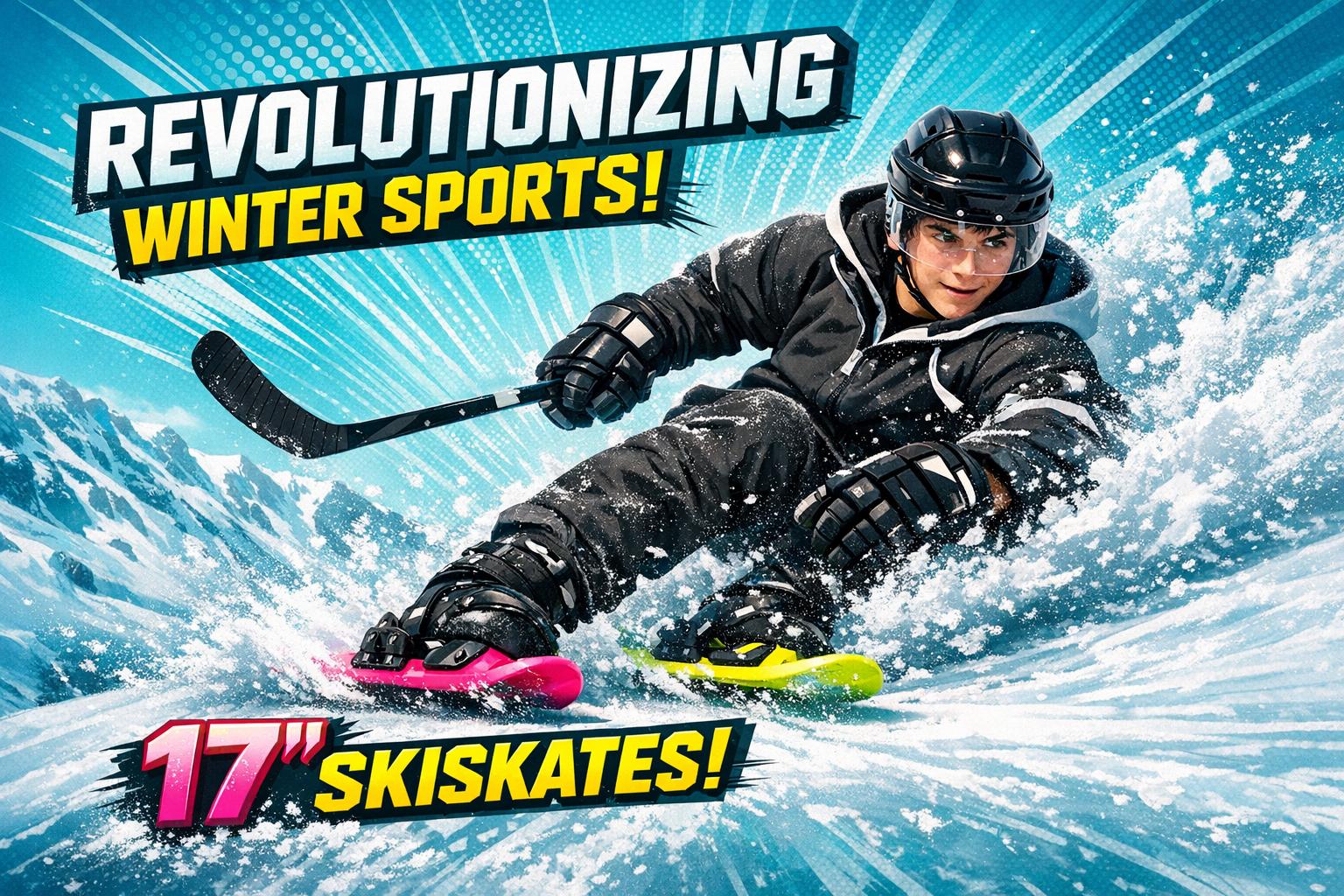
Skiskates are a perfect match for hockey players who want to enjoy snow sports without the steep learning curve of skiing. Here’s why:
- Familiar Movements: Skiskates mimic the skating motion hockey players already know - sideways pushes, edge control, and hockey stops.
- Compact Design: At just 17 inches (44 cm) long, they’re easy to carry, fit in a backpack, and eliminate the hassle of bulky ski gear.
- Quick Learning Curve: Most hockey players master the basics in minutes, thanks to their skating skills.
- Agility: Tight turns, 360° spins, and quick stops are effortless compared to skis.
- Comfort: Use your regular winter boots - no stiff ski boots required.
If you’re a hockey player looking for a fun, portable, and easy way to hit the slopes, skiskates are a no-brainer. Let’s dive into how they work and why they’re such a hit.
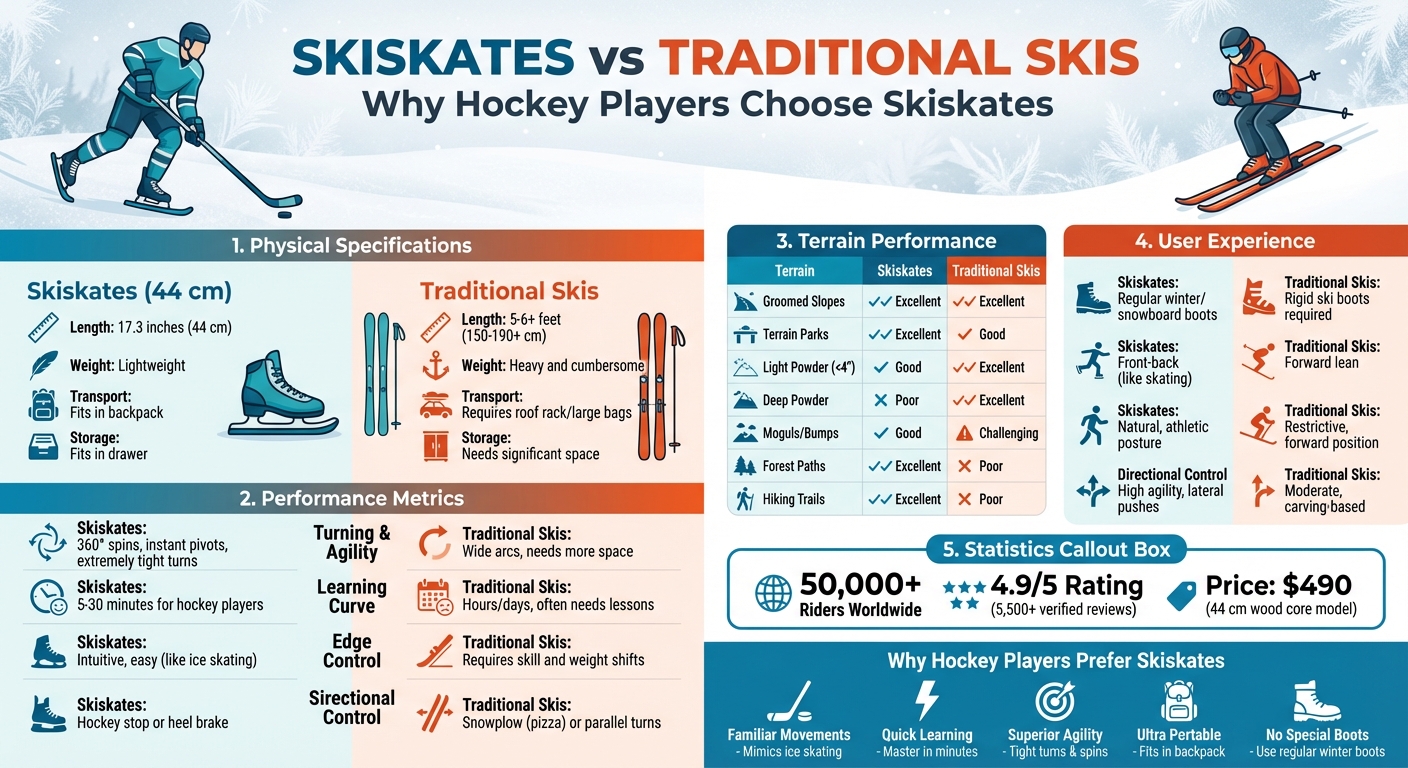
Skiskates vs Traditional Skis: Complete Comparison for Hockey Players
How Hockey Skills Transfer to Skiskating
Similar Body Movements and Balance
If you're a hockey player, you'll feel right at home on skiskates. The movements on skiskates closely mimic those on the ice. Take the lateral skating stride, for example - the sideways leg pushes you use for speed on the rink work just as well on snow. Unlike traditional skis, which require learning a whole new motion, skiskates let you stick to what you already know.
Balance is another area where hockey skills come into play. The front-to-back balance you maintain on hockey blades is almost identical to what’s needed for skiskates. Snowfeet Skiskates, with their compact design, require you to center your weight or lean slightly back - very similar to skating. This is a big contrast to traditional skiing, where you lean forward. Even the hockey stop translates perfectly. Just like on the ice, you evenly distribute your weight over both feet and turn them perpendicular to your direction. It’s second nature for hockey players.
"You have to keep the front-back balance, so it feels very natural to those who play ice hockey, ice skate, or even use inline skates." - Snowfeet Store
Edge control is another skill that transfers seamlessly. On skiskates, you tilt the metal edges to turn - just like you would on hockey skates. Traditional skis, with their long and heavy design, demand a slower, more deliberate approach. But skiskates are quick to respond, making sharp pivots and spins a breeze. This familiarity not only makes the experience enjoyable but also cuts down the time it takes to get the hang of things.
Shorter Learning Time for Hockey Players
Hockey players pick up skiskating much faster than traditional skiing. Why? Because your body is already trained for it. You’re used to balancing on a short base, controlling edges, and making quick direction changes. Many Snowfeet users with a skating background report that they’re zipping down hills and even landing jumps within just 30 minutes of trying skiskates for the first time. Compare that to traditional skiing, where you’d have to relearn everything - weight distribution, turning, stopping - it’s a whole different ballgame. With Snowfeet, your hockey habits work in your favor, making the transition almost effortless.
Agility and Maneuverability: Skiskates vs Traditional Skis
Turning Radius and Edge Control
Snowfeet Skiskates, with their compact 44 cm (17.3 inches) length, change the game when it comes to turning. Traditional skis, often spanning 5 to 6 feet, need large, sweeping arcs to shift direction. Skiskates? They let you pivot on a dime. Their ultra-short design makes 360° spins, sharp carves, and instant pivots effortless - no need for half the slope just to complete a turn.
If you're a hockey player, this will feel second nature. You're already used to quick cuts and tight turns on the ice, and that same edge control translates seamlessly to snow. The metal steel edges on Snowfeet Skiskates grip the slope just like your skate blades grip the ice, offering precise control. Plus, you avoid common ski issues like tip crossing or edge catching.
"Many people find turning with Snowfeet or Skiskates easier than turning with those long clunky skis." - Snowfeet Team
With traditional skis, you have to shift your entire body weight and commit to a turn well before it happens. Skiskates, by contrast, react instantly: just tilt to carve or pivot sharply - no heavy weight shifting or delays.
Comparison Table: Agility Metrics
| Metric | Skiskates (44 cm) | Traditional Skis |
|---|---|---|
| Turning Radius | Extremely tight; allows 360° spins and instant pivots | Wide arcs; needs more space for turns |
| Directional Control | High agility; uses skating-like lateral pushes | Moderate; depends on carving and weight shifts |
| Edge Control | Intuitive and easy, thanks to short length and metal edges | Requires skill and weight shifts to handle long edges |
| Ease of Use | Simple for skaters/hockey players; 5-minute learning curve | Steeper learning curve; often needs lessons |
| Stopping Method | Hockey stop or heel brake | Snowplow (pizza) or parallel turns |
The stats speak for themselves. Over 40,000 riders have embraced skiskating, and Snowfeet Skiskates boast a flawless 5.0/5 rating from more than 5,500 verified reviews. Hockey players, in particular, rave about how natural the maneuverability feels - it mirrors the movements they're already familiar with. This agility makes skiskates a standout choice for tackling all kinds of snow conditions.
Hockey Player Tries Snowfeet* Skiskates | See What He Thinks | Skiboards | Short Ski | Mini Ski
Portability and Convenience
When it comes to winter sports, portability can make all the difference. Hockey players, known for their fast-paced lifestyles, need gear that keeps up - and that’s exactly what Snowfeet delivers.
Compact Size for Easy Transport
Snowfeet Skiskates are only 17.3 inches (44 cm) long. Compare that to traditional skis, which are typically 5 to 6 feet long and require oversized ski bags or roof racks just to get to the slopes. This compact size is a game-changer for anyone on the move, especially hockey players. Whether you’re living in a small apartment or relying on public transit, these skiskates are easy to store and carry.
Throw them in your gym bag, and you’re set. No need to wrestle with bulky equipment or sacrifice car space. You can even toss them in a backpack, hike up a trail, and enjoy a smooth skiskating descent.
"Snowfeet fit in a backpack. Light, compact, and ready to go. Snowfeet fit your gear, your car, and your lifestyle." – Snowfeet Team
And let’s talk weight. Traditional ski setups can feel like a workout before you even hit the slopes. Snowfeet Skiskates, on the other hand, are lightweight and easy to handle. For hockey players who are used to the agility of skates, this convenience is a perfect match.
Comparison: Skiskates vs Traditional Ski Gear
Here’s how Snowfeet stacks up against old-school ski setups:
| Feature | Snowfeet Skiskates (44 cm) | Traditional Ski Gear |
|---|---|---|
| Length | 17.3 inches (44 cm) | 5 to 6+ feet (150–190+ cm) |
| Transport | Fits in a standard backpack | Requires roof racks or large bags |
| Weight | Lightweight and portable | Heavy and cumbersome |
| Footwear | Works with winter or snowboard boots | Requires rigid ski boots |
| Storage | Fits in a drawer or small closet | Needs significant space |
| Car Fit | Fits in any trunk or backseat | Often needs an SUV or roof rack |
With over 50,000 riders and a stellar 4.9/5 rating from more than 5,500 verified reviews, it’s clear that portability isn’t just convenient - it’s a major reason why Snowfeet stands out. For hockey players who value gear that’s simple, efficient, and easy to manage, Snowfeet checks all the boxes.
sbb-itb-17ade95
Performance Across Different Snow Terrain
Performance on Groomed Slopes and Parks
Snowfeet Skiskates really shine on groomed runs and in terrain parks. Their small size makes them perfect for carving sharp turns and weaving through crowded slopes with ease. Thanks to their metal edges, they grip hardpack and groomed snow just like traditional skis. Plus, they let you stop on a dime using either a hockey stop or the built-in heel brake.
Unlike the high-speed, long skis from brands like Rossignol or Salomon, Snowfeet Skiskates focus on agility and fun. They’re designed for quick, precise movements - something hockey players will feel right at home with. As one happy rider shared:
"Absolute game-changer! They're light, fast, and incredibly fun to ride." – Nathan F.
In terrain parks, their short length makes spinning and landing tricks easier, reducing impact during jumps. This level of maneuverability is something traditional skis just can’t match. While they excel on groomed runs, Snowfeet also handle varied terrain well, opening up opportunities for off-piste exploration.
Performance in Off-Piste and Backcountry Conditions
Snowfeet Skiskates work best on maintained slopes and light powder, handling snow depths up to about 4 inches (10 cm). They’re not built for deep powder, as their compact size doesn’t provide enough flotation. For those powder-heavy days, you might want to consider longer options like the Snowfeet Skiblades (99 cm).
Where Snowfeet really stand out is in their portability. Traditional skis from brands like K2 or Atomic can be bulky and difficult to manage on narrow hiking trails or forest paths. Snowfeet, on the other hand, fit easily into a backpack, making them a great choice for quick off-piste adventures. Their compact design pairs perfectly with the quick reflexes hockey players are already used to. On uneven terrain or moguls, shifting your weight onto your heels helps avoid catching the tips, making it easier to navigate tight spots.
Comparison Table: Terrain Performance
| Terrain Type | Snowfeet Skiskates (44 cm) | Traditional Skis |
|---|---|---|
| Groomed Slopes | Excellent – Agile and easy carving | Excellent – High speed and stability |
| Terrain Parks | Excellent – Great for tricks and jumps | Good – Stable for big landings |
| Light Powder (<4") | Good – Manageable with heel-weighting | Excellent – Smooth and effortless glide |
| Deep Powder | Poor – Not suitable | Excellent (especially wider models) |
| Moguls/Bumps | Good – Easy to maneuver | Challenging – Requires more skill |
| Forest Paths | Excellent – Short and obstacle-friendly | Poor – Too long for tight spaces |
| Hiking Trails | Excellent – Lightweight and portable | Poor – Bulky and heavy |
Ease of Learning and Confidence Building
Wider Base for Stability
Snowfeet Skiskates are not just about agility - they’re designed to make learning easier and help riders feel confident right from the start. For hockey players, this transition is almost seamless. The front-back balance required for skiskating mirrors the natural weight distribution they use on the ice - focused over the middle or back of their feet rather than leaning forward, as traditional skiing often demands.
The familiar shoulder-width stance and slightly bent knees that hockey players rely on translate effortlessly to skiskating. Unlike traditional skis from brands like Atomic or Salomon, which often require a forward lean into rigid, restrictive boots, Snowfeet Skiskates let you maintain a more natural, athletic posture. One user, Falk, summed it up perfectly:
"I never skied before but I Inline-skate my whole life. So I hoped for something similar in snow and this absolutely nailed it."
Plus, the compact 44 cm length of Snowfeet Skiskates eliminates the cumbersome feeling of managing long skis. Instead of wrestling with 6-foot-long equipment, you get the freedom and nimbleness of something closer to an ice skate. This design makes it easier to stabilize and quickly pick up the basics of skiskating.
Lower Barriers for Beginners
For hockey players, the learning curve on Snowfeet Skiskates is refreshingly short. The familiar movements - like using a skating stride for momentum and performing a hockey stop for braking - make the transition almost second nature. Compare that to traditional skiing, where mastering even beginner slopes often requires professional lessons and hours of practice.
Instead of struggling with the awkward snowplow technique used in traditional skiing, hockey players can rely on the hockey stop they already know. By turning their feet perpendicular and engaging the metal edges, they can stop with ease. As the Snowfeet Team puts it:
"It is very easy for hockey players, ice-skaters, and roller-bladers, since it is very similar to skating."
Verified user Ingrid echoed this sentiment:
"They are very easy to handle and control especially if you have experience on roller skates or ice skates."
With over 50,000 riders worldwide and a stellar 4.9/5 rating from more than 5,500 verified reviews, it’s clear that Snowfeet Skiskates are confidence boosters. Unlike traditional ski brands like Atomic or Salomon, which often require stiff boots and pricey lessons, Snowfeet Skiskates work with your regular winter shoes or snowboard boots (sizes 6–13 US). This means you can hit the slopes immediately - without the stress or intimidation of traditional ski gear.
Control and Carving Precision
Easier Edge Control
Snowfeet* Skiskates bring a level of edge control that traditional skis just can’t match. Their compact design focuses control right under your feet, making them incredibly responsive. Unlike traditional skis, which stretch 5 to 6 feet and require big weight shifts to engage the edges, these skiskates need just a slight tilt to grip the snow.
For hockey players, this is a total game-changer. The mechanics feel a lot like ice skating: you can push sideways to pick up speed and use a hockey stop to slow down. Without the long tips and tails of regular skis, you can make super-tight turns and quick edge-to-edge transitions. Plus, the lightweight core means less strain on your legs, making carving fast and sharp a breeze.
Andrew B., a verified user, shared his experience:
"These skiblades are so much fun and easy to control. Never going back to regular skis."
With over 5,500 verified reviews and a 4.9/5 rating reported by Snowfeet*, it’s clear these skates deliver the precision and ease that hockey players - and anyone else - will find intuitive and effortless. The added control also means less fatigue during those quick, sharp turns.
Less Strain on Knees and Joints
Another big win with Snowfeet* Skiskates? They’re easier on your knees and joints. Traditional skis act like long levers, putting a lot of twisting force on your legs during sharp turns or falls. Snowfeet* Skiskates, with their compact design, reduce that leverage significantly. That means less strain and less risk of injury.
Their ultra-lightweight construction also makes them easier to handle. Unlike traditional skis that can feel heavy and clunky after a full day on the slopes, these skates keep you light on your feet. Carving becomes less exhausting, so you can enjoy longer runs without wearing yourself out.
Nathan F., another happy rider, put it this way:
"Absolute game-changer! They're light, fast, and incredibly fun to ride."
For hockey players - or anyone who wants to enjoy winter sports without the extra strain - this reduced impact on joints is a big deal. And with prices starting at $490 for the 44 cm model, Snowfeet* Skiskates combine better control with a healthier, more enjoyable way to hit the slopes.
Conclusion: Why Skiskates Work Best for Hockey Players
If you’re a hockey player, Snowfeet* Skiskates are a natural fit. The movement feels familiar - sideways pushes, precise edge control, and effortless hockey stops. Most hockey players pick it up in just about 5 minutes because it’s like skating on snow rather than learning an entirely new sport like traditional skiing.
With a compact 44 cm design, these skiskates ditch the bulky setup of regular skis. This means you can pull off quick twists and tight turns without worrying about long tips or tails getting in your way. Plus, they’re small enough to fit right into a backpack, making them super easy to carry around.
Performance-wise, the numbers speak for themselves: over 50,000 riders and a stellar 4.9/5 rating from more than 5,500 verified reviews. At $490 for the 44 cm wood core model, Snowfeet* Skiskates let you build on your hockey skills without the hassle of a steep learning curve.
What’s more, their lightweight design reduces strain on your knees and joints, so you can enjoy longer sessions without feeling wiped out. Whether you’re carving down groomed slopes, hitting terrain parks, or navigating narrow trails, these skiskates give you the control and agility you need to keep having fun.
FAQs
Why do skiskates offer better agility than traditional skis?
Skiskates are a game-changer on the slopes. At just 44 cm long, they’re much shorter and lighter than traditional skis, which means they’re incredibly agile. Their compact size lets you make quick weight shifts and edge changes, mimicking the sharp, side-to-side moves that hockey players use on the ice. This design makes tighter turns and quicker stops a breeze, giving you a level of control that’s hard to match.
For hockey players, skiskates feel like ice skating on snow. They seamlessly transfer your balance, quick reflexes, and explosive direction changes from the rink to the slopes. Unlike bulky, heavy skis, skiskates let you stick to the dynamic movements you’re already comfortable with. If you’re looking for a fun and natural way to transition from skating to skiing, these might just be your perfect fit.
Why are skiskates easier to transport than traditional skis?
Skiskates are a game-changer when it comes to portability. At just 44 cm long and lightweight, they’re nothing like traditional skis that can feel like you’re hauling around a small tree. These little wonders can slip right into a backpack, making them super easy to bring along. Whether you're hitting the slopes or checking out snowy trails closer to home, skiskates let you enjoy winter fun without the hassle of lugging around bulky gear.
Why do hockey players find skiskates easier to use than traditional skis?
Hockey players pick up skiskates much quicker than traditional skis. Why? Because skiskates mirror the balance, stance, and edge control they’re already used to from skating on ice. Take Snowfeet skiskates, for example. These nifty little tools are just 17 inches long, clip right onto regular winter or snowboard boots, and offer a skating-like experience on snow. The result? A super smooth transition where players can rely on the same ankle flex and weight-shifting moves they’ve already mastered.
Unlike traditional skiing, skiskates skip the learning curve of a wider stance, handling poles, or dealing with long, clunky edges. Plus, Snowfeet skiskates are lightweight, portable, and easy to use just about anywhere - whether it’s a small hill in your backyard or a local park. No bulky gear, no fuss. This combo of ease and familiarity makes skiskates an awesome winter sport option for hockey players wanting to keep their skills sharp in the snow.











Leave a comment
This site is protected by hCaptcha and the hCaptcha Privacy Policy and Terms of Service apply.