



















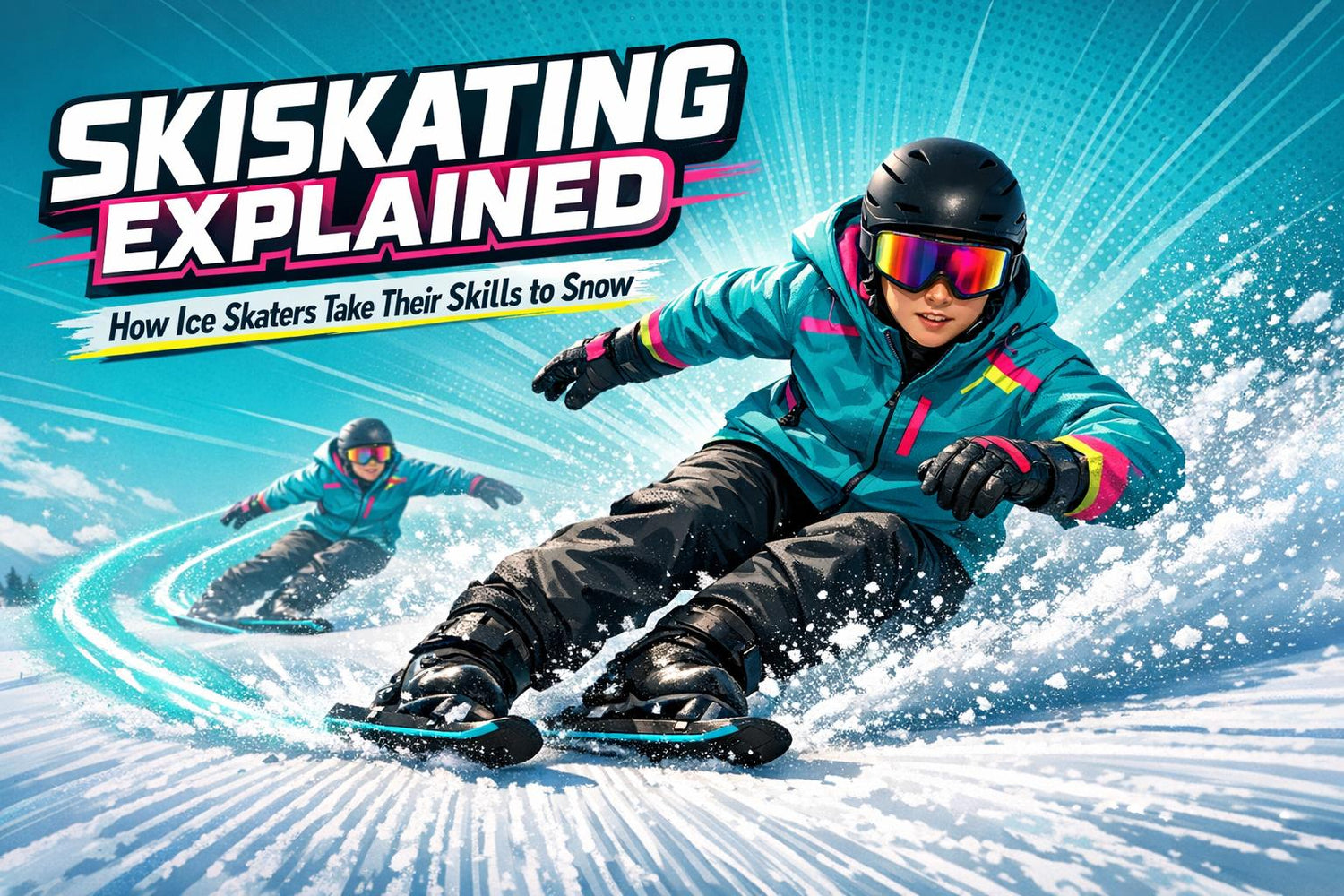
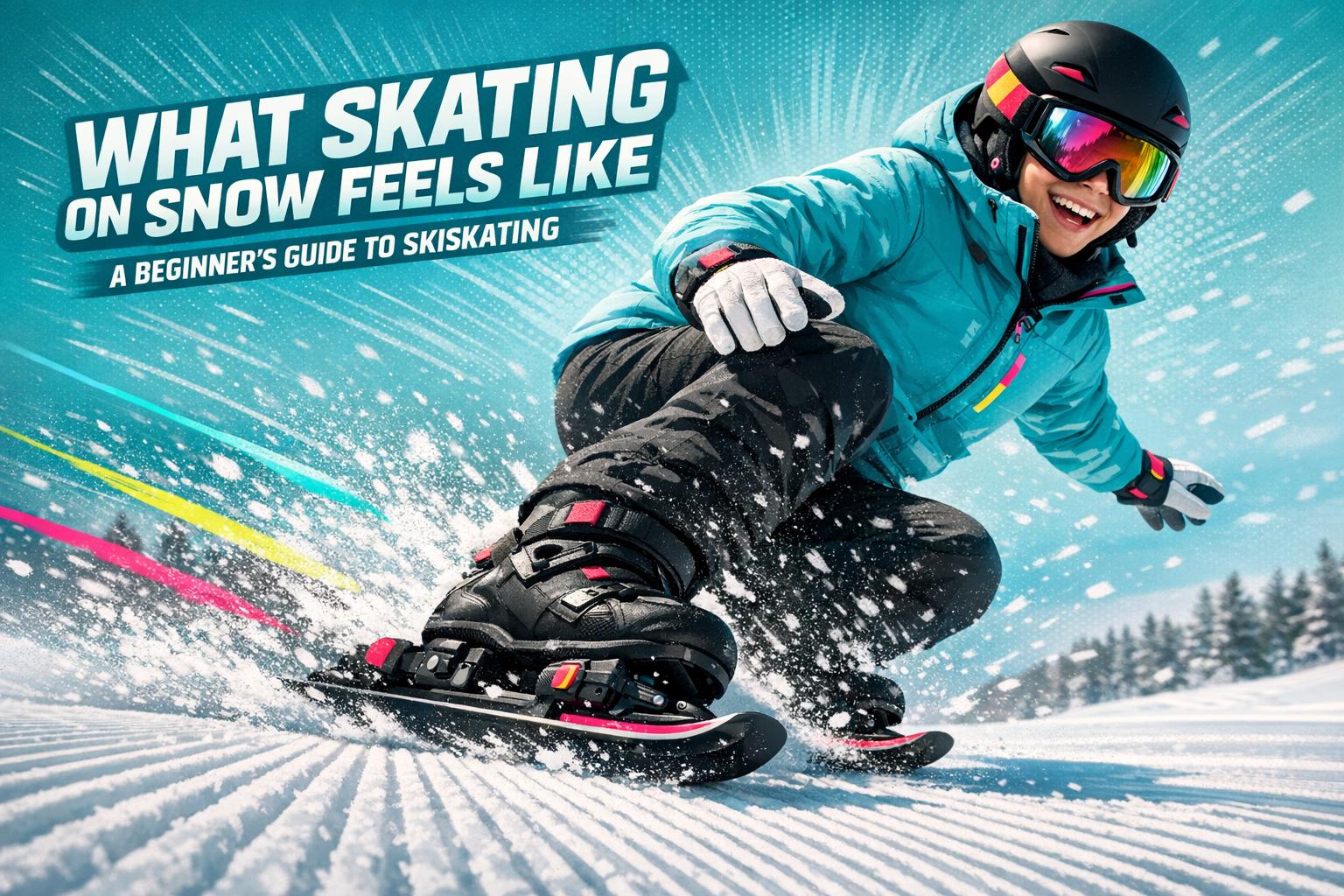
Skiskating is the perfect winter sport for ice skaters who want to bring their skills to snowy slopes. Using compact Snowfeet* skiskates - gear under 20 inches long - you can glide, carve, and even pull off tricks without the bulk of traditional skis. The best part? You can use your regular winter or snowboard boots, skipping the need for pricey ski boots.
Here’s why skiskating is a game-changer for ice skaters:
- Quick to Learn: If you’re an ice skater, you’ll pick it up in minutes. Skills like balance, edging, and hockey stops transfer directly.
- Portable Gear: Skiskates fit in a backpack and weigh far less than traditional skis.
- Affordable: Starting at $250, they’re a budget-friendly option compared to full ski setups.
- Versatile: Perfect for slopes, parks, trails, and even sledding hills.
With over 50,000 users worldwide and glowing reviews, Snowfeet* skiskates make snowy adventures more fun, agile, and accessible. Ready to skate on snow? Let’s dive into the details.
Why Ice Skaters Pick Up Skiskating Quickly
Skills That Transfer: Balance, Edging, and Movement
If you're an ice skater, chances are you’ll feel right at home on skiskates. The balance you’ve mastered on the rink - shifting your weight smoothly from one edge to the other - is the same skill you’ll use on snow. Gliding on a single ski and making those side-to-side weight shifts mirrors the natural lateral balance of ice skating.
Edging is another area where your ice skating experience comes in handy. On the ice, you press into your blade’s edge to carve turns. With Snowfeet* Skiskates, you’ll feel that same edge control, especially during push-offs. The metal edges are designed to respond to your movements, making it easy to apply the edging techniques you already know. It’s like your ice skills were made for this.
Even your alternating push - something hockey players know well - translates perfectly. It helps you build speed, maintain momentum, and even nail a hockey stop on the slopes.
Ice Skaters Learn Faster Than Beginners
Thanks to these transferable skills, ice skaters pick up skiskating much quicker than complete beginners. In fact, many experienced skaters get the hang of it in just five minutes. That solid foundation in balance and edging makes learning push-offs a breeze.
Beginners often struggle with balancing on uneven snow or managing edge pressure. But as a skater, you instinctively know how to shift your weight and use bent-leg pushes to stay steady. The 44 cm (17.3-inch) base of the skiskates feels intuitive to seasoned skaters. Plus, unlike traditional stiff ski boots, Snowfeet* Skiskates are compatible with regular winter or snowboard boots, which makes the whole experience even more comfortable.
"It feels very natural to those who play ice hockey, ice skate, or even use inline skates." - Snowfeet Team
Snowfeet*: The Best Gear for Skiskating
Snowfeet* Product Range
If you're an ice skater looking to take your skills to the snow, Snowfeet* has got you covered. Their lineup is designed to suit all skill levels, making the shift from ice to snow smooth and fun.
Starting at $250, the Mini Ski Skates (38 cm / 15 in) are perfect for casual adventures on hills and trails. These compact skates pair with your regular winter boots, so there’s no need for extra gear. For a step up, the Snowfeet* PRO (50 cm / 19.7 in), priced at $275, offers better stability on light powder while still being small enough to toss in a backpack.
For those chasing serious skiskating thrills on groomed slopes, the 44 cm Skiskates are the top-tier option. Starting at $575, they feature a wood core for a faster, more responsive ride. These skates come with adjustable bindings that fit US shoe sizes 6–13 (EU 38–47) and are lightweight enough to carry anywhere.
Snowfeet* has earned the trust of over 50,000 riders worldwide, backed by 5,500+ verified reviews averaging an impressive 4.9 out of 5 stars. They've also snagged industry awards like the A'Design Award and were finalists at ISPO, solidifying their reputation for quality and performance.
This lineup offers a modern twist on winter sports gear, giving you an edge over traditional ski equipment.
Why Snowfeet* Beats Traditional Ski Equipment
Snowfeet* isn’t just different - it’s better. Traditional skis are bulky, measuring 150–200+ cm (59–79+ in), and they require stiff, expensive boots. Snowfeet* flips the script with models that top out at just 50 cm (19.7 in). Even better, they’re compatible with the winter boots you already own.
Learning to use Snowfeet* is a breeze. Most people get the hang of it in minutes, a stark contrast to the steep learning curve of traditional skiing. Their compact design makes turning and carving feel effortless, with many users finding it easier to maneuver than traditional long skis. And because they’re small enough to fit in a backpack, you can easily take them to local hills - no need to lug around oversized gear.
For ice skaters, Snowfeet* feels like a natural extension of the skills you already have. Your balance and edging expertise translate seamlessly, skipping the awkward beginner phase that often comes with traditional ski gear.
"Far more portable and affordable than traditional skis or snowboards." – Uncrate
Where to Use Your Skiskates: Terrain Options
Ski Slopes and Snowparks
Groomed ski slopes are perfect for Snowfeet* products. The packed snow provides just the right surface for smooth, skating-like movements. You can carve, turn, and stop with ease - almost like you're gliding on ice. Plus, these skiskates are compatible with standard ski lifts, so there's no need for special setups. Just ride up and enjoy the descent.
Their compact size makes them a blast in terrain parks, where you can pull off tricks, twists, and jumps without much effort.
"Snowfeet are best on groomed slopes and trails. Avoid steep slopes and deep powder." – Snowfeet Team
For the best experience, use snowboard boots to keep your ankles supported and maintain your balance by staying centered. Leaning forward can lead to spills, so keep your posture in check. Need to stop in a hurry? Try a hockey stop - turn your feet perpendicular to the slope and use the edges to dig in [1, 13].
But the fun doesn’t stop there! These skiskates shine in more compact and unconventional areas too.
Backcountry Trails and Tight Spaces
Snowfeet* skiskates aren’t just for the slopes - they’re also great for exploring off-the-beaten-path trails. Thanks to their short length, they’re easy to maneuver on narrow trails where traditional skis (which can be 5–6 feet long) just won’t fit. They’re also super portable; toss them in your backpack for a hike uphill, then strap them on for the downhill ride.
"Skiskates also open more opportunities such as accessing narrow hiking trails and types of trails you wouldn't be able to access whilst wearing skis." – Snowfeet Team
For casual outings on local hills or sledding spots, waterproof winter shoes with solid ankle support work just fine. But keep in mind, Snowfeet* aren’t built for deep powder or extremely steep slopes. On ungroomed snow, shift your weight back and lift your toes to avoid the tips catching. Stick to packed trails, and you’ll find yourself exploring areas that traditional skis just can’t reach [1, 3].
Basic Skiskating Techniques for Ice Skaters
Applying Ice Skating Skills to Snow
If you’ve spent time on the ice, you’re already a step ahead when it comes to skiskating on snow. The balanced stance you’ve mastered on the rink transfers well - just with a slight adjustment. Keep your legs shoulder-width apart, bend your knees slightly, and avoid leaning too far forward. Shifting your weight over your toes, like you might with skis, can easily lead to a fall.
"Don't place your weight over your toes as you would with skis, because you will fall. Instead, place your weight over the middle or back of your feet." – Snowfeet Team
To stay steady, try a staggered "scissoring" stance - place one foot slightly ahead of the other. This creates a longer balance platform, helping you avoid those dreaded backward spills.
When it’s time to stop, the hockey stop you know from ice skating works here too. Simply turn your feet perpendicular to the slope and engage the metal edges. On snow, though, you’ll need to spread your weight evenly over both feet for a smoother, more controlled stop - unlike on ice, where you might favor one side. And if stopping feels tricky at first, there’s always the built-in heel brake to help you slow down gradually.
These techniques pair perfectly with the design of Snowfeet*, giving you better control and precision on snow.
How Snowfeet* Features Help Your Performance
Snowfeet* are designed to make moving from ice to snow feel natural. The metal edges and compact build (less than 20 inches) allow for precise carving, quick turns, and effortless spins. Unlike traditional skis, there’s no bulk to hold you back.
The smaller size also makes advanced moves like crossover techniques and spins much easier to pull off. With over 5,500 verified reviews and an average rating of 4.9 out of 5 stars, users love how seamlessly Snowfeet* adapt to their skating skills.
For the best performance, don’t forget to keep those edges sharp and wax the base regularly. This prevents snow from sticking and ensures smooth, consistent rides every time.
sbb-itb-17ade95
Snowfeet* & Skiskates Tutorial - How to Become a PRO Skiskater
Skiskating vs. Traditional Skiing and Snowboarding
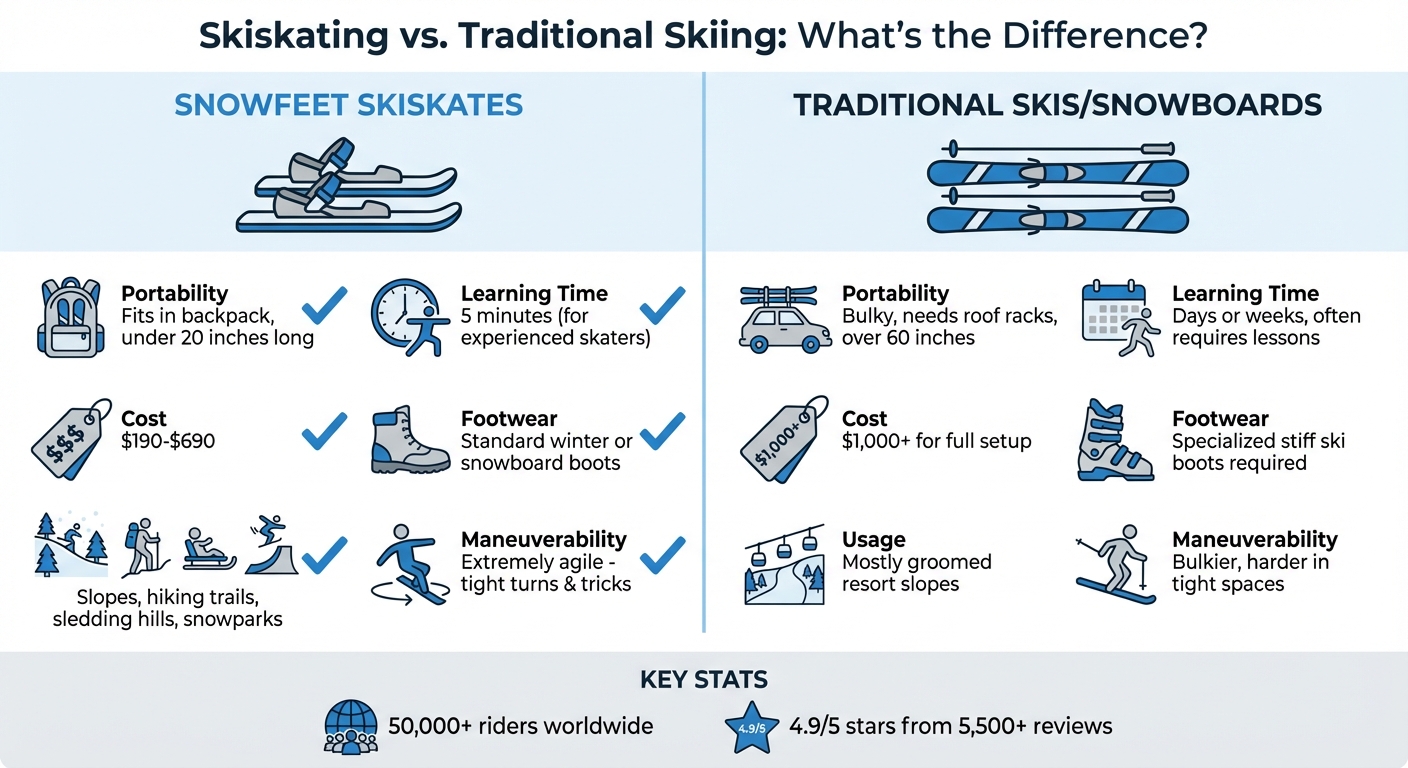
Snowfeet Skiskates vs Traditional Ski Equipment Comparison
Comparison: Skiskating vs. Long Skis and Snowboards
Let’s dig into how skiskating stacks up against traditional skiing and snowboarding. If you’re tired of hauling heavy equipment or spending ages learning the ropes, skiskating - powered by Snowfeet* - might just be the game-changer you’ve been waiting for. The differences aren’t just about size; they touch on learning ease, cost, and how much fun you can squeeze out of your time on the slopes.
| Feature | Snowfeet* Skiskates | Traditional Skis/Snowboards |
|---|---|---|
| Portability | Compact and fits in a backpack; under 20 inches long | Bulky, needs roof racks or large gear bags; often over 60 inches |
| Learning Time | Quick - just 5 minutes if you’re an experienced skater | Takes days or weeks, often requiring lessons |
| Cost | $190–$690 | Full setup can easily exceed $1,000 |
| Footwear | Works with standard winter or snowboard boots | Requires stiff, specialized ski boots |
| Usage | Great for slopes, hiking trails, sledding hills, and snowparks | Mostly limited to groomed resort slopes |
| Maneuverability | Extremely agile - perfect for skating motions, tight turns, and tricks | Bulkier, harder to navigate in tight spaces |
Snowfeet* skiskates are not only easier on your wallet but also on your back. Starting at $190 for the Mini Ski Skates, they eliminate the need for pricey, specialized ski boots. That’s a win for both convenience and budget.
But it’s not just about practicality - skiskating brings a whole new level of fun to the snow. Let’s see how.
More Fun with Short Skis
Skiskating isn’t just easier; it’s a blast. With over 50,000 riders worldwide and a glowing 4.9 out of 5-star rating from more than 5,500 reviews, Snowfeet* users rave about the sheer enjoyment they get compared to traditional setups.
Why? It’s all about freedom. Long skis can feel clunky, like dragging anchors around. Snowfeet*, on the other hand, are compact and nimble, letting you pull off jumps, twists, and crossovers that would be a nightmare with traditional gear. Plus, their size makes it easy to explore narrow trails without the hassle of lugging heavy equipment.
Even major outlets like Uncrate have taken notice, praising Snowfeet* for being lighter, more portable, and way more affordable than traditional gear.
"Short skis provide more fun and freedom of movement, they are playful, responsive, lightweight on your feet, easier to stop, and for many skiers easier to ride as opposed to cumbersome long skis."
– Snowfeet* Team
For ice skaters looking to hit the snow, skiskating offers a seamless transition. You’ll spend less time fiddling with equipment and more time enjoying the winter wonderland. With portability, ease of use, and unmatched agility, skiskating is the perfect way to mix things up this season.
Conclusion
If you’re an ice skater itching to take your skills off the rink and onto the snow, skiskating might just be your next obsession. Your balance, edging, and rhythm? They all carry over naturally, making the transition feel like second nature.
Enter Snowfeet*. With prices starting at just $250 for their 38 cm Mini Ski Skates, this gear is compact, lightweight, and designed to fit right into your backpack. Even better, they work with your existing winter or snowboard boots - no need to splurge on pricey ski boots. With over 50,000 riders worldwide and a stellar 4.9 out of 5-star rating from more than 5,500 reviews, Snowfeet* has earned its spot as a favorite for skiskaters looking for gear that’s portable, versatile, and fun.
Unlike traditional skis that tie you to groomed resort runs, Snowfeet* gives you the freedom to explore. Whether it’s hitting the snowparks or winding through backcountry trails, their short length (most models are under 20 inches) makes pulling off jumps, tight turns, and tricks a breeze - no bulky, awkward equipment holding you back.
So this winter, ditch the heavy gear and give skiskating a try. From carving down slopes to weaving through forest trails, Snowfeet* delivers the agility and excitement ice skaters love. Why wait? Make the leap today.
FAQs
How does the learning curve for skiskates compare to traditional skiing?
Skiskates are a fantastic choice for anyone looking to hit the slopes without the steep learning curve of traditional skiing. Thanks to their compact size - less than 20 inches - and a design that mimics ice skating movements, they make balancing and turning feel natural. Most folks find they can get the hang of skiskating with just a little practice, making it easy to start having fun right away.
Unlike traditional skis, which often involve mastering a wide stance, edge control, and the use of poles, skiskates keep things simple. If you’ve got experience with skiing or ice skating, the transition is even smoother since skills like carving and shifting your weight carry over seamlessly. Skiskates are all about getting on the snow and enjoying yourself without the hassle of a long learning curve.
Can I use Snowfeet skiskates in deep snow or on steep hills?
Snowfeet skiskates work best on groomed trails and packed snow, making them a great choice for ski resorts or well-maintained runs. They’re not built for deep powder or tackling steep slopes, which call for more specialized gear. For the smoothest ride, stick to gentler, even terrain when using Snowfeet skiskates.
What kind of shoes should I wear for skiskating with Snowfeet?
When it comes to skiskating with Snowfeet, the right footwear can make all the difference. The ideal choice? A snug, skate-style sneaker or a regular shoe that fits securely into the bindings. Look for shoes with a firm sole - this helps with both control and comfort as you glide across the snow. Steer clear of bulky boots or anything too clunky, as they can mess with the snug fit and stability you need for smooth, confident movement.











Leave a comment
This site is protected by hCaptcha and the hCaptcha Privacy Policy and Terms of Service apply.