



















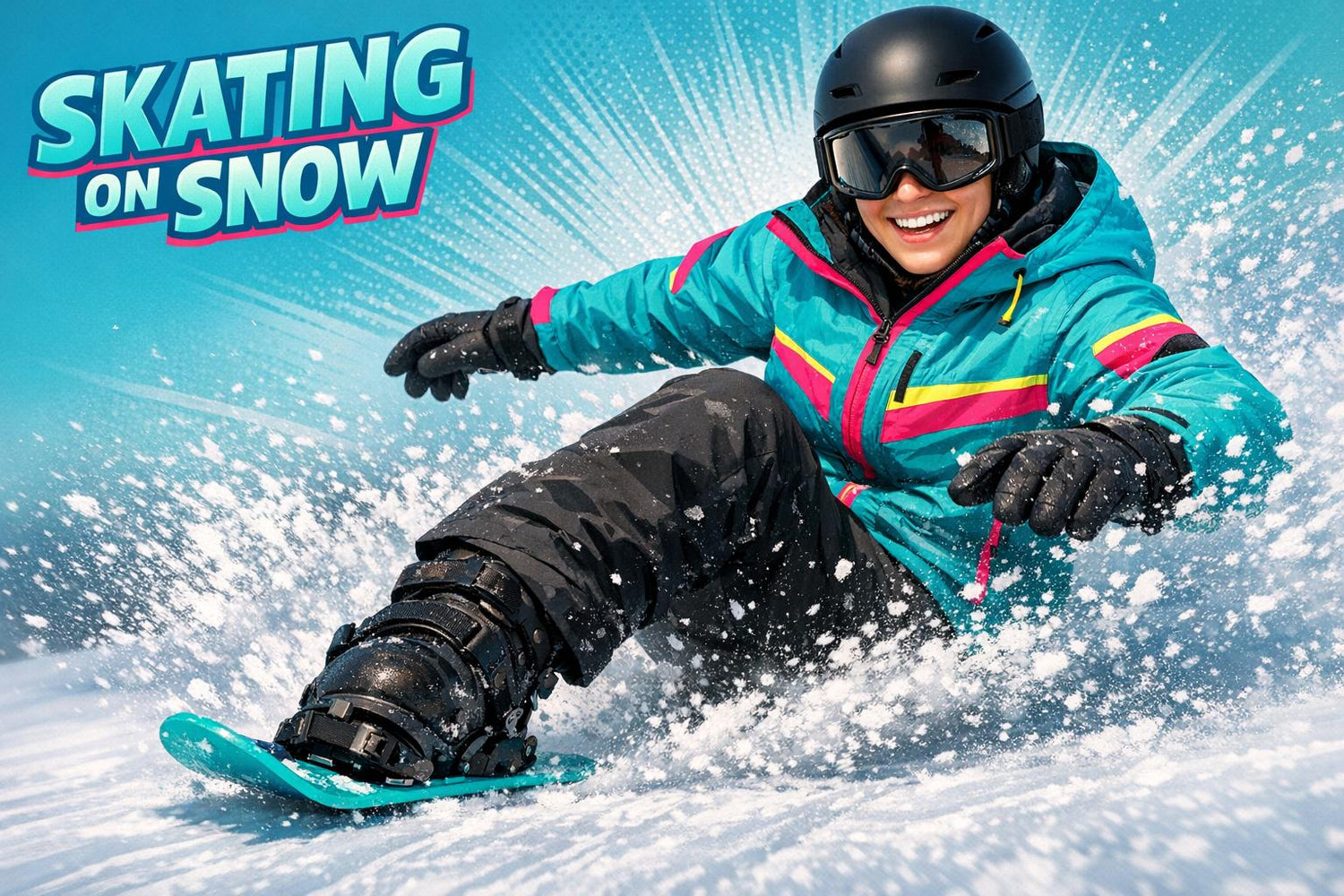
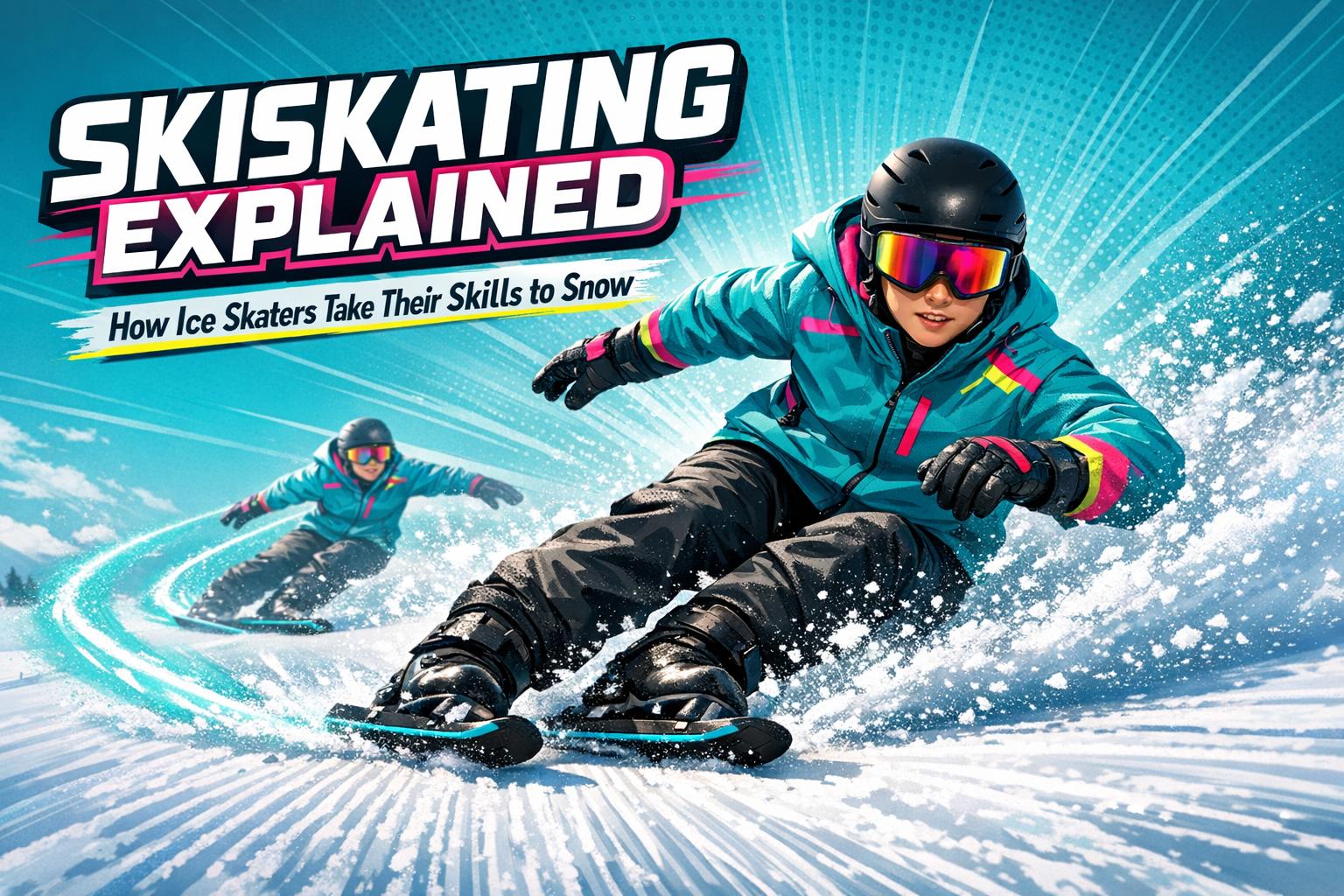
Looking for a simpler way to enjoy winter sports? Meet Snowfeet*, compact snow skates that combine the fun of ice skating with the thrill of skiing - without the heavy gear. They’re lightweight, easy to use, and perfect for slopes, trails, or even your backyard.
Why Snowfeet* Might Be Your New Favorite Winter Gear:
- No bulky equipment: Fits in a backpack and works with regular winter or snowboard boots.
- Quick learning curve: Most people get the basics in 5 minutes - ideal for beginners.
- Versatile use: Glide on slopes, trails, or parks. Just avoid deep powder.
- Affordable options: Prices start at $250, much cheaper than traditional skis or snowboards.
Snowfeet* offers three models to suit different styles, from beginners to seasoned skiers. Whether you’re carving through resorts or cruising local hills, these mini ski skates make winter sports more accessible and fun. Ready to ditch the hassle of traditional gear? Snowfeet* might just be the game-changer you’ve been waiting for.
Snowboarder tries Snowfeet* | Which Snowfeet* Short Ski is the Best? | Snowblades 44, 65, 99 Review
Why Snowfeet* Beats Traditional Skis and Snowboards
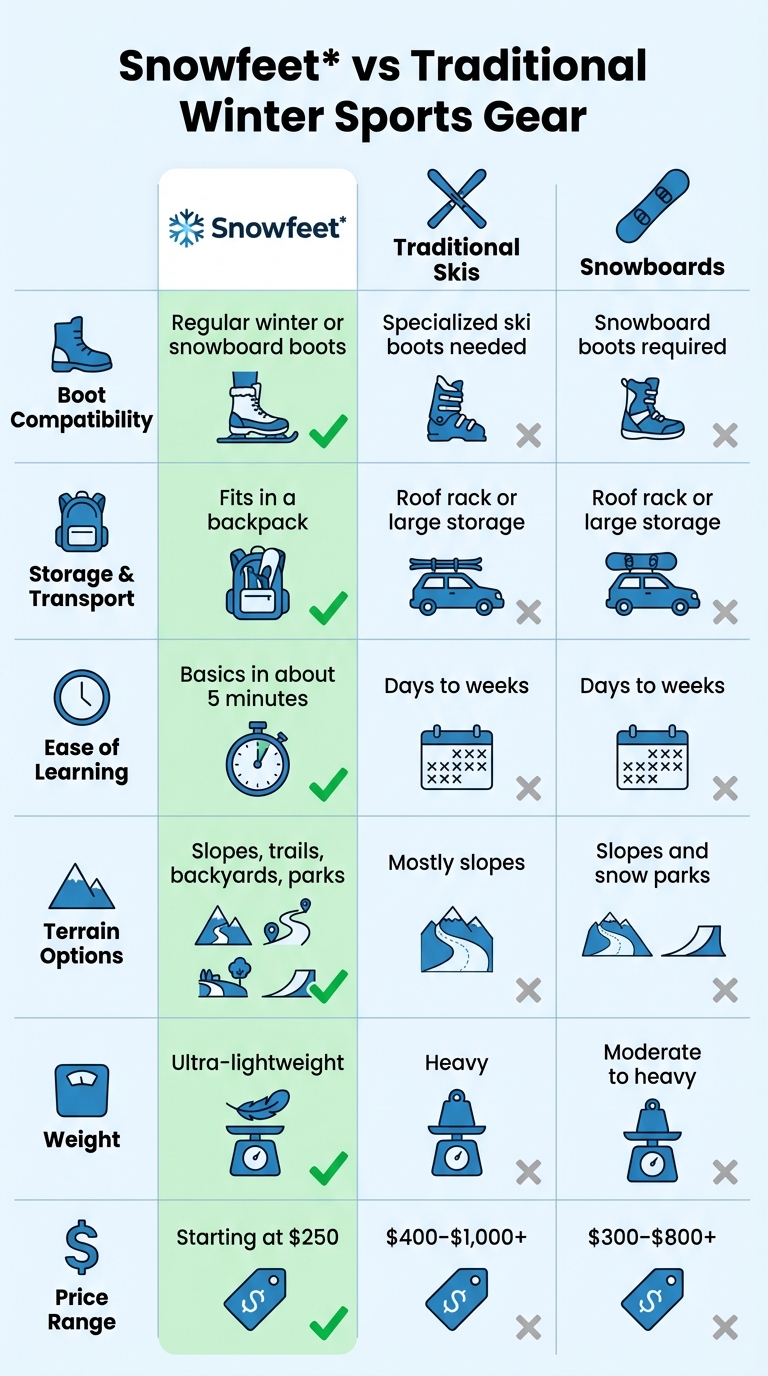
Snowfeet vs Traditional Skis and Snowboards Comparison Chart
Let’s face it: traditional skiing and snowboarding gear can be a hassle. Skis can stretch up to 6 feet, and snowboards - though shorter - still require clunky, heavy boots that weigh you down. Enter Snowfeet*: a compact, under-20-inch design that works with your existing winter gear. They’re portable, versatile, and surprisingly easy to learn.
Portability and Convenience
When it comes to portability, Snowfeet* are a game-changer. Traditional skis need roof racks and take up a ton of trunk space. Snowboards aren’t much better. But Snowfeet*? Their Mini Ski Skates are just 38 cm long and light enough to toss in your backpack. No more wrestling with bulky gear.
And forget about those stiff, cumbersome ski boots. Snowfeet* work with your regular winter boots or snowboard boots. If you’ve got smaller feet, snowboard boots can give you that extra snug fit, making them perfect for all kinds of terrain.
Use Them Anywhere: Slopes, Trails, and Backyards
Traditional skis thrive on groomed slopes, but Snowfeet*? They’re built for variety. Whether it’s ski slopes, hiking trails, snow parks, or even your backyard, they’ve got you covered. Their small size makes them ideal for narrow forest paths and smaller hills where traditional skis just don’t cut it.
Picture this: you hike up a snowy trail in your regular boots, with Snowfeet* tucked away in your backpack. Once you’re at the top, snap them on and glide down with ease. No lift tickets, no long drives to the resort - just you, the snow, and your personal playground.
Faster Learning Curve for Beginners
Skiing and snowboarding can take weeks to master. With Snowfeet*, most people pick up the basics in just five minutes. That’s right - five minutes. If you’ve ever skated before, the motion feels natural and intuitive.
"I learned how to do them on my first day and they were a blast... it's easier to pick them up and it doesn't put stress on your knees as much." – Cameron Asbell
The shorter length of Snowfeet* makes turning and controlling them a breeze. Balance comes naturally by shifting your weight over the middle or back of your feet, rather than leaning on your toes. For beginners looking for extra control, the Carbon Fiber edition offers a slower, more stable ride to help build confidence.
| Feature | Snowfeet* | Traditional Skis | Snowboards |
|---|---|---|---|
| Boot Compatibility | Regular winter or snowboard boots | Specialized ski boots needed | Snowboard boots required |
| Storage & Transport | Fits in a backpack | Roof rack or large storage | Roof rack or large storage |
| Ease of Learning | Basics in about 5 minutes | Days to weeks | Days to weeks |
| Terrain Options | Slopes, trails, backyards, parks | Mostly slopes | Slopes and snow parks |
| Weight | Ultra-lightweight | Heavy | Moderate to heavy |
Choosing the Right Snowfeet* Model
Snowfeet* offers three models, each designed to suit different riding preferences. The 38 cm Mini Ski Skates (starting at $250) are the smallest option, made from fiberglass-reinforced material with ribbed bases that feel like inline skates. They’re compact enough to fit in a backpack and pair well with standard winter or snowboard boots. The 44 cm Skiskates (from $575) have a wood core similar to traditional skis and a smooth base for carving and drifting, making them perfect for seasoned skiers who want a shorter, more maneuverable ride. Finally, the 50 cm Snowfeet PRO, priced at $275, offers a slightly longer design for better balance, while still maintaining the portability and versatility of the smaller models. Each model caters to distinct skill levels and riding styles, so let’s break it down further.
Product Overview
If you’re just starting out, the 38 cm Carbon Fiber edition is a great choice. It offers a slower, more controlled ride, helping beginners build confidence. The ribbed base mimics the feel of inline skating, making it a natural fit for anyone with skating or hockey experience. For added stability, the 50 cm PRO model provides more length, which improves front-to-back balance and makes maneuvers like turning and stopping easier. As the Snowfeet team explains:
"Snowfeet 50 CM are here to make skiskating more accessible to everybody... Even if you have never skied before, Snowfeet feel so natural that anyone can pick up this sport instantly."
For advanced riders, the 44 cm Skiskates are a top pick. With their wood core and smooth base, they deliver a faster, more polished experience. Pro skater Logan @xskyskaterx shared his insight:
"If you are a blader or rollerskater get THESE ONES [Snowfeet*]. They have ribs in the middle that feel more like wheels... If you are normally a skier get the SKISKATES. They have no ribs and feel more like skis."
All models come with metal ski edges for reliable stopping and control. The fiberglass models (38 cm and 50 cm) also include a built-in heel brake. Before purchasing, make sure to check boot compatibility: the 38 cm and 50 cm models work with winter shoes or snowboard boots (US sizes 6–13), while the 44 cm Skiskates require ski boots or snowboard boots.
Comparison: Snowfeet* vs. Traditional Skis and Snowboards
Here’s a quick look at how Snowfeet* stacks up against traditional gear:
| Feature | Snowfeet* 38 cm | Snowfeet* 50 cm | Skiskates 44 cm | Traditional Skis |
|---|---|---|---|---|
| Length | 15 inches | 19.7 inches | 17.3 inches | 5–6 feet |
| Core Material | Fiberglass | Fiberglass | Wood | Wood/Composite |
| Weight | Lightest | Lightweight | Lightweight | Heavy |
| Boot Type | Winter/Snowboard boots | Winter/Snowboard boots | Ski/Snowboard boots | Ski boots only |
| Ideal Terrain | Trails, backyards, slopes | Slopes, light powder | Groomed slopes, parks | Groomed slopes |
| Learning Time | 5–10 minutes | 5–10 minutes | Under 1 hour | Days to weeks |
| Portability | Fits in backpack | Highly portable | Highly portable | Roof rack required |
| Price | Starting at $250 | $275 | From $575 | $400–$1,000+ |
Snowfeet* models stand out for their portability and ease of use. The 38 cm model, for instance, boasts a stellar 4.9/5 rating from 2,262 reviews, with 90% of users awarding it five stars. Unlike traditional skis, these compact options can slip right into your backpack, making them perfect for spontaneous outdoor adventures.
sbb-itb-17ade95
Getting Started with Snowfeet*
You've picked your Snowfeet* - awesome choice! Now let’s get them set up so you can hit the slopes with confidence.
Setup and Requirements
First things first: adjust your Snowfeet* bindings at home. Trust me, it’s way easier to do this in your living room than out in the cold. The bindings are designed to fit US sizes 6–13 (EU 38–47) and work with both standard waterproof winter shoes and snowboard boots. For slopes, snowboard boots are the way to go - they give your ankles the extra support they need. But if you’re just cruising trails or backyard hills, regular winter boots will do the job.
Here’s how to get everything dialed in:
- Grab a screwdriver and the shoes or boots you plan to wear.
- Adjust the multi-hole straps for a snug fit around your toe and ankle.
- If the straps are too long, trim the extra length to keep things secure.
As the Snowfeet team puts it:
"To avoid hassle on the slopes, take your time and adjust the bindings at the comfort of your home, using a screwdriver and a shoe you are going to wear."
Once your bindings are set, don’t forget maintenance. Apply ski wax to the base daily while you’re using them - this keeps snow from sticking and helps you glide smoothly. After each session, dry the metal edges thoroughly to fend off rust. For long-term storage, a quick wipe with a light coat of oil will keep the edges sharp and ready for action.
Now that your gear’s good to go, it’s time to learn the ropes and master your glide.
Mastering the Basics
With your setup locked in, let’s talk technique. Snowfeet* are surprisingly beginner-friendly. Most people get the hang of it in just 5–10 minutes, and even if you’ve never skied before, you’ll likely feel comfortable within an hour. The secret? Balance and weight distribution.
Unlike traditional skis, where you lean forward over your toes, Snowfeet* work best when your weight is centered - or even slightly toward your heels. Lean too far forward, and, well, gravity will remind you who’s boss.
Start with a stance that’s shoulder-width apart, keeping your knees slightly bent. Push your legs sideways, like you’re skating on ice or rollerblades. If you’ve done either of those before, this will feel pretty natural.
Turning is a breeze compared to long skis. Just tilt the Snowfeet* onto their metal edges and shift your weight in the direction you want to go. Their shorter length makes them super responsive. For stopping, you’ve got two main options:
- The "hockey stop", where you turn both feet sideways to create friction.
- The built-in heel brake, available on the 38 cm and 50 cm models.
Here’s a pro tip from the Snowfeet team:
"Stopping is a little bit harder with Snowfeet so distribute your weight evenly over both feet to make you stop easier and slower."
When you’re starting out, stick to groomed slopes, trails, or even your backyard hill. Avoid steep terrain and deep powder - Snowfeet* aren’t built for powder deeper than 4 inches, as the short base won’t give you enough float.
With these basics down, you’re ready to glide, turn, and stop like a pro. Have fun out there! 🎿
Tips for Getting the Most Out of Snowfeet*
Best Terrains for Snowfeet*
If you're looking for maximum control, groomed slopes are where Snowfeet* shine. The 44 cm and 50 cm models grip packed resort runs beautifully, making carving a breeze. Meanwhile, the 38 cm model is a great choice for hiking trails, local hills, or even your backyard, thanks to its compact size. Plus, their shorter length makes weaving through forest paths or sneaking around tree-lined shortcuts way easier than with traditional skis.
Snowparks are another fantastic playground for Snowfeet*. Their compact design makes tricks and jumps way more manageable compared to bulky skis or snowboards. Even on flat terrain, Snowfeet* glide smoothly and stay stable - none of that wobbly feeling you might get with certain loose-heel bindings.
Steer clear of deep powder, though. If the snow is more than 4 inches deep, the short base just won't give you the floatation you need. Stick to groomed snow, packed trails, or moderate slopes while you're getting the hang of things. Once you're comfortable, you can try out different terrains - but keep in mind, Snowfeet* are all about control and agility, not surfing through powder.
These terrain perks also make Snowfeet* a great fit for ski resorts, where their lightweight, compact design makes everything more convenient.
Resort Compatibility
Speaking of ski resorts, Snowfeet* are a natural fit. Most ski resorts are happy to welcome them. They meet the usual standards with metal edges and safety bindings, which are key features resorts look for.
If a lift operator asks about your gear, just mention that your Snowfeet* come with standard metal ski edges. That’s usually all you need to say! Resorts tend to treat them like any other ski equipment - just smaller, lighter, and way easier to toss in your car at the end of the day.
Conclusion: Try Snowfeet* for a New Winter Sports Experience
Snowfeet* bring a fresh twist to winter sports with their unmatched portability, ease of use, and versatility. Whether you're gliding down groomed resort trails or exploring snowy paths, these compact snow skates make winter fun accessible to just about anyone.
One of the standout features of Snowfeet* is how quickly you can pick them up. Beginners often get the hang of it in minutes, thanks to the natural motion that feels similar to ice skating. Compare that to traditional skis, which typically require bulky boots, lessons, and a lot more practice before you feel confident.
Their portability is a total game-changer. Say goodbye to roof racks and cumbersome storage. Snowfeet* are lightweight and compact, making them perfect for tackling various terrains where traditional skis might be a hassle to maneuver.
And here's the kicker: they’re accepted at most ski resorts. With features like metal edges and safety bindings, you won’t have to worry about missing out on the slopes. Snowfeet* have earned a loyal following among winter sports fans worldwide, and it’s easy to see why.
If traditional gear's cost, complexity, or bulk has kept you from hitting the snow, Snowfeet* might be exactly what you need. They're affordable, easy to use, and - most importantly - a ton of fun. Give them a shot this season and see why so many are trading in their skis for a more agile and exciting way to enjoy the winter. Snowfeet* could be your ticket to a whole new kind of adventure on the snow!
FAQs
How does the learning curve of Snowfeet compare to traditional skis?
Snowfeet are perfect for beginners, making it easy for almost anyone to feel comfortable on snow in just minutes. Unlike traditional skis that can take days of practice (and sometimes lessons) to get the hang of balancing, controlling edges, and using poles, Snowfeet keep things simple.
All you have to do is strap them onto your regular winter boots, and you're ready to glide. No complicated setup, no steep learning curve. This makes them a great option for people who want to dive into winter fun without spending a ton of time learning. Whether you're brand new to snow sports or just want an easier way to enjoy the slopes, Snowfeet let you hit the ground running - or, well, gliding!
Can I use Snowfeet on different types of snow surfaces?
Snowfeet are built to work on all kinds of snowy terrain. Whether you're cruising through groomed city parks or carving through untouched powder in the backcountry, they’ve got you covered. The key to a great experience lies in picking the right deck length - shorter decks are ideal for quick tricks and sharp turns, while longer ones offer better stability in deeper snow.
Thanks to their lightweight, portable design, Snowfeet let you enjoy winter sports just about anywhere. They’re a fun, flexible option if you’re looking for something different from traditional skis or snowboards.
What kind of boots can you use with Snowfeet?
Snowfeet are built to fit almost any kind of winter boots. Thanks to their universal adjustable bindings, you can strap them onto regular winter boots, ski boots, or snowboard boots without a hassle. This setup makes them super convenient and easy to use, whether you're just starting out or you've been hitting the slopes for years.











Leave a comment
This site is protected by hCaptcha and the hCaptcha Privacy Policy and Terms of Service apply.