



















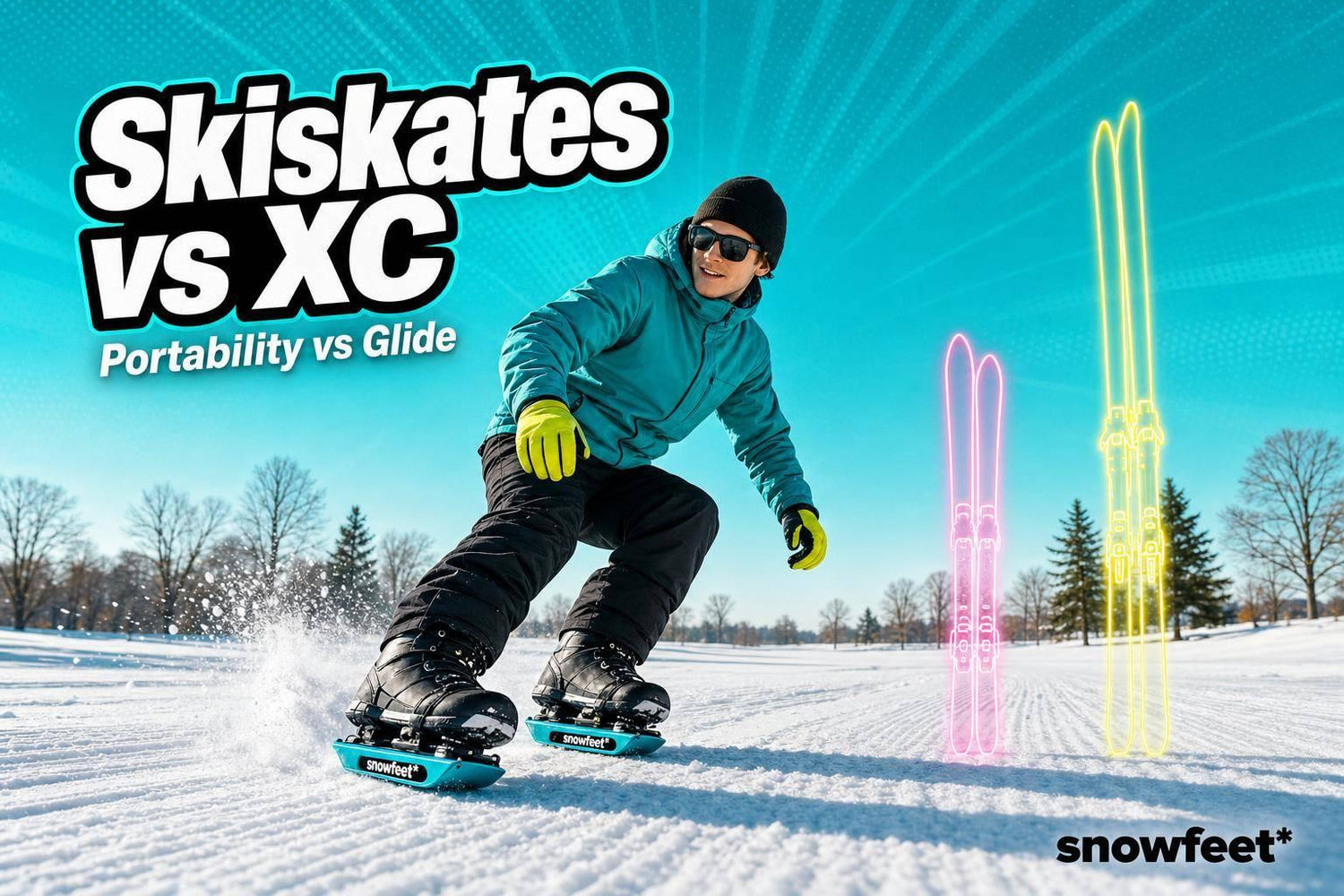
On flat snow, I’d keep it simple: for short, playful laps, I’d pick 44 cm skiskates; for longer, smoother cruising, I’d pick 90 cm Nordic short skis; for the most glide per push, I’d still go with full-length cross-country skis.
Flat terrain is all about how much ground you get from each push. That’s the whole game. A 44 cm / 17 in ski is light, easy to turn, and easy to carry. A 90 cm / 35 in ski tracks straighter and glides farther. And full XC skis still win if your goal is mileage, fitness, and less work over distance.
Here’s the short version:
- 44 cm skiskates: best for fun, tight spaces, short outings
- 90 cm Nordic: best for flatter loops, steadier movement, more glide
- Full-length XC skis: best for distance and speed on groomed snow
- Price in the source article: $460 for 44 cm skiskates, $450 for 90 cm Nordic
- Big trade-off: shorter skis are easier to carry; longer skis save energy on flats
If you’re choosing for flat snow, I’d focus on one thing: how far do you want to go before your legs start filing complaints? :)
Quick Comparison
| Option | Best use | Glide on flats | Turning | Boots | Price |
|---|---|---|---|---|---|
| 44 cm Skiskates | Short, playful sessions | Low | High | Ski or snowboard boots | $460 |
| 90 cm Nordic | Longer flat loops | Medium | Medium | Winter boots | $450 |
| Full XC Skis | Distance, fitness, groomed trails | High | Low in tight spots | XC boots | Varies |
What stood out to me most is this: flat snow punishes short glide. So if you want to roam, longer wins. If you want to mess around and keep gear simple, shorter wins.
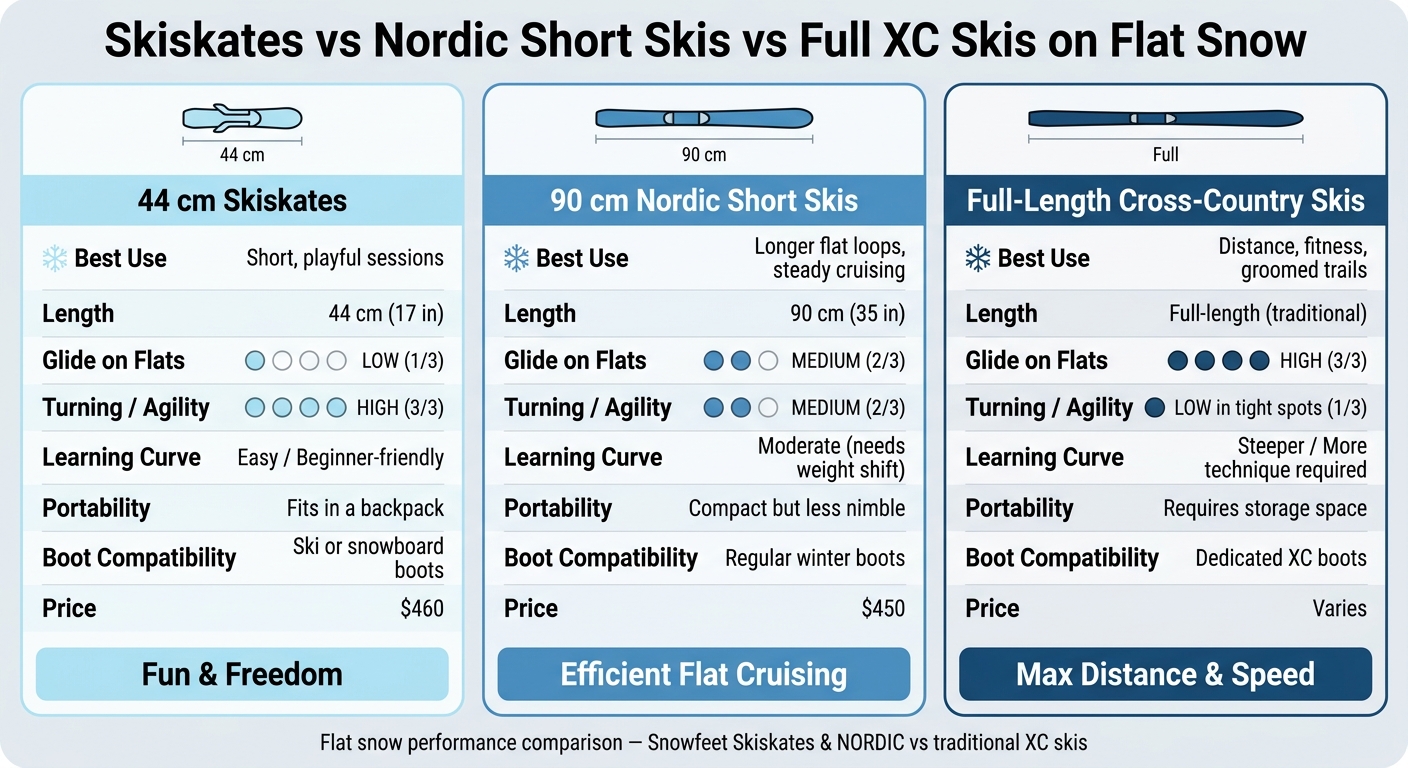
Skiskates vs Nordic Short Skis vs Full XC Skis on Flat Snow
Is Cross-Country Skiing Possible with Mini Ski Skates? | Snowfeet*
How Snowfeet* Skiskates 44 cm Perform on Flat Snow
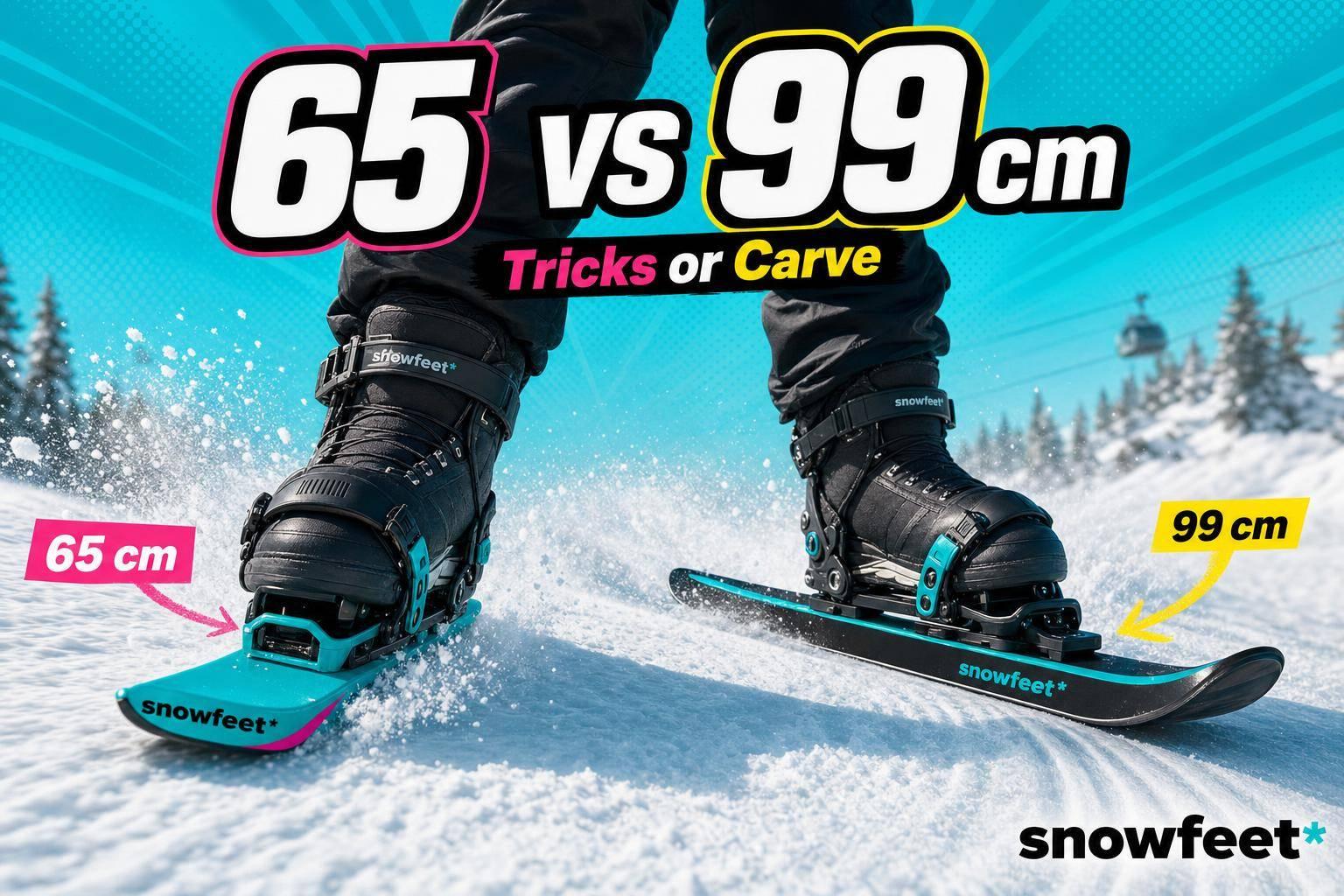
At 44 cm (17 inches), Skiskates lean toward quick control, not long glide. On flat snow, they feel stable, easy to steer, and more playful than full-length cross-country skis. That’s the big feel on actual flat snow.
Strengths: Balance, Maneuverability, and Portability
That short length helps beginners feel more balanced. It also makes quick turns, spins, and fast direction changes much easier. So, they’re a good match for tight flat spots like parks, yards, and neighborhood paths.
The 44 cm size fits in a backpack, which makes them easy to bring just about anywhere.
Another nice touch: the adjustable bindings work with ski boots or snowboard boots. So if you already own either, you may not need extra gear. Of course, that same compact size also puts a limit on how far you glide with each push.
Limits on Flats: Shorter Glide, More Pushes
The trade-off is pretty simple: shorter skis cover less ground per push. On packed flat snow, that means you’ll take more steps than you would on a longer cross-country setup. You feel that gap even more when you compare them with the 90 cm NORDIC setup.
Next, the 90 cm NORDIC shows the other side of the flat-snow trade-off.
How Snowfeet* NORDIC Cross-country 90 cm Performs on Flat Snow
At 90 cm (about 35 inches), Snowfeet* NORDIC gives you more glide than the 44 cm Skiskates, but it’s still much shorter than full cross-country skis. That puts it right in the middle. If you want more travel from each push without dealing with the bulk of full Nordic skis, this is where NORDIC starts to make a lot of sense.
That added length shows up most when you’re covering actual distance on flat snow, not just messing around for a few minutes.
Strengths: Better Glide, Tracking, and Workout Value
On flat terrain like a park loop, a frozen lake, or a groomed golf course, NORDIC tracks straighter and glides farther with each push than the 44 cm version. You spend less time correcting your line and more time moving forward, which feels pretty nice once the miles start adding up.
The metal edges help on firm or icy snow, so you get more control when conditions aren’t soft and forgiving. The waxless fishscale base also means you can skip grip wax. That’s one less thing to fuss with before heading out. It supports riders up to 330 lb (150 kg).
If you add the optional Pro XC bindings, the setup feels more precise and stopping gets easier. The catch? You give up some of the quick, playful feel of the shorter model.
Limits: More Technique Needed, Less Agility in Tight Spaces
Here’s the trade-off: the same length that helps with glide also makes fast spins, sharp pivots, and tight turns feel less natural. In a small backyard or on a narrow, crowded path, 90 cm needs more room than the 44 cm Skiskates.
It also asks a bit more from the rider. You’ll need to shift your weight with purpose and settle into more of a push-and-glide rhythm. The 44 cm Skiskates feel looser and more playful, while NORDIC leans more toward steady movement across flat snow.
Next, compare both Snowfeet* options side by side on flat terrain.
sbb-itb-17ade95
Direct Comparison: 44 cm Skiskates vs 90 cm NORDIC on Flat Terrain
Here’s the flat-snow trade-off at a glance:
| Factor | 44 cm Skiskates | 90 cm NORDIC |
|---|---|---|
| Glide per push | Shorter glide, quicker steps | Longer, smoother glide |
| Learning curve | Gentler for beginners | Moderate; needs more weight shift |
| Balance at speed | More active steering required | Straighter tracking |
| Maneuverability | Excellent - tight pivots, quick stops | Better for wider, smoother arcs |
| Portability | Fits easily in a backpack or car trunk | Still compact, but less nimble than 44 cm |
| Boot compatibility | Ski or snowboard boots | Regular winter boots |
So, the choice is pretty simple. If you want something playful and easy to toss in the car, go with Skiskates. If you want smoother travel on flat snow, NORDIC makes more sense.
Which Is Better for Casual Fun, Fitness, and Distance
On flat snow, it comes down to what kind of day you want. If you like quick turns, short bursts, and messing around in tighter spots, Skiskates are the fun pick. If you want to cruise farther and get into a steadier rhythm, NORDIC has the edge.
A simple way to think about it: Skiskates favor easy, playful use; NORDIC favors efficient distance.
That’s the split. One leans toward fun and freedom. The other leans toward smoother cardio on open, flat snow.
Snowfeet* vs Full-Length Cross-Country Skis on Flats
Full-length skis are faster on flat snow. Snowfeet are easier to live with.
Full-length Nordic skis from brands like Salomon glide farther per kick and cover more ground with less effort than either Snowfeet* option. But there’s a catch: they need dedicated boots, more technique, and more storage space.
Both the 44 cm Skiskates and 90 cm NORDIC are much shorter than traditional cross-country skis, so they’re easier to carry, stash, and bring along on a casual outing. That’s a big deal if you don’t want your gear taking over the garage.
Full-length skis win the efficiency test. Snowfeet wins on portability, simpler setup, and an easier starting point for casual riders.
For most people who just want to get out on flat snow and have a good time, Snowfeet is the easier pick. Long skis still cover distance better, no question, but they ask more from you too.
Final Recommendation: Which One Should You Buy for Flat Snow
On flat snow, the best pick comes down to your goal: fun, distance, or max efficiency. Start there, and the choice gets a lot easier.
Go with the Snowfeet* Skiskates 44 cm if you want short, playful sessions on flat snow. They’re the easiest to learn, easy to carry, and forgiving for beginners. The tradeoff? You won’t get as much distance out of them. They fit best for short loops, backyard laps, and relaxed park sessions.
Go with the Snowfeet* NORDIC Cross-country 90 cm if you want longer outings or a more efficient workout on flat snow. The added length helps with glide and tracking, so they make more sense for riders who want to cover more ground without dealing with the hassle of full-size skis.
If your goal moves from casual flat travel to max mileage, long skis still take it. Full-length cross-country skis are the most efficient option for long distance. But they also ask more from you: more technique, more storage space, and dedicated boots. For a lot of casual outings, that’s more setup than people want to deal with.
Rule of thumb: fun and portability → Skiskates 44 cm; efficient flat loops → NORDIC 90 cm; max distance → full-length XC skis.
FAQs
Are skiskates too slow for flat snow?
No. Skiskates aren’t slow by default on flat snow.
In fact, their skating-style stride often feels more natural and less clunky than the moves people use on long skis.
Traditional cross-country skis do glide well over long distances, especially in set tracks. But on flat snow that’s uneven or hard to predict, they can feel a bit limiting. Snowfeet* Skiskates and NORDIC skis are short and light, which makes it easy to push off, keep moving, and hold your speed.
On packed snow, glide wax can help too.
Can beginners use 90 cm Nordic skis on flat terrain?
Yes. Beginners can use 90 cm Nordic skis on flat terrain, and they’re a lot easier to handle than old-school 5- to 7-foot cross-country skis.
Shorter skis like the _Snowfeet NORDIC (90 cm)_* are built for agility and control. That makes the learning curve feel less steep, which is a big deal when you’re just starting out. Instead of wrestling with long skis, you can focus on balance, movement, and getting comfortable on snow.
Their small size helps in a few simple ways:
- They’re easier to turn and manage
- They’re easier to carry and pack
- They work with regular winter footwear
So, for flat terrain and first-time use, 90 cm Nordic skis make a lot of sense :)
Do I need special boots for Snowfeet products?
No. Unlike regular skis, Snowfeet products are made to work with footwear you may already have.
Most models fit regular waterproof winter boots or snowboard boots. Some larger or more specialized models can also fit ski boots. But one of the big perks is simple: you can use your own comfy winter gear.











Leave a comment
This site is protected by hCaptcha and the hCaptcha Privacy Policy and Terms of Service apply.