


















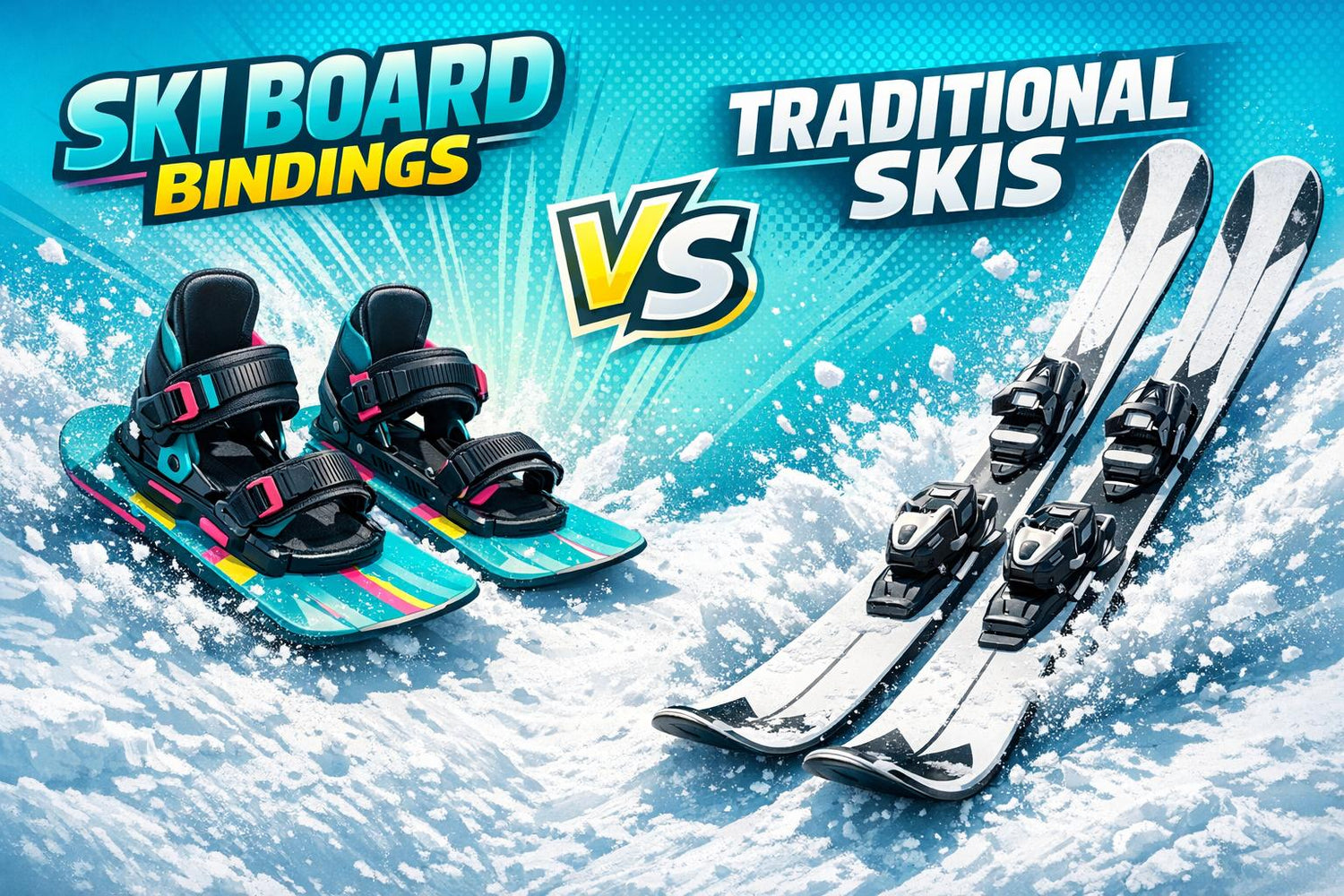
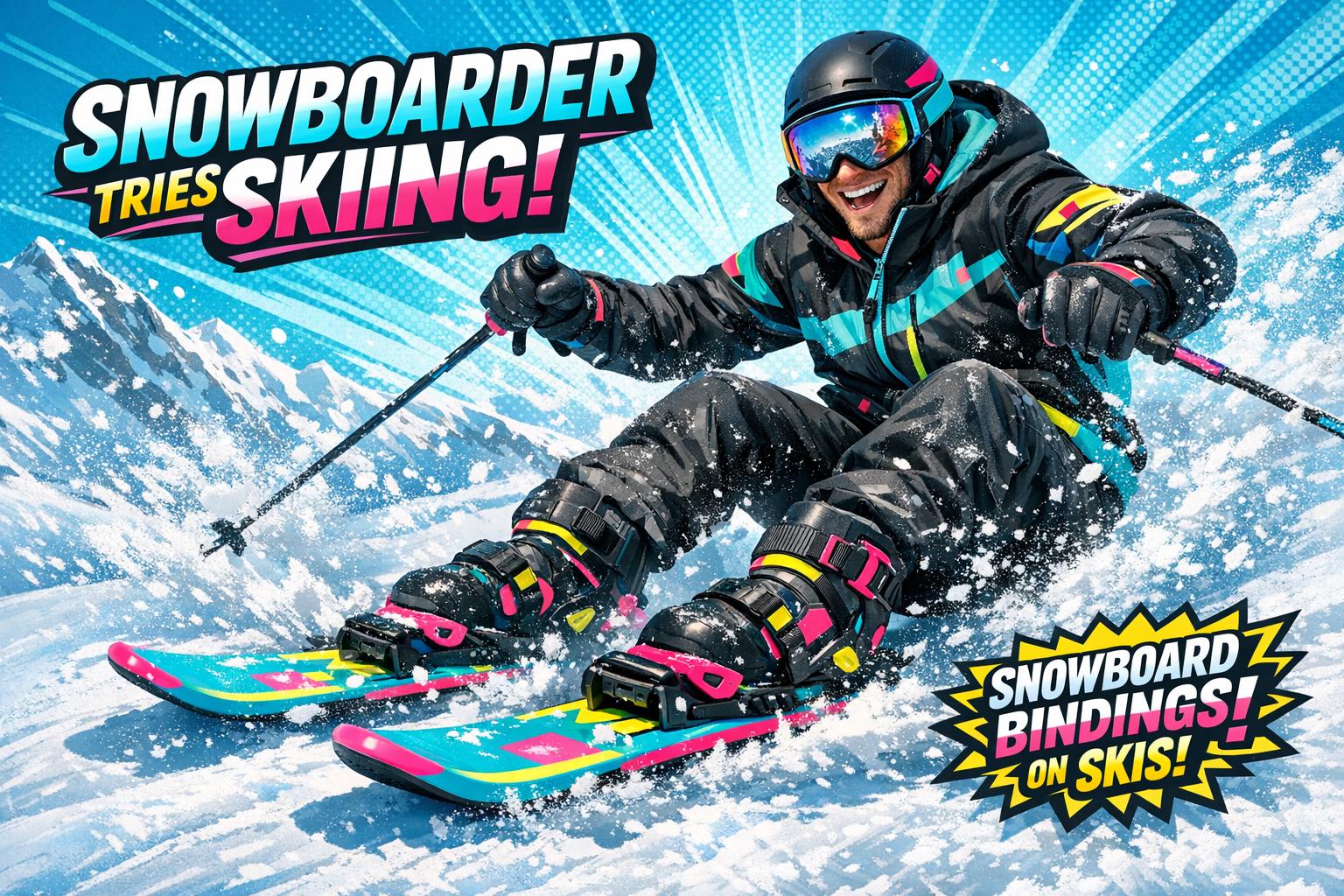
Looking for a simpler, more portable way to enjoy the slopes? Skis with snowboard bindings, like Snowfeet Skiblades, are shaking up the ski world. Here’s why they’re worth considering:
- Ease of Use: Learn to ride in just 5 minutes - no lessons or steep learning curves.
- Portability: Compact enough to fit in a backpack, unlike bulky traditional skis.
- Cost Savings: Use snowboard boots or even winter shoes, cutting down on expensive gear.
- Versatility: Works on ski slopes, trails, sledding hills, and more.
- Fun Factor: Shorter skis mean better control, agility, and freedom for tricks and tight turns.
Meanwhile, traditional setups stick to long, heavy skis, stiff boots, and complicated bindings. They’re reliable but expensive, harder to transport, and less beginner-friendly.
Quick Comparison
| Feature | Skis w/ Snowboard Bindings (Snowfeet) | Traditional Ski Setups |
|---|---|---|
| Learning Curve | 5 minutes | Days/weeks with lessons |
| Portability | Fits in a backpack | Requires roof racks or bags |
| Boots | Snowboard boots or winter shoes | Specialized stiff boots |
| Cost | ~$635–$675 | $1,000–$2,500 |
| Terrain Flexibility | Groomed slopes, trails, backyards | Mostly groomed slopes |
| Control & Agility | High (short skis) | Lower (long skis) |
If you’re after convenience and fun without breaking the bank, Snowfeet Skiblades might be your new go-to. Ready to ditch the hassle? Let’s dive into the details.
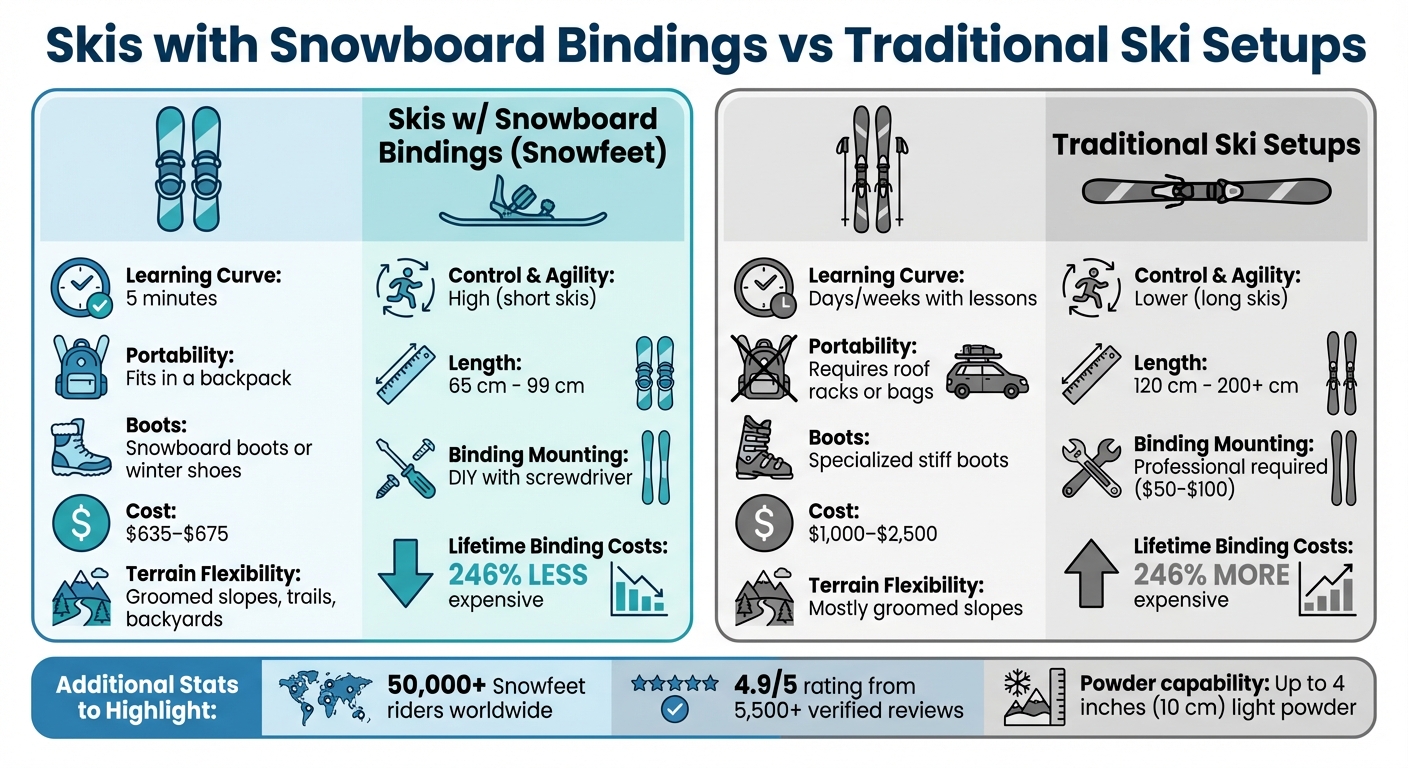
Skis with Snowboard Bindings vs Traditional Ski Setups Comparison
What Are Skis With Snowboard Bindings?
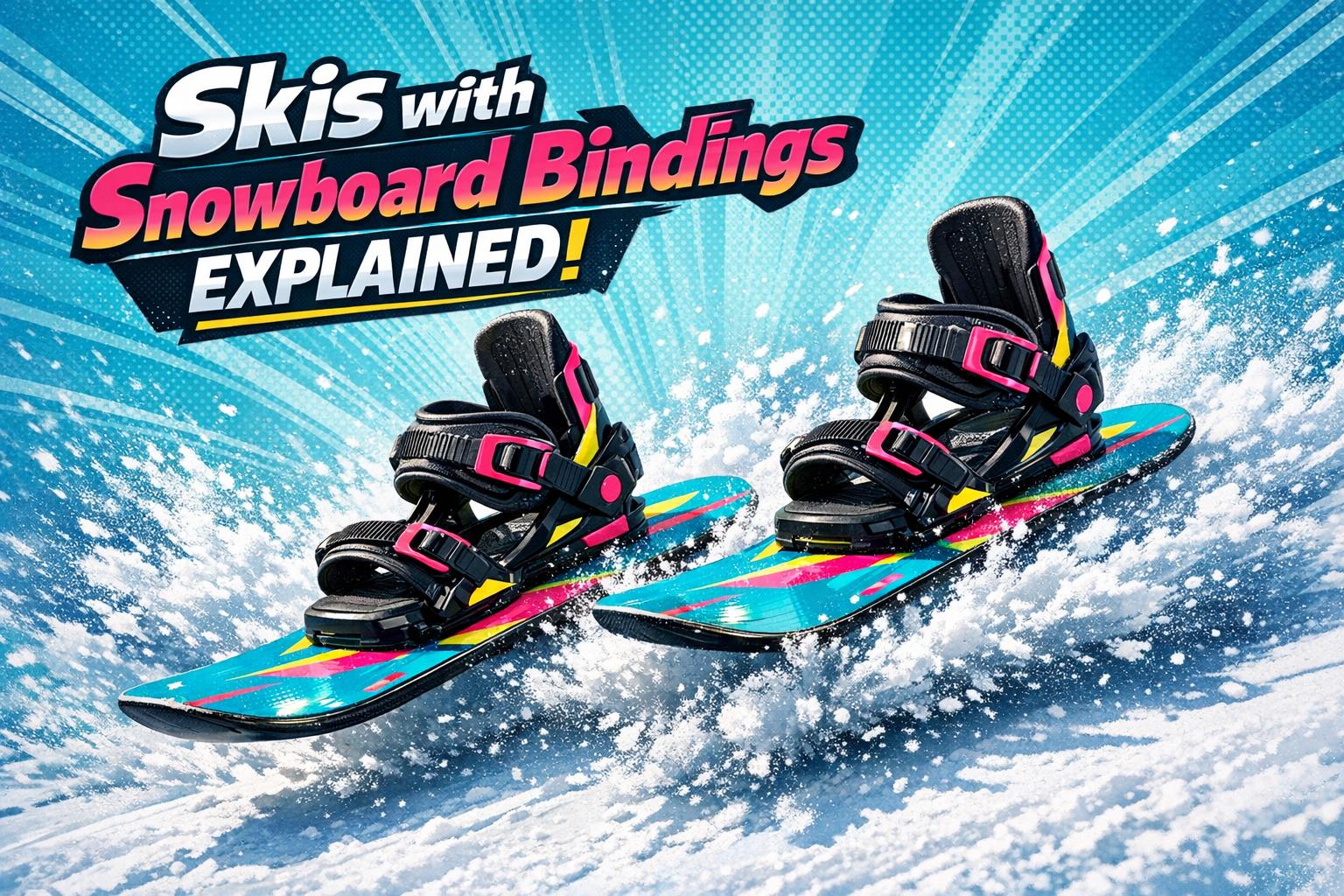
Skis with snowboard bindings shake up the world of skiing by offering a simpler, more compact alternative to traditional setups. Instead of dealing with long skis and rigid plastic boots, you get shorter skis that work seamlessly with soft snowboard boots - or even regular winter shoes. The bindings function like snowboard bindings, securely holding your boots without the complex release mechanisms found in standard ski bindings.
Snowfeet* has taken this concept to the next level. Their shorter ski models are so compact that they can fit into a backpack, making them far more portable than traditional skis, which usually require roof racks or large ski bags. Despite their size, they still include metal edges, so you can carve on groomed slopes with ease. This clever design changes how we think about winter sports gear.
Snowfeet* Skiblades Explained
Snowfeet* has refined the idea of compact skis with their Skiblades, which merge elements of skiing and skating. These ultra-short skis come in two lengths - 65 cm and 99 cm. The 65 cm version starts at $635, while the 99 cm model is priced at $675. Built with wood cores or fiberglass, these skiblades are designed for agility and precision. The bindings are custom-made to fit perfectly, avoiding the awkward overhang that happens when standard snowboard bindings are used on regular skis.
Their lightweight design makes it easy to pull off spins, ride backward, and take tight turns - moves that are tricky with traditional skis. Plus, they’re easy to learn. According to Snowfeet*, you can pick up the basics in just five minutes. With over 50,000 riders and 5,500+ verified reviews averaging 4.9 out of 5 stars, it’s clear this isn’t just hype.
"Long enough to ski, short enough to skate. Easy to Learn and Use. Strap in and ride - no lessons needed." - Snowfeet*
Key Features of Snowfeet* Products
Snowfeet* bindings are compatible with comfortable snowboard boots or even regular winter shoes. Their compact size makes them easy to carry in a backpack, and they’re versatile enough for different terrains. Whether you’re on groomed slopes or light powder (up to about 4 inches or 10 cm), they perform well. The 99 cm model offers better floatation for deeper snow.
Some industry leaders, like J Skis, have highlighted the cost benefits of snowboard bindings. Traditional ski setups can cost 246% more in binding expenses over time. Plus, snowboard bindings improve energy transfer and allow for gear sharing across different sports. Compared to the bulky and expensive nature of traditional ski equipment, Snowfeet* products offer a refreshing alternative.
How Traditional Ski Setups Work
Traditional ski setups stick to the basics: long skis, alpine bindings, and stiff boots. The bindings attach directly to the skis and lock your boots into place, creating a solid connection between you and your gear. While this design has been reliable for decades, it’s far from lightweight or convenient.
One key feature of traditional bindings is their release mechanism, which ejects the boot during a fall to help prevent injuries. But safety comes with a price - bindings alone can cost anywhere from $200 to $600 if purchased separately. And that’s before factoring in the cost of the rigid, uncomfortable boots.
Parts of Traditional Ski Gear
Traditional skis are no joke when it comes to size. They typically range from 120 cm to over 200 cm in length, which makes transporting them a hassle. On top of that, the bindings are complex mechanical systems that need professional adjustments to fit your boots and match your skill level. The boots? They’re stiff, plastic shells that lock your feet and ankles in place. Sure, this rigidity gives you control at high speeds, but it also makes walking feel like a workout. These design elements highlight the challenges of sticking with traditional setups.
"You are able to move freely as opposed to wearing heavy clunky skis." – Snowfeet Store
Drawbacks of Traditional Ski Setups
Compared to modern gear that focuses on portability and ease of use, traditional setups feel clunky and outdated. The weight and bulk are the most common complaints. Carrying, storing, or even just walking with traditional gear can feel like a chore. The rigid boots add to the discomfort, making even short walks - like from the parking lot to the ski lift - a frustrating experience [1, 11].
The long skis also create challenges, especially for beginners. Crossing ski tips is a common mistake that often leads to awkward, sometimes painful falls. The extra length requires more leg strength to control turns, adding to the physical demands. And let’s not forget the need for professional adjustments and the headache of transporting all that gear. In contrast, modern alternatives like Snowfeet* Skiblades prioritize simplicity, portability, and freedom, leaving traditional setups feeling like a relic of the past.
Ease of Use and Learning Curve Comparison
Learning to use Snowfeet* Skiblades is a completely different experience compared to traditional skiing. While mastering basic turns and stops on traditional skis often requires multiple lessons and several days of practice, Snowfeet* products are designed to get you riding in just 5 minutes. Their straightforward design works naturally with your movements, making the process much smoother.
The shorter length of Snowfeet* skiblades, ranging from 38 cm to 99 cm, makes them far easier to maneuver than traditional skis, which typically start at 120 cm. Turning, stopping, and controlling these skiblades feels more intuitive, especially if you’ve ever ice skated or inline skated. And if you do take a tumble, getting back up is much simpler without the hassle of long, heavy skis.
"Short skis have a fast learning curve. They are great for beginners and intermediate skiers who want to enjoy their ski trip to the fullest." – Snowfeet Store
Fast Setup and Easy Access
Traditional ski setups can be a bit of a hassle. You’ve got to deal with renting or buying stiff, rigid boots, adjusting complicated release bindings (sometimes needing professional help), and lugging around bulky equipment. Snowfeet* skiblades, on the other hand, make things refreshingly simple. You can use regular snowboard boots or even your winter shoes. Their snowboard-style bindings use a strap system that adjusts in seconds - no tools required.
Plus, the whole setup is so compact it fits in a backpack, letting you walk to the lift without feeling weighed down. And here’s a bonus: one pair of comfortable boots can work for both snowboarding and skiblading, cutting down on the amount of gear you need.
This streamlined setup makes Snowfeet* products incredibly beginner-friendly.
Better for Beginners
Traditional skis can be intimidating for newcomers. Their longer length increases the chance of crossing ski tips - a common mistake that often leads to clumsy falls - and controlling them demands serious leg strength. It’s no wonder the steep learning curve can turn some people away.
Snowfeet* skiblades remove these obstacles. Their shorter length improves balance and practically eliminates the risk of crossing tips. If you’ve ever done a hockey stop or used a heel brake while ice skating, you’ll find the movements here feel familiar. Many users report being able to confidently control Snowfeet* skiblades on their very first run, often without needing lessons.
With over 50,000 riders and a 4.9/5 rating from more than 5,500 verified reviews, it’s clear beginners love how quickly they can feel at home on the slopes.
"These skiblades are so much fun and easy to control. Never going back to regular skis." – Andrew B.
Portability and Multi-Use: Snowfeet* vs Traditional Ski Setups
Easy to Carry Anywhere
Traditional ski setups, with their long skis and bulky gear, can make travel a headache. Think about lugging those through crowded transit or trying to fit them into a small car - it's not exactly convenient.
That’s where Snowfeet* products shine. Thanks to their compact design, like the 44 cm Skiskates, they’re perfect for travelers who are short on storage space. Whether you’re hopping on public transportation, catching an Uber, or flying to your next snowy destination, these won’t give you the oversized-equipment blues.
Their lightweight plastic build makes them not only durable but also super easy to carry. No more feeling like you’ve been through a workout just hauling your gear around. Plus, they free up space in your car or apartment - no need to sacrifice half your trunk or closet for winter fun.
"Far more portable and affordable than traditional skis or snowboards." – Uncrate
And the best part? Their portability doesn’t come at the cost of versatility.
Works on Different Terrains
Snowfeet* products don’t just travel light - they also perform across a variety of terrains. Traditional skis, built for groomed slopes, often struggle on narrow trails or in less conventional spots like backyards.
Snowfeet* flips the script. They’re designed to work almost anywhere: ski slopes, snow parks, hiking trails, sledding hills, and even frozen lakes. You can glide smoothly on flat surfaces and tackle light powder up to 4 inches with the standard models. For deeper snow, the 99 cm Powder model steps up with better flotation.
Because they’re shorter, Snowfeet* gear offers unmatched agility. Tight spaces? No problem. Quick turns? Easy. Even hills that would leave traditional skis stuck are manageable - you can skate right up them. This flexibility means you’re not tied to resorts; you can enjoy snow sports wherever winter takes you.
sbb-itb-17ade95
Performance on the Slopes: Stability, Speed, and Control
Carving and Control
Traditional skis might offer stability, but their extra length often makes turning feel like a chore. Enter Snowfeet* Skiblades, which range from 44 cm to 120 cm. These shorter skis make carving a breeze, giving you precise turns without the hassle of managing bulky equipment.
Take the 99 cm Skiblades, for example - they strike the perfect balance. They provide enough surface area for solid edge grip but stay nimble enough to handle moguls or tight terrain park features with ease. Instead of feeling like you're wrestling with your gear, you're gliding through turns like a pro.
Now, here's the catch: you'll need to pay more attention to your front-back balance, especially during deep carves. But that's not a downside - it’s part of what makes the ride more engaging. You're not just coasting; you're actively involved in every movement, which adds a layer of excitement to the experience.
For recreational skiers who prioritize maneuverability over breakneck speeds, Snowfeet* offers unmatched control with less effort. Metal edges ensure a solid bite for confident carving, while the shorter length allows for quick stops and sharp turns - perfect for navigating crowded slopes. By focusing on agility and control rather than sheer speed, Snowfeet* redefines what skiing can feel like for everyday riders.
This level of precision and control naturally leads to a more dynamic and enjoyable ride.
More Fun and Freedom
Beyond carving, Snowfeet* transforms the whole skiing experience into something lighter and more playful. Let’s face it - skiing should be fun, not a grueling workout. Traditional skis, with their weight and stiffness, can turn a day on the slopes into a test of endurance. Snowfeet* changes that.
The lightweight design opens up a world of possibilities. Want to try a jump? Go for it. Need to change direction on a dime? No problem. The shorter length makes tricks, spins, and creative lines not just doable but downright fun - for beginners and seasoned riders alike.
"Absolute game-changer! They're light, fast, and incredibly fun to ride." - Nathan F.
And let’s talk comfort. With snowboard-style bindings, your boots stay snug and comfy without sacrificing control. No more battling stiff, clunky gear - just pure enjoyment from your first run to your last.
With over 50,000 riders worldwide and a stellar 4.9/5 rating from 5,500+ verified reviews, it’s clear that shorter skis aren’t a compromise - they’re an upgrade. Snowfeet* proves that when it comes to fun and control, less is definitely more.
Price Comparison: Snowfeet* vs Traditional Ski Setups
Lower Cost, Smarter Design
When it comes to affordability, Snowfeet* stands out as a clear winner over traditional ski setups, without sacrificing quality or performance.
A traditional ski setup can set you back anywhere from $1,000 to $2,500. Here's the breakdown: skis usually cost $400–$1,200, bindings add another $200–$500, ski boots range from $300–$800, and professional mounting fees tack on an additional $50–$100. That’s a hefty investment, especially if you’re just getting into skiing.
Snowfeet*, on the other hand, offers a much simpler and more budget-friendly solution. Their Skiblades start at $635 for the 65 cm model and $675 for the 99 cm wood core version - both of which come as complete setups with integrated bindings. If you already own snowboard boots, you’re good to go. And even if you need to buy new boots, they’re far more affordable than the stiff, specialized ski boots required for traditional setups.
Traditional bindings also need professional mounting, which adds recurring costs every time you upgrade your skis. In fact, this process can make traditional setups 246% more expensive over time. Snowfeet* eliminates this hassle with reusable, screwdriver-mount inserts, allowing you to transfer bindings yourself and skip the mounting fees altogether.
Get More Bang for Your Buck
Snowfeet* gear isn’t just affordable - it’s versatile. You can use it on groomed slopes, trails, sledding hills, or even in your backyard. Compare that to traditional 180 cm downhill skis, which are bulkier and less adaptable.
Their wood core models come pre-waxed, so you can skip costly tune-ups or rebinding fees, which usually range from $50 to $150 each time. Over the long haul, this translates to over 200% in savings with Snowfeet*. Plus, their compact design means you can pack them in a backpack, avoiding the need for roof racks or oversized luggage fees when traveling.
With more than 50,000 riders worldwide and a 4.9/5 rating from over 5,500 verified reviews, Snowfeet* isn’t just a cheaper option - it’s a smarter one. As J Skis executives highlight, the use of snowboard inserts makes skiing "more affordable for everyone" by cutting technician fees and enabling gear sharing. Snowfeet* is all about making winter sports accessible, portable, and budget-friendly.
Conclusion: Why Snowfeet* Skiblades Beat Traditional Ski Setups
Snowfeet* Skiblades outshine traditional ski setups in almost every way that matters. With just one set of Snowfeet* bindings, you can switch between multiple skis without the hassle of technician fees or custom mounting. Their portability is a game-changer - toss them in your backpack, and you’re good to go. No need for bulky roof racks or oversized luggage. And here’s the kicker: you can use them with snowboard boots or even regular winter shoes, so walking around is no longer a chore. Thanks to their simple, intuitive design, you can start carving turns in minutes, skipping the days of practice that traditional skis often demand. Thousands of riders have already vouched for Snowfeet* products, praising their performance and convenience. Plus, the binding system alone can save you a whopping 246% in costs over your lifetime.
Traditional ski setups, on the other hand, come with steep upfront costs and are mostly limited to groomed slopes. Snowfeet* breaks those boundaries, letting you tackle a variety of terrains - whether it’s trails, sledding hills, snow parks, or even your own backyard. Their compact design offers excellent control and safety, staying true to Snowfeet*'s mission of making winter sports more accessible and fun for everyone.
FAQs
How do Snowfeet Skiblades perform compared to traditional skis on different terrains?
Snowfeet Skiblades bring a whole new level of fun to the slopes with their compact design, ease of use, and versatility. Unlike traditional skis that shine at high speeds on groomed trails, Skiblades are all about controlled, playful rides at moderate speeds (think 15–25 mph). This makes them a fantastic choice for beginners or anyone who prefers a laid-back, enjoyable approach to skiing.
Their small size (ranging from 15 to 47 inches) and ability to pair with regular winter boots mean you can take these little powerhouses just about anywhere. Whether you're cruising groomed runs, exploring off-piste trails, hitting the terrain park, gliding down packed snow paths, or even carving up your backyard slope, Skiblades handle it all. Plus, their lightweight, portable design makes moving between different areas a breeze - no more lugging around bulky ski gear. If you're after quick learning, effortless turns, and the freedom to explore a variety of terrains, Snowfeet Skiblades could be your ticket to a whole new kind of winter adventure.
Are Snowfeet Skiblades easy for beginners to use, and how quickly can you learn to ride them?
Snowfeet Skiblades are an awesome choice for beginners! Their design is super intuitive and easy to pick up, making them a great option for anyone just starting out on the slopes. Because they’re lightweight and compact, most people can master the basics pretty quickly - sometimes within just a few runs.
Unlike traditional skis, which can feel clunky and demand more technical skills, Snowfeet Skiblades offer a more relaxed and beginner-friendly experience. Whether you're after fun, control, or just something simple, these skiblades let you dive into the joy of skiing without the steep learning curve that comes with standard ski gear.
How do Snowfeet Skiblades save you money compared to traditional ski gear?
Snowfeet Skiblades offer a budget-friendly alternative to traditional ski gear. With prices ranging from $150 to $599, they’re designed to work with your regular winter boots - no need to splurge on pricey, specialized ski boots. Compare that to traditional ski setups, which include skis, bindings, and boots, and typically start at $600, often climbing past $1,500.
Opting for Snowfeet Skiblades doesn’t just save you a chunk of change - it also gives you a lightweight, portable setup that’s ideal for both casual outings and more adventurous runs. It’s an affordable way to enjoy the slopes without sacrificing fun or performance.











Leave a comment
This site is protected by hCaptcha and the hCaptcha Privacy Policy and Terms of Service apply.