




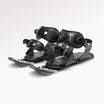
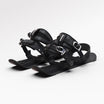
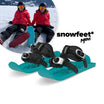
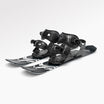
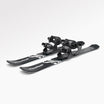
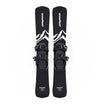
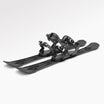
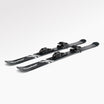
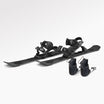
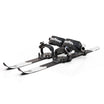
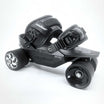

Snowboarders, if you’ve ever thought about trying skiing but dread those stiff, clunky ski boots, there’s an easier way to make the switch. Snowfeet Skiblades let you use your snowboard boots and bindings on short skis, making the transition smoother and more comfortable. Here’s the deal:
- Comfortable Gear: Keep your snowboard boots - no need for ski boots.
- Short Skis: Available in 65 cm, 99 cm, and 120 cm lengths, they’re easier to control than long skis.
- Portable: These lightweight skis can even fit in a backpack.
- Quick Learning Curve: Designed to feel natural for snowboarders, they’re perfect for beginners.
Whether you’re carving, hitting the park, or just cruising down the slopes, Snowfeet Skiblades are a simple, fun way to try skiing without the hassle of traditional gear. Let’s break it down further.
Snowboarder tries Snowfeet* | Which Snowfeet* Short Ski is the Best? | Snowblades 44, 65, 99 Review
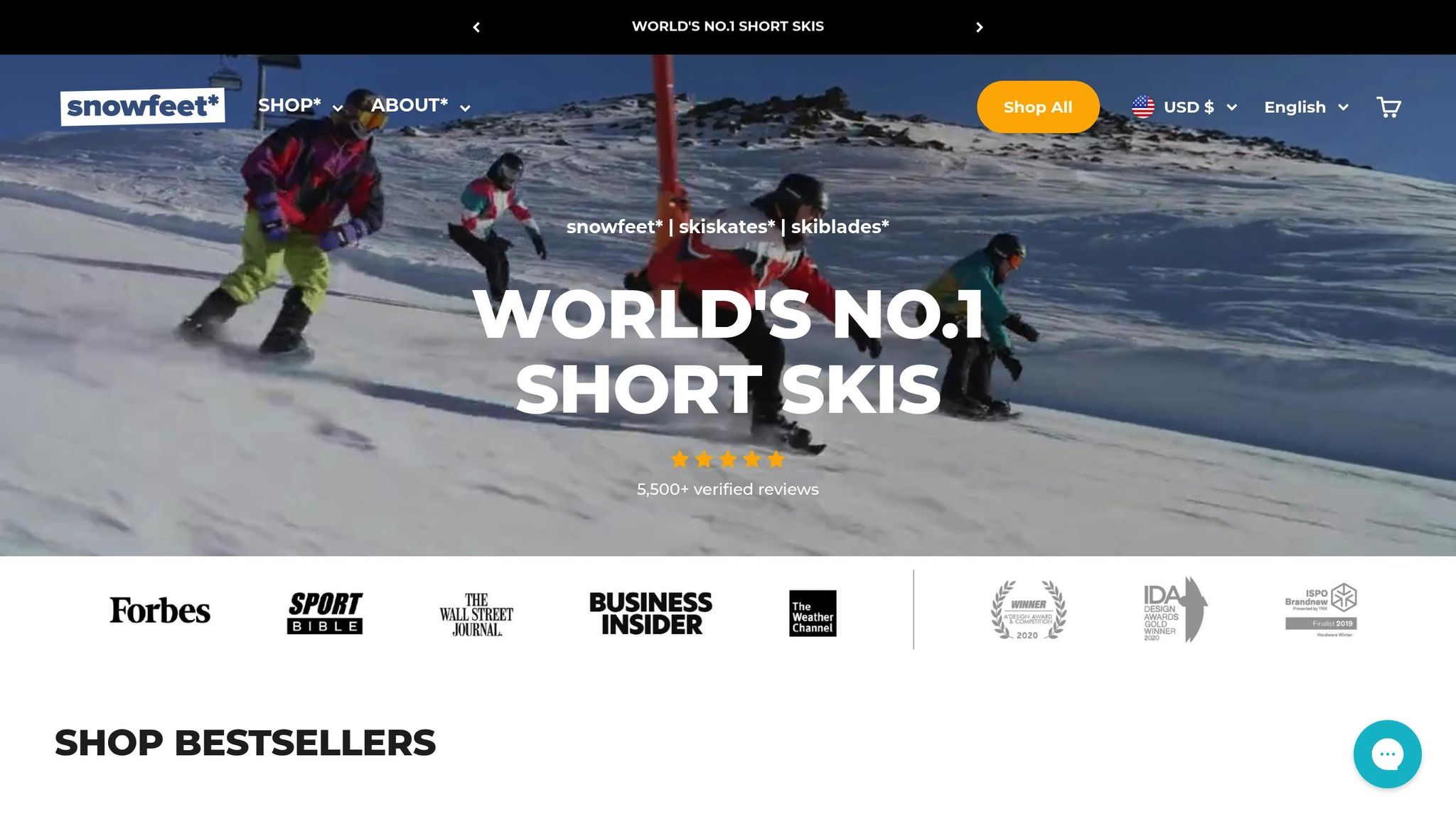
Why Snowfeet* Skiblades Work Better for Snowboarders
Switching from snowboarding to skiing can feel like stepping into a whole new world - traditional skis (150–180 cm long) require a completely different stance and movement. That’s where Snowfeet* Skiblades come in. With lengths of 65, 99, and 120 cm, these skiblades help bridge the gap, making the transition smoother and more intuitive. Let’s break down how their features - short length, binding compatibility, and portability - make them a great fit for snowboarders.
Shorter Length Makes Learning Easier
The shorter design of Snowfeet* Skiblades, especially the 65 cm model, gives them a skating-like feel that’s easier to control. This makes them perfect for beginners or snowboarders trying skiing for the first time. The 99 cm and 120 cm models add more stability for carving while staying more responsive than traditional skis.
"Short skis have a fast learning curve. They are great for beginners and intermediate skiers who want to enjoy their ski trip to the fullest." - Snowfeet Team
The lightweight design is another big plus. It makes turning and stopping less of a workout, which is especially helpful for snowboarders used to fluid, side-to-side movements. Plus, their forgiving design helps you recover quickly from mistakes - ideal for anyone still finding their ski legs.
Works with Your Snowboard Bindings
One of the coolest features of Snowfeet* Skiblades is their compatibility with snowboard bindings. That’s right - you can mount your existing snowboard bindings directly onto the skiblades. This keeps things familiar, allowing you to use the boots and strap-in system you already know and love. No need to drop extra cash on ski boots or bindings.
"Snowboard bindings give you more flexibility while performing all kinds of tricks, they're comfortable and you can walk with them anywhere without a problem." - Snowfeet Team
Both the 65 cm and 99 cm models are designed specifically for snowboard bindings, accommodating boot sizes 6–14.5 US. This setup not only simplifies your gear but also keeps your transition to skiing as seamless as possible.
Easy to Carry and Store
Unlike traditional skis, which can feel like dragging around oversized planks, Snowfeet* Skiblades are compact and portable. Their short length means they can fit in a backpack - try doing that with a pair of 170 cm skis! They’re also light enough to carry under one arm without breaking a sweat. For snowboarders who value mobility and hate lugging around bulky gear, this portability is a game-changer.
Whether you’re learning to ski for the first time or just want a lighter, more compact option, Snowfeet* Skiblades offer a practical and easy-to-use solution.
How to Pick the Right Snowfeet* Skiblades
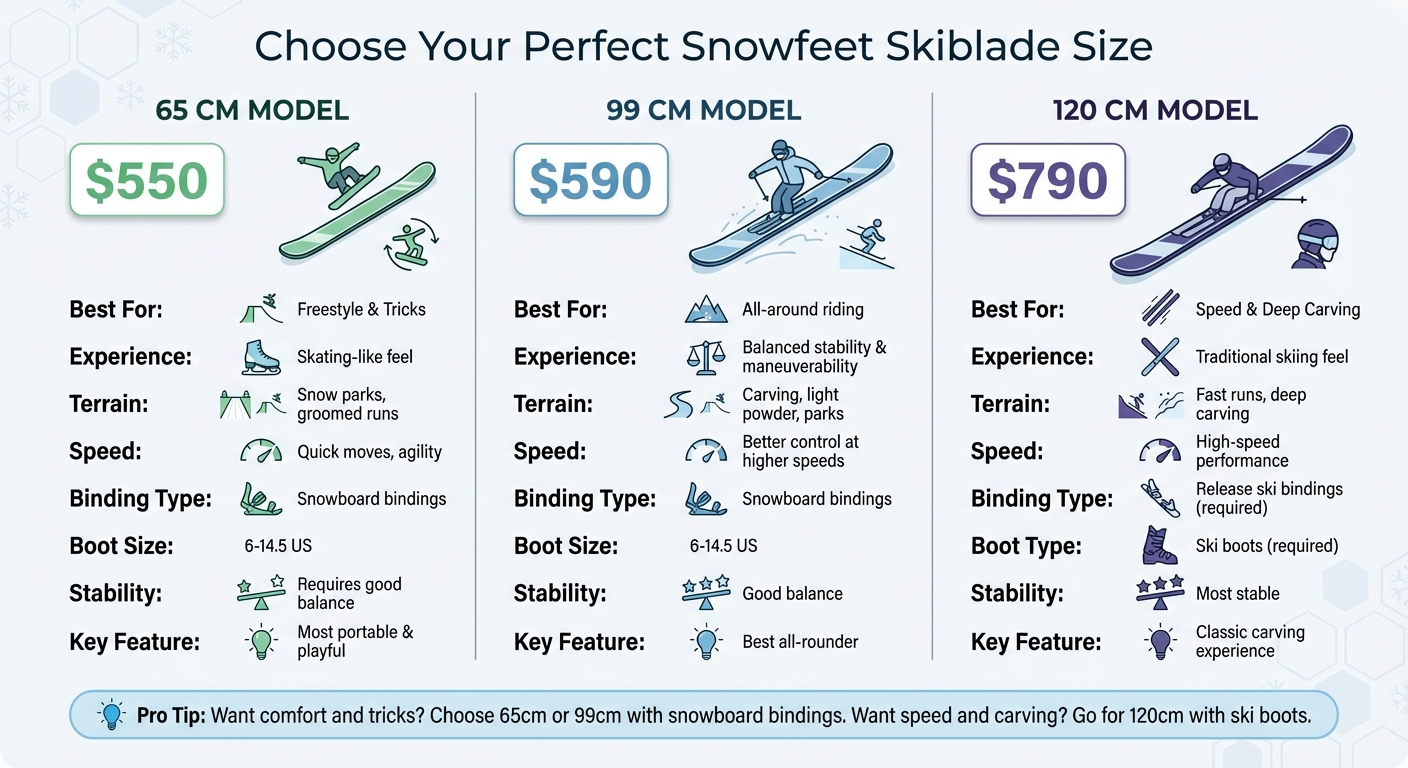
Snowfeet Skiblades Size Comparison Guide: 65cm vs 99cm vs 120cm
When choosing Snowfeet* Skiblades, it all comes down to your riding style and how much stability you need. With three sizes to choose from - 65 cm, 99 cm, and 120 cm - each one offers something different, especially for snowboarders making the leap to skiing.
Choosing Between 65 cm, 99 cm, and 120 cm
The 65 cm model ($550) is all about agility and fun. It's perfect for freestyle riders who enjoy tricks, jumps, and quick moves in snow parks or on groomed runs. Think of it as a skating-like experience on snow. However, its shorter length means you'll need solid balance to get the most out of it.
The 99 cm model ($590) strikes a balance between stability and maneuverability. It’s better for carving compared to the 65 cm, works well in light powder, and still lets you tackle the park. This size is a great all-rounder, offering more control at higher speeds while staying more nimble than your average skis.
The 120 cm model ($790) is for those who want speed and deep carving with a more traditional skiing vibe. It’s still shorter and lighter than regular skis but gives you that classic carving feel. Keep in mind, though, this model requires release ski bindings and ski boots, making it a better match for riders ready to switch their gear for a more advanced experience.
"If you prefer comfort and you don't need to ride too fast and furiously, go for shorter snowblades with snowboard boot bindings. On the other hand, when you are going for a fast experience and want to carve, ski boots and longer skiboards are your best possible choice." - Snowfeet Team
Once you’ve chosen your skiblade size, the next step is ensuring your bindings are a perfect fit.
Making Sure Your Bindings Fit
Before you hit the slopes, double-check that your bindings are compatible with your skiblades. The 65 cm and 99 cm models work with snowboard bindings that fit boot sizes 6–14.5 US, while the 120 cm model requires traditional ski bindings and boots to provide the right ankle support and safety.
Snowfeet* bindings are specially designed for the slim profile of skiblades. Standard snowboard bindings from other brands often don’t fit well - they’re too wide and bulky for the narrower ski deck. If you go for the 65 cm or 99 cm models, buying them as a pre-mounted set is a smart move. It saves you the hassle of adapting your current bindings and ensures a snug, reliable setup.
Now that your bindings are sorted, let’s see how Snowfeet* skiblades stack up against traditional skis.
Snowfeet* Skiblades vs. Traditional Skis
Snowfeet* skiblades flip the script on traditional skiing. Instead of dealing with stiff plastic boots and heavy gear, you can stick with your comfy snowboard boots. Traditional skis, which are usually 150–180 cm long, come with a steep learning curve and a lot of bulk. Snowfeet* skiblades, on the other hand, are lightweight, easy to carry (even in a backpack), and let you get started right away.
Their shorter length makes turning and stopping a breeze, helping you recover quickly from any missteps while saving energy. Plus, walking around the resort is so much easier in snowboard boots compared to clunky ski boots. For snowboarders who value comfort, portability, and simplicity, Snowfeet* skiblades are a no-brainer over traditional skis.
sbb-itb-17ade95
How to Mount Snowboard Bindings on Snowfeet* Skiblades
Mounting snowboard bindings on Snowfeet* skiblades is straightforward - you can handle it yourself without needing a professional.
Getting Your Equipment Ready
First things first, gather the tools and gear you’ll need: a manual screwdriver, mounting bolts, washers, your Snowfeet* skiblades, and your snowboard boots. Before attaching anything, pre-fit your bindings to your boots. Adjust the ankle and toe straps, set the highback lean, and make sure everything fits snugly. Your boots shouldn’t slide around in the bindings - secure and stable is the goal.
"If you can use a screwdriver then you can do it! Snowboard bindings are nothing like ski bindings which need to be professionally mounted." - Absolute Snow
Stick to manual screwdrivers - no power tools allowed. Electric screwdrivers or drills can strip the bolts or damage the inserts on your skiblades. If washers are included, use them! They help protect the inserts from getting pushed through the base. And if you notice bolts coming loose repeatedly, replace them instead of resorting to adhesives.
Setting Your Stance Width and Angles
Start by setting your stance width. A good rule of thumb is to match it to your shoulder width. For most riders between 5'5" and 5'10", this typically falls between 19–22 inches (48–56 cm) from the center of one binding to the other. Make sure to center the bindings so your heel and toe overhang are within one inch - that balance is key for smooth turns.
When it comes to angles, beginners should aim for +18° on the front foot and -9° on the back foot. These angles can be adjusted using the markings on the binding disc and baseplate. Positive angles face the nose of the skiblade, while negative angles point toward the tail. If you’re planning to try some freestyle moves, you might prefer a more balanced setup like +15° on the front and -15° on the back.
Tightening and Testing Your Bindings
With your bindings in place, tighten the bolts by hand in a diagonal pattern. This ensures even pressure and keeps everything aligned. Tighten until they’re snug, but don’t overdo it. Snowfeet bindings are designed to fit the slim profile of skiblades perfectly, so they’ll sit securely once tightened.
Before you head out, strap in and give everything a test. Rock and twist your boots to make sure the bindings stay put. If you’re using non-release bindings, don’t forget to attach your safety leash. After your first few runs, recheck the bolt tightness to make sure everything’s still secure. Once that’s done, you’re ready to hit the slopes and enjoy the smooth ride Snowfeet* skiblades are known for!
Tips for Your First Time on Snowfeet* Skiblades
If you're already comfortable with snowboard gear, you're in luck - Snowfeet* Skiblades are a natural next step. These tips will help you get started and make the most of your time on the slopes.
Adjusting to Skiing from Snowboarding
To get the hang of Snowfeet* Skiblades, start by adjusting your weight. Keep it centered over your mid and back foot - standing straight is key. Unlike traditional skis, these shorter blades don’t offer much front support, so leaning forward isn’t ideal. Think of it more like ice skating or inline skating.
For balance, maintain a shoulder-width stance. If needed, you can stagger one foot slightly forward. Thanks to the flexibility of your snowboard bindings, you'll find it easier to use movements that already feel second nature.
Begin on flat terrain with a skating motion - similar to how a hockey player glides on ice. This will help you get a feel for how the skiblades respond. When it’s time to stop, try a hockey stop by pushing both edges sideways and evenly distributing your weight across both feet.
Once you're comfortable with your stance and weight distribution, you can move on to gentle slopes.
Starting on Easy Slopes
Stick to groomed, packed trails to start. Avoid deep powder or steep, uneven terrain until you’ve got your balance down.
If you feel wobbly, use the built-in heel brake to slow yourself down while working on your edge control. Many riders report getting the hang of it quickly - some in as little as 5 minutes. If you’re using the 99 cm or 120 cm models, you’ll benefit from extra front-to-back support compared to the smaller 65 cm version.
Once you’re confident on easy trails, you can start exploring different terrains for a more varied experience.
Getting the Most Fun from Snowfeet* Skiblades
After nailing the basics, it’s time to experiment. The 65 cm model is perfect for tricks and quick turns, while the 99 cm and 120 cm versions are great for carved turns and light powder. Adjust your stance and weight as needed to match your style.
The beauty of Snowfeet* Skiblades is their versatility. Skate across flat areas, carve down groomed trails, or even hit park features. With an average rating of 4.9 out of 5 stars from over 5,500 verified reviews, it’s clear that riders love how quickly they adapt and how much fun they have. So, push your limits and see just how much these compact blades can do!
Conclusion
For snowboarders intrigued by skiing, Snowfeet* Skiblades make the switch easy and approachable. You can stick with your trusty snowboard boots and bindings, skipping the bulky ski boots and steep learning curve that come with traditional skis.
Snowfeet* Skiblades, available in 65, 99, and 120 cm lengths, are compact and designed for top-notch control and portability. They’re built to work with the natural movements snowboarders already know, making them an ideal crossover option. With over 50,000 riders worldwide and glowing 5-star reviews from verified users, it’s clear that Snowfeet* is changing how snowboarders experience skiing.
One of the biggest perks? No need for pricey ski boots or complicated setups. Snowfeet* lets you hit the slopes with the gear you already own, so you can skip the hassle and jump straight to the fun. Experts from REI and Tactics even highlight this hybrid setup as a "smart, low-risk entry" for snowboarders wanting to try skiing.
Ultimately, Snowfeet* Skiblades offer a versatile and budget-friendly way to explore new terrain without sacrificing comfort or convenience.
FAQs
How are Snowfeet Skiblades better for beginners compared to traditional skis?
Snowfeet Skiblades are a fantastic option for beginners, making skiing easier and more fun compared to traditional skis. Their small size - anywhere from 15 to 47 inches - means they’re super lightweight, simple to control, and great for quick turns and stops. With these, you can go from just standing on the snow to carving turns in a matter of hours, rather than spending weeks trying to get the hang of it. Traditional skis, on the other hand, are usually over 59 inches long, heavier, and take more effort and practice to manage.
One of the best parts? Snowfeet Skiblades work with your regular winter boots. That means no need to shell out for pricey ski boots or other specialized gear. They’re also incredibly easy to carry around - just toss them in a small bag or your car trunk. Compare that to traditional skis, which often require bulky roof racks or take up a lot of storage space. For snowboarders, this setup feels familiar and makes trying out skiing less of a hassle and more of a good time.
Thanks to their forgiving design and versatility, Snowfeet Skiblades help beginners gain confidence quickly. They’re perfect for anyone who wants to dive into skiing without the long and tricky learning curve that comes with traditional skis.
Can I use my snowboard bindings with all sizes of Snowfeet Skiblades?
Yes, Snowfeet Skiblades are made to work perfectly with snowboard bindings, no matter the size - whether you go for 65 cm, 99 cm, or 120 cm. This makes them an awesome choice for snowboarders who want to give skiing a shot without splurging on extra gear.
Since they’re compatible with your snowboard bindings, you’ll enjoy a familiar and comfy feel, making the switch to skiing a breeze. Whether you’re just starting out or simply feeling adventurous, Snowfeet Skiblades are a fun and flexible way to hit the slopes.
Why are Snowfeet Skiblades a great option for snowboarders trying skiing?
Snowfeet Skiblades give snowboarders a simple and budget-friendly way to dip their toes into skiing without splurging on a full set of gear. These skiblades work with your snowboard bindings, so you can stick with your current snowboard boots - no need for extra purchases or adjustments. With lengths of 65, 99, or 120 cm, they’re lightweight, easy to handle, and great for beginners, making the shift from one board to two skis feel natural.
Their compact size means quicker edge response and improved balance, which is a big plus for snowboarders who are already pros at edge control and maintaining stability. And the price? A total win. Ranging from $150 to $490, Snowfeet Skiblades are a fraction of what a traditional ski setup would cost - those can easily run over $1,500. They’re also super portable, making them great for travel or casual days on the slopes. If you’re a snowboarder curious about skiing, these skiblades offer a fun, hassle-free way to give it a shot.













Leave a comment
This site is protected by hCaptcha and the hCaptcha Privacy Policy and Terms of Service apply.