




















Ever wondered if you can hit the slopes with snowboard boots on skis? The short answer: not with standard skis and bindings. Ski boots are rigid and designed to lock into ski bindings, while snowboard boots are softer and don’t fit securely. Trying to mix the two could be unsafe. But there’s good news! Products like Snowfeet Skiskates and Skiblades are specifically designed to work with snowboard boots. These short skis come with built-in bindings that fit snowboard boots perfectly, offering a comfortable, secure, and fun alternative. Here’s what you need to know:
- Standard skis + snowboard boots = no go. The designs just don’t match.
- Snowfeet products solve this. They’re short skis with bindings made for snowboard boots.
- Easy to use. Adjust with a screwdriver, no special tools or adapters needed.
- Sizes for everyone. Fits US boot sizes 6–14.5.
- Affordable and portable. Prices start at $250, and they’re small enough to fit in a backpack.
If you’re tired of stiff ski boots but love the slopes, Snowfeet short skis might be your answer. Let’s dive into how they work, why they’re safe, and what makes them a great choice for winter fun.
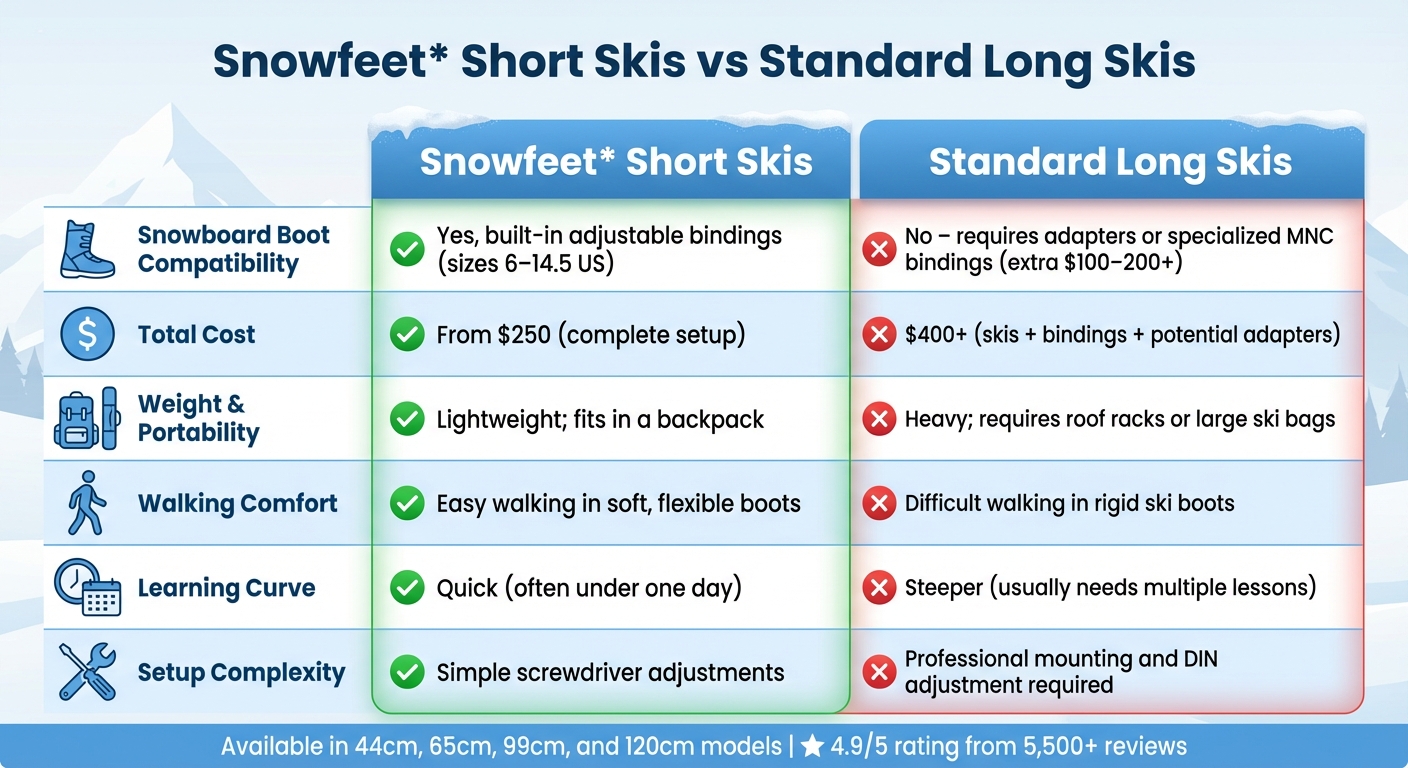
Snowfeet Short Skis vs Standard Long Skis Comparison Chart
Why Snowboard Boots Don't Work with Standard Skis
Binding and Boot Design Differences
Ski boots and snowboard boots are built with completely different goals in mind. Ski boots feature a rigid plastic shell and a specially designed sole that locks securely into ski bindings. On the other hand, snowboard boots are softer and more flexible, prioritizing comfort over rigidity. This fundamental difference means snowboard boots can’t properly engage with the toe and heel locking mechanisms of ski bindings.
"Ski boots and snowboard boots are designed differently to fit into their respective bindings. Ski boots have a different shape and sole, which won't work well with snowboard bindings." – Snowfeet Team
Ski bindings also include a safety release mechanism that ejects the boot during a fall to reduce the risk of injury. Snowboard bindings, however, rely on straps and don’t have a release system. Trying to combine these two incompatible systems isn’t just impractical - it’s outright dangerous.
Problems with Adapters and Conversion Systems
Some people have tried to bridge the gap between snowboard boots and traditional skis using adapters or riser platforms. While creative, these DIY solutions often cause more problems than they solve. For starters, snowboard bindings are generally too wide for the slim profile of standard skis. Even with riser plates, the extra bulk disrupts performance. Snowboard boots, being softer and less rigid, can’t provide the lateral stiffness needed to control the forces at play when skiing. This can lead to poor handling during sharp turns and even cause bindings to detach mid-use - definitely not ideal.
Given these challenges, it’s clear that conversion systems aren’t the answer. Instead, products like Snowfeet*, which are specifically designed for these kinds of needs, offer a much better solution.
How Snowfeet* Products Work with Snowboard Boots
Snowfeet* Models Compatible with Snowboard Boots
Snowfeet* products are designed to work seamlessly with snowboard boots - no expensive adapters or risky DIY fixes needed. Whether you're using the compact 44 cm Skiskates or the larger 65 cm, 99 cm, and 120 cm Skiblades, all models come equipped with adjustable bindings tailored specifically for snowboard boots. These bindings feature a two-strap system (ankle and toe) and an anti-slip surface that firmly grips your boot sole, ensuring a secure fit without the extra hassle.
Adjusting the bindings is a breeze - you just need a standard home screwdriver. They accommodate snowboard boot sizes ranging from 6–14.5 US (38–49 EU), making them suitable for nearly all adult feet. This universal sizing means you can easily share them with family or friends without needing additional gear.
"At Snowfeet we developed a unique snowboard bindings specifically designed for skiboards. They are affordable, easily adjustable to snowboard boots of any size, with an anti-slippery surface for perfect shoe grip." – Snowfeet Team
The system uses a non-release binding mechanism, which is considered safe for skis under 100 cm in length. With over 50,000 riders worldwide and a stellar 4.9/5 rating from more than 5,500 verified reviews, these bindings have proven their reliability across different skill levels and snow conditions [8,9].
This thoughtful design sets Snowfeet* apart from traditional ski brands, making them a practical and efficient choice for winter sports enthusiasts.
Snowfeet* vs Standard Ski Brands
Snowfeet* bindings are not just convenient - they highlight the key differences between Snowfeet* products and traditional long skis. Unlike standard skis, which often require stiff, uncomfortable plastic boots and pricey adapters, Snowfeet* short skis are ready to use with your existing snowboard boots. Starting at $250 (with free fast shipping), they offer a more affordable and comfortable alternative to setups that can easily exceed $400.
Here’s a side-by-side comparison:
| Feature | Snowfeet* Short Skis | Standard Long Skis |
|---|---|---|
| Snowboard Boot Compatibility | Yes, built-in adjustable bindings (sizes 6–14.5 US) | No – requires adapters or specialized MNC bindings (extra $100–200+) |
| Total Cost | From $250 (complete setup) | $400+ (skis + bindings + potential adapters) |
| Weight & Portability | Lightweight; fits in a backpack | Heavy; requires roof racks or large ski bags |
| Walking Comfort | Easy walking in soft, flexible boots | Difficult walking in rigid ski boots |
| Learning Curve | Quick (often under one day) | Steeper (usually needs multiple lessons) |
| Setup Complexity | Simple screwdriver adjustments | Professional mounting and DIN adjustment required |
One standout feature of Snowfeet* is their portability. You can toss them in a backpack, hop on public transportation, or store them in a small closet - things you just can’t do with bulky long skis. Plus, since they work with comfortable snowboard boots, you can move around the lodge, grab a snack, or explore the resort without struggling with clunky ski boots. It’s all about making winter adventures easier and more enjoyable.
Short Skis with Snowboard Bindings | Must-Have of This Winter
sbb-itb-17ade95
Benefits of Using Snowboard Boots with Snowfeet* Short Skis
Snowfeet* short skis come packed with perks that make winter sports more comfortable, portable, and beginner-friendly. Let’s dive into what makes them stand out.
Better Comfort and Movement
When you pair Snowfeet* short skis with snowboard boots, you’re in for a treat. Unlike stiff ski boots, snowboard boots offer a natural range of ankle motion, making tricks and maneuvers on the slopes much easier. Whether you’re spinning, jumping, or freestyling in a snow park, the added flexibility gives you a noticeable edge.
"Snowboard bindings give you more flexibility while performing all kinds of tricks, they're super comfortable and you can walk with them anywhere without a problem." – Snowfeet Team
This combination not only boosts your performance but also keeps your feet comfortable all day long. Plus, you can walk around easily when you’re off the slopes - no clunky ski boots to slow you down.
Easy to Carry and Store
Say goodbye to roof racks and bulky ski bags. Snowfeet* short skis are compact enough to fit in a backpack or your car trunk, which makes them perfect for spur-of-the-moment adventures. Whether it’s a quick trip to a local hill or some backyard fun after fresh snow, these skis are ready to roll.
They’re lightweight too, so you can toss them into an overhead bin when flying, skipping the hassle (and fees) of checked baggage. This portability pairs perfectly with their user-friendly design, making winter sports more accessible and less of a logistical headache.
Quick Learning for Beginners and Experienced Riders
Snowfeet* short skis shine when it comes to ease of learning. Thanks to their intuitive design and shorter length, most users can pick up the basics in just a day. If you’ve ever ice skated, inline skated, or played hockey, the skating-like motion will feel second nature.
Beginners love the control these skis offer, especially since the shorter length means you won’t have to worry about those frustrating crossed tips that come with traditional skis. For seasoned riders, adapting existing skills to this setup is a breeze, allowing for smooth transitions across different types of winter terrain.
Performance Testing with Snowfeet* Short Skis
Durability and Performance Across Different Terrain
Snowfeet* short skis are built to handle a variety of winter conditions with ease. Thanks to their wood-core construction and metal ski edges - similar to those found on traditional skis - they deliver reliable grip on icy surfaces and groomed trails. The 44 cm Skiskates shine as "snow skates", while the 65 cm and 99 cm Skiblades are perfect for carving through all-mountain terrain.
In testing, these skis performed well in up to 4 inches of light powder. For deeper snow, the longer Skiblades are recommended. Their fiberglass-reinforced polyamide build ensures they can withstand season after season of use without breaking down.
One standout example comes from an East Coast lift operator at Catamount in the Berkshires, who tested the 65 cm model for three years. They performed advanced maneuvers like 360° and 720° spins and even skied backward on main slopes. Impressed by the skis’ durability, they went on to purchase the 44 cm and 99 cm models with snowboard bindings. It’s clear these skis are built to last and deliver high performance, earning praise from riders across the board.
User Reviews and Pricing Details
The performance of Snowfeet* short skis is backed by glowing user reviews. With over 50,000 riders worldwide and more than 5,500 verified reviews averaging 4.9/5, the numbers speak for themselves. Both the 44 cm Skiskates and 99 cm Skiblades boast perfect 5.0/5 ratings, and 90% of Basic model reviewers have awarded them 5 stars.
Take Chan Saelee, for example, who tested the 50 cm Snowfeet* Pro at NorthStar Resort near Lake Tahoe. Using size 9.5 US snowboard boots, they reported a smooth experience with chairlifts and resort staff, successfully carving "S" turns as a first-time user. Professional inline skater Logan (@xskyskaterx) also praised the setup, highlighting the excellent ankle support for tricks like boxes, jumps, and spins - eliminating the need for bulky traditional skis.
When it comes to pricing, Snowfeet* products offer a compelling value. The 44 cm Skiskates are priced at $575, the 65 cm Skiblades at $635, and the 99 cm models at $675. For comparison, traditional ski setups typically range from $400–$800 for skis alone, plus an additional $300–$600 for boots and bindings. Snowfeet* gives you the advantage of using your existing snowboard boots, making it a cost-effective option without compromising on performance. For snowboard boot enthusiasts, it’s a deal that’s hard to beat.
Conclusion: Why Snowfeet* Works Best for Snowboard Boots on Skis
Here’s the deal: traditional ski brands just aren’t meant for snowboard boots, and those DIY adapter hacks? They can mess with your safety and control. That’s where Snowfeet* steps in, offering factory-mounted bindings designed specifically for snowboard boots. They use the same two-strap system (ankle and toe) you already know from snowboarding, so it feels natural right from the start.
"Using [snowboard boots] with skis and getting rid of the stiff ski boots is every skier's dream." – Snowfeet Team
This setup doesn’t just keep the comfort of snowboard bindings - it also boosts your control and safety on the slopes. The non-release bindings are perfectly suited for skis under 100 cm, and the wood-core construction with metal edges delivers performance that rivals full-sized skis.
Snowfeet* models bring you a level of maneuverability and ease that long skis simply can’t match. Whether you’re new to skiing and want a smoother learning experience or you’re a seasoned rider chasing more flexibility on the mountain, Snowfeet* combines the comfort of snowboard boots with ski-like precision. It’s a win-win for tackling all kinds of terrain and conditions.
FAQs
Can I use snowboard boots with short skis or regular skis?
Snowboard boots aren’t a one-size-fits-all solution for skiing. They’re only compatible with certain short skis, like the ones made by Snowfeet. These skiblades and skiskates are built with bindings specifically designed for snowboard boots, making them a natural fit.
On the other hand, if you’re planning to hit the slopes with traditional longer skis, you’ll need ski-specific boots and bindings - snowboard boots simply won’t work for those setups.
For anyone craving a compact and unique skiing experience, Snowfeet’s gear pairs perfectly with snowboard boots, offering a fun and easy alternative to the standard ski gear.
Why are Snowfeet products a great match for snowboard boots?
Snowfeet’s short skis, including Skiblades and Skiskates, come equipped with snowboard-style bindings built right in. These bindings are specifically designed to work seamlessly with snowboard boots, offering both a snug fit and solid lateral support. The best part? You can clip your snowboard boots directly onto Snowfeet products without needing any additional ski-boot bindings.
This setup makes Snowfeet incredibly convenient and versatile, especially if you’re after a more compact, lightweight alternative to traditional skis. And since they’re made to pair perfectly with snowboard boots, you’ll get great performance without the hassle of a typical ski setup.
Are Snowfeet short skis good for beginners?
Yes, Snowfeet short skis are a fantastic option for beginners! Their compact and lightweight build makes them super easy to handle, which means new skiers can turn and stop without breaking a sweat. This design helps you pick up the basics faster and enjoy a smoother ride while learning the ropes.
Compared to traditional skis, Snowfeet short skis feel less daunting. They’re more forgiving, so you can work on your technique without feeling like you’re in over your head. If you’re just starting out, these skis make hitting the slopes both fun and approachable!













Leave a comment
This site is protected by hCaptcha and the hCaptcha Privacy Policy and Terms of Service apply.