



















Skiboards are shaking up the snow scene, offering a lighter, easier-to-use alternative to long skis. If you’re tired of lugging heavy gear, struggling with ski poles, or spending weeks mastering technique, skiboards might be your new best friend. With shorter lengths (26–47 inches) and designs that work with various boots - even regular winter shoes - skiboards are perfect for quick turns, tight spots, and a more playful ride. Most people pick them up in just one or two runs, and they’re compact enough to fit in a backpack. Here’s how to make the switch and hit the slopes with confidence:
- Pick the Right Skiboard: Choose a length based on your style - 65 cm for tricks, 99 cm for carving, or 120 cm for smooth rides. Smaller, budget-friendly options like Snowfeet Mini Ski Skates (38 cm) are great for beginners.
- Boot Compatibility: Use ski boots, snowboard boots, or even sturdy winter shoes depending on the model.
- Quick Setup: Secure bindings in minutes and add a safety leash. Wax the base for a smooth glide.
- Master the Basics: Start on a gentle slope, stand upright like you’re skating, and practice carving, stopping, and quick turns.
With over 50,000 riders and rave reviews, Snowfeet skiboards are proving to be a fun, portable, and easier solution for winter sports enthusiasts. Ready to ditch the hassle of long skis? Let’s dive into the details.
I Taught Myself How to Ski IN 1 HOUR with Summit Skiboards
Preparing for the Switch: Gear and Setup
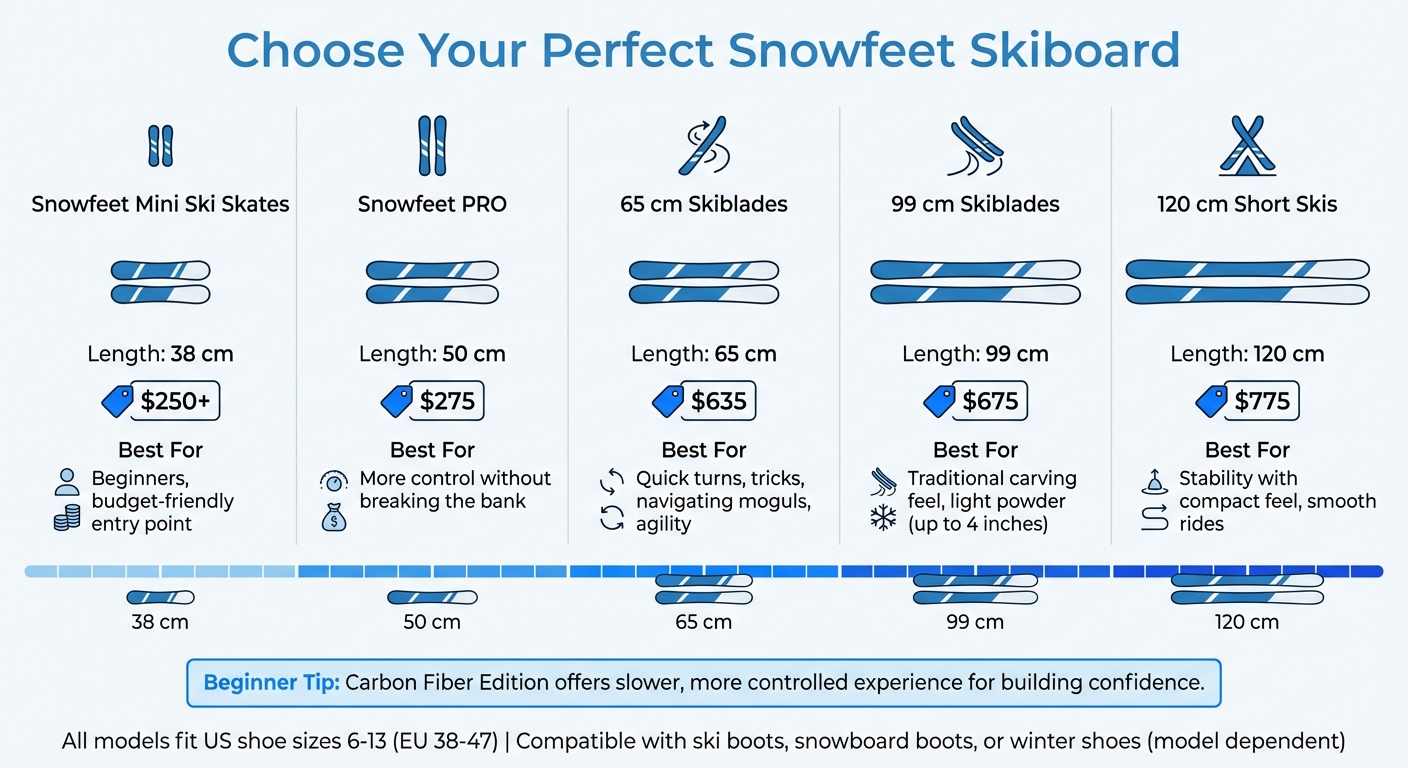
Snowfeet Skiboard Models Comparison: Sizes, Prices, and Best Uses
Making the leap from traditional skis to skiboards? A few smart gear tweaks are all you need to get started. Think of this as setting the stage for a smooth and fun first ride.
Choosing Your Snowfeet* Skiboard Model
Picking the right skiboard depends on your experience and what you're looking for on the slopes:
- 99 cm Skiblades ($675): Perfect for traditional skiers who want to keep that carving feel but without the bulk of long skis.
- 65 cm Skiblades ($635): Great for those who crave agility. These are ideal for quick turns or navigating moguls.
- 120 cm Short Skis ($775): If you want stability that still feels compact, this is your go-to option.
On a budget or just testing the waters? Check out the smaller options:
- Snowfeet Mini Ski Skates (38 cm, from $250): A fun and affordable entry point.
- Snowfeet PRO (50 cm, $275): A bit larger, offering more control without breaking the bank.
For beginners, the Carbon Fiber Edition is a solid choice. It’s designed to provide a slower, more controlled experience, helping you build confidence.
Selecting Compatible Footwear
Your footwear matters just as much as your board. The good news? Snowfeet* skiboards are flexible when it comes to boots:
- Traditional ski boots: These work with all models and provide solid control for carving at higher speeds.
- Snowboard boots: A great choice if you want better lateral support and extra comfort. Pair them with Snowfeet* snowboard bindings for added flexibility and easier walking.
For the smaller models like the Mini Ski Skates or Skiskates, you can even use regular winter or hiking boots. Most models fit US shoe sizes 6–13 (EU 38–47). If your size falls outside this range, you can adjust the bindings with a screwdriver to get the perfect fit.
Setting Up Your Snowfeet* Skiboards
Once you’ve picked your skiboard and boots, setup is a breeze:
- Start by placing your skiboard on a flat surface.
- For non-release bindings, slide your heel into the rear bracket and secure the toe clip snugly.
- Using snowboard bindings? Tighten the ankle strap first to lock your heel, then secure the toe strap for a snug fit. It should feel like the board is part of your foot.
- If your board has release bindings (like the 99 cm or 120 cm models), have a pro adjust your DIN setting based on your weight and skill level.
Don’t forget the safety leash! It’s essential for non-release or snowboard bindings to keep your skiboards from sliding off if you take a tumble. Lastly, give the base a good wax before your first run to ensure a smooth glide.
The whole setup process takes just five minutes - way quicker than the adjustments for traditional skis. Once you're done, you're ready to hit the slopes!
Your First Run: Techniques and Tips
Got your Snowfeet* skiboards all set up? Great! Now it’s time to dive into the techniques that’ll have you gliding down the slopes in no time.
Starting on a Gentle Slope
Pick a gentle slope for your first run. This gives you plenty of room to get used to the shorter boards without the stress of steep terrain or crowded areas. Fun fact: Most riders get the hang of skiboards within one or two runs - sometimes in just five minutes.
Start on flat ground by pushing off with alternating feet, like you’re skating. This motion is key for navigating gentle slopes and even lift lines. Once you’re comfortable, point your skiboards downhill, and let gravity take over.
Adjusting Your Stance and Balance
Your stance is everything. Stand upright with your weight centered over your boots - think ice skating or rollerblading. Keep your legs about shoulder-width apart, and hold your hands out in front to stay balanced.
"The stance for skiboarding is more like the stance for skating or rollerblading – standing up, not leaning over the tips." - Skiboards.com
Avoid leaning forward too much, as this can make the boards chatter and feel unstable. If you’re feeling wobbly, try a scissor stance - position one foot slightly ahead of the other. This adds stability and helps you stay in control. Since the carving edge sits directly under your boots, standing upright allows the side cuts and flex to do their job. Once you’ve nailed your stance, you’re ready to move into carving.
Practicing Carving, Stopping, and Quick Turns
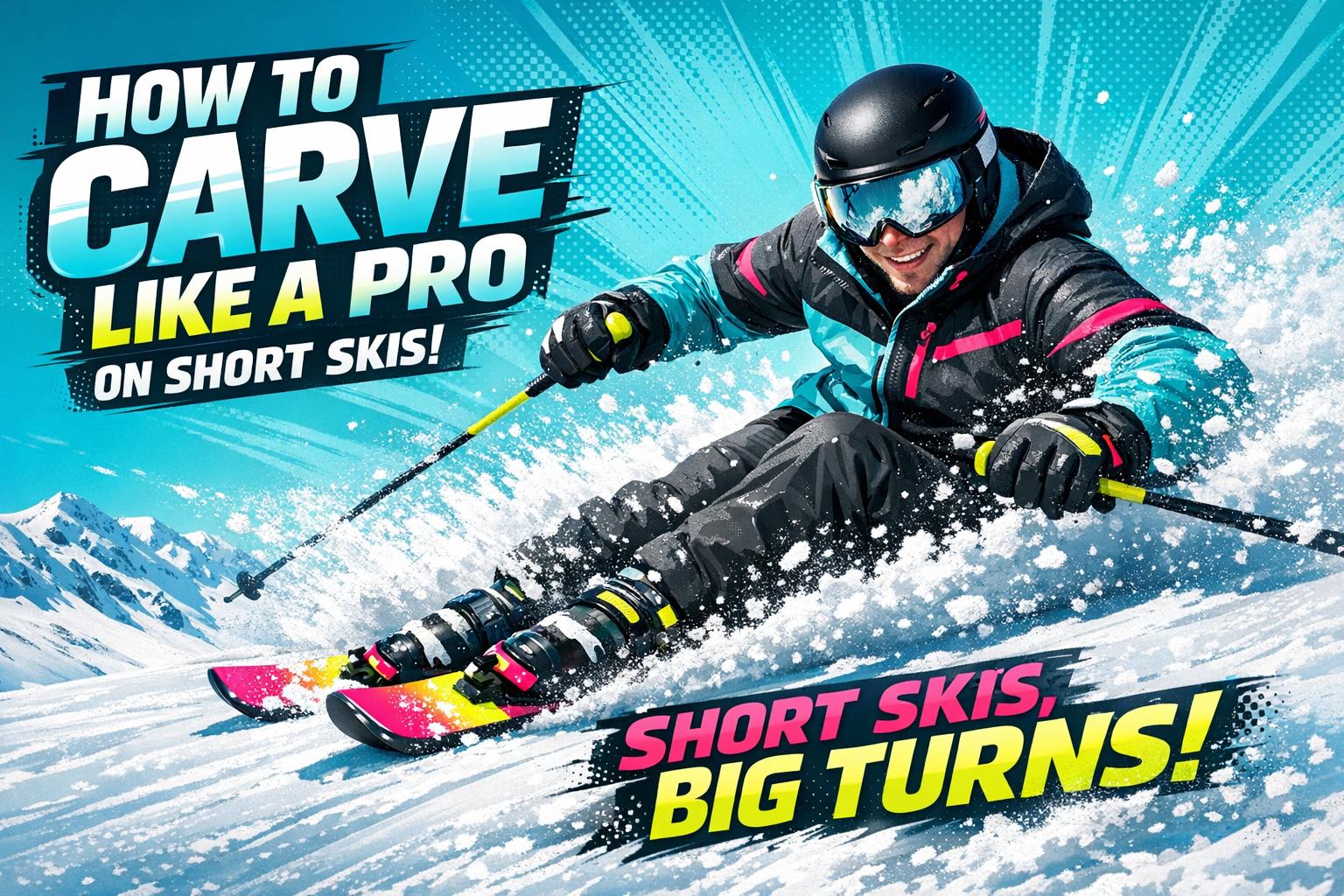
Carving: To carve, bend your knees, press the outer edge of your skiboards, and lean into the turn. Thanks to the deep side cuts, the boards practically turn themselves - no need to overdo it with your upper body. You can even distribute your weight evenly across both boards for quick, tight carved turns.
Stopping: Mastering a hockey stop is essential. Push both edges sideways to stop, keeping your weight evenly distributed over both feet. Unlike traditional skiing, there’s no need to favor one side. It might take a little practice, but you’ll get smoother with time. If your skiboards have a heel brake, use it for easy speed control on gentle slopes.
Quick turns: This is where skiboards shine. Their shorter length lets you pivot and change direction almost instantly. Focus on driving the movement from your hips rather than twisting your feet - this helps you avoid catching an edge. As one rider, Daniel Siouffi, shared:
"My first run the skis did shake but soon thereafter by distributing better my weight on my toes - I was flying like never before. Going fast I was in complete control of every move, turns, and stops."
These techniques show why Snowfeet* skiboards are such a game-changer. You’ll feel agile and in control, with your arms free for balance - just like when you’re skating.
sbb-itb-17ade95
Why Snowfeet* Beats Traditional Skis
Once you’ve honed your skills, it’s time to see why Snowfeet* skiboards leave traditional skis in the dust.
Compact and Easy to Transport
Say goodbye to lugging around massive ski bags or dealing with roof racks. Snowfeet* skiboards are so compact they fit into a standard backpack. The 38 cm model? Toss it in your pack. Even the larger 99 cm skiblades slide easily into your car trunk - no special carriers needed. Traditional skis, on the other hand, are long, cumbersome, and demand extra gear to transport.
Their lightweight design makes hauling them from the parking lot to the lift a breeze. Plus, many models are compatible with regular winter shoes or snowboard boots, so you can comfortably roam the resort without the hassle of ski boots. This portability means no more struggling with bulky equipment.
With over 50,000 riders worldwide and a stellar 4.9 out of 5-star rating from more than 5,500 verified reviews, it’s clear people love the freedom Snowfeet* offers. As one rider, Sophia Kane, put it:
"I hate getting stuck on a hill in skis because they're so long and bulky. Since these are shorter, you can just skate right up."
Performance Across Different Terrains
Traditional skis are great for groomed slopes, but Snowfeet* skiboards? They’re built to handle it all. Whether you’re cruising down snow parks, weaving through moguls, exploring forest trails, or even playing around on backyard slopes, Snowfeet* has you covered. The 65 cm models are especially handy in tight spots like glades or moguls, where longer skis can feel clunky.
In snow parks, their lightweight design lets you pull off spins and jumps that would be much harder with bulkier equipment. For light powder (up to 4 inches), the 99 cm and 120 cm models provide enough surface area for smooth rides while keeping turns quick and responsive. Another bonus? Snowfeet* encourages a more upright stance, which eases strain on your back and knees - something traditional skis can’t promise with their forward-leaning posture. Add all this versatility to their reasonable pricing, and Snowfeet* easily stands out.
Better Value for Your Money
Traditional ski setups can be pricey, but Snowfeet* starts at just $190 for the 38 cm model, with premium 99 cm skiblades priced at $590. That’s hundreds of dollars saved right off the bat.
And it’s not just the upfront cost. Snowfeet* eliminates the need for poles or specialized boots. If you already own snowboard boots or sturdy winter shoes, you’re good to go. Plus, their compact size spares you from spending extra on roof racks or paying oversized baggage fees when flying.
Built with durable materials like high-quality wood cores, fiberglass-reinforced polyamide, and metal edges, Snowfeet* skiboards rival - or even surpass - the construction of traditional skis. Recognized as a finalist at ISPO and a winner of the A'design award, they’re a testament to smart engineering. As one rider, Nathan F., raved:
"Absolute game-changer! They're light, fast, and incredibly fun to ride."
Conclusion: Make the Switch to Skiboards
Making the jump from traditional skis to Snowfeet* skiboards is a breeze. Most people pick up the basics in just 5 minutes or after a couple of runs. Their shorter design gives you better control, quicker turns, and a whole new level of freedom on the mountain.
Unlike traditional skis that come with bulky gear and pricey lessons, Snowfeet* skiboards keep things simple. They're compact, lightweight, and work with a variety of boots. Plus, you'll become part of a community that prioritizes fun and simplicity on the slopes.
Once you’ve got the hang of it, Snowfeet* skiboards take your performance up a notch. The upright stance offers better control and is gentler on your knees and back, meaning less fatigue and more time shredding. Whether you're carving down groomed trails, tackling moguls, or hitting the terrain park, these skiboards bring a playful twist to your winter adventures. It’s a chance to rediscover the excitement of snow sports.
Enjoy effortless rides, quick turns, and a balanced stance that makes the whole experience smoother. Say goodbye to hauling heavy skis or struggling uphill. As NowThis perfectly put it:
"WHO NEEDS SKIS WHEN YOU HAVE SNOWFEET?"
Grab your Snowfeet* skiboards and experience the ultimate freedom on snow.
FAQs
What makes skiboards better than traditional skis?
Skiboards stand out because of their shorter length - usually between 25 and 47 inches - which makes them a breeze to handle. Whether you're weaving through tight turns, navigating narrow trails, or throwing in some tricks, their compact size gives you incredible control and agility.
They're also a fantastic option for beginners. Most people get the hang of skiboards after just one or two runs, unlike the longer adjustment period that comes with traditional skis. And thanks to their wider design, skiboards perform well in deep powder, stay stable at higher speeds, and don’t require poles. This means a more hands-free, dynamic way to enjoy the slopes.
If you're after something fun, versatile, and easy to use, skiboards - like the ones from Snowfeet - might just be your new favorite gear.
How do I pick the right skiboard size for my experience level?
Choosing the right skiboard size comes down to your skill level, height, and weight. If you're just starting out, shorter skiboards (65–99 cm) are a great choice. They’re easier to control and handle, making them perfect for beginners. For those with some experience, medium-length boards (around 99–120 cm) strike a nice balance between agility and stability. If you’re an advanced rider chasing speed and precision, longer boards (120 cm or more) are the way to go.
Your height and weight also play a big role in picking the right size. A well-matched skiboard ensures you’ll stay comfortable and perform your best on the slopes. Snowfeet skiboards are designed to make this process easier. They offer excellent control and maneuverability, giving riders of all levels a smoother and more enjoyable experience compared to traditional skis or snowboards.
Can I use regular winter boots with skiboards like Snowfeet?
No, regular winter boots won’t work with skiboards. If you’re planning to use skiboards like Snowfeet, you’ll need boots that are specifically designed to match their bindings. This usually means snowboard-style boots or dedicated ski boots, which provide the secure fit you need for a solid performance on the slopes.
Wearing the right boots isn’t just about comfort - it’s about safety and making the most of your skiboarding experience. The right pair lets you enjoy the agility and control skiboards are known for. Before you gear up, double-check your skiboard bindings to ensure your boots are compatible.











Leave a comment
This site is protected by hCaptcha and the hCaptcha Privacy Policy and Terms of Service apply.