



















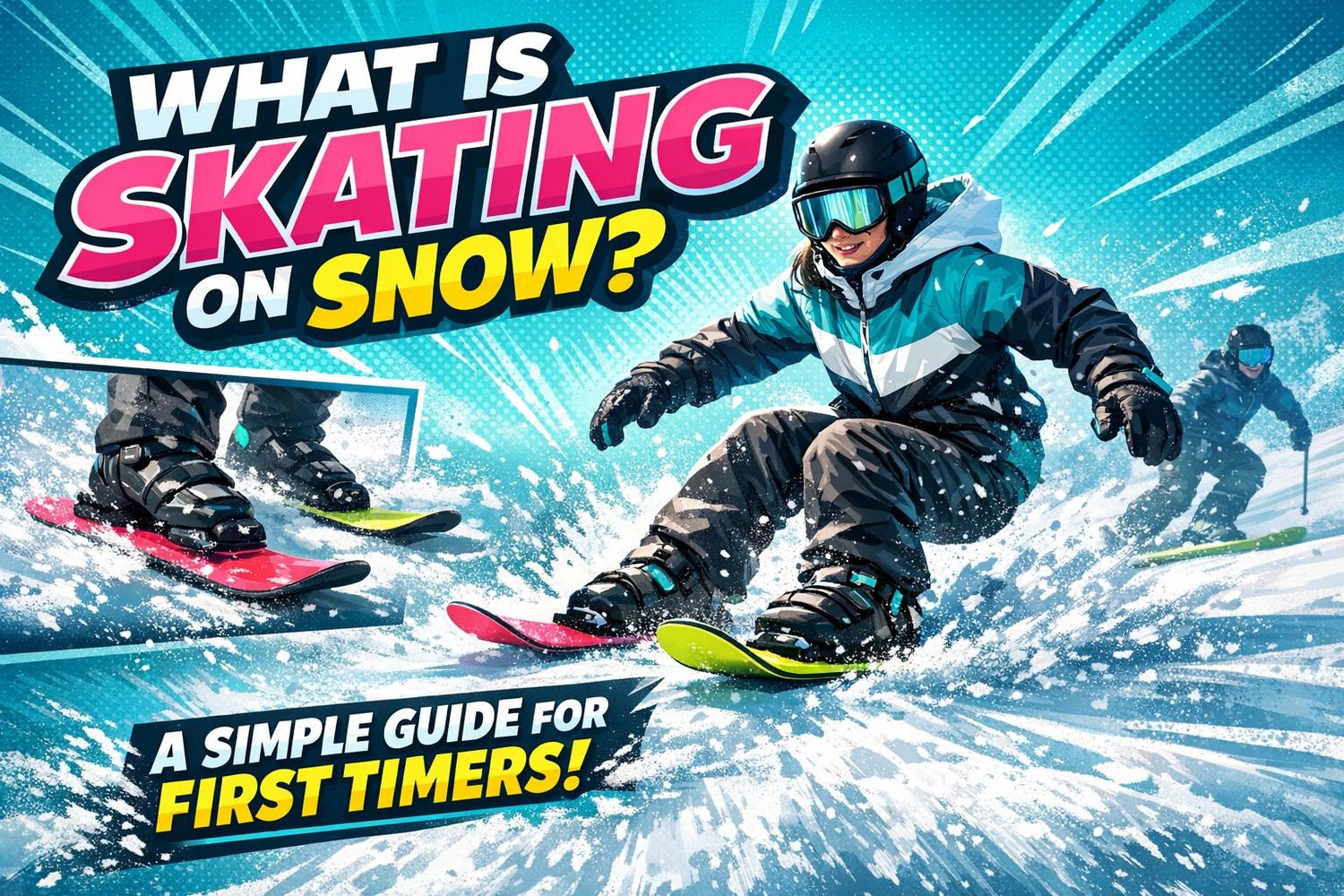
Skating on snow, or skiskating, is like blending ice skating with skiing - fun, simple, and perfect for beginners. Instead of long skis or bulky snowboards, you use ultra-short skis (15–20 inches long) that attach directly to your regular winter boots. The motion? A sideways hockey-style push-off that feels natural if you’ve ever ice skated or rollerbladed. Most people pick it up in just 5–10 minutes!
Here’s why it’s awesome:
- Lightweight gear: No clunky ski boots. Just attach to your waterproof boots.
- Portable: Fits in a backpack - no roof racks needed.
- Beginner-friendly: Less intimidating than skiing or snowboarding.
- Versatile: Use it on slopes, trails, sledding hills, or even your backyard.
Starting at $250, skiskating is also easier on your wallet compared to skiing or snowboarding. With over 50,000 users and glowing reviews (4.9 out of 5 stars), it’s a fun, low-hassle way to enjoy winter. Ready to give it a try? :)
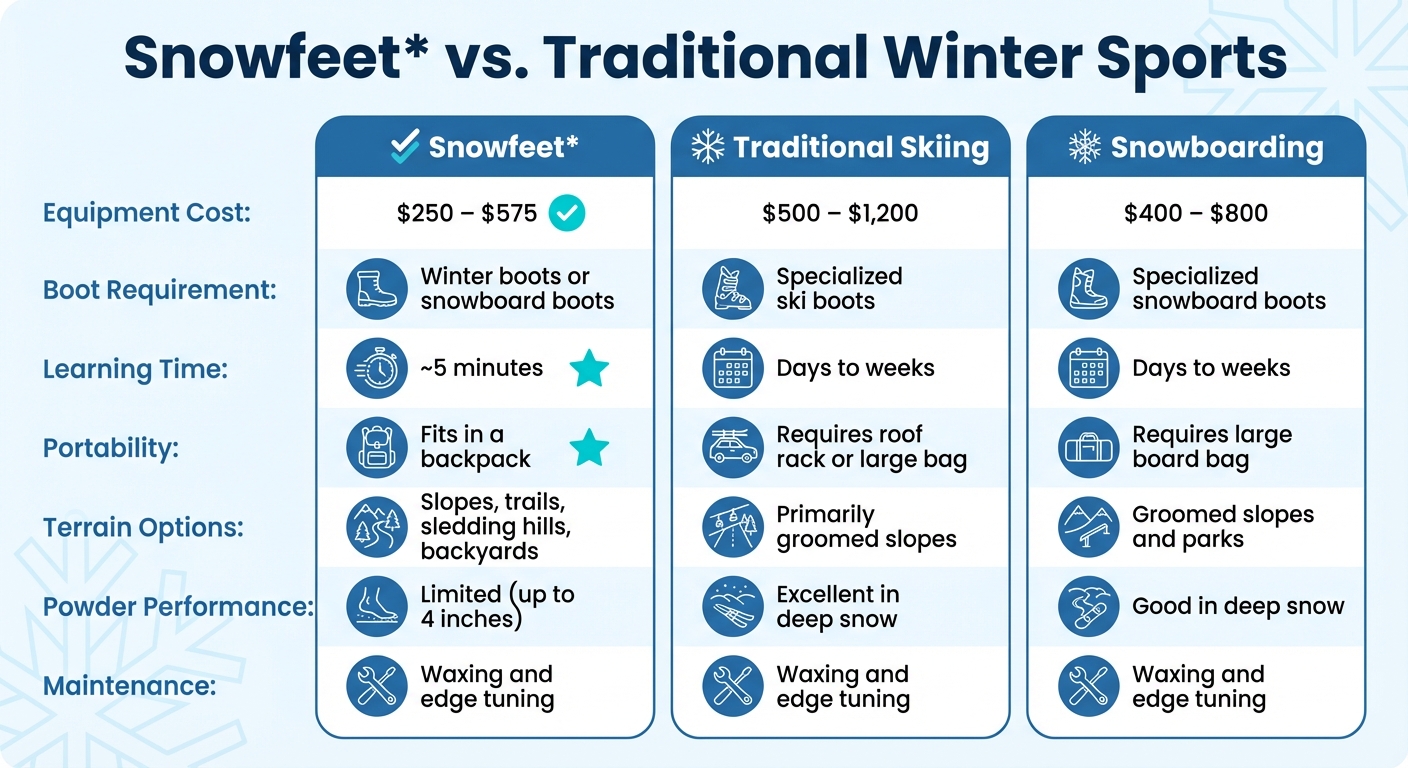
Snowfeet vs Traditional Skiing and Snowboarding Comparison
How Skating on Snow Works
Skiskating brings a fresh twist to moving on snow, all thanks to its ultra-short skis. These compact skis, measuring just 15–20 inches (38–50 cm) long, make your feet feel light and free. Instead of the classic forward glide of traditional skiing, skiskating has you pushing your legs sideways - like a hockey player - creating a motion that feels a lot like ice skating.
Their small size makes balancing and controlling your movements easier, especially when you need to adjust your weight or recover from a wobble. One thing to note: unlike regular skiing, you’ll want to keep your weight centered or slightly toward the back of your feet to avoid catching the tips. The metal edges of the skiskates act like ice skate blades, letting you carve sharp turns and pull off hockey stops with ease. This unique motion sets the stage for the specialized gear that makes skiskating simple and fun.
What Equipment Do You Need?
Getting started with skiskating is straightforward. The main piece of gear is a pair of short skis, such as Snowfeet Mini Ski Skates or Skiskates. Here’s a quick breakdown of your options:
- Snowfeet Mini Ski Skates: Available in 38 cm ($250) or 50 cm PRO models ($275).
- Premium Skiskates: These 44 cm skis come with a wood core and cost $575.
All these skis are small enough to fit in a backpack, making them super portable.
Another big plus? You don’t need special ski boots. Snowfeet attach directly to your regular waterproof winter boots or snowboard boots. Just make sure your boots are waterproof and offer solid ankle support. This means you can skip the hassle (and cost) of dedicated ski boots.
How It Differs from Regular Skiing and Snowboarding
Skiskating isn’t just about compact gear - it’s a whole new way to enjoy winter sports. Traditional skis, which can be over 5 feet long, are great for high-speed stability but can feel bulky on flat terrain and are awkward for walking. Snowboards, with both feet locked onto a single board in a sideways stance, can be intimidating for beginners. Skiskates, on the other hand, combine the best of both worlds: you face forward like a skier but have the freedom to move each leg independently, like a skater.
If you’ve ever tried ice skating, rollerblading, or hockey, the sideways push of skiskating will feel instantly familiar. For beginners, the compact design means less gear to manage and fewer things to worry about.
Portability is another game-changer. Unlike 6-foot skis that need a roof rack or oversized bag, Snowfeet fit right into a backpack. This makes it easy to hike to remote spots, take public transit, or toss them in your car trunk. And they’re versatile too - you can use them on groomed slopes, snow parks, hiking trails, or even sledding hills. No need to stick to pricey ski resorts!
Why Snowfeet* Works Best for Beginners
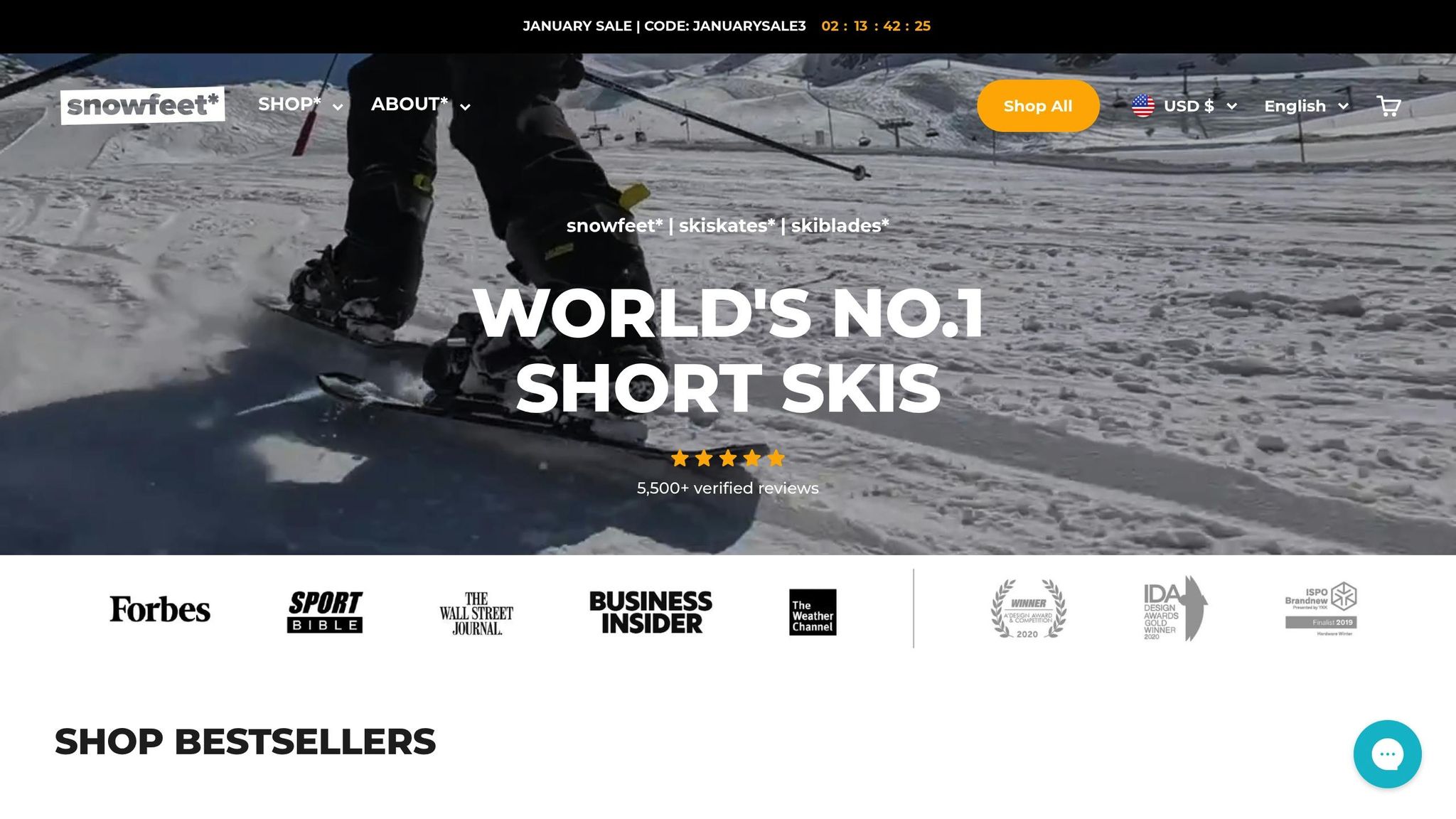
If you’re new to winter sports, Snowfeet* products make it super simple to get started. The 38 cm Mini Ski Skates ($250) and 44 cm Skiskates ($575) are designed to help beginners feel comfortable quickly, cutting out the hassle of traditional ski gear. With over 50,000 riders giving them a stellar 4.9/5 rating, Snowfeet* is a trusted choice to get you gliding in no time.
What makes them stand out? The learning curve is incredibly short. Traditional skiing often takes days - and sometimes lessons - to master. But with Snowfeet*, many users say they get the hang of it in just one day. Some even feel confident after just five minutes! The movement feels natural, especially if you’ve ever ice skated, making it easier to pick up compared to managing long skis or a snowboard where your feet are locked in place.
Easy-to-Use Design
Snowfeet* products are all about keeping things simple. Their compact size - between 15 to 17.3 inches - makes them far easier to control than traditional skis. This shorter length gives you better maneuverability, allowing for sharp turns and quick stops, similar to ice skating. Plus, the metal edges help you carve turns with stability and precision.
Your stance plays a big role, too. Keep your weight centered or slightly back on your feet - don’t lean forward like you might with long skis. Feeling a bit unsteady? Try staggering one foot ahead of the other for added balance. And here’s the best part: no need for stiff, pricey ski boots. Snowfeet* attach directly to your regular waterproof winter or snowboard boots. That means you can walk, drive, and skip the rental lines. As one happy user, Lynn, shared:
"I found these so easy to turn and control. I have recreational Nordic experience but was able to manage these great."
Easy to Carry and Store
Forget the hassle of lugging around bulky ski gear. Snowfeet* are compact enough to fit in a standard backpack. The 44 cm Skiskates, for example, slide right in, making it easy to take them on public transit, hike to remote spots, or just toss them in your car trunk. Their portability is a game-changer, especially if you’re heading to the mountains or exploring different snow conditions.
Perfect for Varied Terrains
Snowfeet* shine on a range of terrains where traditional gear might struggle. They’re ideal for groomed slopes and packed snow trails but also perform well in snow parks, on hiking paths, sledding hills, or even your backyard. Most ski resorts allow Snowfeet* since their metal edges meet standard safety guidelines. For the best experience, stick to groomed trails or packed snow rather than steep drops or deep powder. The shorter length gives you excellent control and makes quick turns a breeze. As Andrew B., another satisfied user, put it:
"These skiblades are so much fun and easy to control. Never going back to regular skis."
How to Start Skating on Snow
Getting started with Snowfeet* is simple, even for beginners. The trick is to take it slow and practice on flat, groomed terrain before tackling steeper slopes. Confidence comes with time and repetition, so don’t rush it!
Step 1: Master Balance and Body Position
Balance is your foundation when learning to skate on snow. Keeping steady, especially front-to-back, is the most important skill to develop. Start on flat ground to understand how the skates respond to your movements.
Stand with your legs about shoulder-width apart - spreading them too far can make it harder to control your movements. Keep your knees slightly bent to absorb motion and improve stability. Make sure your weight stays centered over the middle or back of your feet. Unlike skiing, where you might lean forward, Snowfeet* require a more upright stance. Leaning too far forward can throw you off balance and lead to falls. For added steadiness, try a slight staggered stance.
The Snowfeet Team puts it perfectly:
"Don't lean forward like you would do with skis, because you don't have the support of regular-length skis to hold you... instead, stand up straight and place your weight over the middle and back of your feet." – Snowfeet Team
Once you’ve got the hang of balancing, it’s time to move on to the push-off motion.
Step 2: Get Moving with the Push-Off
Once you feel stable, it’s time to start moving. The push-off motion with Snowfeet* is similar to what you’d use in ice hockey or inline skating. Push off to the side to build momentum. This sideways push helps you glide smoothly across the snow.
A common beginner mistake is putting too much weight on the toes during the push. This can cause the tips of the skates to dig into the snow, leading to a fall. Instead, keep your weight centered or slightly shifted toward your heels. Maintain a shoulder-width stance and keep your knees bent for better control.
Once you’re gliding, the next step is learning how to turn and stop effectively.
Step 3: Turning and Stopping Like a Pro
The compact design of Snowfeet* makes turning a breeze. To steer, tilt your skates onto their metal edges and guide yourself in the direction you want to go. This gives you the ability to make tight, controlled turns with ease.
When it’s time to stop, the hockey stop is your go-to method for a quick halt. Turn your feet perpendicular to the slope and use the inside edges of your skates to bring yourself to a stop. On gentler terrain, you can also use the built-in heel brake by applying pressure to the back of your skate. Whichever method you choose, keep your weight evenly distributed over both feet, and avoid leaning too far forward during the stop.
With these steps, you’ll be ready to skate confidently on snow in no time!
sbb-itb-17ade95
Snowfeet* vs. Regular Skiing and Snowboarding
Snowfeet* stands out from traditional skiing and snowboarding when it comes to convenience, cost, and how quickly you can pick it up. It's a great option for beginners who want to skip the hassle of heavy gear and pricey lessons.
Traditional skiing and snowboarding setups can be expensive and require specialized boots. Beginner ski packages typically range from $500 to $1,200, while snowboard setups cost between $400 and $800. Snowfeet*, on the other hand, is much more budget-friendly. Prices start at $250 for the 38 cm mini ski skates and go up to $575 for the premium 44 cm wood core skiskates. Plus, you can use your regular waterproof winter boots or snowboard boots - no need for anything extra-special.
When it comes to learning, Snowfeet* has a serious edge. If you’ve ever ice skated, inline skated, or played hockey, you can get the hang of Snowfeet* in about five minutes. In contrast, traditional skiing might be easier to start but takes longer to master, and snowboarding often has a steep learning curve right from the beginning. And let's talk portability - Snowfeet* fits into a standard backpack, making it super easy to carry around. Compare that to traditional skis and snowboards, which usually need a roof rack or oversized bag for transport.
To sum it up, Snowfeet* offers a unique mix of affordability, quick learning, and portability. Here's a side-by-side comparison to highlight the differences:
Comparison Table: Snowfeet* vs. Regular Winter Sports
| Feature | Snowfeet* | Traditional Skiing | Snowboarding |
|---|---|---|---|
| Equipment Cost | $250 – $575 | $500 – $1,200 | $400 – $800 |
| Boot Requirement | Winter boots or snowboard boots | Specialized ski boots | Specialized snowboard boots |
| Learning Time | ~5 minutes | Days to weeks | Days to weeks |
| Portability | Fits in a backpack | Requires roof rack or large bag | Requires large board bag |
| Terrain Options | Slopes, trails, sledding hills, backyards | Primarily groomed slopes | Groomed slopes and parks |
| Powder Performance | Limited (up to 4 inches) | Excellent in deep snow | Good in deep snow |
| Maintenance | Waxing and edge tuning | Waxing and edge tuning | Waxing and edge tuning |
This table clearly shows how Snowfeet* simplifies winter sports without sacrificing the fun. Whether you're heading to the slopes, a local trail, or even your backyard, it's a flexible and easy-to-use option that fits into your lifestyle.
Conclusion
Snow skating offers a simple, fun way for beginners to enjoy winter without the usual hassle. In just 5 minutes, you can pick up the basics. The gear is compact enough to fit in a backpack, works with your regular winter boots, and transforms any snowy surface into your personal playground.
Snowfeet* takes the complications out of traditional winter sports. Forget about pricey ski boots, long lessons, and lugging around heavy equipment. With over 50,000 riders globally and more than 5,500 verified reviews averaging 4.9 out of 5 stars, it’s clear people are loving it.
"These skiblades are so much fun and easy to control. Never going back to regular skis." – Andrew B.
Whether you go for the 38 cm mini ski skates starting at $250 or the 44 cm premium wood core skiskates priced at $575, you’re investing in gear designed for quick learning and heaps of fun. Their short length makes turning and stopping feel natural, and falling is less intimidating compared to traditional skis.
This winter, skip the bulky gear and give snow skating a shot. Keep your weight centered or slightly back, start on groomed slopes, and you’ll be gliding in no time. Snowfeet* makes it easy to enjoy the slopes effortlessly.
FAQs
What safety tips should beginners know before trying skiskating?
If you're just starting out with Snowfeet products for skiskating, staying safe boils down to preparation and good technique. First things first - gear up! A helmet, goggles, gloves, and padded clothing are must-haves to protect yourself from bumps and falls.
Next, focus on your stance. Keep your legs about shoulder-width apart, bend your knees slightly, and lean forward a bit. This position helps you stay balanced and stable. When it’s time to stop, make sure to evenly distribute your weight across both feet. This will help you control your speed and avoid any unexpected tumbles.
As a beginner, stick to groomed slopes - steep hills and deep powder can wait until you’ve got more experience under your belt. Start with small, manageable moves like gentle turns and slow, controlled stops. By taking it step by step and focusing on the basics, you’ll set yourself up for a fun and safe skiskating adventure!
How does skiskating compare to traditional skiing in deep snow?
Skiskating isn’t the best option for deep, untouched snow. It’s designed to shine on groomed slopes, packed trails, and flatter terrain. For those powder-filled backcountry adventures, traditional skis are the way to go - they’re built to glide effortlessly through deeper snow.
That said, Snowfeet Skiskates bring their own perks to the table. They’re super portable, easy to use, and a blast on maintained slopes. If you’re looking for something lightweight and quick to pick up, skiskating offers a fun and convenient alternative for winter sports lovers!
Are Snowfeet skiskates safe for kids to use?
Yes, kids can use Snowfeet skiskates safely, but a few precautions are key. First, make sure they’re wearing the right safety gear - this includes a helmet, goggles, and padded clothing to help protect against falls. For beginners, adult supervision is a must. It’s important they start in a controlled setting where they can ease into the activity and pick up the basics gradually.
Snowfeet skiskates are super lightweight and simple to use, which makes them a great choice for kids looking to try something different this winter. With the right guidance and safety steps in place, they can enjoy the excitement of gliding on snow while also improving their balance and coordination.













Leave a comment
This site is protected by hCaptcha and the hCaptcha Privacy Policy and Terms of Service apply.